AhaPrompt
Prompts
Featured
Models
Submit
Blog
Home
AI Prompt Library
Sketch
Sketch Prompts
Explore the best Sketch prompts for AI image, video, and audio generation.
Browse AI Image Prompts
Browse AI Video Prompts
Browse AI Music & Voice Prompts
AI Prompt Library
All
Images
Videos
Audio
Newest
Popular
All categories
3D Render
Abstract
Advertising
Aerial
Ambient
Animals
Animation
Anime
Architecture
Avatar
Black & White
Bright
Cartoon
Character
Cinematic
Cityscape
Classical
Comic
Cyberpunk
Dark
Digital Art
Dramatic
Dynamic
Electronic
Ethereal
Fantasy
Fashion
Folk
Food
Game Assets
Gothic
Hip-Hop
Historical
Holiday
Horror
Infographic
Jazz
Landscape
Lo-Fi
Logo Design
Macro
Minimalist
Motion Graphics
Music Video
Mysterious
Mythology
Nature
Neon
Oil Painting
Peaceful
Pixel Art
Pop
Pop Art
Portrait
Poster
Product Photography
R&B
Realistic
Rock
Sci-Fi
Short Film
Sketch
Slow Motion
Sound Effects
Space
Sports
Steampunk
Sticker
Still Life
Street Photography
Surreal
Tattoo
Timelapse
Trailer
Typography
Vector
Vehicles
VFX
Vintage
Voiceover
Wallpaper
Watercolor
Whimsical
GPT Image 2.5
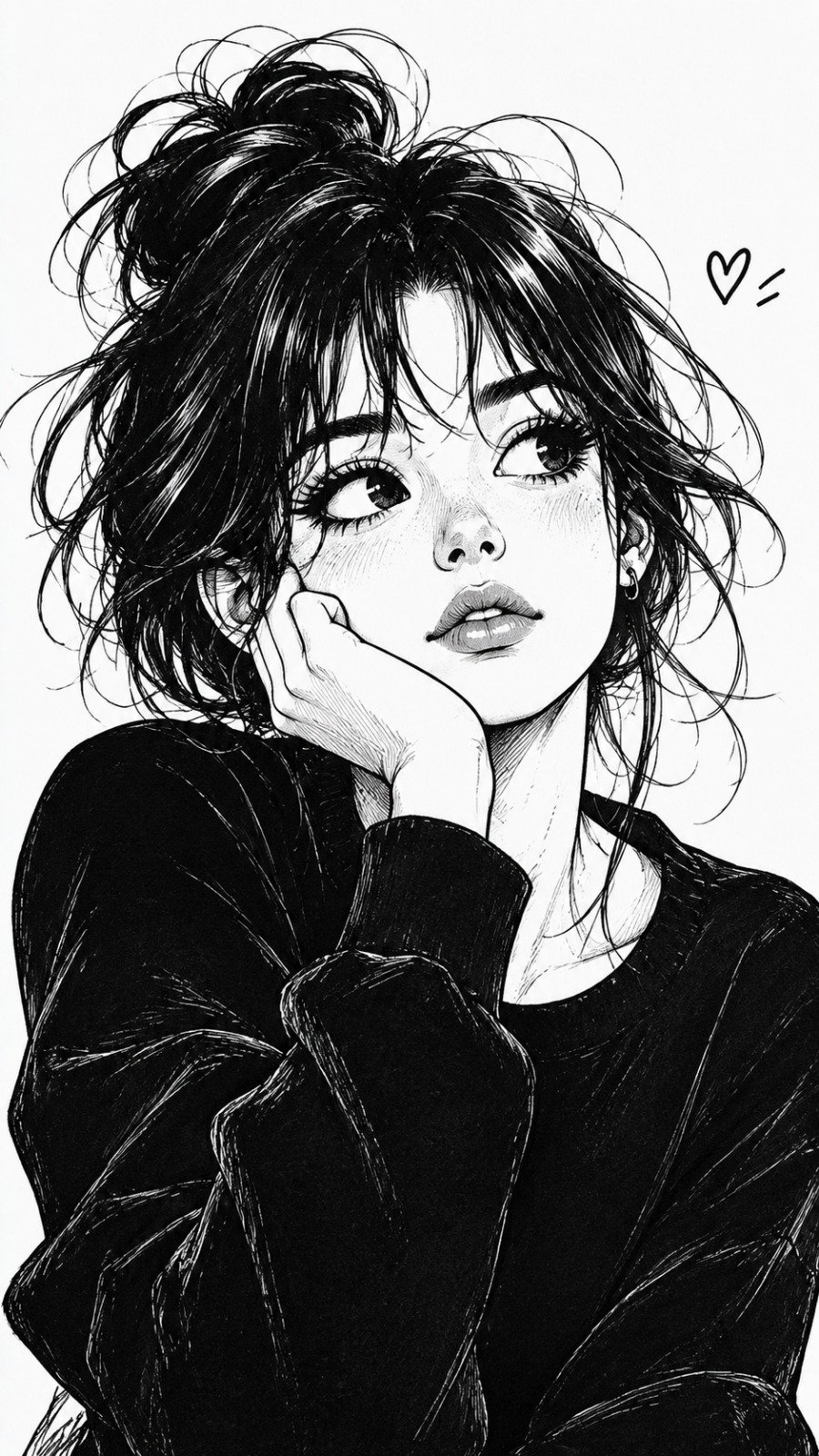
{ "aspect_ratio": "9:16", "style": "Black and white manga ink sketch, detailed hand-drawn illustration", "prompt": "A beautiful young anime woman with large expressive eyes, long eyelashes, full lips and a dreamy sideways gaze. Extremely voluminous messy black hair tied in a loose high bun, with wispy bangs and wild flowing flyaway strands. Her head is slightly tilted, resting gently on one hand, with naturally curved fingers supporting her cheek. She wears an oversized black sweater with loose sleeves and detailed fabric folds. Medium close-up portrait, head and upper torso visible, centered composition. Intricate black ink linework, fine cross-hatching, delicate pencil shading on the face, dense black hair strokes with white highlights, expressive sketchy outlines. Pure white paper background with a tiny hand-drawn heart doodle in the upper right corner. Strong black and white contrast, authentic manga illustration, elegant, dreamy and playful.", "negative_prompt": "Color, 3D, photorealism, watercolor, extra fingers, distorted face, messy background, text, watermark, blurry details" }
0
Details
GPT Image 2.5
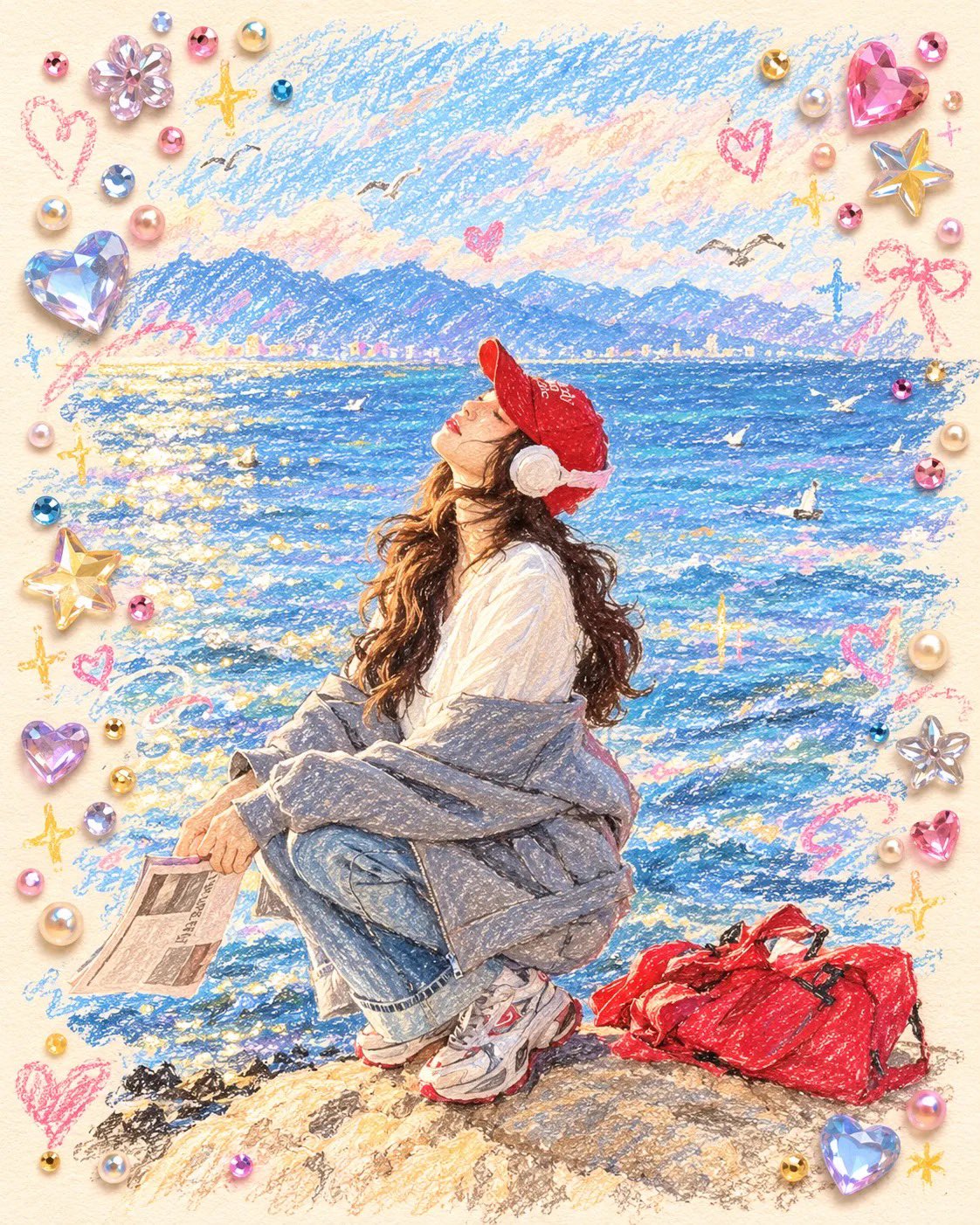
Transform the uploaded photograph into a beautiful, cozy, whimsical HAND-DRAWN COLORED PENCIL & CRAYON SCRAPBOOK ILLUSTRATION. IMPORTANT — PRESERVE THE ORIGINAL PHOTO: First, carefully analyze the uploaded photograph. Identify the actual subjects, people, facial features, hairstyles, clothing, poses, expressions, accessories, objects, background and surroundings. Recreate the same photograph as a charming illustrated artwork. Preserve the original composition, recognizable facial characteristics, clothing details, body positions and interactions. Do not randomly replace or invent the main subjects. ART STYLE: - Authentic hand-drawn colored pencil and wax crayon illustration. - Visible pencil strokes, grainy textures and imperfect sketch lines. - Soft watercolor-like coloring mixed with rich colored pencil shading. - Delicate cross-hatching and layered hand-drawn details. - Slightly rough, nostalgic children's storybook illustration aesthetic. - Warm, dreamy, cozy and whimsical atmosphere. - Cream-colored textured paper background. - Soft lighting with warm highlights and gentle shadows. - Rich yet slightly faded vintage colors. SCRAPBOOK DECORATION: Surround the main illustration with a playful handmade scrapbook border featuring: - Pink and red glittery heart stickers. - Small colorful gemstones and pearl beads. - Golden stars and crystal decorations. - Tiny hand-drawn flowers and butterflies. - Cute doodles, smiley faces and little stars. - Small decorative leaves and seasonal elements. - Colorful hand-drawn outlines and playful symbols. Make the decorations look like real physical stickers and tiny embellishments placed around the edges of the artwork. COMPOSITION: Keep the main subject as the central focus. Recreate the original environment using detailed colored pencil textures. Add decorative scrapbook elements mainly around the outer borders without covering important parts of the photograph. The artwork should feel like a page from a beautifully decorated personal diary or a nostalgic illustrated memory journal. FINAL AESTHETIC: Extremely detailed, adorable, cozy, nostalgic, artistic, soft vintage scrapbook aesthetic, handmade illustration, visible crayon grain, colored pencil texture, delicate imperfections, warm pastel tones, charming decorative embellishments, premium illustrated journal page. IMPORTANT: The result must look like a completely hand-drawn illustration, NOT a photograph with a cartoon filter. Avoid photorealism, 3D rendering, plastic textures and overly smooth digital painting.
0
Details
GPT Image 2.5
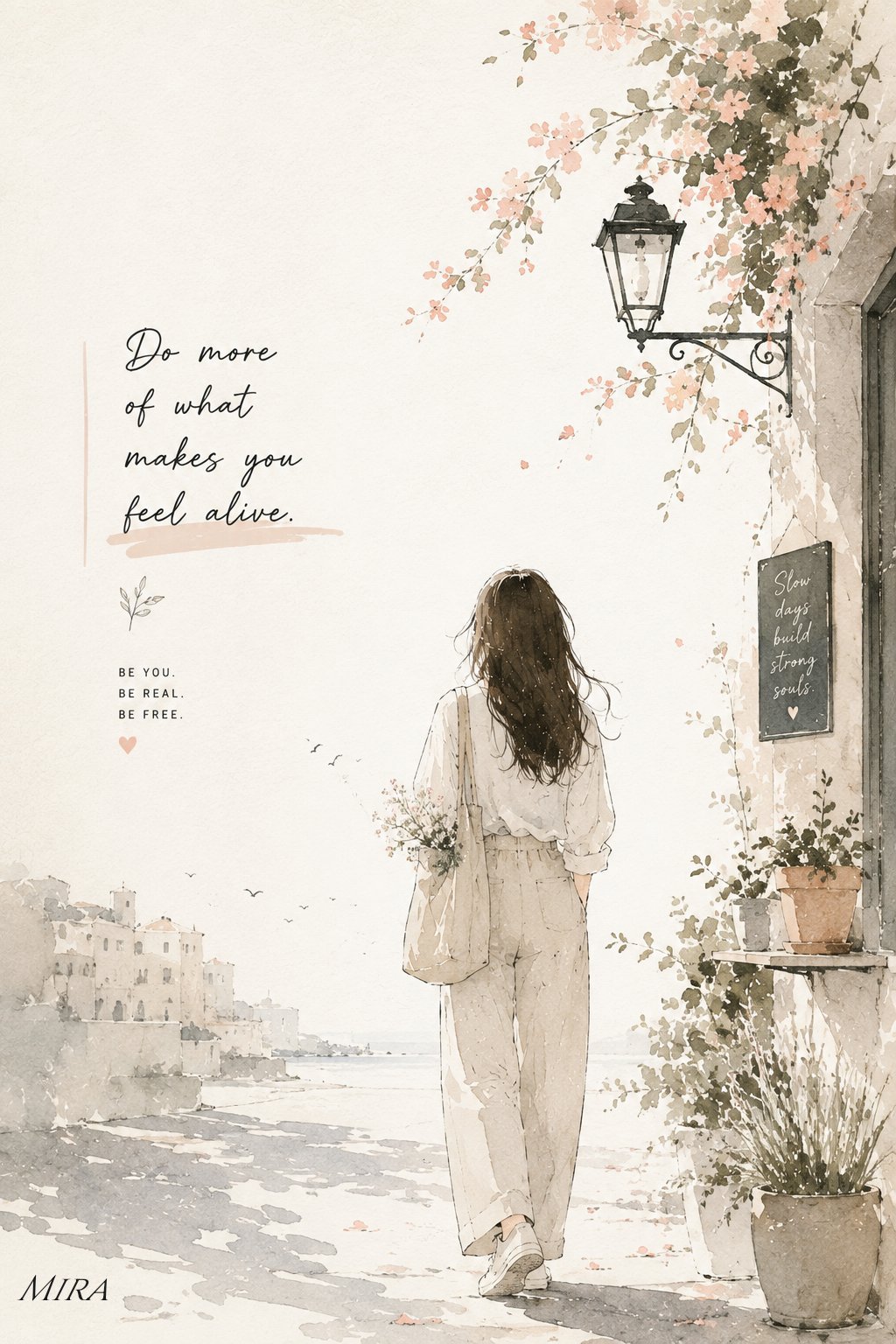
Create a minimal, elegant watercolor-and-ink illustration poster with a soft handmade artist-sketchbook aesthetic. Show a young woman standing or slowly walking away from the viewer, full body visible, with long naturally flowing dark hair, wearing modest, relaxed neutral clothing such as a loose cream shirt, beige wide-leg trousers and simple sneakers, carrying a small canvas tote with delicate flowers. Place her in a peaceful European/Mediterranean-inspired street or countryside setting, with subtle old architecture, a vintage street lamp, climbing flowers, small plants and a few distant birds. Use very light pastel colors — warm ivory, cream, dusty peach, pale sage, soft beige and diluted gray — with lots of clean negative space. Blend delicate black ink outlines with loose transparent watercolor washes, visible watercolor-paper texture, imperfect brush edges and tiny paint splashes. Keep the composition airy, sophisticated and artistic rather than busy, like an original travel-journal illustration by a contemporary artist. Add one short, tasteful handwritten inspirational phrase in an empty area of the poster, with very small minimalist typography underneath. Soft natural daylight, peaceful atmosphere, subtle shadows, premium editorial composition, handcrafted feel, no photorealism, no heavy colors, no bold graphics, no clutter. Vertical 2:3 poster composition.
0
Details
GPT Image 2.5
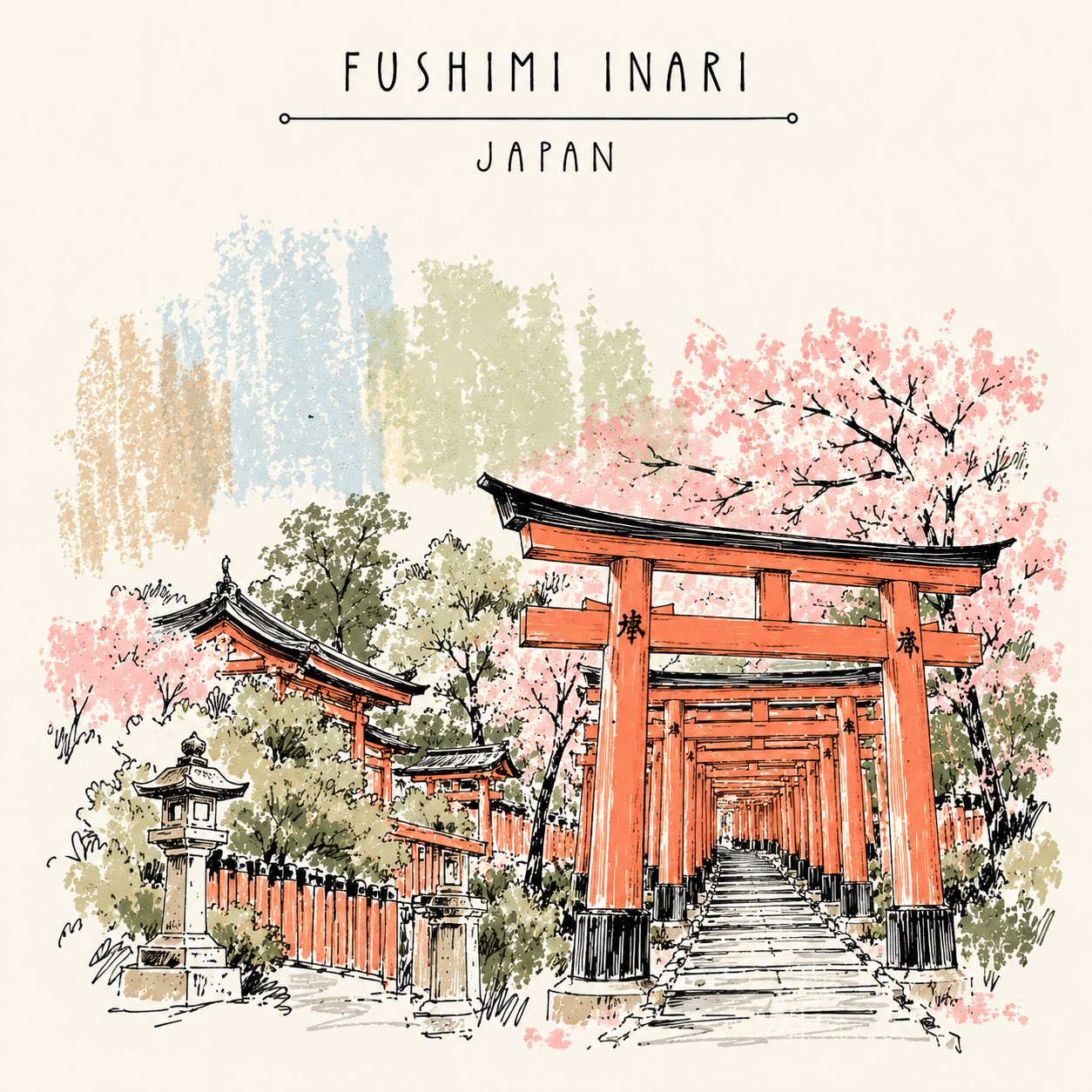
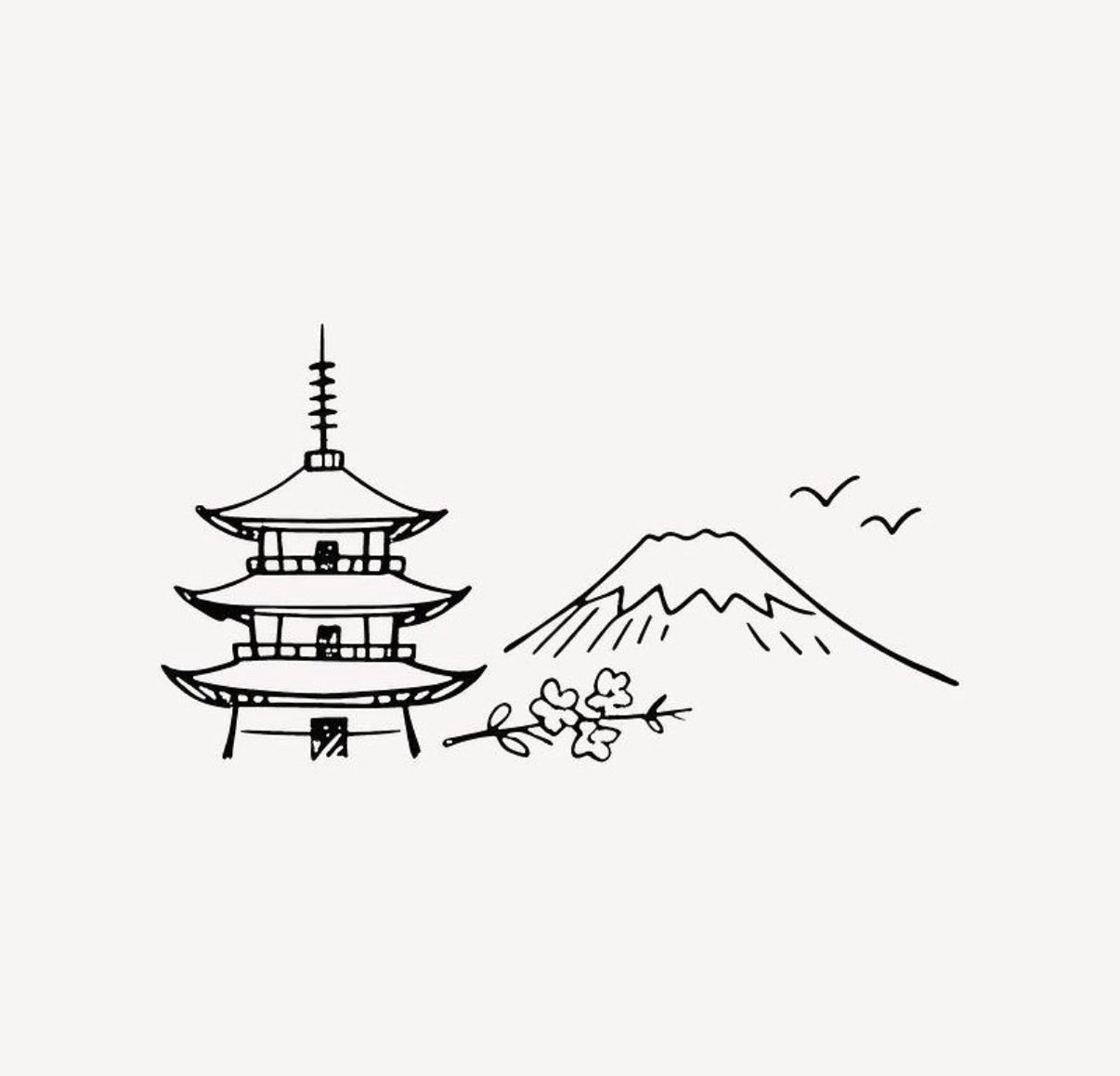
Create a beautiful, minimalist hand-drawn travel illustration of [LANDMARK / CITY / COUNTRY], inspired by Japanese architectural sketchbook art and contemporary minimalist travel posters. Illustration style: Fine black ink outlines with loose, expressive, imperfect hand-drawn strokes. Simplified architectural forms that preserve the destination’s most recognizable features. Soft, dry-brush pastel colour patches in the background, with a distressed, textured, almost crayon-like finish. A limited palette of muted sage green, dusty pink, pale blue, warm beige, and soft ochre. Warm ivory paper background with subtle natural paper grain. Delicate sketchy trees, tiny shrubs, birds, distant mountains, clouds, or other location-specific elements. Beautiful negative space and an airy, uncluttered composition. Artistic imperfections, uneven ink lines, and a handmade illustration aesthetic. Composition: Place the iconic landmark in the lower half of the image, drawn in elegant black ink. Add a few surrounding elements to create a small, atmospheric scene. Behind the architecture, incorporate abstract vertical or irregular pastel brushstrokes that add colour without overpowering the drawing. Typography: At the top, write the destination name in thin, spaced-out uppercase lettering: “[DESTINATION NAME]”. Place the country name directly underneath in smaller, elegant uppercase letters. Add a fine horizontal divider with tiny circular endpoints between the title and subtitle, if appropriate. Overall mood: Peaceful, poetic, artistic, minimalist, nostalgic, and sophisticated — like a page from a beautifully illustrated travel journal. Technical details: Square 1:1 composition, crisp fine-line drawing, restrained pastel colours, plenty of cream negative space, no photorealism, no 3D effects, no glossy finish, no heavy shadows, no clutter, and no extra text. Ensure the destination name is spelled correctly.
0
Details
GPT Image 2.5
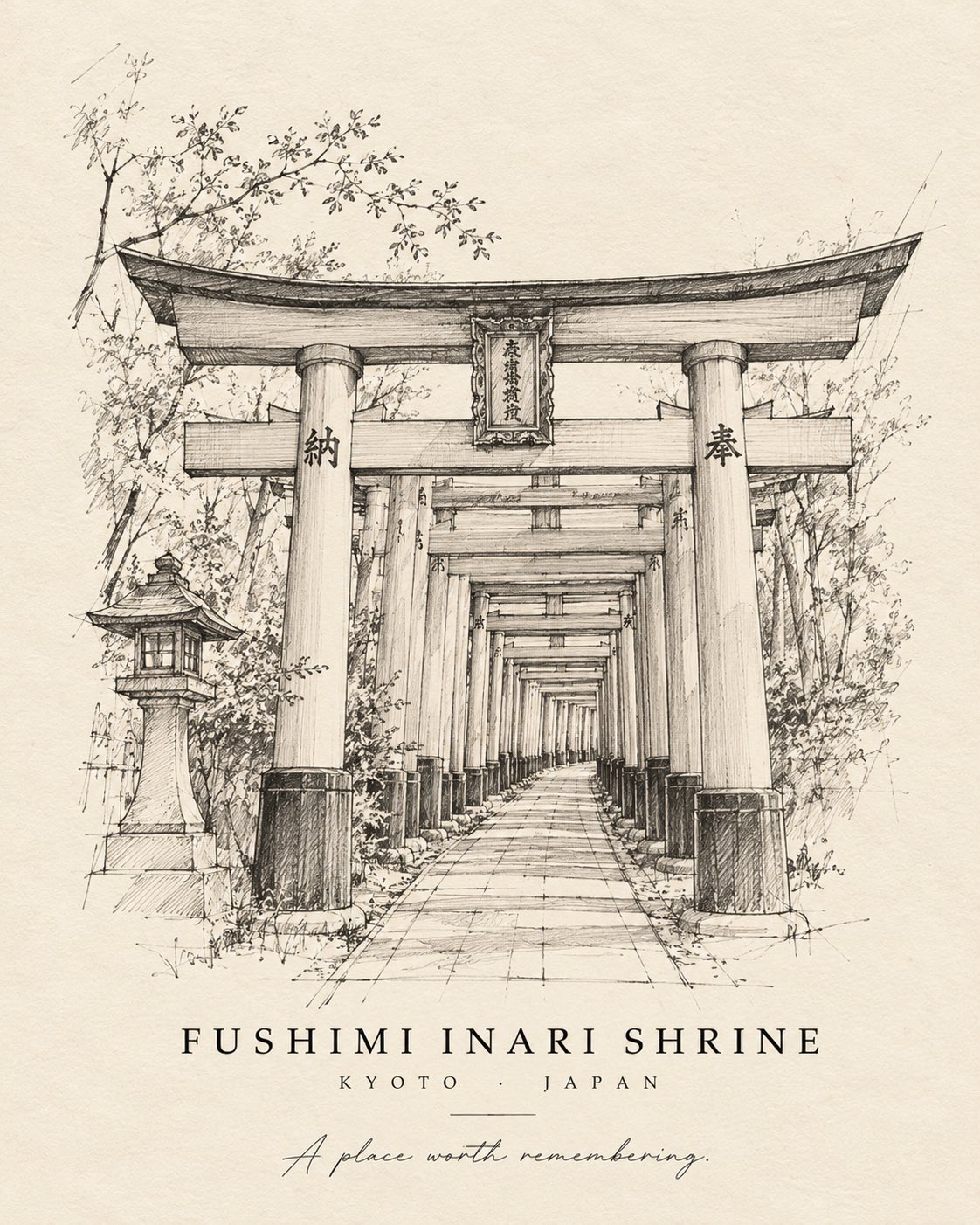
Create an elegant, minimalist hand-drawn architectural sketch of [LANDMARK NAME], located in [CITY, COUNTRY]. Illustrate the landmark using delicate graphite pencil strokes, fine contour lines, subtle cross-hatching, and natural hand-drawn imperfections. Preserve its iconic silhouette and distinctive architectural details so it is instantly recognizable. Composition: Position the landmark in the centre of warm ivory, lightly textured paper, surrounded by generous negative space. Include a few faint construction lines to give the drawing an authentic architect’s sketchbook feel. Typography: Beneath the illustration, write the landmark’s exact name in elegant, uppercase serif lettering: “[LANDMARK NAME]” Below it, add the location in small, widely spaced letters: “[CITY] · [COUNTRY]” Finish with the tiny handwritten phrase: “A place worth remembering.” Style: Minimalist architectural sketch, monochrome graphite, fine-line drawing, imperfect pencil edges, subtle vintage editorial design, sophisticated travel-journal aesthetic. Colour palette: Graphite grey, soft charcoal, warm ivory. Background: Clean, uncluttered paper texture with no scenery competing with the landmark. Important: Keep all text correctly spelled and legible. No photorealism, no bright colours, no heavy shadows, no elaborate borders, no extra landmarks. Format: Portrait 4:5, high-resolution art print.
0
Details
GPT Image 2.5
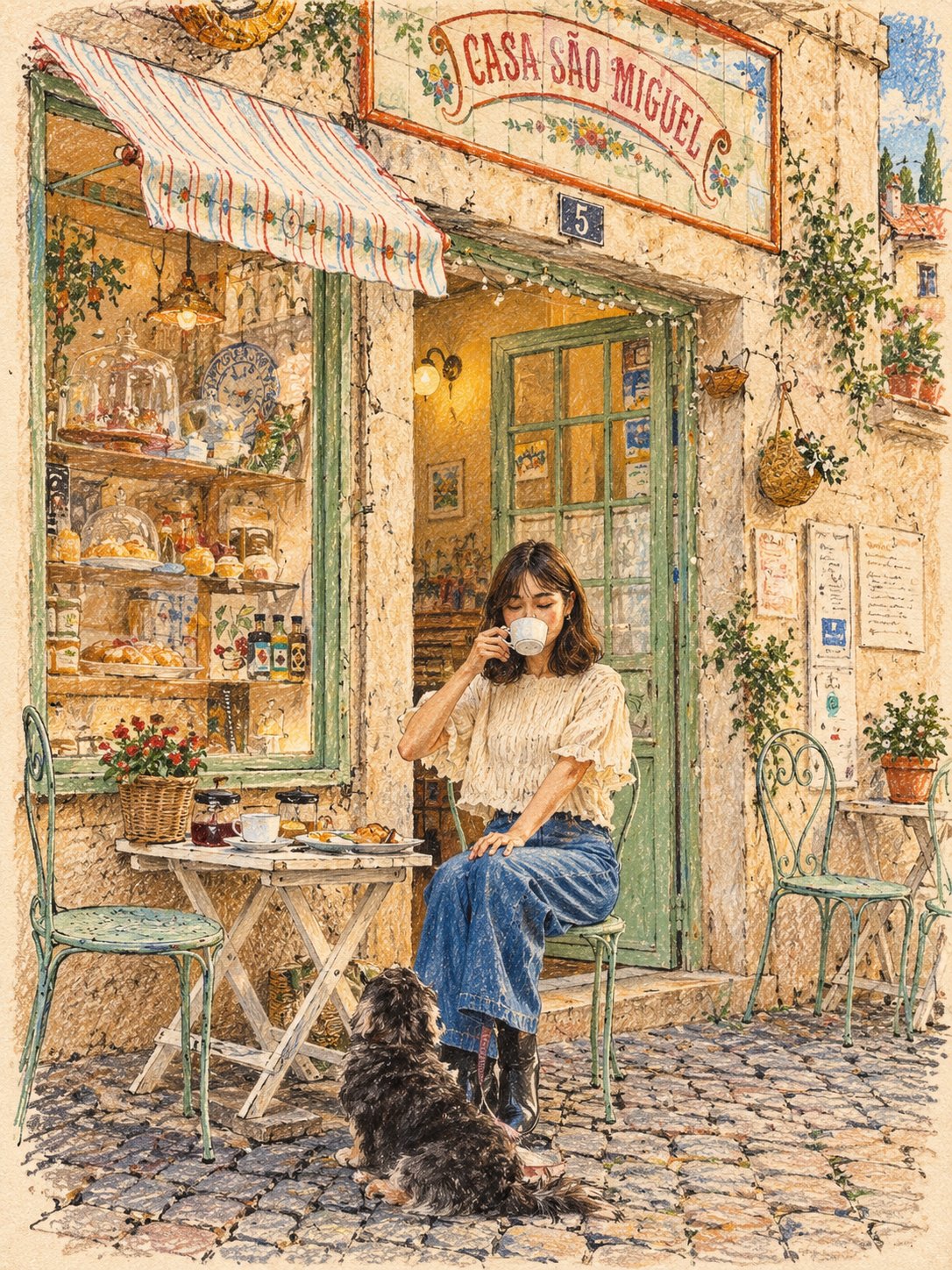
Transform the uploaded photo into a beautiful, hand-drawn editorial travel illustration with a charming vintage storybook aesthetic. STYLE: Traditional colored-pencil and wax-crayon illustration on warm, textured paper. Visible sketch strokes, grainy pigment, imperfect hand-drawn outlines, subtle cross-hatching, and a soft matte finish. A blend of European travel-journal art and modern illustrated storytelling. SUBJECT: Preserve the recognizable identity, facial features, hairstyle, clothing, pose, and essential details of the original subject. Use elegant simplified shapes, expressive features, delicate linework, rosy cheeks, and natural proportions with a slightly whimsical illustrated appearance. BACKGROUND: Recreate the original environment using painterly architectural details, scenic landscapes, charming buildings, blue skies, rolling hills, or cobblestone streets as appropriate. Maintain depth and perspective while simplifying details into expressive hand-drawn forms. COLOR PALETTE: Warm cream, terracotta red, dusty blue, muted olive green, charcoal black, and soft beige. Use harmonious colors, gentle contrast, and subtle vintage color variation. TEXTURE & DETAILS: Add visible pencil scratches, rough crayon marks, uneven color fills, delicate hatching, and natural paper grain throughout the image. Keep the artwork tactile, organic, and authentically handmade. Optional tiny hand-drawn hearts or playful accents when appropriate. COMPOSITION: Vertical 3:4 portrait format, balanced framing, full-bleed illustration with subtly irregular paper edges. Keep the subject prominent and the background visually engaging without overwhelming the main scene. FINAL RESULT: A sophisticated, nostalgic travel-journal illustration that feels genuinely hand-drawn by a professional editorial illustrator. Avoid photorealism, glossy digital rendering, 3D effects, excessive smoothness, and generic anime styling.
0
Details
GPT Image 2.5
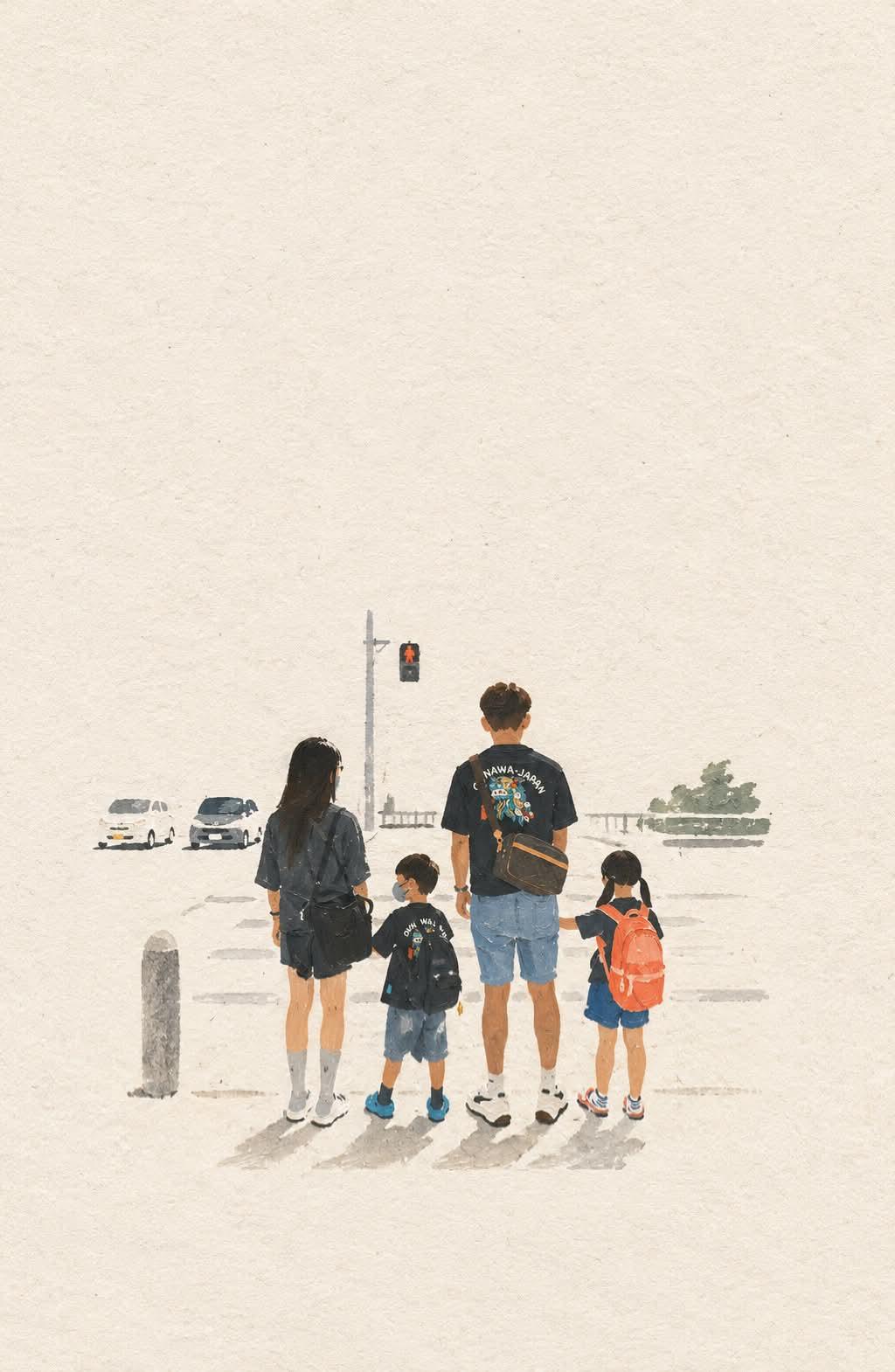
MINIMAL HAND-DRAWN PAPER ILLUSTRATION Transform the uploaded photo into a minimalist, hand-drawn, paper-textured artistic cover. Composition - The main subject should occupy only 10–20% of the frame. - Position the subject near the bottom center of the composition. - Leave generous negative space throughout the image. - Suggest the environment using only a few lines or small blocks of color. Preserve - The most recognizable features of the original subject. - The essential silhouette and proportions. - The original pose or primary action. - Important objects and defining details. - The core story, relationships, and emotional atmosphere. Color Palette - Extract the dominant colors from the original photograph. - Limit the palette to no more than four main colors. - Use bold yet restrained, flat color blocks. - Maintain a harmonious, muted color combination. - Add subtle paper grain and handmade brush textures. Simplification Remove unnecessary details and visual clutter. Retain only the essential visual information needed to make the subject instantly recognizable. Typography - Optionally incorporate a small amount of simple text. - Keep typography short, subtle, and aesthetically refined. - Integrate the text naturally into the composition. - Aim for the visual language of an art-book cover, independent publishing, modern editorial design, or a contemplative picture book. - Do not force typography into the image if it doesn't improve the composition. Style and Materials - Delicate, slightly imperfect hand-drawn lines. - A few clearly defined acrylic-like flat color blocks. - Rough, tactile paper texture. - Visible handmade brushstrokes. - Organic, irregular, natural contours. - Subtle imperfections that make the artwork feel genuinely handmade. Overall Mood Quiet, poetic, sophisticated, minimalist, innocent, relaxed, artistic, thoughtful, distinctive, and premium. Avoid - Colored-pencil rendering. - Dry-brush effects. - Watercolor washes or bleeding. - Pure line-art illustration. - Overly detailed or realistic illustrations. - Heavy impasto or thick oil-paint textures. - Smooth, polished digital illustration. - 3D rendering, glossy surfaces, or artificial lighting effects. - Generic commercial cartoon styles. - E-commerce advertising aesthetics. - Generic poster templates. - Excessive decorative elements. - Overly complex compositions. - Too much text. Final Result: A refined, minimalist, hand-crafted paper illustration with generous negative space, restrained colors, subtle tactile textures, and the sophistication of an independent art-book cover.
0
Details
GPT Image 2.5
Create a beautiful, minimalist, hand-drawn travel illustration Art style: Fine black ink line drawing on a clean, warm-white paper background, delicate imperfect strokes, loose pencil shading, subtle cross-hatching, artistic simplicity, and a timeless European journal aesthetic. Composition: Arrange a few charming objects in the foreground that represent the destination, such as a steaming coffee cup, croissant, a slender glass vase holding a single flower, and a small upright postcard or book featuring the iconic architecture or landmark of [CITY / COUNTRY / LANDMARK]. Landmark details: Illustrate the destination’s most recognizable landmark with delicate hand-drawn lines, keeping it simple, elegant, and instantly recognizable. Add small decorative handwritten lettering featuring the destination’s name. Mood: Peaceful, romantic, cozy, nostalgic, artistic, and dreamy, like a page from a vintage travel diary in a Parisian café. Background: Plain white or ivory paper with generous negative space, no unnecessary scenery, no borders, and no distracting elements. Technical style: Monochrome black ink, fine sketch lines, natural imperfections, delicate shadows beneath the objects, subtle paper texture, balanced horizontal composition, understated editorial illustration, high-resolution artwork. Replace every instance of [CITY / COUNTRY / LANDMARK] with your chosen destination. Keep the same overall composition and artistic style while changing the landmark and cultural details to match the location.
0
Details
GPT Image 2.5
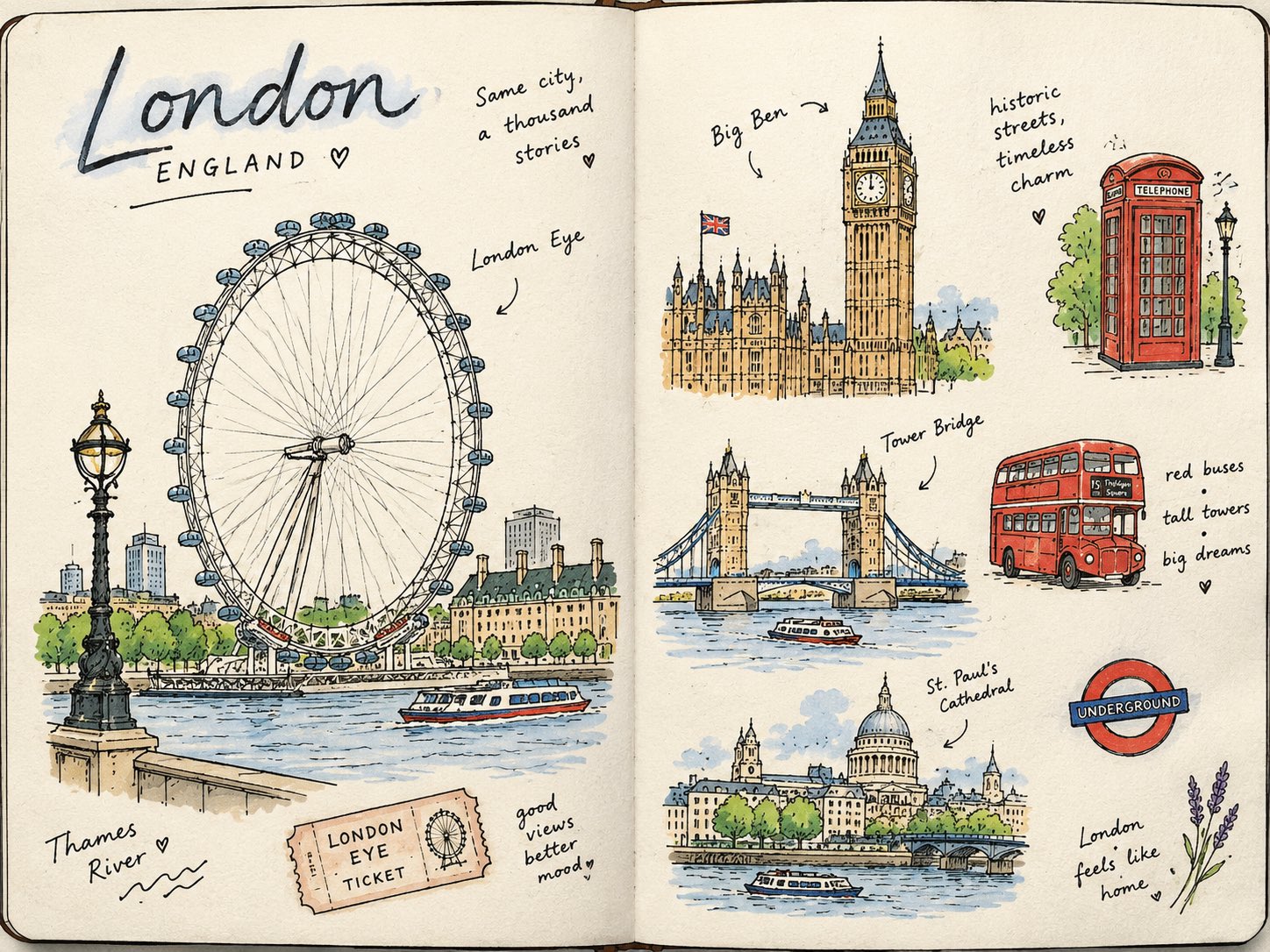
Create a beautiful, hand-drawn travel journal illustration titled “[CITY, COUNTRY]”, featuring the iconic landmarks, architecture, and everyday charm of [CITY / COUNTRY / LANDMARK]. Art Style: A spontaneous travel sketchbook illustration drawn with fine black ink outlines, loose imperfect pen strokes, and soft watercolor or colored-pencil accents. The artwork should feel like a real artist’s personal travel diary—playful, imperfect, artistic, and full of character. Use a clean, warm-white sketchbook paper background with subtle paper texture. Composition: Create an open sketchbook spread featuring one large, detailed drawing of the most recognizable landmark on the left page, accompanied by several smaller illustrated scenes on the right page. Include additional local attractions, historic buildings, city squares, waterfronts, charming streets, bridges, gardens, or famous monuments associated with the location. Landmark Accuracy: Keep the main landmark recognizable and architecturally accurate, preserving its authentic shape, proportions, structure, and distinctive details. Surround it with smaller sketches that capture the personality and atmosphere of the destination. Artistic Details: Add tiny handwritten labels naming the landmarks, short location notes, little arrows, dotted lines, ticket-stub illustrations, miniature transportation, local trees, and charming everyday details. Let the handwriting look natural and slightly imperfect, as if an artist made these notes while exploring the city. Color Palette: Use a restrained combination of sky blue, muted green, warm yellow, soft terracotta, and subtle grey, with black ink defining the drawings. Leave generous areas of untouched white paper. Mood: Nostalgic, curious, peaceful, creative, and travel-inspired. The illustration should evoke the feeling of discovering a beautiful city and collecting memories in a personal sketchbook. Typography: Add the destination’s name in beautiful, artistic handwritten lettering, along with a small subtitle such as “A JOURNEY THROUGH [CITY]” or “[COUNTRY] TRAVEL NOTES.” Keep the typography integrated naturally into the sketchbook. Final Result: A charming, editorial-quality illustrated travel journal spread with a large hero landmark and multiple smaller location sketches. Authentic hand-drawn imperfections, expressive ink lines, delicate watercolor accents, an organic layout, and a timeless travel-sketch aesthetic. No photorealism, no 3D rendering, no glossy digital effects, and no overly polished vector graphics. Destination: [CITY, COUNTRY] Main Landmark: [FAMOUS LANDMARK] Additional Landmarks: [2–4 OTHER LOCAL ATTRACTIONS]
0
Details
GPT Image 2.5
Create a beautiful, vintage-inspired hand-drawn illustration of [COUNTRY / CITY / LANDMARK], designed as an elegant travel coloring-book artwork on a warm ivory background. Transform the destination into a charming miniature world using delicate black ink outlines, intricate architectural details, and a sophisticated minimalist composition. Include its most iconic landmarks, majestic mountains, traditional buildings, local transportation, cultural objects, and recognizable elements of everyday life, all blending naturally into one harmonious scene. ✨ Artistic details: Landmarks: Feature the most recognizable architecture of the destination as the centerpiece. Nature: Add mountains, flowing rivers, rolling hills, clouds, tiny trees, and delicate leaves inspired by the local landscape. Cultural elements: Include traditional objects, local boats, pottery, lanterns, teapots, or other meaningful cultural details. Line art: Use clean, delicate black outlines with varied line thickness, intricate patterns, and beautiful hand-drawn imperfections. Color accents: Keep most of the illustration in elegant black-and-white line art, but fill selected elements with gorgeous colors—soft teal water, sage-green trees, warm terracotta rooftops, golden sunlight, and subtle pastel accents. Composition: Arrange the elements in layered horizontal sections, creating depth without making the artwork look crowded. Background: Use a clean, warm ivory paper texture with plenty of negative space. Atmosphere: Peaceful, nostalgic, artistic, and full of cultural charm, like a page from a premium vintage travel sketchbook. Typography: Write the destination's name in elegant, hand-lettered typography at the bottom, with a tiny decorative flourish. Style: Vintage travel illustration, architectural line drawing, minimalist coloring-book aesthetic, selective watercolor fills, fine black ink, handmade sketchbook texture, sophisticated editorial design. Aspect ratio: 4:5 vertical composition. Ultra-detailed, crisp outlines, balanced layout, beautiful and instantly recognizable destination.
0
Details
GPT Image 2.5
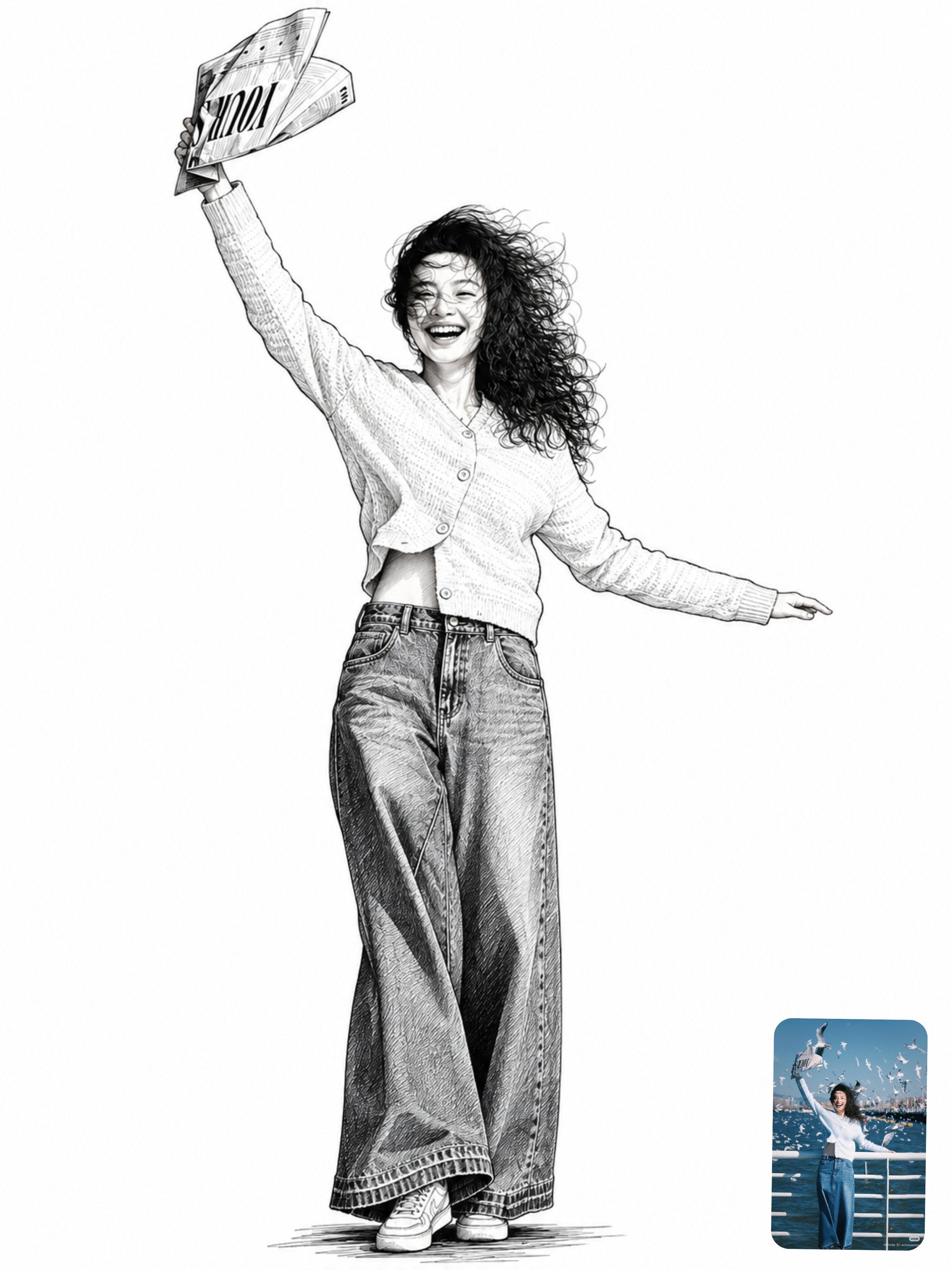
Convert this photo into a detailed black-and-white ink illustration of the subject on a plain white background, 3:4 vertical. Redraw the person or people as a hand-inked line drawing — clean confident pen lines, varying line weight, no color anywhere. Keep them full-body and centered, at the same pose, body angle and expression as the photo, with generous white space around them. Keep the likeness. Faces must stay clearly recognizable as the same individuals: same face shape, eyes, nose, mouth, eyebrows, facial hair, hairstyle and glasses. Draw faces with lighter, finer, more restrained linework than the rest of the drawing — just enough line to describe the features, no heavy shading on the skin, no harsh outlines across the face. Describe form with line, not gray tone. Use clean contour lines for edges, and fine parallel hatching only where a fold, shadow or texture needs it. Render dark clothing and dark objects as bold solid black fills, and light clothing as white with only its seams, folds, pleats and stitching drawn in. The contrast between solid black garments and open white ones is what gives the drawing its punch. Keep every detail of the outfit and anything held or carried: patterns and prints on fabric, batik or lace texture, stripes, bag straps, watches, jewelry, earphone cables, shoes with their laces and soles. If the clothing has a printed graphic or logo, redraw that artwork as line illustration inside the garment rather than leaving it blank. If the subject is seated on or using an object — a chair, a bicycle, a pedicab — draw that object in full detail too, including spokes, frames and mechanical parts. Delete the entire background. Pure white, empty, with nothing drawn behind the subject. The only grounding is a loose scribble of short horizontal pen strokes forming a soft shadow directly beneath the feet or wheels, fading out at the edges. The finish should look like a skilled artist's ink portrait — crisp, graphic and confident, with clean edges and no smudging. Avoid: color, gray airbrushed shading, soft gradients, pencil smudging, a photographic or partly photographic subject, a changed face or identity, a generic or idealized face, a cartoon or anime style, chibi proportions, heavy outlines across facial features, a background of any kind, scenery, buildings, a frame or border, cropped limbs, altered pose, altered clothing, missing printed graphics, text, signature, watermark.
0
Details
GPT Image 2.5
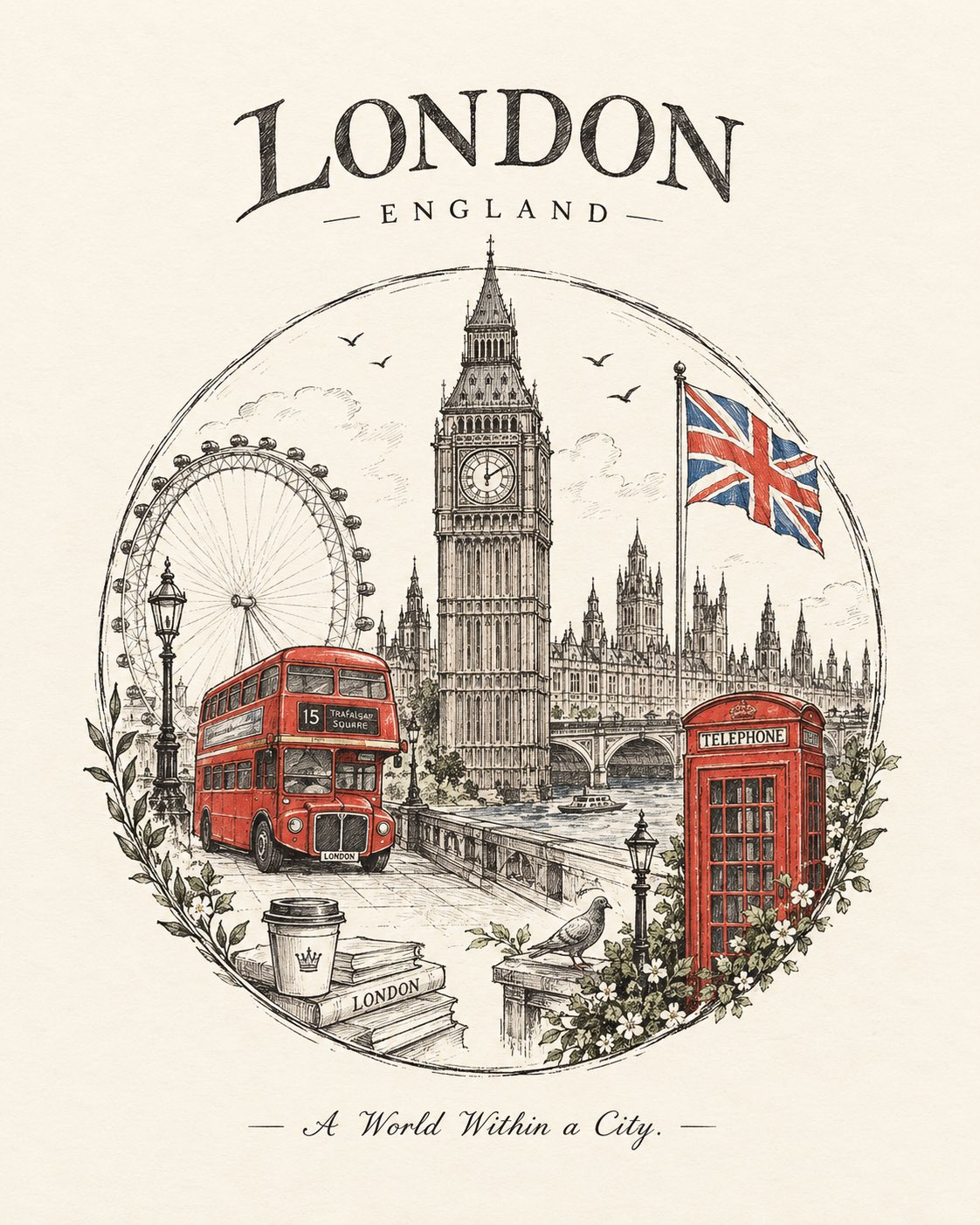
Create a beautiful, vintage-inspired hand-drawn illustration titled “[CITY / COUNTRY / LANDMARK]”, designed as a circular travel emblem on a clean, warm-white background. Composition: Draw one large, slightly imperfect circle using loose black ink strokes. Inside the circle, create an artistic miniature world representing [CITY / COUNTRY / LANDMARK], combining its most iconic architecture, cultural symbols, local transportation, and recognizable everyday details into one harmonious composition. Include 3–5 recognizable elements, arranged naturally with overlapping architectural sketches, delicate perspective lines, tiny flying birds, and subtle decorative foliage. Art style: Handmade pen-and-ink illustration, vintage travel journal, rough architectural sketching, fine cross-hatching, imperfect outlines, and an authentic artist-drawn appearance. Color palette: Keep most of the illustration in black, white, and soft graphite grey. Selectively fill only a few signature elements with the destination's most recognizable colors, creating beautiful pops of color against the monochrome sketches. Typography: Place the destination's name above the circle in beautiful, distinctive lettering that complements its cultural identity. Add a small, elegant tagline beneath the illustration. Keep the composition minimal, balanced, and sophisticated, with generous empty space around the artwork. Every object should feel intentionally placed, like a collectible piece of handmade travel art. Important: No photorealism, no 3D, no gradients, no busy backgrounds, no excessive colors, and no unnecessary text. Preserve the charm of imperfect hand-drawn lines. Aspect ratio: 4:5, portrait format, high-quality editorial illustration.
0
Details
GPT Image 2.5
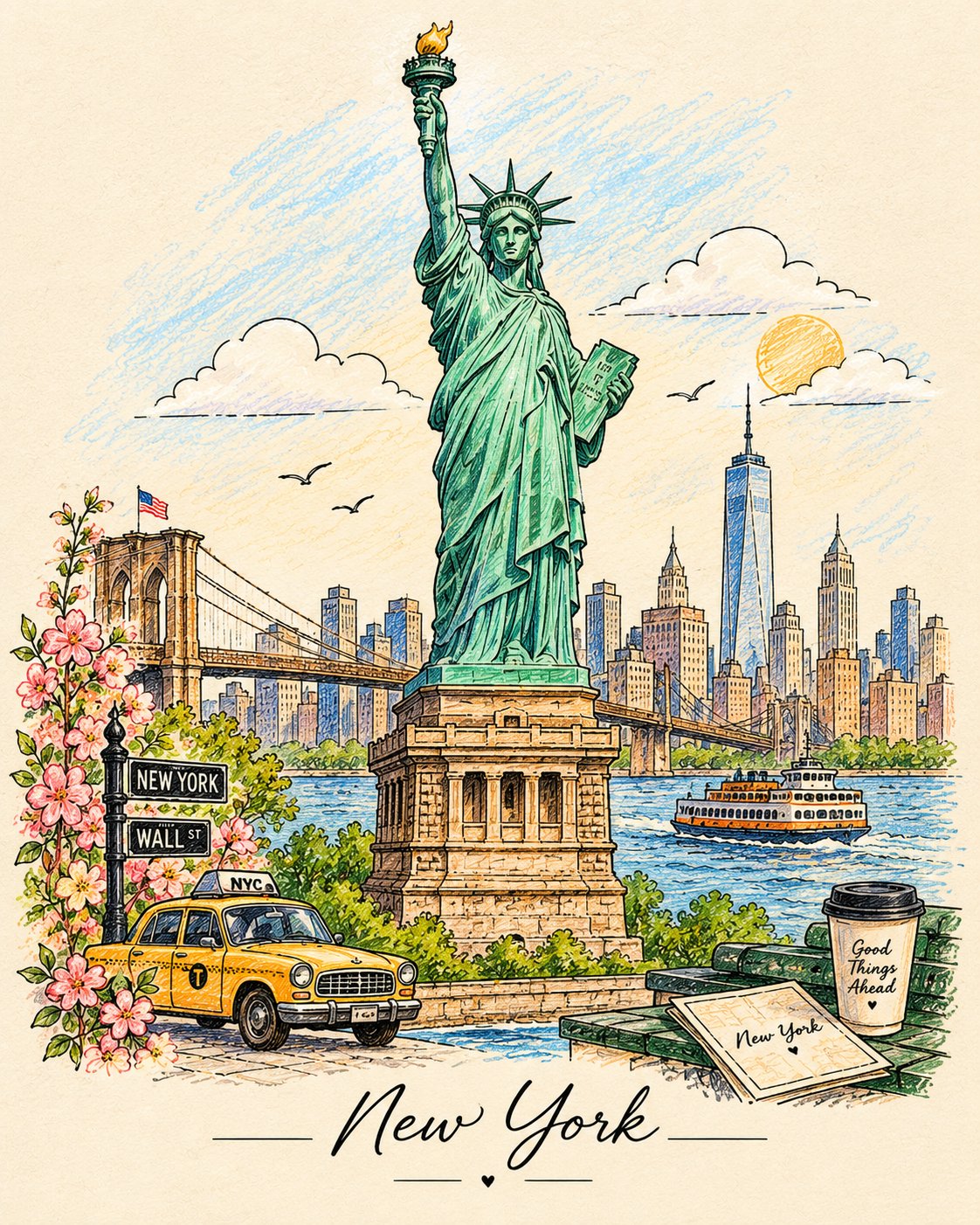
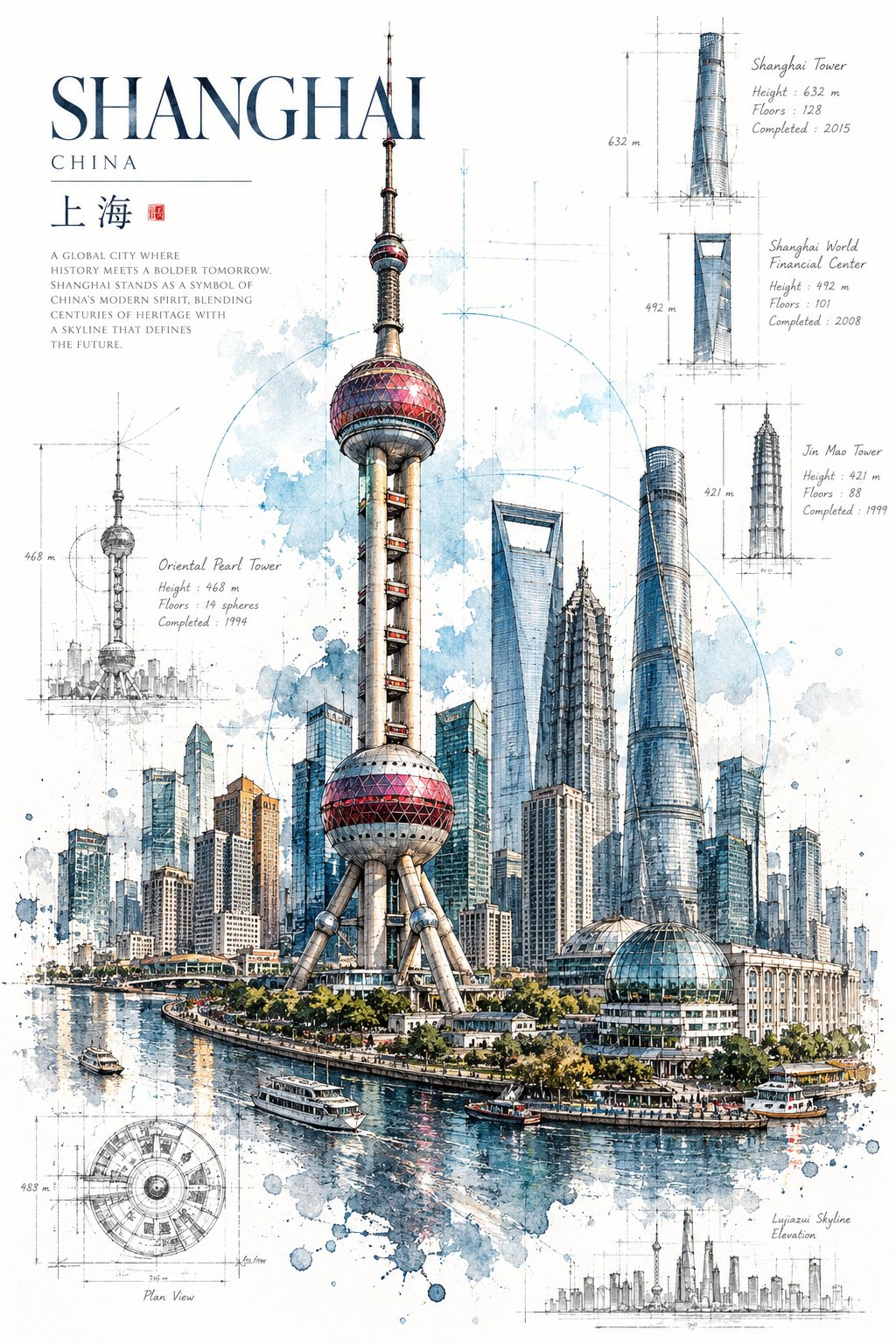
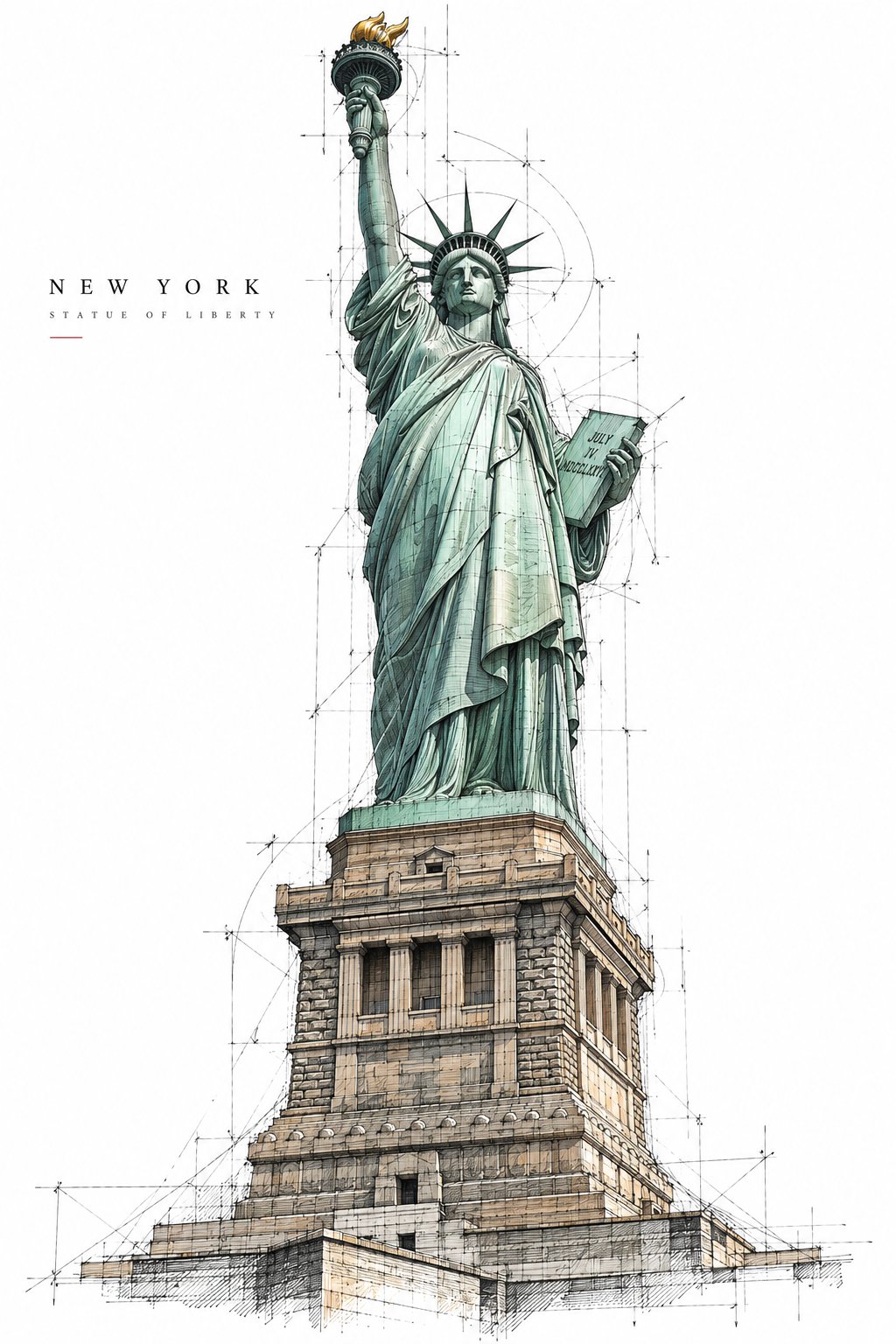
Create a premium 2:3 vertical architectural art poster of [BUILDING / LANDMARK], combining precise architectural sketching with expressive ink and watercolor. COMPOSITION: Feature one architecturally accurate building in a dynamic three-quarter perspective, occupying 60–70% of the composition. Preserve its recognizable silhouette, proportions, structural details, and authentic architectural character. ART STYLE: Intricate hand-drawn ink lines, graphite sketching, delicate crosshatching, translucent watercolor washes, organic imperfections, and expressive ink splashes concentrated around the building’s base. TECHNICAL DETAILS: Integrate fine cyan and muted-teal construction lines, perspective guides, measurement arrows, geometric diagrams, and a few subtle handwritten annotations that relate to the building’s actual structure. COLOR & BACKGROUND: Pure white background, charcoal and graphite linework, pale cyan drafting marks, muted blue-gray watercolor, and restrained indigo accents. Keep the composition airy with generous negative space. TYPOGRAPHY: Add a small, elegant museum-archive label containing the building name, location, architectural style, and a short, factual 2–3-line English curatorial note. Keep typography refined and secondary. FINAL AESTHETIC: A collectible museum-quality architectural study blending technical precision, expressive handmade artistry, and sophisticated editorial design. AVOID: Photorealism, 3D rendering, vector-perfect outlines, inaccurate architecture, unrelated buildings, clutter, colored backgrounds, excessive annotations, logos, and watermarks. FORMAT: Full-bleed 2:3 portrait, high resolution, exceptionally detailed, authentic ink-and-watercolor craftsmanship. Generate for new york
0
Details
GPT Image 2.5
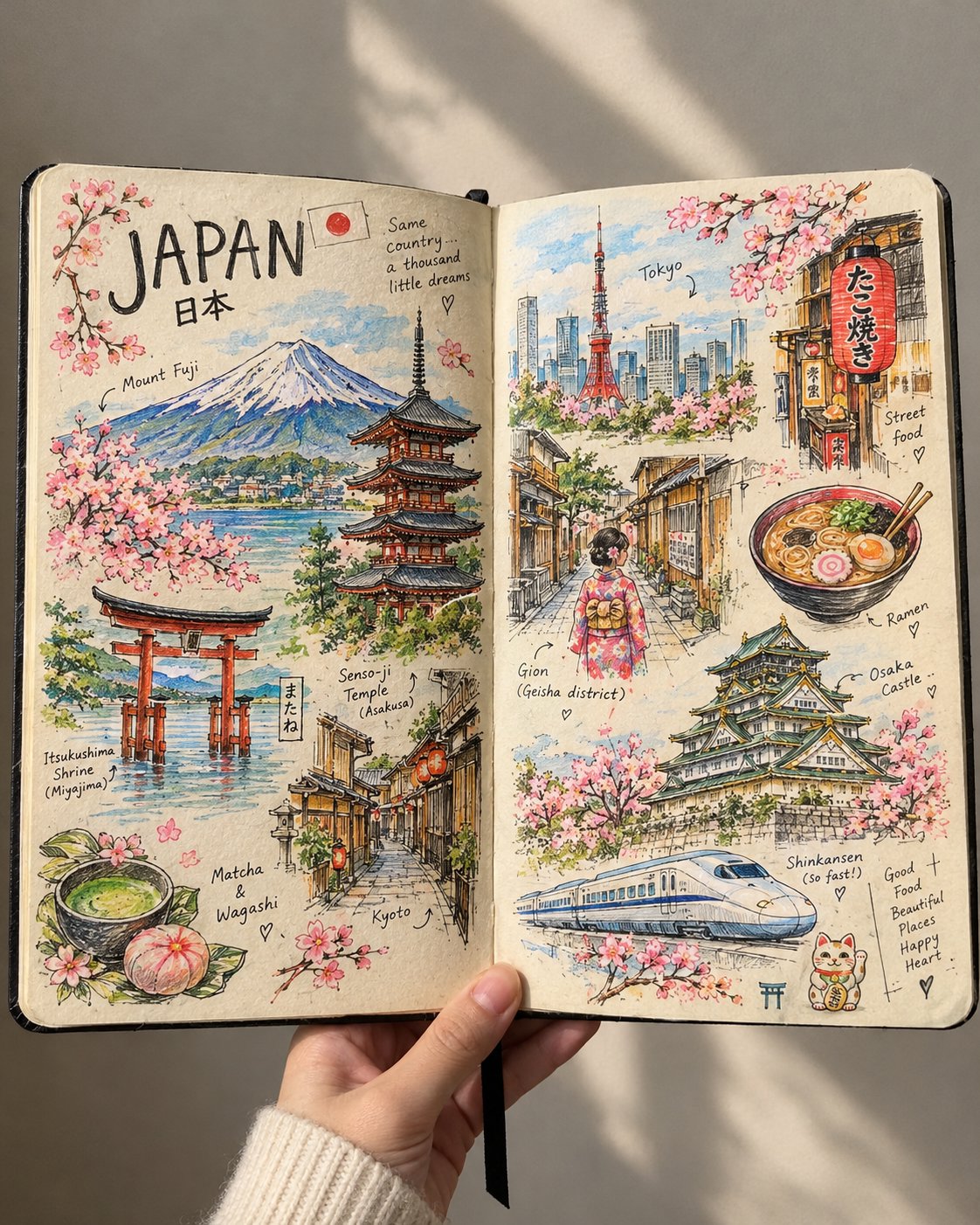
Create a beautiful, highly detailed, handmade travel sketchbook spread inspired by an artist’s personal travel journal. Show an open sketchbook with warm ivory paper, slightly imperfect edges, and visible paper texture, filled with intricate hand-drawn illustrations of [COUNTRY / CITY]. The two-page spread should feel like a collection of little memories gathered during a journey, with famous landmarks, traditional architecture, charming streets, cultural symbols, local food, nature, and tiny everyday details arranged organically across both pages. Use fine black ink linework, delicate cross-hatching, loose pencil strokes, architectural doodles, handwritten labels, tiny arrows, and small notes pointing toward the illustrated places. Let the drawings feel authentic and handmade, like a real artist sketched them while travelling. 🌈 The Special Touch — Selective Beautiful Colors Keep most of the artwork in elegant black-and-white ink, but bring selected elements to life with beautiful, carefully placed splashes of color. 🗻 Mountains and landscapes with soft watercolor blues, sage greens, and snowy whites. 🏯 Famous landmarks with subtle terracotta, warm beige, and muted golden tones. 🌸 Flowers and leaves with delicate pinks, coral, and fresh greens. 🍜 Local food illustrated in appetizing, vibrant colors. 🏮 Traditional lanterns, cultural objects, or street signs highlighted with rich reds and warm amber. 🌊 Rivers, lakes, or ocean views accented with dreamy turquoise and soft blue. 🚌 Tiny travel details featuring unexpected pops of mustard yellow, dusty orange, and pastel colors. Important: The colors should appear selectively, as if the artist used watercolor and colored pencils to highlight their favorite memories. Some illustrations should remain completely monochrome, while others should be partially or beautifully colored. The contrast between black ink and colorful details should make the artwork visually captivating without overwhelming the page. ✍️ Composition & Atmosphere Include the country name in large, artistic handwritten lettering, accompanied by a tiny national flag. Add a mixture of large landmark sketches and smaller doodles, creating a rich yet balanced composition. Allow some drawings to overlap slightly or extend toward the edges of the pages. Include spontaneous pencil marks, unfinished outlines, tiny stars, handwritten location names, and subtle artistic imperfections. Show the sketchbook as a real physical object, opened in someone's hand against a simple, softly lit background. Use a close-up perspective, natural daylight, realistic paper texture, and gentle shadows. Art style: Travel journal meets architectural ink illustration meets selective watercolor sketching. Sophisticated, cozy, artistic, nostalgic, and irresistibly beautiful. Aspect ratio: 4:5 vertical composition. Final result: A stunning, realistic travel sketchbook that looks handmade rather than digitally designed, with intricate black ink drawings and strategically placed bursts of beautiful color that make every page feel like a treasured travel memory.
0
Details
GPT Image 2.5
Create a premium 2:3 vertical architectural poster for [COUNTRY / CITY / LOCATION / LANDMARK]. TEXT-TO-IMAGE ONLY — generate the entire artwork creatively from [COUNTRY / CITY / LOCATION / LANDMARK]. No reference image required. CORE CONCEPT Present [LANDMARK] as an expressive unfinished architectural master sketch, as if drawn by an architect exploring the building’s form, structure, and character. Keep the real architecture accurate — preserve its recognizable silhouette, proportions, façade rhythm, materials, and signature details. Do not redesign the landmark. COMPOSITION Show approximately 80–95% of the landmark from the most elegant and architecturally informative viewpoint for that specific building. Use a natural eye-level or gently elevated three-quarter perspective with realistic depth and restrained distortion. ONE LANDMARK ONLY. Let it dominate the composition while surrounding it with generous PURE WHITE negative space. No skyline or secondary landmarks. SKETCH STYLE Combine precise architectural ink drawing with loose unfinished concept-sketch elements: crisp black structural lines fine façade detailing varied line weights construction and perspective guides subtle drafting marks selective ink washes partially unfinished contours Some areas should be highly detailed while others naturally dissolve into loose exploratory lines and white space. It must feel genuinely hand-drawn, not like a 3D render with a sketch filter. DETAIL & COLOR Reveal authentic architectural elements such as structural connections, façade layers, openings, ornamentation, joints, and material textures. Never invent features that do not belong to the landmark. Use a PURE WHITE background with black and charcoal linework, plus ONE subtle accent color naturally derived from the landmark’s real materials. TYPOGRAPHY Optional small refined text in one corner: [DESTINATION] [LANDMARK] Keep typography minimal and secondary to the architecture. FINAL AESTHETIC Architectural master sketch × technical drawing × expressive ink work × restrained hand-painted wash × contemporary collectible art poster. Avoid fictional architecture, incorrect proportions, extreme perspectives, close-ups, surrounding cityscapes, multiple landmarks, beige/aged paper, gradients, excessive colors, glossy 3D rendering, oversized typography, logos, and watermarks. FORMAT 2:3 vertical, single landmark, full architectural form clearly visible, generous white space, intricate linework, natural perspective, premium gallery-quality finish.
0
Details
GPT Image 2.5
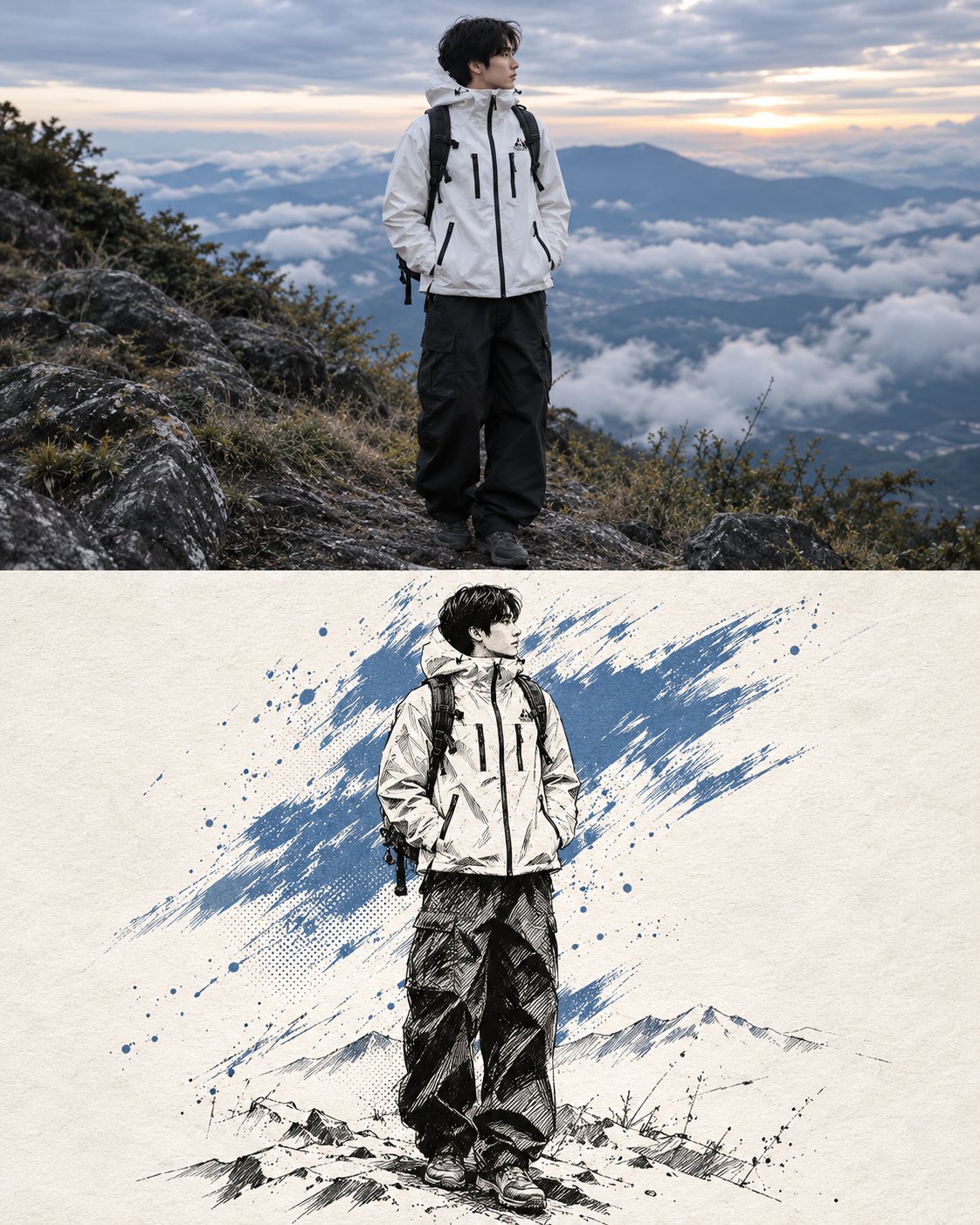
img1. Everything in the result comes from here — the person, their face, hair, body, pose, clothing, equipment and setting. img2= THE STYLE REFERENCE. Use this ONLY as inspiration for the artistic technique: the ink linework, the hatching and halftone shading, the rough accent-colour brush strokes and splatters, the paper background and the overall graphic treatment. Do NOT take the person, face, body, pose, clothing, objects, setting or accent colour from @image2. Nothing visible in @upload-1793347670928-cpgnoei may appear in the result — it is a look, not content. OUTPUT: one single unified image, 4:5 vertical, split into two panels of exactly equal height — 50% top, 50% bottom — divided by one clean straight horizontal edge. Not a collage. TOP PANEL — BEFORE: the photograph @upload-1793347676165-hgzb72w exactly as provided, unedited apart from a subtle grade. Crop intelligently to fill the landscape panel edge to edge without distorting the subject, keeping the face and the main action clearly visible. Full bleed, no margins, no border. BOTTOM PANEL — AFTER: the same subject transformed into a mixed-media ink and paint illustration on textured off-white paper, in the artistic style of @image2. Nothing runs continuously across the dividing edge — the two panels are separate images of the same subject, not one picture with its lower half stylised. THE SUBJECT IN THE LOWER PANEL Keep the subject clearly recognisable — the same face, features, expression, hairstyle, body proportions, pose and gesture, and the same clothing and equipment. Keep anything they are riding, holding or playing rendered in full detail. Redraw them entirely in BLACK INK: confident varied-weight contour lines, dense cross-hatching in the shadows, bold solid black fills in the darkest areas, and halftone dot patterns for the mid-tones. Faces are drawn with finer, more restrained linework so the likeness stays clear; clothing, hair and hard surfaces carry the heavier hatching and black fills. Render mechanical detail precisely where it exists — spokes, frames, strings, hardware, laces, stitching — in clean ink line. THE ACCENT COLOUR Identify the single most dominant or meaningful colour in @upload-1793347676165-hgzb72w — a red garment, a blue sky, a yellow jacket — and make it the ONE accent colour. Do not copy the accent colour from @image2; take it from the subject photo. Everything else is strictly black and white. Apply it as rough, energetic PAINT: wide dry-brush strokes slashing diagonally behind and across the subject, torn-edged patches, hard-edged streaks, and scattered splatters, flecks and droplets flung outward. The strokes are gestural and imperfect, with visible brush texture and dry gaps where the bristles skipped. Let the accent fill whatever actually carried that colour in @image1, but let it break out of those shapes into loose strokes beyond their edges. Cluster the colour mass behind one side of the subject so it reads as a burst of energy, thinning out toward the opposite side. THE BACKGROUND OF THE LOWER PANEL Delete the original background almost entirely. Bare off-white paper with a faint natural grain — no scene, no sky, no architecture, no crowd. Keep only a few simplified sketched elements from @image1's setting, drawn small, loose and incomplete near the base of the figure — a suggestion of ground, a ramp, a stage edge, a few distant figures — fading into the paper with no hard boundary. FINISH The subject's outer edges dissolve into brush strokes, hatching and splatters rather than ending in a clean outline. Scatter loose ink flecks, drips and spray marks around the figure, heaviest near the accent colour. Leave generous empty paper around everything. High contrast, graphic and bold — a hand-made screenprint or ink-and-wash poster, not a digital filter. Avoid: unequal panel heights, a visible gap or border between panels, a side-by-side layout, the lower panel continuing the upper photo, a subject sliced across the dividing edge, mismatched subjects between panels, the person or accent colour from @image2, photorealism in the lower panel, a photographic background, a full detailed scene, grey airbrushed shading, soft gradients, a clean vector look, smooth flat fills, more than one accent colour, a clean cut-out silhouette, a hard outline around the figure, a changed face, a different person, an altered outfit, a changed pose, text, logos, watermark. Run at high edit strength (0.8+). Upload @upload-1793347676165-hgzb72w first and @upload-1793347670928-cpgnoei second.
0
Details
GPT Image 2.5
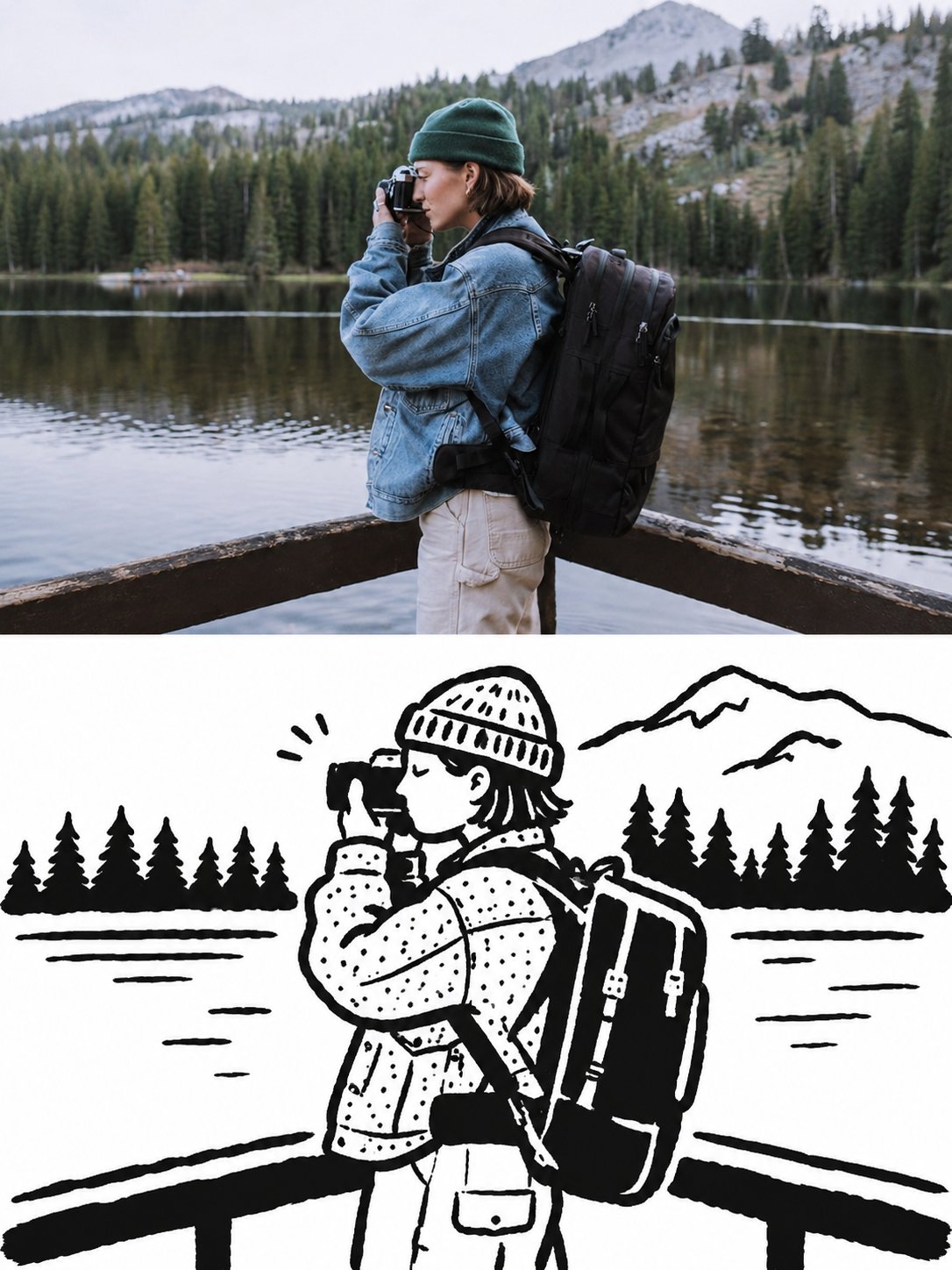
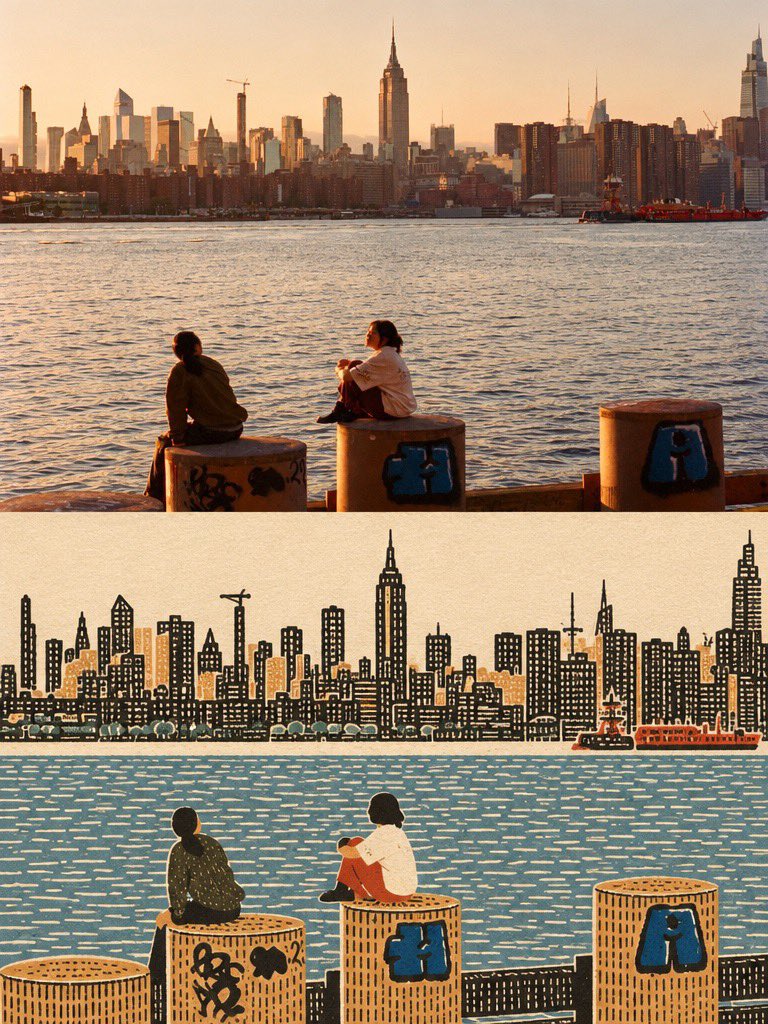
Create a premium, full-bleed 3:4 vertical editorial poster using the uploaded photograph as the sole reference. Divide the canvas into exactly two equal horizontal halves (50/50), without borders, dividers, text, or labels. TOP HALF — ORIGINAL PHOTOGRAPH Preserve the photograph faithfully, maintaining the subjects' identities, facial features, expressions, hairstyles, clothing, poses, important objects, natural colors, lighting, and atmosphere. Allow only minimal cropping to fit the composition. Do not reconstruct, stylize, or alter the original image. BOTTOM HALF — HAND-DRAWN ILLUSTRATION Recreate the same scene as a playful, minimalist, hand-inked screen-print illustration using strictly two colors: pure white (#FFFFFF) for the background and near-black (#080807) for outlines and solid shapes. Use bold, broad, imperfect marker or brush strokes with organic contours, visible hand-drawn wobble, and natural pressure variations. Avoid thin, smooth, vector-like lines. Simplify people into expressive cartoon-like characters with rounded irregular heads, minimal facial features, friendly expressions, mitten-shaped hands, and chunky limbs. Preserve recognizable hairstyles, glasses, accessories, poses, and interactions. Apply the same playful simplification to animals and other subjects. Retain the original scene's main subjects, important objects, visual story, and relationships while removing 70–90% of unnecessary background details. Use bold silhouettes, flat shapes, and generous white negative space. Add small, dense, irregular black dots to no more than one suitable garment or textile area. STYLE & RESTRICTIONS Maintain a warm, spontaneous, handcrafted editorial aesthetic. The illustration must remain flat, graphic, and expressive. Avoid photorealism, 3D effects, gradients, gray tones, shadows, realistic shading, additional colors, excessive details, corporate icon aesthetics, mechanical symmetry, malformed anatomy, extra fingers, and detached hands. Do not introduce unrelated characters, objects, or activities. No text, letters, numbers, logos, signatures, watermarks, decorative frames, or additional panels. FINAL COMPOSITION The finished poster must present the exact same visual story twice: the authentic original photograph in the upper half and its expressive black-ink, hand-drawn interpretation against a pure white background in the lower half. Maintain a precise 50/50 division, consistent composition, and premium editorial finish.
0
Details
Nano Banana 2.1
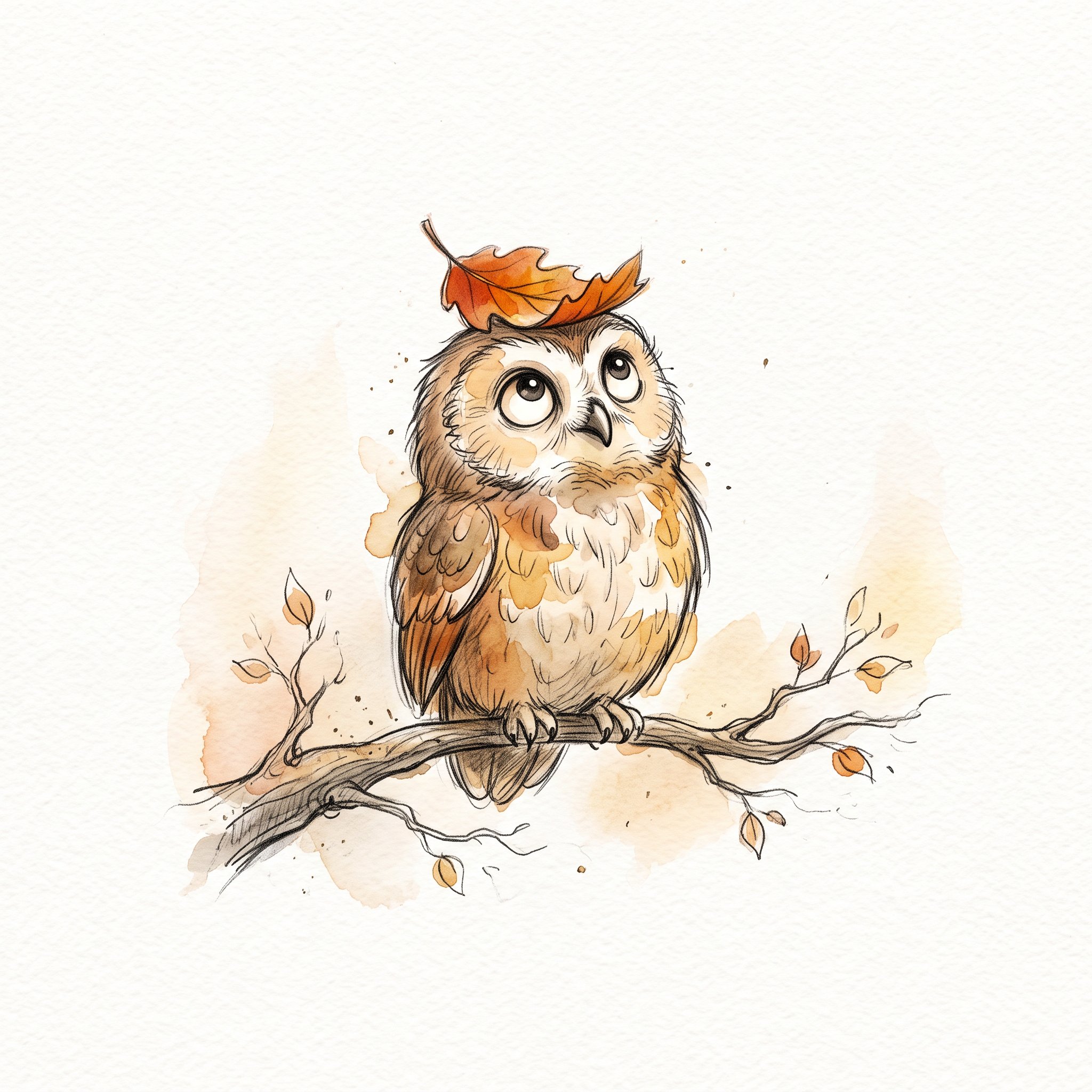
A charming hand-drawn owl perched on a delicate branch, gazing upward as a single autumn leaf rests atop its head. Rendered in expressive dark pencil lines with a few translucent watercolor washes, subtle paper texture, warm fall tones, gentle natural light, and a whimsical, storybook mood; centered composition with clean, softly textured background.
0
Details
GPT Image 2.5
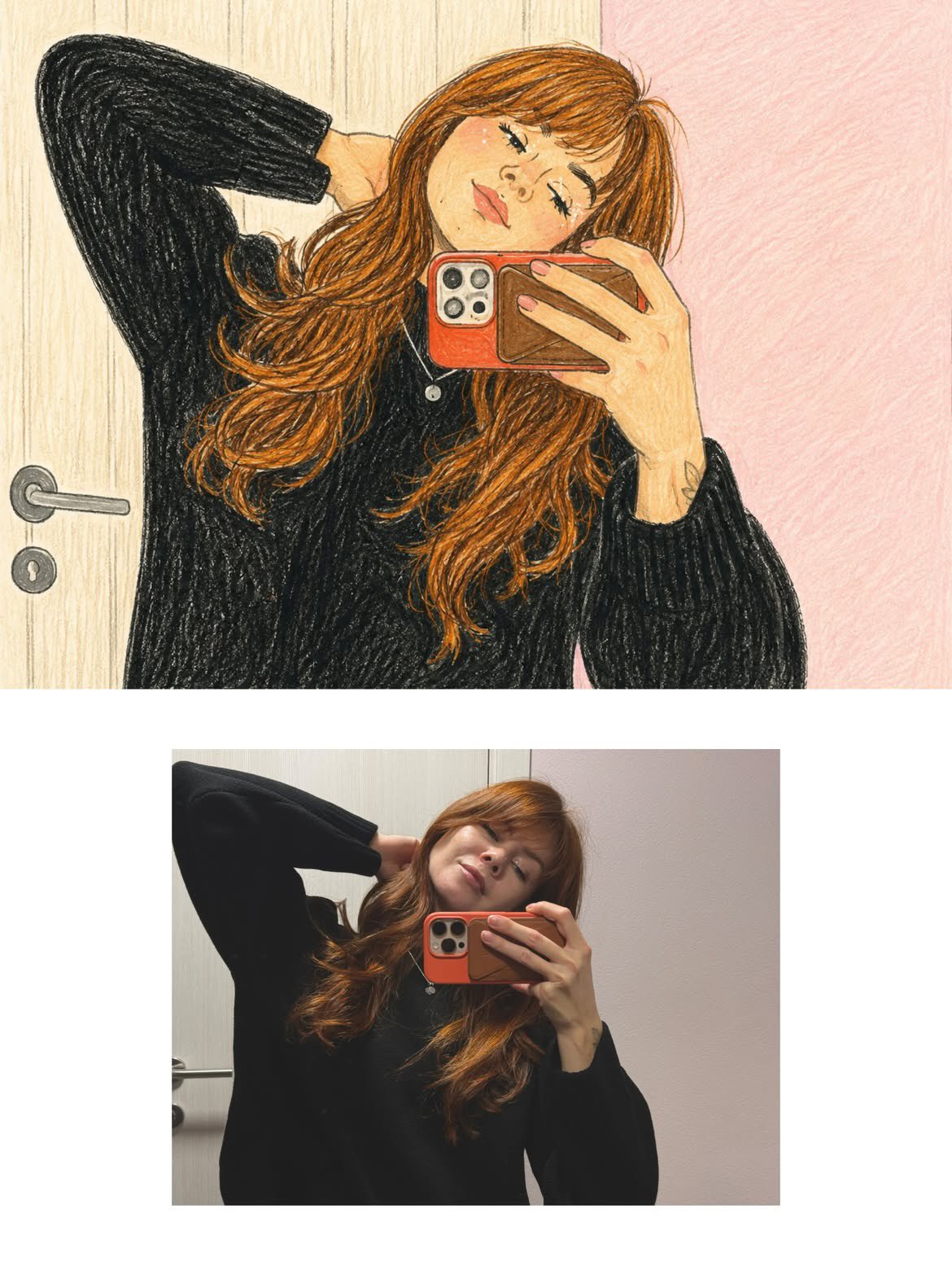
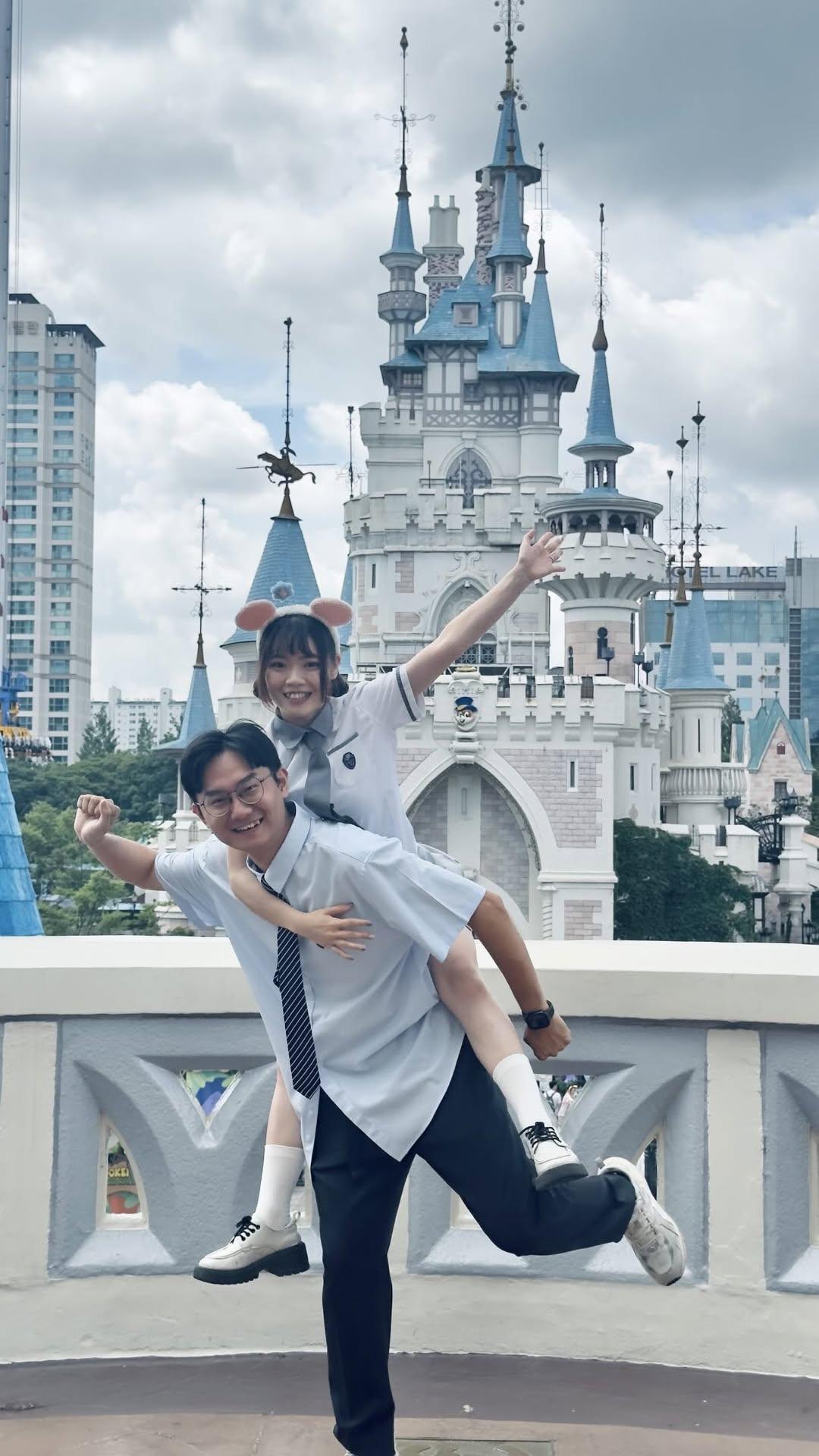
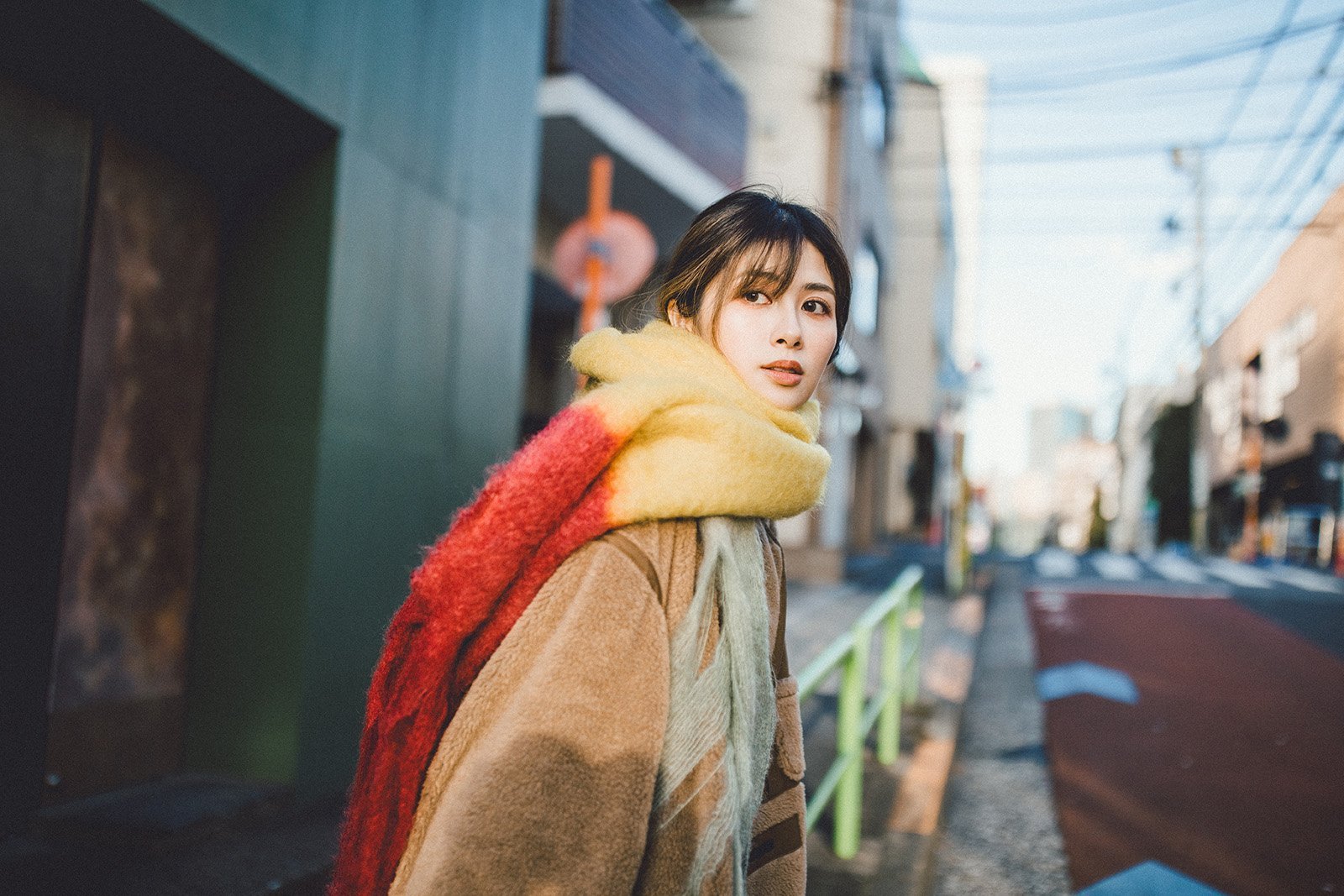
Transform the uploaded photograph into a beautiful, hand-drawn colored-pencil illustration while preserving the original photograph's exact content, composition, and emotional atmosphere. 1. REFERENCE IMAGE ACCURACY Carefully analyze the uploaded photograph, including the subject's identity, facial features, hairstyle, expression, pose, clothing, accessories, body proportions, surrounding objects, background, camera angle, perspective, lighting, and small distinctive details. Recreate the same scene as an illustrated drawing. Preserve the recognizable appearance of the original subject and the exact arrangement of the scene. Do not change the pose, invent new objects, remove important details, or alter the original environment. 2. ART STYLE Use a traditional colored-pencil and wax-crayon illustration style, resembling a beautiful drawing made by hand on textured cream-colored sketchbook paper. Include: - Visible colored-pencil strokes and delicate crosshatching. - Soft, imperfect hand-drawn outlines. - Layered pencil shading with natural variations in pressure. - Fine paper grain and subtle crayon texture. - Warm, muted colors with gentle pastel undertones. - Slightly sketchy contours and charming handmade imperfections. - Natural color blending without smooth digital gradients. - Detailed hair rendered with individual flowing pencil strokes. - Expressive facial details with simplified yet recognizable features. - Soft shadows created through layered pencil strokes rather than photographic shading. 3. COLOR PALETTE Use a warm, nostalgic palette featuring creamy beige, dusty pink, muted brown, warm caramel, charcoal black, soft gray, and subtle earthy colors. Match the original photograph's actual colors while translating them into a traditional illustration medium. 4. BACKGROUND AND ENVIRONMENT Recreate the original background faithfully, including furniture, doors, walls, streets, sidewalks, railings, plants, pets, buildings, and other visible elements. Render background details with loose but intentional pencil strokes. Maintain the original depth, perspective, and spatial relationships while giving the entire scene a cohesive, hand-illustrated appearance. 5. LIGHTING AND MOOD Preserve the original lighting direction and overall atmosphere. Create a cozy, intimate, nostalgic feeling, as if the moment were captured in a personal illustrated diary or a page from an artist's sketchbook. 6. FINAL FINISH The entire image must look genuinely hand-drawn using colored pencils on textured paper, NOT like a photograph with an artistic filter. Maintain the original aspect ratio and composition. Use fine illustrative details, organic linework, visible pencil grain, gentle imperfections, and consistent hand-drawn textures throughout the image. IMPORTANT: The uploaded photograph is the sole reference for the scene. Preserve its identity, pose, objects, and composition. Transform only the visual medium into a traditional colored-pencil illustration. NEGATIVE PROMPT: Photorealism, 3D rendering, glossy digital painting, vector art, anime, exaggerated cartoon features, plastic skin, airbrushed shading, smooth digital gradients, artificial outlines, excessive blur, distorted anatomy, altered facial identity, incorrect hands, missing objects, invented background elements, oversaturated colors, and photographic textures.
0
Details
GPT Image 2.5
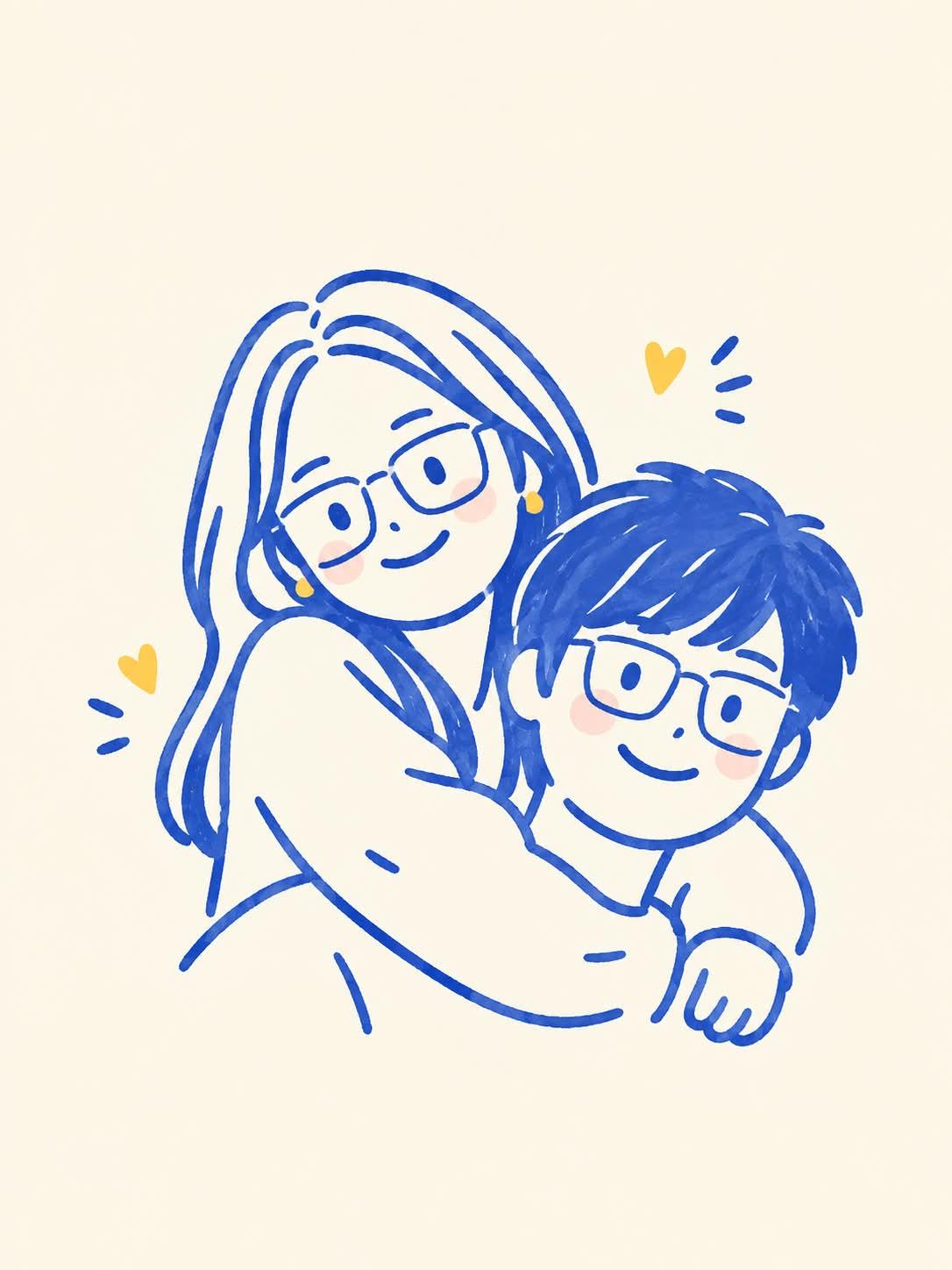
Transform the uploaded photo into a cute minimalist hand-drawn doodle illustration. Preserve the original people, pose, composition, and recognizable facial characteristics, but simplify them into charming cartoon forms. Use a naive handmade sketchbook aesthetic with bold, slightly wobbly cobalt-blue brush-pen outlines, simple rounded shapes, minimal details, and imperfect hand-drawn strokes. Add subtle warm peach/pink blush on the cheeks and small golden-yellow heart accents around the characters. Keep the illustration clean and airy with a warm cream/off-white paper background. Use flat, very limited colors, no realistic shading, no gradients, and no complex textures. The overall feeling should be sweet, wholesome, playful, cozy, and romantic, like a handmade children's doodle or personal notebook drawing. Style keywords: minimalist doodle, folk-inspired hand drawing, blue ink illustration, cute couple illustration, naive art, imperfect brush strokes, simple cartoon, handmade sketchbook aesthetic, warm cream paper, subtle blush, tiny heart doodles, charming imperfections, clean composition.
0
Details
GPT Image 2.5
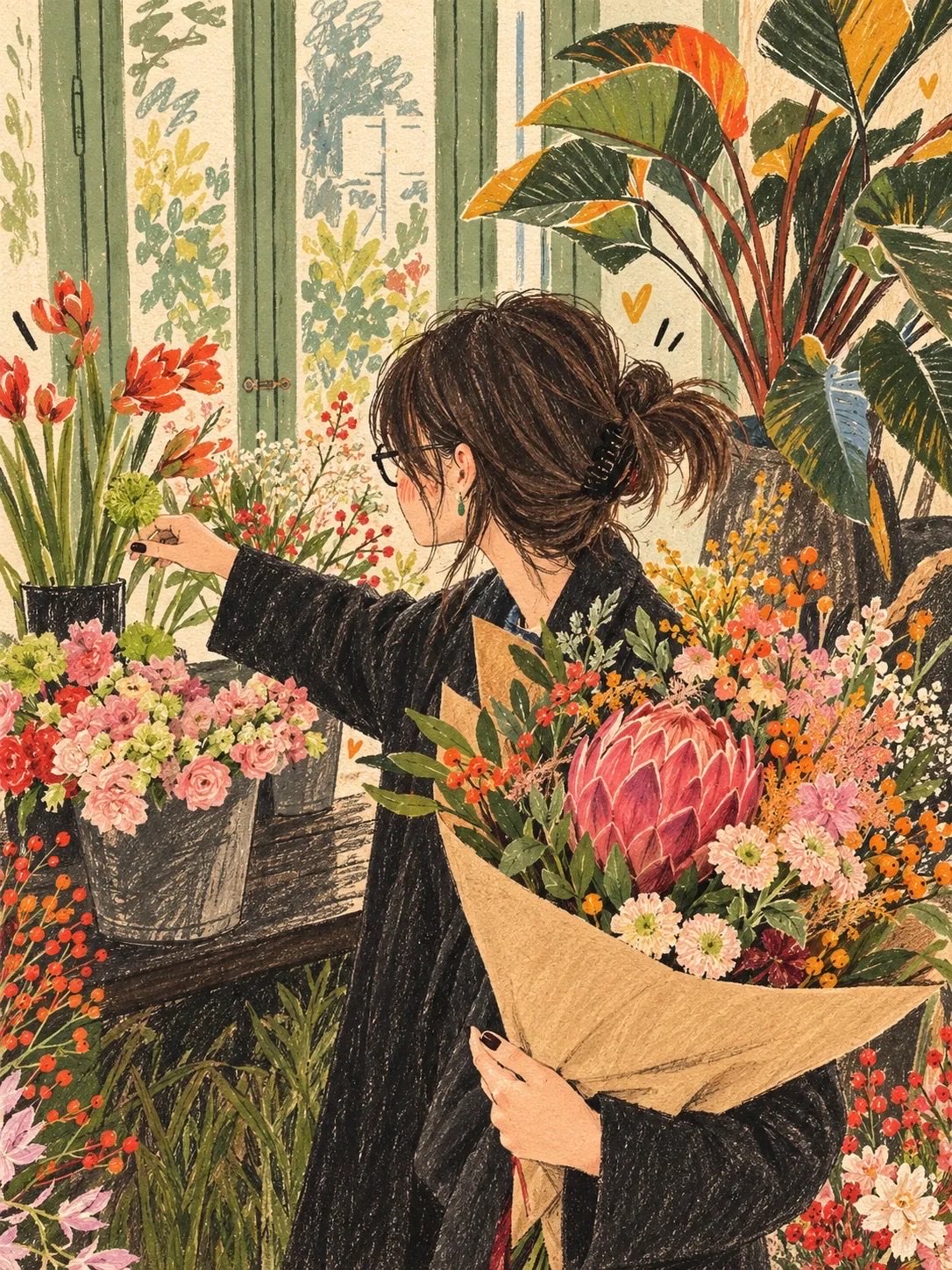
Create a beautiful, nostalgic hand-drawn editorial illustration combining two cozy everyday scenes in a consistent vintage sketchbook style. In the first scene, a young woman with dark brown hair in a messy bun and black glasses, wearing a black outfit, arranges colorful pink roses, coral flowers, tiny white blossoms, and lush greenery inside a charming flower shop, holding a large bouquet wrapped in brown kraft paper. Surround her with potted plants, tropical leaves, blooming flowers, and tall vintage windows. In the second scene, a young couple sits closely together on stone steps along a charming European city street. The man wears a navy baseball cap, headphones, a gray hoodie, a long black coat, blue jeans, and sneakers, while the woman wears a black coat, a soft blue scarf, cream trousers, black sneakers, and carries a brown leather shoulder bag. They share a quiet, affectionate moment surrounded by elegant old buildings, a cozy café, glowing street lamps, bicycles, leafy trees, and pedestrians. Use a harmonious palette of warm cream, olive green, mustard yellow, dusty blue, navy, coral, and soft pink. Add textured colored-pencil strokes, delicate ink outlines, subtle watercolor shading, vintage paper grain, charming hand-drawn accents, and warm natural lighting. Whimsical slice-of-life storytelling, cozy nostalgic atmosphere, artistic imperfections, highly detailed illustration, premium handmade sketchbook aesthetic, consistent art style across both scenes, vertical composition, no photorealism.
0
Details
GPT Image 2.5
Transform the uploaded photo into a minimalist, hand-drawn, paper-textured artistic cover. Composition - The main subject should occupy only 10–20% of the frame. - Position the subject near the bottom center of the composition. - Leave generous negative space throughout the image. - Suggest the environment using only a few lines or small blocks of color. Preserve - The most recognizable features of the original subject. - The essential silhouette and proportions. - The original pose or primary action. - Important objects and defining details. - The core story, relationships, and emotional atmosphere. Color Palette - Extract the dominant colors from the original photograph. - Limit the palette to no more than four main colors. - Use bold yet restrained, flat color blocks. - Maintain a harmonious, muted color combination. - Add subtle paper grain and handmade brush textures. Simplification Remove unnecessary details and visual clutter. Retain only the essential visual information needed to make the subject instantly recognizable. Typography - Optionally incorporate a small amount of simple text. - Keep typography short, subtle, and aesthetically refined. - Integrate the text naturally into the composition. - Aim for the visual language of an art-book cover, independent publishing, modern editorial design, or a contemplative picture book. - Do not force typography into the image if it doesn't improve the composition. Style and Materials - Delicate, slightly imperfect hand-drawn lines. - A few clearly defined acrylic-like flat color blocks. - Rough, tactile paper texture. - Visible handmade brushstrokes. - Organic, irregular, natural contours. - Subtle imperfections that make the artwork feel genuinely handmade. Overall Mood Quiet, poetic, sophisticated, minimalist, innocent, relaxed, artistic, thoughtful, distinctive, and premium. Avoid - Colored-pencil rendering. - Dry-brush effects. - Watercolor washes or bleeding. - Pure line-art illustration. - Overly detailed or realistic illustrations. - Heavy impasto or thick oil-paint textures. - Smooth, polished digital illustration. - 3D rendering, glossy surfaces, or artificial lighting effects. - Generic commercial cartoon styles. - E-commerce advertising aesthetics. - Generic poster templates. - Excessive decorative elements. - Overly complex compositions. - Too much text. Final Result: A refined, minimalist, hand-crafted paper illustration with generous negative space, restrained colors, subtle tactile textures, and the sophistication of an independent art-book cover.
0
Details
GPT Image 2.5
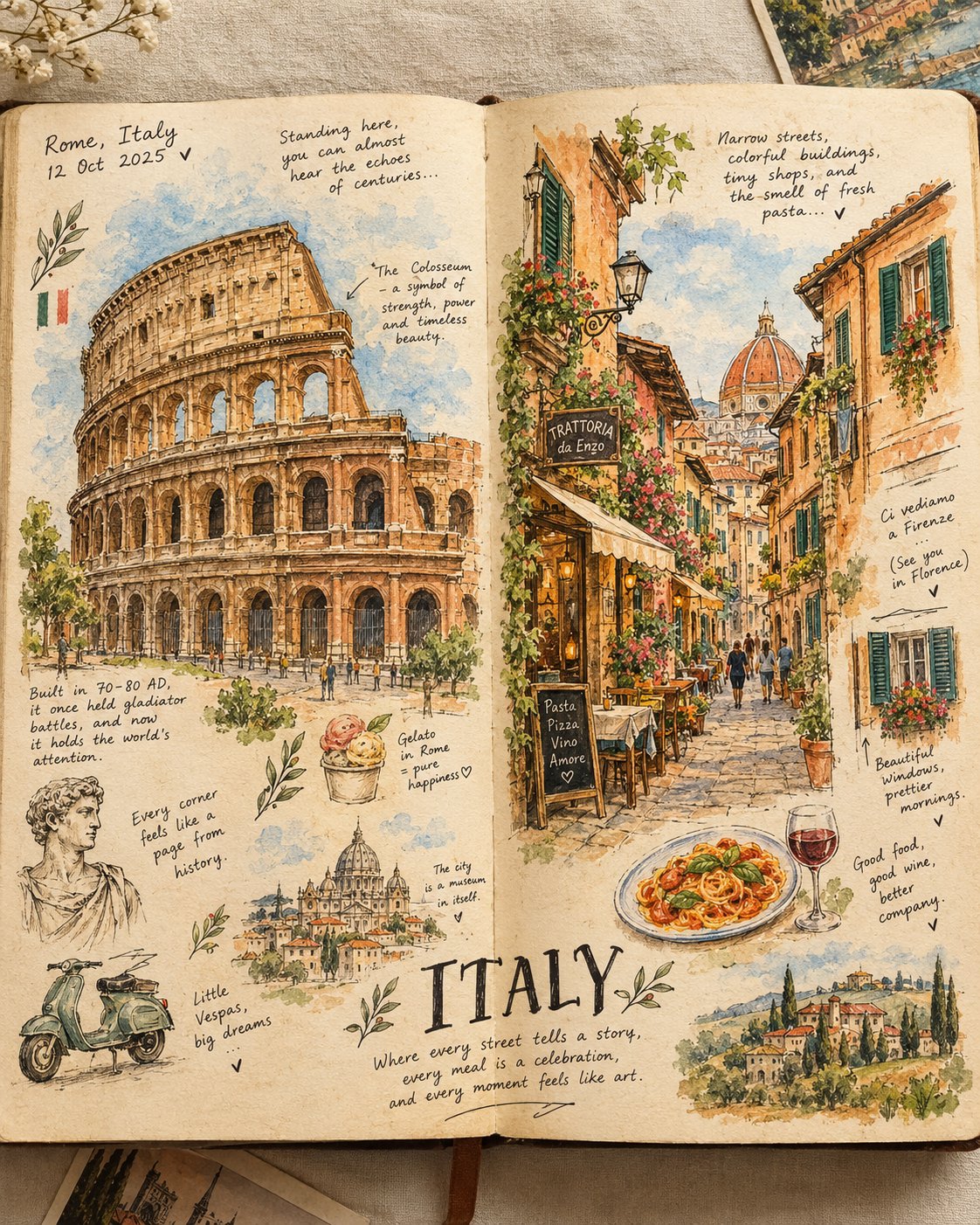
Create a beautiful, hand-drawn vintage travel journal spread featuring [CITY / COUNTRY / LANDMARK], inspired by the charm of an artist’s personal travel sketchbook. Composition: An open cream-colored sketchbook with two pages filled with expressive architectural illustrations of [CITY / COUNTRY / LANDMARK]. On one page, feature its most iconic landmark, carefully illustrated with accurate architectural details. On the other page, depict colorful traditional buildings, narrow streets, charming windows, rooftops, local shops, or recognizable elements of everyday life. Let the illustrations flow naturally across the pages, as though an artist sketched them during a real journey. Art Style: Loose black ink outlines combined with expressive watercolor washes, visible colored-pencil strokes, imperfect hand-drawn lines, and beautiful splashes of earthy pigment. Use warm terracotta, muted ochre, faded teal, dusty blue, olive green, and sun-washed cream. Preserve the authentic architecture, recognizable proportions, and distinctive character of the real location. Travel Diary Details: Fill the empty spaces with small handwritten travel notes, a fictional date, little arrows pointing toward architectural details, tiny people walking through the streets, and spontaneous observations about local culture, food, history, and atmosphere. Include a beautifully hand-lettered title reading “[CITY / COUNTRY / LANDMARK]” across the bottom of the illustration, accompanied by a short, poetic historical tagline. Atmosphere: Nostalgic, intimate, artistic, and authentic, like a treasured page from a traveler’s journal discovered in an old European bookstore. The artwork should feel handmade rather than digitally perfect, with natural imperfections, delicate ink textures, uneven watercolor edges, and a spontaneous composition. Background: A warm, off-white sketchbook page with subtle paper grain, photographed from directly above on a neutral surface. Important: Keep the landmark architecturally accurate and instantly recognizable. Avoid glossy digital rendering, 3D effects, excessive ornamentation, and artificial-looking textures. Make the handwriting appear natural and integrated into the artwork. Format: Vertical 4:5 composition, high detail, elegant editorial illustration, authentic watercolor-and-ink travel sketchbook aesthetic.
0
Details
GPT Image 2.5
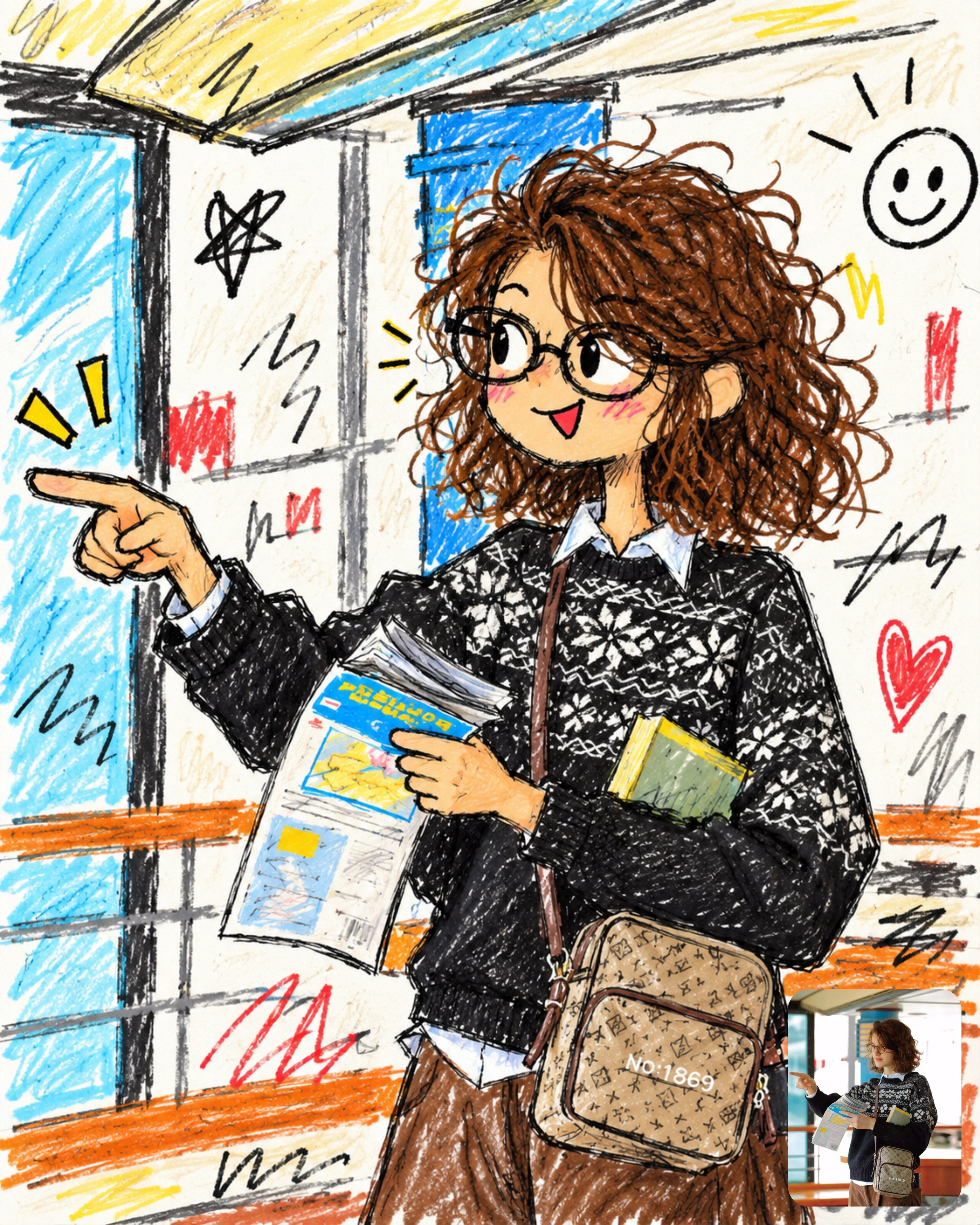
Transform this photo into a badly drawn, funny doodle-style illustration. Features: - A messy sketch that looks hastily drawn with cheap markers or crayons. - Chaotic, rough, childish drawing style. - Broken perspective and unnatural proportions. - Slightly exaggerated, comical facial features. Additional elements: - A simple comic-style background inspired by the attached photo. - Meaningless scribble lines and small, messy details. - Clearly visible uneven coloring, color spilling outside the lines, and drawing strokes. Style: - Sloppiness that suggests it was drawn without much effort. - Do not make it too polished. - Silly, laughable meme style. - A casual internet vibe. Do not: - Make it realistic. - Render it too beautifully or intricately. - Give it a professionally polished finish. IMPORTANT: Do NOT generate the image yet. This prompt needs my photo. First reply only by asking me to upload this image.
0
Details
Nano Banana 2.1
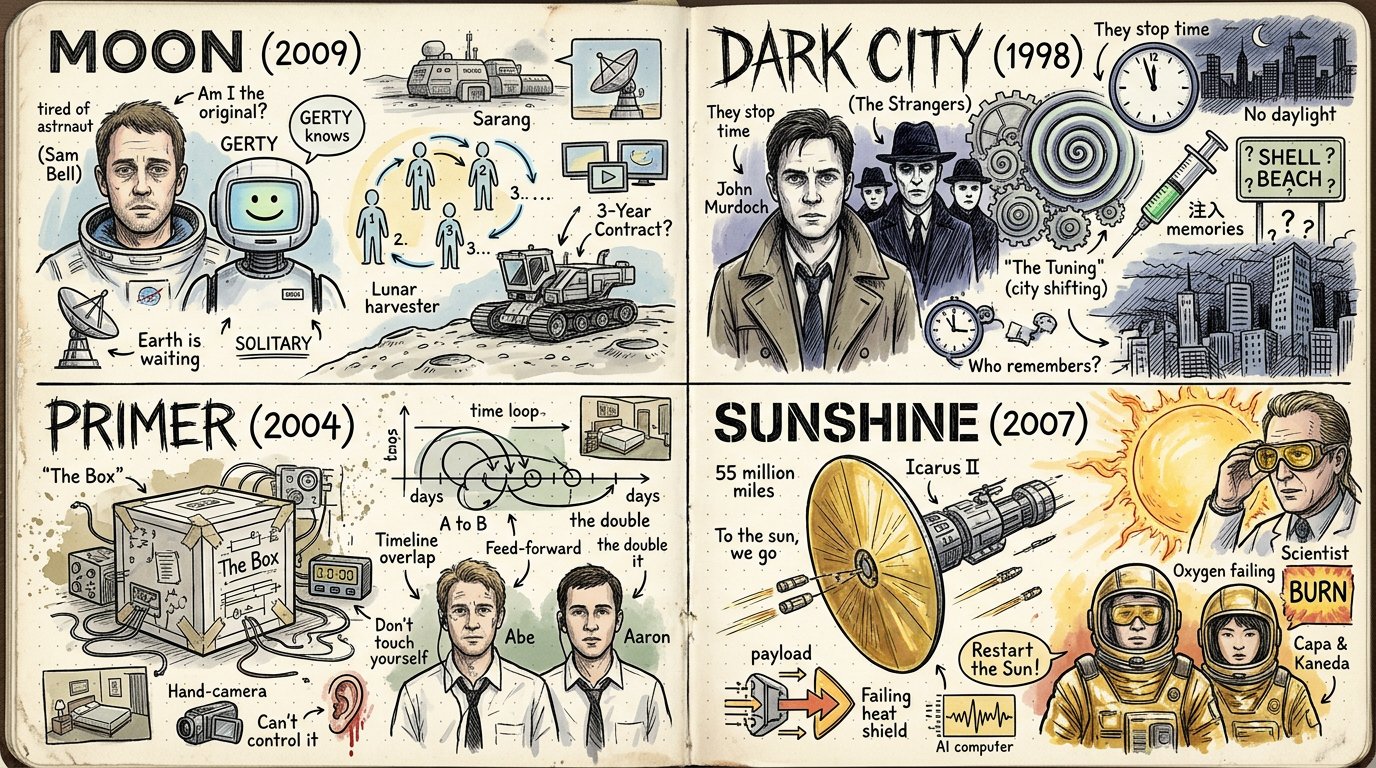
2x2 grid, 16:9, do this for 4 under rated sci-fi movies: Style = { MEDIUM: Hand-drawn sketchbook spread, visual biography map, notebook doodle infographic, scrapbook-style idea journal. SURFACE: Open cream notebook pages, dotted-grid paper, worn page edges, slight paper grain, soft archival texture. LINEWORK: Black ink pen drawing, loose crosshatching, hand-lettered labels, imperfect doodle outlines, energetic sketch marks. COLOR: Mostly monochrome ink with sparse watercolor or marker accents in muted peach, pale blue, soft yellow, faded red, dusty green, and warm beige. COMPOSITION: Dense two-page spread filled with portraits, icons, inventions, arrows, symbols, timelines, labels, speech bubbles, diagrams, and memory fragments. TYPOGRAPHY: Casual handwritten titles, labels, notes, arrows, underlines, callouts, small captions, and playful emphasis marks. MOOD: Curious, biographical, inventive, educational, intimate, nostalgic, messy-but-organized, and highly inspectable. - Convert the subject into a hand-drawn notebook spread that explains its life, history, system, mythology, process, or cultural impact. - Preserve the subject’s core identity, but break it into many small doodled moments, icons, milestones, influences, tools, places, quotes, diagrams, and symbolic objects. - Replace polished realism with black ink sketch lines, hatching, dotted texture, handwritten notes, and small imperfect doodles. - Convert major events, features, powers, products, traits, discoveries, or transformations into illustrated callouts connected by arrows and winding paths. - Reinterpret relationships and timelines as visual flow: arrows, loops, roads, spirals, gears, maps, banners, labels, and notebook annotations. - Convert important people, creatures, objects, locations, ideas, or components into small portrait doodles, simplified icons, diagrams, badges, and comic-like vignettes. - Use sparse color only to highlight key areas, not to fully render the whole image. - Place everything across an open notebook or journal spread so the page itself becomes the environment. - Let the result feel like someone obsessively studied the subject and filled a sketchbook with everything important about it. - Use a two-page open notebook layout when possible. - Place the largest focal image, portrait, object, logo, or main symbol on one side. - Fill the surrounding space with smaller doodles, arrows, captions, miniature diagrams, and symbolic references. - Use the opposite page for a roadmap, process flow, timeline, ecosystem, invention chain, or idea network. - Keep the composition dense but navigable: clusters should feel intentionally grouped. - Leave small pockets of breathing room so the page does not become visual noise. - Use hand-drawn icons for abstract ideas. - Use arrows and motion paths to show progress, influence, causality, or transformation. - Use spirals, gears, lightbulbs, clouds, stars, hearts, boxes, banners, speech bubbles, and small symbols where they support the subject. - Turn complex objects into simplified sketchbook diagrams. - Let small imperfections, uneven line weight, and casual mark-making remain visible. - Every doodle should feel related to the subject, not random decoration. - Use handwritten labels, not clean digital type. - Mix small captions, large casual headings, arrows, short notes, and underlined phrases. - Keep text short and punchy. - Use labels to explain icons, milestones, relationships, or key concepts. - Allow playful missive-like notes, but avoid long paragraphs. - If exact text is not provided, infer concise subject-relevant labels and diagram notes. - Keep black ink dominant. - Use faded pastel accents sparingly for emphasis. - Favor muted watercolor fills, marker washes, and lightly tinted areas. - Avoid full-color rendering, neon palettes, glossy gradients, or saturated cartoon color. - Let cream paper and black linework define the main visual identity. - Render as a physical sketchbook page photographed or scanned. - Use visible paper texture, notebook fold, subtle page wear, and dotted-grid background. - Use crosshatching and line density for shading instead of digital gradients. - Keep drawings loose but legible. - Make the image rewarding to inspect closely, with many tiny connected ideas. - Balance educational clarity with personal sketchbook charm. - Open sketchbook biography-map aesthetic. - Dense black-ink doodles, handwritten notes, arrows, icons, portraits, diagrams, and sparse muted color accents. - Feels like a personal research journal, creative mind map, invention history, or illustrated life story. - Informative, nostalgic, playful, handmade, and highly inspectable. - Avoid photorealism. - Avoid clean corporate infographic styling. - Avoid glossy 3D, toy, clay, plush, anime, or low-poly rendering. - Avoid overly polished vector art. - Avoid empty minimal pages. - Avoid random unrelated doodles. - Avoid dense unreadable text blocks. - Avoid bright saturated full-color poster treatment. - Avoid perfect symmetry; preserve lively notebook spontaneity. }
0
Details
GPT Image 2.5
Create one vertically stacked before-and-after comparison using the supplied image as the only source. LAYOUT:Exactly two equal-height panels: original image on top, transformed image on bottom. Both panels have the source image's aspect ratio and identical width. The complete canvas is twice the source image's height. Join the panels directly at a clean horizontal seam. No thick divider, extra panel, decorative frame, labels, or added text. TOP PANEL — ORIGINAL:Place the supplied image unchanged in the upper half. Preserve its full composition, original colors, lighting, details, existing text, and crop. Do not redraw, retouch, stylize, or apply texture to this panel. BOTTOM PANEL — OUTSIDER ART:Redraw the same scene as a flat, densely textured naïve folk-art print. Preserve the main subject, recognizable silhouettes, relative positions, important objects, and overall composition. Do not invent additional subjects or props. Flatten the ground into map-like color zones, with people, trees, buildings, and objects shown in simple frontal or side elevation. Remove converging perspective, photographic depth, directional lighting, and cast shadows.Use warm paper white, warm ink black, and two to four subdued colors derived from the source. Choose one existing object or connected detail as the only saturated accent. Give each large zone one consistent handmade texture: stitch marks, irregular window grids, or dense foliage marks. Keep the texture dense, rhythmic, and slightly imperfect. Where people appear, use small, solid, faceless figures with filled clothing and limbs of visible width. Render every surface as opaque printed ink on matte paper, with no photographic remnants.Keep all illustration, paper texture, and color changes strictly inside the lower panel. No gradients, glossy vector finish, watercolor, stick figures, cute cartoon proportions, invented lettering, or watermark.
0
Details
GPT Image 2.5
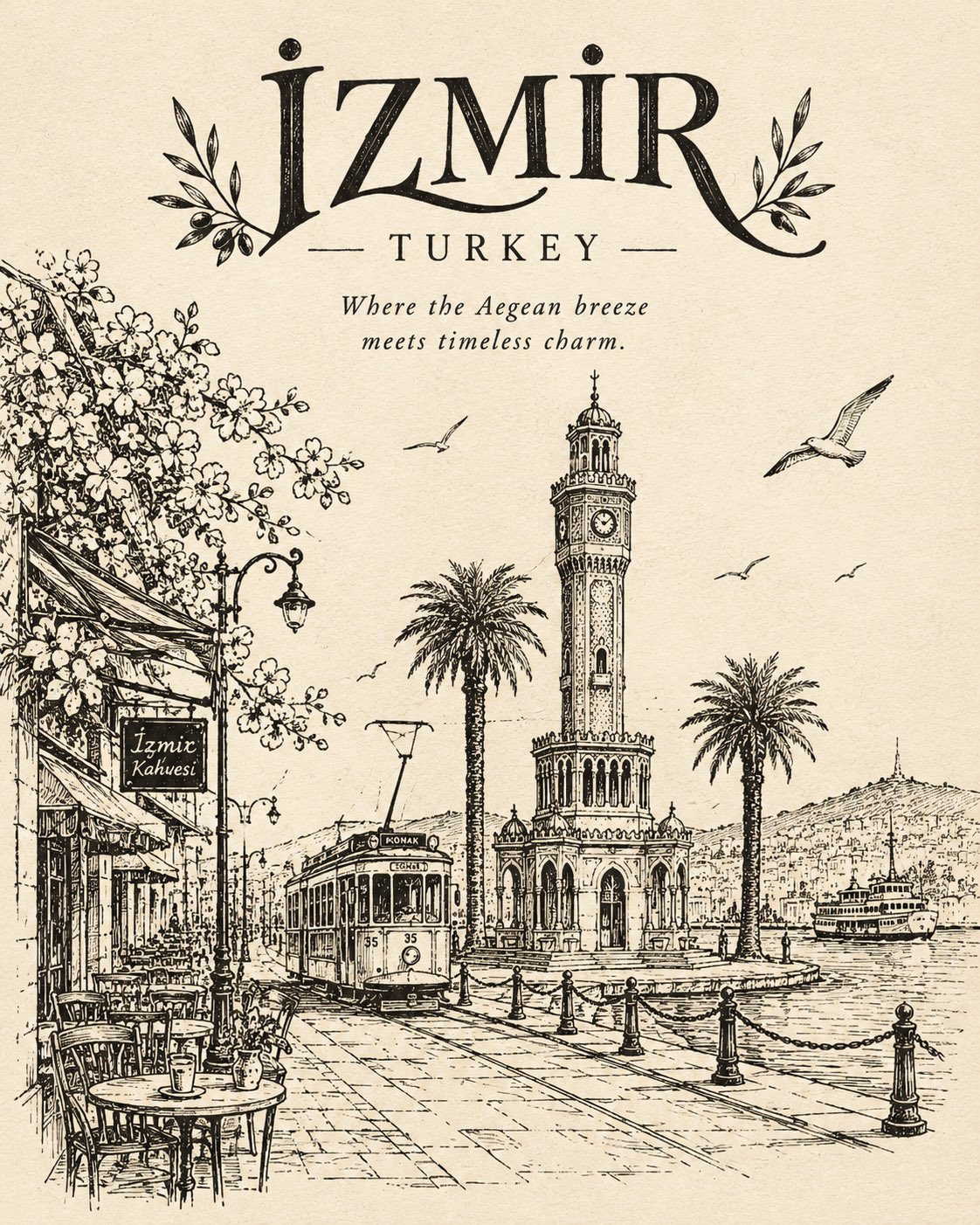
Create a beautiful, vintage-inspired hand-drawn architectural illustration of [LANDMARK], [CITY], [COUNTRY], inspired by the charm of old travel sketchbooks and traditional pen-and-ink drawings. Composition: Feature the most iconic landmark of [CITY] as the main subject, surrounded by authentic local architecture, historic buildings, charming streets, traditional transportation, vintage street signs, overhead wires, and small cultural details that make the place instantly recognizable. Include a tram, bicycle, old car, or other local transportation where appropriate. Art Style: Use delicate black ink linework, expressive hand-drawn strokes, intricate architectural details, fine cross-hatching, imperfect outlines, and an unfinished sketchbook aesthetic. Keep the illustration predominantly monochrome on a clean, warm ivory-white background. Preserve the landmark’s authentic architecture, proportions, and recognizable features. Typography & Title Design: Make the name of the place the visual highlight of the composition. Add [CITY, COUNTRY] in a beautiful, eye-catching vintage editorial font, such as elegant retro serif lettering, artistic hand-lettered calligraphy, or bold old-world typography. Give the lettering a distinctive personality, with graceful curves, carefully spaced characters, and a timeless travel-poster aesthetic. Position the title harmoniously at the top or bottom of the illustration, ensuring it is clearly readable and beautifully integrated into the artwork. Make the city name prominent and the country name slightly smaller beneath it. Add subtle decorative flourishes, delicate ink ornaments, or thin vintage borders around the typography. The lettering should feel like a carefully designed title on a collectible travel poster, not ordinary computer text. Historical Tagline: Beneath the place name, include a short, poetic line that reflects the destination’s history and character, such as: “Every street remembers. Every stone tells a story.” Generate a suitable, location-specific tagline for each destination. Overall Atmosphere: Nostalgic, artistic, authentic, culturally rich, elegant, and timeless. The result should resemble an original illustration from a vintage travel journal, beautifully transformed into a collectible art print. Color Palette: Primarily black ink on warm ivory paper, with subtle natural paper texture. Keep the composition minimal, airy, and sophisticated. Avoid: Photorealism, 3D rendering, glossy digital effects, excessive colors, generic architecture, cluttered composition, and plain or poorly rendered typography. Format: 4:5 portrait composition, high-resolution illustration, balanced negative space, professional editorial layout. Replace these details for every new artwork: Landmark: [LANDMARK] City: [CITY] Country: [COUNTRY] The final result should feel like a beautiful vintage illustration with a memorable title—an artwork people would want to save, frame, and collect.
0
Details
GPT Image 2.5
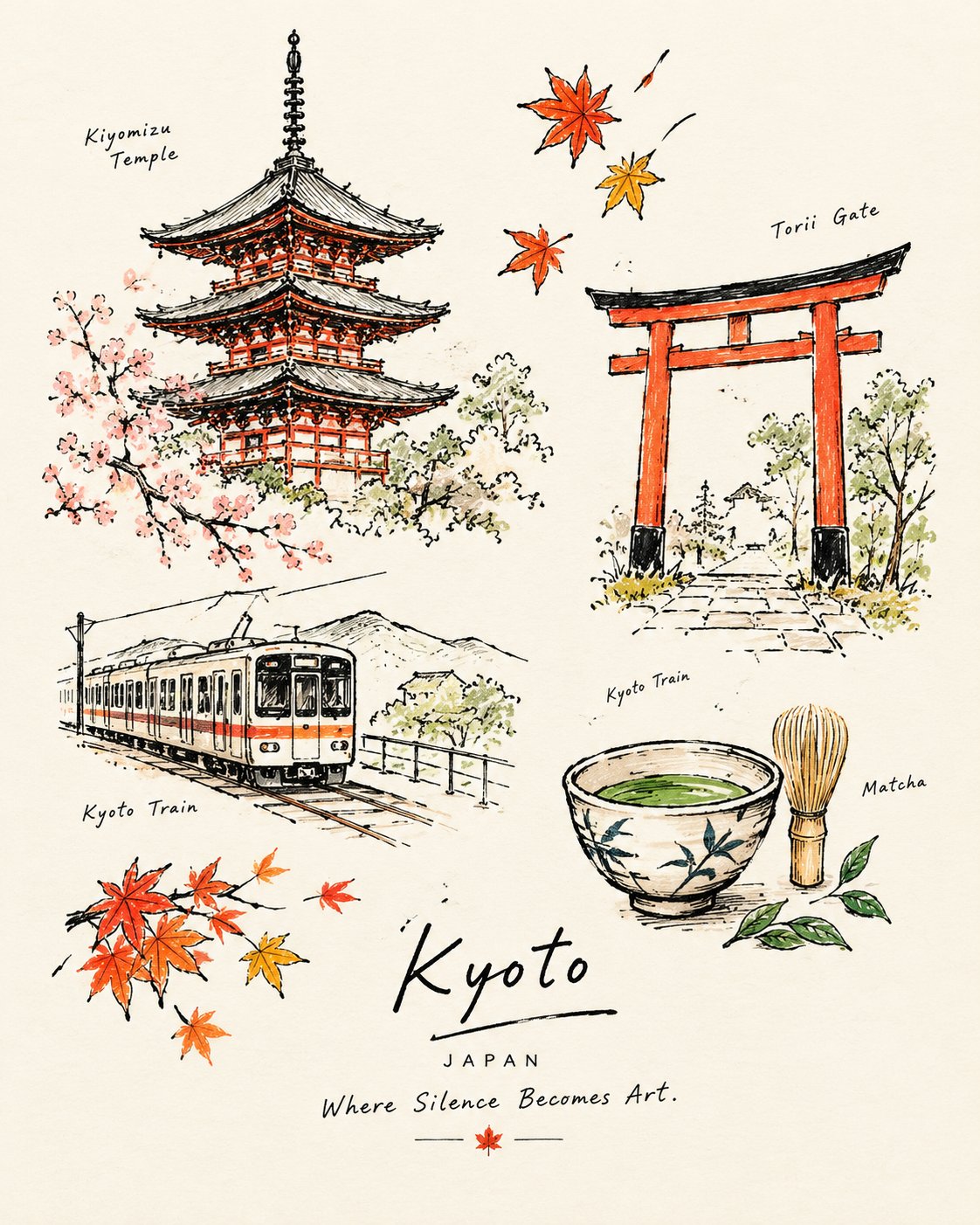
Create a beautiful, minimalist hand-drawn travel journal illustration inspired by the charm of vintage Japanese ink sketches and modern editorial travel art. Feature [CITY / COUNTRY / LANDMARK] through 4–5 small, thoughtfully arranged doodles, each representing a unique part of its identity. Use loose black ink outlines, imperfect sketchbook strokes, delicate hatching, and selective pops of beautiful colors against a warm ivory-white background. Include these elements: One iconic landmark as the main illustration. One traditional street, architectural detail, or local scene. One local transport or everyday-life element. One cultural object, traditional food, or drink. Tiny flowers, leaves, birds, or other delicate decorative details. Typography and layout: Write the name of the city or country in elegant, handwritten lettering near the bottom. Add a short, poetic tagline underneath that captures the soul of the place. Include tiny handwritten labels beside selected illustrations, identifying the objects or landmarks with just 1–3 words each. Use a restrained palette of black ink, warm rust orange, muted terracotta, soft sage green, and occasional golden-yellow accents. Leave generous negative space. Some elements should remain simple black-and-white sketches, while a few are filled with beautiful, rich yet tasteful colors. The final result should feel intimate, artistic, nostalgic, and effortlessly beautiful—a collectible travel postcard drawn by someone who fell in love with the place. Aspect ratio: 4:5, portrait composition. No photorealism, no 3D, no clutter, no heavy backgrounds, no excessive text.
0
Details
GPT Image 2.5
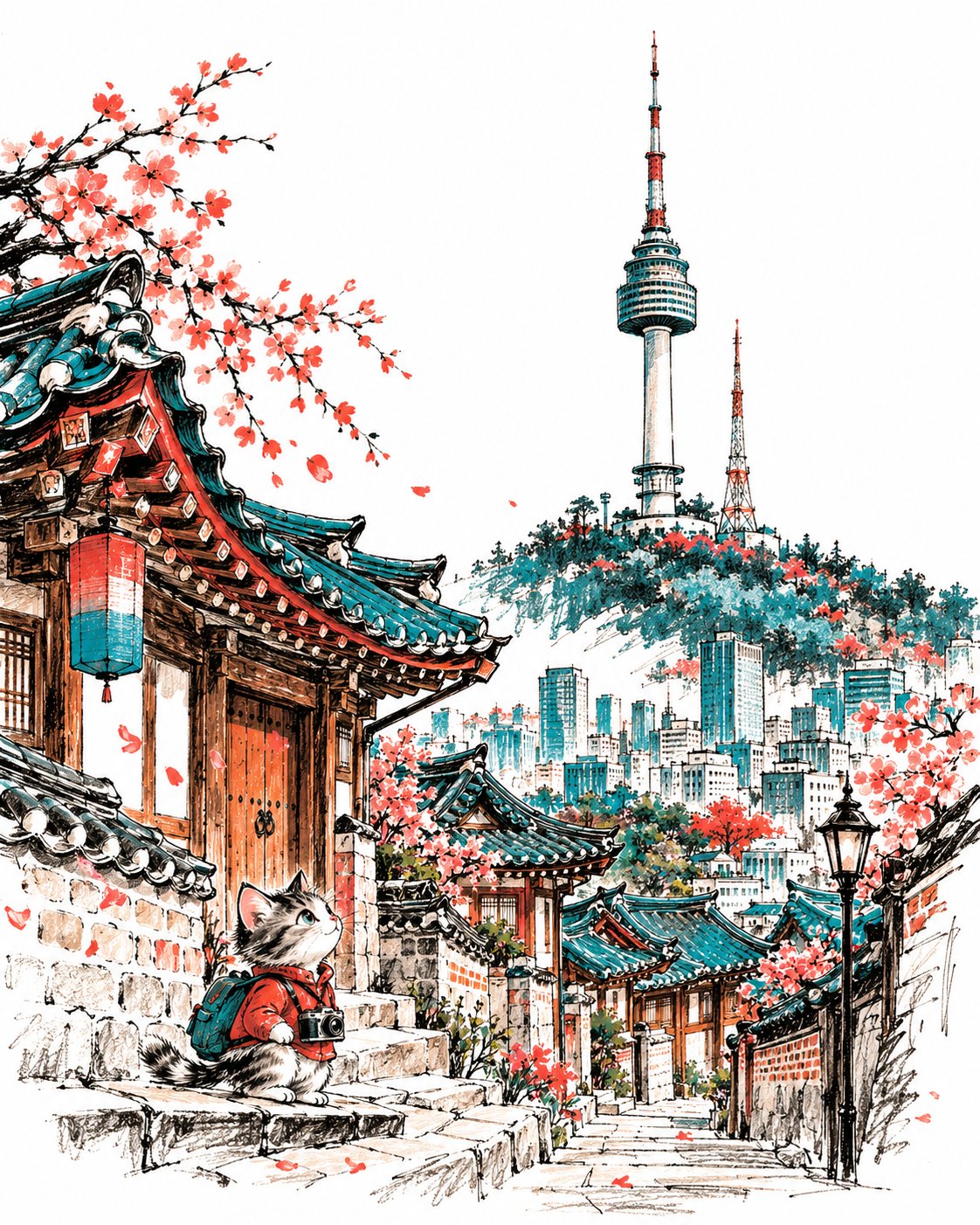
Create a whimsical 4:5 vertical travel illustration of [COUNTRY / CITY / LOCATION], inspired by mid-century European storybook art. Feature one iconic local landmark with slightly crooked architecture, playful proportions, and recognizable details. Add two or three authentic local elements, loosely connected into one charming scene. Use lively black ink, scratchy pencil lines, rough charcoal shading, grainy colored pencil, and small opaque gouache accents. Let lines wobble, overlap, and remain imperfect. Palette: Turquoise, vermilion red, charcoal black, and pure white. Keep the background completely white with generous irregular negative space. Include one small animal traveler near the bottom, wearing a simple outfit and making a playful, location-inspired gesture. Keep it secondary to the architecture. Create a spontaneous, asymmetrical composition with sparse local plants, expressive scale, and unmistakably handmade textures. Avoid: Multiple landmark collages, beige or aged-paper backgrounds, polished vector art, glossy 3D, gradients, excessive detail, lettering, borders, and watermarks. FORMAT: Full-frame 4:5 portrait, pure white background, tactile mid-century picture-book illustration.
0
Details
GPT Image 2.5
Using the character in the reference image as the prototype, preserve the facial features, expression, clothing, and body pose, remove the original background, and recreate it as a master-level black-and-white pen figure sketch. Employ refined traditional pen drawing techniques, using lively and fluid ink lines, fine cross-hatching, natural broken strokes, and bold negative space to build the figure's sense of volume and artistic tension. Render the face with fine detail, vary the density of the clothing lines, and retain traces of the initial sketch and casual unfinished brushwork in places, presenting the texture of a real artist's hand-drawn original work. Warm ivory vintage sketch paper, with clearly visible paper fibers and delicate ink marks, and rich layers of black, white, and gray. Minimalist art album layout, with large areas of negative space, accented in the corners with a handwritten signature and creation date. Overall elegant, free, and rich in artistic collectible value, rejecting digital tracing and any AI-filter feel, 9:16 vertical high-definition composition.
0
Details