Space Prompts
Space is a game of scale: the prompt builds vastness out of references, not adjectives.
About Space prompts
Generated space scenes fail when they look like a postcard of the cosmos — everything lit evenly, nebulae everywhere, planets the size of beach balls. Real space imagery is defined by emptiness and proportion: almost nothing in frame, and the one thing that is there is incomprehensibly large or far.
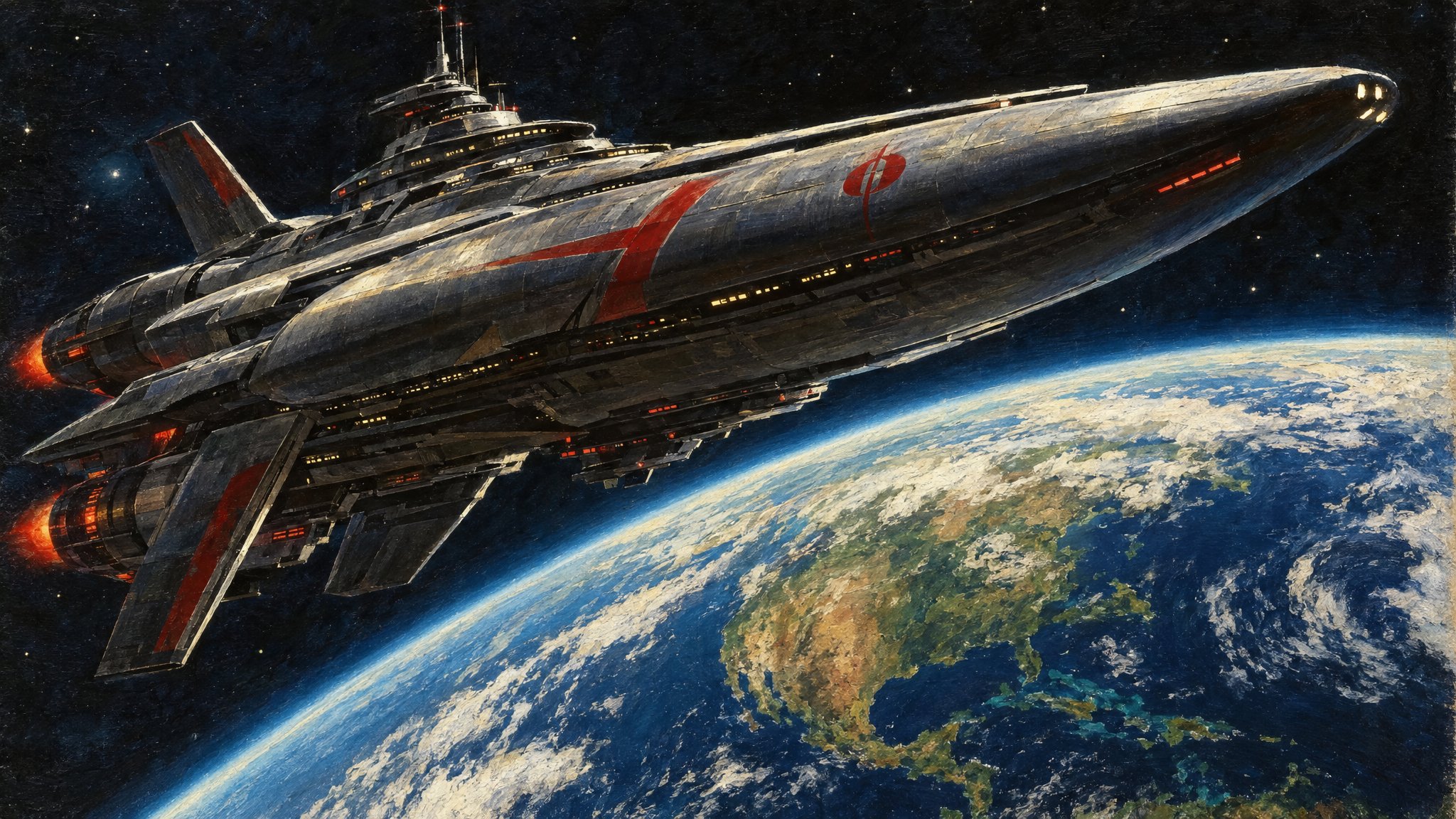
So the prompt's job is to construct scale, and scale only exists relative to something known. Put an astronaut against a station's hull, a station against a planet's limb, a planet against its star. One light source — the sun, an engine burn, a warning beacon — because vacuum has no atmosphere to scatter a second one. "Cinematic space lighting" is how you get a studio with stars painted on it.
For video the same logic extends to motion: nothing drifts fast in space, and nothing banks like an airplane. The prompts below are tested with their real outputs — notice how the strongest ones spend their words on what the camera is small next to, not on what the scene contains.
How to write Space prompts
- 1Build scale with a known reference: "an astronaut's glove against a hull that fills the frame", "a shuttle crossing the planet's terminator". Without a familiar object, vastness has no ruler.
- 2Commit to one light source and name it: "lit only by the sun, low off frame left", "the blue flicker of an engine burn". Two light sources in vacuum reads as a film set.
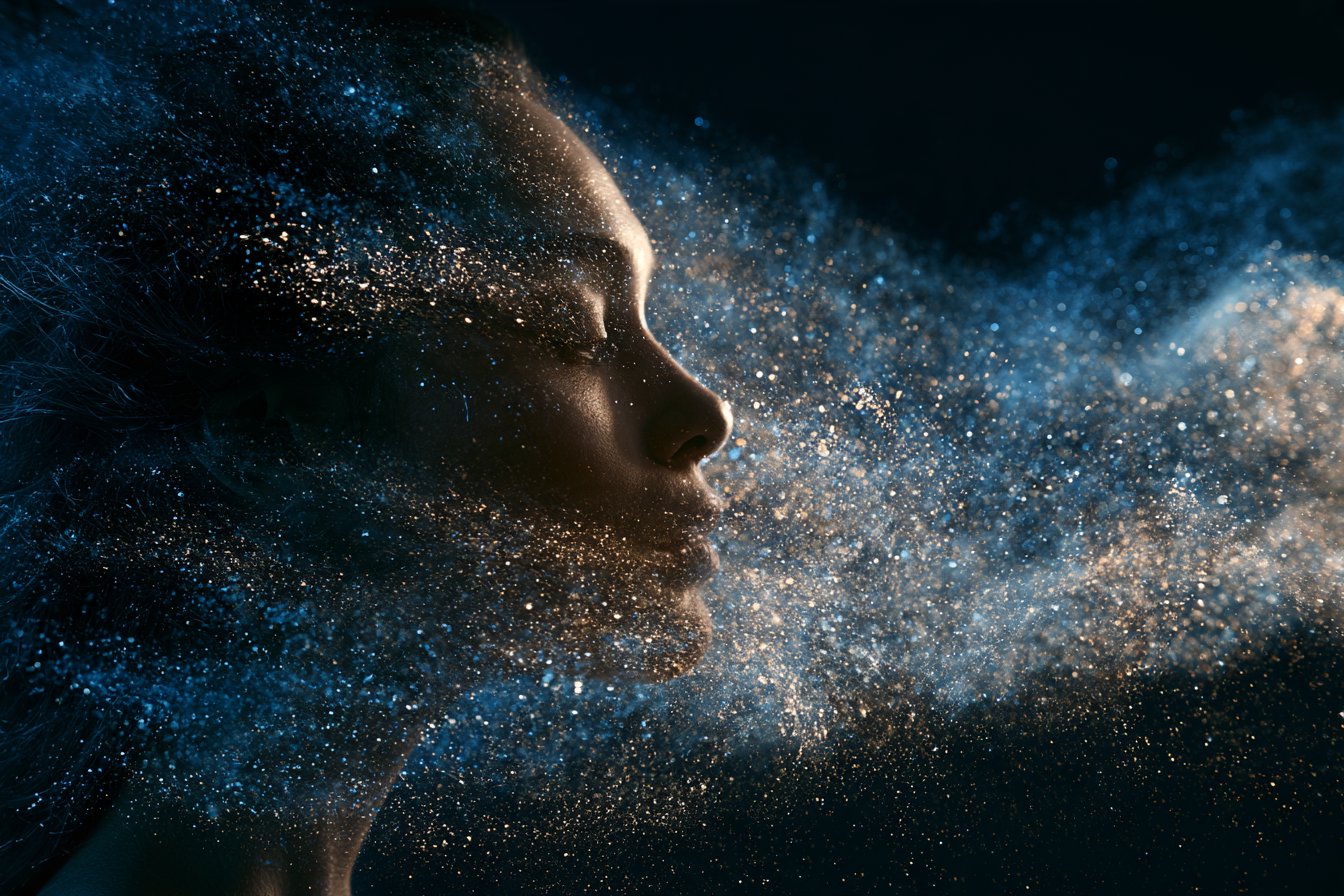
- 3Prompt the physics: "no atmospheric haze, shadows fully black", "dust motes hanging motionless in zero gravity". Vacuum imagery convinces when it refuses Earth-like air.
- 4Frame the emptiness on purpose: "the subject small in the lower third, the rest void". Negative space is the subject's size.
- 5For video, slow everything: "the station rotates once across the shot", "the planet's limb slides past over minutes". Speed is the enemy of mass.
Frequently asked questions
Why does my AI space scene look small and flat?
Usually because everything is lit and nothing is referenced. Put one known object (a person, a craft, a window frame) against the vast element, cut the lighting to a single named source, and let shadows go fully black. Scale is comparison; flatness is everything at once.
How do I make a planet look actually huge?
Never show the whole sphere. Show its limb curving gently through the frame with a small craft for scale, cloud bands spanning the full width, and the horizon swallowing the edges. A planet that fits in frame reads as a ball; a planet that doesn't fit reads as a world.
What changes for space in AI video?
Mass and time. Nothing accelerates or turns quickly — ships drift, rotate, and slide. Prompt the camera to hold still and let the scene move through it, and stretch every motion across seconds. The fastest way to break space video is motion that has weight nowhere.