Oil Painting Prompts
Paint is a physical substance: its thickness, its direction, and the canvas underneath are the prompt.
About Oil Painting prompts
Oil painting is where the photographic default does the most damage. Ask casually and you get a photo wearing a painting filter — brushstrokes decaled onto a lens-sharp image, with depth of field and specular highlights no painter ever produced. The job of the prompt is to commit the entire image to paint logic: edges dissolve into strokes, light is a color mixed on a palette, and detail runs out exactly where the brush did.
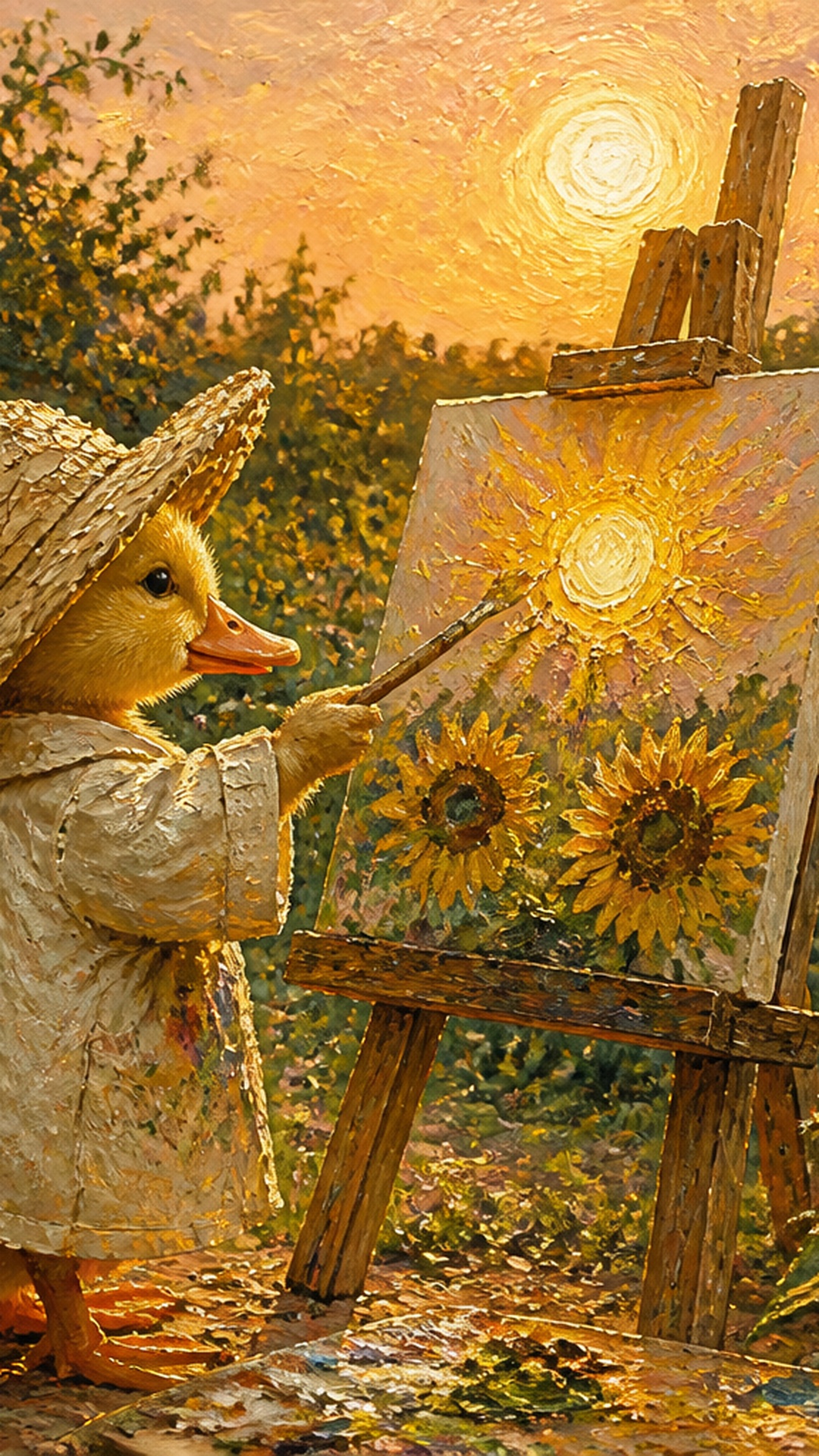
The medium has a precise vocabulary, and models know it from centuries of digitized canvases. Impasto is paint thick enough to cast its own shadow; glazing is thin transparent layers that make water and skies glow from underneath; scumbling drags dry paint across the weave. These are physical words describing physical behavior — use them and the image starts obeying pigment instead of optics.
Movement language is the efficient shorthand. "Impressionist broken color" bundles a palette, a stroke length, and a way of treating light in one phrase; "Romantic marine painting" carries backlit waves, translucent water, and dramatic sky along with it. The prompts below are tested with real outputs — notice how they describe the paint before they describe the subject.
How to write Oil Painting prompts
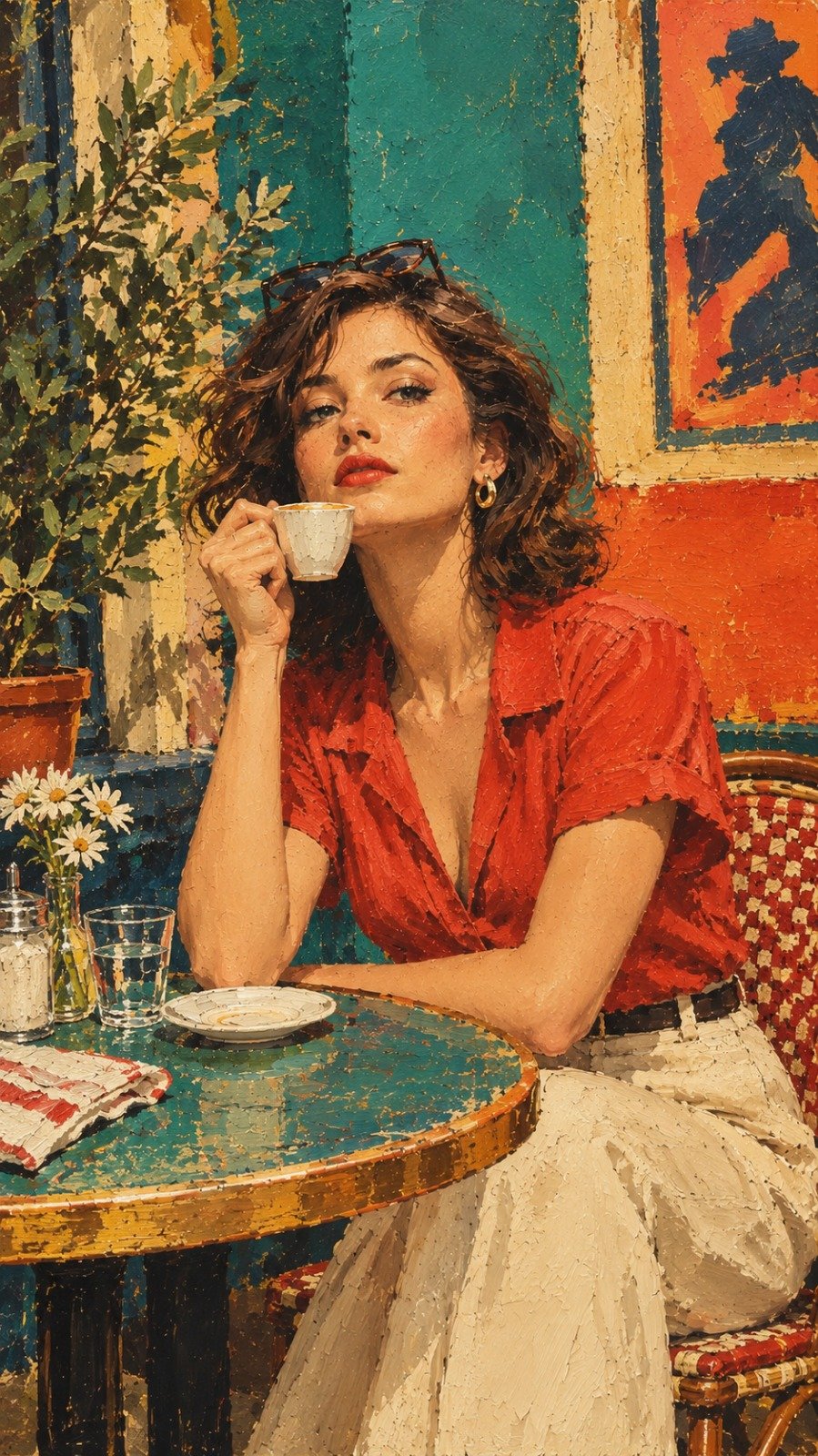
- 1Specify the stroke's thickness and direction: "thick impasto highlights, strokes following the curve of the petals", "short broken dabs in the foliage". A stroke with a direction reads as a decision; texture without direction reads as a filter.
- 2Put the canvas in the picture: "visible canvas weave in the thin shadow areas, paint catching the texture in the lights". The support showing through is one of the strongest signals that this is paint on cloth, not pixels on glass.
- 3Use movement terms as compressed instructions: "Impressionist broken color, unmixed pigment side by side" for gardens and light; "Romantic seascape, backlit translucent wave, glazed water over a dark ground" for the sea. A movement sets palette, stroke, and mood in three words.
- 4Ban the camera explicitly: no depth-of-field blur, no lens flare, no bokeh. Edges should soften because the brush lost them, not because a lens defocused them — say so, or the optics creep back in.
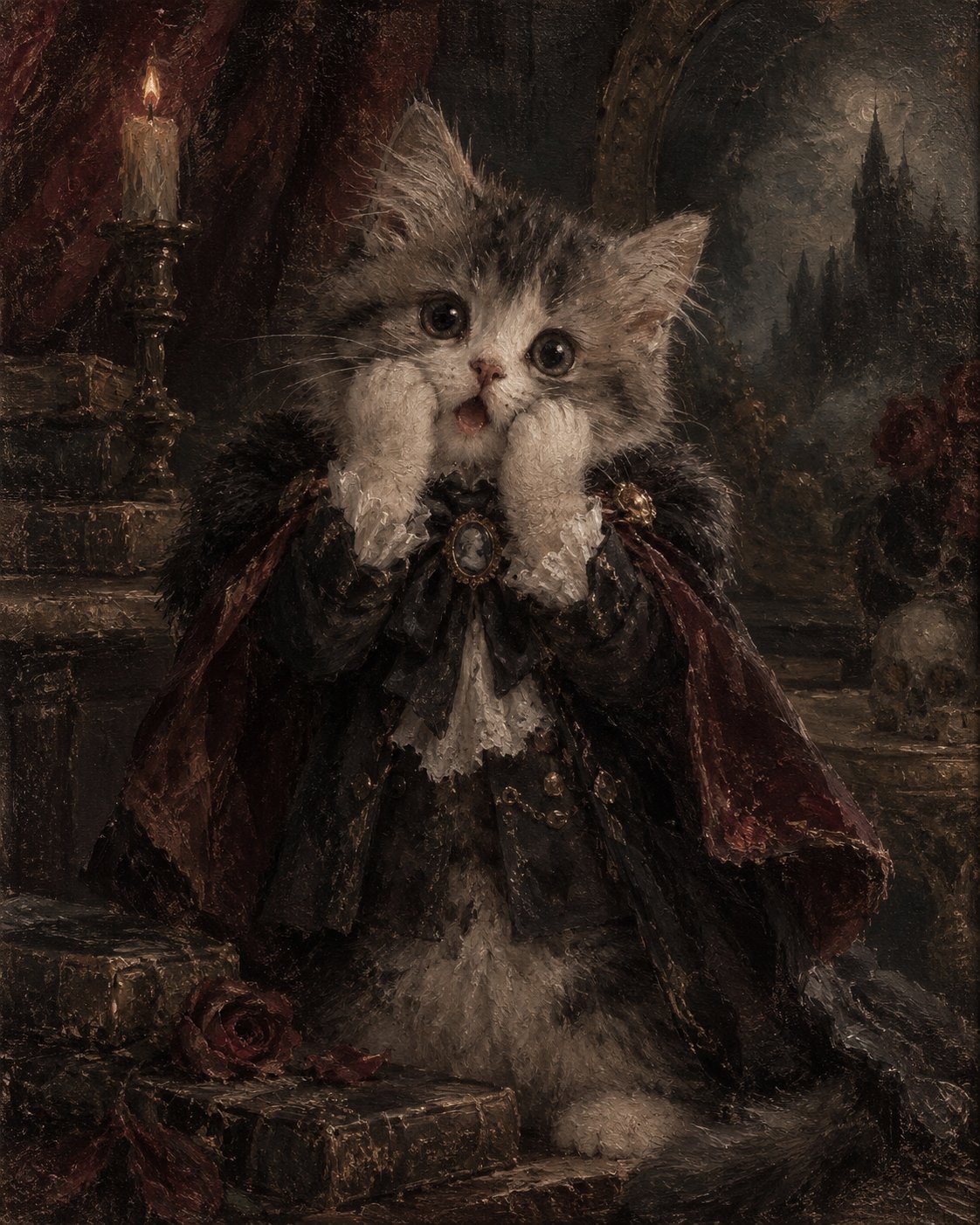
- 5Describe light as mixed color, not illumination: "highlights of pale yellow laid over warm ochre", "shadows shifting toward violet, not gray". Painters build light out of pigment relationships, and the phrasing pulls the model into that logic.
Frequently asked questions
Why do my oil painting prompts look like photos with a filter?
Because only the surface was specified, not the logic. If the prompt describes a scene and appends "oil painting style", the model renders the scene photographically and decals texture on top. Instead, spend the prompt on paint behavior — stroke thickness, edge quality, canvas texture — and explicitly exclude camera artifacts like depth-of-field blur.
What do impasto and glazing actually do in a prompt?
They control the paint's thickness, which controls where the eye goes. Impasto is thick, ridged paint that catches real light — ask for it in highlights and focal areas. Glazing is thin transparent layers over a darker ground — ask for it in water, skies, and shadows that need depth. Using both in one prompt gives the surface variety a real canvas has.
Which subjects work best for oil painting prompts?
Subjects the medium spent centuries on: gardens and figures in outdoor light, seascapes, still life, portraits. This is less about nostalgia than training data — the pairing of subject and stroke is deeply reinforced there, so a movement phrase like "Impressionist garden" or "Romantic seascape" recruits the whole tradition at once.

![An epic oil painting of a [SHIP CLASS] ship of [SHIP STYLE] design, featuring [SAIL COLOR] sails emb — AI image prompt — Grok Imagine 2](https://cdn.ahaprompt.app/harvest-media/import-1787457074740-9cxb0l.jpg)

![Song Huizong aesthetics × Song dynasty academy-style gongbi × [surreal subject] × extreme gongbi det — AI image prompt — GPT Image 2.5](https://cdn.ahaprompt.app/harvest-media/import-1790652544672-km5qbs.jpg)