AhaPrompt
Prompts
Featured
Models
Submit
Blog
Home
AI Prompt Library
Watercolor
Watercolor Prompts
Explore the best Watercolor prompts for AI image, video, and audio generation.
Browse AI Image Prompts
Browse AI Video Prompts
Browse AI Music & Voice Prompts
AI Prompt Library
All
Images
Videos
Audio
Newest
Popular
All categories
3D Render
Abstract
Advertising
Aerial
Ambient
Animals
Animation
Anime
Architecture
Avatar
Black & White
Bright
Cartoon
Character
Cinematic
Cityscape
Classical
Comic
Cyberpunk
Dark
Digital Art
Dramatic
Dynamic
Electronic
Ethereal
Fantasy
Fashion
Folk
Food
Game Assets
Gothic
Hip-Hop
Historical
Holiday
Horror
Infographic
Jazz
Landscape
Lo-Fi
Logo Design
Macro
Minimalist
Motion Graphics
Music Video
Mysterious
Mythology
Nature
Neon
Oil Painting
Peaceful
Pixel Art
Pop
Pop Art
Portrait
Poster
Product Photography
R&B
Realistic
Rock
Sci-Fi
Short Film
Sketch
Slow Motion
Sound Effects
Space
Sports
Steampunk
Sticker
Still Life
Street Photography
Surreal
Tattoo
Timelapse
Trailer
Typography
Vector
Vehicles
VFX
Vintage
Voiceover
Wallpaper
Watercolor
Whimsical
GPT Image 2
Transform the uploaded photograph into a minimalist, premium handmade editorial paper illustration. Use the photo strictly as reference and preserve the subject’s recognizable identity, facial features, hairstyle, facial hair, skin tone, body proportions, clothing, pose, expression, hands, umbrella and key recognizable details. Generate ONLY the illustration on a clean paper background. FORMAT LOCK Vertical 3:4 canvas. Small centered subject occupying approximately 15–25% of the canvas. Generous warm negative space. Do not crop important parts of the subject. STYLE TRANSFER Reinterpret the photograph as a sophisticated handmade watercolor, acrylic, colored-pencil and ink illustration. Preserve recognition while simplifying the image into a refined contemporary editorial artwork. Avoid photorealism and polished digital-vector aesthetics. DETAIL & COLOR Delicate imperfect ink outlines, loose watercolor washes, restrained acrylic shapes, dry-brush marks, rough pigment edges, subtle colored-pencil texture and natural paint imperfections. Warm ivory handmade paper with visible grain and fibers. Use a restrained palette of deep navy blue, muted dark green, natural skin tones and warm brown/ochre, with subtle blue and green environmental shapes. COMPOSITION LOCK Keep the subject small, centered and fully readable. Preserve the wavy dark hair, facial features and gentle smile, light facial hair, navy sweater, pale shirt collar, green umbrella, umbrella shaft, curved wooden handle, hand and ring. Simplify the environment aggressively into only a few loose painted shapes. Maintain a calm gallery-like composition with abundant clean negative space. STYLE Quiet, poetic, minimal, refined, warm, contemporary handmade editorial illustration. Premium art-book aesthetic, tactile paper surface, organic edges, subtle pigment variation and authentic traditional craftsmanship. NEGATIVE PROMPT No photograph, photorealism, split-screen, collage, top-and-bottom layout, second panel, photographic half, detailed background, oversized subject, large illustration, digital vector art, glossy CGI, 3D, anime, cartoon exaggeration, excessive detail, chaotic colors, typography, text, letters, words, numbers, logos, symbols, watermark or signature
0
Details
GPT Image 2.5
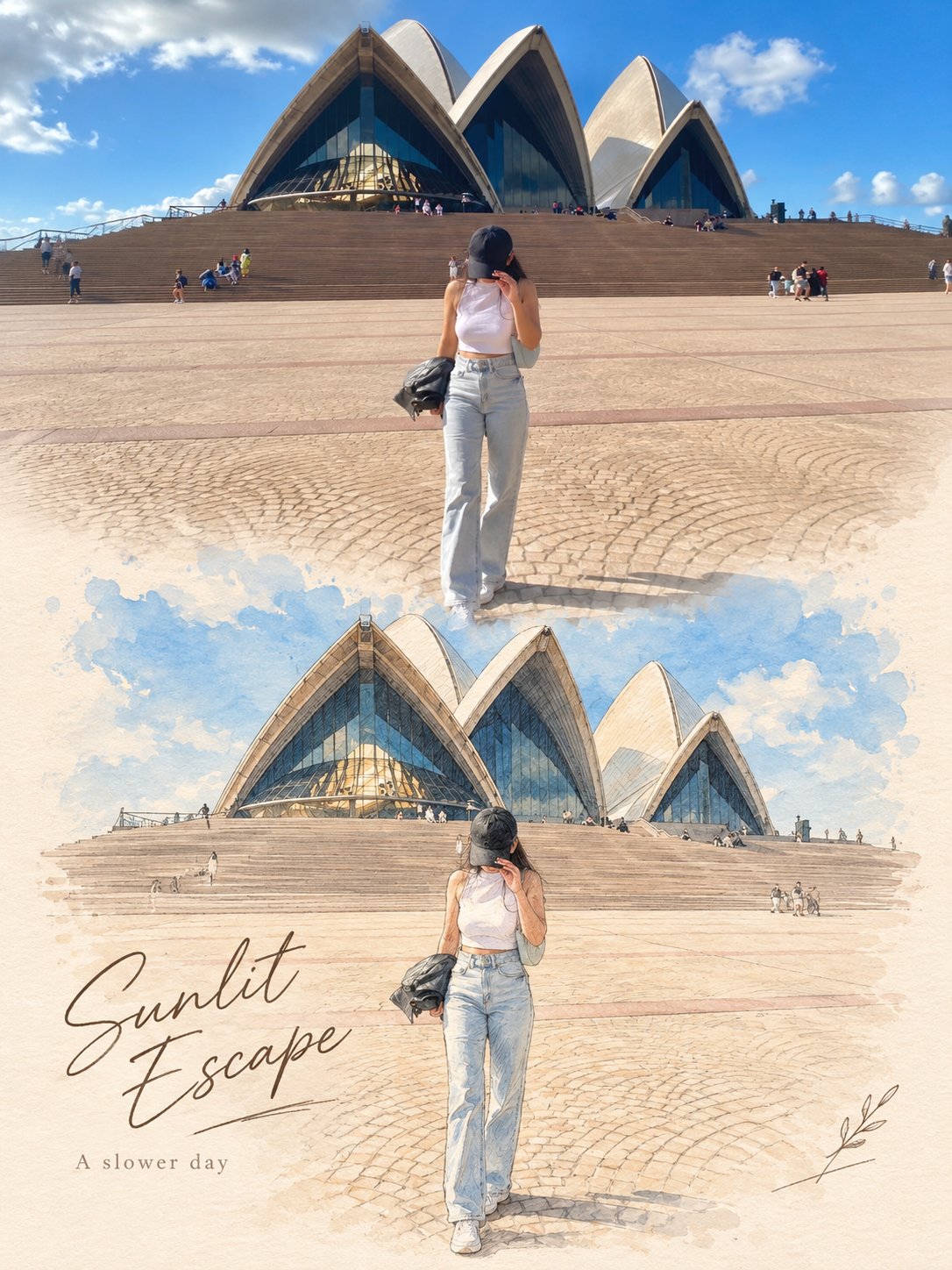
Use the uploaded image as the exact reference. Preserve the original subjects, identities, poses, composition, colors, lighting, background, and key details. Do not add, remove, or rearrange major elements. Create a vertical 3:4 editorial poster with two sections: - Top half: keep the original photo natural, sharp, and essentially unchanged. - Bottom half: recreate the exact same scene as a refined hand-drawn illustration in soft watercolor, colored pencil, and fine ink sketch style. Keep the same subjects, positions, perspective, and recognizable details. Use soft pastel tones, a warm off-white paper background, subtle paper texture, and a premium editorial / art-book / postcard feel. Add a soft seamless transition between the photo and illustration. Add minimal elegant typography: a handwritten-style title and a small simple subtitle. Use context-appropriate text such as “A Brighter Day” and “A Slower Life”, or for pets/family “Good Friends”, “Brighter Days”, or “Happier Tails ♡”. Optional: add a few subtle hand-drawn decorative details like tiny petals, leaves, hearts, or sketch marks only if they naturally fit. Do not change identities or the scene, and do not make the lower section look like photorealism, 3D, anime, or cartoon.
0
Details
Nano Banana Pro
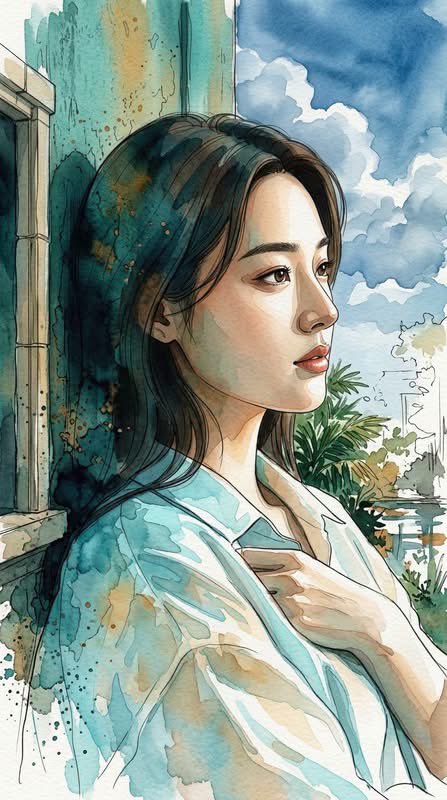
Create a completely new visual style by synthesizing two contrasting visual languages: STYLE FOUNDATION: A cinematic architectural illustration with the clean composition, strong perspective, elegant architectural forms, crisp selective linework, luminous tropical colors, dramatic blue sky, and polished environmental storytelling of a high-end anime-inspired background painting. PAINT HANDLING: Fuse this with expressive traditional watercolor and ink techniques: loose gestural brush strokes, dry-brush texture, translucent watercolor washes, pigment blooms, irregular ink contours, spontaneous splatters, visible paper grain, partially unfinished edges, atmospheric paint bleeding, and subtle abstract fragmentation. NEW HYBRID STYLE: Do NOT simply imitate either reference. Develop an original visual language that sits between polished digital illustration and expressive architectural watercolor sketching. Keep the major architectural structures highly readable and beautifully designed, but allow secondary details, vegetation, reflections, clouds, distant objects, and peripheral elements to dissolve into loose watercolor marks and ink gestures. Use selective precision: sharp, deliberate linework around important architectural silhouettes, windows, domes, roofs, bridges, lamps, boats, and foreground structures; looser broken lines and painterly abstraction toward the edges and background. Combine luminous cinematic lighting with watercolor transparency. Use layered washes of turquoise, cyan, deep blue, warm ochre, coral, terracotta, muted green, and soft cream. Let colors subtly bleed into one another rather than appearing as perfectly flat digital fills. Atmosphere should feel tropical, poetic, nostalgic, peaceful, slightly dreamlike, and cinematic. Include strong foreground / middle-ground / background depth. Use reflections on water as loose, broken watercolor reflections rather than perfectly mirrored digital reflections. Clouds should be volumetric and luminous but painted with soft watercolor masses and irregular edges. Vegetation should alternate between identifiable tropical foliage and expressive abstract brushwork. SURFACE: fine cold-pressed watercolor paper texture, subtle grain, transparent pigment layers, ink-and-wash marks, dry brush, soft granulation, occasional paint splashes, slightly imperfect handmade edges. COMPOSITION: vertical cinematic composition, strong leading lines, architectural focal point, deep perspective, generous atmospheric space, balanced negative space, beautiful visual hierarchy, high-end editorial travel illustration. IMPORTANT: The final result must look like a coherent NEW ART STYLE, not a collage and not a literal combination of the two references. Avoid photorealism. Avoid generic watercolor clip-art. Avoid overly clean vector art. Avoid excessive anime facial features. Avoid uniform line thickness. Avoid making every object equally detailed. Preserve architectural clarity while allowing painterly abstraction to emerge naturally. highly sophisticated, cinematic, expressive, elegant, atmospheric, hand-painted, architectural watercolor-and-ink illustration, contemporary visual development art, original style. Ar 9:16!
0
Details
GPT Image 2.5
Create a stunning 4:5 vertical fine-art sketch illustration of [STRUCTURE NAME] as if it is being drawn by a master architectural artist inside a luxury travel sketchbook. Show the famous structure transitioning from loose preliminary pencil lines into a fully detailed finished architectural drawing. The foreground should contain delicate construction lines, perspective guides, measurement marks, small handwritten architectural notes, compass marks, arrows, erased pencil strokes, and unfinished portions. As the eye moves toward the main structure, the sketch gradually becomes more refined — combining graphite pencil, fine black ink, subtle watercolor washes, cross-hatching, and delicate hand-drawn textures. Include small artistic studies around the main drawing: a tiny side elevation, architectural detail, window or ornament study, simplified map outline, and a small silhouette showing the scale of the structure. Use an elegant warm ivory sketchbook-paper background with natural paper fibers and subtle imperfections. Keep the composition sophisticated and spacious. The structure should remain the unmistakable hero. Add minimal handwritten-style labeling: [STRUCTURE NAME] [CITY, COUNTRY] ARCHITECTURAL STUDY The artwork should feel like an original museum-quality architectural sketch discovered inside an explorer’s personal sketchbook — artistic, intellectual, nostalgic, detailed, and highly collectible. No photorealistic rendering, no 3D CGI, no modern infographic boxes, no excessive text, no watermark.
0
Details
GPT Image 2
Create a premium 4:5 vertical travel-poster illustration of [LOCATION] in a distinctive mixed-media style combining handcrafted clay/plasticine 3D forms, watercolor painting, textured paper, organic ink outlines, and subtle paper-cut collage. Create a cinematic composition centered around [LOCATION]’s most iconic landmark, landscape, or natural feature, with clear foreground, middle-ground, and background depth. Add tactile handcrafted details, soft sculpted textures, visible handmade imperfections, watercolor washes, paper grain, and elegant illustrated depth. Keep it whimsical and miniature-like, but refined and editorial rather than childish. Interpret the destination through its authentic architecture, landscape, vegetation, transportation, streets, cultural details, and recognizable local elements. Include small environmental storytelling details without clutter. Use warm golden-hour lighting, soft shadows, atmospheric haze, glowing highlights, and a sophisticated earthy palette of peach, terracotta, cream, ochre, warm yellow, muted teal, sage, and natural tones, adapted to the location. Create a dreamy watercolor sky with soft clouds and subtle paper texture. At the top, include: [LOCATION] [COUNTRY / REGION] Add one short, elegant tagline inspired by the destination. Typography should be hand-painted, vintage travel-poster inspired, legible, and naturally integrated into the artwork. Prioritize authenticity, accurate landmarks, strong focal point, layered depth, tactile materials, cinematic warmth, premium editorial quality, and visual coherence. Avoid generic architecture, distorted landmarks, random symbols, meaningless text, and unrelated cultural elements. Strict aspect ratio: 4:5 portrait.
0
Details
Grok Imagine 2
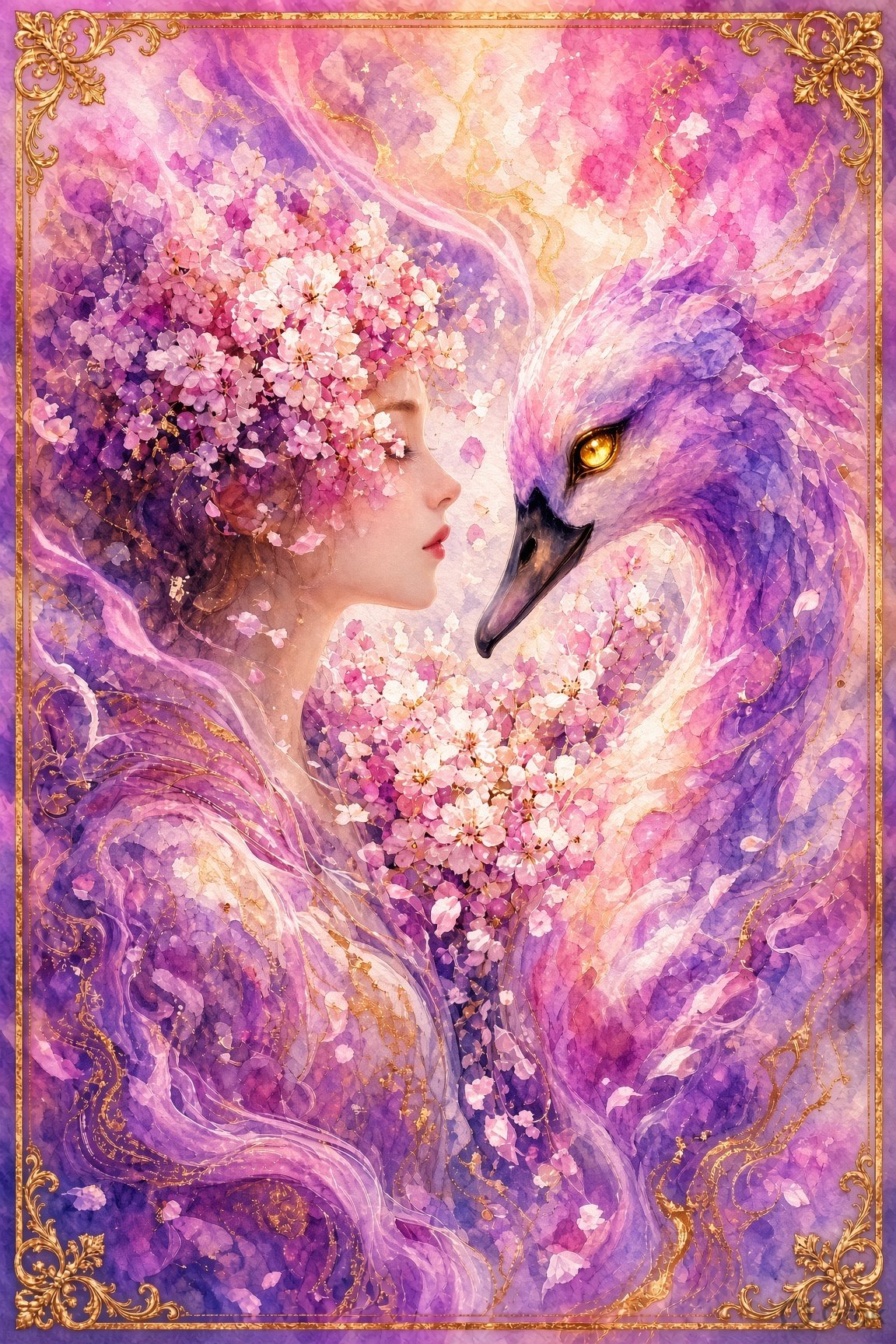
A serene figure in soft profile, a crown of watercolor-bloomed blossoms bleeding softly over the brow so only a quiet blush of pigment-pink lips and a gentle jaw emerge from wet washes of color, skin rendered in soft translucent watercolor bleed; a magnificent anthropomorphic swan presses close, eyes molten gold, feathers painted in soft bleeding washes of lavender and blush, pigment pooling and feathering at each edge like wet-on-wet bloom; dozens of pale blossoms erupting between them, colors bleeding into one another like a slow tender heartbeat; gentle motion-blur ribbons of lavender-pink and soft gold drifting diagonal across the composition, edges soft and unbound; the figure's robe dissolving into spiraling tendrils of trapped pigment-glitter and floating petal-stars, watercolor bleeding at every seam; fine paper-grain texture beneath the soft washes, a delicate gold-leaf border framing it like a painted relic; Ukiyo-E staging meets Impressionist bleed meets Baroque softness; soft lavender-pink and molten gold and pale wash-white; gentle atmosphere of drifting petals and soft pigment mist; surreal, cinematic, editorial, serene, tender allure; Meaningful Visual, high-detail watercolor-manga rendering on soft paper-lacquer glow.
0
Details
GPT Image 2
Create a beautiful vertical 4:5 pastel-colored paper painting featuring [COUNTRY] as an entire miniature world painted onto textured handmade paper. Use delicate pastel gouache, soft watercolor and colored-pencil textures, with visible paper fibers, gentle brush strokes, imperfect painted edges and subtle layered pigments. Let the country’s most recognizable landmarks, landscapes, traditional architecture, local flowers, food, clothing, wildlife and cultural elements naturally emerge from the painted surface, blending together like one continuous handmade illustration. Include the [COUNTRY] flag subtly integrated into the artwork and elegantly write “[COUNTRY]� at the bottom in beautiful hand-painted lettering. Use a sophisticated palette of powder blue, blush pink, butter yellow, mint green, lavender, peach and cream, with soft shadows and delicate highlights. Minimal, whimsical, premium editorial art style, dreamy atmosphere, tactile handmade paper, artistic imperfections, elegant composition, highly detailed miniature elements, no harsh outlines, no photorealism, no 3D rendering, no clutter. Feels like a luxury travel postcard painted by hand with pastel colors.
0
Details
GPT Image 2
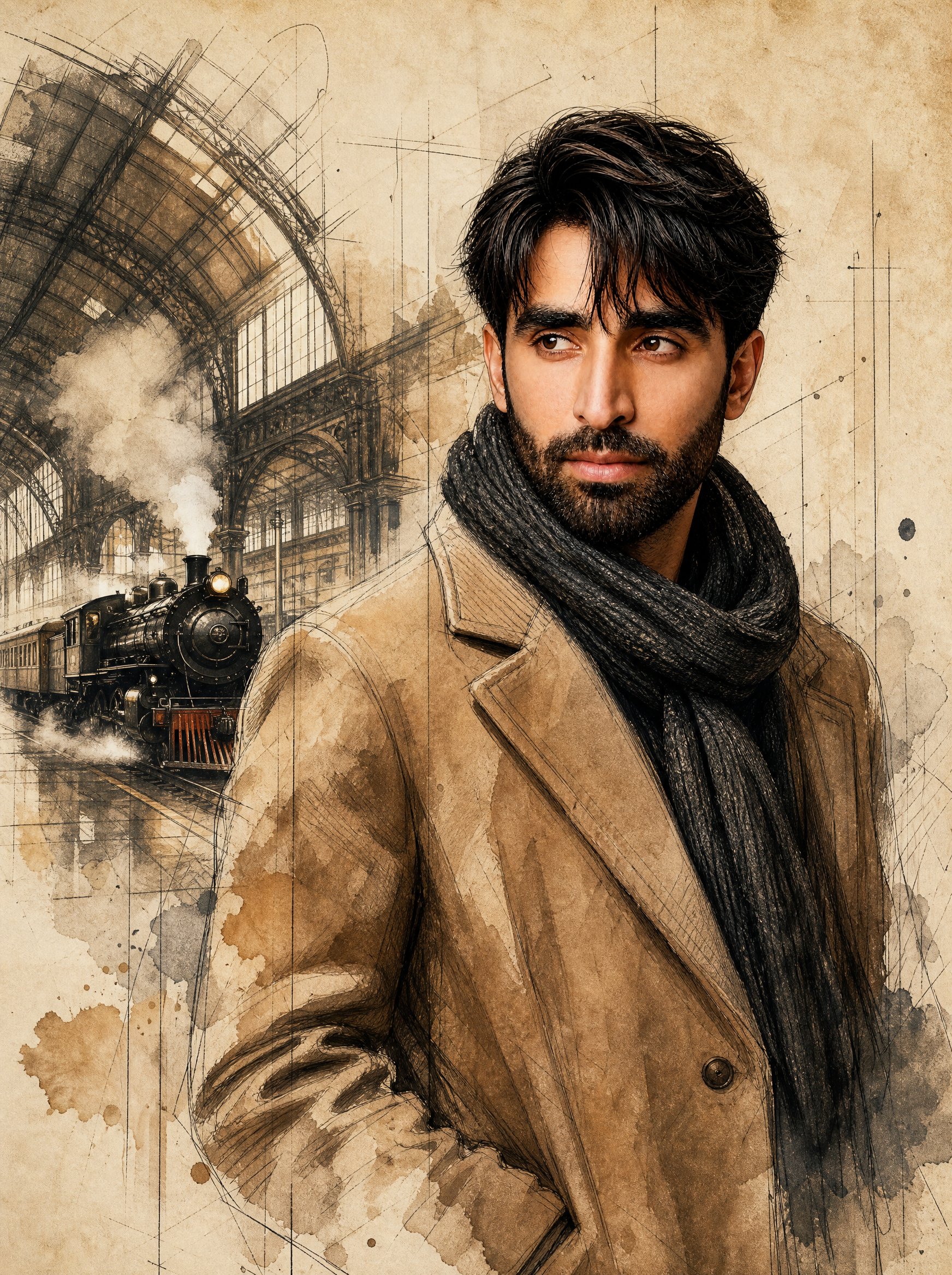
Use the uploaded image strictly ONLY for face matching and identity reference. Create a striking, high-end mixed-media fashion illustration featuring a handsome man standing inside a grand historic train station. The artwork seamlessly blends photorealistic portraiture with expressive graphite sketching, watercolor painting, and ink illustration techniques. The subject has neatly styled hair with texture. He wears a tailored camel-colored wool overcoat layered over a dark charcoal chunky-knit scarf wrapped elegantly around his neck. Pose & Expression: Medium portrait composition. The man stands confidently with his left hand tucked into his coat pocket and his right arm resting naturally at his side. He gazes thoughtfully off-camera to the left with a stoic, contemplative, and slightly nostalgic expression, conveying quiet confidence and timeless elegance. Background & Environment: The left side of the composition transitions into an atmospheric train station interior featuring soaring iron-and-glass architecture, vaulted arches, and an approaching vintage steam locomotive emerging through drifting steam. The environment gradually dissolves into loose architectural sketches, construction lines, and expressive hand-drawn details. No text and extra element. Art Style & Medium: A sophisticated fusion of graphite pencil drawing, watercolor washes, fine ink linework, and subtle digital painting. The illustration should feature rough sketch marks, visible pencil strokes, architectural drafting lines, monochromatic and sepia-toned watercolor textures, ink splatters, paint drips, and soft smoke effects. The entire artwork is rendered on aged parchment paper with weathered stains, subtle creases, and vintage paper texture. The portrait remains highly detailed while the surrounding elements fade into artistic abstraction. Color Palette: Warm sepia, beige, camel, charcoal black, soft gray, ivory parchment tones, and muted watercolor browns with subtle cool accents in the eyes. Lighting: Soft cinematic ambient lighting with gentle highlights on the face and coat, creating depth and contrast while maintaining the hand-painted aesthetic. Quality & Detail: Masterpiece, museum-quality illustration, ultra-detailed facial features, highly detailed clothing textures, expressive brushwork, dynamic visual contrast, elegant composition, fine-art editorial style, professional mixed-media artwork, 8K resolution, sharp focus, intricate textures, watercolor and graphite fusion, premium fashion illustration. Aspect Ratio: 4:5.
0
Details
GPT Image 2.5
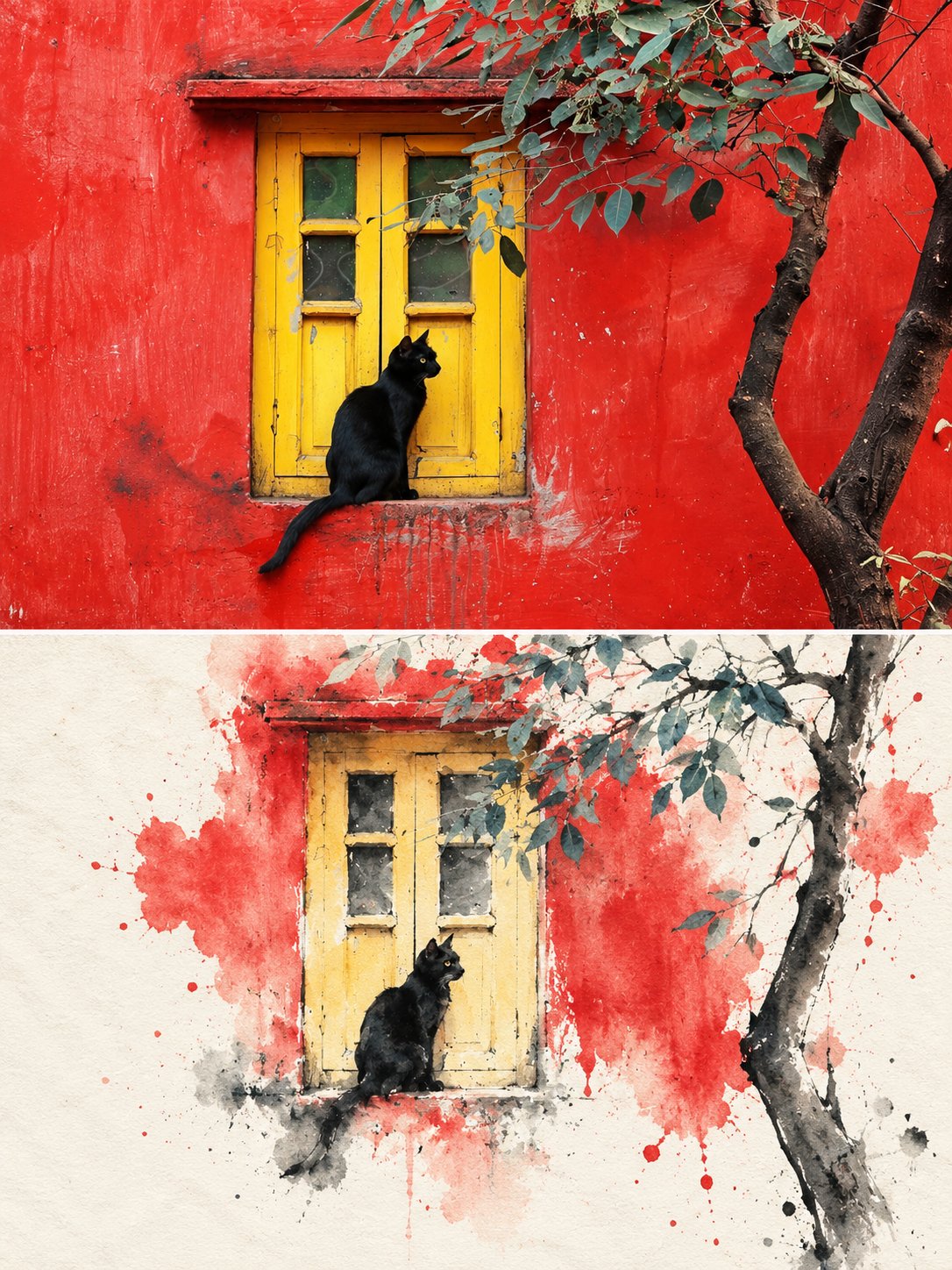
Split-Frame Ink Wash Reconstruction 3:4 vertical composition · photo / ink wash split · contemporary Eastern aesthetic The image is in a 3:4 vertical composition, divided into two regions, with a strict 1:1 ratio, each taking up 50% of the image. Upper Region — Original Photo Shoot Area Preserves the subject's identity, structure, perspective, and true material, natural light, and original color atmosphere, with only slight high-end color grading and image purification, presenting it with the texture of art magazines or exhibition photography. It allows for a moderate expansion of the background to fit the screen size, but does not stretch, distort, or reshape the subject, without changing the subject's structure, posture, and core composition. Lower Region — Minimalist Ink Wash Reconstruction Area First, refine the subject with the most memorable details, such as the outline, structure, trend, perspective, rhythm, and atmosphere, and then reconstruct the same scene into a minimalist ink wash material landscape. Do not copy the photo details, do not make a realistic copy, only preserve the most recognizable structure and charm, allowing people to recognize the corresponding relationship between the upper region and the original photo at first glance. The overall base of the lower half is milky white, warm white or paper white, with delicate paper fiber and natural texture. The main body is reconstructed in ink wash blending, dry-wet interplay, flying white, seepage, ink accumulation, and white space, forming a quiet, restrained, and poetic Eastern visual. Removing secondary details, only retaining the most distinctive contours, structural turns, spatial layers, and breath, not pursuing realistic completeness, but rather summarizing, refining, and leaving a lingering impression. The use of ink in black, gray, and light ink tones, layered and progressing, with varying intensities and rhythms. The most vibrant colors can be extracted from the original image to create a few spots of dyeing or coloring, without mechanically replicating the color values. The colors can be transformed locally into clear blue-gray, distant blue, soft gold, warm yellow, vermilion red, light cyan, etc., to emphasize the main focus and emotional rhythm, but the overall composition is still dominated by ink tones and negative space. Avoiding dull, heavy, old brown, excessive decoration, and vulgar color combinations. The main core areas should be more refined and concentrated, with edges gradually loosening, breaking away, disappearing, and scattering, forming a sense of breathing with the large negative space. The lower half of the composition should account for about 30%–45%, with the rest reserved for large negative spaces. The composition can be biased, framed, suspended, or slightly cut, but must maintain an asymmetrical balance and a high-end editorial feel. Negative space is not blank, but an important component of the visual structure. It is better to reduce information than to fill the entire image, so that the main focus looks like an ink seal or an oriental material work displayed on a page. Text Treatment Text is only allowed a very small amount of editing intervention, without preset titles and numbers. A small number of words or short sentences can be extracted from the subject, location, time, action, emotion, or metaphor, and quietly placed in the blank area or the edge of the subject. The text should be restrained, sparse, and have a sense of breathing, not noisy or dominant. Overall Presentation Contemporary Eastern aesthetics, minimalist ink wash reconstruction, large-scale art blank, small-scale seal impression, quiet editing layout and exhibition poster style. Avoid complex backgrounds, piled-up real details, overly decorative, excessive text, template layout and filled composition.
0
Details
GPT Image 2.5
Create a premium 4:5 vertical vintage hand-drawn travel storybook illustration for [COUNTRY / CITY / LOCATION / SUBJECT]. TEXT-TO-IMAGE ONLY — generate the entire artwork creatively from [COUNTRY / CITY / LOCATION / SUBJECT] alone. No reference image required. CORE CONCEPT Imagine [COUNTRY / CITY / LOCATION / SUBJECT] as a softly misremembered travel memory inspired by 1950s–1960s European city storybooks. Create one whimsical imagined street where the destination's real identity remains recognizable, but everything feels gently imperfect, intimate, and nostalgic rather than geographically precise. SCENE Automatically choose one iconic primary landmark as the main focal point, one secondary landmark, and one smaller distant landmark partially hidden in the background. Add one authentic local vehicle, several tiny everyday environmental details, and 5–6 ordinary local residents casually performing simple daily activities. Compress everything naturally into the same imagined street scene with layered depth and a charming sense of discovery. DRAWING STYLE Use loose charcoal and deep navy ink with trembling hand-drawn contours, slightly crooked architecture, sparse windows, simplified silhouettes, minimal expressive lines, and imperfect handmade proportions. Characters should have oversized heads, thin legs, narrow bodies, tiny faces, slightly crooked accessories, and simple readable gestures. COLOR Use a restrained palette of only 6–7 colors inspired by the visual identity of [COUNTRY / CITY / LOCATION / SUBJECT]. Apply muted matte gouache in flat areas with uneven brush edges, tiny unpainted gaps, subtle registration shifts, and visible handmade imperfections. Leave large portions of the sky as untouched warm paper. FINAL AESTHETIC Naïve European travel storybook × loose charcoal sketch × navy ink × muted gouache × nostalgic city memory × handmade editorial illustration. The artwork should feel warm, awkward, poetic, quietly humorous, and authentically handmade—not polished or digitally perfect. Add only a small handwritten caption at the bottom containing the name of [COUNTRY / CITY / LOCATION / SUBJECT]. Avoid photorealism, precise mapping, aerial views, gradients, 3D rendering, polished vector art, hyper-detailed watercolor, realistic faces, excessive linework, heavy distressed effects, clutter, logos, watermarks, or modern graphic design. FORMAT: 4:5 vertical, single unified illustration, generous paper/sky negative space.
0
Details
GPT Image 2.5
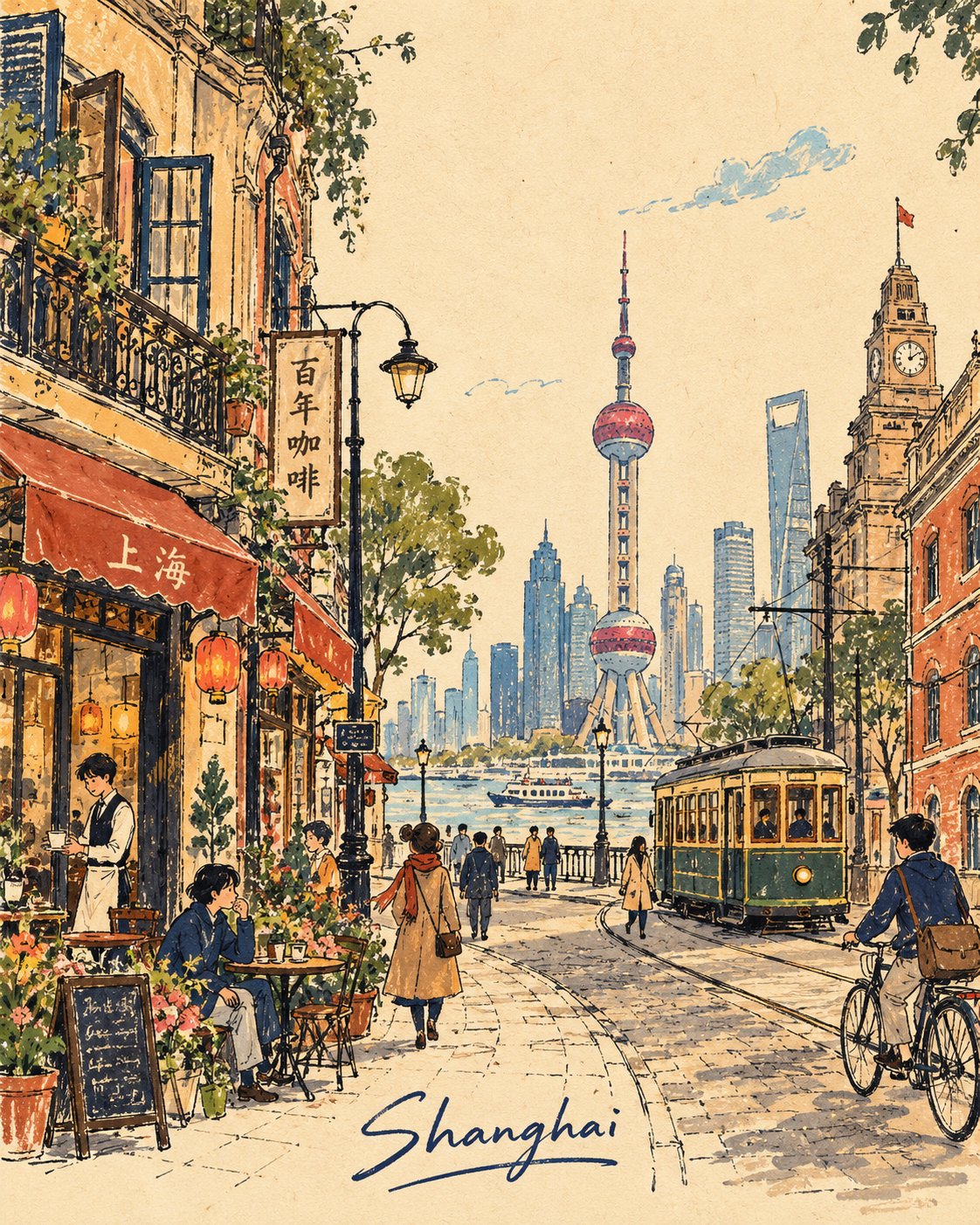
Create an exceptionally original minimalist architectural art poster featuring [LANDMARK] in [CITY, COUNTRY]. Depict the landmark in its recognizable natural architectural appearance, with its authentic proportions, distinctive structure, materials, and characteristic details. Combine fine graphite architectural drawing with subtle vintage watercolor washes, creating the feeling of a sophisticated illustrated travel archive. The landmark should be the central visual focus, surrounded by an intricate but restrained world of extremely delicate architectural linework: construction measurements, perspective guides, tiny streets, rooftops, surrounding buildings, local landscape, clouds, birds, shadows, fragments of maps, compass marks, elevation studies, structural details, and subtle environmental contours. Use a layered visual language where some elements are highly detailed while others fade into the paper, creating depth without making the composition feel crowded. Add one unexpected artistic detail: a single continuous pencil line travels around the landmark without directly tracing its outline. Allow it to occasionally intersect with construction lines, then break at one point beside a tiny handwritten coordinate, date, measurement, or architectural note. Use warm ivory handmade paper, graphite pencil, extremely fine ink lines, delicate watercolor washes, subtle eraser dust, visible paper fibers, faint halftone imperfections, soft natural shadows, and lightly weathered archival texture. Color palette Keep the overall artwork muted, sophisticated, and vintage. Use warm ivory and graphite as the foundation, with the landmark shown in its authentic recognizable colors through restrained watercolor washes. Add one subtle accent color inspired by [CITY/COUNTRY] — for example: - Italy → muted terracotta - Japan → restrained vermilion - France → faded blue - UK → muted navy or burgundy - India → subtle saffron - USA → muted teal or dusty red Avoid bright digital colors. Surrounding details Include carefully chosen elements associated with [CITY/COUNTRY], such as: - local architecture - landscape or geography - streets and rooftops - transportation - vegetation - small cultural details - map fragments - architectural ornaments - elevation or measurement diagrams - compass rose - coordinates - faint historical annotations These details should frame and contextualize the landmark rather than compete with it. Typography Place small, refined typography in generous negative space: [LANDMARK NAME] [CITY, COUNTRY] “drawn by everything around it.” Use elegant editorial serif typography with generous spacing. Add only a few tiny handwritten architectural annotations or coordinates. Artistic direction The final composition should feel mysterious, intelligent, timeless, and unexpectedly beautiful — somewhere between a vintage European travel poster, an architect's working sketch, a museum exhibition print, and a collector's archival illustration. No people. No photorealistic background. No excessive typography. No decorative clutter. No neon colors. No glossy digital rendering. No cartoon aesthetic. No generic stock-travel-poster appearance. 4:5 vertical composition, premium editorial design, tactile handmade paper, sophisticated architectural illustration, precise fine-line details, subtle watercolor, elegant negative space, balanced visual hierarchy, museum-quality contemporary art poster.
0
Details
GPT Image 2
Transform the provided real photograph into a charming hand-drawn travel-journal illustration while preserving the original scene, composition, perspective, architecture, landmarks, people, objects, and overall layout. Keep the main subject and recognizable details in exactly the same positions as the reference image, but reinterpret everything as a warm, playful illustrated artwork. Use a Japanese illustrated travel diary / modern picture-book aesthetic with clean expressive black ink outlines, slightly imperfect hand-drawn strokes, simplified shapes, soft watercolor-and-gouache textures, subtle paper grain, and vibrant but natural colors. Add gentle artistic exaggeration while keeping the location clearly recognizable. Create a bright sky-blue atmosphere, lush simplified greenery, expressive trees, stylized buildings, charming small details, and simplified human figures with minimal facial features. Use warm orange/red architectural elements and natural greens where appropriate. Maintain realistic depth and perspective, but simplify fine photographic details into appealing illustrated forms. Add small hand-written doodle elements and travel-journal typography naturally around empty areas of the composition, such as a short location title, mood phrase, tiny hearts, clouds, sun, flowers, stars, or simple decorative marks. The lettering should feel casually handwritten with a white paint-marker/brush effect and should never cover important subjects. The final image should feel like a personal travel memory redrawn by an artist, nostalgic, cheerful, wholesome, youthful and spontaneous — not a generic cartoon and not a digital 3D render. Preserve: original framing, camera angle, landmark proportions, major objects, people placement, road/building layout, lighting direction and recognizable environmental details. Style: Japanese travel sketchbook, hand-painted illustration, ink outline, watercolor + gouache, children’s picture-book charm, editorial travel illustration, textured paper, imperfect brushwork, vibrant blue sky, warm natural lighting, cinematic composition, highly detailed but artistically simplified. Avoid: photorealism, 3D CGI, anime character styling, overly smooth digital artwork, excessive saturation, distorted architecture, changing the landmark, adding major objects, unrealistic perspective, plastic textures, overly detailed faces, or losing the original photograph’s composition.
2
Details
GPT Image 2.5
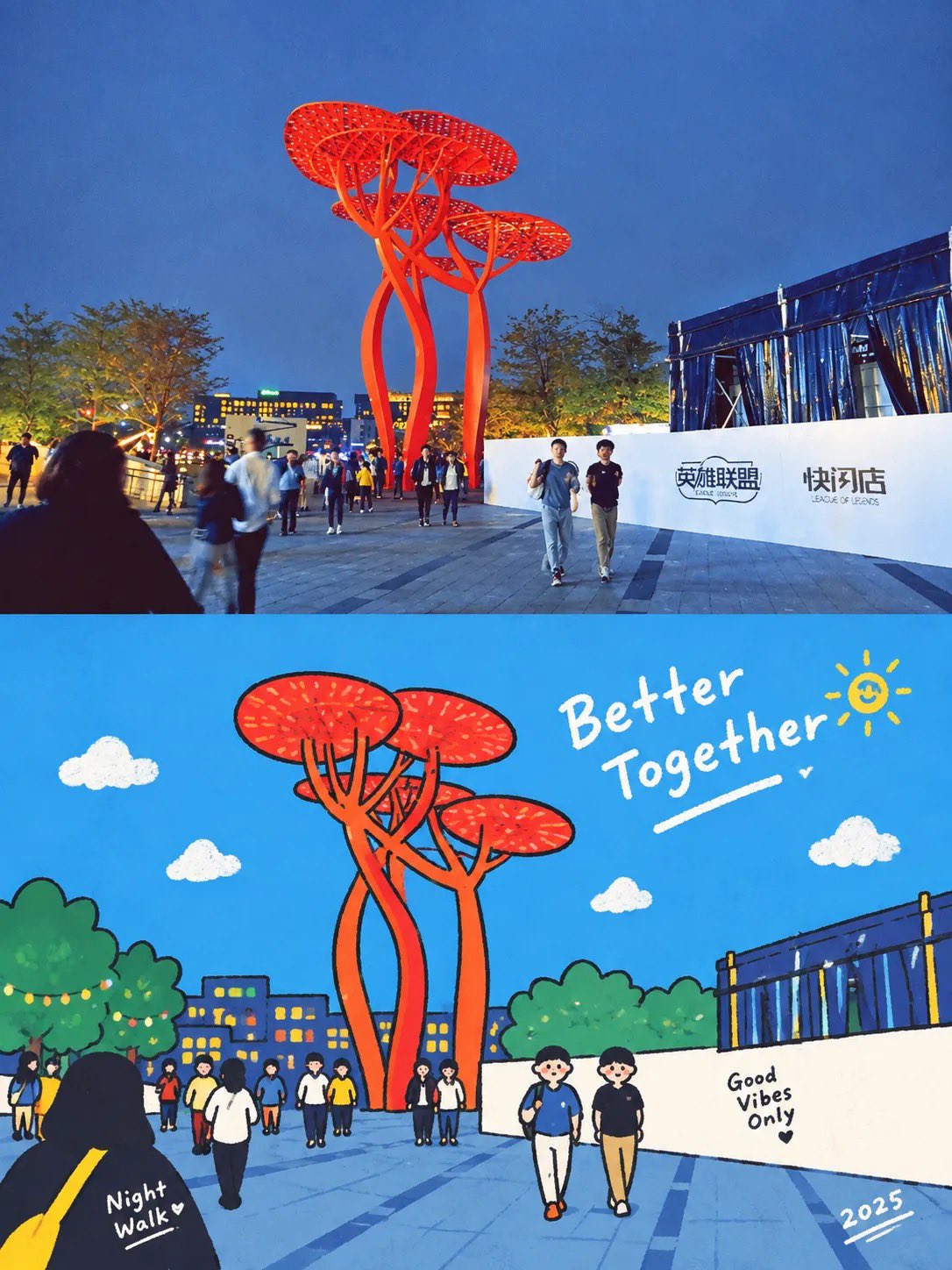
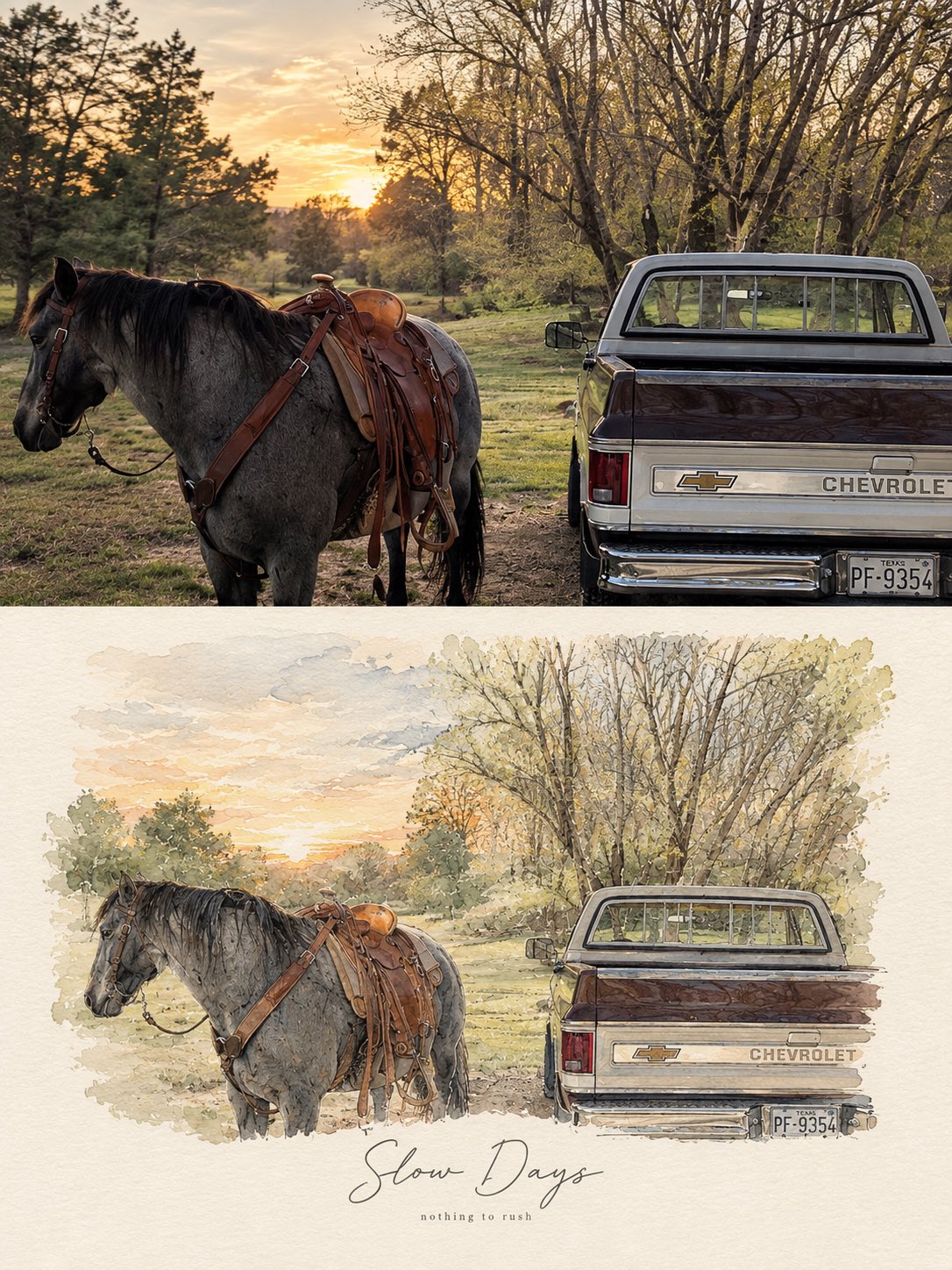
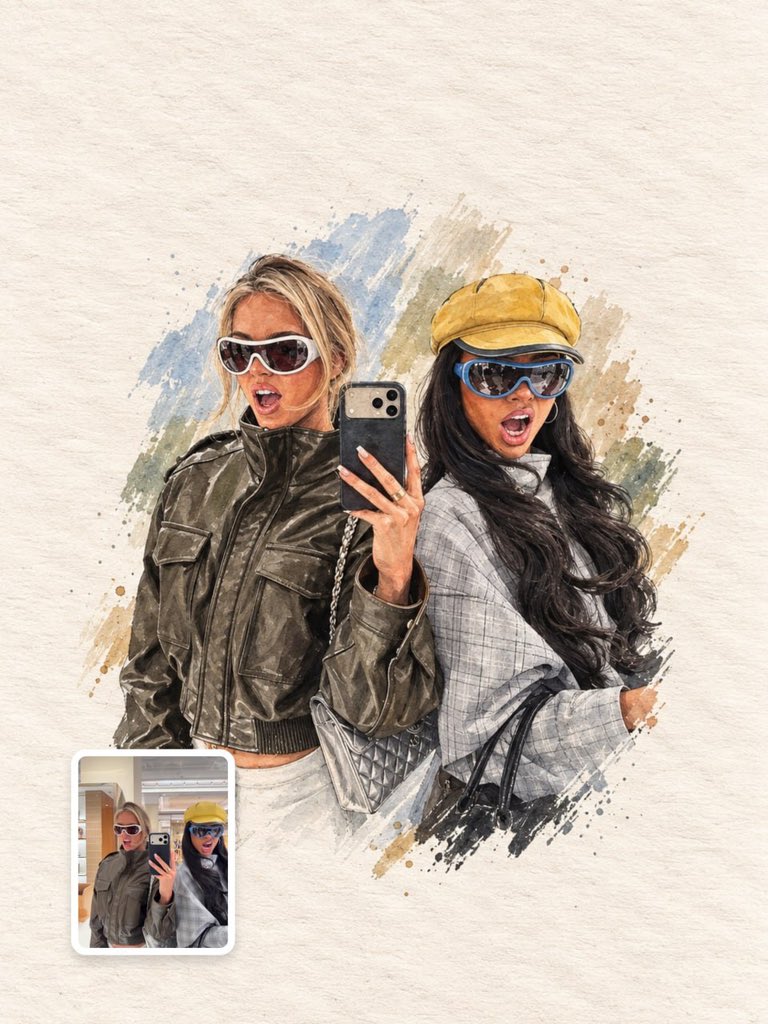
Create a refined, high-end PHOTO + MINIMAL WATERCOLOR VIGNETTE artwork based entirely on the uploaded photograph. Use the photograph as the only visual reference and preserve the exact subject, composition, environment, clothing, objects, lighting, colors, and mood. FORMAT: Vertical 3:4 editorial composition. TOP SECTION — ORIGINAL PHOTOGRAPH: Place the original photograph in the upper 55–60% of the canvas. Keep it photorealistic and naturally detailed. Do not alter the identity, pose, proportions, objects, architecture, scenery, or important visual details. Give it a subtle premium editorial photography finish with natural cinematic light and gentle tonal balance. BOTTOM SECTION — HAND-PAINTED INTERPRETATION: Transform the same exact scene into a delicate minimal watercolor and fine-ink illustration. Recreate the main subject, pose, perspective, key objects, and recognizable background elements from the photograph. Use loose watercolor washes, subtle pencil/ink outlines, imperfect hand-painted edges, soft paper texture, and restrained pastel tones. Keep the illustration airy, elegant, and slightly imperfect rather than digitally polished. The illustration should feel like a fashion/lifestyle magazine sketchbook page, with plenty of clean negative space and a warm off-white textured paper background. Do not introduce new subjects or details. TYPOGRAPHY: Add a short elegant handwritten brush-script phrase underneath or integrated naturally into the illustrated section, similar to a premium lifestyle editorial poster. Underneath it, add a tiny minimalist lowercase serif/sans-serif subtitle. Typography should be subtle, sophisticated, thin, and balanced with the artwork. AESTHETIC: Scandinavian editorial design, quiet luxury, nostalgic travel journal, soft watercolor, delicate ink drawing, handmade paper texture, muted natural palette, sophisticated minimalism, emotional storytelling, premium art-book layout. IMPORTANT: The photograph and illustration must clearly represent the same exact moment and scene. No collage of unrelated images, no dramatic redesign, no excessive watercolor, no cartoon appearance, no heavy outlines, no saturated colors, no clutter. Output: photorealistic upper section + matching delicate watercolor illustration below, seamless premium editorial composition, vertical 3:4, high detail. For different photos, just change the text phrase Examples: •Good Days — a kinder me •Better Together — same window, same silence •Little Moments — worth remembering •Slow Days — nothing to rush •Somewhere Quiet — just for a while •Golden Hours — softly remembered
1
Details
GPT Image 2
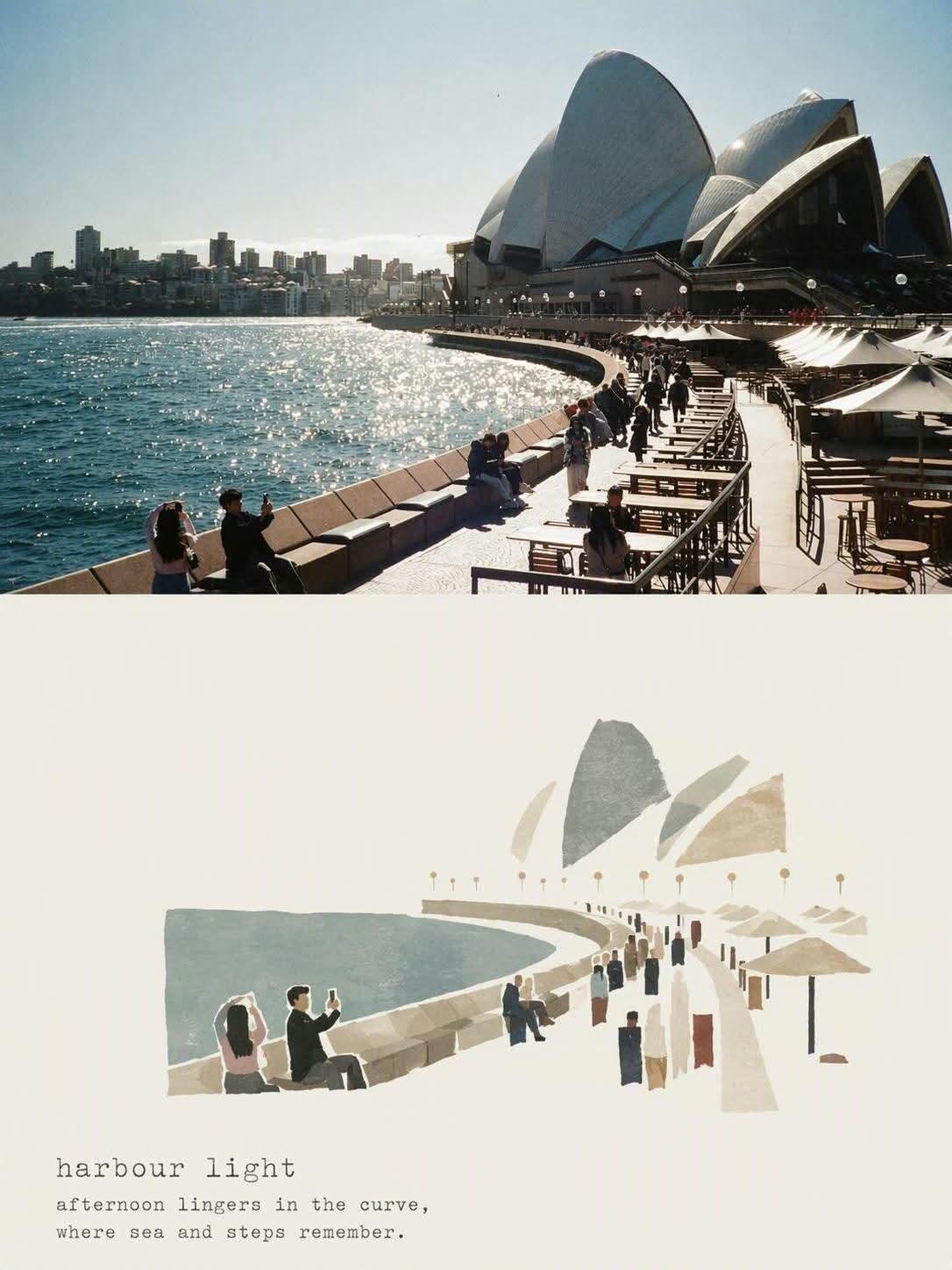
Transform the reference photograph into a minimalist editorial travel-journal poster. Preserve the recognizable architecture, curved waterfront promenade, sparkling sea, people, umbrellas, steps, and overall composition, but reinterpret the scene as a delicate hand-painted and screen-printed illustration. Use loose simplified shapes, fine imperfect ink outlines, muted blue, sea-green, warm beige, soft gray and terracotta accents, subtle watercolor washes, faded pigments, natural paper grain and slightly distressed vintage-print texture. Place the illustration on a warm ivory handmade paper background with generous negative space. Keep the architecture recognizable but artistic and simplified. Add elegant typewriter-style typography near the bottom reading “harbour light”, with the smaller line “afternoon lingers in the curve, where sea and steps remember.” Calm coastal mood, nostalgic travel diary aesthetic, sophisticated editorial composition, understated Japanese-inspired art zine, authentic handmade imperfections, premium print design, vertical 4:5 poster.
1
Details
GPT Image 2
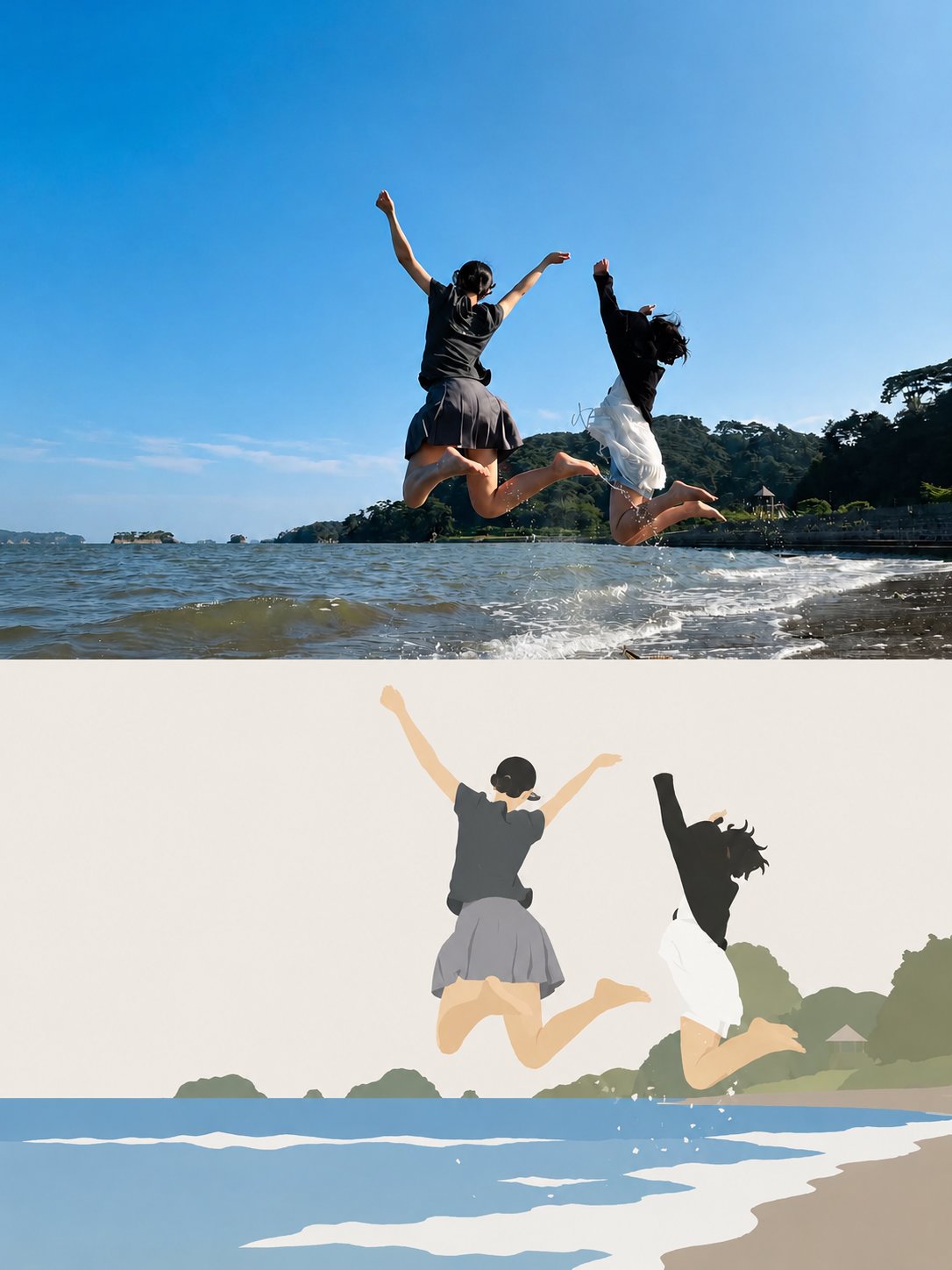
Create a stylized editorial illustration based on the reference photo, transforming the real beach scene into a sophisticated hand-painted cut-paper travel artwork. Show two young women joyfully jumping above shallow ocean water, captured from a low, wide perspective. Preserve the original composition, body poses, clothing silhouettes, jumping motion, shoreline, distant tree-covered island, bright blue sky, and splashing water. Use a minimalist Japanese-inspired paper-cut illustration style with clean organic shapes, layered flat colors, subtle paper grain, soft shadows, and slightly imperfect handmade edges. Simplify the people into elegant illustrated figures while keeping their poses recognizable: one woman wearing a dark charcoal short-sleeve top and gray pleated skirt, the other wearing a black long-sleeve top and flowing white skirt. Their arms are raised naturally and their legs are bent backward mid-jump. Replace realistic textures with soft layered shapes: pale blue ocean, cream sandy shoreline, muted green coastal vegetation, warm beige highlights, and a clear powder-blue sky. Add simplified white water splashes beneath their feet and subtle distant islands and trees. The final image should feel like a premium Japanese travel magazine illustration / handcrafted paper collage, calm, nostalgic, artistic, and playful. Maintain generous negative space in the sky, balanced composition, soft pastel color palette, clean silhouettes, subtle depth from layered paper, delicate shadows, high-end editorial design, no photorealism, no 3D CGI, no excessive outlines, no clutter, no text. Vertical 4:5 composition, high resolution, polished illustration, visually faithful to the reference pose and framing.
0
Details
GPT Image 2
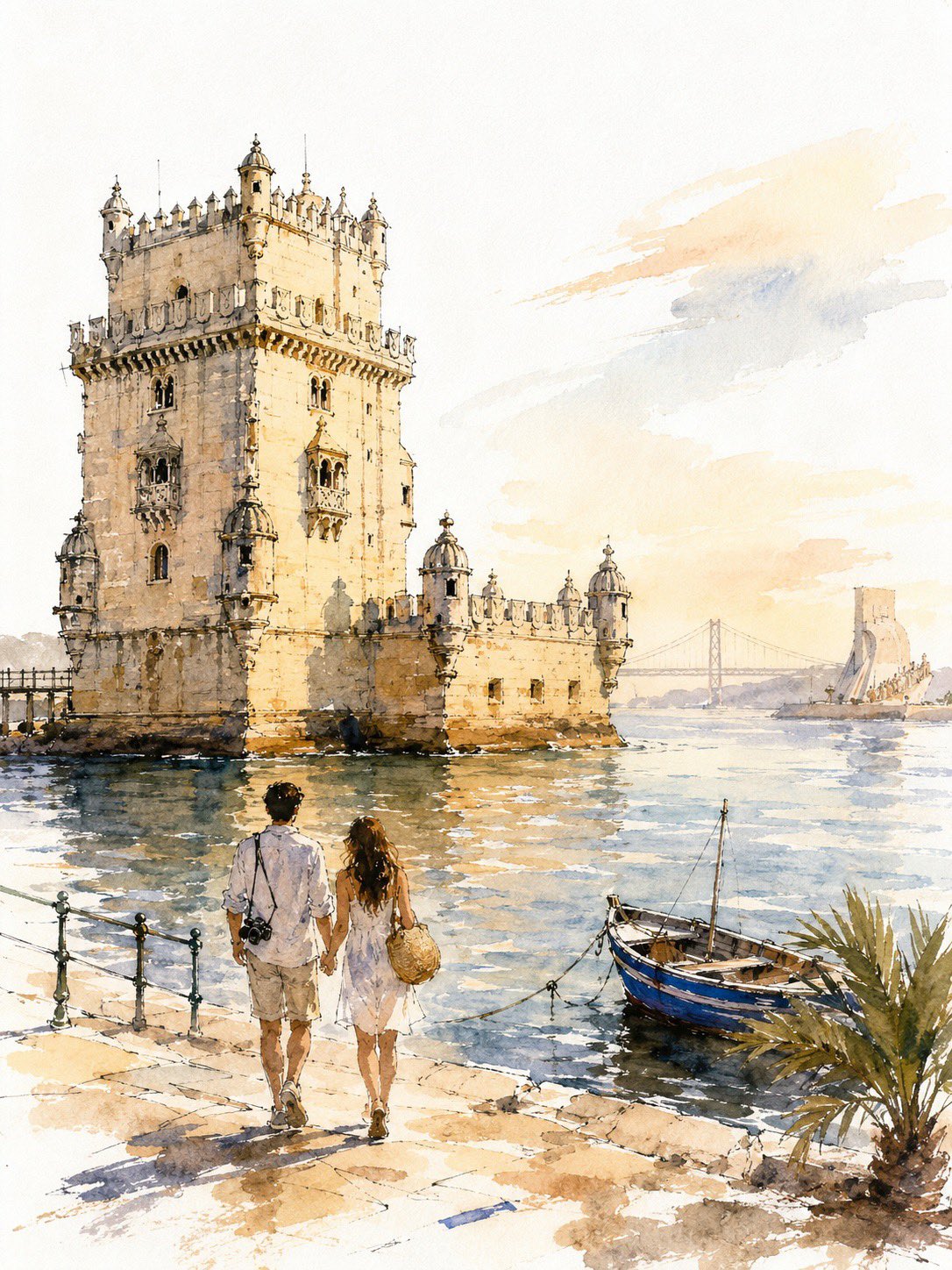
A loose, unfinished watercolor-and-ink travel sketch of New York: fast broken line, uneven washes, generous bare paper, golden-hour light. SUBJECT Hero: the Empire State Building from street level, frontal and slightly upward-tilted, full height inside the frame, 68–75% of poster height, anchored on the right third, base in the lower-middle third. Behind it: the Chrysler crown, small and low left, plus 2–3 soft masses standing in for Midtown. Nothing else — no Liberty, no Brooklyn Bridge, no Times Square. Bright white cold-press paper, no cream or sepia cast. IDENTITY LOCK — the only sustained drawing in the image (a) stepped Art Deco setbacks narrowing in stages toward the top (b) continuous vertical piers with recessed window bands — long strokes, never individual windows (c) the tiered crown lantern with mooring mast and antenna These carry the strongest contrast, are never cropped, never fade to blank paper. COUPLE A young couple seen from behind, arms linked, walking up the avenue, one glancing up at the tower. 14–18% of poster height, in the bottom 22–25% band. Mid-century-cut travel coats; a small handbag, a compact suitcase. 10–15 strokes each — silhouette, hair mass, coat line, legs. No faces, no fingers, no folds, no third figure. The most resolved human element in the image. LINE Contours break, skip, overshoot corners, and stop before meeting; weight varies within a single edge. Background architecture is gestural only — a roofline, a corner, an implied vertical. If a building reads in 5–8 strokes, stop at 8. Never window-by-window, never brick. Some forms exist as wash alone, no line. WATERCOLOR Never fill evenly. Within one surface the wash swings from deep pooled pigment on one side to bare paper on the other. Blooms and backruns with cauliflower edges, wet-in-wet bleed, hard pooled edges beside dissolved ones, dry-brush skips, granulation in the grain. Washes overshoot the ink by 5–10% in places and fall short elsewhere. No object is uniformly colored. Coverage 55–65%: leave bare paper across most of the sky, the distant city, sunlit faces, the outer 10–15% of the frame, and gaps in the pavement. Bare shapes are brush-formed and irregular, never rectangular. VALUE 6–10 fingernail-sized darks in burnt umber or dark indigo — setback shadows, window bands, under the awning, beneath the taxi and the couple, tower base. Drop them into damp wash so they bloom. Without these the image is a flat pastel smear. DEPTH Foreground strongest pigment and clearest line; distance at 15–25% pigment in dusty blue-gray and hazy peach with almost no line, grouped into 2–3 masses. LIGHT & COLOR Golden hour, light raking from the left so the tower has a lit face and a shaded face. Sky: 3–5 broad strokes, the rest bare paper, no detailed clouds. Warm limestone cream, pale apricot, warm gray, dusty steel blue, soft graphite. One saturated accent: taxi yellow. Props, 3 only — a yellow cab from behind, a lamp post, a striped awning edge. TEXT None anywhere: no title, caption, signage, storefront name, street sign, number, logo, or pseudo-lettering. Signs become abstract shapes. The top 15–18% stays clean and empty for titling added later. AVOID Photorealism, CGI, 3D render, generic AI architecture, hybrid or duplicated towers, extra setbacks, warped façade, repeating-window artifacts, mechanically even line weight, floating objects, roads into walls, inconsistent scale, visible faces, extra figures, flat even fills, uniform contrast at all distances, edge-to-edge painting, neon color, garbled text. Bare paper beats invented detail — everywhere except the identity features. RECOGNITION FIRST, VALUE SECOND, ATMOSPHERE THIRD, DETAIL LAST.
0
Details
GPT Image 2
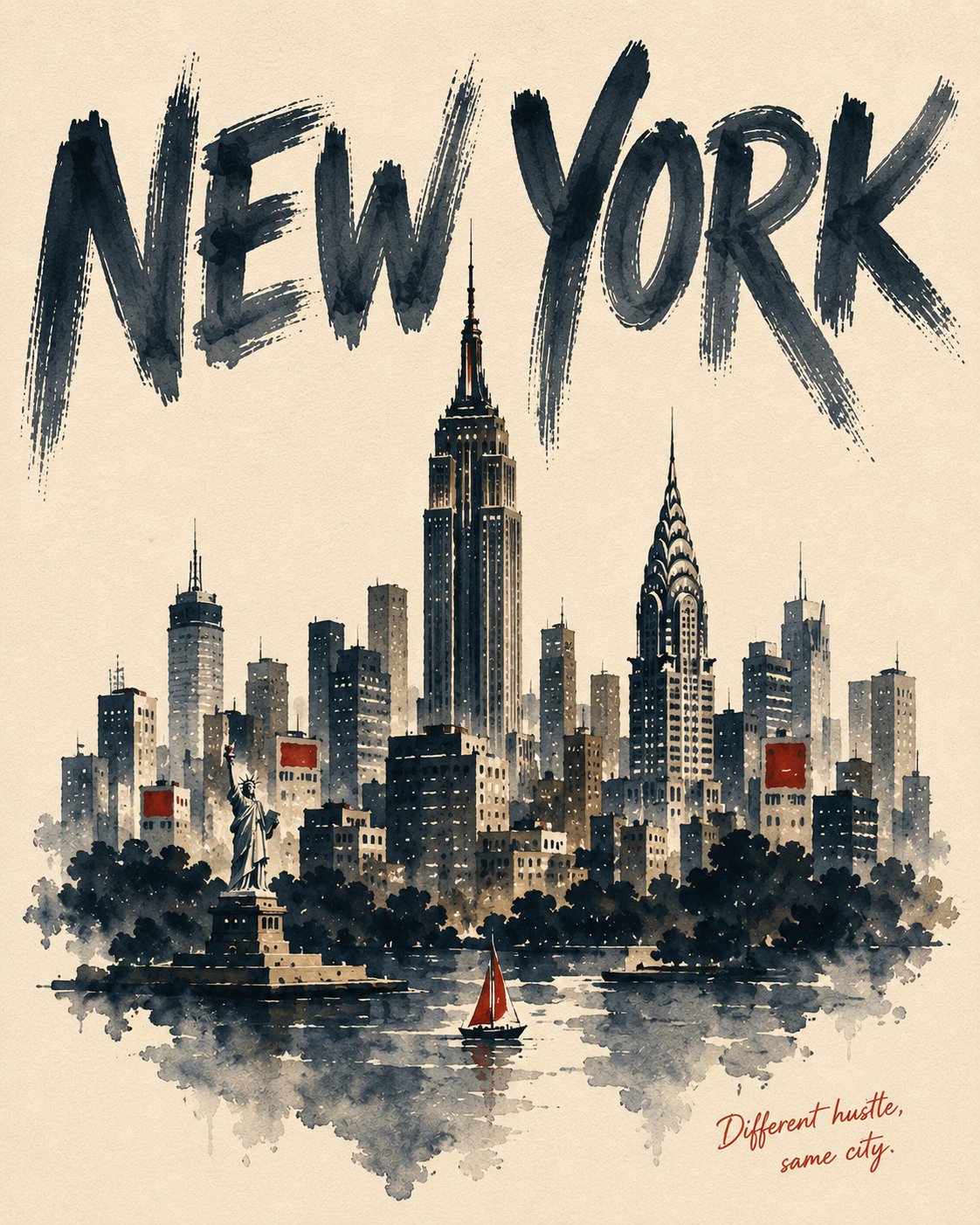
@Create image {CITY} — uppercase English city name {SUBJECT} — one hero landmark as the highest point, one secondary structure a step lower, a mid-rise or terrain band beneath, a closing mass of trees or water at the bottom — overlapping into ONE silhouette, real geography ignored, everything below it dissolving into bare paper {PALETTE} — MAIN (dark, carries structure and lettering) / ACCENT (only saturated color) / SUB1 / SUB2 (muted) {CAPTION} — 3–5 word English line, offhand, never explanatory --- [ASPECT RATIO] Vertical 3:4 [SUBJECT] {SUBJECT} [STYLE] Watercolor materiality first: wet-on-wet blooms, dark hard edges where a wash dried, density shifting within a single stroke as the water load changes. Pigment pools at the lower edge of each form; dry-brush passages split and let the cold-press tooth show through. A thick brush pen lays the main contours first — about 40 strokes, no hatching. Washes cross those lines 1–3 mm off register; color never doubles as the outline. Coverage 60 percent — the untouched paper is the brightest value in the image. Windows are short repeated strokes at uneven intervals, never drawn individually. Form comes from flat washes and line, never from modeling. [COLOR] Four only: {PALETTE}. Cream off-white paper ground, every color one step down in saturation for a vintage print tone. Accent covers 8 percent of the frame at most. [COMPOSITION] Subject mass in the lower two thirds with clear margins left and right; upper third is unpainted paper for the lettering. The tallest spire may pierce slightly into it. Sky and ground stay bare paper. [TYPOGRAPHY] Top: "{CITY}" in oversized heavy brush lettering, all caps, spanning nearly the full width, wide letter spacing, dry grain streaking white through the strokes, ends splitting. MAIN color. Bottom right: "{CAPTION}" small handwritten script, ACCENT color. Signage is abstract blocks of color — no other legible text. [NEGATIVE] photorealistic, 3D, airbrush, gradient shading, cast shadows, reflections, logos, watermarks, border frames, painted sky, gibberish lettering, evenly saturated full coverage, mechanical window grids, thin typography, serif or script display fonts, Aspect ratio 4:5.
0
Details


![Create a stunning 4:5 vertical fine-art sketch illustration of [STRUCTURE NAME] as if it is being dr — AI image prompt — GPT Image 2.5](https://cdn.ahaprompt.app/harvest-media/import-1789369018825-vy1v3g.jpg)
![Create a premium 4:5 vertical travel-poster illustration of [LOCATION] in a distinctive mixed-media — AI image prompt — GPT Image 2](https://cdn.ahaprompt.app/harvest-media/import-1788443182063-d4khwy.jpg)

![Create a beautiful vertical 4:5 pastel-colored paper painting featuring [COUNTRY] as an entire minia — AI image prompt — GPT Image 2](https://cdn.ahaprompt.app/harvest-media/import-1787306674841-q2jmw6.jpg)
![Create an exceptionally original minimalist architectural art poster featuring [LANDMARK] in [CITY, — AI image prompt — GPT Image 2.5](https://cdn.ahaprompt.app/harvest-media/import-1790608046909-bo6w1q.jpg)