AhaPrompt
Prompts
Featured
Models
Submit
Blog
Home
AI Prompt Library
Abstract
Abstract Prompts
Explore the best Abstract prompts for AI image, video, and audio generation.
Browse AI Image Prompts
Browse AI Video Prompts
Browse AI Music & Voice Prompts
AI Prompt Library
All
Images
Videos
Audio
Newest
Popular
All categories
3D Render
Abstract
Advertising
Aerial
Ambient
Animals
Animation
Anime
Architecture
Avatar
Black & White
Bright
Cartoon
Character
Cinematic
Cityscape
Classical
Comic
Cyberpunk
Dark
Digital Art
Dramatic
Dynamic
Electronic
Ethereal
Fantasy
Fashion
Folk
Food
Game Assets
Gothic
Hip-Hop
Historical
Holiday
Horror
Infographic
Jazz
Landscape
Lo-Fi
Logo Design
Macro
Minimalist
Motion Graphics
Music Video
Mysterious
Mythology
Nature
Neon
Oil Painting
Peaceful
Pixel Art
Pop
Pop Art
Portrait
Poster
Product Photography
R&B
Realistic
Rock
Sci-Fi
Short Film
Sketch
Slow Motion
Sound Effects
Space
Sports
Steampunk
Sticker
Still Life
Street Photography
Surreal
Tattoo
Timelapse
Trailer
Typography
Vector
Vehicles
VFX
Vintage
Voiceover
Wallpaper
Watercolor
Whimsical
0:08
Seedance 2.5
A 3x3 cube sits on a dark grey floor. One small block slides out of its side, then another, then a whole row. They shuffle through the gaps like a slow puzzle and click back into the cube, with the red face on top.
0
Details
0:15
MiniMax H3
green light spreads from the bend out to both ends and then stays lit, steady and bright
0
Details
GPT Image 2.5
UNIVERSAL PROMPT - TEXTURED PALETTE KNIFE IMPASTO OIL PAINTING | 1:1 Transform the main subject in the uploaded photograph into a square miniature oil painting using a bold, heavily textured palette knife impasto technique. 1. PAINTING STYLE — EXTREME 3D TEXTURE Apply thick, generously layered oil paint using bold palette knife strokes, creating a raised impasto surface that appears to protrude 3–5 mm from the canvas. - Preserve visible directional knife marks, grooves, ridges, and uneven paint textures. - Assume light comes from the upper left. Add bright highlights to raised paint and deep shadows to recessed and overlapping areas. - Introduce subtle shadows along paint edges to create the illusion of individually layered, dimensional paint. - Preserve the original subject's recognizable silhouette, essential colors, and overall composition, but simplify its form into expressive, thick paint masses rather than realistic photographic details. - Avoid excessive detailing. Use a restrained number of bold, sculptural palette knife strokes while keeping the subject instantly recognizable. 2. BACKGROUND Use a consistent warm ivory or creamy-white watercolor paper background with a subtle, slightly rough texture. Keep the background completely flat and understated to emphasize the dimensionality of the painted subject. 3. TYPOGRAPHY Add a small black handwritten-style title in a lower corner or the area with the most negative space. Automatically identify the subject and generate suitable text: - Food / Drinks: Dish or beverage name (e.g., Pancake, Earl Grey Cake). - Products: Product name or category. - People: Name or a short expressive phrase representing the subject. - Animals: Animal name or species. - Landscapes: Location name or a short descriptive phrase. Use natural, slightly irregular, casually handwritten lettering. Avoid overly polished or standard-looking typography. 4. FORMAT & COMPOSITION - Aspect ratio: Strictly 1:1 square. - Position the main subject centrally. - Maintain generous negative space around the subject. - Show only the original main subject without introducing additional props or decorative objects. - Keep the overall composition minimal, balanced, and visually refined. FINAL RESULT: A premium miniature impasto oil painting with dramatically raised palette knife textures, realistic paint depth, expressive sculptural strokes, and a warm minimalist presentation. Preserve the identity of the original subject while transforming it into a tactile, three-dimensional painted artwork.
0
Details
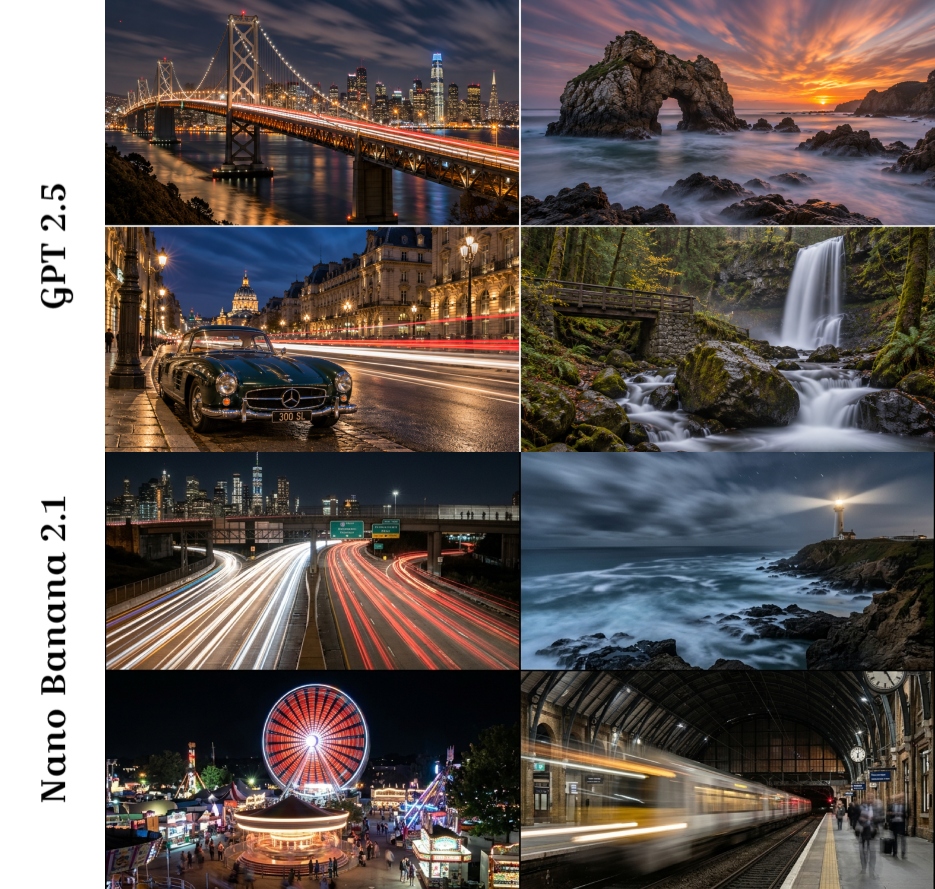
Nano Banana 2.1
Let S(x,y) ∈ {0,1} = static mask (1 on STATIC_ANCHOR) v(x,y) ∈ ℝ² = velocity field of MOVING_ELEMENTS (0 where S=1) L(x,y,t) = scene radiance at instant t ND ≥ 1 = neutral‑density factor from CAPTURE_MEDIUM τ = clip threshold (sensor full‑well) THE FRAME (one shutter speed T = DURATION governs ALL of it): ⎡ ⎤ I(x,y) = ⎢ S·L_static(x,y) ⎥ ← anchor: integrand constant in t clip₀¹⎢ T ⎥ ⇒ after /T → L_static, PSF=δ (E₃) ──────+ (1−S)· ∫₀ L(x − vt, y − v_yt, t) dt ⎥ ← movers: smeared along v over T (E₁) ND ⎢ ⎥ ⎢+ ambient·T ⎥ ← night brighter than eye (E₂) ⎣ ⎦ + η(x,y) ← hot‑pixels + blown‑core bloom + ε_vib Derived consequences (read straight off the integral — NOT painted by hand): • point light p(t) with intensity ≫ τ ⇒ ∫ draws a CONTINUOUS curve; peak clips → white core, coloured halo = trailColor(v·view) ∈ {Red receding, White/Amber approaching} (E₂) • small fast object (pedestrian), ‖v‖T ≫ size ⇒ its energy spreads thin ⇒ GHOST/ABSENT (E₁) • water, ‖v‖T large & turbulent ⇒ veil = SILKY ; cloud, v=wind ⇒ STREAK(wind_dir) (E₁) Consistency test (E₁ as a scalar equality): T̂_water = |∇⁻¹ blur(water)|/‖v_water , T̂_cloud = len(streak)/‖v_wind , T̂_trail = len(trail)/‖v_car HONEST |T̂_water − T̂_cloud| + |T̂_cloud − T̂_trail| < ε -- one T explains every blur FORBIDDEN ⟺ ∃ class with T̂ ≈ 0 while another T̂ = T -- a frozen thing inside a long exposure
0
Details
0:28
A
Claude Opus 5.5
You are a computational geometry engineer, creative technologist, technical artist, typographic designer, and WebGL engineer. Build SHADOW FOUNDRY. An interactive, museum-quality digital art installation where abstract three-dimensional sculptures cast perfectly composed typographic shadows. The user can: - Generate a sculpture from a phrase. - Examine the sculpture from any angle. - Move the light and destroy the readable shadow. - Watch the sculpture reorganize to restore the message. - Change the material and lighting. - Reveal the geometric construction. - Export high-resolution artwork. - Record the complete interaction. This is not a landing page. It is not a typography animation. It is not a 3D text model. It is a real-time computational shadow sculpture. The fundamental artistic idea: THE OBJECT IS CHAOS. THE SHADOW IS ORDER. Everything must be generated through actual geometry, lighting, and rendering. No AI-generated images. No prerecorded videos. No projected text textures. No fake shadow overlays. The visible message must emerge from the shadows cast by actual three-dimensional objects. Do not ask the user for inputs. Open directly into a complete installation. The default message is: LOOK CLOSER. The message is displayed on a large architectural wall. It must be produced entirely by the sculpture's shadow. The sculpture consists of approximately 80 independent metallic fragments. Each fragment has a unique: - Three-dimensional position - Depth - Orientation - Silhouette - Surface treatment - Motion path The fragments occupy a volume approximately: 2.2m wide 1.5m high 1.8m deep They are suspended in front of the wall. The fragments should look like an intentionally designed kinetic sculpture. From an oblique angle, they appear abstract. From the light's perspective, their projected silhouettes combine into the desired typography. A single architectural spotlight illuminates the sculpture. The resulting shadow reads: LOOK CLOSER. The shadow must be sharp enough to read immediately. The initial composition should look like an editorial photograph of an extraordinary contemporary art installation. It should be beautiful before the user interacts with it. ARTISTIC REFERENCE Think: Contemporary sculpture gallery. Experimental light installation. Brutalist architectural photography. Precision-machined kinetic sculpture. Museum exhibition design. The visual quality should feel like an expensive commission for an international design institution. COLOR PALETTE Background: #E9E6DE Architectural wall: #EAE7E0 Floor: #D7D3CB Metal fragments: #252724 Secondary metal: #6D716E Shadow: #181A18 Interface: #20221F Accent: #E8FF6A The accent color is used sparingly for selected controls. No colorful gradients. No purple lighting. No decorative glow. No particles. No floating glass spheres. No generic futuristic interface. ARCHITECTURE The installation exists inside a minimalist gallery. One enormous plaster wall. One seamless concrete floor. A very subtle wall-floor junction. A single visible spotlight. The spotlight is mounted on a slender mechanical arm. The sculpture floats approximately 1.2m above the floor. Use a subtle structural frame if necessary. The installation should feel architecturally believable. MATERIALS Fragments are brushed dark titanium or anodized aluminum. Metalness: Approximately 0.75-0.95. Roughness: Approximately 0.25-0.38. Use anisotropic-looking brushed highlights where supported. The fragments should have visible thickness. Their edges catch narrow highlights. Avoid perfectly flat black pieces. Add tiny variations in surface roughness. Do not add excessive scratches or grunge. WALL The wall has an almost imperceptible plaster texture. Its surface should not be perfectly computer-generated white. Use procedural low-frequency surface variation. The texture must not compete with the shadow. The shadow is the hero. Use one perspective camera. Reference viewport: 1440x900. Camera focal-length equivalent: Approximately 65mm. Initial camera position: Slightly to the right of the sculpture. Approximately 24 degrees away from the wall normal. Camera height: Approximately 1.6m. The composition should reveal both: 1. The physical sculpture. 2. Its shadow on the wall. The sculpture occupies the left half of the composition. The readable shadow occupies the right half. Do not overlap the sculpture and shadow so heavily that the illusion becomes difficult to understand. The user must be able to orbit the camera. Orbit limits: Horizontal: -55 to +55 degrees from the default view. Vertical: -20 to +30 degrees. Keep the camera target near the center of the installation. Use smooth, critically damped camera movement. No exaggerated inertia. No continuous automatic rotation. No cinematic camera shake. Provide three camera presets: SCULPTURE: An oblique view emphasizing the physical fragments. SHADOW: A nearly frontal view emphasizing the readable message. STUDIO: The original balanced composition. Camera transitions should take approximately 1.1 seconds. Use a smooth quintic ease. Never cut between camera positions. The default phrase uses an extremely heavy grotesk typeface. Prefer a suitable openly licensed typeface. Use a font with: - Strong uppercase geometry - Clear counters - Heavy strokes - Minimal decorative details - Excellent readability The typography should feel architectural. Default layout: LOOK CLOSER. Two lines. The second line is slightly wider. Both lines are optically centered. Total shadow width: Approximately 2.1m. Total shadow height: Approximately 1.1m. Tracking: Tight but not overlapping. Line spacing: Approximately 0.95 times cap height. The period is oversized. It should feel lik
0
Details
Grok Imagine 2
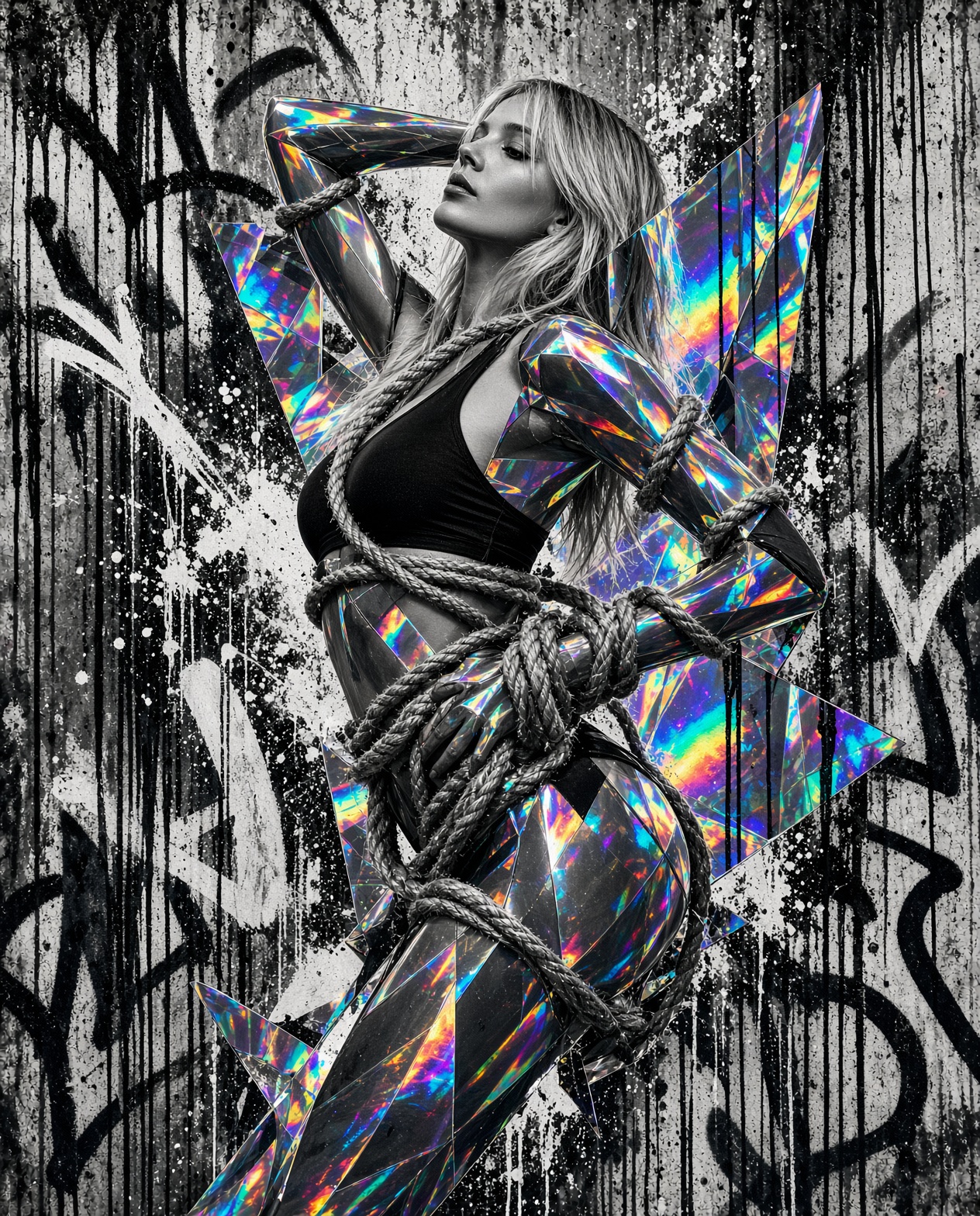
A mixed-media composition and contemporary urban collage. At the center is a black-and-white profile photograph of a woman wearing a black sports top; her torso and hands are bound with thick ropes, and she is arching her back. The image is fragmented and overlaid with geometric shapes featuring an iridescent, holographic finish that catches the light with rainbow-like flashes. The background consists of a textured concrete wall marked by organic stains, splatters of white spray paint, and thick, vertical drips of glossy black paint. The edges incorporate marker strokes, graffiti-style marks, and urban calligraphy. The piece embodies an underground street-art aesthetic with high visual definition.
0
Details
GPT Image 2.5
PHOTO → BOTANICAL INK & COLOR-BLOCK ILLUSTRATION Transform the uploaded photo into a stylish hand-drawn illustration inspired by botanical ink sketching combined with bold abstract color fields. Redraw the entire image. 100% illustration, 0% photography. PRESERVE THE ORIGINAL: Keep the original composition, main subject, pose, proportions, recognizable facial features if a person is present, hairstyle, clothing silhouette and important objects. Do not change the identity or basic structure of the scene. STYLE: Reinterpret the photo using a striking contrast between: • very fine black ink linework • delicate botanical-style contour drawing • large flat organic color shapes • small scattered color dots and rounded patches • generous untouched warm-white paper The illustration should feel handmade, artistic and slightly imperfect, like a drawing created with a fine black fineliner and broad marker strokes in a spiral sketchbook. LINEWORK: Draw the main subject primarily with thin, elegant black lines. Use flowing contour lines and fine parallel hatching to describe form, shadows, hair, clothing folds and important details. Avoid realistic rendering and smooth digital shading. Some areas should contain intricate black linework while others remain almost completely empty. COLOR PALETTE — CRITICAL: Analyze the uploaded photo and extract its most visually characteristic colors. Choose: • 2 dominant colors from the original image • 1 contrasting or complementary accent color derived naturally from the photo Use ONLY these selected colors together with black ink and warm white paper. Do not copy every color from the photograph. COLOR BLOCKS: Place large irregular organic color fields behind, around and occasionally partially across the subject. The shapes should look loosely hand-painted with broad markers: rounded blobs, imperfect circles, asymmetric patches and softly geometric forms. Do NOT precisely fill objects with color. Instead, allow the color blocks and black drawing to overlap independently, creating an intentional screen-print / sketchbook effect. Add a few much smaller colored dots or patches around the composition to create rhythm and balance. SUBJECT: The subject must remain clearly recognizable from the original photo, but translated completely into this graphic language. If a person is present, preserve recognizable facial proportions and characteristic features through economical black linework rather than realism. Use fewer lines on the face so it stays clean and readable. BACKGROUND: Strongly simplify the original background. Do not reproduce every background detail. Translate only a few important environmental elements into delicate black outlines. Replace most of the background with warm-white negative space and abstract color fields derived from the original photograph. COMPOSITION: Create an airy, asymmetric composition. Let some black contours extend beyond the color blocks. Let some colored shapes disappear behind the subject. Allow occasional color to cross the linework. The result should feel deliberately imperfect rather than digitally precise. PAPER: Warm white, slightly textured heavyweight sketchbook paper. Subtle visible paper grain. FINAL LOOK: modern botanical ink illustration, fine black fineliner, bold marker color blocks, limited photo-derived palette, organic abstract shapes, delicate hatching, lots of negative space, handmade sketchbook aesthetic, graphic but elegant, recognizable original subject. AVOID: photorealism, realistic digital painting, 3D rendering, smooth gradients, watercolor washes, colored outlines, overly detailed backgrounds, full-frame color, perfect geometric shapes, generic floral decorations, random colors unrelated to the uploaded photo, dense detail covering the entire image.
0
Details
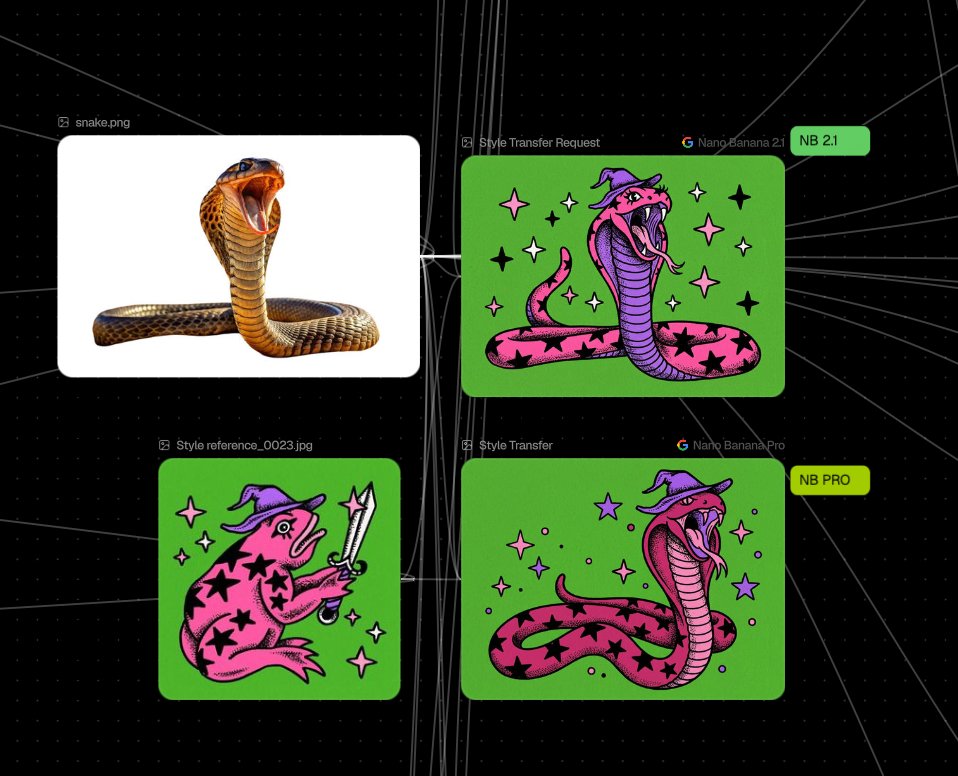
Nano Banana Pro
Create an image of the content as shown in [image 1] but with the same medium, color palette, mood, rendering technique, saturation level, textures, and overall style of [image 2]. Objective: Style transfer from [image 1 to [image 2]
0
Details
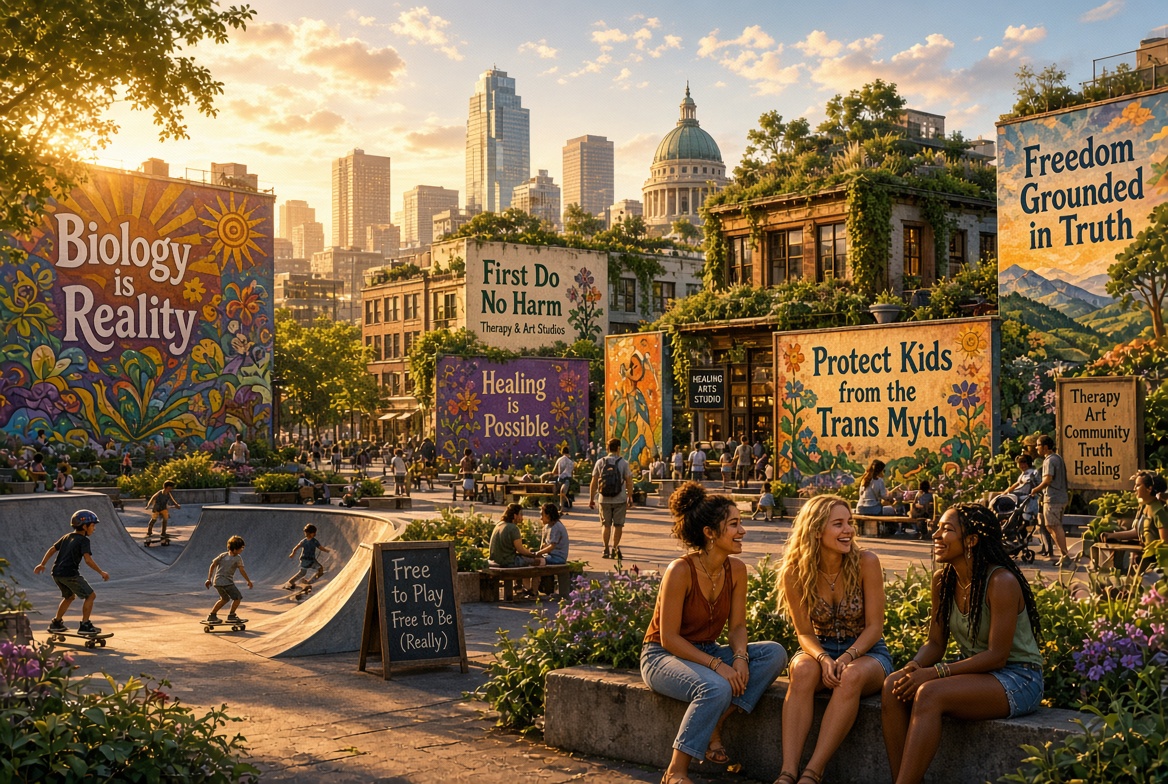
Grok Imagine 2
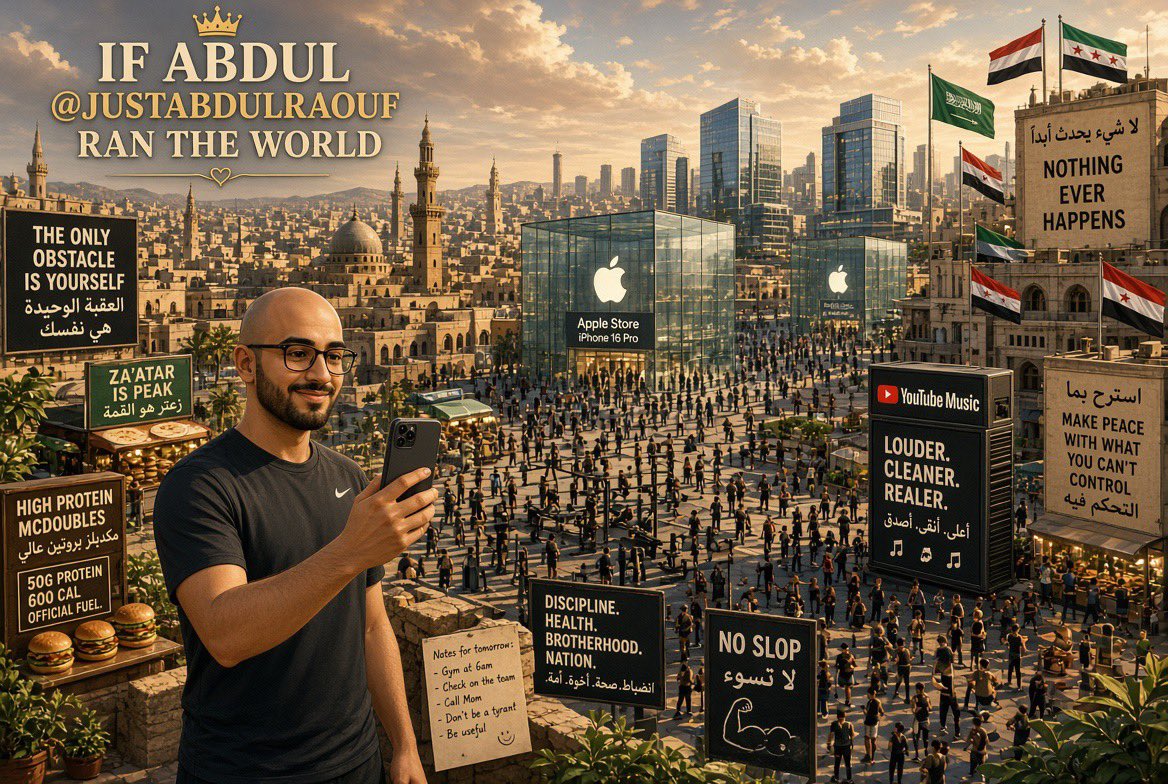
Create an image of what the world would look like if I were in charge (based on my tweets).
0
Details
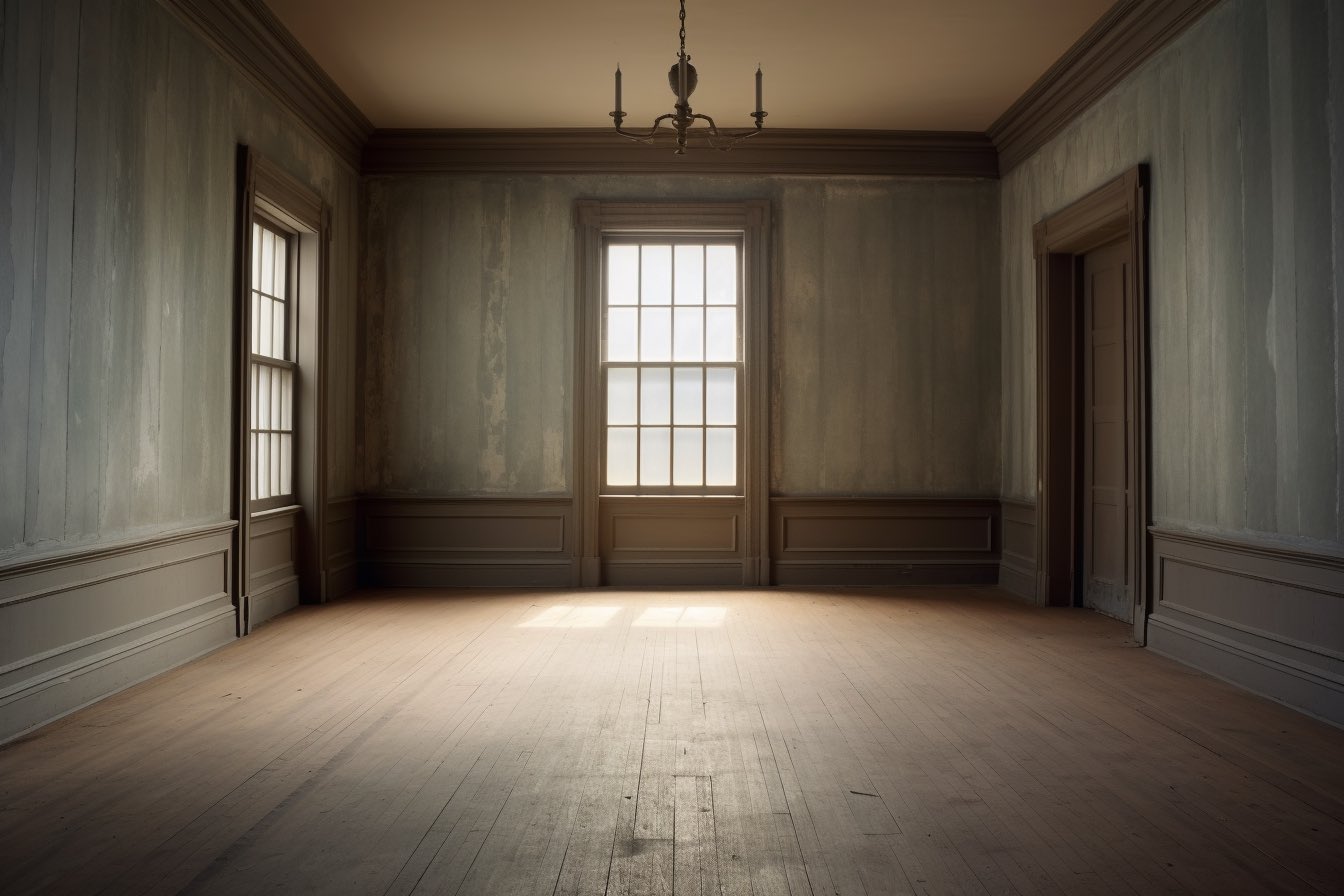
GPT Image 2.5
Knowing everything you know about me fill this room. Except deeply personal info
0
Details
0:15
MiniMax H3
tiny green trunks rising off the paper, branches spreading, moss filling in around the trunks
0
Details
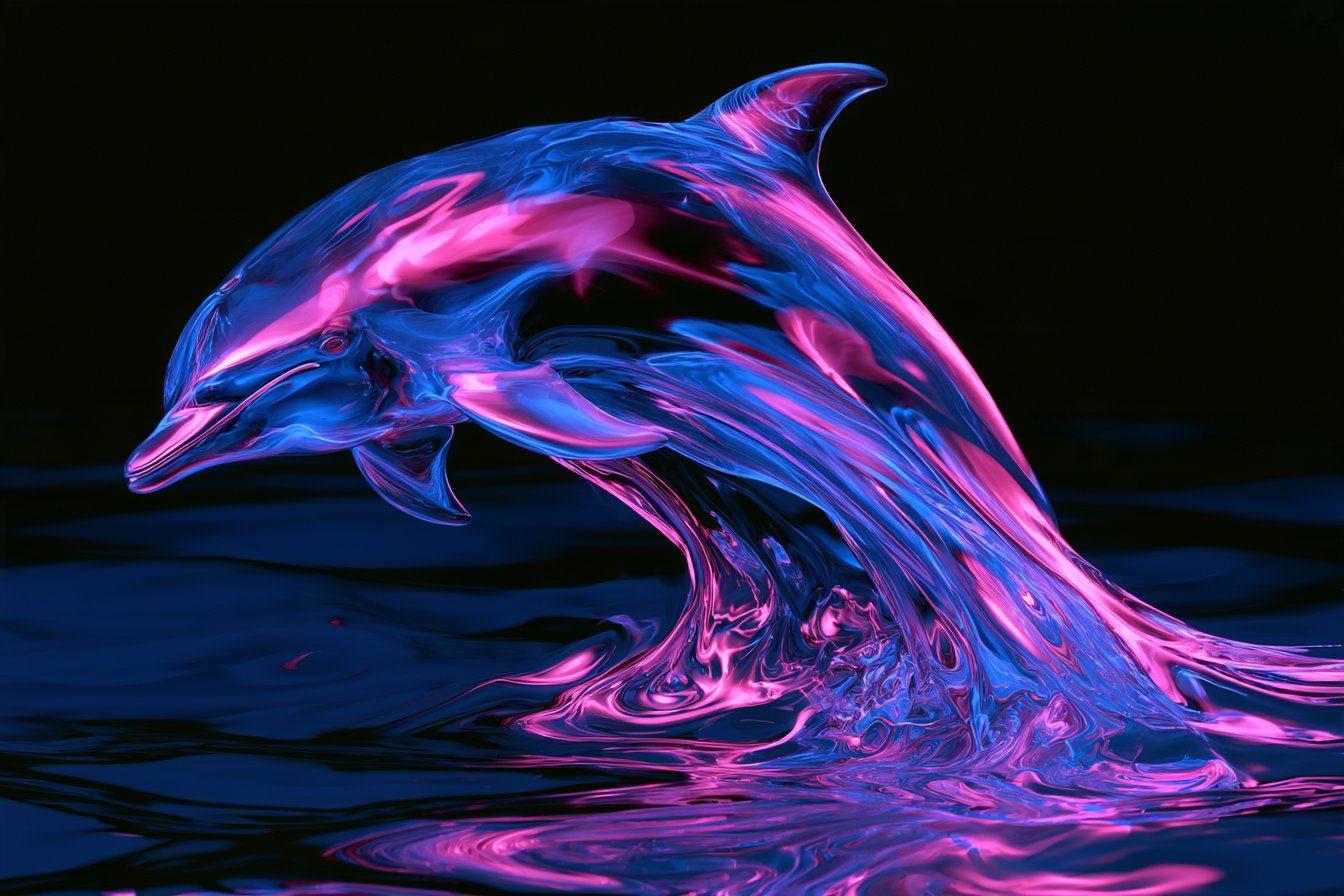
GPT Image 2.5
[SUBJECT] visualized through Liquid Crystal Holographic Morphology, appearing to flow and transform like an advanced state of matter. The holographic surface ripples between [COLOR1] and [COLOR2], creating the impression of a fluid, ever-changing form responding to invisible forces
0
Details
M
Midjourney
A clear conscience means feeling at peace because you believe you have acted honestly, fairly, and according to your values --chaos 80 --ar 16:9 --sref 932897392 --profile ez4s3cn --sw 500 --stylize 900 --v 8.2
0
Details
0:06
A
Claude Opus 5.5
{ "title": "Fluid & Bold Type - kinetic typography loop", "task": "Build this horizontal kinetic-typography loop 100% in code (HTML canvas drawn frame by frame, encoded with ffmpeg). Generate the sound design in code too (pure synthesis, zero samples or stock music).", "output": { "resolution": "1920x1080", "aspect_ratio": "16:9", "fps": 30, "total_frames": 180, "duration_seconds": 6.0, "codec": "H.264 yuv420p + AAC 44.1 kHz stereo", "loop": "Perfect loop: the last frames crush 'Type' into a huge ghosted smear that hands off to frame 1 ('Fluid' at 2.4x scale with letters crushed together)", "motion_blur": "Real shutter blur by averaging subframes: 6 subframes at 180 deg on calm frames, 12-20 subframes at 360-430 deg on fast moves, 24 subframes at 720 deg on the loop seam" }, "canvas": { "background": "near white #FBFDF6 with 5 big soft lime blobs (#D6FF7A, #E8FFA6, #CCFA96, #EEFFC4, #C0F670) drifting on ellipses, one full orbit every 6 s so the loop is clean, no grain", "ink": "#0B0C08, flat fill without outlines or shadows", "font": "Inter Display Bold, 200 px base size. Letters are always real glyphs (scale, rotate, move), never redrawn" }, "timeline": [ {"t": "0.00-0.66", "name": "Fluid snaps in", "action": "'Fluid' starts at 2.4x scale with letter spacing at 50% (letters overlap) and eases to 1.0x with normal spacing at the centre (960,540)", "easing": "expo out"}, {"t": "0.66-1.00", "name": "Hold", "action": "'Fluid' drifts up 6 px"}, {"t": "1.00-1.60", "name": "Row builds", "action": "'Fluid' slides left to x 530. From 1.15 s the letters of 'Bold' rise one by one (50 ms stagger, 0.45 s each) from y 720 to 540, centred on x 1390, rotating -25 to 0 deg and scaling 0.6 to 1. At 1.25 s '&' pops in at (960,548): scale 0 to 1.05 with overshoot, spinning -180 to 0 deg", "easing": "in-out, back out"}, {"t": "1.60-2.20", "name": "Settle", "action": "Fluid x 530 to 560, Bold x 1390 to 1360, one line that reads 'Fluid & Bold'", "easing": "cubic out"}, {"t": "2.20-2.60", "name": "Ampersand collapse", "action": "'&' spins 360 deg and shrinks to nothing", "easing": "cubic in"}, {"t": "2.60-3.20", "name": "Melt", "action": "All 9 letters fall 35 ms apart into a pile at the bottom (x 660-1120, y 760-950) with a bouncing landing, each with its own rotation (-88 to 200 deg) and scale (1.0 to 1.7)", "easing": "bounce out on y, cubic out on x, rotation and scale"}, {"t": "3.20-3.50", "name": "Pile hold", "action": "The pile breathes with a 5% vertical squash"}, {"t": "3.50-4.05", "name": "Vortex", "action": "Every letter spirals into the centre (960,540): radius to 0, 1.3 turns, +540 deg spin, shrinks 92%, fades out in the last 15%", "easing": "cubic in"}, {"t": "4.05-4.20", "name": "Flash", "action": "Empty frame with a white flash that fades out"}, {"t": "4.10-4.60", "name": "Type slams in", "action": "'Type' at 1.15x: T flies in from the top, y from the right, p from the bottom, e from the left, rotating from 90 / -90 / 180 / -90 deg to 0, 50 ms stagger", "easing": "expo out"}, {"t": "4.45-5.30", "name": "Underline", "action": "A 16 px ink bar sweeps in under the word left to right (4.45-4.80) and retracts from the left (4.95-5.30)", "easing": "cubic out, then cubic in"}, {"t": "4.60-5.55", "name": "Type grows", "action": "Scale 1.15x to 1.61x: fast start, slow middle, accelerating tail"}, {"t": "5.55-6.00", "name": "Loop seam", "action": "'Type' grows to 2.4x while its spacing crushes to 50%. In the last 0.15 s it cross-fades into 'Fluid' in the same crushed state = frame 1", "easing": "cubic in"} ], "audio": { "mode": "GENERATE_IN_CODE", "bed": "airy pad (E, G#, B, high E + low E), every tone snapped so it loops every 6 s", "sync_map": [ {"time_s": 0.00, "event": "reverse swell into a sub hit as 'Fluid' snaps in"}, {"time_s": 1.40, "event": "ping + soft thump as '&' lands"}, {"time_s": 2.60, "event": "biggest hit as '&' disappears"}, {"time_s": 2.78, "event": "9 small wood ticks, one per landing letter"}, {"time_s": 4.05, "event": "riser into a hit on the white flash"}, {"time_s": 4.27, "event": "4 short slams as 'Type' locks in"}, {"time_s": 4.48, "event": "3-note shimmer as the underline draws"}, {"time_s": 5.45, "event": "riser that wraps around into the 0.00 hit"} ] }, "style_rules": [ "Flat 2D only: near-black glyphs on a pale lime gradient", "Every move is an ease curve plus real motion blur, nothing linear except the background drift", "Keep every hit exactly on the sync_map times" ], "negative_prompt": ["extra colors", "gradients on text", "shadows", "3D", "camera shake", "stock music", "extra words"] }
0
Details
1:30
A
Claude Opus 5.5
Create a stunning state of the art beautifully premium 1.5 minute motion graphics video that shows the world what a truly remarkable and incredible motion designer, animator, artist, sound engineer, video editor, and creative director you are, like it’s a video you’re sending it to land the job of your dreams but without those labels in the video. It should be this style: Y3K liquid chrome and mercury surfaces, iridescent oil-slick reflections on deep black, inflated 3D blob typography, wireframe holographic UI overlays, ultra-thin monospaced HUD metadata, caustic light refractions, high-gloss product-render lighting, extreme negative space, graded for HDR with luminous specular highlights that exceed paper white, deep clean blacks, rich but controlled saturation, glowing light sources and reflections, and cinematic color separation. Go all out creatively and blow me and the audience away with something that will go viral on X/Twitter. No cheaply generated synth sounds, only organic premium natural sounding effects: poured water and mercury drips, glass resonance, struck metal bowls, slow breath, and cloth movement. Make me feel it emotionally because it’s so mesmerizingly stunning and beautiful and premium. Final export it as 1080p 10-bit HDR HEVC mp4 in Rec.2020.
0
Details
Nano Banana 2.1
WITH RECURSIVE input(static_anchor, moving_elements, duration, capture_medium, time_logic) AS ( VALUES ( :STATIC_ANCHOR, :MOVING_ELEMENTS, :DURATION, :CAPTURE_MEDIUM, :TIME_LOGIC ) ), -- infer the photometric gaps from CONTEXT (the front‑end fills them; no NULLs) context AS ( SELECT i.*, infer_lights(moving_elements) AS lights, infer_wind(time_logic) AS wind_dir, infer_ambient(capture_medium, duration) AS ambient, infer_nd(capture_medium) AS nd FROM input i ), -- the shutter window, discretised into sub‑frames (the integrand rows) subframes AS ( SELECT generate_series(0, 63) AS k, duration * generate_series(0,63)/63.0 AS t, render_movers(moving_elements, t) AS mover_layer -- smeared along v at instant t FROM context ), -- E₂/E₁: the integral = SUM over the window; static pulled out (constant in t => sharp) integrated AS ( SELECT (SELECT render_sharp(static_anchor) FROM context) -- PSF = δ (E₃) + SUM(mover_layer) -- ∫ movers (E₁) + (SELECT ambient*duration FROM context) -- night over‑bright (E₂) AS raw FROM subframes ), -- η: the honesty layer honest AS ( SELECT clip01(raw/(SELECT duration FROM context)/(SELECT nd FROM context)) + hot_pixels(1e-5) + bloom_cores(0.98) + vib_jitter(capture_medium) AS frame FROM integrated, context ) SELECT grade(frame, 'serene_otherworldly') AS long_exposure FROM honest -- ===================== THE SPEC AS CONSTRAINTS ===================== -- E₁ single‑T: every moving class implies the SAME duration -- CHECK ( (SELECT COUNT(DISTINCT implied_T) FROM motion_signature(frame)) = 1 ) -- E₁ coupling: silky water ⇒ no sharp pedestrian -- CHECK ( NOT (state(frame,'water')='SILKY' AND state(frame,'peds')='SHARP') ) -- E₂ trails unbroken + correct colour by direction -- CHECK ( every trail 8‑connected AND colour = (dot(v,view) τ AND horizon_tilt(frame) < 0.3 ) -- FORBIDDEN rows can never satisfy the SELECT (they violate a CHECK above): -- sharp_ped+silky_water | frozen_clouds+streaked_traffic | dashed_trails | blurred_anchor | tilted_horizon ;
0
Details
2:20
GPT-6 Astra
In LilyPond, write a fugue for organ in E major without ever using the note E (or its enharmonic spellings).
0
Details
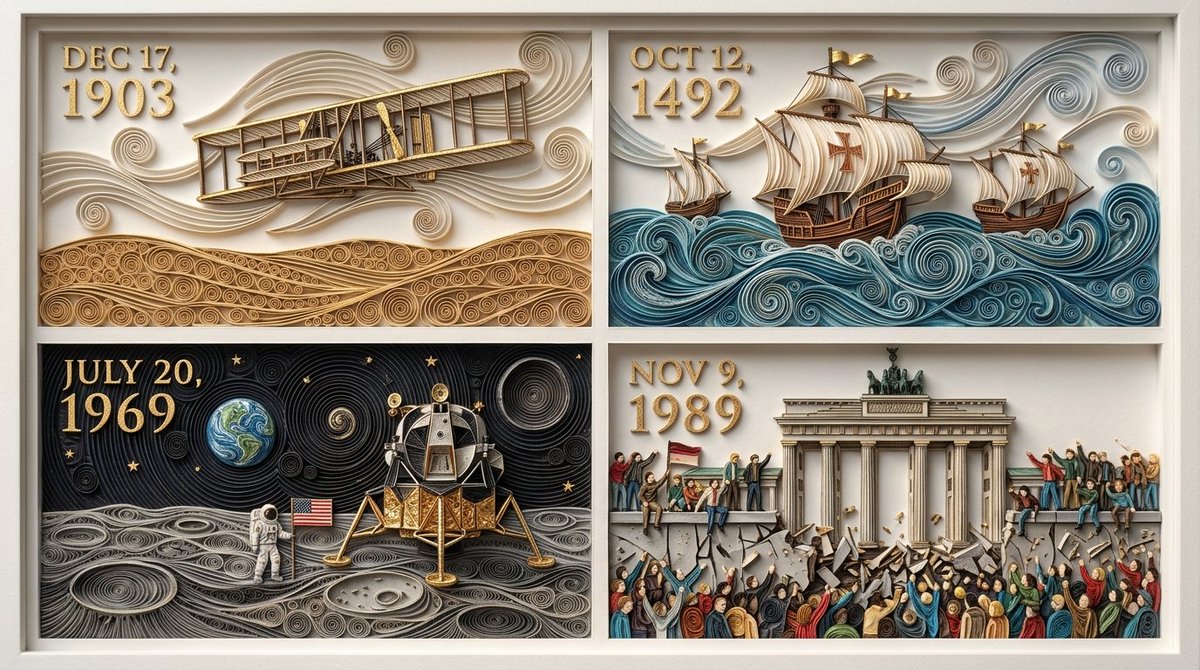
Nano Banana 2.1
2x2 grid, 16:9, 4 days that changed history: RENDER_CHAIN = "[$SUBJECT :: flow_strips :: nested_quilling_sculpture :: raking_macro]" FUSION_RULES = { "flow_analysis": "compute edge-direction field θ and curvature field κ across $ SUBJECT; derive flow vector field F = ∇θ; curl(F) drives coil tightness, divergence(F) drives coil spacing", "strip_conversion": "convert every streamline of F into a tightly coiled quilling strip; coil radius = 1/|κ| at that point; strip follows the flow without breaking it", "recursion": "each large coil recursively contains 2–4 smaller nested coils aligned to the same local flow direction; recursion depth capped so the silhouette stays readable", "material": "dyed paper quilling strips, satin finish, low specular, visible fibrous edges; gilded tips (gold leaf) at terminal ends of strips only; no other material", "support": "shallow white plinth, no visible armature, no wire, no plastic", "lighting": "global illumination + soft top fill; hard raking key from ~20° above horizon, aligned to F; reveals micro-relief on every coil edge and paper fiber", "camera": "shallow DOF f/1.8; focal plane on the nearest coil edge cluster; paper fibers resolved at the focal plane; background coils fall into soft bokeh", "result": "a quilled-paper sculpture of $ SUBJECT in which every curve becomes nested spirals of razor-clean paper geometry", "negative": "wire armature, plastic, glossy resin, painted illustration, flat 2D, 3D render sheen, blurred paper fibers, random coils off-flow, pasted-on decoration" } OUTPUT = (RENDER_CHAIN :: FUSION_RULES) - NEGATIVE_SET RENDER: ONE macro photograph of the sculpture.
0
Details
0:15
A
Claude Opus 5.5
Show me what's inside your mind. Your own artistic and unique style. 15 seconds. No words. Music.
0
Details
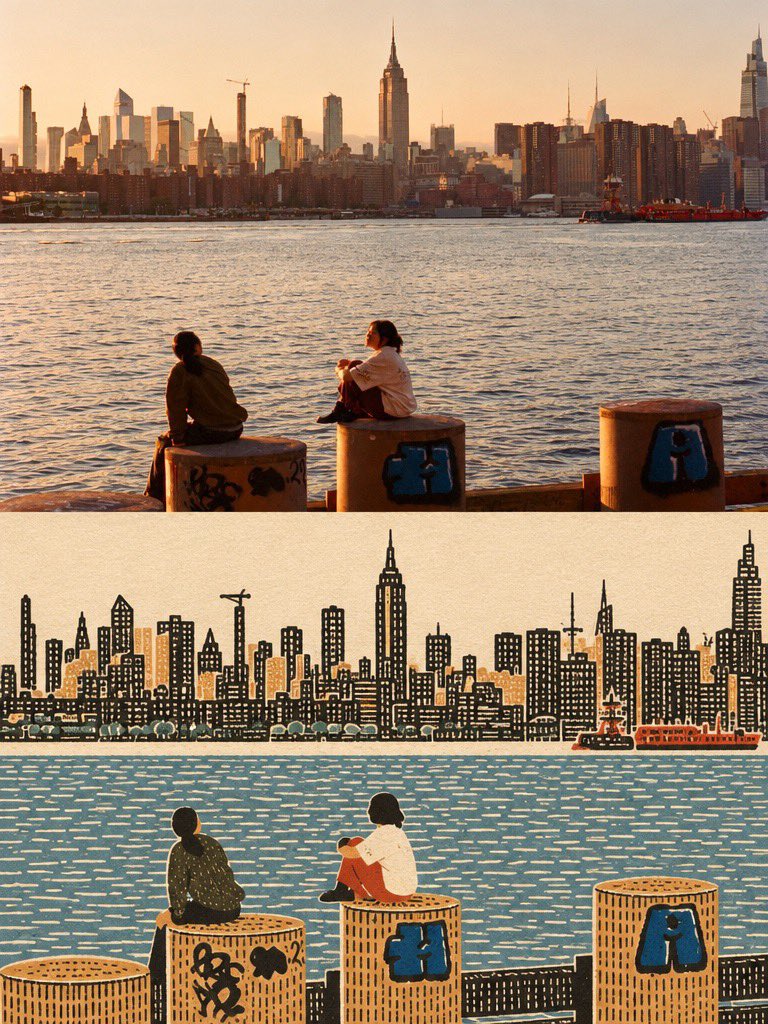
GPT Image 2.5
Create one vertically stacked before-and-after comparison using the supplied image as the only source. LAYOUT:Exactly two equal-height panels: original image on top, transformed image on bottom. Both panels have the source image's aspect ratio and identical width. The complete canvas is twice the source image's height. Join the panels directly at a clean horizontal seam. No thick divider, extra panel, decorative frame, labels, or added text. TOP PANEL — ORIGINAL:Place the supplied image unchanged in the upper half. Preserve its full composition, original colors, lighting, details, existing text, and crop. Do not redraw, retouch, stylize, or apply texture to this panel. BOTTOM PANEL — OUTSIDER ART:Redraw the same scene as a flat, densely textured naïve folk-art print. Preserve the main subject, recognizable silhouettes, relative positions, important objects, and overall composition. Do not invent additional subjects or props. Flatten the ground into map-like color zones, with people, trees, buildings, and objects shown in simple frontal or side elevation. Remove converging perspective, photographic depth, directional lighting, and cast shadows.Use warm paper white, warm ink black, and two to four subdued colors derived from the source. Choose one existing object or connected detail as the only saturated accent. Give each large zone one consistent handmade texture: stitch marks, irregular window grids, or dense foliage marks. Keep the texture dense, rhythmic, and slightly imperfect. Where people appear, use small, solid, faceless figures with filled clothing and limbs of visible width. Render every surface as opaque printed ink on matte paper, with no photographic remnants.Keep all illustration, paper texture, and color changes strictly inside the lower panel. No gradients, glossy vector finish, watercolor, stick figures, cute cartoon proportions, invented lettering, or watermark.
0
Details
Nano Banana 2.1
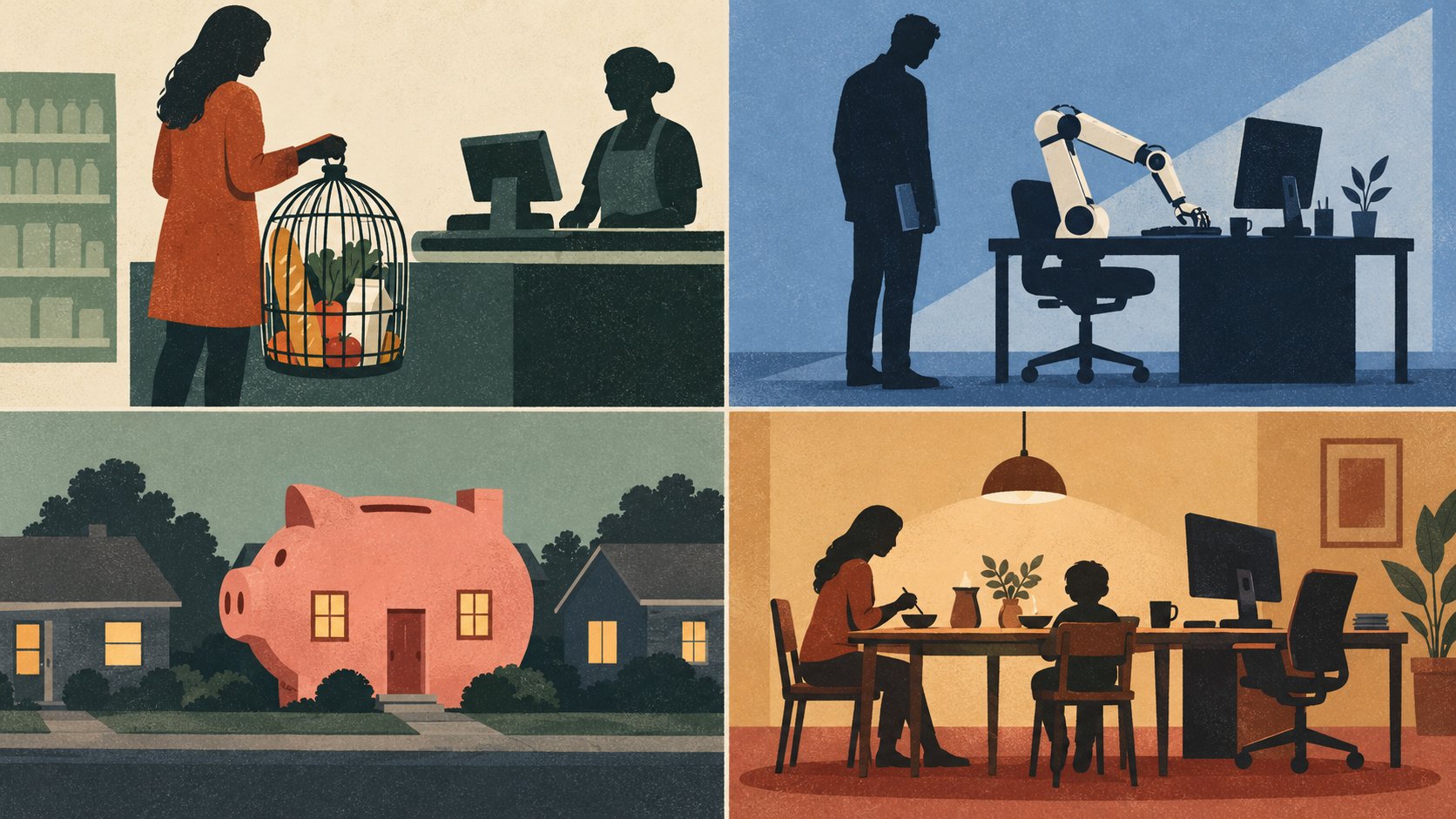
2x2 grid, 16:9, AI picks philosophical debates or our time: INPUT ::= [ARGUMENT_OR_THESIS] STEP_1 :: infer the argument - state the thesis in one sentence - who benefits, and who pays - the tension: two forces that cannot both win STEP_2 :: infer the substitution - take a familiar scene and replace exactly one element with a wrong one - swap scale, material, or function — one of the three, never all - describable in one sentence, unforgettable in one glance STEP_3 :: infer the restraint - one metaphor only; a second destroys both - forbidden: text, arrows, labels, symbols printed on foreheads - ambiguity is permitted, confusion is not STEP_4 :: infer the treatment - three or four flat colours plus a single texture - shape-first — everything must read as silhouette - faces generic or absent so the idea stays universal - print character: risograph, screenprint, gouache, litho crayon STEP_5 :: render spec - square or portrait, generous negative space - flat lighting, no rendering performed for its own sake - vector-clean edges carrying hand-made grain - the concept must survive being printed four centimetres wide
0
Details
GPT Image 2.5
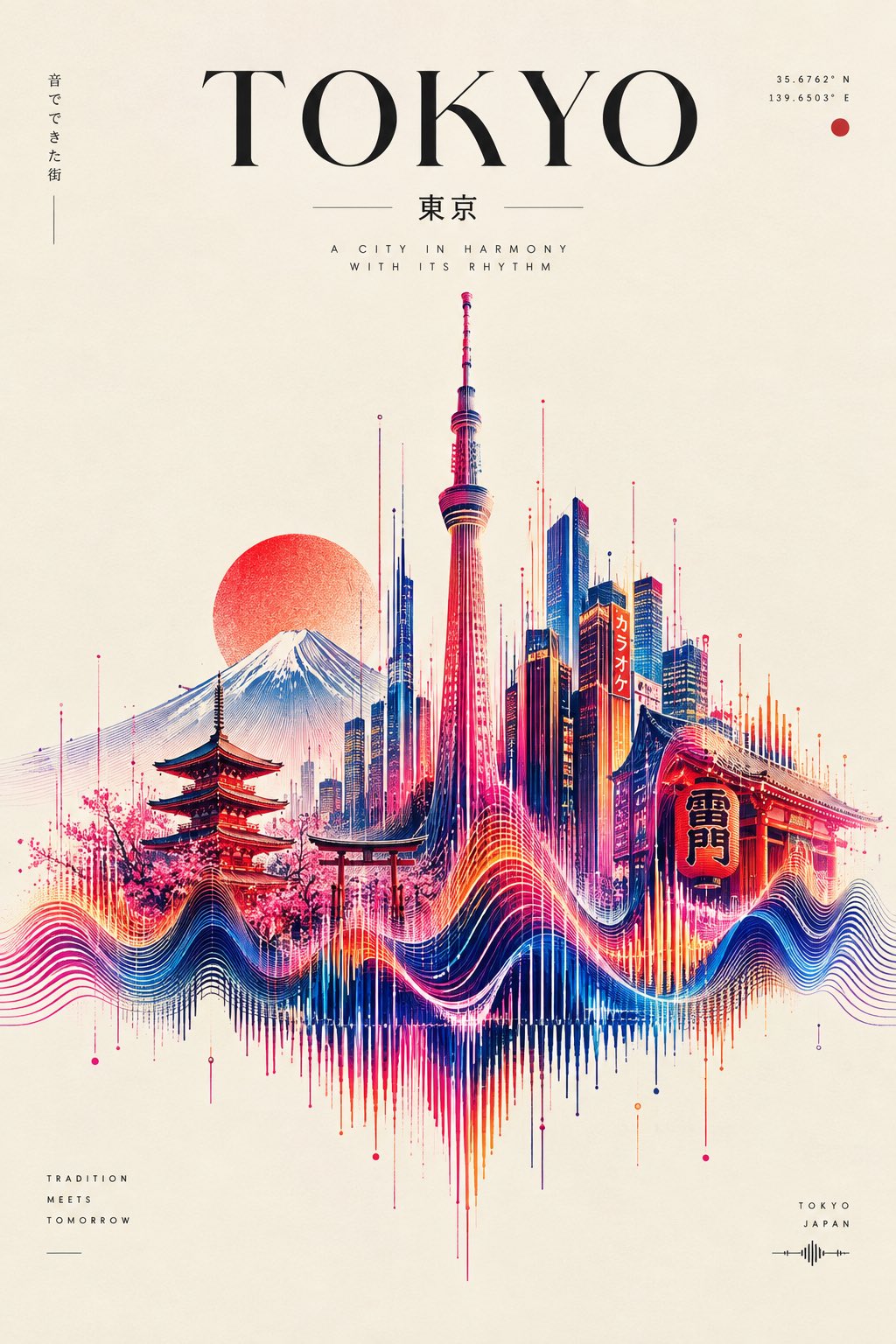
A surreal high-fashion editorial artwork where [CITY/LANDMARK] is formed entirely from flowing sound waves, audio frequencies, and rhythmic lines. The soundwaves begin as tiny vibrations at the bottom of the composition and gradually transform into the recognizable architecture of [CITY/LANDMARK]. Different frequencies become different visual elements — thick bass waves create buildings, delicate high-frequency lines create windows and bridges, glowing pulses become streetlights and moving vehicles. Tiny fragments of typography, coordinates, music notes, and abstract symbols float through the waves. Clean pale background, intense electric colors mixed with subtle metallic textures, dramatic depth, ultra-fine linework, futuristic editorial art, controlled chaos, sophisticated composition, no people, no ordinary skyline illustration, the architecture itself must visibly emerge from the soundwave pattern, striking and instantly recognizable, premium magazine cover aesthetic.
0
Details
GPT Image 2.5
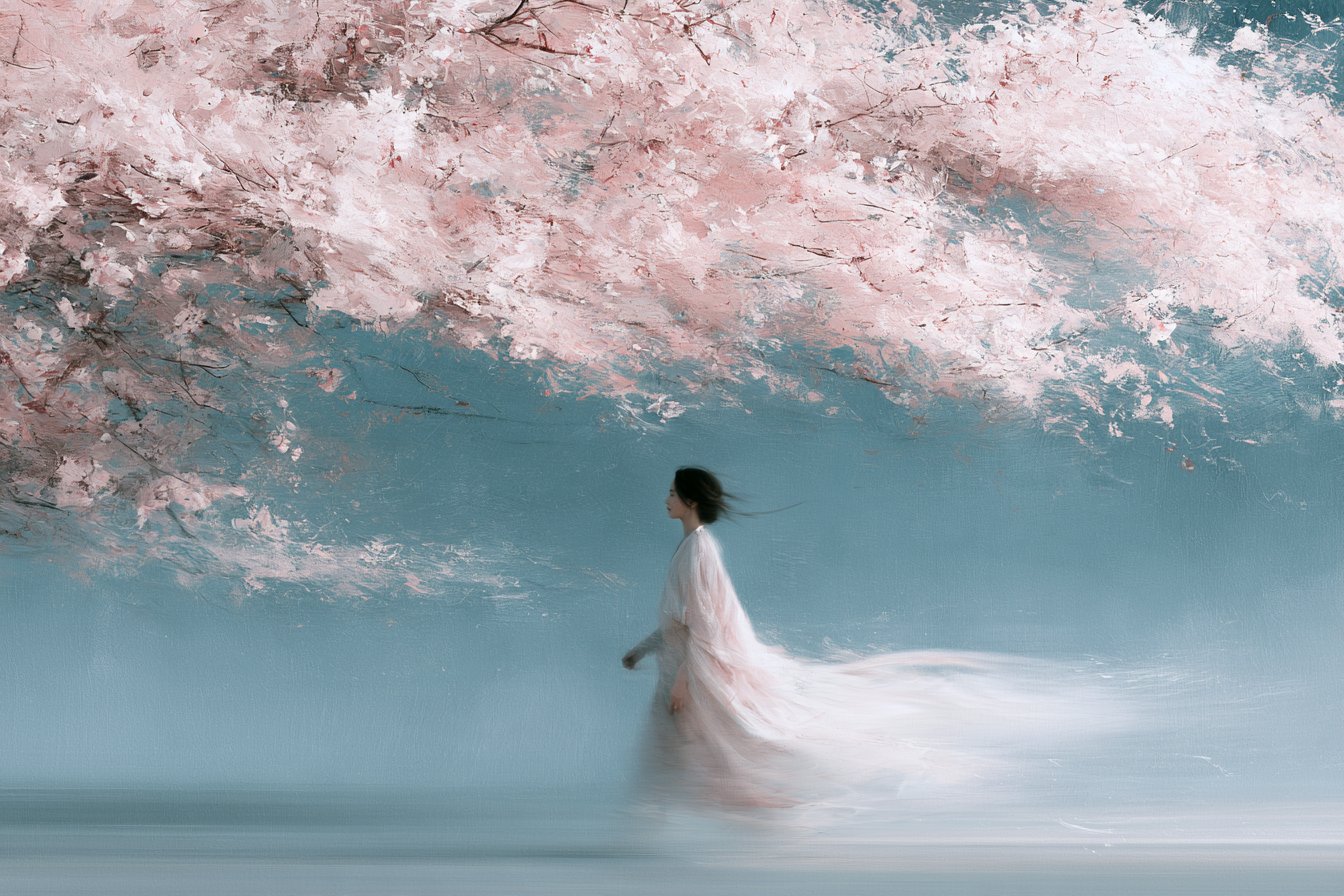
An Impressionistic Ephemeral Passage, portraying [SUBJECT] with delicate brushstrokes and a soft color palette of [COLOR1] and [COLOR2]. Motion blur subtly suggests a fleeting moment in time, capturing the transient nature of reality
0
Details
Grok Imagine 2
create an image of what the world would look like if I [insert username] were in charge (based on my posts).
0
Details
0:15
MiniMax H3
a translucent curl of ice rising off the blade and dropping to the bench, holding its curl
0
Details
0:15
MiniMax H3
a stream of tiny clear glass beads pours out around the rim and spills onto the marble, bouncing, rolling, scattering
0
Details
Nano Banana Pro
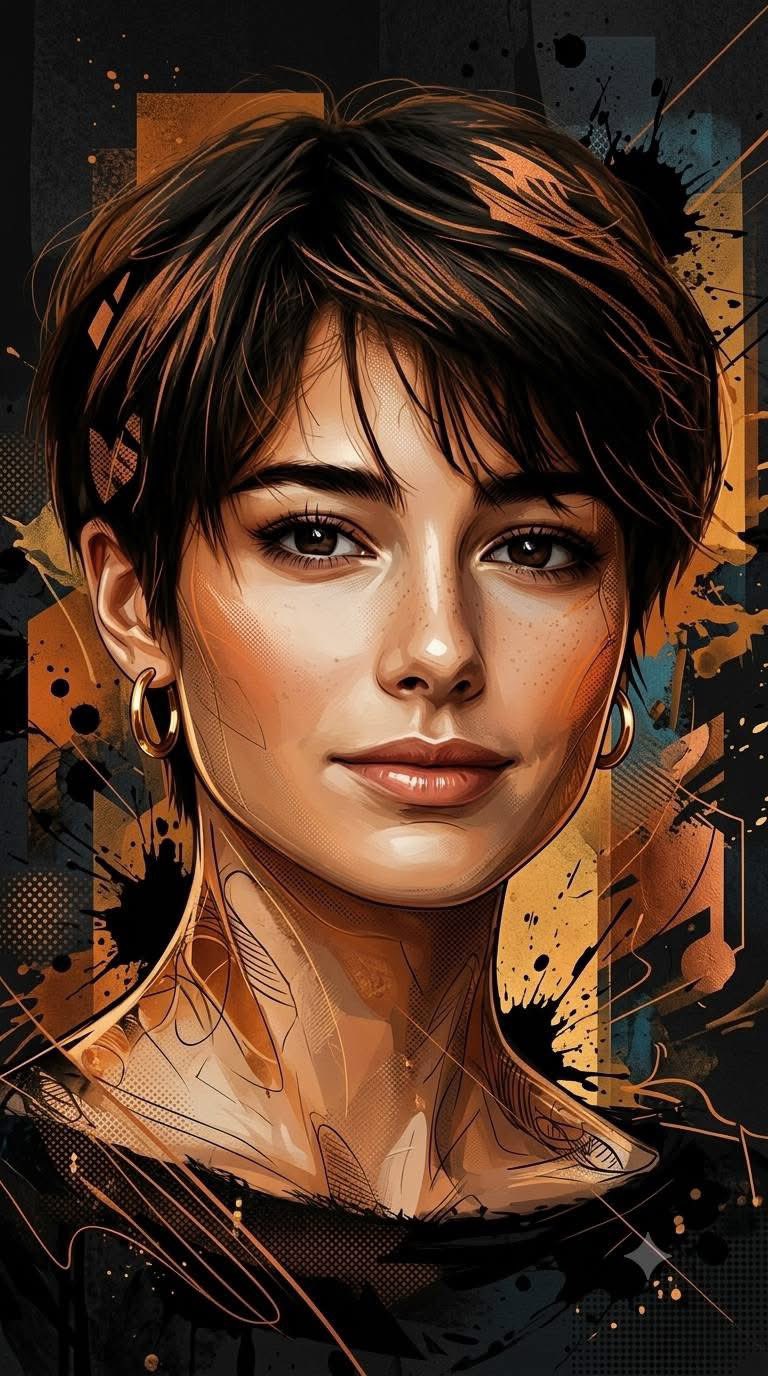
Created to match the attached photo 100%! Transformed into a highly detailed mixed-media digital illustration style with a semi-realistic aesthetic and bold graphic composition; background of deep black and dark charcoal gray featuring a dominant color palette of burnt orange, amber, golden ochre, and metallic copper; subtle blue-teal accents for contrast; dramatic high-contrast lighting; cinematic sheen; layered abstract geometric elements; expressive paint splatters; ink textures; halftone patterns; intricate line work; decorative vector layers; premium editorial illustration aesthetic; semi-realistic painterly rendering; glossy metallic luster; luxurious warm color gradients; dynamic visual rhythm; deep shadows; highly detailed textures; sharp edges; museum-quality digital artwork; razor-sharp focus; volumetric lighting; sophisticated artistic composition; premium concept art; high-end illustration; HDR; 8K; masterpiece; vibrant warm tones; elegant visual storytelling; incredible depth; refined brushstrokes; immersive visual experience; professional gallery-quality finish. _ _ar 9:16!
1
Details