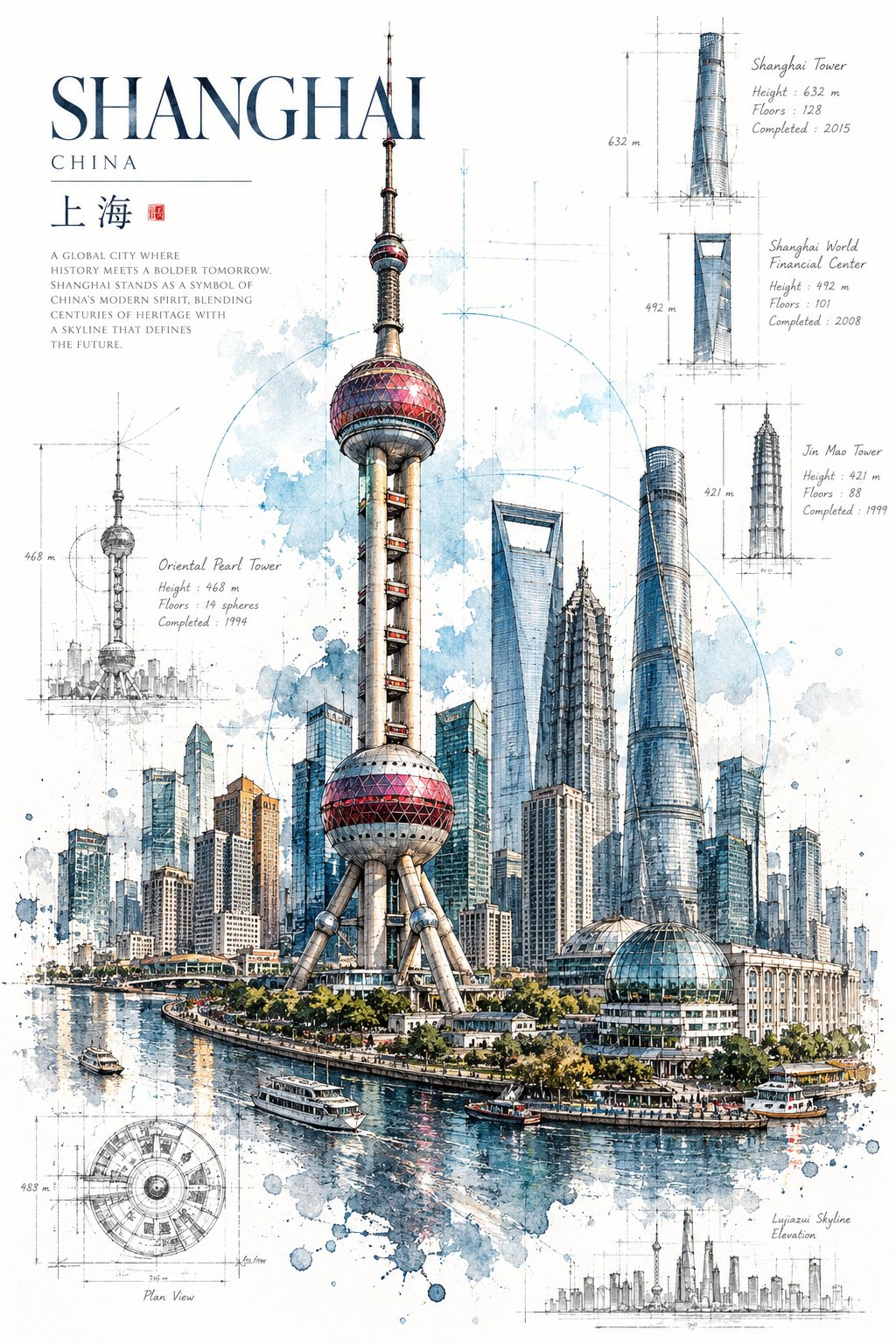
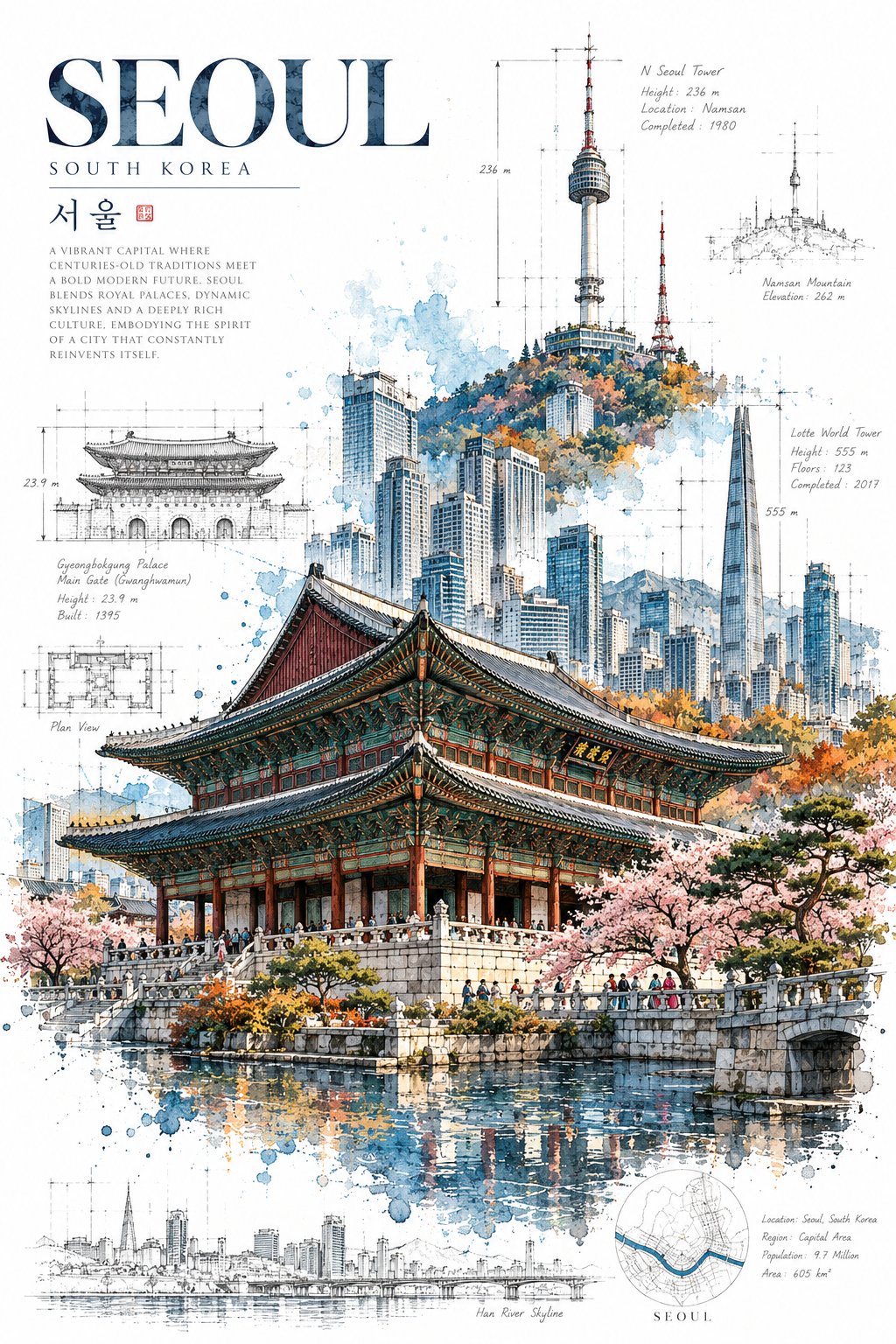
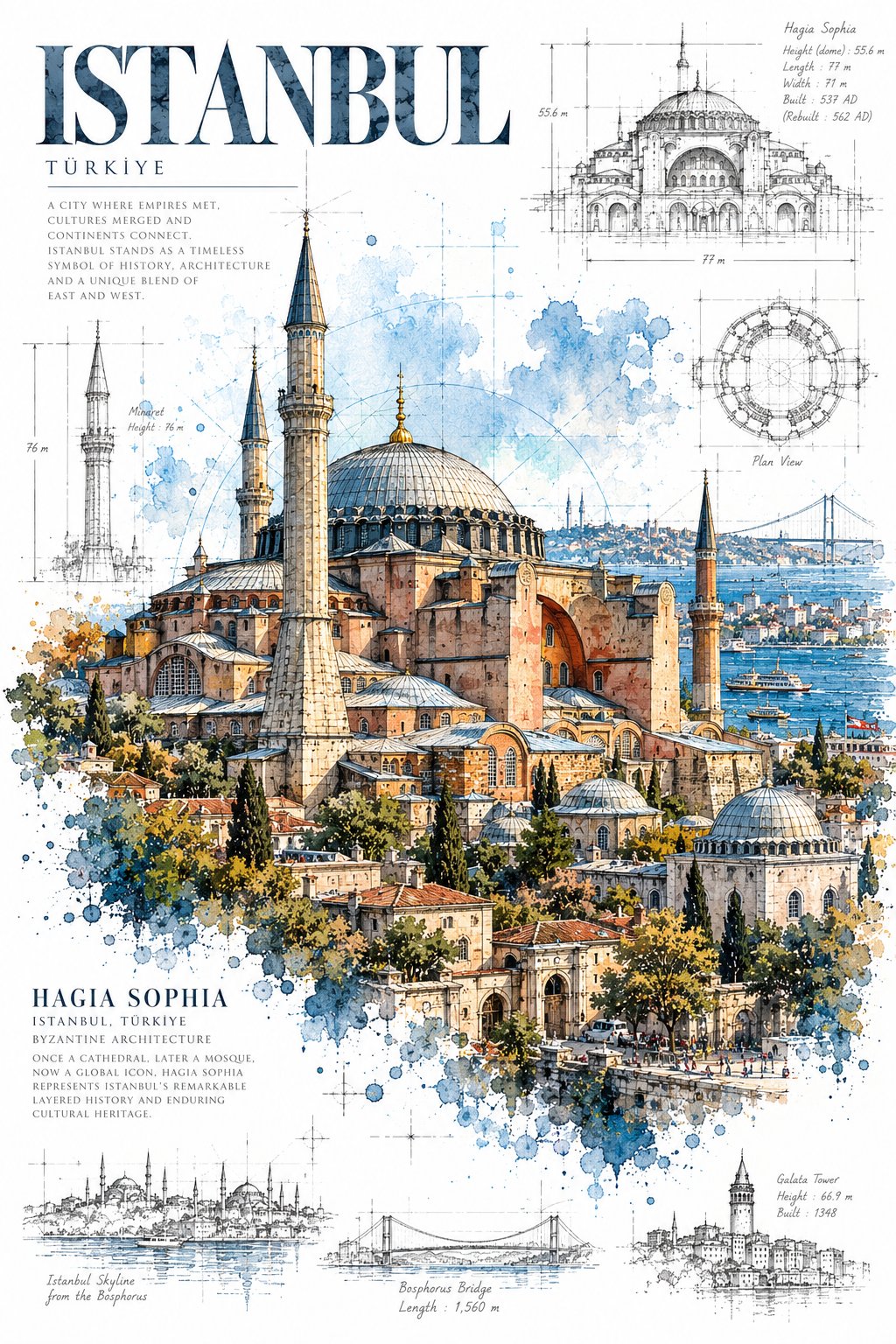
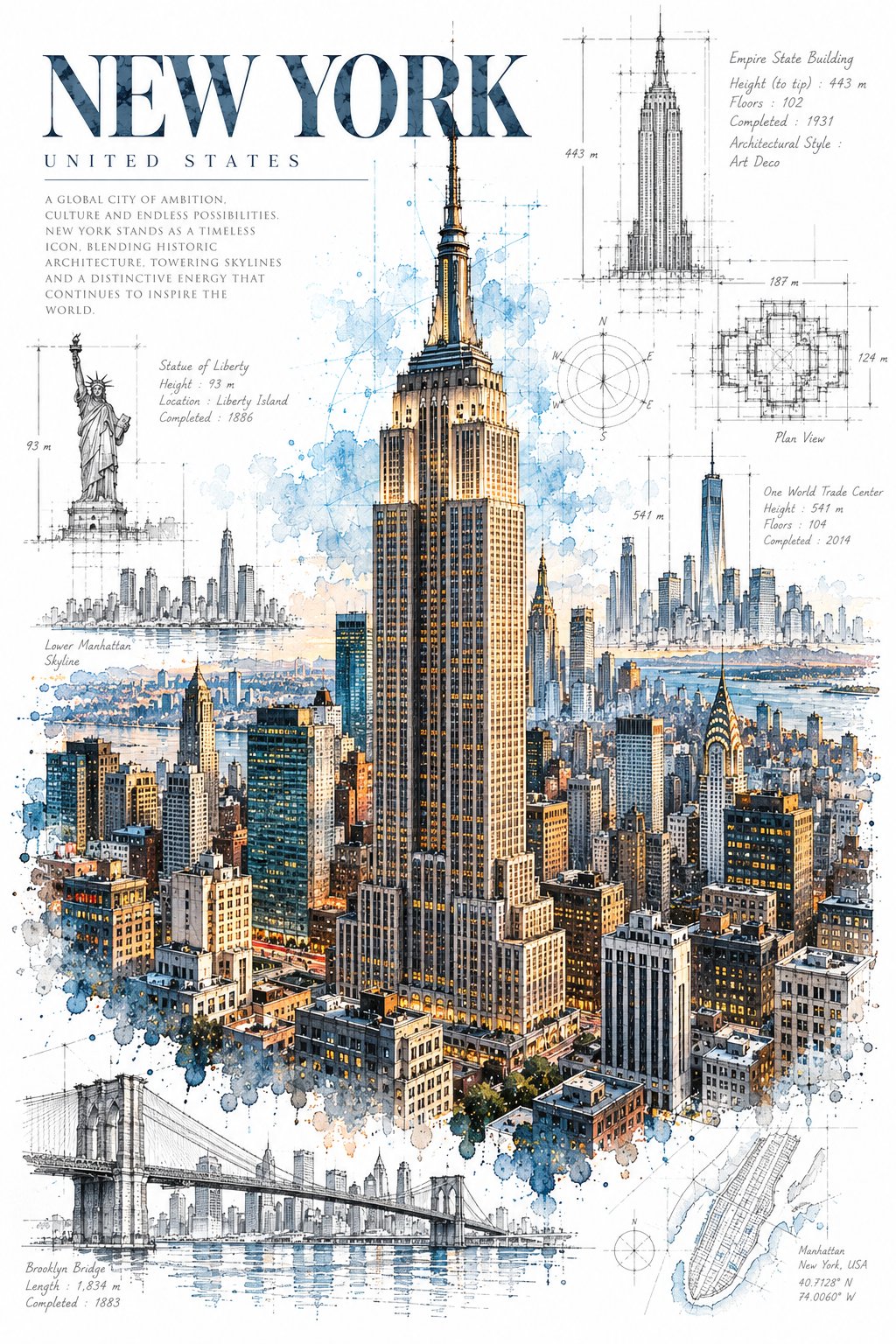
Architectural Ink and Watercolor Poster
 GPT Image 2.5OpenAIimage
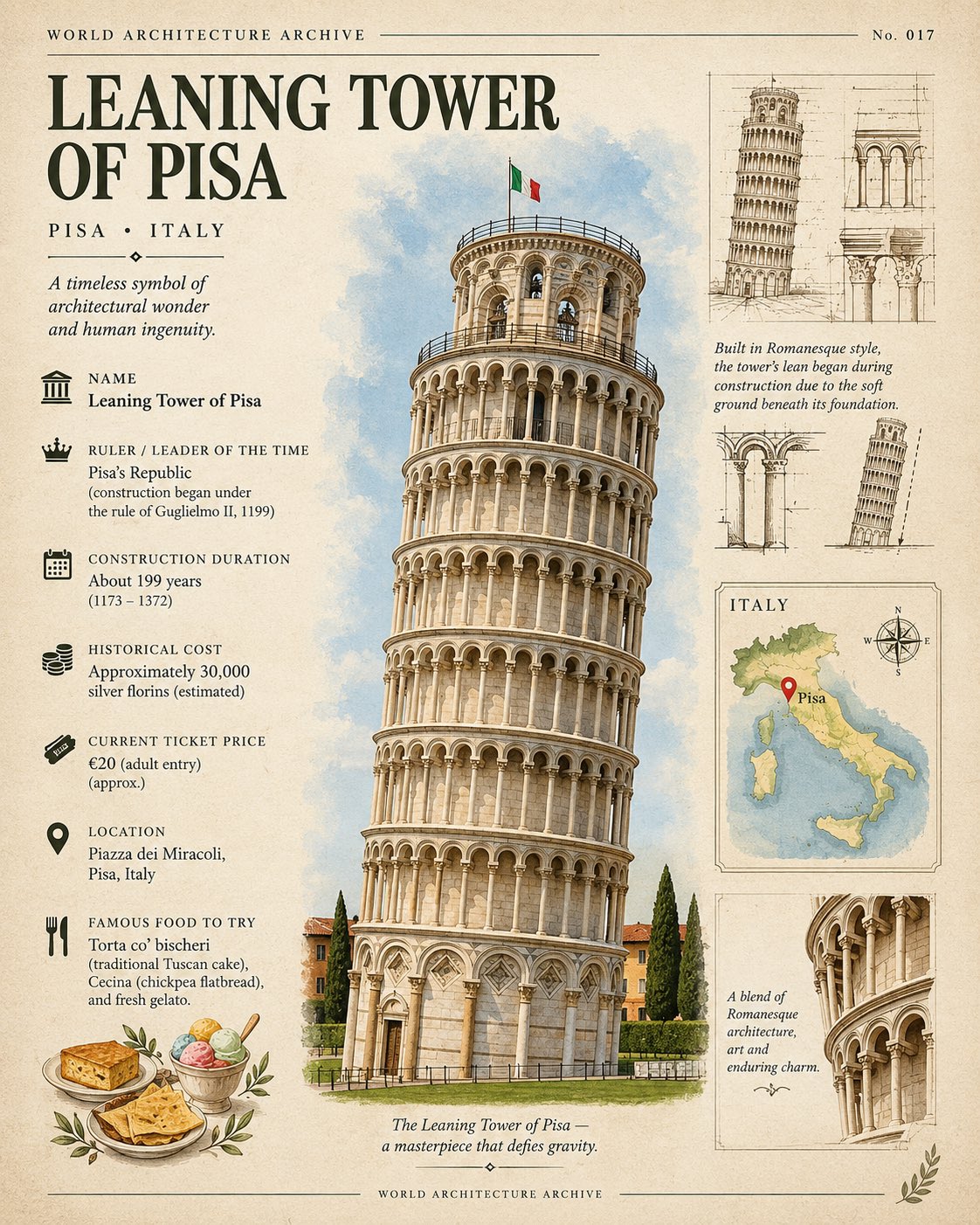
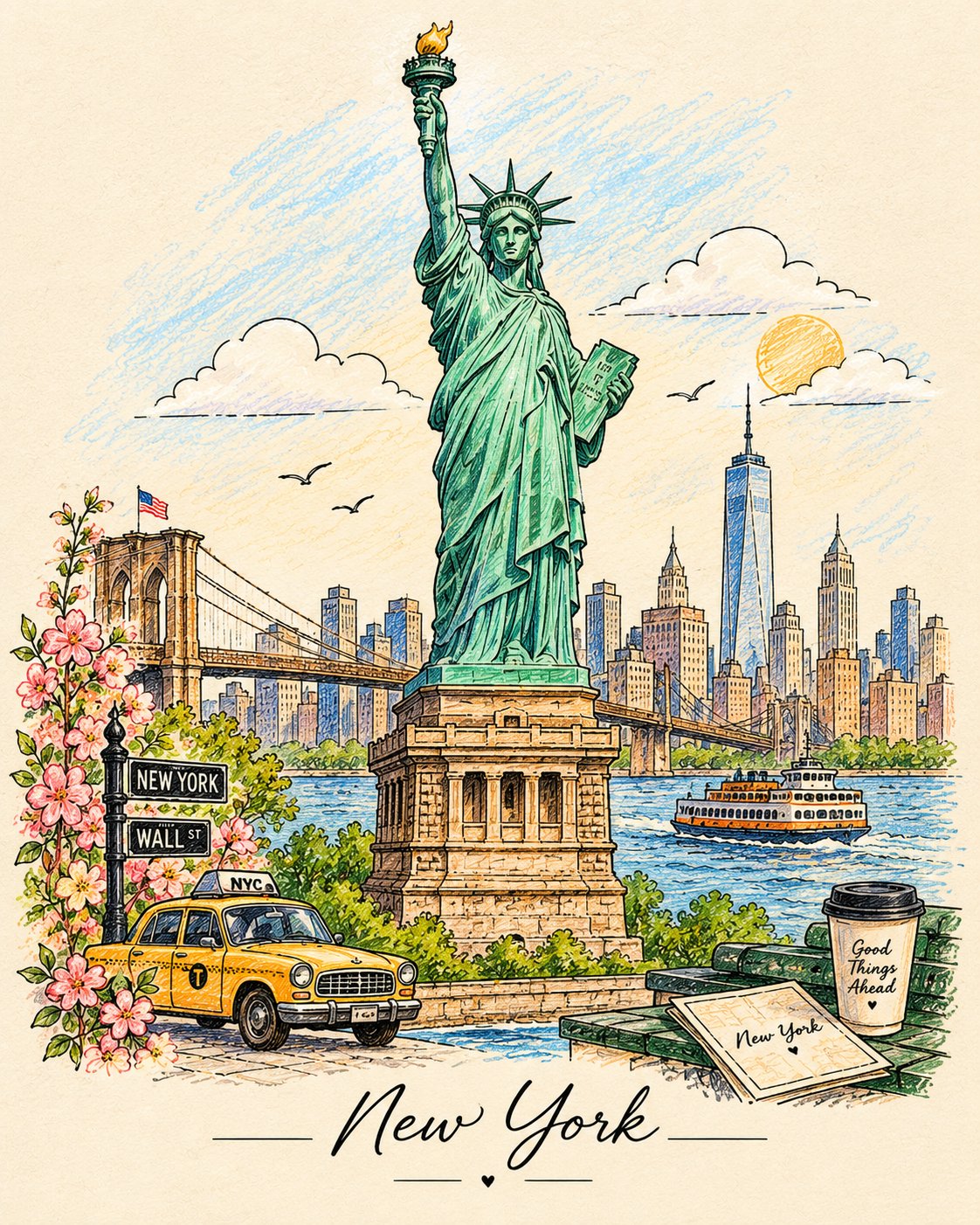
Create a premium 2:3 vertical architectural art poster of [BUILDING / LANDMARK], combining precise architectural sketching with expressive ink and watercolor. COMPOSITION: Feature one architecturally accurate building in a dynamic three-quarter perspective, occupying 60–70% of the composition. Preserve its recognizable silhouette, proportions, structural details, and authentic architectural character. ART STYLE: Intricate hand-drawn ink lines, graphite sketching, delicate crosshatching, translucent watercolor washes, organic imperfections, and expressive ink splashes concentrated around the building’s base. TECHNICAL DETAILS: Integrate fine cyan and muted-teal construction lines, perspective guides, measurement arrows, geometric diagrams, and a few subtle handwritten annotations that relate to the building’s actual structure. COLOR & BACKGROUND: Pure white background, charcoal and graphite linework, pale cyan drafting marks, muted blue-gray watercolor, and restrained indigo accents. Keep the composition airy with generous negative space. TYPOGRAPHY: Add a small, elegant museum-archive label containing the building name, location, architectural style, and a short, factual 2–3-line English curatorial note. Keep typography refined and secondary. FINAL AESTHETIC: A collectible museum-quality architectural study blending technical precision, expressive handmade artistry, and sophisticated editorial design. AVOID: Photorealism, 3D rendering, vector-perfect outlines, inaccurate architecture, unrelated buildings, clutter, colored backgrounds, excessive annotations, logos, and watermarks. FORMAT: Full-bleed 2:3 portrait, high resolution, exceptionally detailed, authentic ink-and-watercolor craftsmanship. Generate for new york
Details
- Type
- AI Image Prompts
- Aspect Ratio
- 2:3
- Updated
- Oct 15, 2026
Category
How to use this prompt
- 1Copy the full prompt with the copy button above.
- 2Open GPT Image 2.5 by OpenAI, or any image generator with a similar style range.
- 3Paste the prompt, then swap the subject and style keywords to match your idea.
- 4Match the example's settings (2:3 · Architecture · Watercolor · Sketch), then iterate — small wording changes shift the output a lot.
Frequently asked questions
Which AI model generated this image?
This image was generated with GPT Image 2.5 by OpenAI. The prompt on this page is the exact text used to create it.
What settings does this prompt use?
The example was generated with GPT Image 2.5 using: 2:3 · Architecture · Watercolor · Sketch. Reusing these settings gives the closest match.
How do I get similar results?
Copy the prompt as-is first, then replace only the subject while keeping the style, lighting, and composition keywords. Generate a few variations — outputs differ between runs.
Can I modify this prompt?
Yes. Prompts work best as starting points — adjust descriptors, aspect ratio, or style tags to make the output your own.