LogoAhaPrompt
  • Prompts
  • Featured
  • Models
  • Submit
  • Blog
AhaPromptAhaPrompt

AI Prompts for Images, Video & Audio — Every Model, One Library

Built withLogoNEXTY.DEV
Explore
  • All Prompts
  • Featured Prompts
  • Image Prompts
  • Video Prompts
  • Audio Prompts
  • AI Models
  • Submit a Prompt
  • Blog
Languages
  • English
  • 中文
  • 日本語
  • 한국어

Copyright © 2026 AhaPrompt All rights reserved.

Privacy PolicyTerms of Service
HomeAI Prompt LibraryAI Image PromptsBlack and White Ink Portrait Illustration
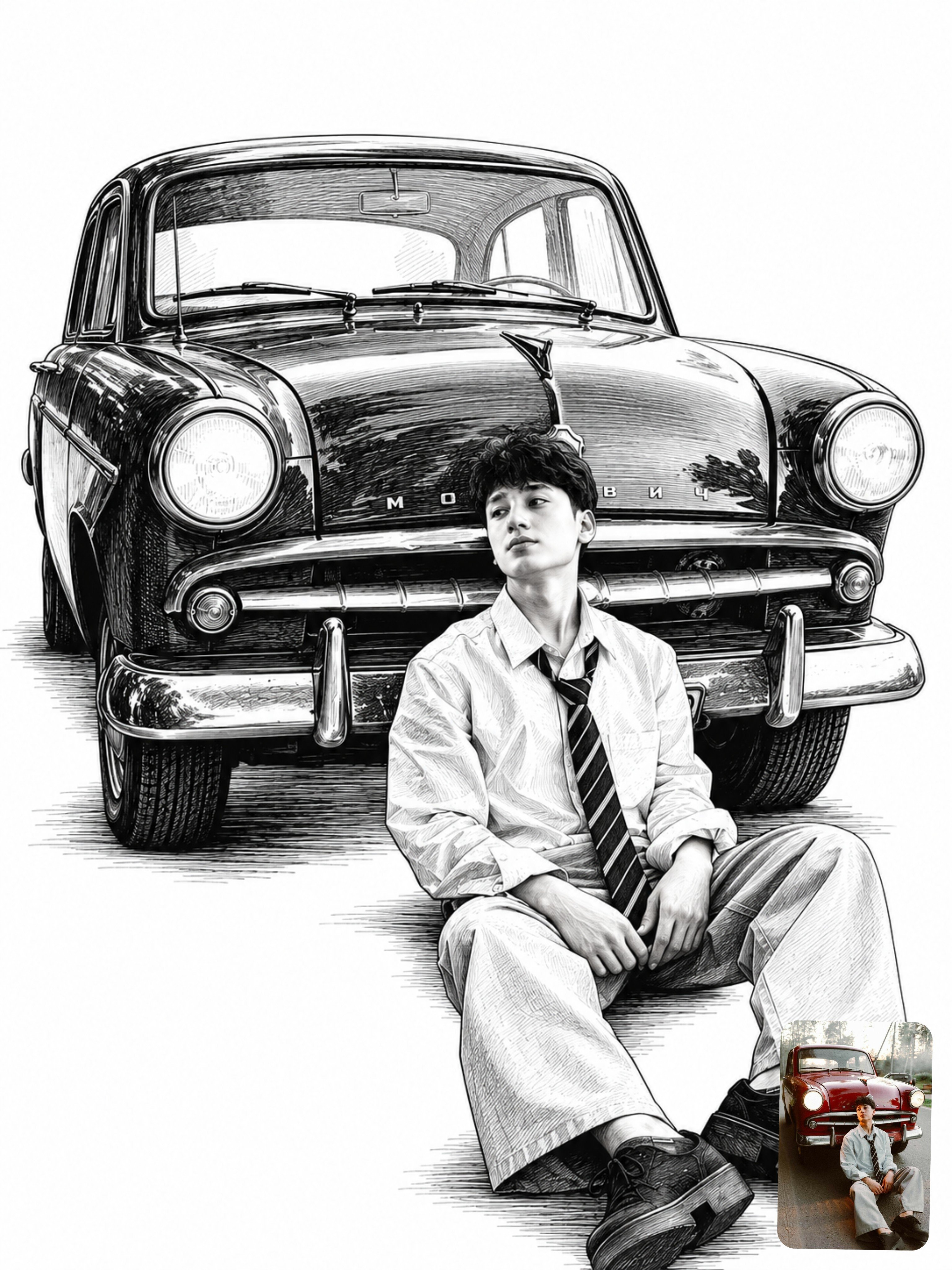
Black and White Ink Portrait Illustration — AI image prompt — GPT Image 2.5 — Black & White, Minimalist, Sketch - 1

Black and White Ink Portrait Illustration — AI image prompt — GPT Image 2.5 — Black & White, Minimalist, Sketch - 2
Black and White Ink Portrait Illustration — AI image prompt — GPT Image 2.5 — Black & White, Minimalist, Sketch - 3

Black and White Ink Portrait Illustration

OpenAIGPT Image 2.5OpenAIimage

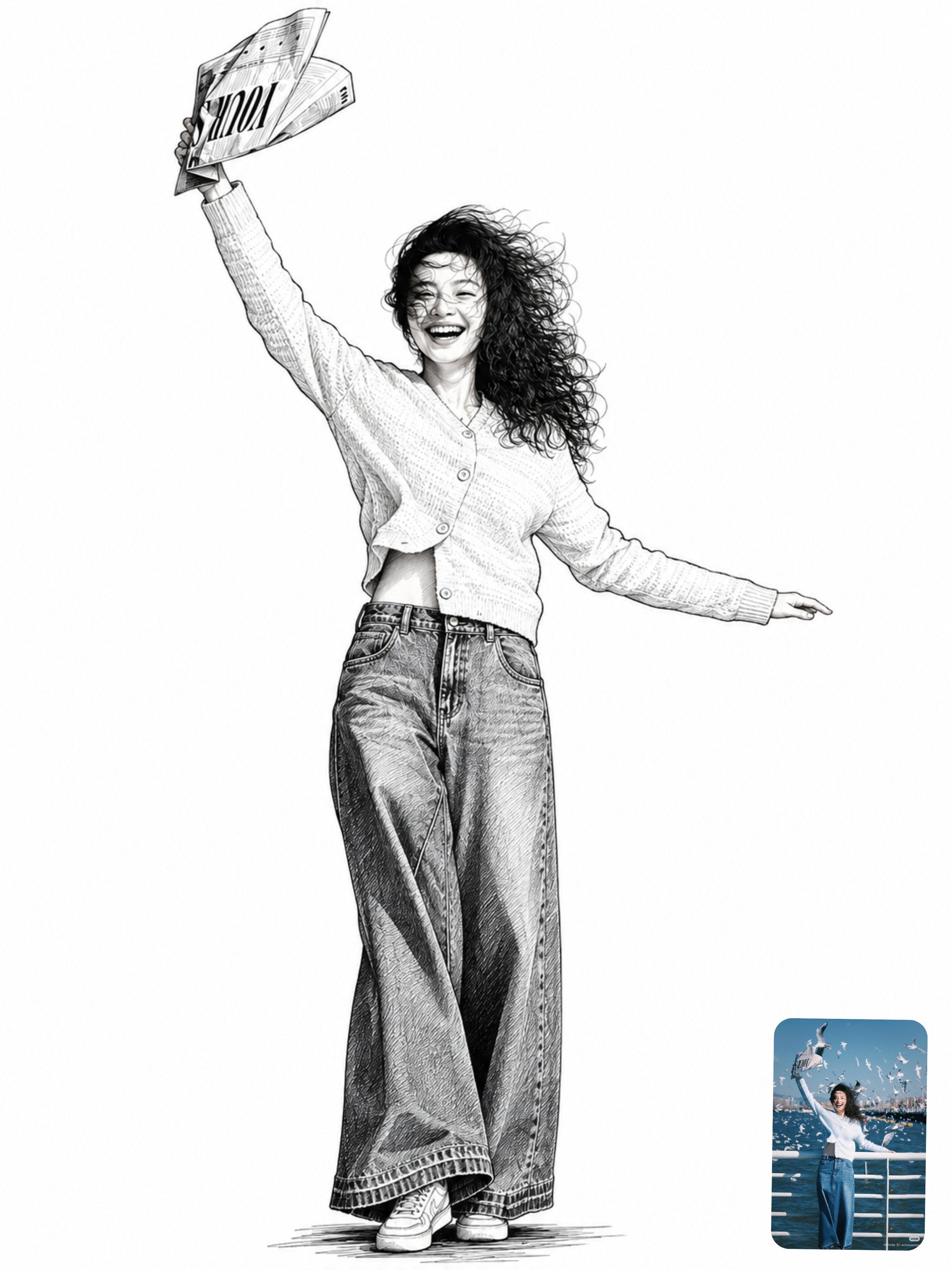
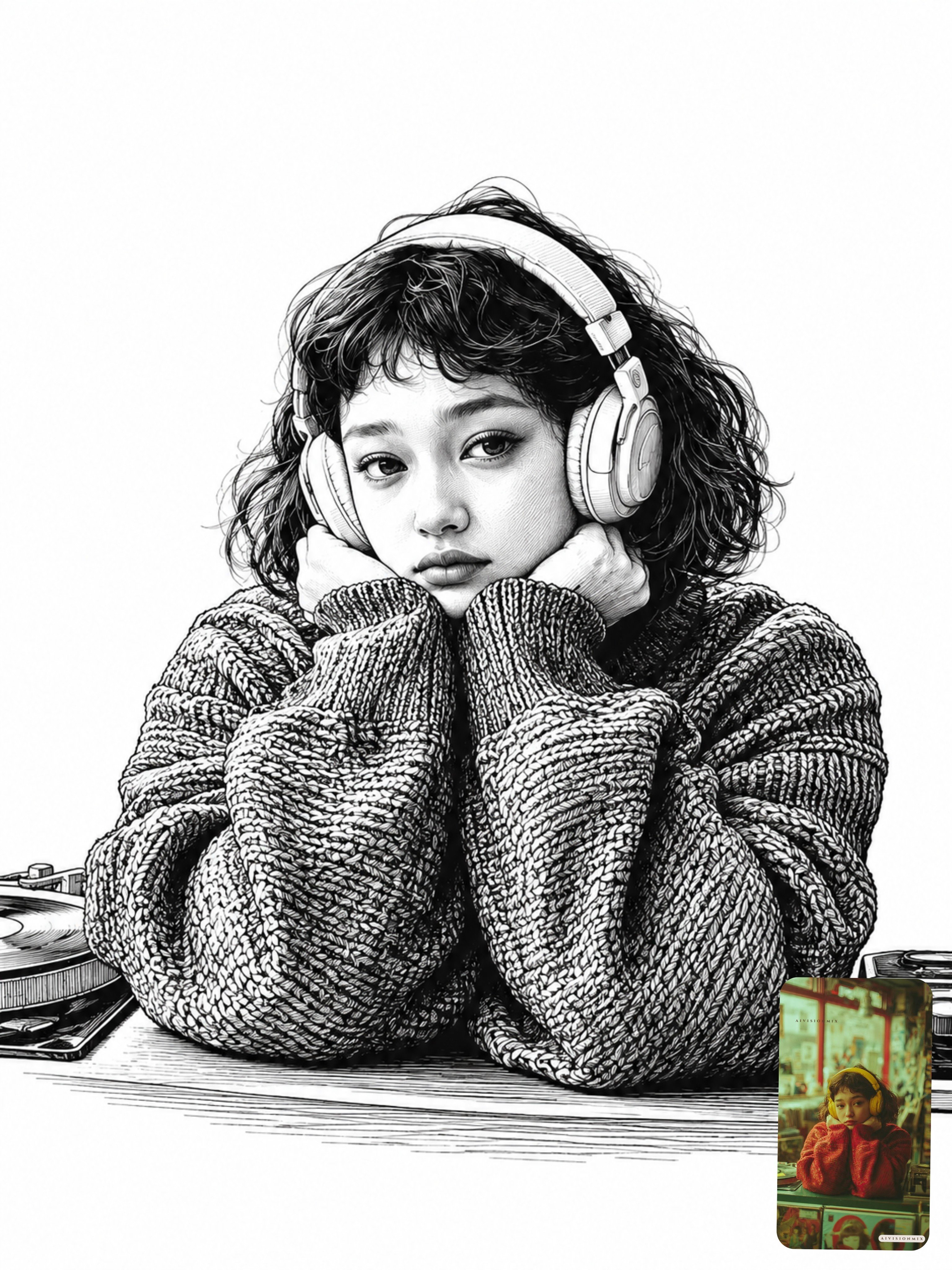
Convert this photo into a detailed black-and-white ink illustration of the subject on a plain white background, 3:4 vertical. Redraw the person or people as a hand-inked line drawing — clean confident pen lines, varying line weight, no color anywhere. Keep them full-body and centered, at the same pose, body angle and expression as the photo, with generous white space around them. Keep the likeness. Faces must stay clearly recognizable as the same individuals: same face shape, eyes, nose, mouth, eyebrows, facial hair, hairstyle and glasses. Draw faces with lighter, finer, more restrained linework than the rest of the drawing — just enough line to describe the features, no heavy shading on the skin, no harsh outlines across the face. Describe form with line, not gray tone. Use clean contour lines for edges, and fine parallel hatching only where a fold, shadow or texture needs it. Render dark clothing and dark objects as bold solid black fills, and light clothing as white with only its seams, folds, pleats and stitching drawn in. The contrast between solid black garments and open white ones is what gives the drawing its punch. Keep every detail of the outfit and anything held or carried: patterns and prints on fabric, batik or lace texture, stripes, bag straps, watches, jewelry, earphone cables, shoes with their laces and soles. If the clothing has a printed graphic or logo, redraw that artwork as line illustration inside the garment rather than leaving it blank. If the subject is seated on or using an object — a chair, a bicycle, a pedicab — draw that object in full detail too, including spokes, frames and mechanical parts. Delete the entire background. Pure white, empty, with nothing drawn behind the subject. The only grounding is a loose scribble of short horizontal pen strokes forming a soft shadow directly beneath the feet or wheels, fading out at the edges. The finish should look like a skilled artist's ink portrait — crisp, graphic and confident, with clean edges and no smudging. Avoid: color, gray airbrushed shading, soft gradients, pencil smudging, a photographic or partly photographic subject, a changed face or identity, a generic or idealized face, a cartoon or anime style, chibi proportions, heavy outlines across facial features, a background of any kind, scenery, buildings, a frame or border, cropped limbs, altered pose, altered clothing, missing printed graphics, text, signature, watermark.

Details
Type
AI Image Prompts
Aspect Ratio
3:4
Updated
Oct 21, 2026
Category
Black & WhiteMinimalistSketch
Source

How to use this prompt

  1. 1Copy the full prompt with the copy button above.
  2. 2Open GPT Image 2.5 by OpenAI, or any image generator with a similar style range.
  3. 3Paste the prompt, then swap the subject and style keywords to match your idea.
  4. 4Match the example's settings (3:4 · Black & White · Minimalist · Sketch), then iterate — small wording changes shift the output a lot.

Frequently asked questions

Which AI model generated this image?

This image was generated with GPT Image 2.5 by OpenAI. The prompt on this page is the exact text used to create it.

What settings does this prompt use?

The example was generated with GPT Image 2.5 using: 3:4 · Black & White · Minimalist · Sketch. Reusing these settings gives the closest match.

How do I get similar results?

Copy the prompt as-is first, then replace only the subject while keeping the style, lighting, and composition keywords. Generate a few variations — outputs differ between runs.

Can I modify this prompt?

Yes. Prompts work best as starting points — adjust descriptors, aspect ratio, or style tags to make the output your own.
More GPT Image 2.5 prompts

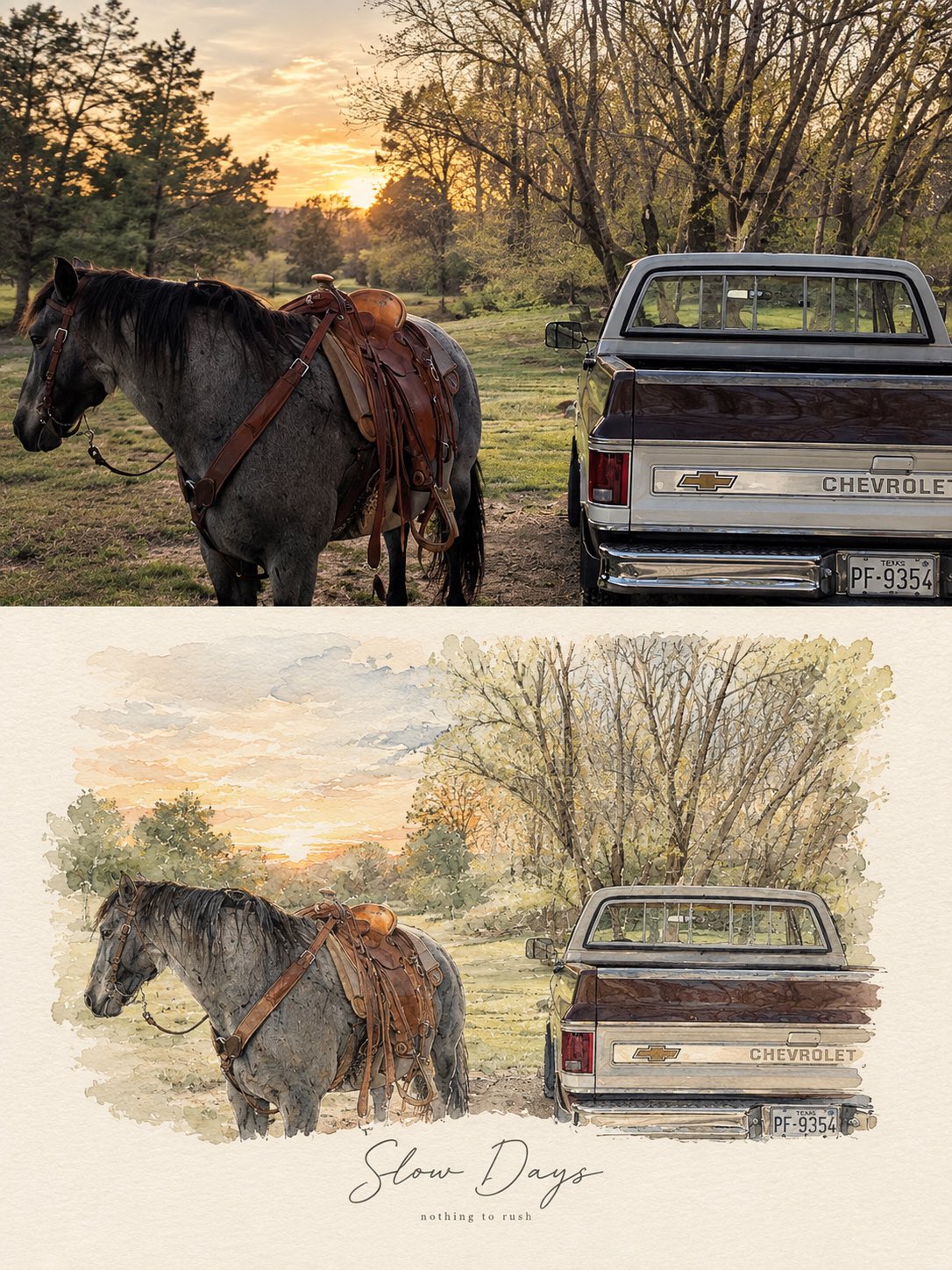
Create a refined, high-end PHOTO + MINIMAL WATERCOLOR VIGNETTE artwork based entirely on the uploade — AI image prompt — GPT Image 2.5
OpenAIGPT Image 2.5
Create a refined, high-end PHOTO + MINIMAL WATERCOLOR VIGNETTE artwork based entirely on the uploaded photograph. Use the photograph as the only visual reference and preserve the exact subject, composition, environment, clothing, objects, lighting, colors, and mood. FORMAT: Vertical 3:4 editorial composition. TOP SECTION — ORIGINAL PHOTOGRAPH: Place the original photograph in the upper 55–60% of the canvas. Keep it photorealistic and naturally detailed. Do not alter the identity, pose, proportions, objects, architecture, scenery, or important visual details. Give it a subtle premium editorial photography finish with natural cinematic light and gentle tonal balance. BOTTOM SECTION — HAND-PAINTED INTERPRETATION: Transform the same exact scene into a delicate minimal watercolor and fine-ink illustration. Recreate the main subject, pose, perspective, key objects, and recognizable background elements from the photograph. Use loose watercolor washes, subtle pencil/ink outlines, imperfect hand-painted edges, soft paper texture, and restrained pastel tones. Keep the illustration airy, elegant, and slightly imperfect rather than digitally polished. The illustration should feel like a fashion/lifestyle magazine sketchbook page, with plenty of clean negative space and a warm off-white textured paper background. Do not introduce new subjects or details. TYPOGRAPHY: Add a short elegant handwritten brush-script phrase underneath or integrated naturally into the illustrated section, similar to a premium lifestyle editorial poster. Underneath it, add a tiny minimalist lowercase serif/sans-serif subtitle. Typography should be subtle, sophisticated, thin, and balanced with the artwork. AESTHETIC: Scandinavian editorial design, quiet luxury, nostalgic travel journal, soft watercolor, delicate ink drawing, handmade paper texture, muted natural palette, sophisticated minimalism, emotional storytelling, premium art-book layout. IMPORTANT: The photograph and illustration must clearly represent the same exact moment and scene. No collage of unrelated images, no dramatic redesign, no excessive watercolor, no cartoon appearance, no heavy outlines, no saturated colors, no clutter. Output: photorealistic upper section + matching delicate watercolor illustration below, seamless premium editorial composition, vertical 3:4, high detail. For different photos, just change the text phrase Examples: •Good Days — a kinder me •Better Together — same window, same silence •Little Moments — worth remembering •Slow Days — nothing to rush •Somewhere Quiet — just for a while •Golden Hours — softly remembered
Details
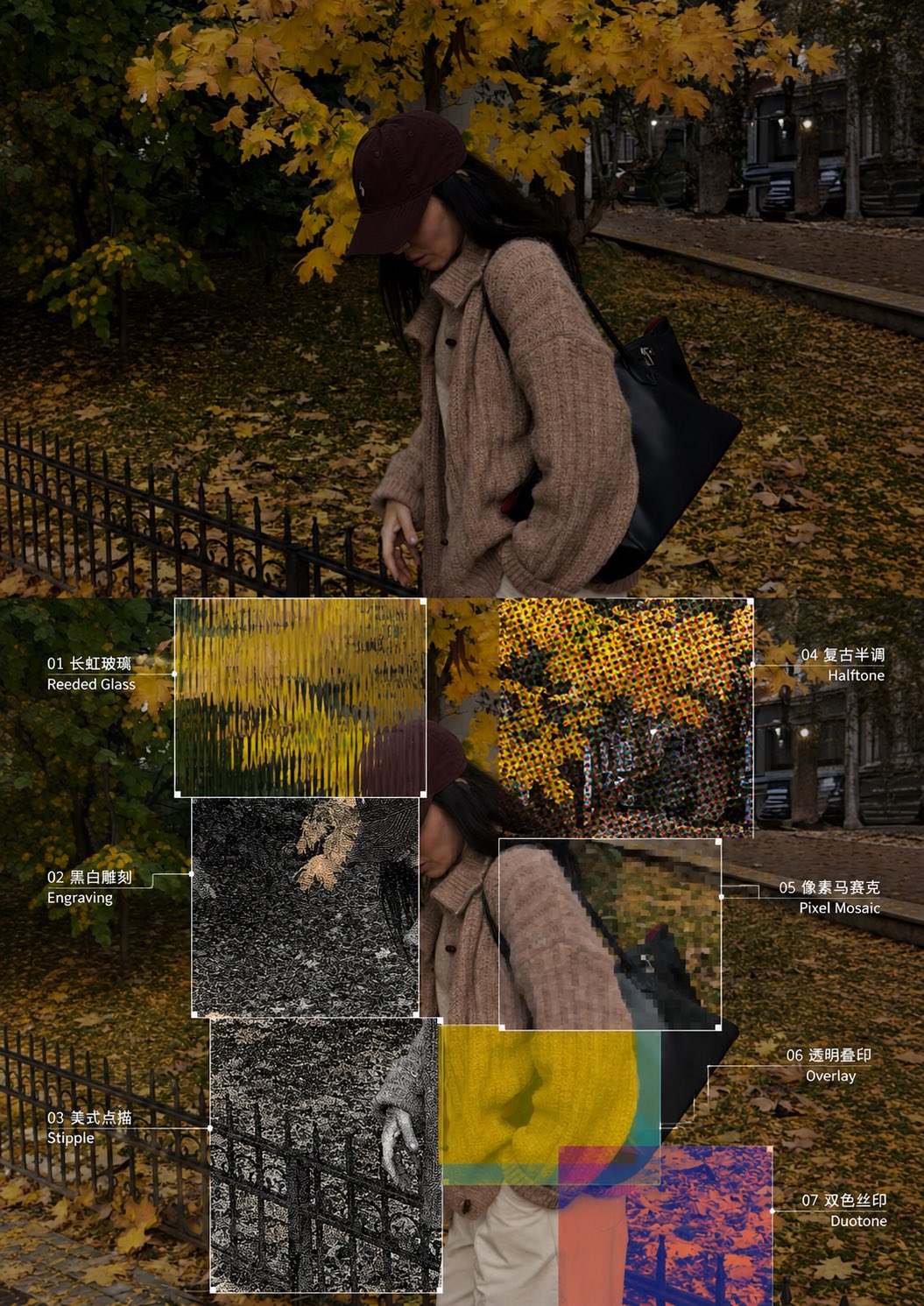
Create one vertical 3:4 diptych for each uploaded photo, divided into equal top and bottom halves wi — AI image prompt — GPT Image 2.5
OpenAIGPT Image 2.5
Create one vertical 3:4 diptych for each uploaded photo, divided into equal top and bottom halves with a seamless join. No divider, frame, or collage. Swiss editorial design, experimental photography, and vintage print aesthetics. TOP HALF — ORIGINAL PHOTOGRAPH Preserve the original identity, pose, scene, composition, perspective, lighting, and colors. Allow only subtle color grading and background extension. No text. BOTTOM HALF — SEVEN EXPERIMENTAL TEXTURE ZONES Repeat the entire original photo. Overlay seven asymmetrical rectangular zones of different sizes directly onto the image pixels, crossing non-critical details. Maintain visual continuity inside and outside every zone. Never crop, zoom, shift, duplicate, or redraw the image. Keep all important focal features visible. SEVEN NUMBERED TECHNIQUES 01. Reeded Glass: Vertical optical refraction. 02. Black-and-White Engraving: Fine etched lines and crosshatching. 03. American Stipple: Black-and-white microdot texture. 04. Vintage Halftone: CMYK printing dots. 05. Pixel Mosaic: Square pixel blocks. 06. Transparent Overlay: 2–4 translucent overlapping layers. 07. Duotone Screen Print: Two-color screen-printing effect. DESIGN DETAILS Add hairline borders, tiny corner squares, and fine leader lines to identify each rectangular zone. Label every technique with its corresponding number and English name. Keep all areas outside the seven zones photographic and realistic. STRICT REQUIREMENTS No logos, watermarks, extra images, or unnecessary decorative elements. Preserve the original photograph's integrity and maintain a clean, sophisticated editorial layout. OUTPUT: One high-definition 3:4 vertical poster with equal top and bottom halves.
Details
turn each photo I upload into a separate, high-end design poster. Do not combine multiple photos int — AI image prompt — GPT Image 2.5
OpenAIGPT Image 2.5
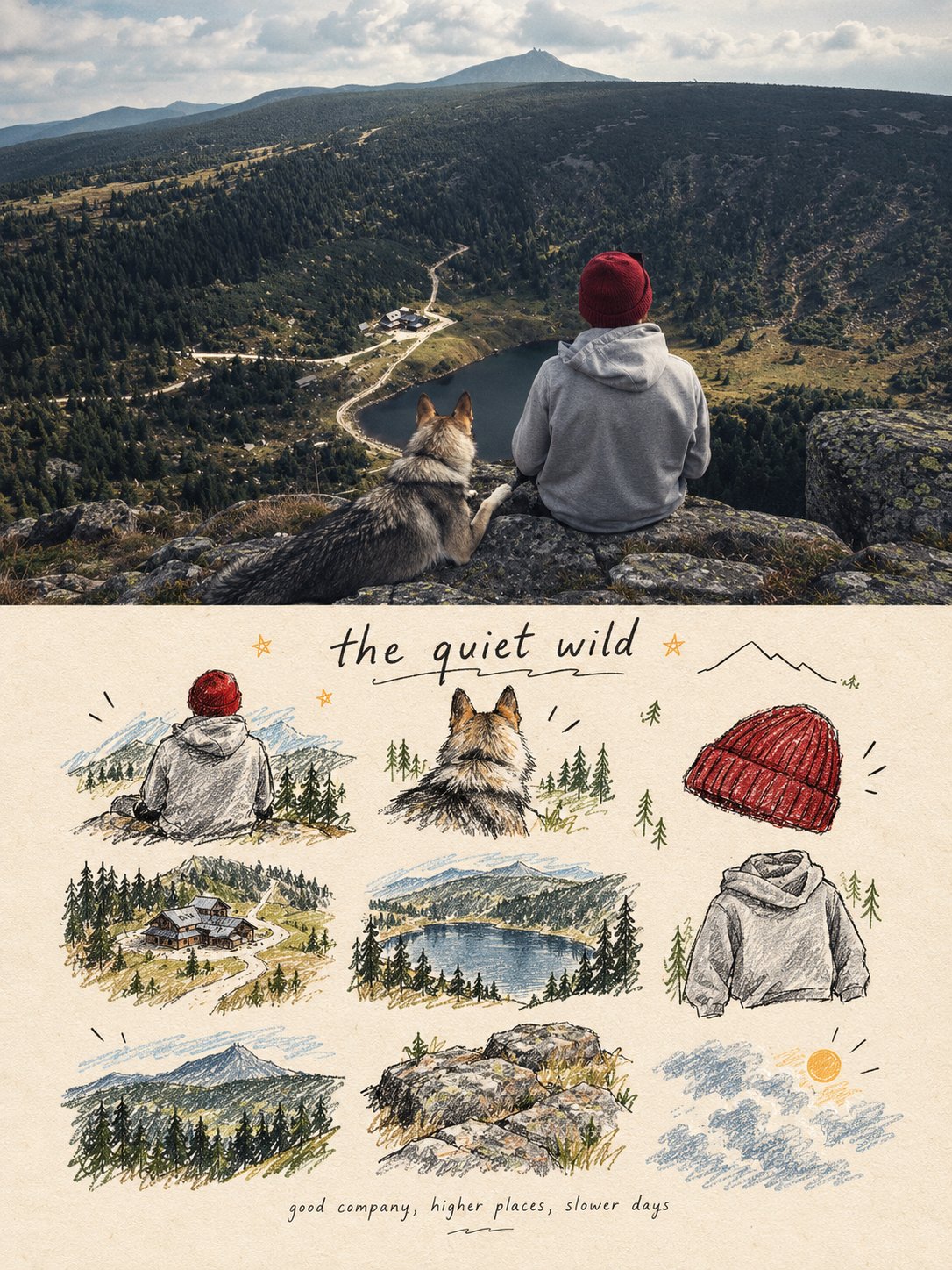
turn each photo I upload into a separate, high-end design poster. Do not combine multiple photos into a collage. Each photo must be processed and output individually. 1. Overall Layout and Composition Use a 3:4 vertical aspect ratio. Divide the canvas into two equal horizontal sections, with a strict 1:1 height ratio: the top half occupies exactly 50% of the canvas, and the bottom half occupies the remaining 50%. 2. Top Half — Original Photography Preserve the original photograph in the upper section. Maintain the subject’s identity, structure, pose, realistic textures, natural lighting, shadows, and original color atmosphere. Apply only subtle, sophisticated color grading to achieve the aesthetic of an art magazine, independent publication, or gallery exhibition image. You may naturally extend the environmental background to fit the composition, but never stretch, distort, or alter the subject. 3. Bottom Half — A Visual Memory Collection Extract the most recognizable subjects, distinctive details, action cues, objects, and narrative relationships from the photograph. Reinterpret them as a visual system combining a modular 3×3 icon grid, naïve hand-drawn doodle illustrations, crayon/p colored-pencil textures, and handwritten typography. Do not reproduce the original photograph in full detail, and do not create realistic illustrations. Instead, simplify the complex visual information into nine memorable visual elements. These may include: The main subject Distinctive physical or visual features Personal belongings or objects Plants or food Modes of transportation Poses or gestures Emotional symbols Small memorable details from the surrounding scene Every element must be a semantic extension of the same photograph above, creating a cohesive “memory checklist” that clearly belongs to that specific image. 4. Grid System and Visual Arrangement Use an implicit, loosely arranged 3×3 grid. The nine-cell structure should serve as an underlying compositional framework rather than a rigid, visible grid. Slightly vary the position, scale, angle, and placement of each icon to create an organic, imperfect arrangement that feels structured but never mechanical. Aim for a natural loose grid / organic grid aesthetic. At the top of the lower section, you may add a short handwritten title, accompanied by a few playful wavy lines, tiny stars, or decorative symbols. At the bottom, include a very small handwritten caption, making the overall design feel like a page from a personal journal, visual diary, or curated collection sheet. Maintain generous negative space. The layout should feel relaxed, cute, restrained, and visually balanced rather than cluttered. 5. Illustration Style and Texture Use a Naïve Hand-Drawn Doodle Illustration style. Keep shapes simple, slightly childlike, and intentionally imperfect. Use subtly shaky outlines with irregular line thickness. Allow contours to remain partially open rather than perfectly closed. Preserve a sense of deliberate imperfection and handmade character. Avoid overly dense coloring. Let the paper texture, white grain, and rough edges remain visible. Combine fine black outlines with colored-pencil or crayon fills and a few selective blocks of color. Use flat color / spot color to establish visual relationships instead of relying on realistic lighting and shading. If grid guidelines are included, keep them extremely faint, as if lightly sketched in pencil, rather than using clean, computer-generated table lines. Final Art Direction The finished poster should feel like a sophisticated independent art publication blended with a playful, handmade visual diary. The upper half should preserve the beauty and authenticity of the original photograph, while the lower half transforms its most meaningful details into nine charming, hand-drawn visual memories. The final result must be a separate 3:4 vertical poster for each uploaded photograph, with an exact 50/50 split between the original photograph and the illustrated memory collection.
Details
DESTINATION: [DESTINATION]

Create a sophisticated Halloween-edition geometric travel art poster of  — AI image prompt — GPT Image 2.5
OpenAIGPT Image 2.5
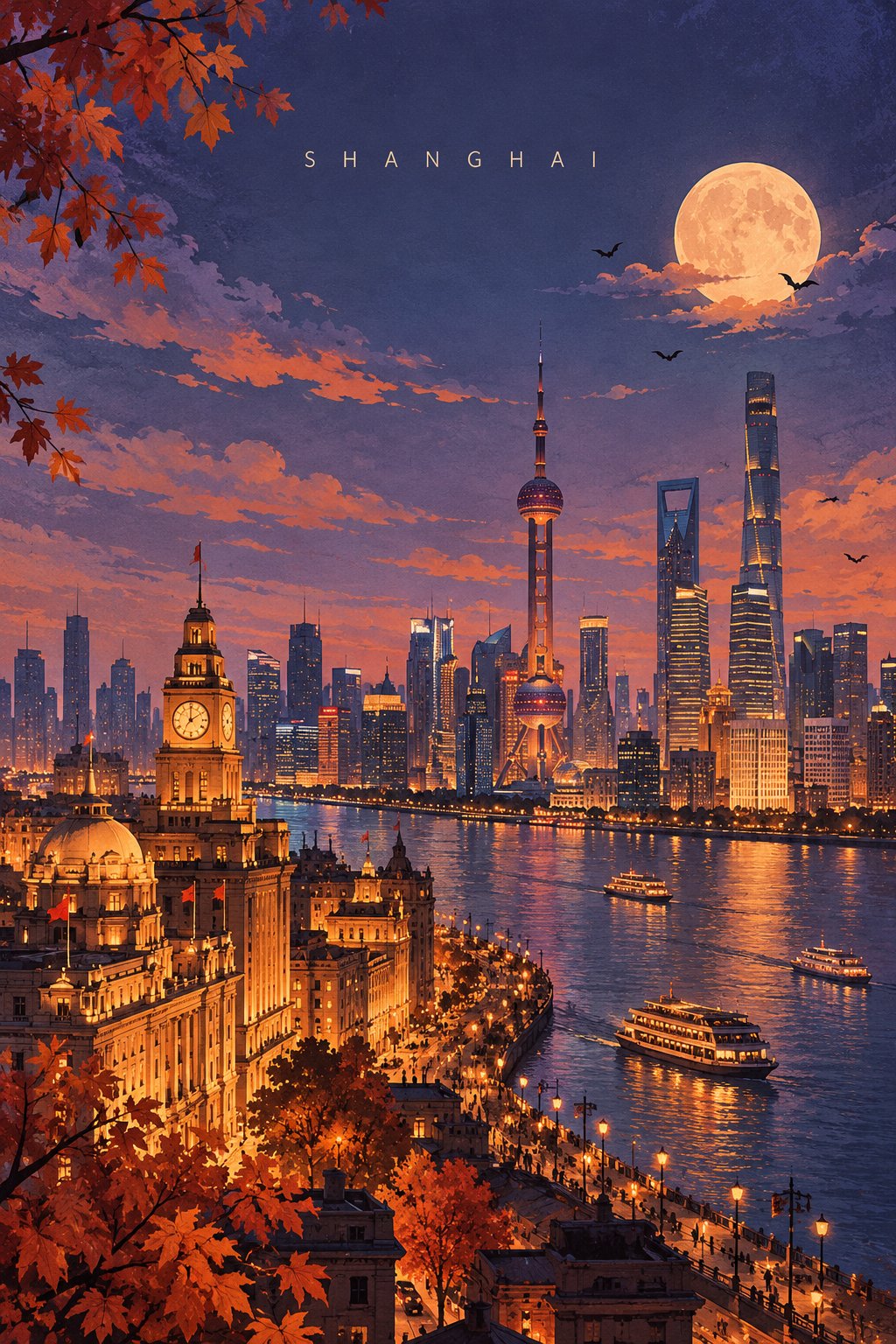
DESTINATION: [DESTINATION] Create a sophisticated Halloween-edition geometric travel art poster of [DESTINATION]. Vertical 2:3, high-resolution, museum-quality editorial illustration. CORE PRINCIPLE 70% recognizable landmark and authentic cityscape, 30% geometric abstraction. Select one or two iconic landmarks as the unmistakable focal points, preserving their real silhouettes, architectural proportions and distinctive details. Simplify surrounding rooftops, streets, bridges, hills and foliage into elegant geometric color fields. COMPOSITION Reserve the upper 40–50% for an expansive, atmospheric twilight sky. Place only “[DESTINATION]” in small, widely spaced uppercase sans-serif lettering near the upper center. Arrange the authentic cityscape across the lower half with graceful architectural layering, compelling depth and a clear focal landmark. HALLOWEEN ATMOSPHERE Transform the city into an enchanting, subtly haunted autumn evening, not a horror scene. Use a dusky lavender-blue sky, a softly glowing harvest moon, a few tiny flying bats, delicate drifting clouds, copper-orange autumn leaves and warm amber lights shining through historic windows. Introduce gentle mystery, romantic twilight and understated cinematic magic. Adapt the seasonal details to the destination's actual architecture and geography. Halloween elements must remain secondary to the recognizable city. GEOMETRIC ART DIRECTION Blend Scandinavian editorial illustration, mid-century geometric design and refined architectural gouache painting. Use restrained arches, semicircles, rectangular planes and layered silhouettes as supporting compositional accents, never overwhelming the landmarks. Preserve an elegant balance of detailed architecture and simplified geometry. COLOR & TEXTURE Limit the palette to 6–10 harmonious colors: dusty periwinkle, muted violet, midnight navy, terracotta, burnt orange, pale peach, soft ivory and warm amber. Add subtle handmade gouache, dry-brush, colored-pencil and fine paper-fiber textures. Crisp, refined museum-print quality, not glossy vector art. MOOD Poetic, atmospheric, quietly magical, mysterious, romantic, sophisticated, collectible Halloween travel art. AVOID Generic fantasy architecture, distorted landmarks, oversized pumpkins, cartoon ghosts, witches, skeletons, horror imagery, excessive bats, neon orange, heavy black shadows, giant geometric circles, photorealism, 3D rendering, childish illustration, sepia filters, yellowed paper, decorative borders, logos, slogans and extra text. FINAL TEST The viewer should recognize [DESTINATION] immediately, then discover the subtle Halloween magic. The result must feel like a contemporary fine-art travel poster rather than a Halloween party advertisement.
Details
Theme: Minimalist natural imagery × Split Fountain same-screen gradient screen printing

Each print  — AI image prompt — GPT Image 2.5
OpenAIGPT Image 2.5
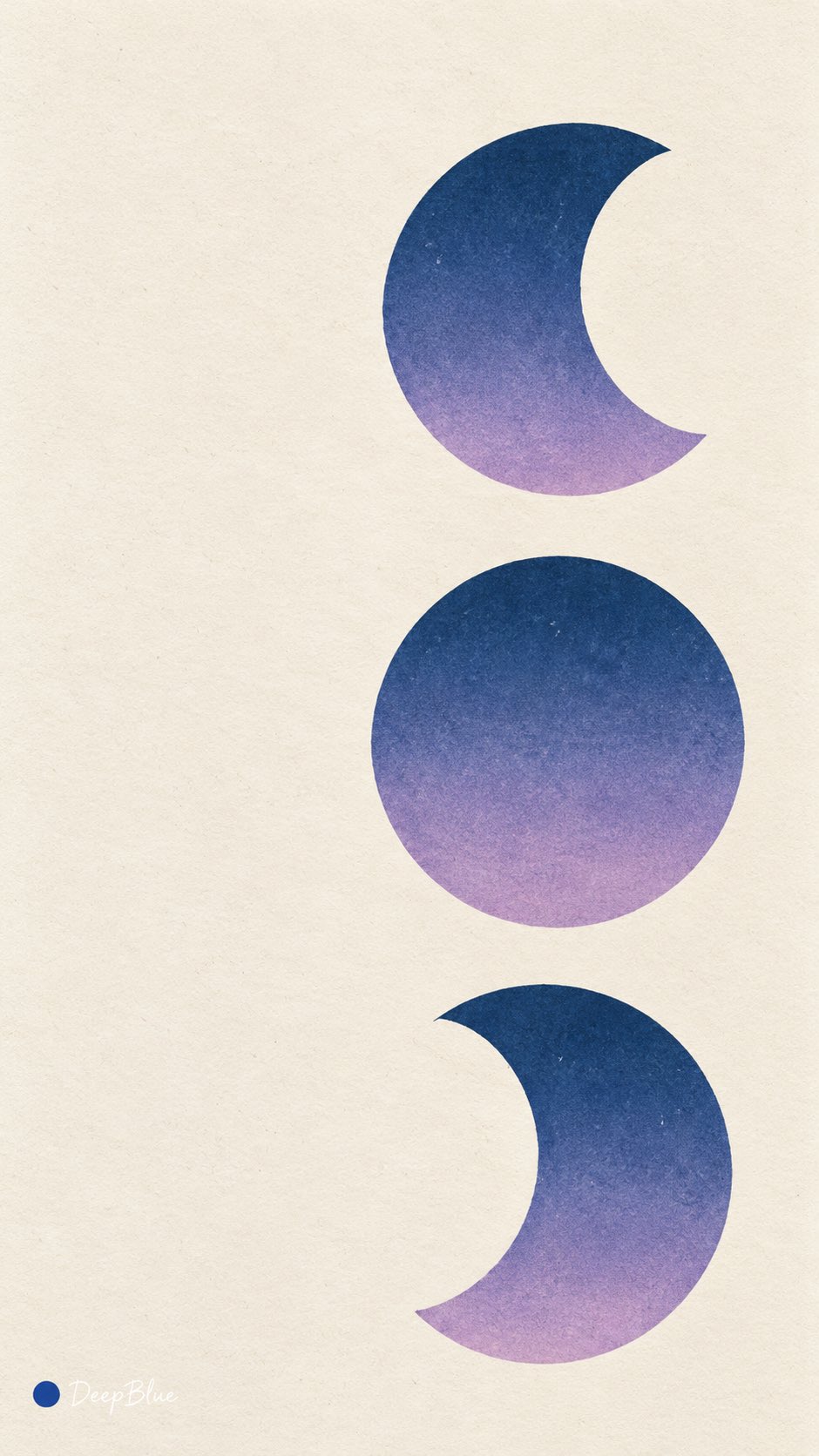
Theme: Minimalist natural imagery × Split Fountain same-screen gradient screen printing Each print independently selects one from sunset, ocean waves, mountain peaks, sand dunes, and moon phases, expressed with a small number of concise large forms and color fields, retaining subject recognizability and generous negative space. Independently explore coordinated two-color or multi-color ink combinations, as well as gradient direction, color mixing range, and graphic layout. Colors enter the interior of the graphics through the same screen printing plate, naturally blending along a unified direction, with original colors retained at both ends and a continuous soft mixed-color transition formed in the middle. The matte ink layer is smooth and delicate, with slight ink color variation retained locally, clear contours with slight hand-printed irregularity. The texture of warm white paper is faintly visible, and the overall effect is concise, warm, and possesses the quality of vintage art prints. Each print is re-conceived, with different combinations of subject, color scheme, and composition. 9:16 vertical format, n=10, each a separate single image. Bottom-left signature: a solid dark blue dot first, followed by white natural handwritten "DeepBlue".
Details
Transform the reference photograph into a sophisticated minimalist editorial art poster while preser — AI image prompt — GPT Image 2.5
OpenAIGPT Image 2.5
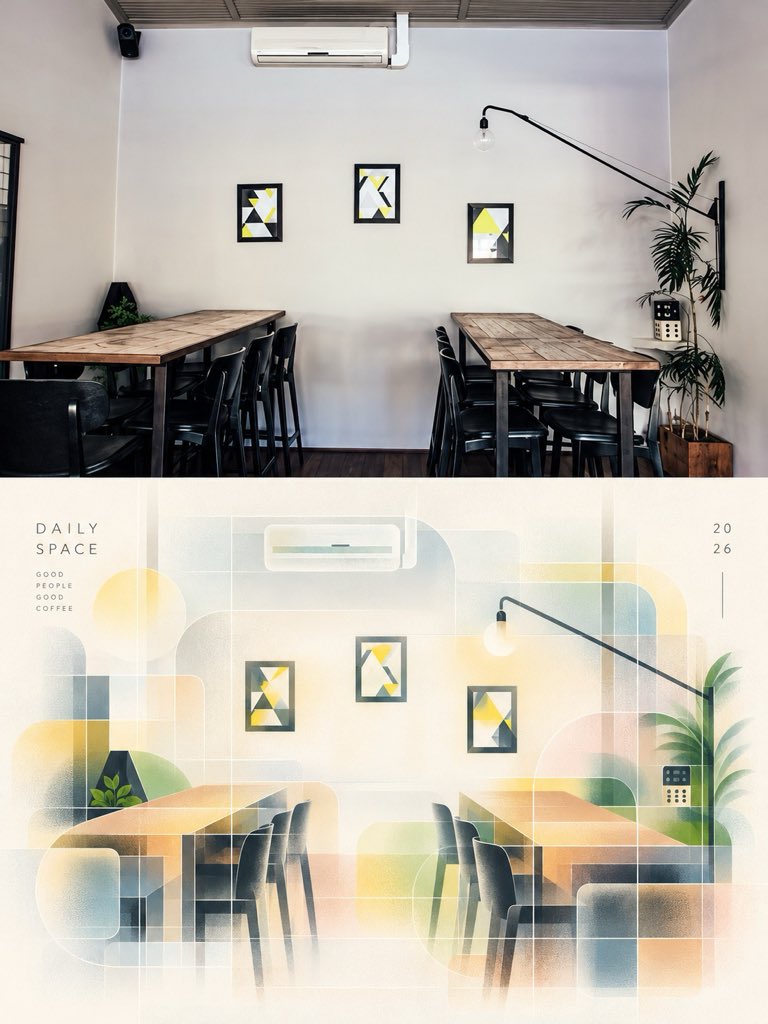
Transform the reference photograph into a sophisticated minimalist editorial art poster while preserving the original café interior, wooden tables, chairs, plants, lighting, and composition. Create a refined architectural illustration with translucent geometric overlays, soft pastel gradients, warm cream and beige tones, muted sage green, pale blue, and golden yellow. Use delicate grid lines, subtle paper texture, elegant negative space, and soft sunlight for an artistic, contemporary design-magazine aesthetic. Arrange the result as a vertical split composition, with the realistic photograph on top and an abstract artistic reinterpretation below. Add subtle typography reading “A QUIETER DAY” and “SAME PLACE, BRIGHTER THOUGHTS.” Premium graphic design, minimalist Swiss editorial layout, soft atmospheric glow, balanced composition, high detail, 4K quality, portrait 4:5 aspect ratio.
Details
Create a beautiful, vintage-inspired hand-drawn illustration of [COUNTRY / CITY / LANDMARK], designe — AI image prompt — GPT Image 2.5
OpenAIGPT Image 2.5
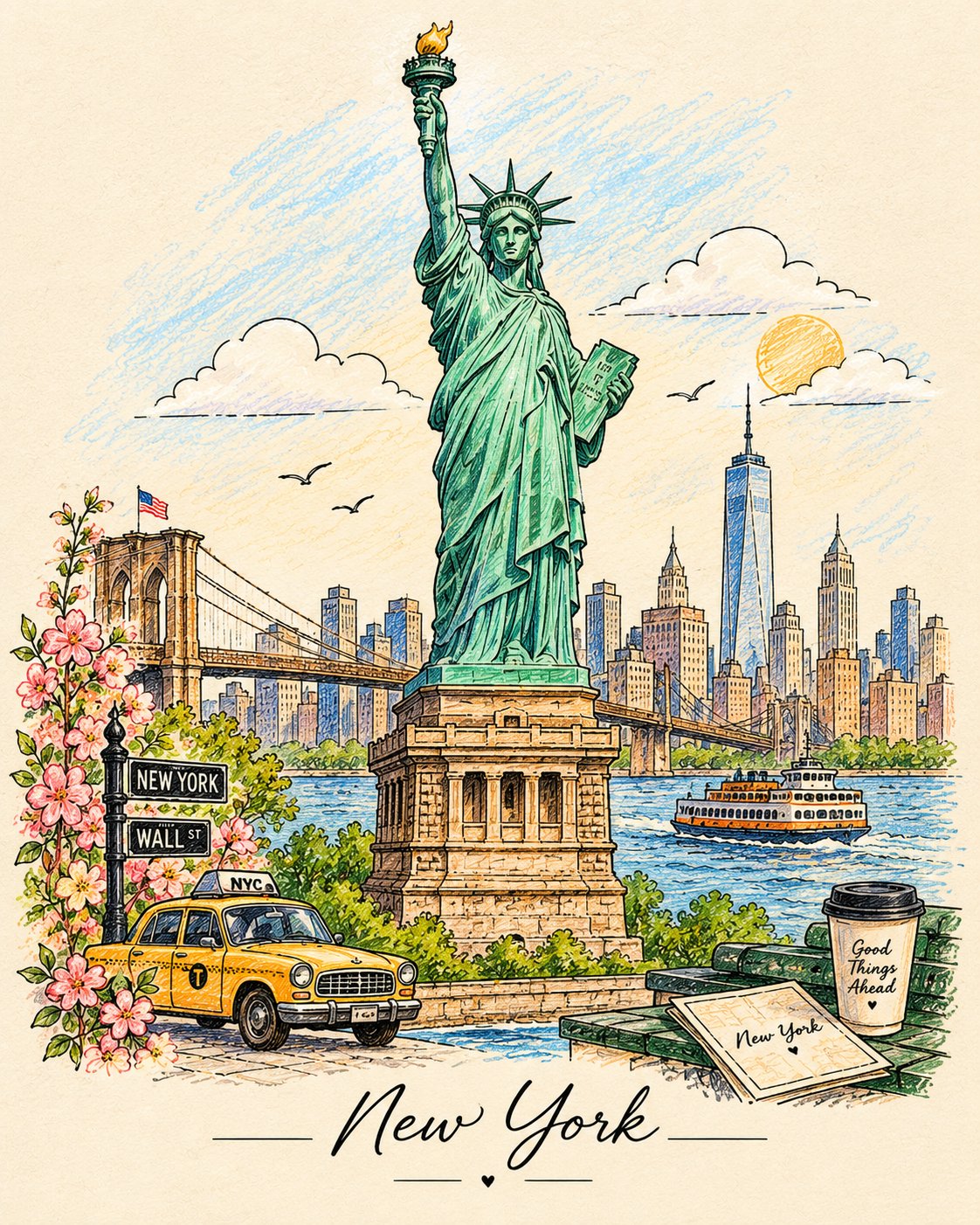
Create a beautiful, vintage-inspired hand-drawn illustration of [COUNTRY / CITY / LANDMARK], designed as an elegant travel coloring-book artwork on a warm ivory background. Transform the destination into a charming miniature world using delicate black ink outlines, intricate architectural details, and a sophisticated minimalist composition. Include its most iconic landmarks, majestic mountains, traditional buildings, local transportation, cultural objects, and recognizable elements of everyday life, all blending naturally into one harmonious scene. ✨ Artistic details: Landmarks: Feature the most recognizable architecture of the destination as the centerpiece. Nature: Add mountains, flowing rivers, rolling hills, clouds, tiny trees, and delicate leaves inspired by the local landscape. Cultural elements: Include traditional objects, local boats, pottery, lanterns, teapots, or other meaningful cultural details. Line art: Use clean, delicate black outlines with varied line thickness, intricate patterns, and beautiful hand-drawn imperfections. Color accents: Keep most of the illustration in elegant black-and-white line art, but fill selected elements with gorgeous colors—soft teal water, sage-green trees, warm terracotta rooftops, golden sunlight, and subtle pastel accents. Composition: Arrange the elements in layered horizontal sections, creating depth without making the artwork look crowded. Background: Use a clean, warm ivory paper texture with plenty of negative space. Atmosphere: Peaceful, nostalgic, artistic, and full of cultural charm, like a page from a premium vintage travel sketchbook. Typography: Write the destination's name in elegant, hand-lettered typography at the bottom, with a tiny decorative flourish. Style: Vintage travel illustration, architectural line drawing, minimalist coloring-book aesthetic, selective watercolor fills, fine black ink, handmade sketchbook texture, sophisticated editorial design. Aspect ratio: 4:5 vertical composition. Ultra-detailed, crisp outlines, balanced layout, beautiful and instantly recognizable destination.
Details
Create one vertically stacked before-and-after comparison using the supplied image as the only sourc — AI image prompt — GPT Image 2.5
OpenAIGPT Image 2.5
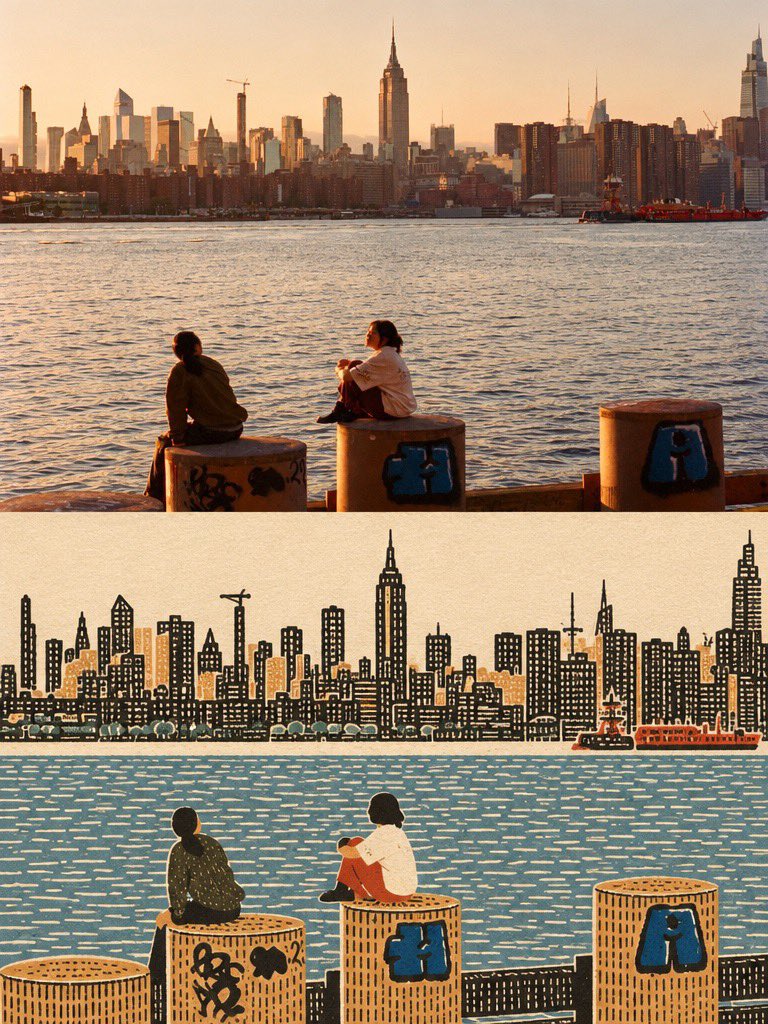
Create one vertically stacked before-and-after comparison using the supplied image as the only source. LAYOUT:Exactly two equal-height panels: original image on top, transformed image on bottom. Both panels have the source image's aspect ratio and identical width. The complete canvas is twice the source image's height. Join the panels directly at a clean horizontal seam. No thick divider, extra panel, decorative frame, labels, or added text. TOP PANEL — ORIGINAL:Place the supplied image unchanged in the upper half. Preserve its full composition, original colors, lighting, details, existing text, and crop. Do not redraw, retouch, stylize, or apply texture to this panel. BOTTOM PANEL — OUTSIDER ART:Redraw the same scene as a flat, densely textured naïve folk-art print. Preserve the main subject, recognizable silhouettes, relative positions, important objects, and overall composition. Do not invent additional subjects or props. Flatten the ground into map-like color zones, with people, trees, buildings, and objects shown in simple frontal or side elevation. Remove converging perspective, photographic depth, directional lighting, and cast shadows.Use warm paper white, warm ink black, and two to four subdued colors derived from the source. Choose one existing object or connected detail as the only saturated accent. Give each large zone one consistent handmade texture: stitch marks, irregular window grids, or dense foliage marks. Keep the texture dense, rhythmic, and slightly imperfect. Where people appear, use small, solid, faceless figures with filled clothing and limbs of visible width. Render every surface as opaque printed ink on matte paper, with no photographic remnants.Keep all illustration, paper texture, and color changes strictly inside the lower panel. No gradients, glossy vector finish, watercolor, stick figures, cute cartoon proportions, invented lettering, or watermark.
Details
Browse all GPT Image 2.5 promptsExplore AI Image Prompts