Neon Prompts
Neon is photography where the light source is in the frame — glow is a contrast you build, not a filter you apply.
About Neon prompts
Neon is a light-source genre, not a color genre. In a real neon photograph the tubes and signs inside the frame are doing the lighting: they tint faces, bounce off wet asphalt, and fall away into shadow. Prompts that treat neon as a palette — "neon colors, vibrant, glowing" — get a uniformly bright image where nothing actually glows, because glow is contrast, and the contrast is missing.
So write the light sources, then protect the dark. Name a color pair — magenta and cyan is the classic, orange against teal runs warmer — and say where each light lives: a sign overhead, a strip along a visor, a storefront across the street. Then defend the shadows explicitly: a mostly black frame, unlit alleys, faces half in darkness. Neon only reads as bright because most of the frame is not.
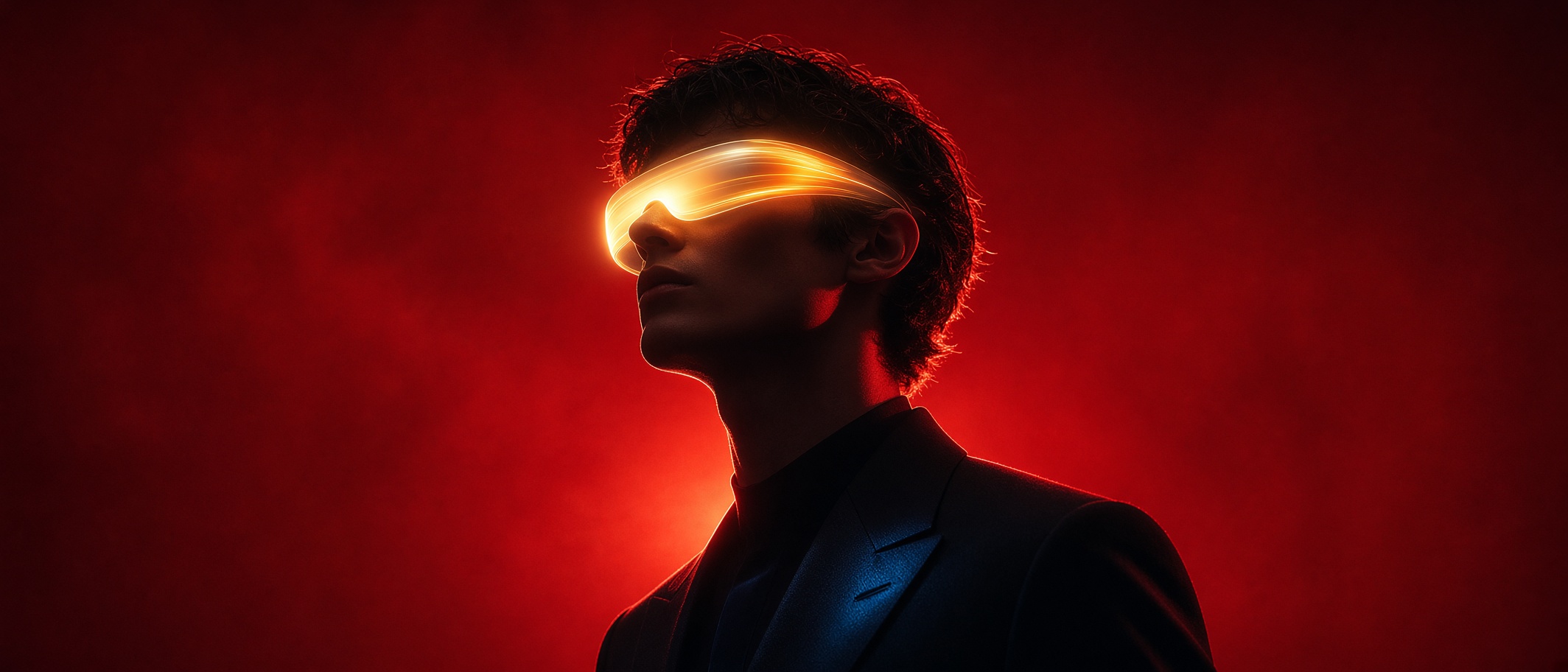
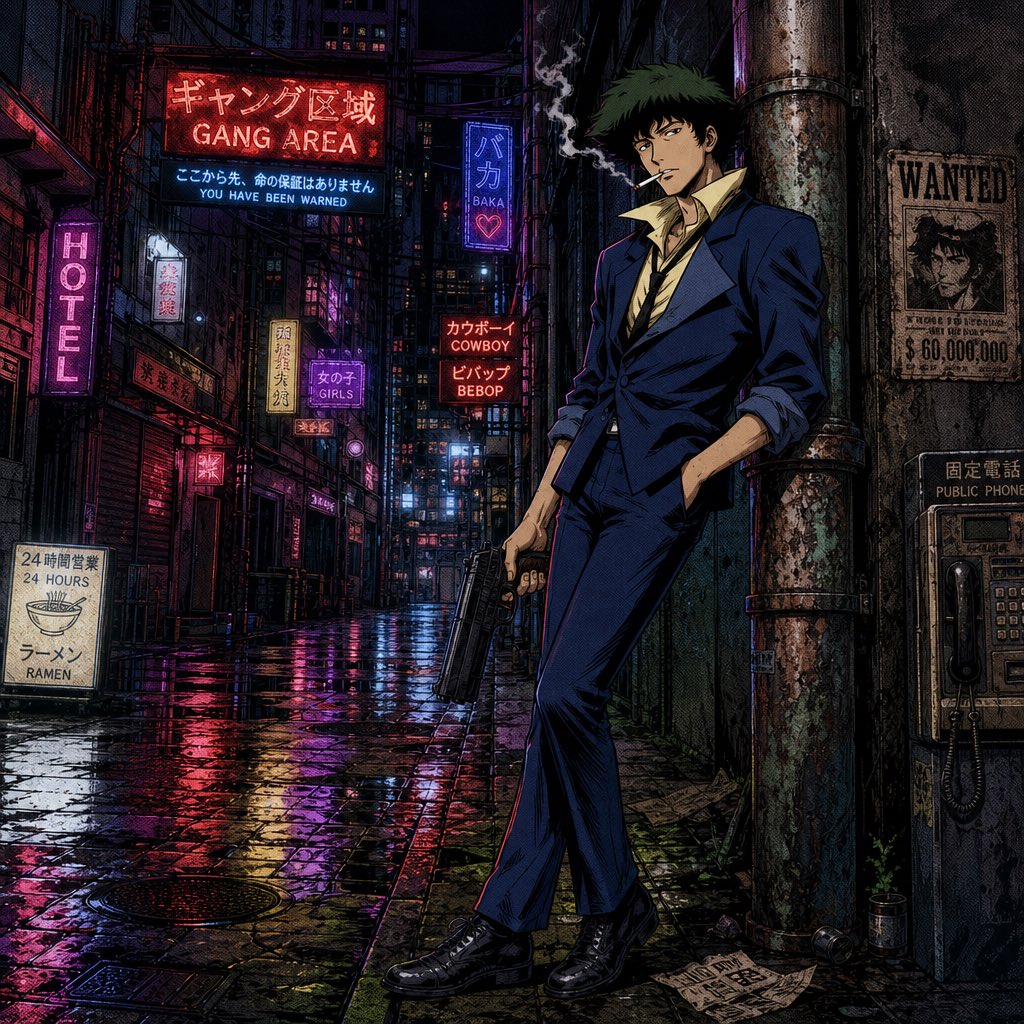
Wet surfaces are the multiplier. Rain-slicked streets, puddles, visors, and chrome double every light source with a reflection and place the glow into the world. The prompts below are tested with their real outputs — notice how many specify rain or wet ground, and how dark their backgrounds actually are.
How to write Neon prompts
- 1Put the light source in the frame: "a buzzing magenta sign overhead", "cyan tube light along the counter". Neon lights the scene from inside the shot — an off-screen glow is just tinted studio lighting.
- 2Pick one color pair and assign directions: "magenta from the left signage, cyan spill from the right". Two opposing colors modeling one subject is the signature neon look; five colors is a carnival.
- 3Protect the darkness in words: "deep black background, unlit street, only the signs glowing". The most common neon failure is a fully exposed frame — brightness everywhere means glow nowhere.
- 4Add a wet surface for free reflections: "rain-soaked asphalt mirroring the signs", "puddles doubling every light". Reflections anchor the glow to the ground and double your light sources at no cost.
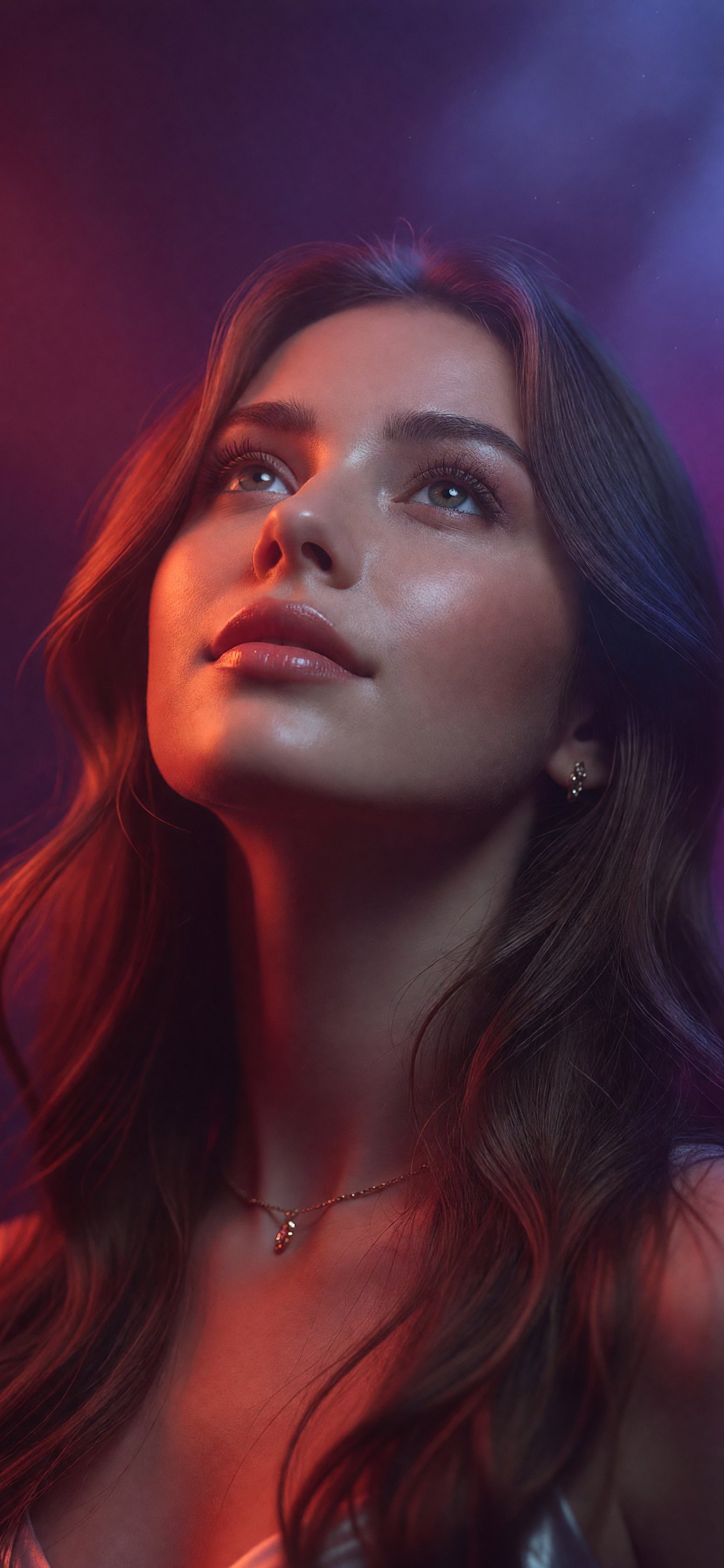
- 5Let the neon tint the subject: "half the face washed magenta, the other edge rimmed cyan". Colored light landing on skin and fabric is what proves the signs are real sources, not decoration.
Frequently asked questions
Why does my neon prompt come out overexposed and flat instead of glowing?
Because the whole frame is bright, and glow is contrast. Ask for a mostly dark frame explicitly — black backgrounds, unlit areas, night — and let only the named light sources be bright. If everything emits light, nothing reads as a light source.
What color combinations work best for neon prompts?
Pairs, not palettes. Magenta and cyan is the archetype; orange against deep blue reads warmer and more street-level. Assign each color a direction or a source so they model the subject from opposite sides — that two-tone shaping is the look people mean by "neon".
Do I need rain in every neon prompt?
Not rain specifically, but some reflective surface earns its place in almost every neon frame: wet asphalt, puddles, glass, chrome, a visor. Reflections double each light source and tie the glow into the environment — without them, signs float on a dark backdrop instead of lighting a world.





![[SUBJECT] visualized through Liquid Crystal Holographic Morphology, appearing to flow and transform — AI image prompt — GPT Image 2.5](https://cdn.ahaprompt.app/harvest-media/import-1789829146551-4t030f.jpg)