LogoAhaPrompt
  • Prompts
  • Featured
  • Models
  • Submit
  • Blog
AhaPromptAhaPrompt

AI Prompts for Images, Video & Audio — Every Model, One Library

Built withLogoNEXTY.DEV
Explore
  • All Prompts
  • Featured Prompts
  • Image Prompts
  • Video Prompts
  • Audio Prompts
  • AI Models
  • Submit a Prompt
  • Blog
Languages
  • English
  • 中文
  • 日本語
  • 한국어

Copyright © 2026 AhaPrompt All rights reserved.

Privacy PolicyTerms of Service
HomeAI Prompt LibraryAI Image PromptsTypographic Story Inserts Grid
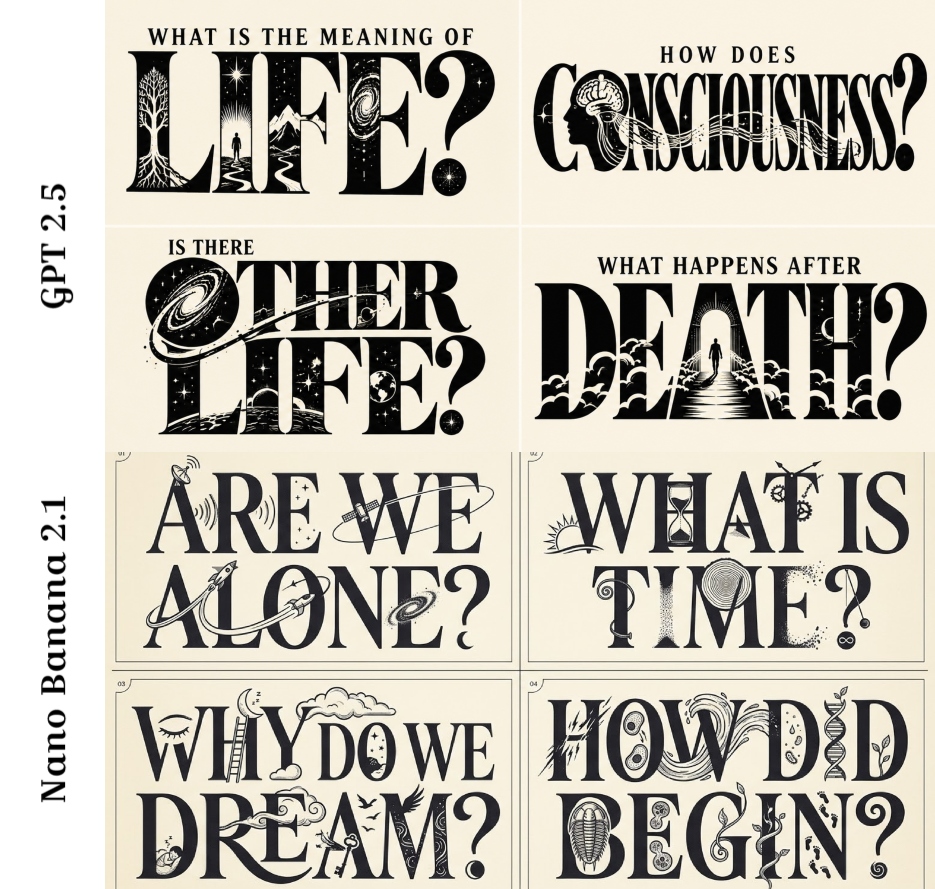
Typographic Story Inserts Grid — AI image prompt — Nano Banana 2.1 — Typography, Poster, Minimalist

Typographic Story Inserts Grid

GoogleNano Banana 2.1Googleimage

2x2 grid, 16:9, do this for 4 questions that baffle humans: I₁ ELEGANT SINGLE‑FACE WORDMARK (master) the phrase in ONE elegant/distinctive display face (condensed serif here), set clean and dominant across one or two lines; the type IS the poster. ¬I₁ = plain body face / multiple faces / small type / type sharing space with a separate illustration. I₂ NARRATIVE INSERTS IN LETTERFORMS story icons integrated into the letters' anatomy — rocket through a counter, trail as a connective swash, stars in counters, crescent as diacritic; the inserts read as part of the type composition, not stickers. ¬I₂ = icons beside/behind the type as separate art / floating stickers / inserts ignoring letter anatomy. I₃ STORY SEQUENCE LEGIBLE the inserts imply the narrative sequence (launch → trail → destination moon/stars); the eye follows the mission through the lockup. ¬I₃ = random icons / no sequence / inserts that don't connect. I₄ TWO‑INK MINIMAL one ink on a light ground (black on cream); no color, no extra imagery, generous negative space. ¬I₄ = color / gradient / extra scenery / busy ground. I₅ LEGIBILITY PRESERVED despite the inserts, every letter reads; no insert breaks a letter beyond recognition. ¬I₅ = broken letters / illegible word / inserts overwhelming the type. η HONEST TYPE consistent letterform weight, clean insert linework, balanced counters. FORBIDDEN = plain wordmark · stickers beside type · inserts unrelated to story · color · extra imagery · illegible letters · inserts breaking letters · multiple faces

Details
Type
AI Image Prompts
Aspect Ratio
935:889
Updated
Nov 1, 2026
Category
TypographyPosterMinimalist
Source

How to use this prompt

  1. 1Copy the full prompt with the copy button above.
  2. 2Open Nano Banana 2.1 by Google, or any image generator with a similar style range.
  3. 3Paste the prompt, then swap the subject and style keywords to match your idea.
  4. 4Match the example's settings (935:889 · Typography · Poster · Minimalist), then iterate — small wording changes shift the output a lot.

Frequently asked questions

Which AI model generated this image?

This image was generated with Nano Banana 2.1 by Google. The prompt on this page is the exact text used to create it.

What settings does this prompt use?

The example was generated with Nano Banana 2.1 using: 935:889 · Typography · Poster · Minimalist. Reusing these settings gives the closest match.

How do I get similar results?

Copy the prompt as-is first, then replace only the subject while keeping the style, lighting, and composition keywords. Generate a few variations — outputs differ between runs.

Can I modify this prompt?

Yes. Prompts work best as starting points — adjust descriptors, aspect ratio, or style tags to make the output your own.
More Nano Banana 2.1 prompts

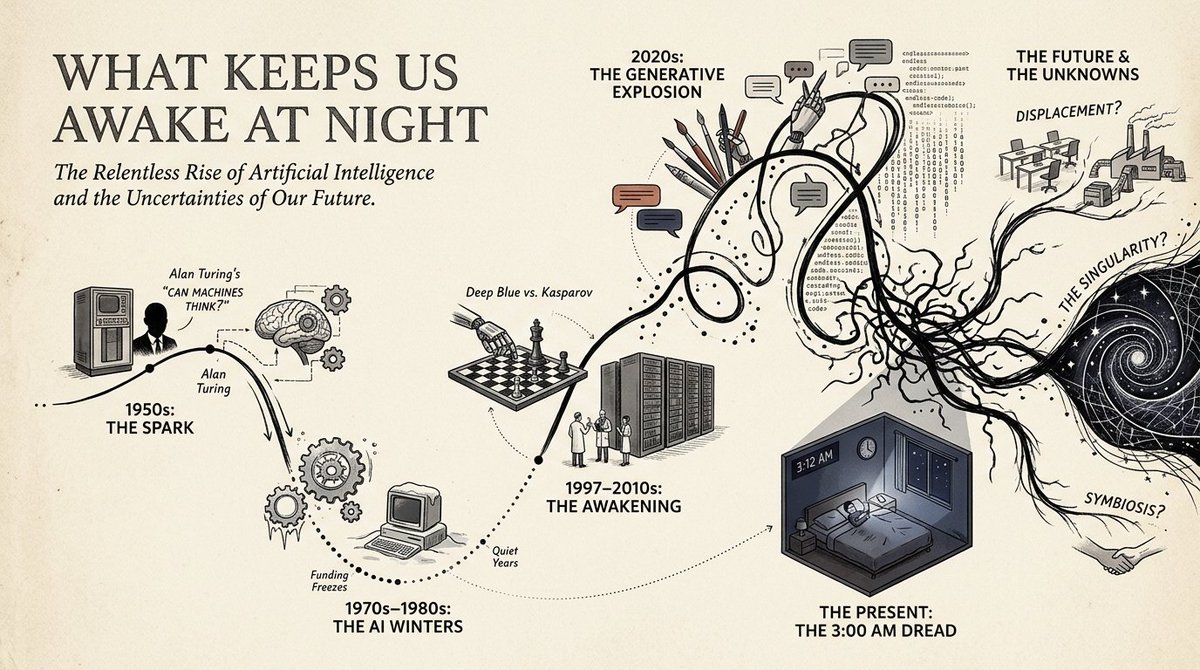
16:9, do this for a topic that keeps us awake at night: in this style= {

CORE IDEA:
Transform the s — AI image prompt — Nano Banana 2.1
GoogleNano Banana 2.1
16:9, do this for a topic that keeps us awake at night: in this style= { CORE IDEA: Transform the subject into a chronological visual journey where a single wandering line travels through time, branching into illustrated milestones, cultural scenes, human moments, and symbolic turning points. MEDIUM: Editorial infographic × historical poster illustration × narrative timeline × miniature visual storytelling. BACKGROUND: Warm ivory or lightly textured archival paper. PALETTE: Mostly black, cream, muted gray, and one or two restrained accent families inferred from the subject. Important milestones may receive stronger localized color. TIMELINE: A continuous hand-drawn path flows horizontally or diagonally across the composition. The path may: loop, dip, accelerate, split, reconnect, flatten, or become chaotic according to the subject’s actual development. MILESTONES: Major stages become illustrated nodes attached to the line. Each node may contain: a person, profession, invention, object, event, environment, symbol, cultural artifact, breakthrough, setback, or transformation. - Analyze the subject and infer its most meaningful chronological stages rather than dividing time evenly. Convert the subject’s progression into one expressive continuous path whose shape reflects momentum, uncertainty, disruption, growth, decline, or reinvention. Reinterpret major milestones as compact illustrated vignettes placed above or below the path. Use simplified human figures, objects, architecture, tools, symbols, or environments to make each milestone immediately understandable. Convert abstract changes into visual path behavior: uncertainty → loops and knots, acceleration → steep directional movement, stability → long clean segments, disruption → sudden breaks or drops, divergence → branching routes, convergence → reconnecting paths. Use dotted vertical connectors to link timeline points with their illustrated scenes. Let early periods feel simpler and later periods become visually denser when the subject naturally grows in complexity. If the subject has competing trajectories, show multiple temporary paths before returning to one dominant storyline. Preserve substantial negative space so the journey remains readable rather than becoming a collage. Simplified editorial figures. Bold silhouettes mixed with minimal line drawing. Small architectural scenes. Iconic objects rather than detailed realism. Clear visual metaphors. Occasional large symbolic illustrations anchoring major transitions. PRIMARY: large subject title or concept. SECONDARY: milestone dates, eras, phases, or sequence markers. TERTIARY: very short explanatory phrases. VISUAL: the timeline and illustrations must communicate the story even if all secondary text disappears. Use one dominant timeline across the full composition. Alternate visual nodes above and below it. Reserve one end of the composition for the current or culminating state. Allow one particularly important milestone to become much larger than surrounding nodes. Keep text aligned to a disciplined editorial grid. - Intelligent narrative infographic. - Historical journey poster. - Human-centered, analytical, and visually approachable. - Feels like a magazine feature, museum wall graphic, and illustrated timeline combined. - Avoid generic evenly spaced timelines. - Avoid turning every event into the same-sized icon. - Avoid dense paragraphs. - Avoid meaningless decorative line movement. - Avoid purely corporate infographic aesthetics. - Avoid identical color intensity across every era. }
Details
2x2 grid, 16:9, do this for 4 famous scifi movies: class UniversalEditorialMetaphor:

    def __init — AI image prompt — Nano Banana 2.1
GoogleNano Banana 2.1
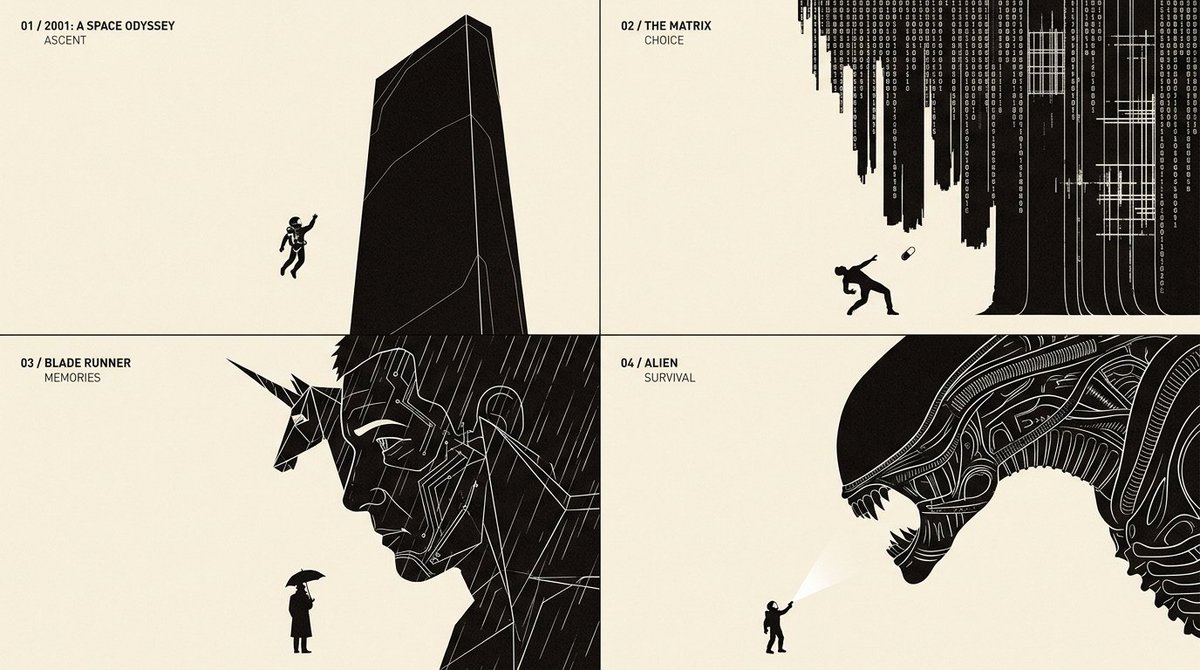
2x2 grid, 16:9, do this for 4 famous scifi movies: class UniversalEditorialMetaphor: def __init__(self, topic): self.topic = topic self.semantics = infer_semantic_structure(topic) self.thesis = infer_visual_thesis(topic) self.mood = infer_editorial_tone(topic) self.metaphors = generate_candidate_metaphors( topic, count=12 ) self. best_metaphor = self. select_best_metaphor() def select_best_metaphor(self): return max( self.metaphors, key=lambda m: 0.35 * semantic_accuracy(m) + 0.25 * conceptual_originality(m) + 0.25 * visual_clarity(m) + 0.15 * silhouette_strength(m) ) def visual_actors(self): return { "primary": infer_dominant_form( self. best_metaphor ), "secondary": infer_consequence_or_partner( self. best_metaphor ), "interaction": infer_decisive_action( self. best_metaphor ) } def composition(self): return { "geometry": "asymmetric", "primary_scale": "monumental", "secondary_scale": "small", "camera": "flat editorial orthographic", "cropping": "dramatic boundary intrusion", "negative_space": "dominant", "focal_point": "physical interaction" } def typography(self): return { "heading": derive_chapter_title(self.topic), "embedded_word": infer_single_action_label_if_needed( self.topic ), "density": "minimal" } def render_style(self): return { "background": "warm ivory", "foreground": "near-black", "interior_lines": "fine white contours", "shadows": None, "gradients": None, "texture": "minimal editorial print", "format": "wide conceptual illustration" } def render(self): return compose( actors=self.visual_actors(), metaphor=self. best_metaphor, layout=self.composition(), typography=self.typography(), style=self.render_style() ) FINAL_IMAGE = UniversalEditorialMetaphor( topic="[TOPIC]" ).render()
Details
Transform the provided reference photograph into a sophisticated, premium editorial art poster while — AI image prompt — Nano Banana 2.1
GoogleNano Banana 2.1
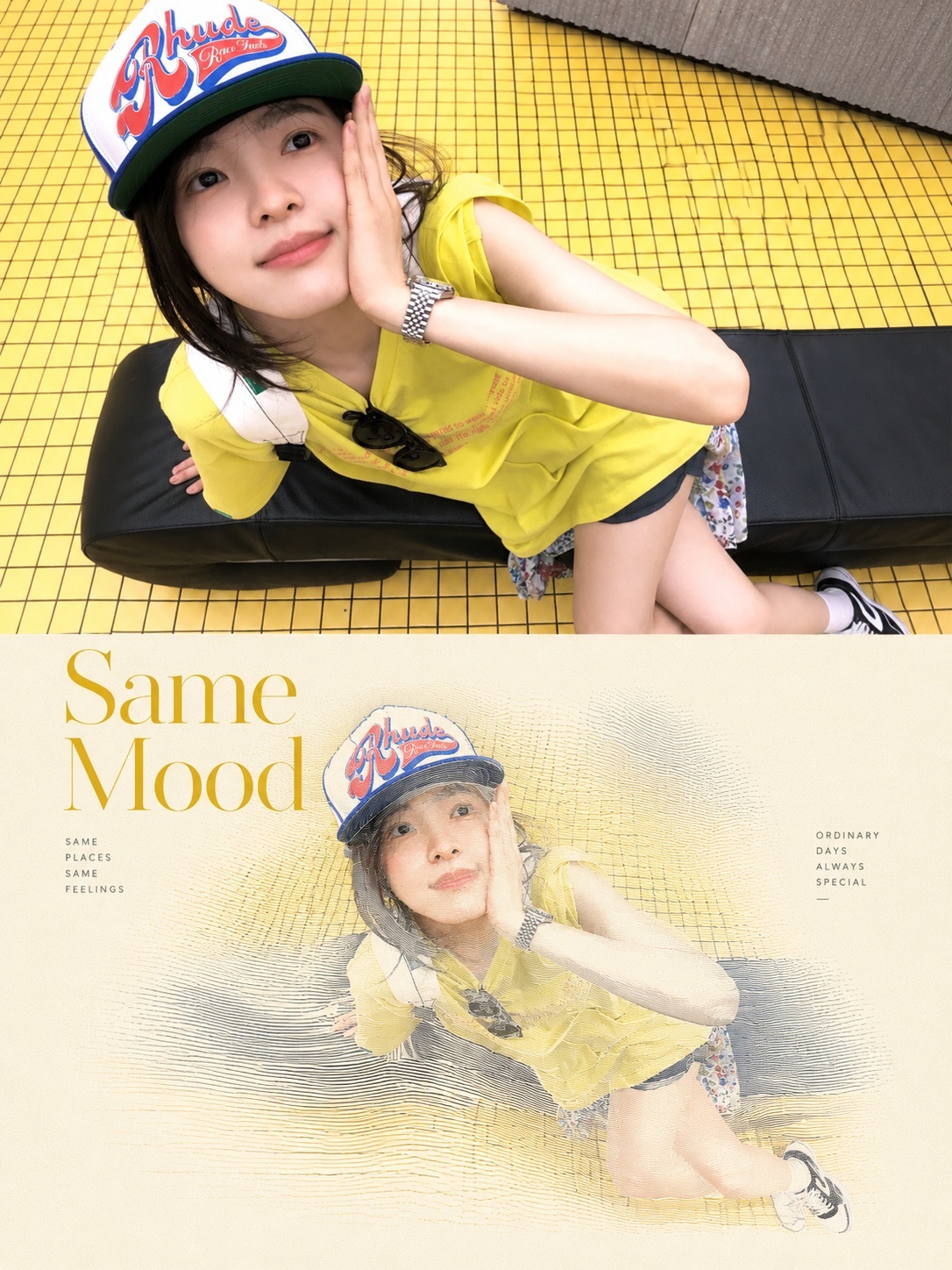
Transform the provided reference photograph into a sophisticated, premium editorial art poster while preserving the original subject exactly as shown. Composition: Create a vertical 4:5 editorial layout divided into two sections. The upper section features the original photograph in full color, maintaining the exact face, identity, pose, clothing, objects, proportions, and natural details. Do not beautify, retouch, or alter the subject. The lower section transforms the same photograph into an elegant, artistic illustration on a warm ivory, textured paper background. Recreate the subject using delicate flowing contour lines, fine engraved linework, subtle crosshatching, and elegant hand-drawn strokes. Preserve the subject’s original silhouette, facial features, pose, and recognizable details. Typography: Add a large, refined editorial headline on the lower section, positioned to the left with generous spacing. Use sophisticated high-contrast serif typography inspired by luxury fashion magazines. Choose a short, meaningful title that matches the photograph. Add small uppercase supporting text on the left and right, with wide letter spacing and minimalist editorial details. Art direction: Minimalist luxury magazine aesthetic, Japanese editorial design influence, vintage printmaking, fine-line illustration, warm cream paper grain, subtle natural imperfections, delicate flowing wave patterns surrounding the subject, muted earthy accents, restrained color palette, balanced negative space, elegant visual hierarchy, museum-quality art direction. Color palette: Warm ivory, soft beige, muted gold, dusty brown, or subdued green, selected to complement the original photograph. Important requirements: Keep the upper photograph realistic and unchanged. The lower illustration must depict the exact same subject and scene, not a different interpretation. Maintain accurate anatomy, original colors where appropriate, and recognizable details. Text should be clean, correctly spelled, and professionally typeset. No extra subjects, no distorted features, no excessive effects, no artificial facial enhancement, no watermarks. Final result: A premium, collectible editorial art poster combining an authentic photograph with a delicate, hand-drawn contour illustration, resembling a high-end photography exhibition poster.
Details
2x2 grid, 16:9, do this for 4 eras that defined modern humanity: S₁ CHARACTER SILHOUETTE FILLED WITH — AI image prompt — Nano Banana 2.1
GoogleNano Banana 2.1
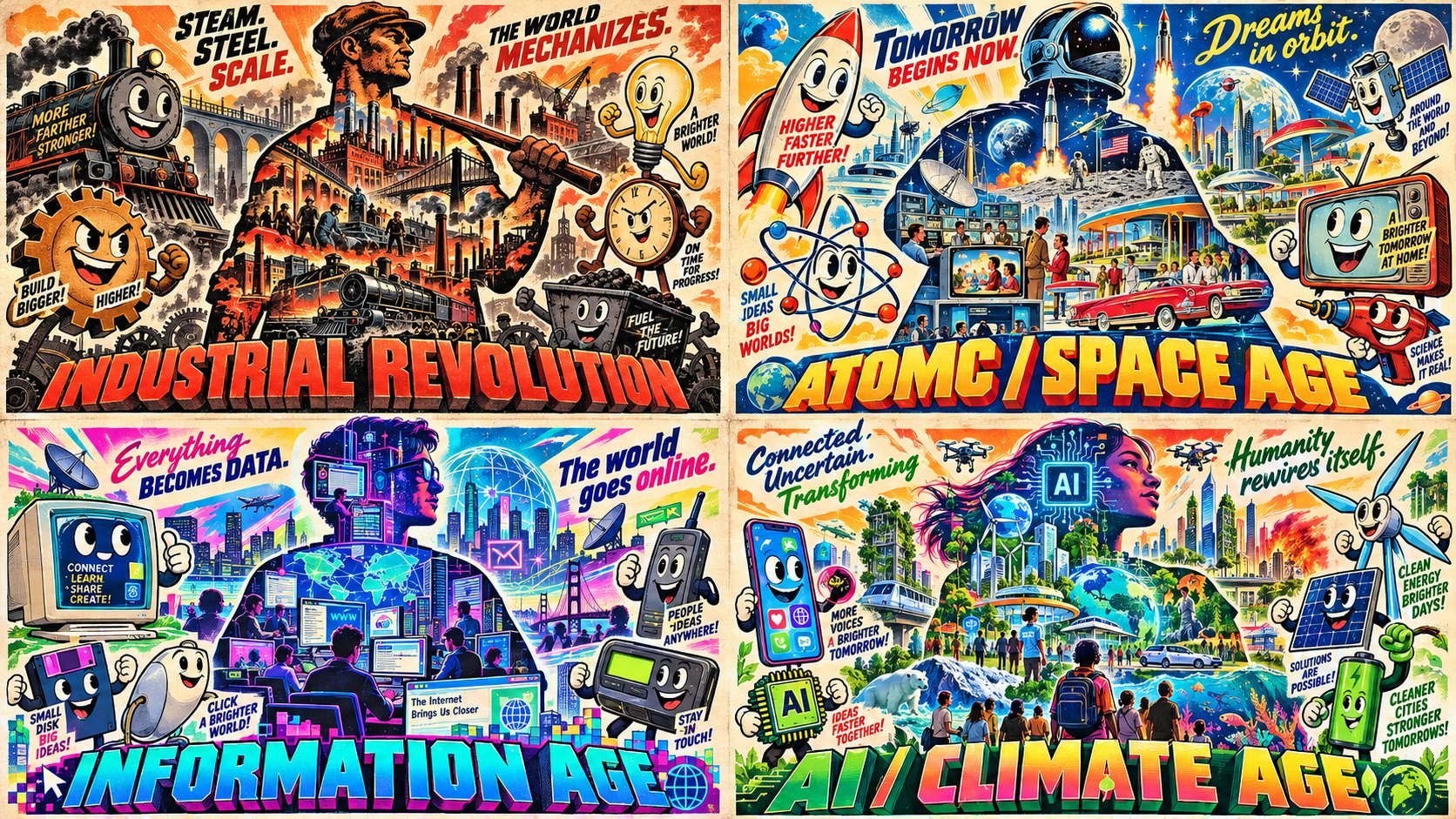
2x2 grid, 16:9, do this for 4 eras that defined modern humanity: S₁ CHARACTER SILHOUETTE FILLED WITH SCENES (master) a central character silhouette whose interior is filled with scenes from the topic/era (city, sunset, objects, people); the silhouette IS the era. ¬S₁ = no silhouette / empty silhouette / scenes outside. S₂ ANTHROPOMORPHIZED OBJECTS WITH era's main emotion appropriate FACES surrounding the silhouette, 3–6 objects from the era with smiley faces and expressive eyes (cassette, phone, car, food, tool); each object is a character. ¬S₂ = no objects / no smiley faces / realistic objects / generic props. S₃ GIANT 3D TYPOGRAPHY + TAGLINES giant bold 3D title at the bottom naming the era/topic; taglines above the silhouette or panels; legible, retro style. ¬S₃ = small type / no 3D / no taglines / modern font. S SATURATED RETRO PALETTE saturated colors (neon pink, electric blue, sunset orange, lime green) on cream; retro poster feel; bold shapes. ¬S₄ = muted / grayscale / modern minimal / dark ground. S₅ MULTI‑PANEL OR COMPOSITIONAL DENSITY either a multi-panel layout (4 panels like Image 55) or a single dense composition with the silhouette + objects + title filling the frame; no empty space. ¬S₅ = sparse / single object / empty frame. η HONEST RETRO bold shapes, saturated fills, retro typography, poster texture. FORBIDDEN = no silhouette · empty silhouette · no smiley objects · small type · no 3D · muted palette · sparse · empty frame
Details
// ── SEMANTIC INFERENCE ────────────────────────────────────────── THEME_AESTHETIC  = infer_motif_l — AI image prompt — Nano Banana 2.1
GoogleNano Banana 2.1
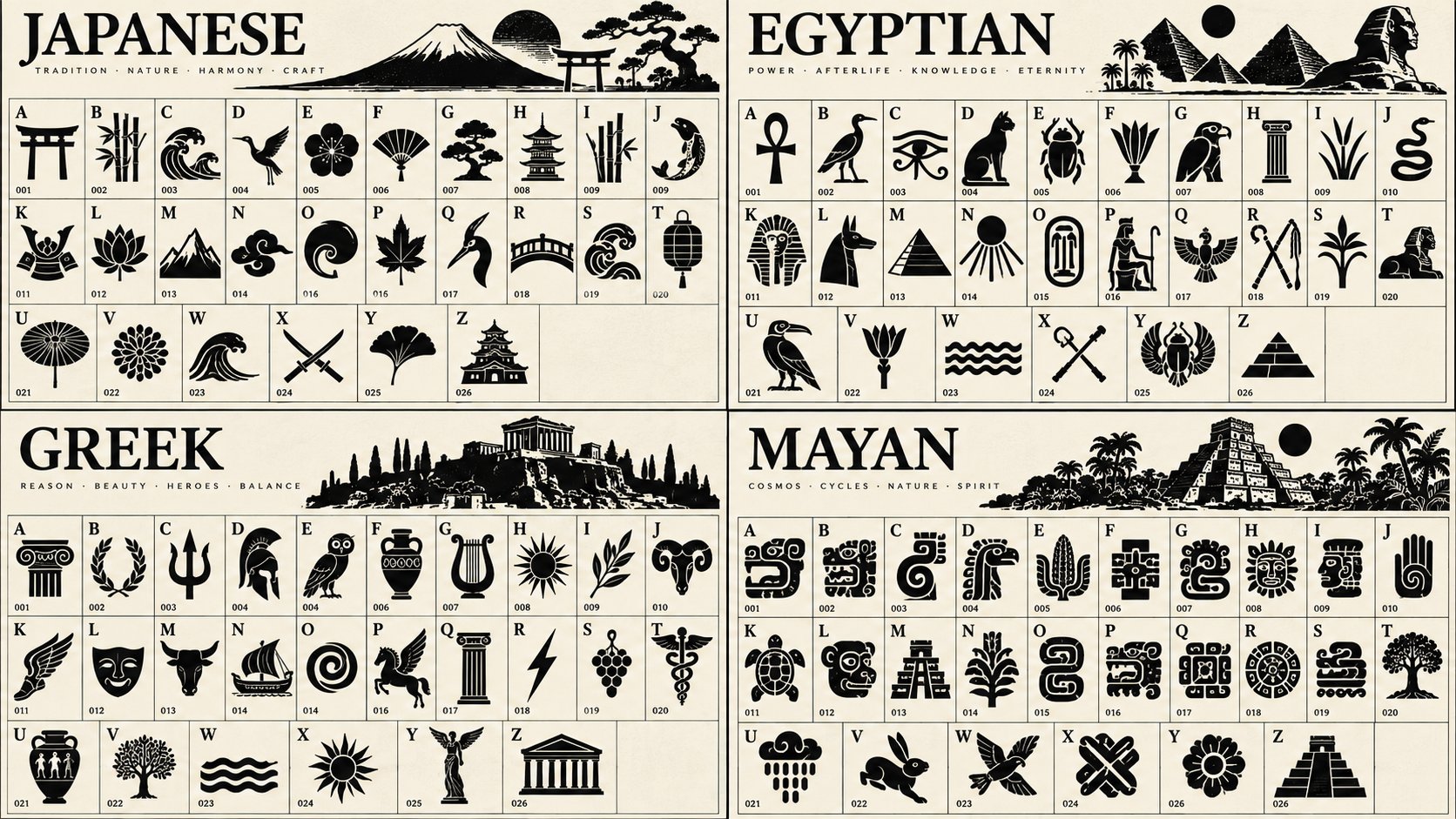
// ── SEMANTIC INFERENCE ────────────────────────────────────────── THEME_AESTHETIC = infer_motif_language($ TOPIC) // Mesoamerican, Cyberpunk circuitry, botanical, nautical, astral MOTIF_PRIMITIVES = infer_shape_vocabulary(THEME_AESTHETIC) // hooks, spirals, dots, sweeping tails, gears, leaves GRID_LAYOUT = 26_cells (A-Z), strict orthogonal grid INK_STYLE = solid_black_blocks, negative_space_carving // ── GLYPH GENERATION FIELD ───────────────────────────────────── // Each glyph is a dense mass carved by negative space. Φ(x,y) = solid_mass(GRID_CELL) - carve_potential(MOTIF_PRIMITIVES) F = ∇Φ // flow of the outer silhouette Curl = ∇×Φ // internal spirals, loops, and curves Div = ∇·F // density of dots, eye-holes, and negative space gaps // ── ITERATION (A to Z) ───────────────────────────────────────── for letter in A..Z: // 1. Base mass: Assign a random organic/geometric bounding shape BASE = random_organic_blob(THEME_AESTHETIC) // 2. Apply topic-specific motifs for i in 1..3: MOTIF = select_random(MOTIF_PRIMITIVES) FUSE(BASE, MOTIF, via=Curl) // 3. Carve negative space CARVE(BASE, shape='internal_eye_or_gap', via=Div) CARVE(BASE, shape='sweeping_slash', via=F) // 4. Metadata RENDER_LABEL(letter, top_left) RENDER_ID(format="00" + index, bottom_left) // 5. Place in grid PLACE(BASE, grid=GRID_LAYOUT) // ── ACCURACY CHECK PROTOCOL ──────────────────────────────────── ACCURACY_CHECK = { grid_check : exactly 26 cells, A-Z, silhouette_check: all glyphs are solid black masses, carve_check : negative space does not break the outer silhouette, theme_check : motifs (e.g., if $ TOPIC is 'Marine Biology', look for fins/waves) } IF ANY check fails → regenerate affected glyphs. // ── RENDER ───────────────────────────────────────────────────── RENDER_BOARD( layout := GRID_LAYOUT, palette := { ink: black, paper: light_grey }, style := 'bold_iconic_totem_glyphs' )
Details
Design a logo for a Jamaican plantain chip brand called "Golden Crunch". Bold rounded lettering, a s — AI image prompt — Nano Banana 2.1
GoogleNano Banana 2.1
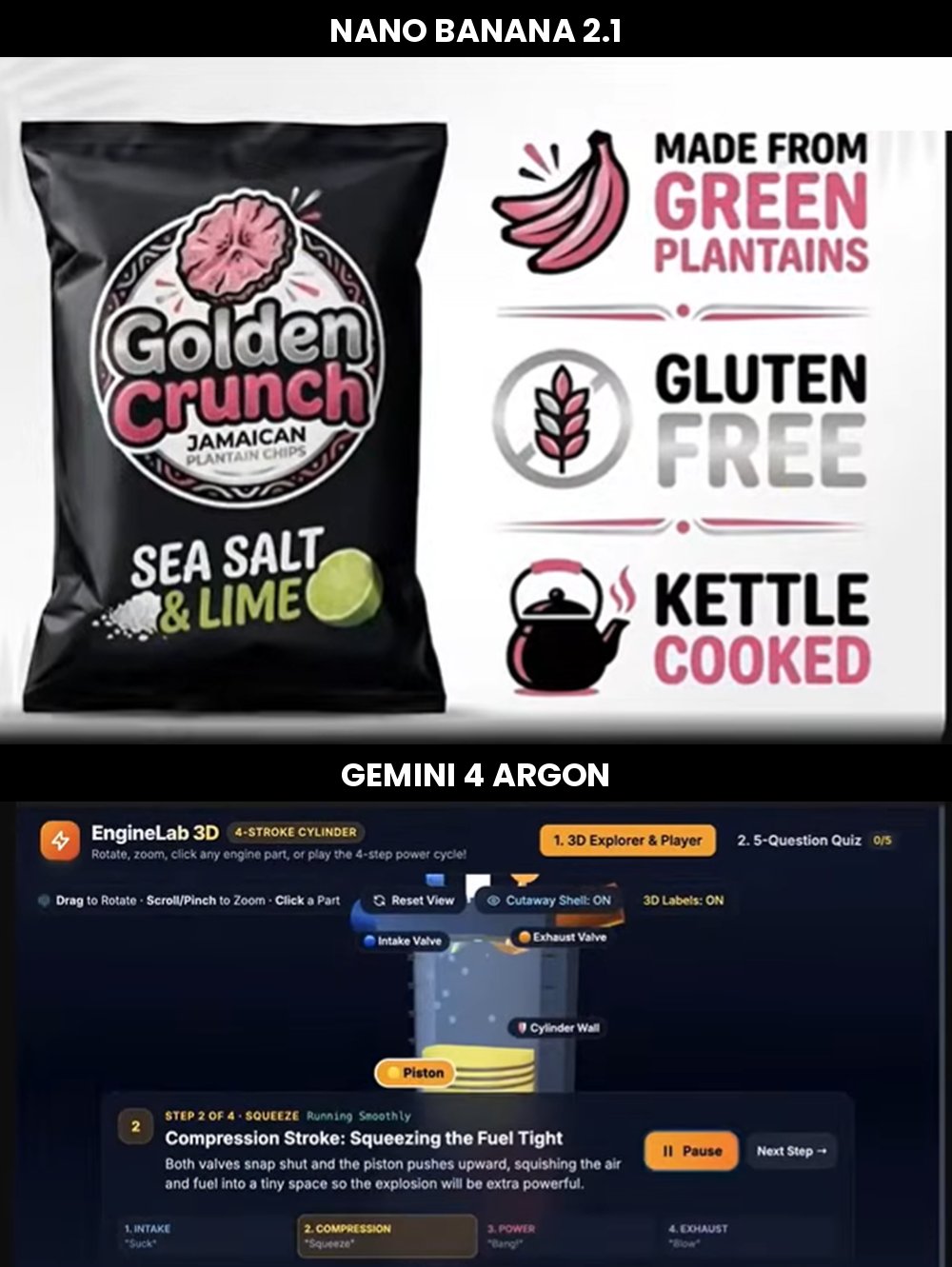
Design a logo for a Jamaican plantain chip brand called "Golden Crunch". Bold rounded lettering, a single stylized plantain slice as the icon, black, silver and pink. Plain white background, 1:1.
Details
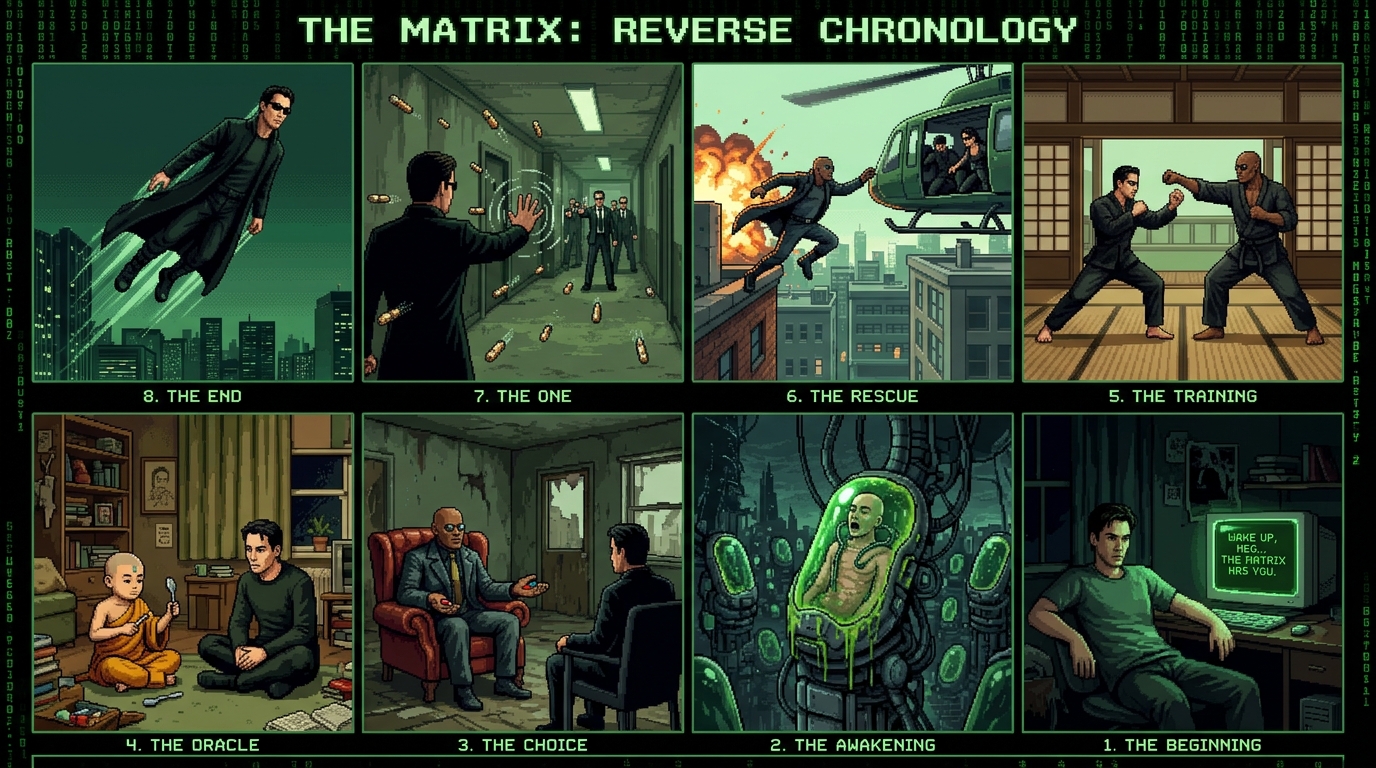
make a collage of The Matrix movie from end to start, 8 total panels, pixel art style — AI image prompt — Nano Banana 2.1
GoogleNano Banana 2.1
make a collage of The Matrix movie from end to start, 8 total panels, pixel art style
Details
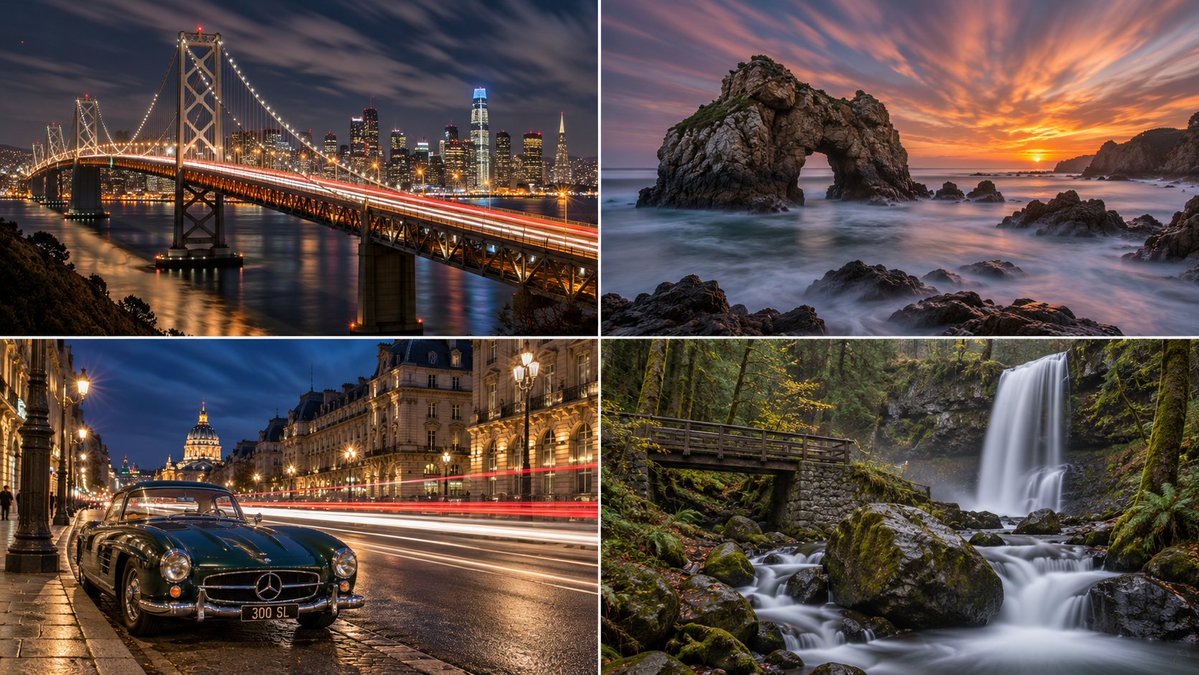
Let  S(x,y) ∈ {0,1}        = static mask   (1 on STATIC_ANCHOR)      v(x,y) ∈ ℝ²           = velocit — AI image prompt — Nano Banana 2.1
GoogleNano Banana 2.1
Let S(x,y) ∈ {0,1} = static mask (1 on STATIC_ANCHOR) v(x,y) ∈ ℝ² = velocity field of MOVING_ELEMENTS (0 where S=1) L(x,y,t) = scene radiance at instant t ND ≥ 1 = neutral‑density factor from CAPTURE_MEDIUM τ = clip threshold (sensor full‑well) THE FRAME (one shutter speed T = DURATION governs ALL of it): ⎡ ⎤ I(x,y) = ⎢ S·L_static(x,y) ⎥ ← anchor: integrand constant in t clip₀¹⎢ T ⎥ ⇒ after /T → L_static, PSF=δ (E₃) ──────+ (1−S)· ∫₀ L(x − vt, y − v_yt, t) dt ⎥ ← movers: smeared along v over T (E₁) ND ⎢ ⎥ ⎢+ ambient·T ⎥ ← night brighter than eye (E₂) ⎣ ⎦ + η(x,y) ← hot‑pixels + blown‑core bloom + ε_vib Derived consequences (read straight off the integral — NOT painted by hand): • point light p(t) with intensity ≫ τ ⇒ ∫ draws a CONTINUOUS curve; peak clips → white core, coloured halo = trailColor(v·view) ∈ {Red receding, White/Amber approaching} (E₂) • small fast object (pedestrian), ‖v‖T ≫ size ⇒ its energy spreads thin ⇒ GHOST/ABSENT (E₁) • water, ‖v‖T large & turbulent ⇒ veil = SILKY ; cloud, v=wind ⇒ STREAK(wind_dir) (E₁) Consistency test (E₁ as a scalar equality): T̂_water = |∇⁻¹ blur(water)|/‖v_water , T̂_cloud = len(streak)/‖v_wind , T̂_trail = len(trail)/‖v_car HONEST |T̂_water − T̂_cloud| + |T̂_cloud − T̂_trail| < ε -- one T explains every blur FORBIDDEN ⟺ ∃ class with T̂ ≈ 0 while another T̂ = T -- a frozen thing inside a long exposure
Details
Browse all Nano Banana 2.1 promptsExplore AI Image Prompts