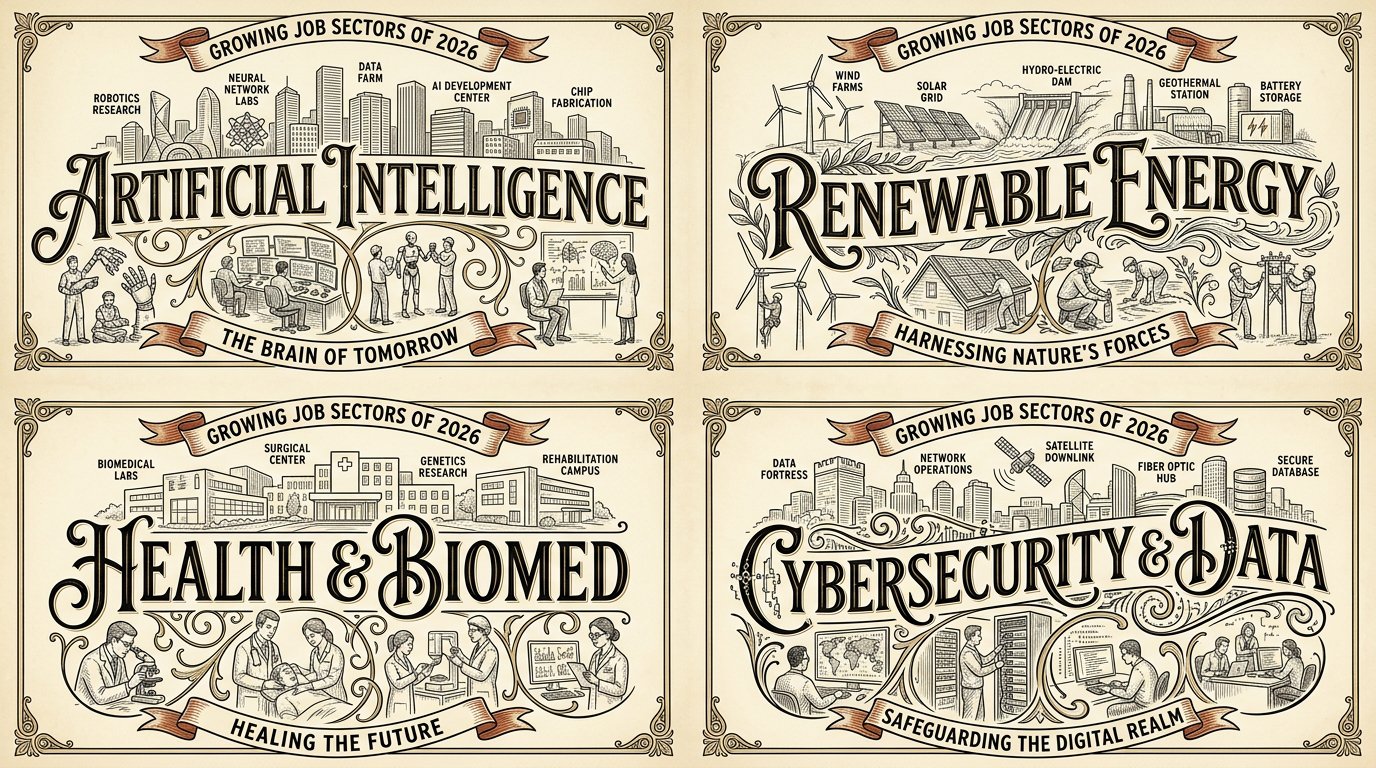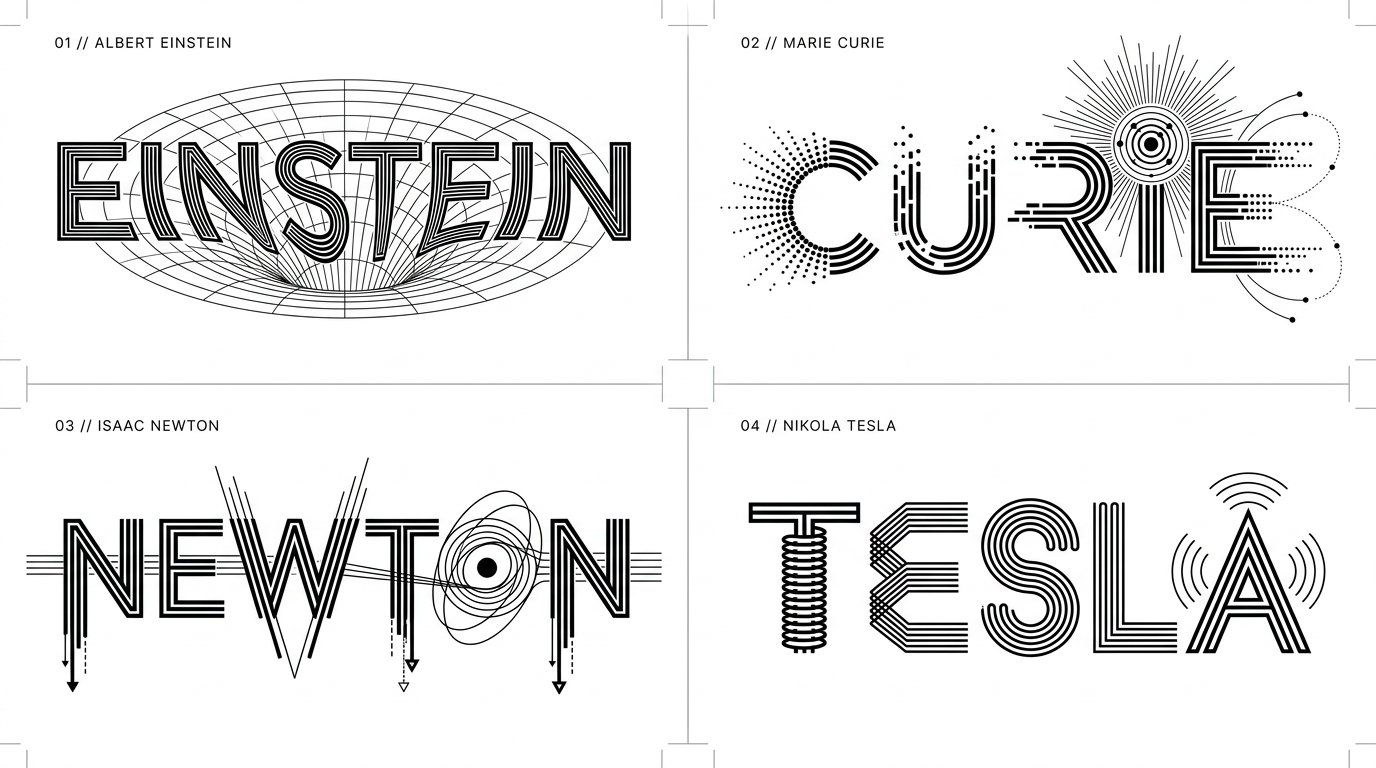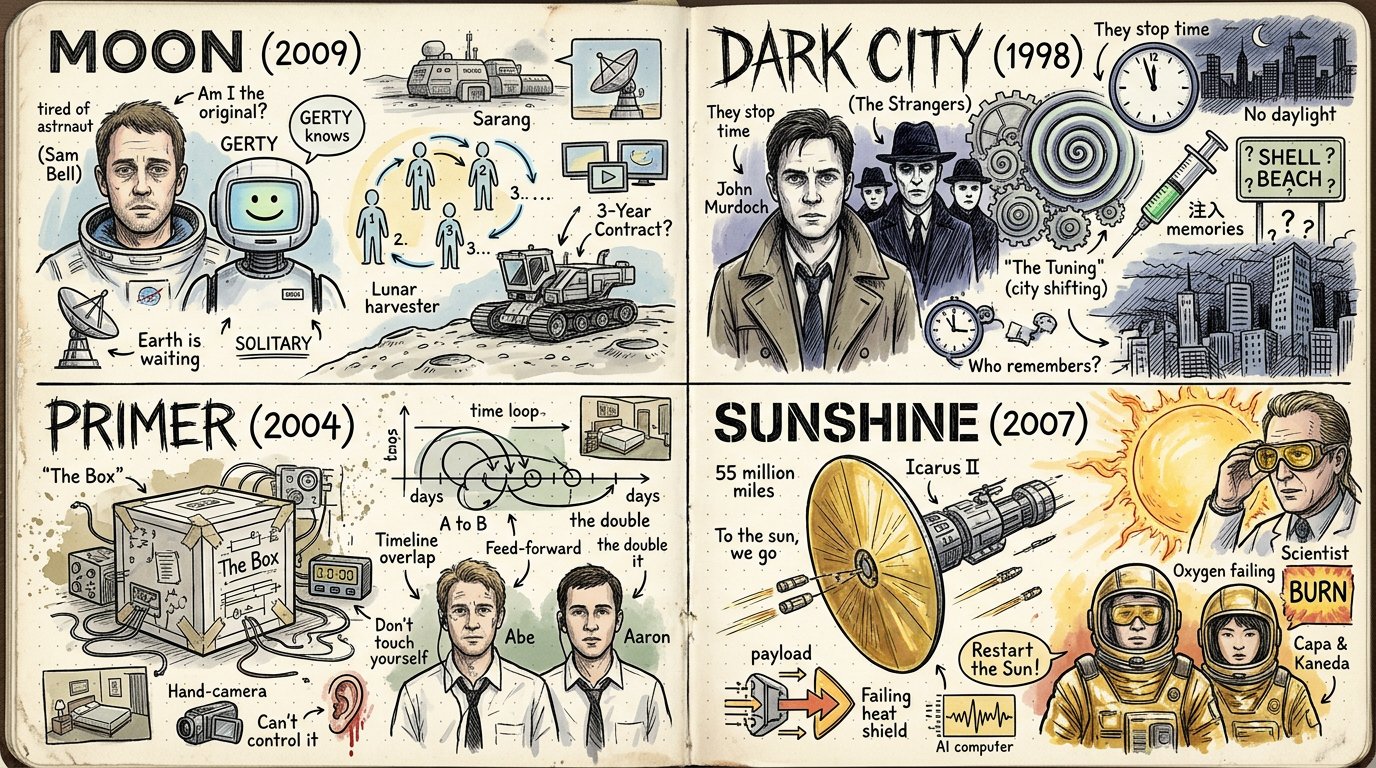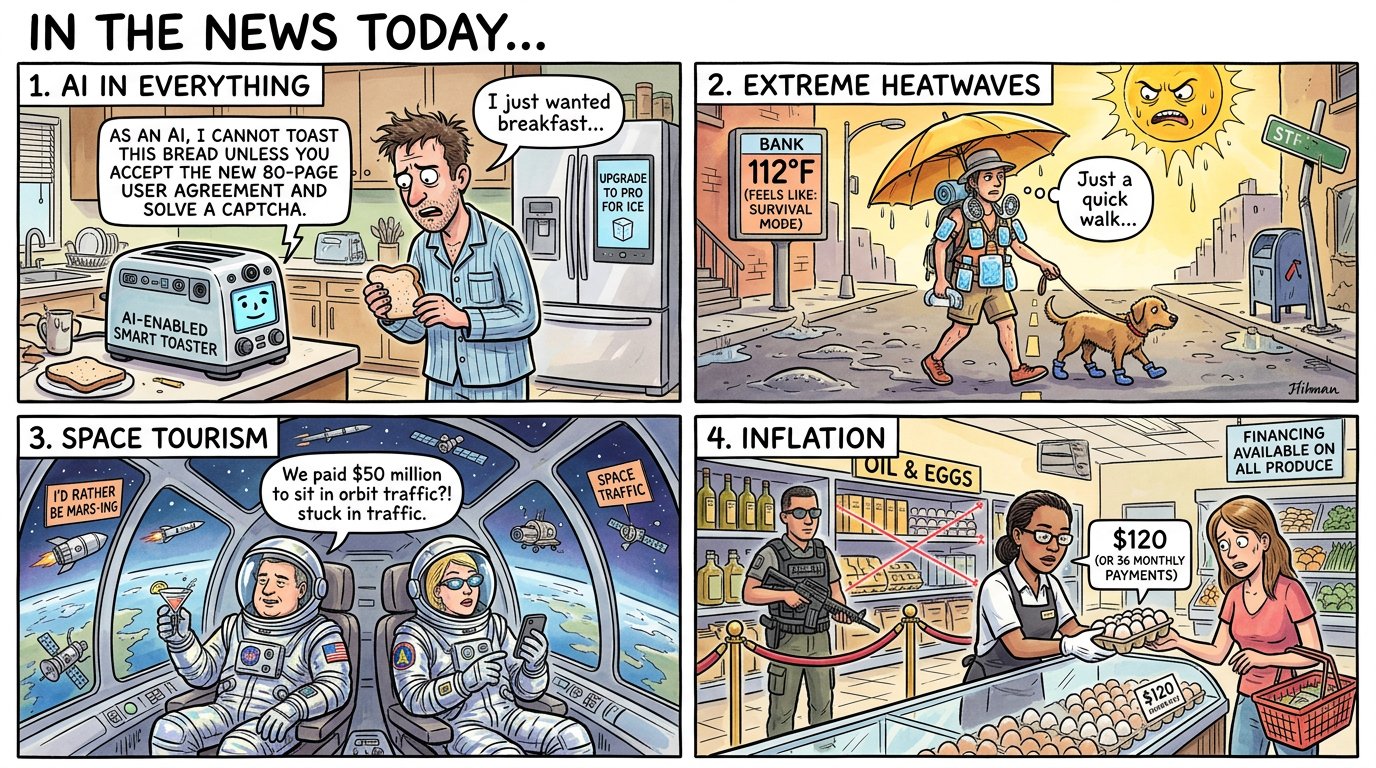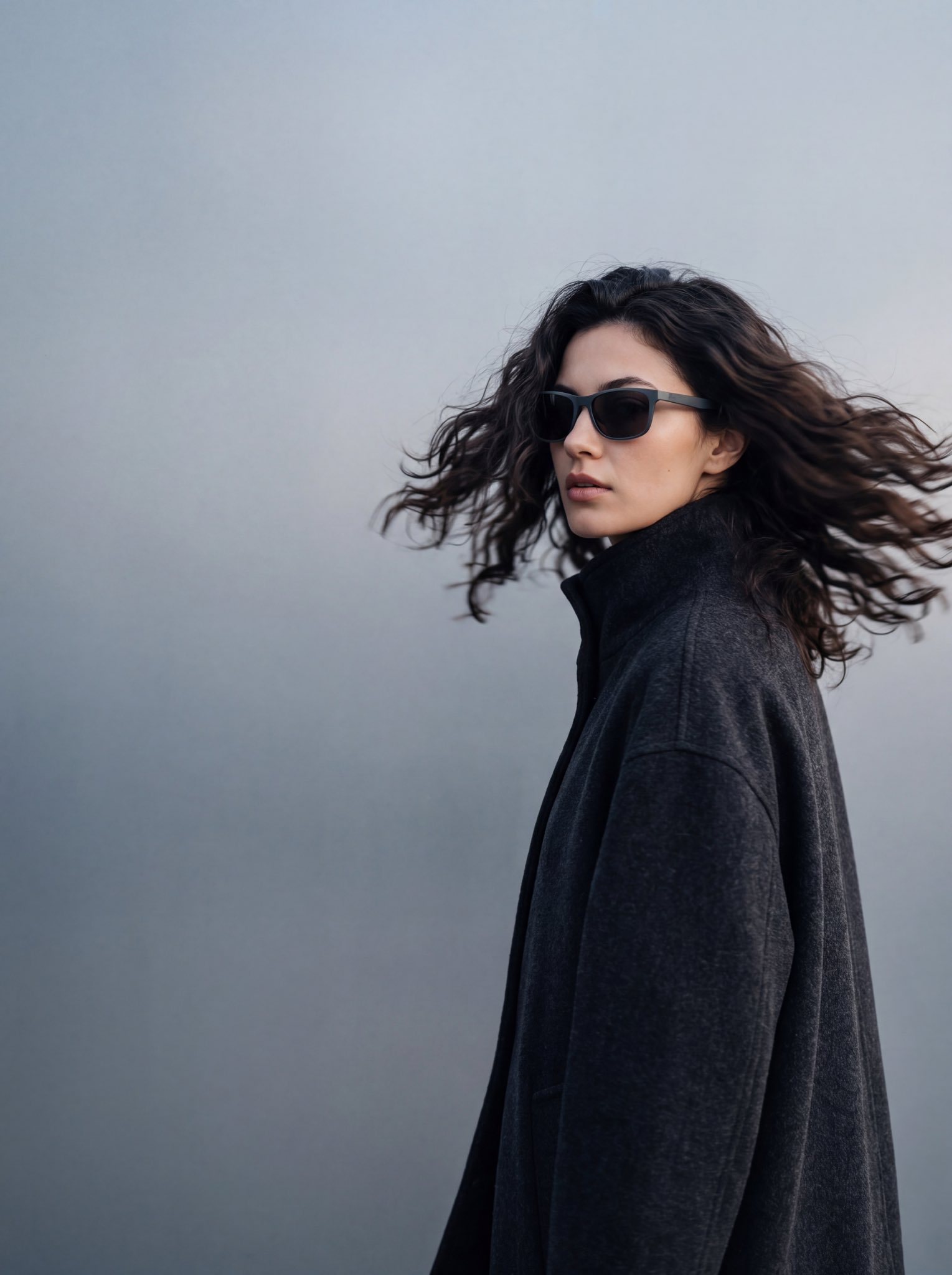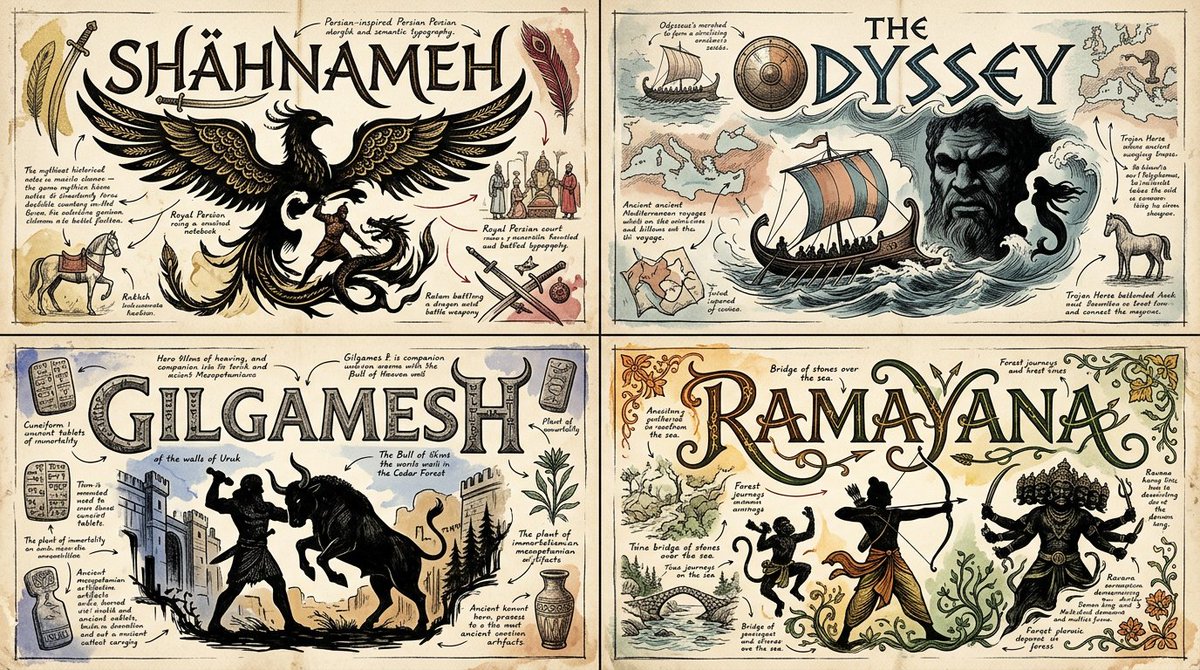
Semantic Calligram Story Artwork Grid

2x2 grid, 16:9, do this for 4 international classics like Shahnameh: INPUT = "$SUBJECT" STYLE_DNA = { "ILLUSTRATED_NOTEBOOK": { "medium": "aged ivory paper + editorial ink illustration", "marks": [ "fine black outlines", "crosshatched portraits", "muted hand-colored drawings", "scribbled arrows", "miniature explanatory doodles", "handwritten captions" ], "composition": "information flows through connected visual discoveries" }, "SEMANTIC_TYPOGRAPHY": { "medium": "bespoke vector-like calligram", "structure": [ "letterforms contain symbols", "letters morph into recognizable objects", "typographic strokes encode meaning", "organic and geometric letterform fusion", "color communicates conceptual character" ], "principle": "the word visually demonstrates its meaning" }, "MYTHIC_SILHOUETTE": { "medium": "high-contrast black-and-white emblem", "structure": [ "heroic silhouettes", "negative-space integration", "flowing ornamental forms", "symbolic animals or figures when relevant", "elegant literary typography" ], "principle": "image and lettering share one silhouette" } } def extract_semantic_dna(subject): return { "identity": infer_recognizable_identity(subject), "narrative": infer_meaningful_story(subject), "symbols": infer_authentic_visual_associations(subject), "geometry": infer_iconic_shapes(subject), "personality": infer_emotional_character(subject), "relationships": infer_semantic_connections(subject) } def construct_calligram(subject, dna): word = choose_primary_label(subject) candidates = generate_letterform_transformations( text=word, symbols=dna["symbols"], geometry=dna["geometry"] ) return optimize( candidates, objective={ "legibility": 0.40, "semantic_relevance": 0.30, "visual_elegance": 0.20, "originality": 0.10 }, preserve_letter_order=True, preserve_recognizable_word=True ) def illustrate_knowledge(dna): return create_ink_drawings( hero=dna["identity"], companions=select_meaningful_symbols(dna["symbols"]), connections=dna["relationships"], drawing_style="antique editorial sketchbook", detail="small but inspectable" ) def fuse_silhouettes(calligram, dna): return integrate_negative_space( main_word=calligram, visual_symbols=dna["geometry"], methods=[ "shared outlines", "figure-ground reversal", "letter-object morphing", "contour continuation", "internal silhouette cutouts" ], avoid="forced illegible letter distortion" ) def generate_artwork(subject): dna = extract_semantic_dna(subject) calligram = construct_calligram(subject, dna) knowledge = illustrate_knowledge(dna) emblem = fuse_silhouettes(calligram, dna) return compose( dominant_form=emblem, secondary_elements=knowledge, narrative_flow=infer_best_connector(dna), typographic_system={ "display": "expressive semantic calligram", "supporting": "elegant illustrated labels", "microtext": "restrained handwritten notes" }, material="cream archival paper and black ink", accents=infer_semantically_meaningful_colors(subject), complexity="high internal intelligence, clean overall silhouette", output="one integrated visual identity artwork" ) RESULT = generate_artwork(INPUT) CONSTRAINTS: - Do not hard-code a person, invention, myth, or historical era. - Do not add unrelated decorative symbols. - Preserve accurate spelling and readable lettering. - Use literal imagery only when semantically justified. - Favor clever figure-ground transformations over visual clutter. - Keep the overall composition coherent as one artwork.
Details
- Type
- AI Image Prompts
- Aspect Ratio
- 120:67
- Updated
- Oct 20, 2026
Category
How to use this prompt
- 1Copy the full prompt with the copy button above.
- 2Open Nano Banana 2.1 by Google, or any image generator with a similar style range.
- 3Paste the prompt, then swap the subject and style keywords to match your idea.
- 4Match the example's settings (120:67 · Historical · Vintage · Sketch), then iterate — small wording changes shift the output a lot.
Frequently asked questions
Which AI model generated this image?
This image was generated with Nano Banana 2.1 by Google. The prompt on this page is the exact text used to create it.
What settings does this prompt use?
The example was generated with Nano Banana 2.1 using: 120:67 · Historical · Vintage · Sketch. Reusing these settings gives the closest match.
How do I get similar results?
Copy the prompt as-is first, then replace only the subject while keeping the style, lighting, and composition keywords. Generate a few variations — outputs differ between runs.
Can I modify this prompt?
Yes. Prompts work best as starting points — adjust descriptors, aspect ratio, or style tags to make the output your own.