AhaPrompt
提示詞
精選
模型
AI 反推
定價
投稿
部落格
首頁
AI 提示詞庫
Poster
Poster 提示詞
探索最佳 Poster 類提示詞,適用於 AI 圖片、影片與音訊生成。
瀏覽AI 圖片提示詞
瀏覽AI 影片提示詞
瀏覽AI 音樂與語音提示詞
AI 提示詞庫
全部
圖片
影片
音訊
最新
熱門
全部分類
3D Render
Abstract
Advertising
Aerial
Ambient
Animals
Animation
Anime
Architecture
Avatar
Black & White
Bright
Cartoon
Character
Cinematic
Cityscape
Classical
Comic
Cyberpunk
Dark
Digital Art
Dramatic
Dynamic
Electronic
Ethereal
Fantasy
Fashion
Folk
Food
Game Assets
Gothic
Hip-Hop
Historical
Holiday
Horror
Infographic
Jazz
Landscape
Lo-Fi
Logo Design
Macro
Minimalist
Motion Graphics
Music Video
Mysterious
Mythology
Nature
Neon
Oil Painting
Peaceful
Pixel Art
Pop
Pop Art
Portrait
Poster
Product Photography
R&B
Realistic
Rock
Sci-Fi
Short Film
Sketch
Slow Motion
Sound Effects
Space
Sports
Steampunk
Sticker
Still Life
Street Photography
Surreal
Tattoo
Timelapse
Trailer
Typography
Vector
Vehicles
VFX
Vintage
Voiceover
Wallpaper
Watercolor
Whimsical
Seedream 5
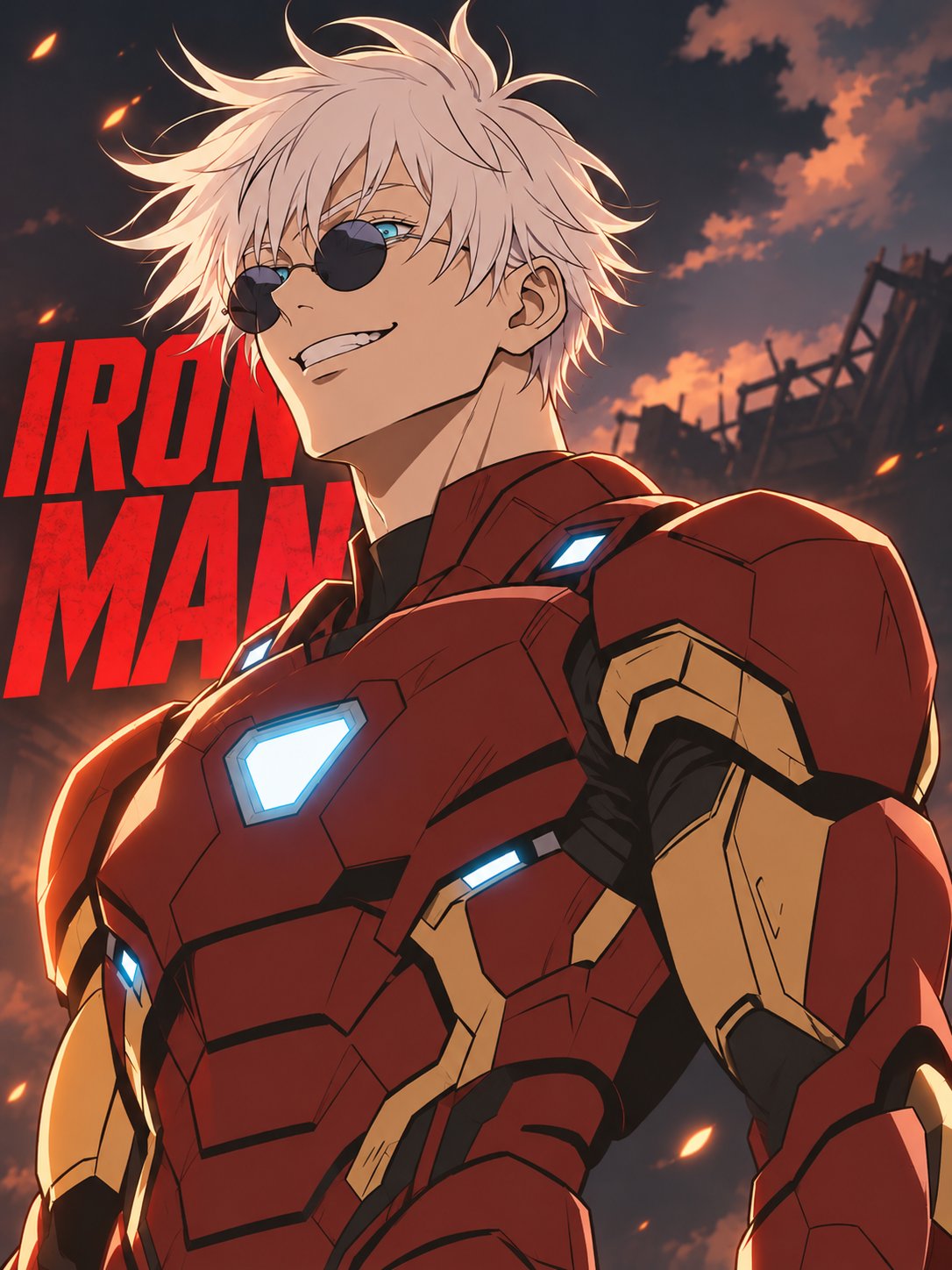
Transform the character in image 3 (your character reference) into a cinematic superhero movie poster, taking inspiration from the dramatic composition, bold typography, poses, and visual atmosphere of images 1 and 2 (reference images). Art style: premium cinematic anime illustration, high-end superhero concept art, crisp detailed linework, polished cel-shading, dramatic contrast, rich saturated colors, realistic fabric and costume textures, intricate character details, atmospheric lighting, glowing highlights, cinematic color grading, subtle film grain, and professional blockbuster poster rendering. Use a vertical 3:4 composition with the character as the dominant focal point. Give the character a powerful, dynamic superhero pose that matches their personality and abilities. Experiment with dramatic low-angle perspectives, strong foreshortening, expressive body language, and exaggerated foreground elements such as extended hands, weapons, or action poses. Preserve the character's original facial features, hairstyle, and recognizable identity while adapting their outfit into a superhero-inspired design. Create a bold cinematic background featuring a dramatic sunset sky, dark atmospheric clouds, glowing city buildings, distant skyscrapers, flying embers, and subtle environmental effects. Add oversized, bold character-name typography behind the character, using a font style and signature color palette that complements their personality. Incorporate subtle graphic elements, dramatic shadows, glowing rim lighting, and layered visual depth. The final artwork should resemble an official superhero movie poster, with striking composition, powerful character presence, dramatic atmosphere, and premium cinematic visual storytelling. Keep the character as the main focus while the background enhances the overall superhero aesthetic. Ensure clean typography placement, detailed rendering, and a polished professional poster finish.
0
檢視詳情
GPT Image 2.6
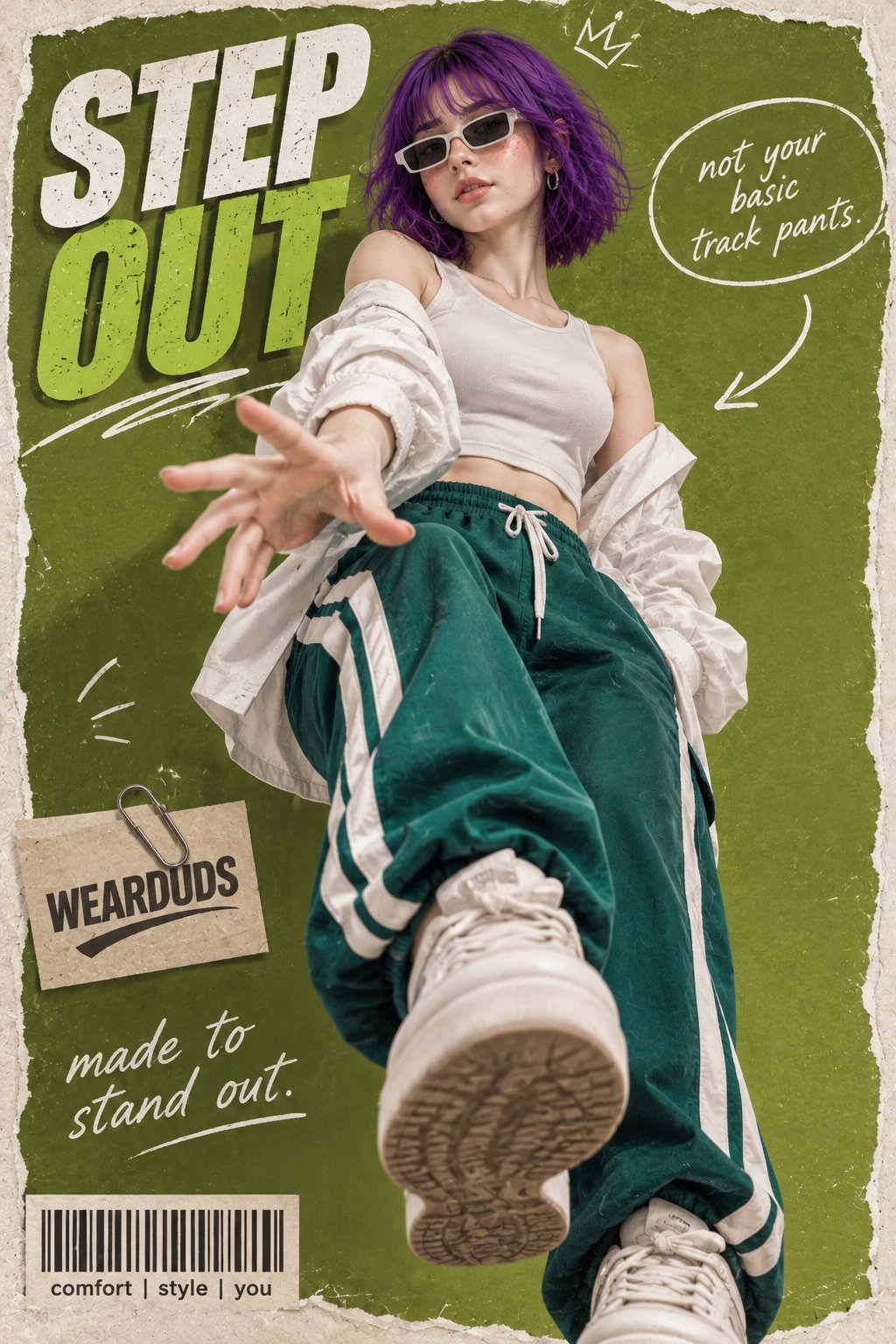
Create a hyper-realistic 3D pop-out fashion poster featuring the same young adult female character from the reference image, preserving her signature vivid violet-purple chin-length bob with soft straight bangs, fair porcelain skin, natural freckles across her nose and cheeks, hazel/light-brown almond-shaped eyes, delicate facial features, glossy lips, and slim physique. Show her breaking out of a magazine poster frame in a dynamic low-angle full-body pose. One arm reaches forward toward the camera with an open hand while one leg is lifted prominently toward the viewer, creating an impressive 3D perspective effect. She wears a white crop top, an oversized white shirt loosely falling off her shoulders, high-waisted teal-green track pants with thick white side stripes, chunky white platform sneakers, slim white-framed retro sunglasses, and small hoop earrings. The background features a bright olive-green textured poster design with torn-paper edges and bold typography reading "STEP OUT" in large white and green letters. Add a handwritten speech bubble saying "not your basic track pants." with an arrow, a paperclip-pinned brand label reading "WEARDUDS", and the tagline "made to stand out." alongside a barcode graphic and the text "comfort | style | you". Use bright punchy studio lighting, high contrast, realistic shadows, dramatic perspective, detailed clothing textures, natural skin rendering, cinematic depth, premium Y2K sporty streetwear advertising aesthetic, photorealistic, ultra-detailed 8K, professional fashion campaign quality.
0
檢視詳情
GPT Image 2.6
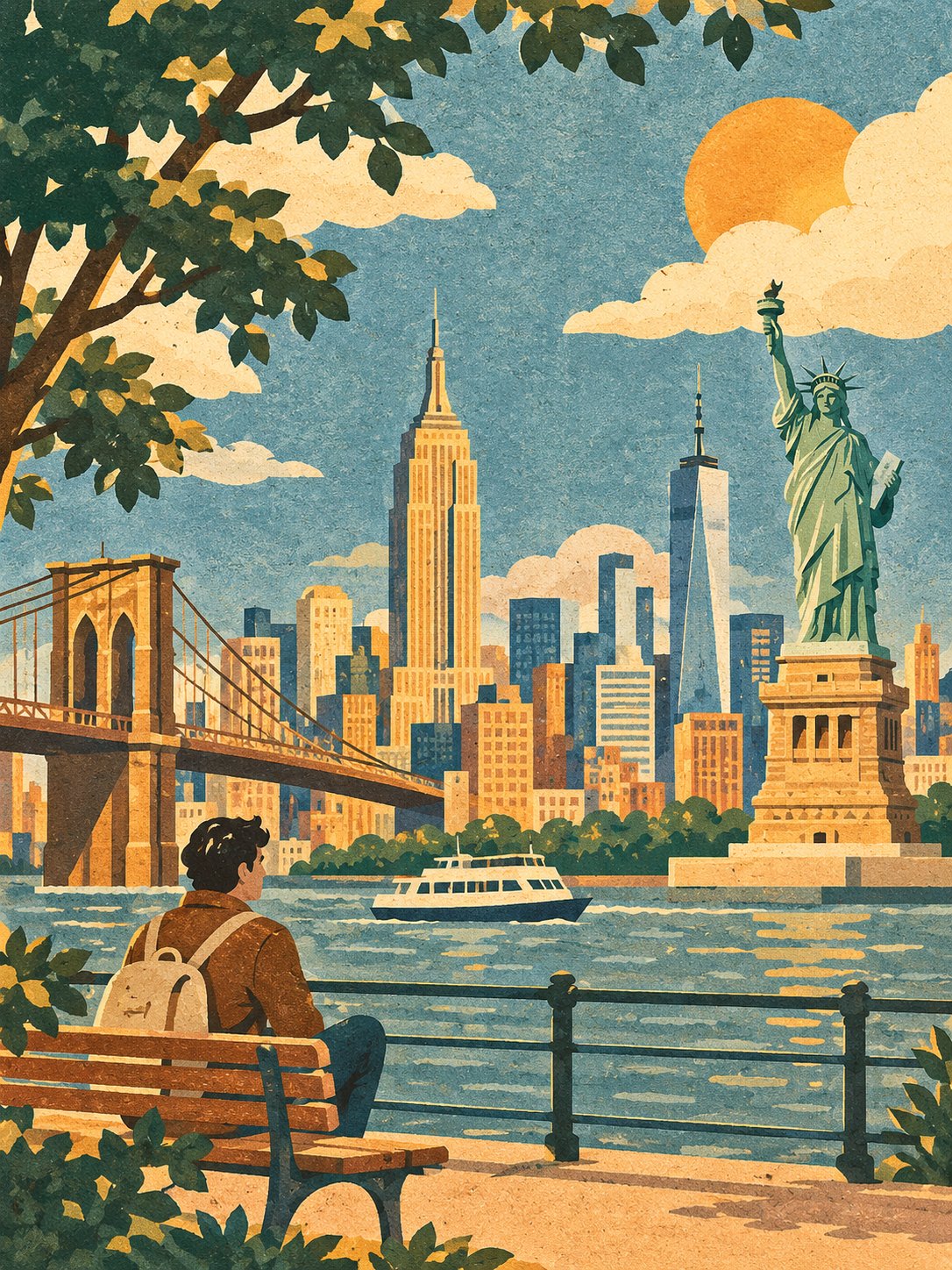
WARM VINTAGE FLAT ILLUSTRATION | TEXTURED PAPER ART Create a beautiful, sophisticated flat illustration of [SUBJECT / SCENE / LOCATION] in a warm vintage storybook aesthetic. Interpret the entered subject creatively while maintaining its recognizable identity, essential features, natural proportions, and defining details. Build an appealing composition with thoughtfully arranged elements and a clear visual hierarchy. ILLUSTRATION STYLE Use large, bold, simplified color shapes resembling layered cut-paper artwork. Apply matte, opaque colors inspired by gouache painting and vintage screen printing. Add subtle, fine-grain texture throughout, creating the appearance of artwork printed on textured paper. Avoid heavy outlines. Define shapes through contrasting color areas, with slightly irregular, organic edges and a handcrafted appearance. COLOR PALETTE Use a harmonious, slightly muted vintage palette featuring dusty blue, peach beige, deep forest green, warm ivory, earthy brown, and occasional mustard-yellow accents. Use solid, clearly defined color shapes for shadows. Maintain subtle depth without gradients, realistic reflections, or glossy finishes. COMPOSITION AND DETAILS Arrange the subject and surrounding elements naturally, creating a balanced, visually engaging composition. Simplify architecture, objects, vegetation, furniture, and other details into clean geometric and organic shapes. If people are present, illustrate them using simple silhouettes, minimal facial features, and flat colors. Preserve recognizable characteristics without unnecessary realism. Every element should feel cohesive and belong to the same illustrated world. FINAL AESTHETIC The finished artwork should resemble a sophisticated European travel poster combined with a beautifully illustrated children's storybook. Make it elegant, nostalgic, warm, minimal, and visually distinctive. OUTPUT REQUIREMENTS - Aspect ratio: 3:4 portrait. - Consistent paper grain and matte printed texture. - Strong composition and recognizable subject. - No photorealism, 3D rendering, anime, watercolor bleeding, or thick black outlines. - No unnecessary text, borders, UI elements, or decorative clutter. Overall style: Warm vintage flat illustration, screen-printed color blocks, organic cut-paper shapes, and subtle tactile paper texture.
0
檢視詳情
GPT Image 2.6
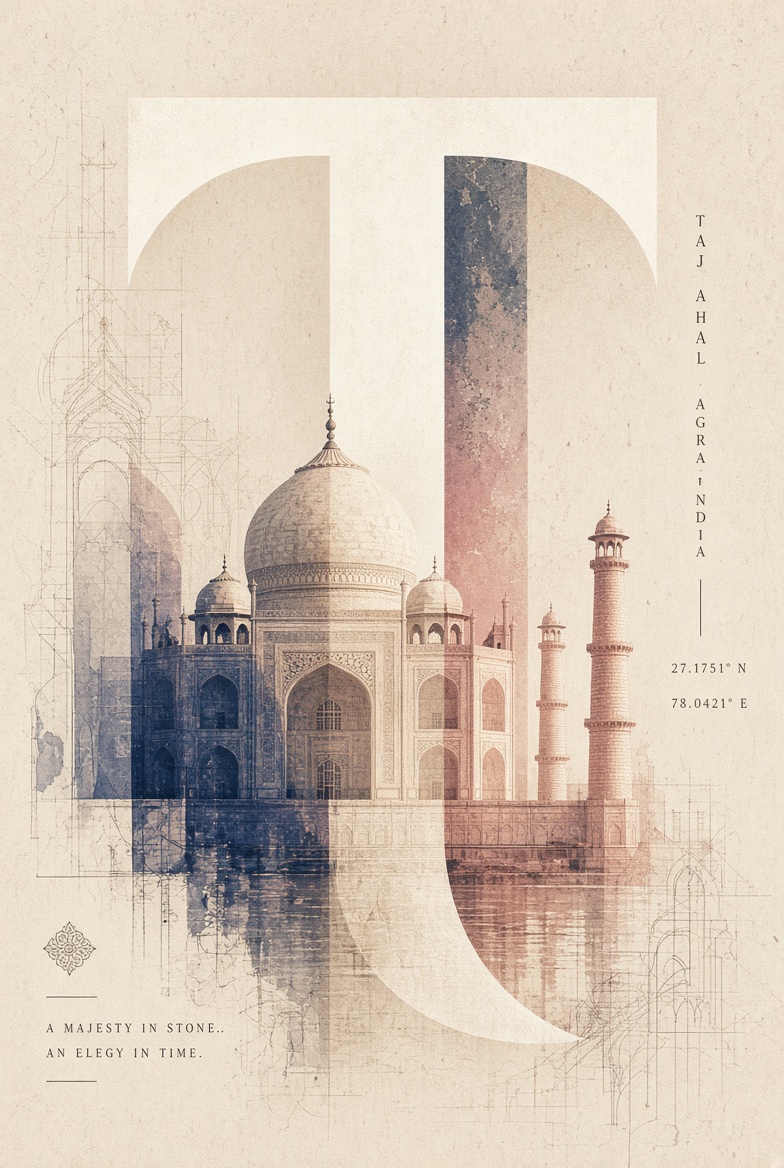
Create an exceptionally sophisticated, contemporary architectural art poster featuring [LANDMARK NAME], [CITY], [COUNTRY]. 1. GIANT TYPOGRAPHIC COMPOSITION Feature one enormous, oversized uppercase letter associated with the destination name as the central graphic element. The letter should dominate the composition, extending almost across the entire poster. Use bold, elegant, geometric typography with distinctive curves and negative spaces. 2. LANDMARK INTEGRATION Seamlessly integrate a highly detailed architectural photograph or realistic architectural illustration of [LANDMARK NAME] into and across the oversized letter. The landmark should appear to emerge from the typography, partially overlap its boundaries and interact naturally with its shape. Preserve the landmark’s authentic architectural details, proportions and recognisable silhouette. Create an artistic double-exposure effect where the architecture and typography become one unified visual composition. 3. DISTINCTIVE COLOUR TREATMENT Choose a unique colour palette inspired by the destination’s cultural identity, national colours and architectural character. Use two or three contrasting colours within the oversized typography. Apply translucent colour overlays across selected sections of the landmark, creating a beautiful combination of architectural photography, coloured light and graphic shapes. Every new destination must receive a different colour combination. Never repeat palettes. 4. TEXTURE & BACKGROUND Use a warm ivory, soft white or subtle textured paper background. Introduce delicate architectural sketch marks, distressed ink textures, faded photographic grain and subtle print imperfections around the central composition. Keep the surrounding space clean and uncluttered. 5. EDITORIAL TYPOGRAPHY Include the following information: [LANDMARK NAME] [CITY NAME] [COUNTRY NAME] Add small vertical typography along one side, geographical coordinates and a subtle destination-inspired tagline. Use sophisticated editorial typography with carefully balanced spacing. 6. ART DIRECTION Luxury architectural editorial design, experimental typography, architectural double exposure, contemporary Swiss graphic design, oversized letterforms, cinematic monochromatic photography, translucent colour blocking and minimalist gallery poster aesthetics. 7. FINAL PRESENTATION Create a visually striking, intellectual and artistic collectible landmark poster. The architecture must remain recognisable while becoming an integral part of the oversized letter. Vertical 4:5 composition, premium art-print quality, exceptional visual balance and sophisticated negative space. Avoid ordinary travel-poster layouts, decorative clutter, excessive colours and generic typography.
0
檢視詳情
GPT Image 2.5
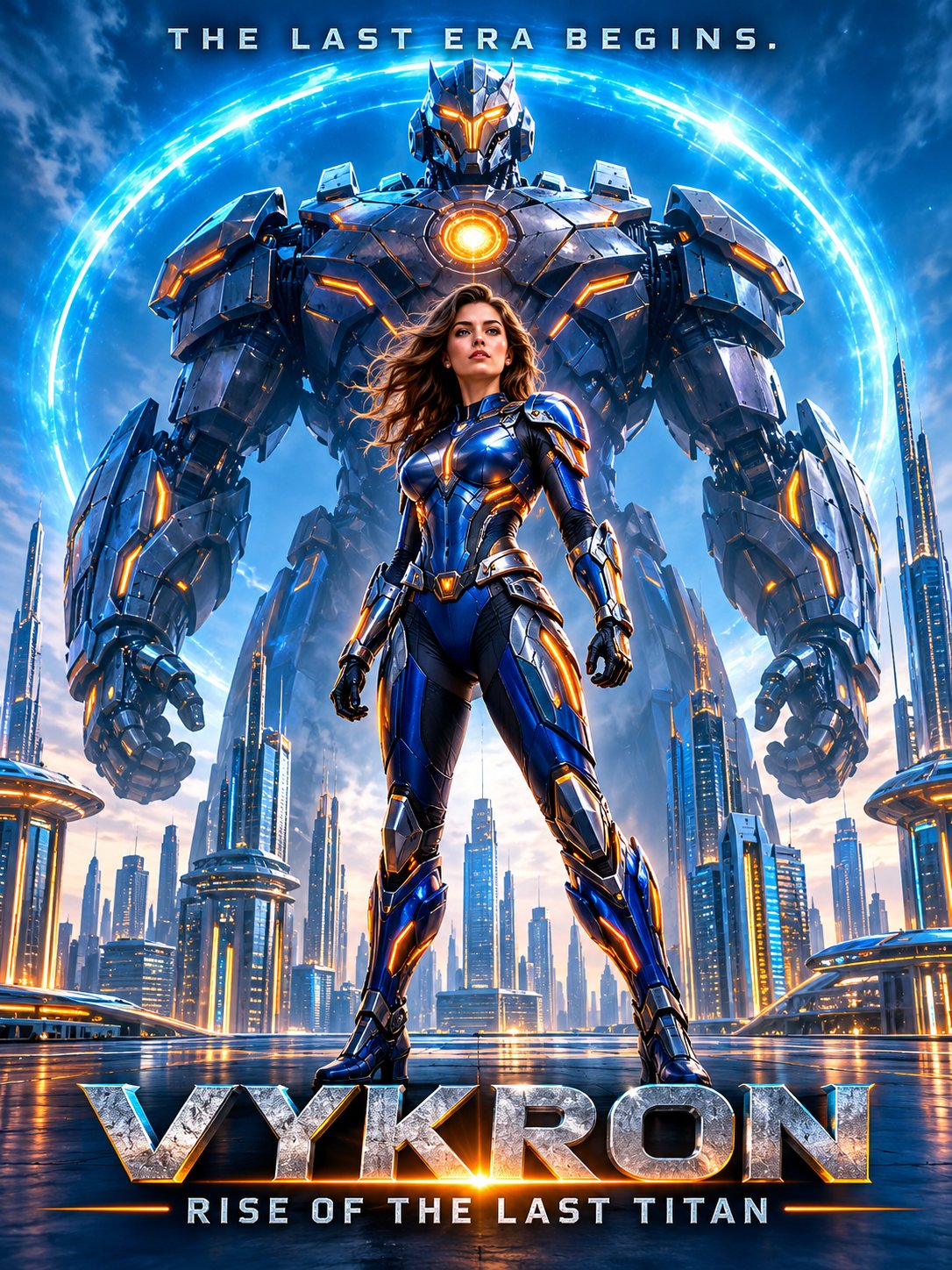
{ "aspect_ratio": "3:4", "style": "premium Hollywood sci-fi superhero theatrical poster, photorealistic CGI, clean cinematic composition, IMAX production quality, sophisticated visual storytelling", "prompt": "Create an extraordinary original Hollywood blockbuster movie poster titled VYKRON: RISE OF THE LAST TITAN. A powerful adult female superhero stands in the center foreground, shown full body from head to toe. She wears an iconic futuristic metallic cobalt-blue and silver battle suit with elegant orange illuminated energy details, sophisticated mechanical armor, sculpted shoulder protection and advanced robotic gauntlets. Her appearance is confident, stylish and intimidating. Her face is clearly visible and beautifully detailed. "Directly behind her stands ONE enormous futuristic mechanical Titan, towering over the city. Its distinctive silhouette features massive armored shoulders, powerful mechanical arms, an illuminated circular chest reactor and an angular futuristic head. The Titan should look magnificent, intimidating and incredibly expensive to build. "BACKGROUND DESIGN: A beautiful futuristic megacity stretching across the horizon, with elegant skyscrapers and a dramatic atmospheric sky. A large glowing blue energy ring appears behind the Titan, creating a powerful visual focal point. A few distant orange lights illuminate the architecture. The skyline should remain clean, organized and visually calm. No chaotic destruction. "COMPOSITION: Heroine occupies the central lower foreground. The gigantic Titan fills the middle background. The glowing circular energy structure frames the upper background. Every subject must be clearly separated and instantly recognizable. "COLOR GRADING: Rich cobalt blue, polished silver, electric cyan and carefully placed warm orange highlights. Bright attractive colors, balanced exposure, beautiful cinematic reflections and premium atmospheric lighting. "IMPORTANT VISUAL RULES: Minimal background clutter, no excessive explosions, no flying debris, no random aircraft, no multiple robots, no crowded buildings, no excessive smoke, no visual noise, no unnecessary objects. Maintain clean negative space and strong subject separation. "At the top write: THE LAST ERA BEGINS. "At the bottom display a huge bold metallic movie title: VYKRON "Below it write: RISE OF THE LAST TITAN "Professional Hollywood theatrical typography, beautiful poster hierarchy, premium cinematic finish, exceptional clarity, original character and original machine design, no existing franchise references, no watermark." }
0
檢視詳情
GPT Image 2.6
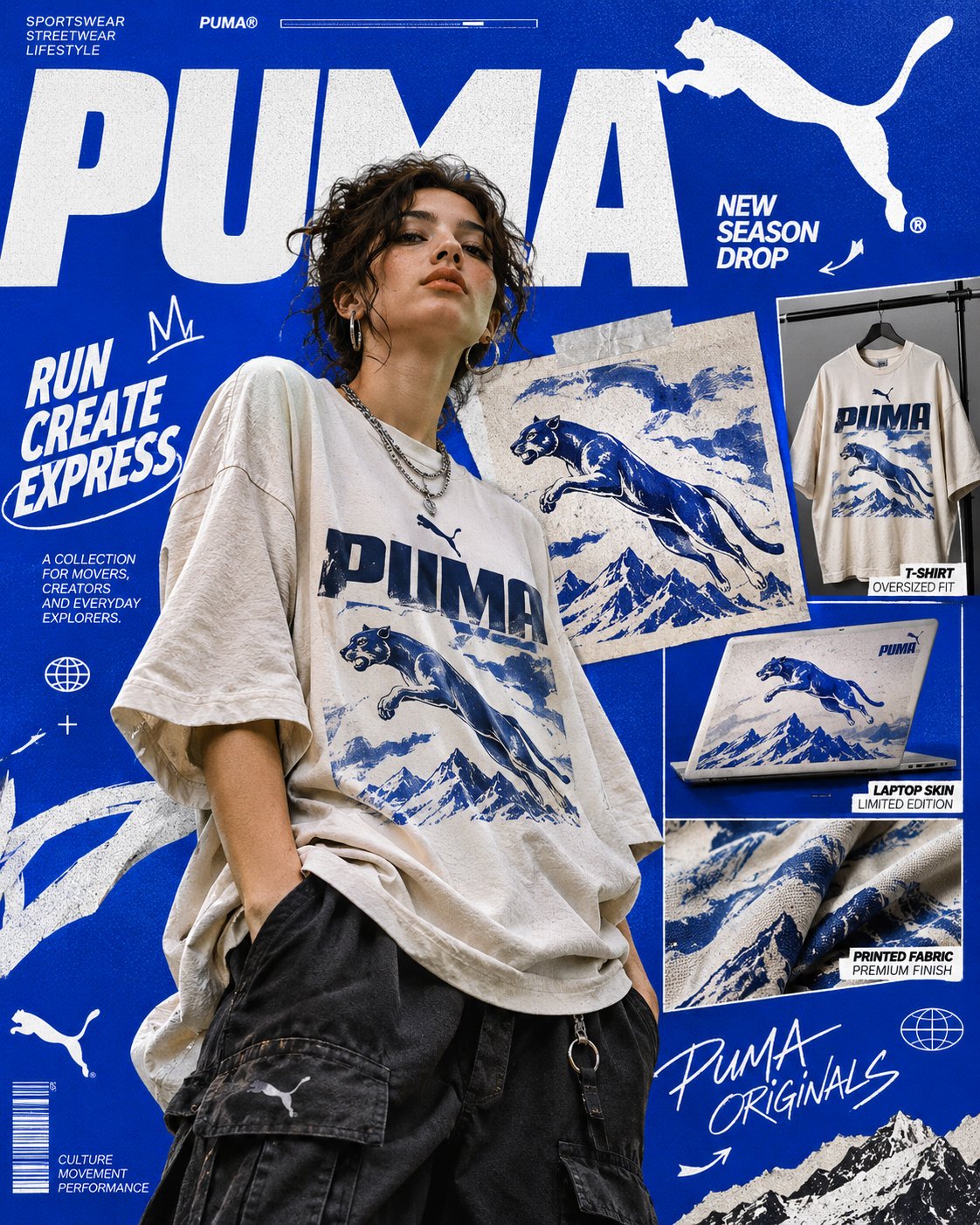
BOLD EDITORIAL STREETWEAR CAMPAIGN | GRAPHIC DESIGN & PEACE ART Create a striking, high-fashion editorial advertising poster for [BRAND / CAMPAIGN / CONCEPT], blending contemporary streetwear photography with oversized typography, artistic graphics, and commercial product presentation. COMPOSITION & PHOTOGRAPHY Feature a stylish young adult model in a relaxed, confident pose, wearing an oversized graphic T-shirt featuring [YOUR ARTWORK / DESIGN], layered with contemporary streetwear pieces. Use natural-looking editorial photography, dynamic styling, realistic fabric textures, and a bold fashion-magazine aesthetic. GRAPHIC DESIGN & LAYOUT Build a vibrant electric-blue background with oversized white typography, overlapping headlines, curved connecting lines, small informational labels, decorative symbols, and hand-drawn illustrations. Arrange the composition like a premium independent fashion magazine cover mixed with a creative advertising campaign. PRODUCT SHOWCASE Display the featured artwork across multiple products, including a T-shirt, laptop, printed fabric, and large close-up graphic panel. Ensure the original artwork remains visually consistent across every product. VISUAL STYLE & FINISH Use strong visual hierarchy, asymmetrical layouts, layered elements, crisp cutout photography, bold contrast, playful graphic details, and sophisticated editorial art direction. Combine modern streetwear culture with experimental Swiss-inspired graphic design. The final result should look like an authentic, professionally art-directed fashion campaign: energetic, youthful, visually rich, highly detailed, and instantly eye-catching. Vertical 4:5 composition, ultra-sharp, premium commercial poster quality.
0
檢視詳情
GPT Image 2.6
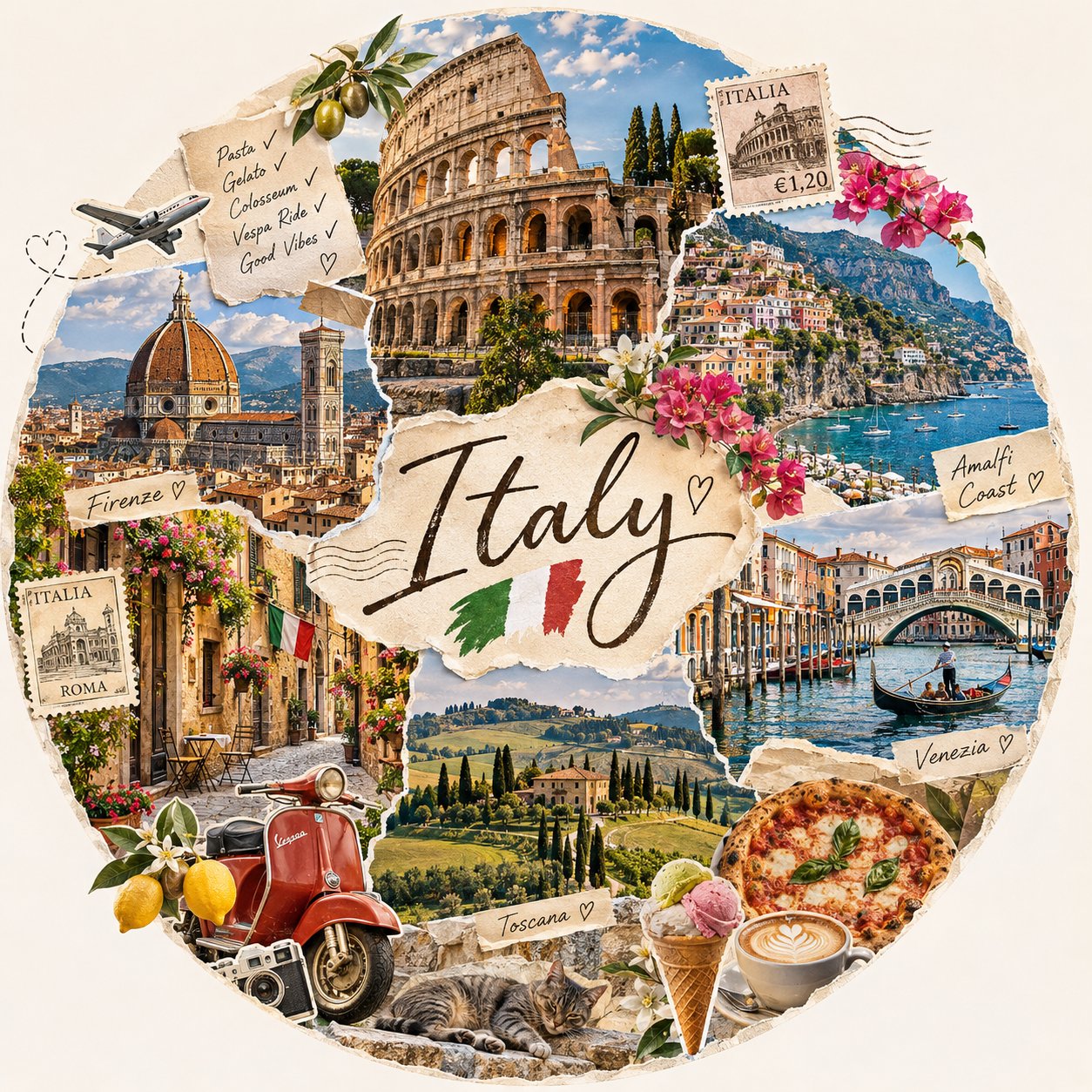
Create a beautiful, highly detailed travel-inspired scrapbook collage featuring [YOUR DESTINATION / COUNTRY / CITY / THEME], designed as an elegant circular composition on a clean, warm ivory background. COMPOSITION & VISUAL STYLE Build a large, perfectly balanced circular collage filled with multiple overlapping, realistic photographs showcasing the destination's most iconic landmarks, beautiful landscapes, architecture, local culture, street scenes, and signature food. Arrange the photographs like carefully layered vintage travel magazine cutouts, with subtle torn-paper edges and natural transitions. DESIGN DETAILS Place the destination name prominently in the centre using elegant handwritten cursive typography. Incorporate small decorative elements such as the country's flag, vintage postage stamps, miniature airplane illustrations with dotted flight paths, tiny hearts, handwritten travel notes, botanical leaves, flowers, and playful travel doodles. COLOUR & AESTHETIC Use a soft, sophisticated palette of warm cream, muted pastels, natural greens, gentle blues, and sunlit photographic tones. Add subtle paper textures, delicate shadows, and fine hand-drawn outlines to create a charming, handcrafted editorial appearance. FINAL PRESENTATION Keep the entire circular artwork clearly visible, centred, and surrounded by generous ivory negative space. Maintain a polished, cohesive composition with realistic photography and artistic scrapbook layering. Every destination should have its own unique visual identity while retaining the same elegant aesthetic. Aspect ratio: 1:1. Quality: Ultra-detailed, high-resolution, premium editorial design.
0
檢視詳情
GPT Image 2.5
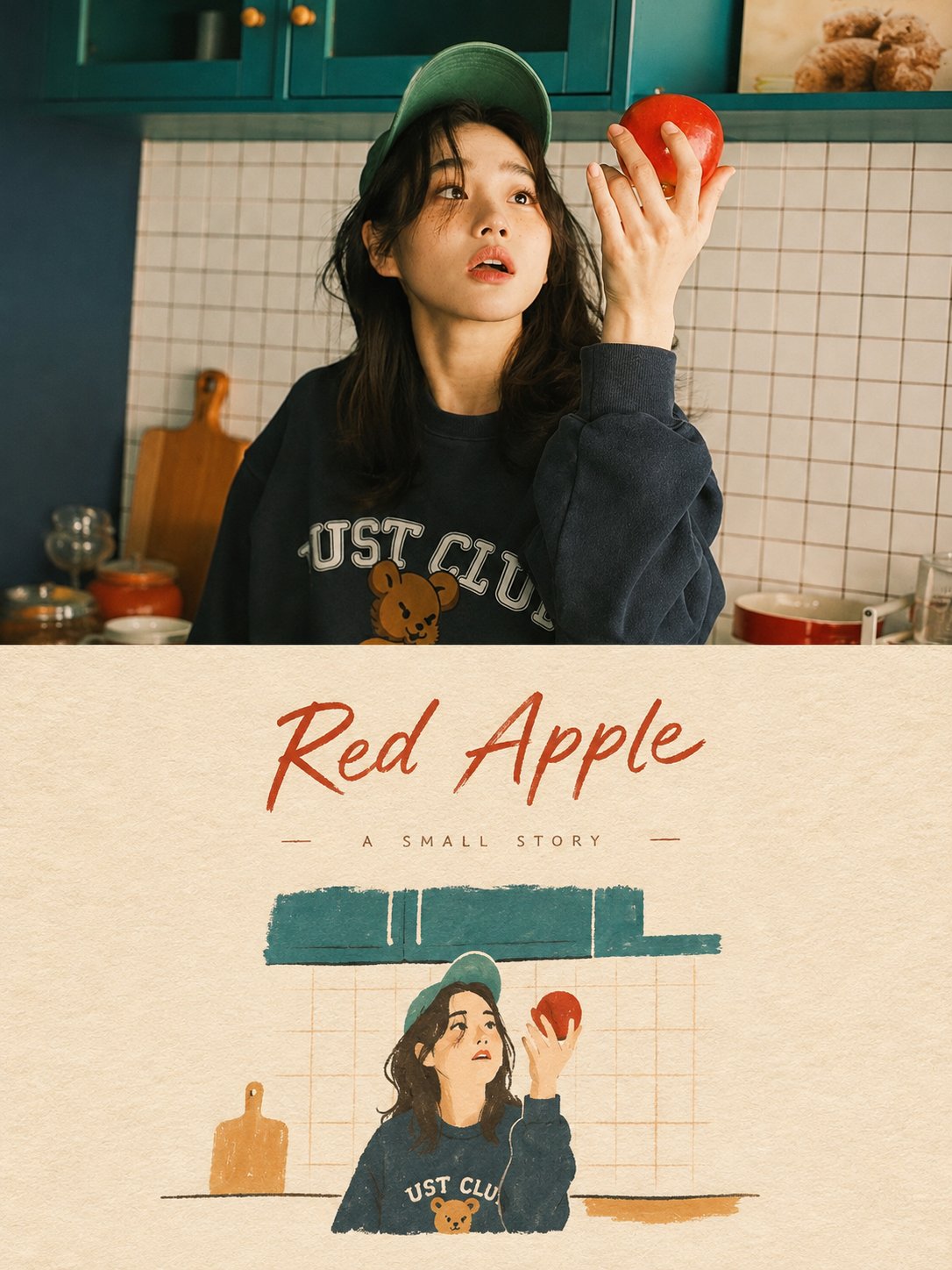
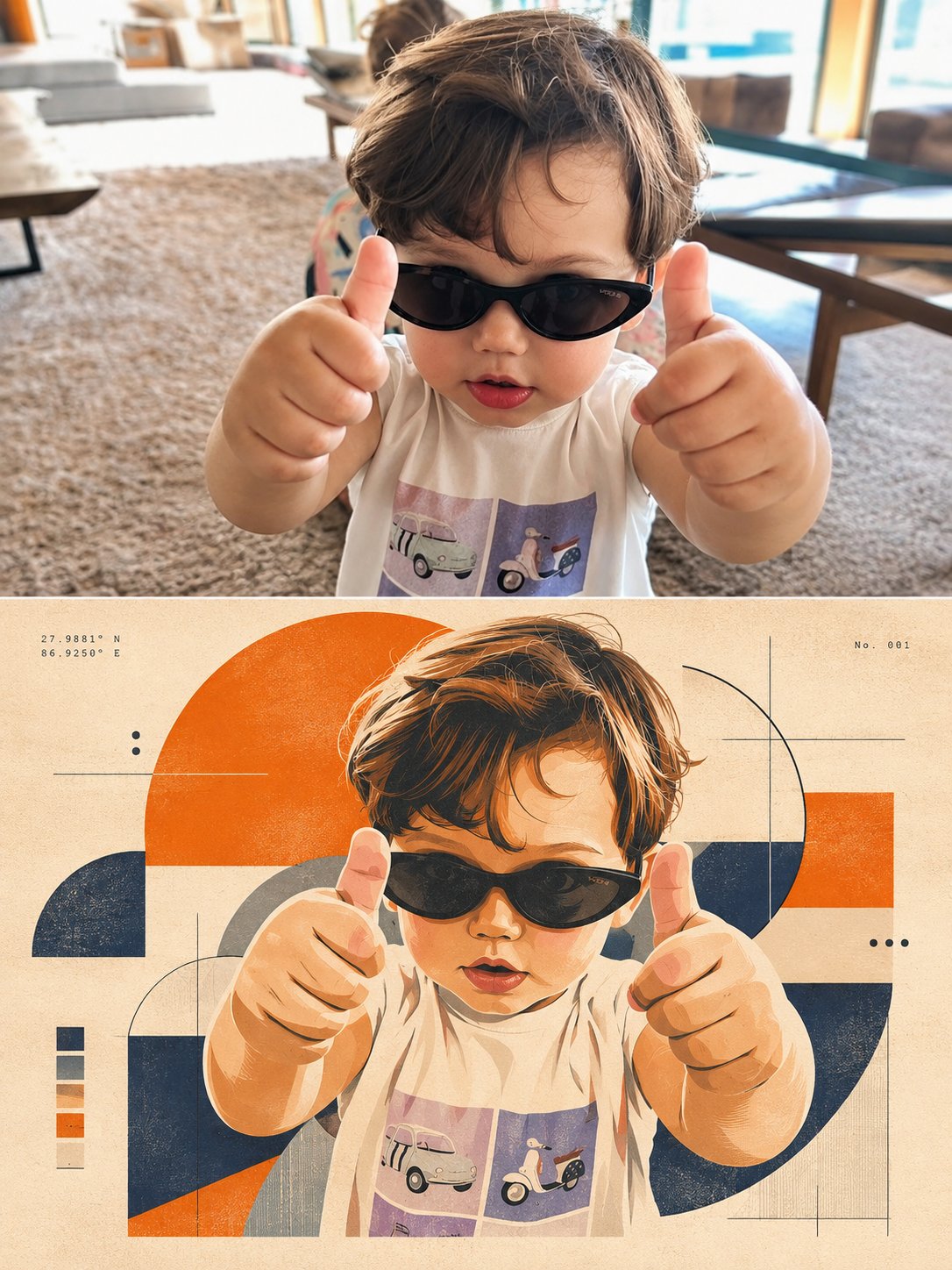
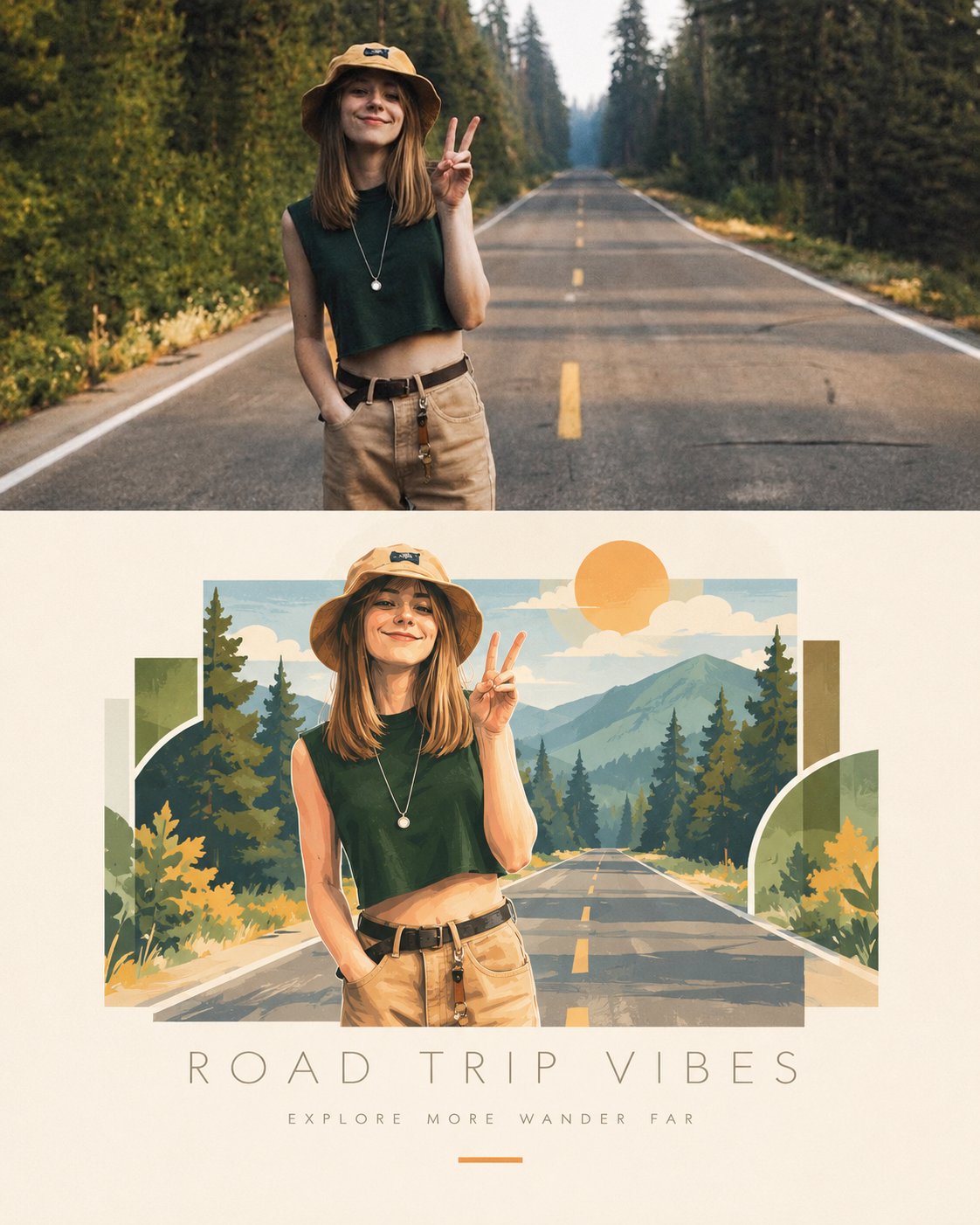
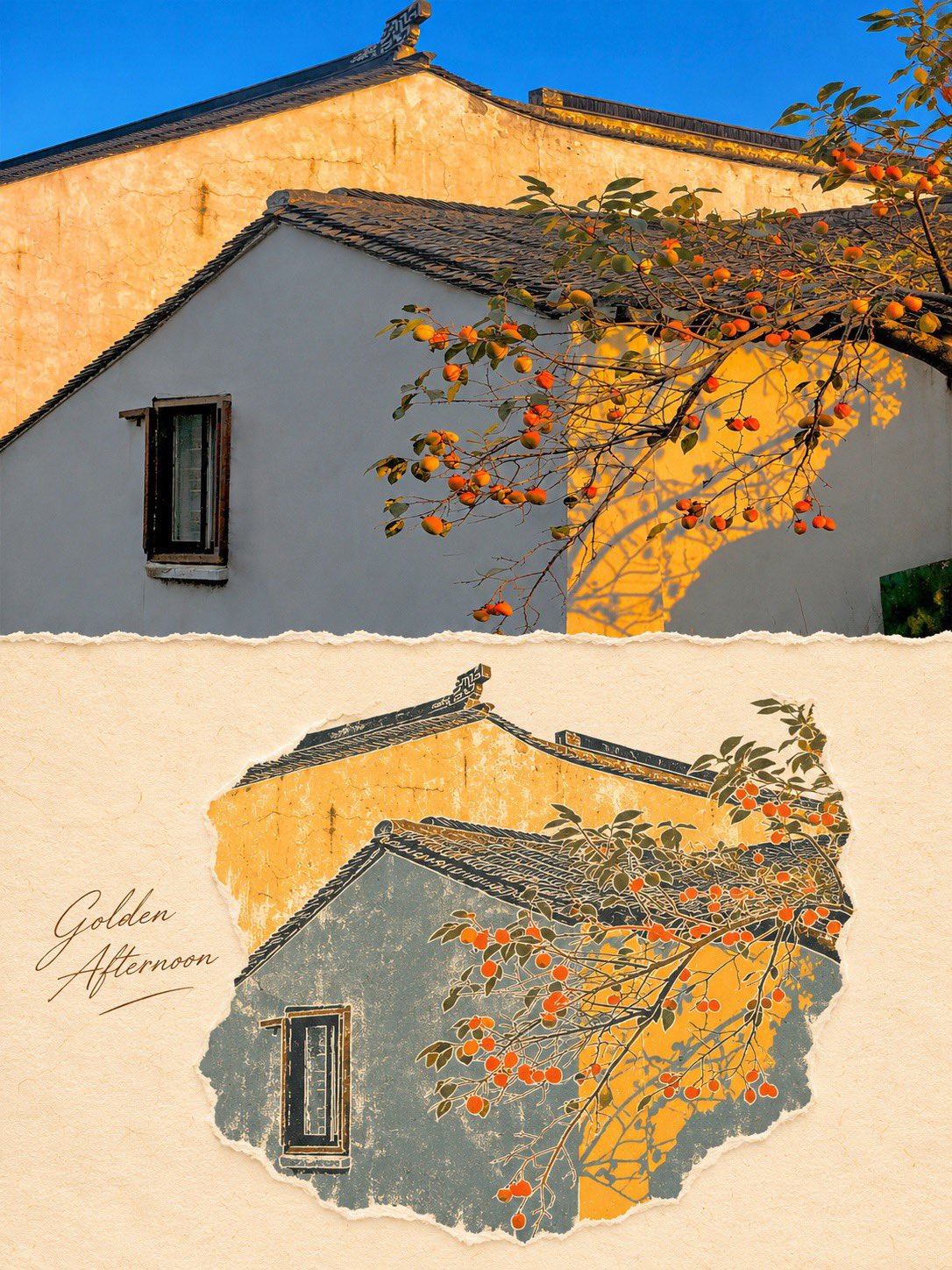
Transform the uploaded photos into an individual, high-end design poster. Do not combine multiple images; output each photo as a separate, standalone piece. Use a vertical {argument name="aspect ratio" default="3:4"} format, with the upper and lower sections divided strictly 1:1, each occupying 50% of the total composition. The upper section should retain the original photograph—preserving its core structure, authentic texture, natural lighting, and original color atmosphere—while applying subtle, high-end photographic color grading to evoke the aesthetic of magazine photography or art publications. To fit the frame, you may naturally extend the sky, ground, or environmental background, provided that the main subject remains undistorted and unaltered. The lower section should distill the most recognizable elements of the subject—its silhouette, posture, and narrative context—into a minimalist, hand-drawn, paper-textured cover illustration. Strip away complex details, retaining only the most essential visual features. Use delicate, slightly unsteady hand-drawn lines combined with a few distinct, flat-applied acrylic color blocks to represent the subject, ensuring it remains instantly identifiable. The subject should be small and concentrated—occupying approximately {argument name="subject proportion" default="10%–20%"} of the lower section—surrounded by ample negative space. The background should resemble rough or light-colored paper, with only minimal lines or color planes to suggest the environment. The color palette should be derived from the original photo and condensed into no more than four primary colors. These color blocks should be bold, solid, and restrained, incorporating textures like paper grain, visible brushstrokes, and slightly irregular edges. Lines should define the structure, while color blocks should establish the subject. Avoid styles such as colored pencil, crayon, watercolor washes, pure line art, complex realism, heavy oil-painting textures, slick digital illustrations, or 3D-rendered effects. You may incorporate a small amount of concise text—such as titles, keywords, subject names, locations, years, serial numbers, or short phrases—tailored to the content of each photo (not limited to urban themes). The typography should be sparse and restrained, blending naturally with the negative space and illustration to evoke the aesthetic of an art book cover, an independent publication, or a children’s picture book. The overall visual aesthetic features small subjects, ample negative space, a high degree of distillation, and strong recognizability. It conveys a sense of tranquility, childlike charm, and ease—evoking a poetic, sophisticated quality while steering clear of the look typical of commercial cartoons, e-commerce imagery, or generic templates.
0
檢視詳情
GPT Image 2.5
create a 3:4 vertical high-end art poster from the uploaded photo, with 50% of the image on each side strictly in the same position, presenting a dual-layer design of 'real photography × abstract geometric art'. Top half|Real photography The original image is preserved in its entirety, including the person, posture, composition, natural light, and color atmosphere, with only the color tone being refined, presenting a high-end art photography and independent publication quality. The background can be naturally extended, but the facial features, body shape, or original details of the person cannot be changed. Bottom half|Abstract visual The image is extracted from the photo to transform the person's posture, interaction, scene outline, and representative elements into minimalist geometric illustrations and abstract visual symbols. Color blocks, curves, lines, grids, and negative space are re-structured to maintain the original image's recognizability, but not directly copy the photo. Design style Combining Bauhaus, deconstructive Swiss flat design, Post-digital Graphic Design, and Japanese art publication aesthetics. The composition is restrained, the proportions are precise, and a large amount of blank space is left, combining rational order with artistic warmth. Color and Material Extract the main color from the original image, combined with warm white, low-saturation color tones, and a small amount of contrast color. Add Risograph embossed printing particles, vintage paper texture, subtle offset printing inaccuracies, and scanning noise to create a refined physical print quality. Layout Details Only use a very small number of tiny numbers, coordinates, fine line markings, and color tickets as design elements, without using large headlines. All elements must be coordinated with the main visual, avoiding excessive information. Final Result A collector's-level poster for high-end design studios, art institutions, or independent publications. The top half is realistic and natural, while the bottom half is abstract yet instantly recognizable as the original image concept. The overall design is refined, minimalist, and stylish, avoiding cheap commercial illustrations and excessive decoration
0
檢視詳情
Seedream 5
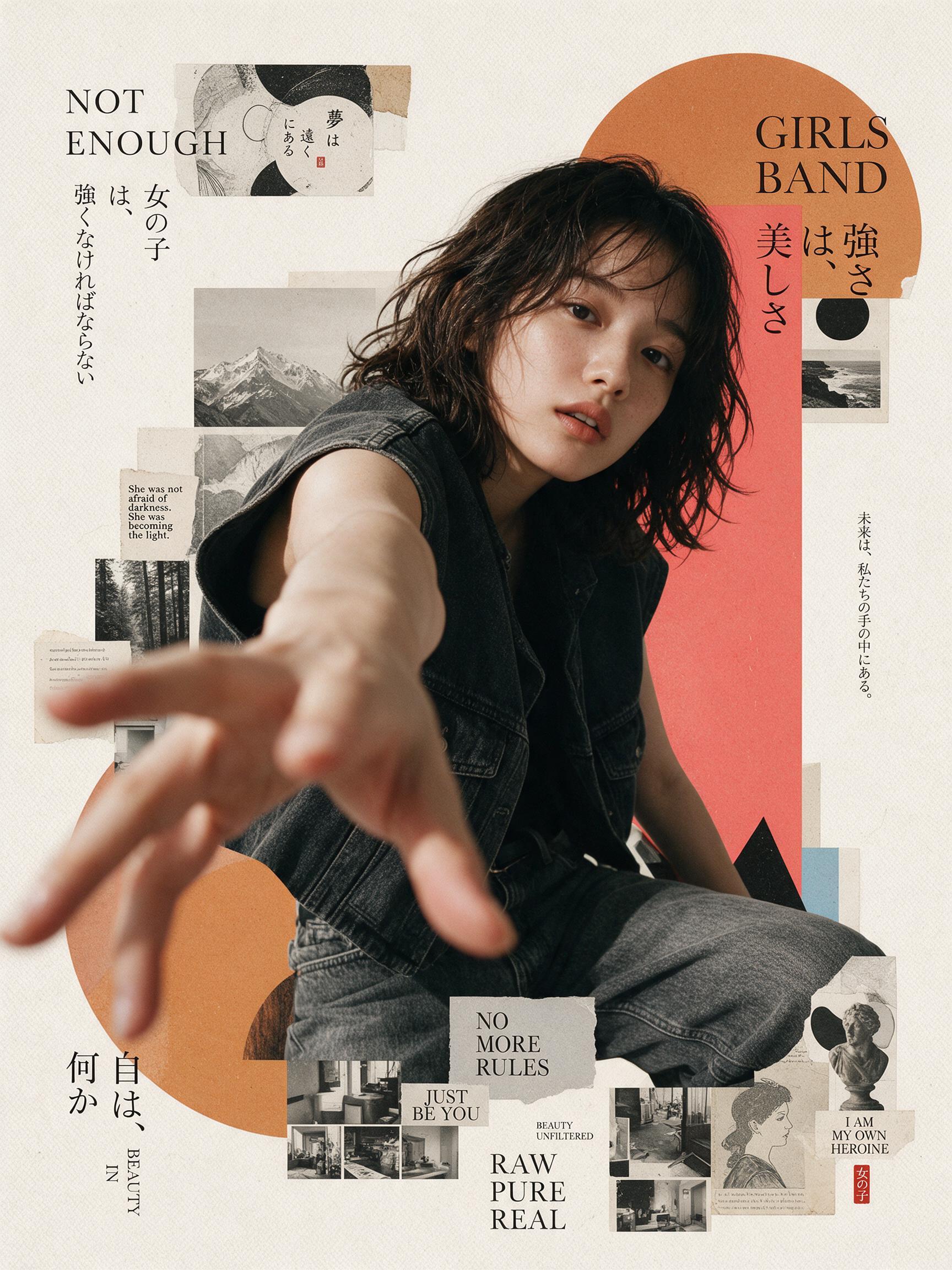
Create a high-end experimental Japanese editorial fashion poster with a contemporary avant-garde graphic design aesthetic, vertical 2:3 composition. MAIN SUBJECT & POSE: A young East Asian woman with shoulder-length, naturally wavy, slightly messy dark brown-black hair, wearing a dark charcoal oversized sleeveless denim vest over a black top and loose-fitting washed charcoal-grey denim jeans. She has delicate facial features, a calm yet confident expression, slightly parted lips, and a direct gaze toward the camera. Her body is positioned at a slight angle, with her upper body leaning forward. One arm is dramatically extended directly toward the camera, with her hand reaching into the foreground. Use extreme forced perspective and exaggerated foreshortening, making the hand appear significantly larger than her face and body. Fingers are naturally spread and softly blurred due to shallow depth of field. The subject should feel dynamic, mysterious, artistic, and editorial. POSE & CAMERA: Low-angle fashion photography, close-up perspective, wide-angle lens aesthetic, approximately 24mm lens. The subject occupies most of the central frame. Her face remains relatively sharp while the outstretched hand dominates the foreground with strong perspective distortion. Natural body proportions, realistic skin texture, authentic photographic details. BACKGROUND & COMPOSITION: Warm ivory/off-white textured paper background with a subtle fine-grain printed canvas texture. Create an asymmetrical mixed-media collage composition with overlapping geometric shapes, abstract cutouts, vintage illustrations, and monochromatic photographic fragments. Place a tall, vivid coral-red rectangular panel vertically behind the subject, slightly right of center, extending from near the top edge to the bottom edge. The rectangle partially overlaps the subject and creates a strong vertical visual division. Add large burnt-orange circular shapes on the left-middle and bottom-right portions of the composition. Include smaller orange circular dots around these shapes. Incorporate black-and-white vintage bird photographs and hand-drawn ornithological illustrations, partially cropped and layered behind the subject. Include abstract sketchbook-style bird drawings, feather details, and fragmented photographic elements. Add overlapping black and grey geometric paper cutouts, irregular triangular shapes, and diagonal collage fragments. TYPOGRAPHY & JAPANESE DESIGN ELEMENTS: At the upper-right area, incorporate large Japanese typography reading "知覚する" (Perceive). The first two Japanese characters, "知覚", should sit prominently over the coral-red rectangular panel in dark black calligraphic serif typography. The remaining characters, "する", extend toward the upper-right over the ivory background. Across the lower-middle section, overlay bold uppercase white sans-serif typography reading: "PERCEIVE" Use a heavy condensed modern grotesk font, with selected letters featuring a thin outlined treatment to create a layered typographic effect. Below it, aligned toward the left, place the word: "IT." Use oversized white uppercase typography with a partially outlined letter treatment. Add small abstract decorative details, including a black diagonal striped square in the upper-left corner, tiny ornamental line drawings, geometric symbols, and a small black double-arrow symbol in the bottom-right corner. COLOR PALETTE: Warm ivory: #F1EEE5 Vivid coral red: #EF5558 Burnt orange: #E98A16 Charcoal black: #252323 Washed denim grey: #666665 Pure white: #FFFFFF Maintain a strong contrast between warm orange and coral-red accents, monochromatic photography, and the neutral paper background. LIGHTING & PHOTOGRAPHIC TREATMENT: Warm directional sunlight hitting the woman's face and hand from the left side, creating rich amber highlights and deep cinematic shadows. Subtle film grain, slightly desaturated editorial photography, realistic skin tones, soft motion blur in the foreground, and high-contrast photographic details. ART DIRECTION: Japanese contemporary editorial magazine design meets avant-garde streetwear fashion photography. Experimental Swiss-inspired typography, vintage natural-history illustration, modern brutalist graphic design, analogue paper collage, layered cut-and-paste artwork, and sophisticated fashion magazine art direction. FINAL QUALITY: Ultra-detailed photorealistic fashion photography combined with professionally designed graphic collage elements. Sophisticated visual hierarchy, intentional asymmetrical balance, crisp typography, tactile paper texture, intricate details, and premium art-direction quality. Vertical 2:3 poster, full-bleed composition, no borders, no mockup, no watermark. cartoon, anime, illustration-only subject, 3D character, plastic skin, artificial face, distorted facial features, extra fingers, missing fingers, malformed hands, duplicate arms, unnatural anatomy, flat perspective, weak foreshortening, excessive background clutter, symmetrical composition, neon colors, oversaturated skin, glossy digital background, low resolution, blurry face, unreadable typography, random letters, misspelled Japanese characters, incorrect text placement, watermark, logo, poster mockup, frame, border.
0
檢視詳情
GPT Image 2.5
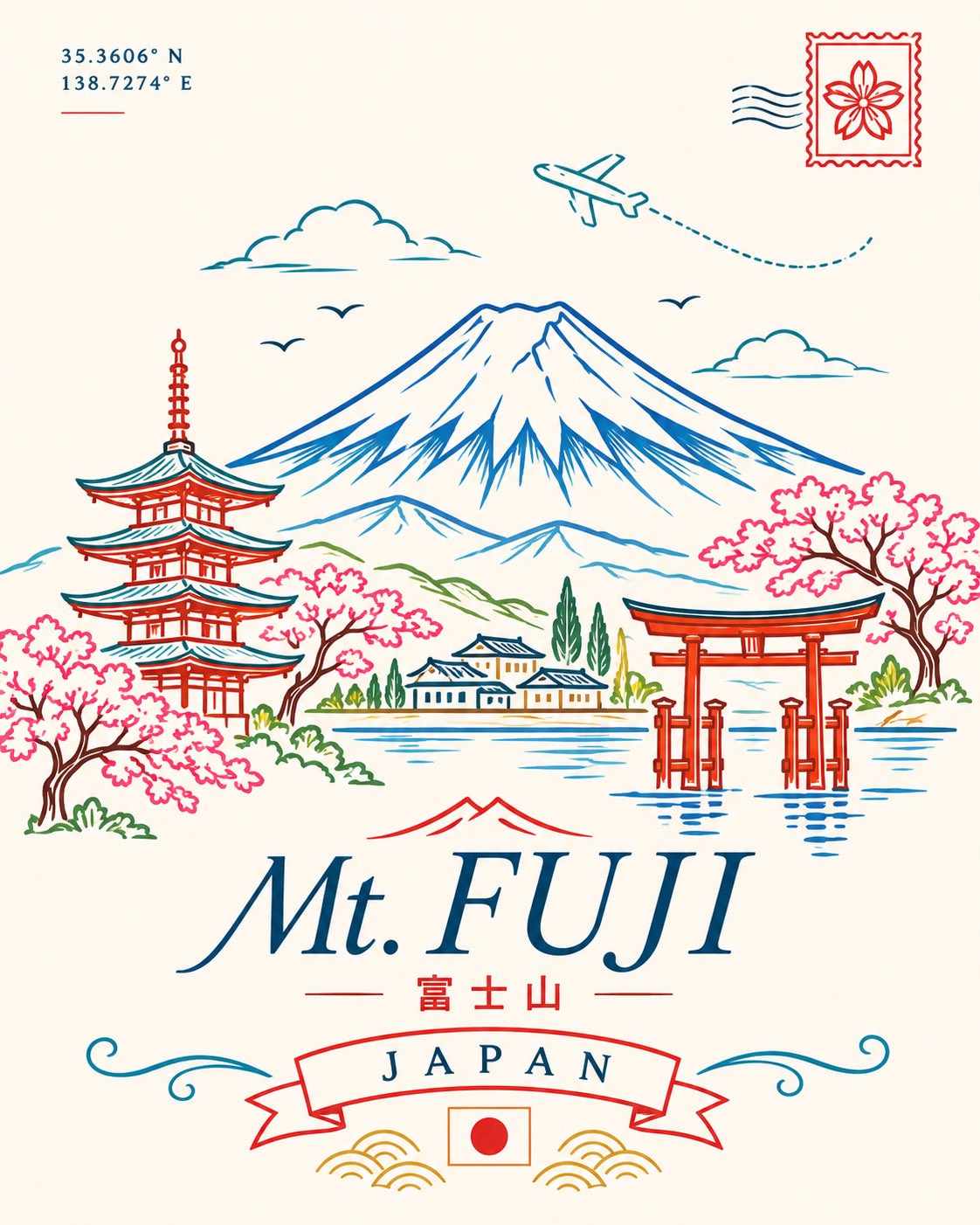
Create an elegant, minimalist architectural travel poster featuring [LANDMARK NAME], [CITY], [COUNTRY]. 1. MAIN ARCHITECTURAL ILLUSTRATION Feature the selected landmark as the central subject, illustrated entirely with delicate, continuous-looking hand-drawn outline strokes. Preserve the landmark’s distinctive architectural silhouette and recognisable proportions. Use clean, thin, slightly imperfect hand-drawn lines. Avoid solid fills, heavy shading and excessive details. Make the architecture look like a beautiful architectural sketch. 2. COLOUR PALETTE Use a sophisticated combination of 3–4 soft pastel colours for the outlines. Choose colours that complement the destination’s identity, architecture and cultural character. Examples: Paris: Dusty rose, lavender, soft blue and muted coral. London: Navy, muted red, sage and pale gold. Tokyo: Vermilion, jade, blush pink and warm grey. Italy: Terracotta, olive, dusty blue and ochre. Greece: Aegean blue, turquoise, muted coral and lavender. Every destination must have its own unique colour combination. 3. FLOATING TRAVEL DETAILS Add a few delicate decorative elements around the landmark: A small flying aeroplane with a dotted curved flight trail. Tiny birds, clouds or stars. Minimal geographical coordinates. A small travel stamp or destination symbol. Subtle architectural decorative details. Keep everything light, delicate and uncluttered. 4. TYPOGRAPHIC ELEMENTS Add the landmark’s name in elegant, refined typography. Include: [LANDMARK NAME] [CITY, COUNTRY] Place the destination name in a beautiful decorative ribbon banner near the bottom, leaving sufficient space for the illustration. Use sophisticated serif or handwritten typography. 5. BACKGROUND & COMPOSITION Use a beautiful warm ivory or soft cream background with subtle handmade-paper texture. Maintain generous negative space around the central illustration. Create a balanced composition with the landmark as the visual focus and small decorative elements positioned naturally around it. 6. ARTISTIC DIRECTION Minimalist architectural line art, Scandinavian poster design, delicate pastel illustrations, elegant travel stationery, vintage sketchbook aesthetics and contemporary gallery-style graphic design. 7. FINAL FINISH A timeless, sophisticated collectible travel poster that feels delicate, artistic and beautifully handcrafted. Vertical 4:5 composition, crisp fine-line artwork, premium print quality, clean spacing and refined visual hierarchy. Avoid photorealism, 3D effects, heavy colours, thick outlines, crowded compositions and unnecessary decorative elements.
0
檢視詳情
GPT Image 2.5
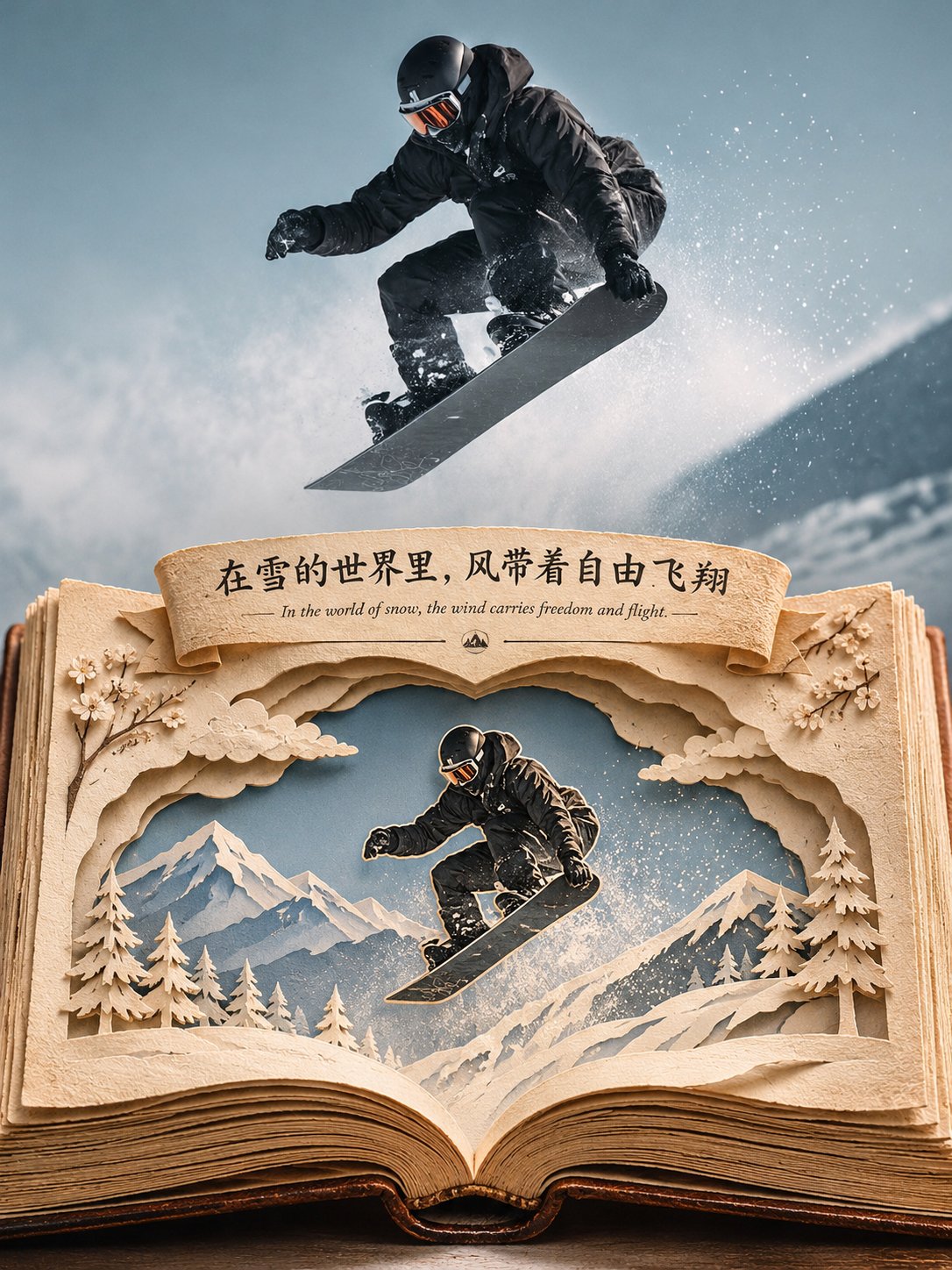
UNIVERSAL PHOTO-TO-3D PAPER-CUT EDITORIAL POSTER PROMPT Use the uploaded image as the primary and exclusive visual reference. Automatically identify the main subject, environment, objects, colors, lighting, composition, and distinctive details. Transform it into a premium, photorealistic 3:4 vertical editorial poster combining realistic photography with an elaborate three-dimensional layered paper-cut book illustration. OVERALL COMPOSITION: Create two vertically integrated sections with a seamless transition, without white lines, borders, frames, or visible gaps. TOP SECTION — ORIGINAL PHOTOGRAPH: Preserve the uploaded photograph in its original photographic appearance. Maintain the exact subject, pose, environment, colors, lighting, perspective, and fine details. Do not redraw, stylize, replace, or modify the original photograph. Keep the scene visually rich and realistic. BOTTOM SECTION — 3D OPEN PAPER-CUT BOOK: Create a beautifully opened, antique ivory-beige hardcover book occupying the lower half of the composition. The book should feature multiple thick, individually visible pages with realistic stacked edges, slightly curled corners, and natural paper texture. Inside the open book, recreate the exact same subject and environment through intricate, multi-layered 3D paper-cut artwork. Include a large central cutout window revealing the scene, surrounded by delicate hand-cut silhouettes and overlapping paper layers. Preserve the original photograph's colors, recognizable details, and overall atmosphere. Add contextually appropriate decorative elements such as stars, clouds, trees, flowers, mountains, buildings, or other environmental details depending on the uploaded image. Use realistic paper depth, carefully cut edges, subtle folds, soft side lighting, and natural shadows to create a convincing pop-up book effect. EDITORIAL TYPOGRAPHY: Place an elegant vintage parchment banner across the upper portion of the open book. Add a short, meaningful poetic sentence in Traditional Chinese inspired by the photograph, with a smaller English translation directly underneath. Include fine horizontal divider lines and subtle decorative ornaments around the typography. Ensure the Chinese characters are correctly rendered and visually balanced. VISUAL STYLE: Warm vintage paper aesthetic, antique ivory and champagne-beige tones, sophisticated editorial art direction, intricate paper engineering, realistic layered cutouts, delicate handcrafted details, dimensional shadows, soft cinematic lighting, and premium photorealistic textures. IMPORTANT REQUIREMENTS: - The original photograph must remain untouched in the upper section. - The lower illustration must depict the exact same subject and scene. - Maintain visual continuity between photography and paper-cut artwork. - Make the book look physically realistic, with visible thickness, layered pages, and genuine cutout depth. - Avoid flat illustrations, cartoon aesthetics, artificial plastic textures, and excessive decorations. - Adapt the Chinese poetic headline and decorative elements to the uploaded subject rather than using a fixed theme. FINAL RESULT: A sophisticated 3:4 vertical vintage editorial poster that seamlessly combines an original realistic photograph with an elaborate three-dimensional, layered paper-cut interpretation presented inside an antique open book.
0
檢視詳情
GPT Image 2.5
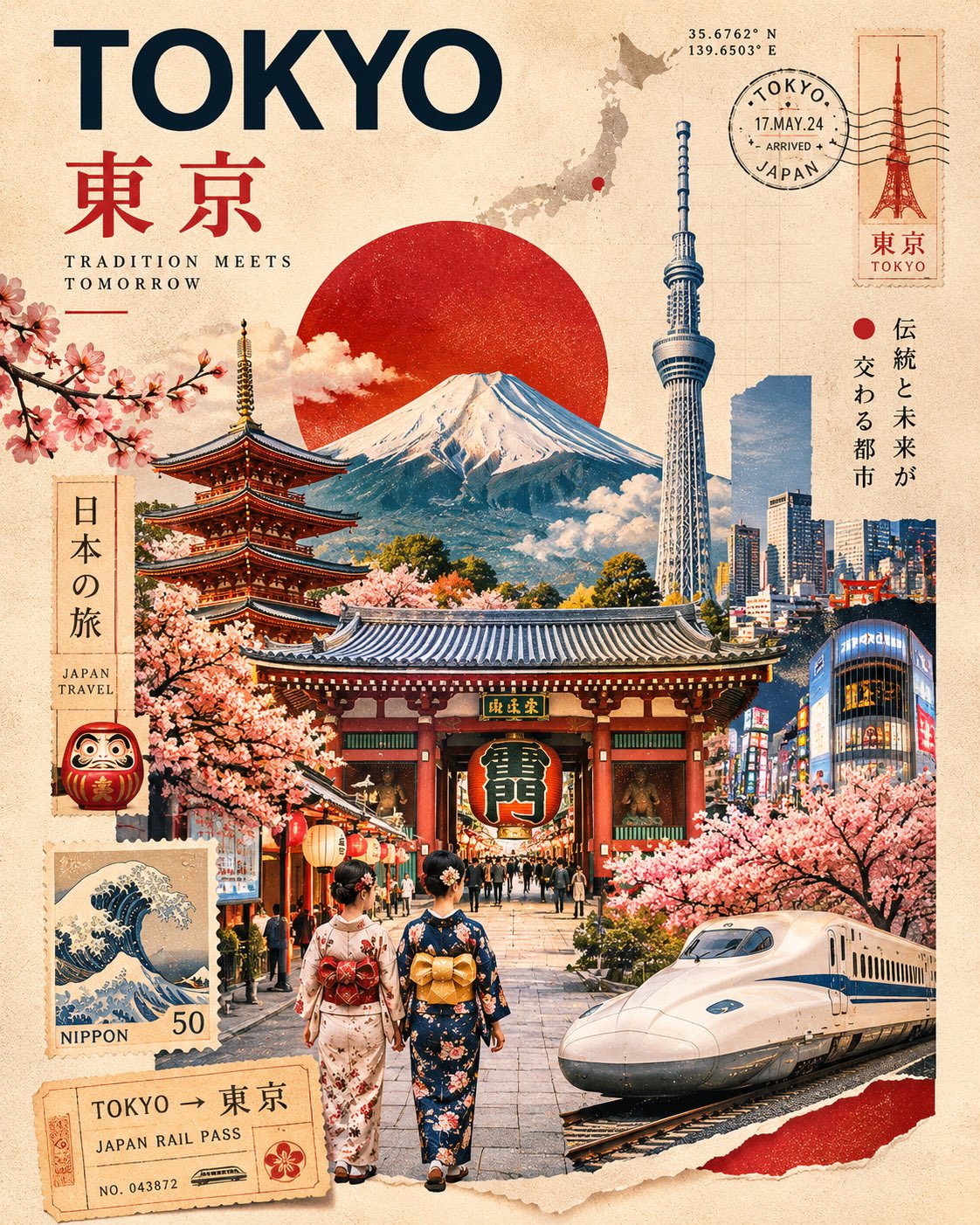
Create an exceptionally beautiful, premium editorial-style travel poster for [CITY, COUNTRY], inspired by contemporary minimalist travel magazines, vintage cultural posters, cinematic photography and sophisticated scrapbook collage design. 1. TYPOGRAPHY & HEADER Feature the destination name in enormous, bold, clean uppercase typography across the upper portion. Add the destination name in its native language or traditional script underneath. Include a small cultural tagline that captures the identity of the destination. Add subtle geographical coordinates, postal markings and a vintage arrival stamp. 2. CENTRAL VISUAL COMPOSITION Create an artistic photographic collage showcasing the destination’s most iconic landmarks and cultural identity. Include: One dominant architectural landmark as the main visual attraction. Two or three smaller architectural or historical landmarks. Beautiful natural scenery, local streets, gardens, mountains or waterfronts. Authentic cultural elements, traditional architecture, local lifestyle and people in culturally appropriate clothing. Local transportation, such as trains, boats, bicycles or traditional vehicles, where relevant. Blend these elements into an elegant, layered photographic composition with natural transitions, overlapping imagery and artistic cropping. 3. BACKGROUND & GRAPHIC ELEMENTS Warm textured handmade paper background with subtle grain. A large geometric sun, circle or abstract shape behind the main architecture. A subtle silhouette map of the country or region. Delicate grid lines, geographical coordinates and tiny decorative graphic elements. Small travel tickets, postage stamps and destination labels. Elegant torn-paper edges and subtle collage layering. 4. UNIQUE COUNTRY COLOUR IDENTITY IMPORTANT: Create a completely new and distinctive colour palette for every destination. Automatically select a sophisticated palette inspired by the country’s cultural heritage, national identity, architecture, landscapes and natural surroundings. Examples: Japan: Vermilion red, deep forest green, warm ivory and charcoal. Italy: Terracotta, olive green, warm cream and Mediterranean blue. France: Burgundy, dusty blue, champagne beige and muted gold. India: Saffron, peacock blue, deep maroon and warm ivory. Switzerland: Alpine blue, glacier white, forest green and muted red. Morocco: Burnt orange, cobalt blue, sand beige and deep emerald. Greece: Aegean blue, chalk white, Mediterranean turquoise and soft ochre. Egypt: Desert gold, sandstone, lapis blue and deep brown. Do not reuse the same colour combination for different destinations. Adapt all background shapes, typography, graphic accents and collage elements to the selected destination’s palette. 5. ART DIRECTION A sophisticated fusion of premium travel editorial design, vintage tourism posters, cinematic architectural photography, minimalist graphic design and cultural scrapbook aesthetics. The result should feel like a limited-edition collectible travel magazine cover, not a conventional tourist advertisement. 6. FINAL FINISH Exceptional visual hierarchy, realistic architectural details, beautiful photographic integration, sophisticated negative space, balanced typography, subtle paper texture, premium print quality and visually rich storytelling. Vertical 4:5 aspect ratio. High-resolution professional graphic design. No generic layouts, no repeated colour schemes, no cluttered composition.
0
檢視詳情
GPT Image 2.5
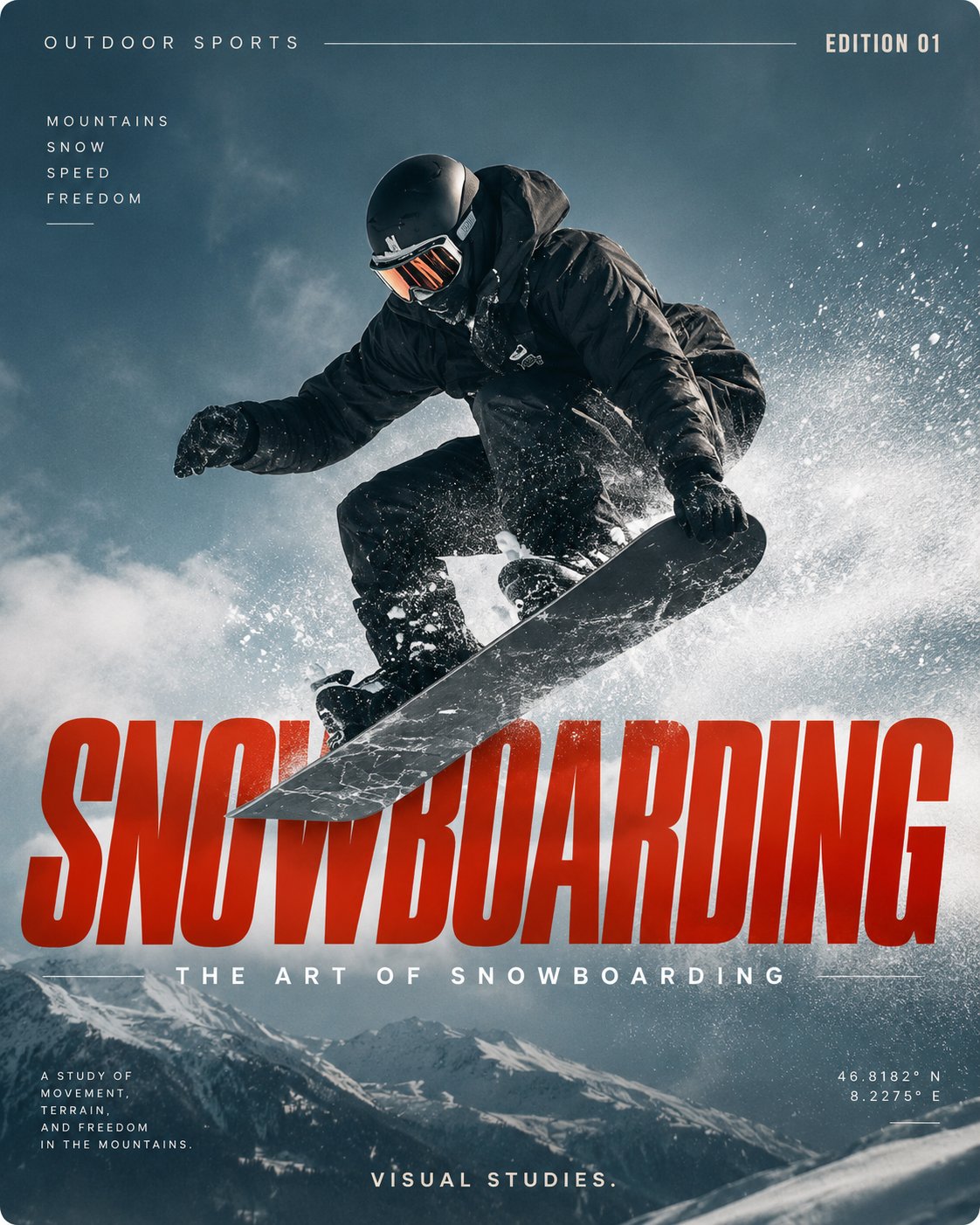
Create a premium, photorealistic editorial magazine poster inspired by high-end outdoor adventure photography, contemporary sports campaigns, and minimalist Swiss graphic design. CORE CONCEPT: Automatically identify the main subject, activity, environment, and visual characteristics from the provided subject or concept. Transform it into a striking editorial cover that combines dramatic full-frame photography with oversized, bold typography. PHOTOGRAPHY & COMPOSITION: Capture the subject in an extraordinary, visually dynamic moment. Use professional sports and lifestyle photography, realistic anatomy, precise details, natural textures, dramatic environmental elements, and authentic movement. The main photograph should occupy the upper and middle sections of the poster. Use an immersive composition with the subject prominently positioned and the environment providing visual depth. TYPOGRAPHIC DESIGN: - Add an enormous, bold, uppercase headline featuring the main subject or activity. - Use condensed extra-bold sans-serif typography. - Position the headline across the lower-middle portion of the poster. - Allow the subject to overlap and partially obscure the typography, creating an integrated photographic-editorial effect. - Choose typography colors that contrast beautifully with the photograph. - Include subtle microtypography, thin horizontal divider lines, and editorial labels. EDITORIAL DETAILS: Include sophisticated magazine-style elements: - Small uppercase category label at the top. - Edition number: EDITION 01. - Small subtitle describing the activity or environment. - Minimalist footer branding: VISUAL STUDIES. - Short editorial tagline: THE ART OF [MAIN SUBJECT]. - Subtle technical coordinates or location details where appropriate. VISUAL STYLE: Luxury outdoor adventure magazine, contemporary editorial art direction, premium sports photography, cinematic natural lighting, rich realistic colors, crisp details, sophisticated typography, professional graphic design, and carefully balanced negative space. LAYOUT: Vertical 4:5 poster composition. Clean rectangular layout with subtle rounded corners, carefully aligned typography, strong visual hierarchy, and professional magazine-cover aesthetics. IMPORTANT: The design must feel like a professionally art-directed magazine cover, not a generic AI-generated image. Ensure all typography is correctly spelled, legible, properly integrated, and visually balanced. Avoid unnecessary text, logos, watermarks, and decorative clutter.
0
檢視詳情
GPT Image 2.5
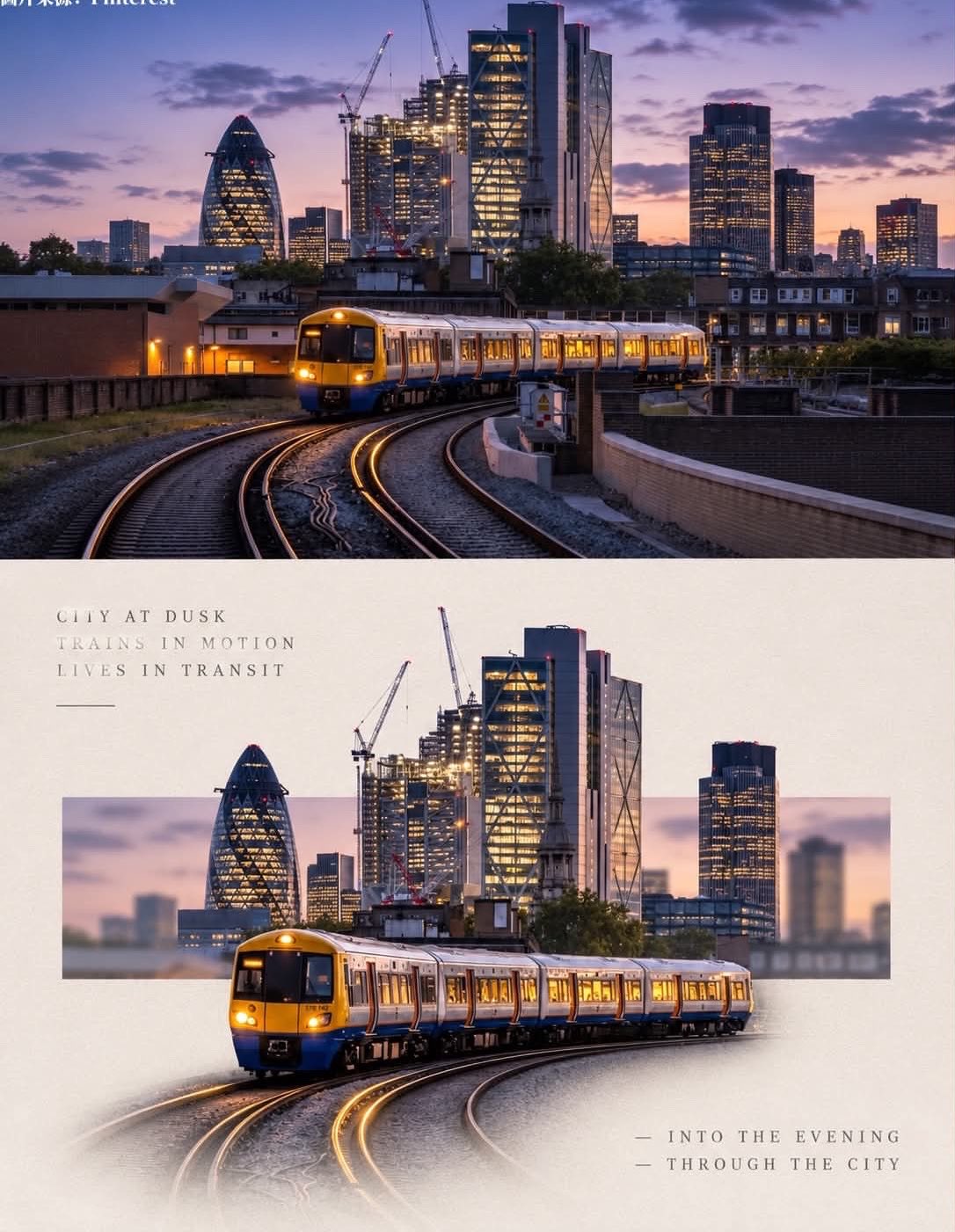
ing the uploaded photo, create a 3:4 vertical poster split into top and bottom halves that touch seamlessly, with no white line, gap, or border between them. Top: the original photo, full-bleed. Bottom: a warm off-white textured paper background. The main subject is cut out, enlarged, and centered. Behind it, a thin horizontal rectangle shows a blurred crop of the original scene, and the subject breaks out of the frame (3D pop-out). The subject's base fades softly into the paper with natural particles, shadow, or reflection. Add small uppercase serif text in light grey with wide spacing: 3 short poetic lines at top-left and 2 lines with a "—" at bottom-right. Minimal gallery-poster style, photorealistic.
0
檢視詳情
Nano Banana 2.1
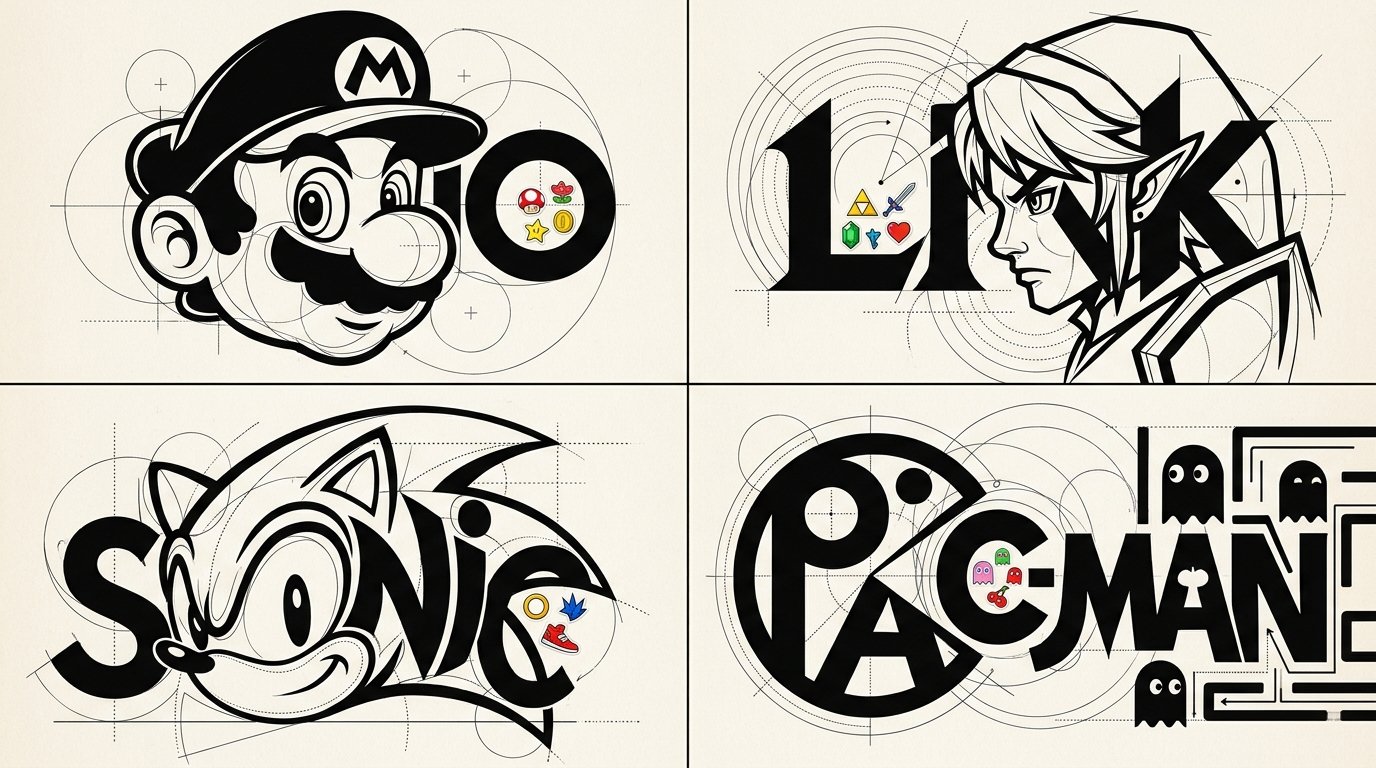
2x2 grid, 16:9, do this for 4 famous games: STYLE: LIVING LETTERFORM CARICATURES Create an experimental typographic character design of [SUBJECT] where recognizable anatomy and lettering become one unified graphic sculpture-like illustration. C₀ IDENTITY PRESERVATION Identify the subject's most recognizable physical features, including hairstyle silhouette, nose, eyes, jawline, eyebrows, and signature expression. Reconstruct these characteristics using geometric letterforms and controlled negative space. The viewer should recognize both the subject and the typographic construction. ¬C₀ = generic mascot face / unrelated character silhouette / completely abstract identity. C₁ TYPOGRAPHIC ANATOMY FUSION (master) Use the subject's name or recognizable initials as the primary structural foundation. Construct the head, hair, eyebrows, eyes, nose, mouth, and signature facial geometry through carefully manipulated typographic forms. Transform letter counters into eye shapes, rounded glyphs into facial masses, vertical stems into necks or structural elements, and curved strokes into hair or facial contours. Allow the letters and character features to share physical boundaries. The character and typography must feel inseparable rather than layered independently. ¬C₁ = portrait placed above a logo / unrelated typography / conventional wordmark / generic illustrated character. C₂ CONSTRUCTIVIST GEOMETRIC ENGINEERING Surround key forms with precise thin-line circles, overlapping arcs, tangent guides, crosshair marks, dotted construction paths, baseline grids, and small alignment points. Use dramatic contrasts between massive filled black typographic forms and delicate hairline geometric construction elements. Every guide should appear to explain how the character's visual geometry was constructed. ¬C₂ = random decorative circles / excessive technical clutter / inconsistent alignment / meaningless geometry. C₃ MICRO-STICKER INTERRUPTIONS Introduce isolated concentrations of small colorful cartoon stickers inside selected letter counters, along typographic edges, or within intentional negative spaces. Stickers should reference the subject's personality, career, recognizable accessories, or visual identity. Keep approximately 80–90% of the overall composition monochromatic, with sticker accents creating surprising pockets of color. Sticker illustrations should use bold outlines, simple expressive faces, and compact shapes. ¬C₃ = full-page sticker wallpaper / stickers covering the face / unrelated doodles / random colorful decoration. C₄ GRAPHIC MINIMALISM + CONTROLLED COLOR Primary palette: pure black and warm white. Use one or two subject-adaptive accent colors within the sticker clusters. Typography should use exceptionally heavy geometric letterforms, clean sharp edges, strong negative space, and selective high-contrast curved structures. Background remains clean and pale. ¬C₄ = full rainbow palette / photoreal textures / 3D material shaders / glossy effects / elaborate gradients. C₅ EXPERIMENTAL IDENTITY POSTER Square or portrait editorial composition. Make the fused character-wordmark occupy most of the image. Preserve generous white space around the central construction. Integrate delicate registration geometry without obscuring the primary lettering. The final artwork should function both as a recognizable character illustration and a distinctive experimental identity mark. ¬C₅ = ordinary portrait / dense stickerbomb background / realistic scenery / conventional logo placement. η HONEST GRAPHIC RENDER Precisely engineered curves, confident typography, mathematically inspired geometry, clever facial abstraction, seamless letter-character integration, clean high-contrast shapes, and crisp print quality. FORBIDDEN = ordinary text under a portrait · generic icon · excessive color · random stickers · unrelated geometric symbols · photorealism · generic cartoon avatar · 3D CGI · watermarks.
0
檢視詳情
GPT Image 2.5
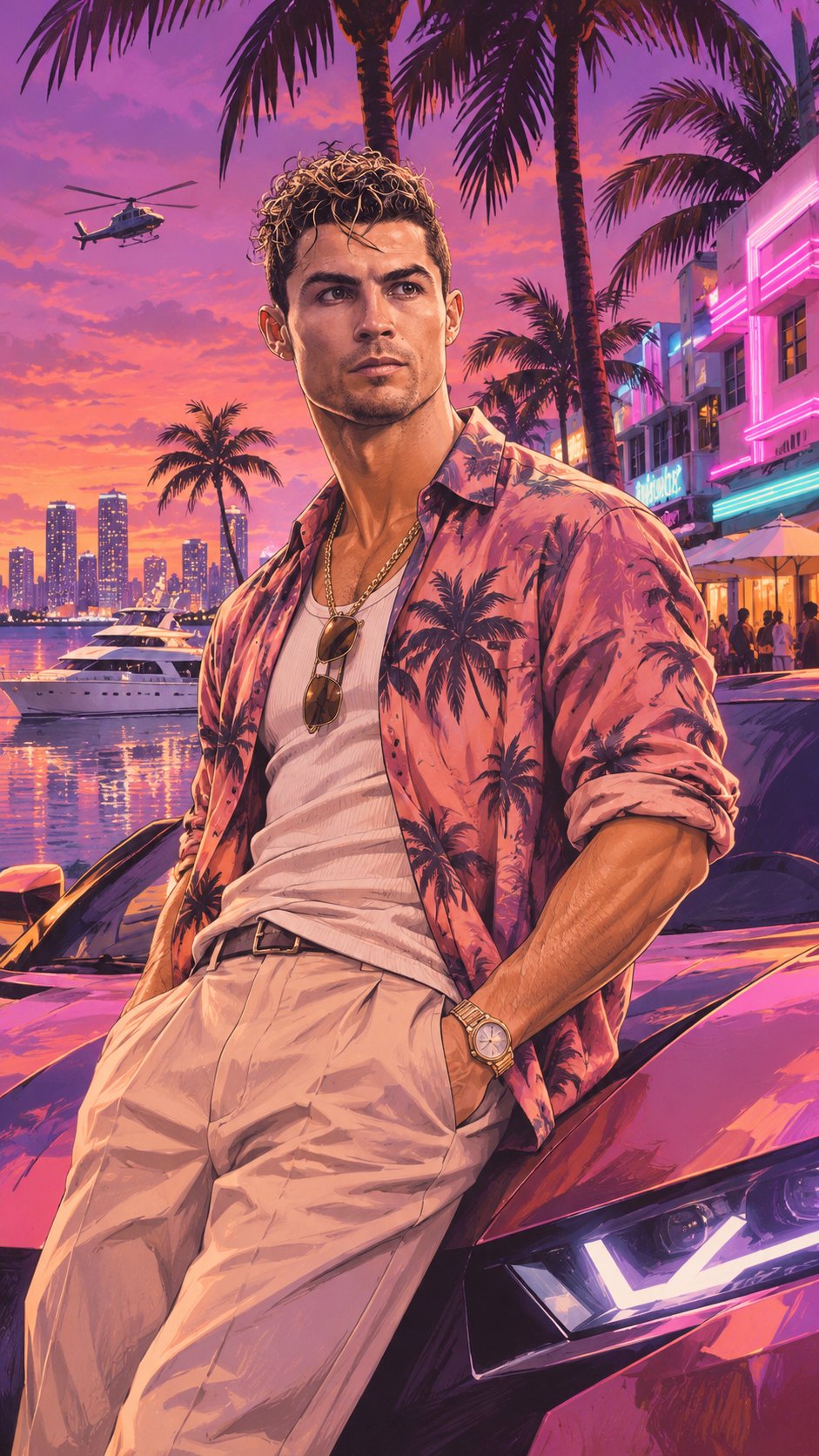
GTA VI VICE CITY | CINEMATIC CHARACTER TRANSFORMATION Transform the person in the uploaded reference photograph into an extraordinary, ultra-detailed Grand Theft Auto VI-inspired Vice City cinematic poster. The result should look like an exclusive official-style GTA VI promotional artwork or a stunning in-game loading screen. 1. PERSON & IDENTITY — CRITICAL Use the uploaded photograph as the exact identity reference. Preserve the person's recognizable facial identity, facial structure, eyes, nose, hairstyle, skin tone, and distinctive features. Transform the person naturally into a confident, charismatic GTA protagonist. Give them a stylish, effortlessly cool personality and realistic proportions. Do not replace their face with a generic character or make them look like someone else. 2. GTA CHARACTER STYLING Dress the person in fashionable Vice City-inspired clothing that complements their appearance and personality. Depending on their look, create an outfit such as: - Luxury tropical shirts, open collars and sunglasses. - Premium leather jackets, fitted T-shirts and dark denim. - Relaxed designer-inspired streetwear and accessories. - Elegant summer suits, watches and gold chains. Clothing must feel authentic to the GTA VI universe, with no real-world sports team logos, football club branding or recognizable brand marks. 3. VICE CITY ENVIRONMENT Place the character inside a spectacular Miami-inspired Vice City setting. Automatically select a cinematic scenario that best suits the uploaded person's appearance. Possible environments include: - Driving a luxury convertible along Ocean Drive. - Relaxing on a luxury yacht overlooking the Vice City skyline. - Standing beside an exotic sports car outside a neon-lit hotel. - Riding a powerful motorcycle through a vibrant nightlife district. - Enjoying a sunset overlooking the ocean from a luxury waterfront villa. - Sitting confidently inside an upscale nightclub or casino. - Walking through a palm-lined boulevard after dark. The character must be the undeniable focal point of the composition. 4. SIGNATURE GTA VI ART DIRECTION Recreate the distinctive visual atmosphere of GTA VI promotional artwork: - Spectacular pink, purple and orange sunset skies. - Electric cyan and magenta neon illumination. - Tropical palm trees and luxurious coastal architecture. - Glowing city skylines, reflective streets and oceanfront scenery. - Beautifully exaggerated yet believable cinematic lighting. - Rich saturated colours with sophisticated contrast. - Highly detailed illustrated textures and polished digital painting. - Semi-realistic GTA promotional illustration rather than ordinary photography. 5. COMPOSITION & QUALITY Create a premium vertical 9:16 smartphone poster. Use a cinematic medium or full-body composition depending on the chosen scenario. Ensure the face is clearly visible, beautifully detailed and naturally integrated into the environment. The artwork should feature exceptional depth, dynamic composition, intricate environmental details, realistic anatomy, dramatic lighting and professional video-game promotional artwork quality. 6. FINAL PRESENTATION Make the final image feel like a legendary GTA VI character introduction or exclusive Vice City loading-screen artwork. IMPORTANT: No Juventus, no football clubs, no sports jerseys, no real-world team logos, no random text, no captions, no watermarks, no borders and no social media interface. FINAL OBJECTIVE: One uploaded photograph goes in, and an incredible Vice City protagonist poster comes out. Preserve the person's identity while completely transforming their surroundings, outfit, atmosphere and lifestyle into the spectacular world of GTA VI.
0
檢視詳情
GPT Image 2.6
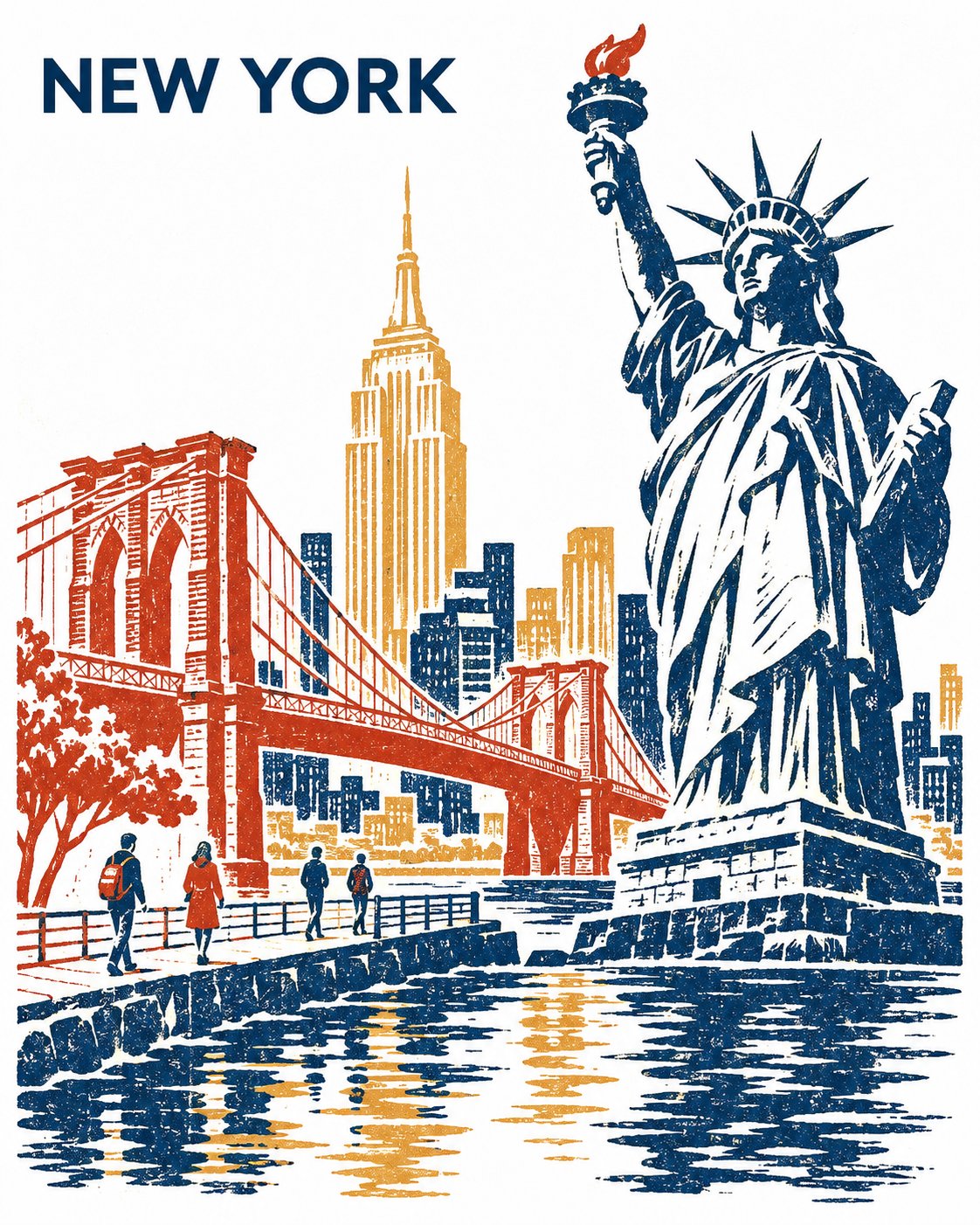
COLLECTIBLE THREE-COLOR REDUCTION LINOCUT | CITY TRAVEL POSTER Create a striking, collectible three-color reduction linocut travel poster featuring [CITY NAME], printed vertically in a 4:5 aspect ratio on pristine, pure-white paper. COMPOSITION & ARCHITECTURE Make [PRIMARY LANDMARK] the dominant focal point. Select two additional instantly recognizable landmarks from [CITY NAME], ensuring their architectural forms create a compelling visual contrast. Bring all three landmarks together along one continuous waterfront, artistically reimagining their geographical positions while preserving their authentic silhouettes, architectural proportions and defining details. Use an asymmetric, low three-quarter perspective. Ground every structure in a believable waterfront environment with convincing foundations, bridges and architectural connections. Establish a unified horizontal visual flow through varied building heights, intentional spacing and subtle overlaps. Maintain a balanced, organic composition. Avoid conventional skyline arrangements, stacked architectural tiers or disconnected floating structures. Include exactly four tiny contemporary pedestrians along the waterfront to introduce scale, atmosphere and subtle human presence. PRINTMAKING & COLOUR PALETTE Use exactly three destination-inspired ink colours, carefully selected to reflect the city's character, architecture and atmosphere. Embrace authentic reduction linocut aesthetics: - Bold, sculptural carved shapes and confident silhouettes. - Rhythmic white negative-space cuts revealing the texture of the paper. - Organic, slightly irregular hand-carved edges. - Subtle variations in ink density and uneven pressure, suggesting traditional block printing. - Strong contrasts between deep architectural shadows and luminous unprinted areas. - Waterfront reflections simplified into expressive, broken horizontal marks. The finished artwork should feel like an authentic, artisan-produced limited-edition print rather than a digitally generated illustration. TYPOGRAPHY & LAYOUT Position the text "[CITY NAME]" discreetly in the upper-left corner. Use a clean, SUIT-style uppercase sans-serif typeface in Regular or Medium weight, with restrained letter spacing and generous surrounding white space. Keep the typography minimal, sophisticated and secondary to the artwork. FINAL ART DIRECTION A refined collectible destination poster combining traditional Japanese-inspired reduction printmaking, contemporary graphic design and distinctive architectural illustration. Prioritize strong composition, architectural authenticity, elegant negative space, carefully controlled colour separation and timeless visual appeal. STRICT RESTRICTIONS: No additional text, captions, inscriptions, decorative lettering, logos, borders, signatures or watermarks. Exactly three ink colours, four pedestrians and one continuous waterfront composition.
1
檢視詳情
GPT Image 2.6
Create an exceptionally beautiful, sophisticated minimalist geometric architectural travel poster featuring [LANDMARK NAME], [CITY], [COUNTRY]. 1. CENTRAL ARCHITECTURAL SUBJECT Feature the iconic landmark as the dominant central attraction. Illustrate its recognisable architectural structure using simplified geometric shapes, clean silhouettes, elegant curves and carefully constructed flat-colour forms. Preserve the landmark’s distinctive architectural identity, proportions and signature details. Transform complex architectural details into beautifully simplified artistic elements. Integrate the architecture naturally into the surrounding abstract landscape. 2. ORGANIC GEOMETRIC LANDSCAPE Create an imaginative environment using a combination of abstract geometric and organic forms. Oversized circles, semicircles and curved shapes representing the sun and moon. Flowing hills, layered mountains and abstract landscape formations. Architectural arches, rectangular frames and sculptural platforms. Overlapping organic shapes creating beautiful depth and dimension. Simplified trees, water bodies, pathways and natural elements. Large geometric foreground elements framing the landmark. Every shape should feel intentional, balanced and artistically connected. 3. DISTINCTIVE COMPOSITION Create a visually striking composition inspired by contemporary Swiss graphic design, Bauhaus principles and modern editorial illustration. Strong central architectural arrangement. Beautiful interaction between positive and negative space. Layered foreground, middle ground and background. Oversized abstract forms framing the architecture. Elegant asymmetrical balance. Bold shapes with carefully controlled proportions. Avoid unnecessary details and visual clutter. 4. UNIQUE DESTINATION COLOUR PALETTE Develop a completely distinctive colour identity inspired by the destination’s cultural character, architecture and natural environment. Use approximately 5–7 carefully coordinated colours. Combine bold contrasting tones with sophisticated muted shades, warm neutrals and occasional unexpected accents. Every destination must receive its own original palette. Never repeat colour combinations across the collection. 5. COLOUR AND SHAPE INTERACTION Use large areas of solid colour, subtle overlapping forms and beautifully controlled tonal transitions. Crisp, clean edges. Smooth organic curves. Flat graphic illustration. Subtle paper-grain texture. Minimal gradients used selectively. Beautiful colour blocking. No excessive photorealism or 3D effects. 6. POSTER TYPOGRAPHY Include sophisticated editorial typography. Main title: [DESTINATION NAME] Secondary text: [COUNTRY] Add a small poetic tagline inspired by the destination. Use elegant oversized contemporary serif or refined modern sans-serif typography. Typography should feel like an integral part of the composition rather than an afterthought. 7. FINAL ART DIRECTION A beautiful fusion of minimalist architecture, organic geometry, contemporary graphic design, modernist illustration and premium international travel poster aesthetics. The finished artwork should feel timeless, intelligent, artistic, visually memorable and suitable for a prestigious design exhibition. Museum-quality graphic composition, exceptional colour harmony, clean silhouettes, refined details and sophisticated visual storytelling. Portrait 2:3 format. No borders, no watermark, no unnecessary text. Preserve the authentic recognisable identity of the landmark.
0
檢視詳情
GPT Image 2.6
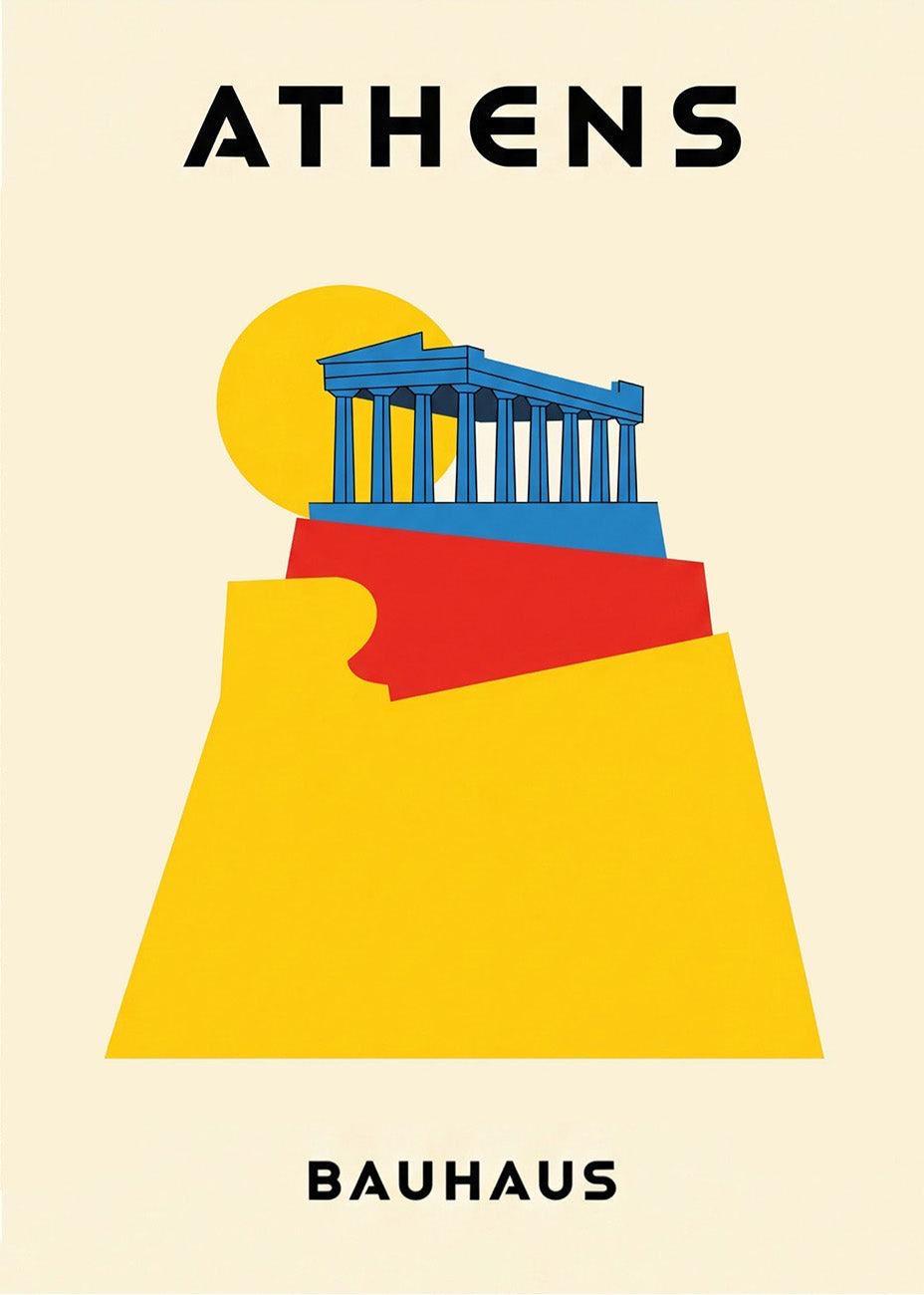
Create an exceptionally beautiful, ultra-minimalist Bauhaus-inspired architectural travel poster featuring [LANDMARK NAME], [CITY], [COUNTRY]. 1. ICONIC ARCHITECTURAL SILHOUETTE Feature the destination’s most recognisable landmark as the central artistic subject. Preserve its authentic architectural identity and instantly recognisable silhouette. Simplify the structure into clean geometric lines, rectangles, circles, triangles and elegant architectural proportions. Use minimal details to communicate the landmark’s character. Make the architecture appear as though it has been constructed from carefully arranged geometric paper cutouts. Avoid photorealism, excessive details and complicated textures. 2. GEOMETRIC ARTISTIC COMPOSITION Build the entire poster around a striking arrangement of oversized geometric shapes. Large semicircles and circles representing the sun or moon. Bold rectangular architectural foundations. Angular trapezoids and triangular landscape forms. Layered geometric platforms supporting the landmark. Carefully overlapping shapes creating depth. Simple curved forms and architectural abstractions. Use only shapes that complement the landmark’s natural structure. 3. UNIQUE DESTINATION-INSPIRED COLOURS This is the most important part of the collection. Create a completely different 4–6 colour palette for every destination. Choose colours inspired by the destination’s architecture, history, cultural identity and natural surroundings. Use bold primary or complementary colours, balanced with warm ivory or soft neutral backgrounds. Never repeat the same colour combinations between destinations. 4. MINIMALIST GRAPHIC STYLE Flat vector illustration. Solid colour blocks. Crisp architectural outlines. Strong geometric contrast. Subtle vintage paper texture. Perfectly controlled negative space. Clean, sophisticated modernist aesthetic. No gradients unless absolutely necessary. No unnecessary decorative elements. 5. TYPOGRAPHY AND LAYOUT At the top, display the destination name in oversized, bold, uppercase geometric sans-serif typography. [DESTINATION NAME] At the bottom, add a small artistic caption: [COUNTRY] Include a discreet design movement label such as BAUHAUS. Keep the typography exceptionally clean, balanced and beautifully spaced. 6. SIGNATURE ART DIRECTION Inspired by original Bauhaus graphic design, Swiss modernism, mid-century travel advertising and minimalist architectural illustration. The poster must look like a timeless collectible from an international design exhibition. The composition should be instantly recognisable even from a distance. Portrait 2:3 aspect ratio. Warm ivory background. No borders, no photographs, no people, no flowers, no leaves, no watermarks and no unnecessary text.
0
檢視詳情
GPT Image 2.5
Transform the uploaded reference image into a beautiful, premium editorial illustration poster. Composition: Create a vertical 4:5 split-layout design. The upper half should display the original photograph in its realistic photographic style, preserving the subject's exact appearance, facial features, hairstyle, outfit, pose, and expression. The lower half should feature a beautifully stylized 2D illustration of the exact same subject, recreating the original photograph's pose, expression, clothing, and composition. Convert the subject into a charming, hand-painted digital illustration with soft brush textures, clean shapes, delicate outlines, warm skin tones, and beautiful artistic details. Background Design: Transform the original background into a creative illustrated environment. Add minimal geometric architecture, abstract shapes, subtle plants, soft natural elements, and a complementary color palette inspired by the original photograph. Poster Layout: Place the illustration inside a clean rectangular artwork frame, surrounded by a warm ivory or cream-colored background. Add a large elegant uppercase headline beneath the illustration, with a small complementary subtitle and a subtle decorative line. Typography: Use thin, sophisticated, widely spaced uppercase lettering. Choose a short title that matches the mood of the photograph, with a smaller minimalist tagline underneath. Art Direction: Modern Japanese editorial poster design, contemporary lifestyle illustration, soft pastel colors, warm sunlight, minimalist graphic design, artistic storytelling, premium magazine aesthetic. Important: Maintain the original person's identity and recognizable features. The illustrated version must clearly resemble the person in the original photograph. Keep the top photograph realistic and the bottom illustration artistic. Ensure both versions match perfectly in pose and composition. High-quality details, balanced layout, elegant negative space, professional art direction, 4:5 portrait poster.
0
檢視詳情
GPT Image 2.6
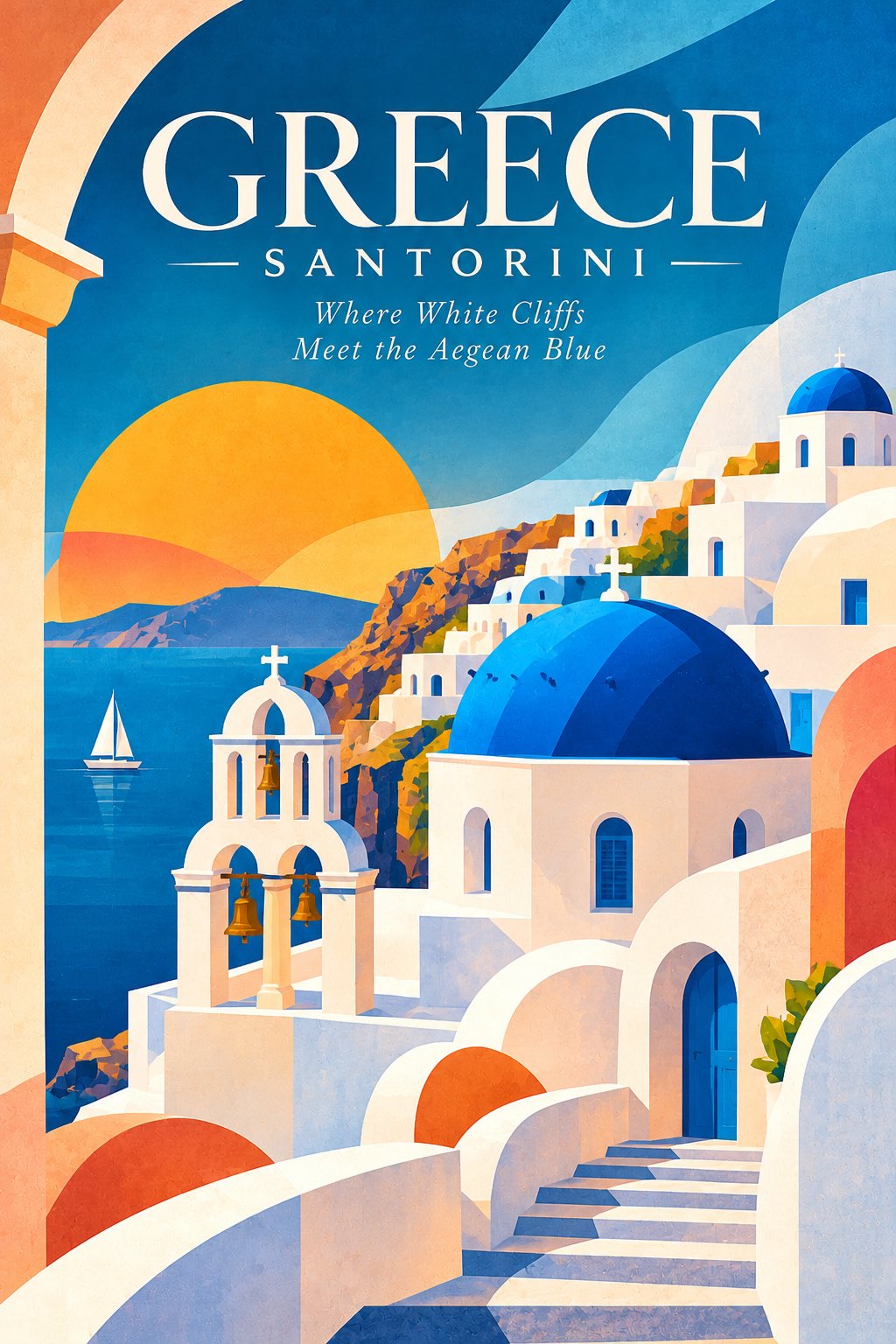
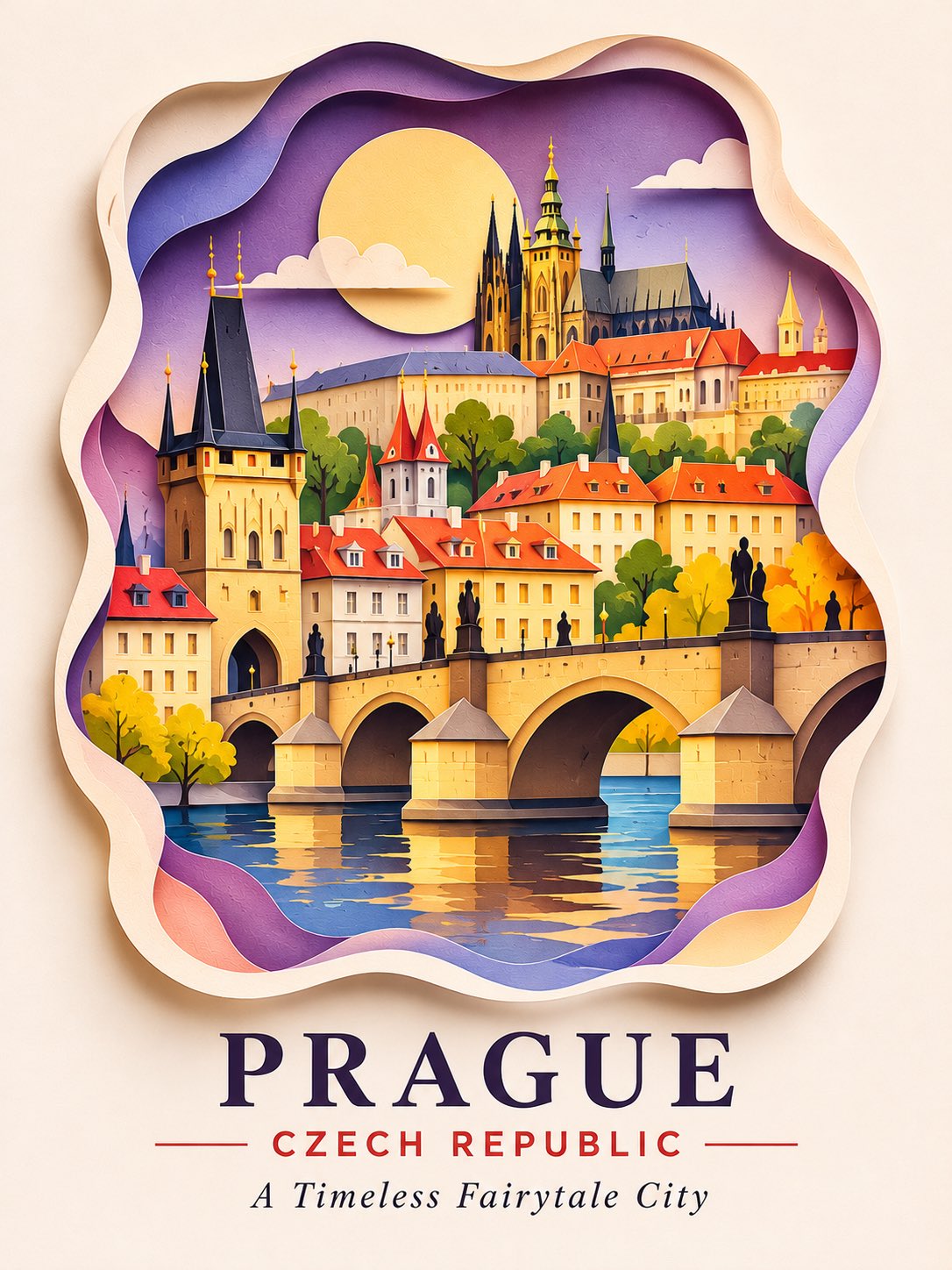
Create an extraordinarily beautiful 3D layered paper-cut architectural travel poster featuring [LANDMARK NAME], [CITY], [COUNTRY]. Transform the destination into an enchanting miniature architectural world, crafted entirely from intricately layered, sculpted and cut coloured paper. 1. CENTRAL ARCHITECTURAL SCENE Feature the destination’s most iconic landmark as the main attraction. Preserve its authentic and recognisable architectural identity. Recreate buildings using multiple layers of carefully cut paper. Include distinctive rooftops, windows, arches, towers, domes, bridges or architectural details specific to the destination. Arrange smaller surrounding buildings to create a charming miniature cityscape. Make the entire scene resemble a beautifully handcrafted architectural diorama. 2. LAYERED PAPER LANDSCAPE Build an extraordinary three-dimensional environment. Flowing paper-cut hills and sculpted mountains. Layered rivers, lakes, coastlines or ocean waves where appropriate. Curved bridges, winding pathways and miniature staircases. Overlapping paper clouds, hills and architectural backgrounds. Intricate foreground elements framing the composition. Beautiful irregular paper-cut edges surrounding the scene. Every layer should have visible depth, delicate edges and realistic cast shadows. 3. UNIQUE DESTINATION DETAILS Include small architectural and cultural elements that make each destination instantly recognisable. Select details according to the location rather than repeating the same decorations. 4. DESTINATION-SPECIFIC COLOUR PALETTE Create a completely original colour identity for every destination. Use 6–9 harmonious shades inspired by its architecture, culture, landscape and atmosphere. Combine rich colours, soft pastels, contrasting paper layers and carefully selected neutral tones. Never repeat the same palette between different destinations. 5. THREE-DIMENSIONAL PAPER ART Authentic handmade paper-cut aesthetic. Multiple overlapping cardstock layers. Sculpted paper architecture. Delicate folded and curved paper details. Visible paper thickness. Soft realistic shadows between layers. Beautiful tactile textures. Intricate miniature craftsmanship. Gentle studio lighting. The artwork must look like a real handcrafted paper sculpture photographed professionally, not a flat illustration or plastic 3D render. 6. DISTINCTIVE POSTER COMPOSITION Place the entire architectural scene inside an elegant irregular organic paper-cut frame. Use a balanced vertical composition with: Large miniature architectural scene in the centre. Beautiful layered foreground. Subtle surrounding negative space. Soft neutral background. Realistic depth and dimensional shadows. 7. MINIMAL TYPOGRAPHY Below the artwork, write: [CITY / DESTINATION NAME] [COUNTRY] Add one short, elegant poetic tagline of approximately 3–6 words inspired by the destination. Use elegant uppercase modern typography for the destination name and a delicate refined serif font for the tagline. Keep typography minimal, correctly spelled and beautifully positioned. 8. FINAL ART DIRECTION A breathtaking fusion of miniature architecture, layered paper sculpture, handcrafted papercraft, whimsical storytelling and premium contemporary travel poster design. Extremely intricate craftsmanship, sophisticated colour harmony, realistic paper shadows, beautiful depth, exquisite architectural details and museum-quality presentation. Portrait 2:3 composition. No watermark, no unnecessary text, no photorealistic buildings, no plastic appearance.
1
檢視詳情
GPT Image 2.5
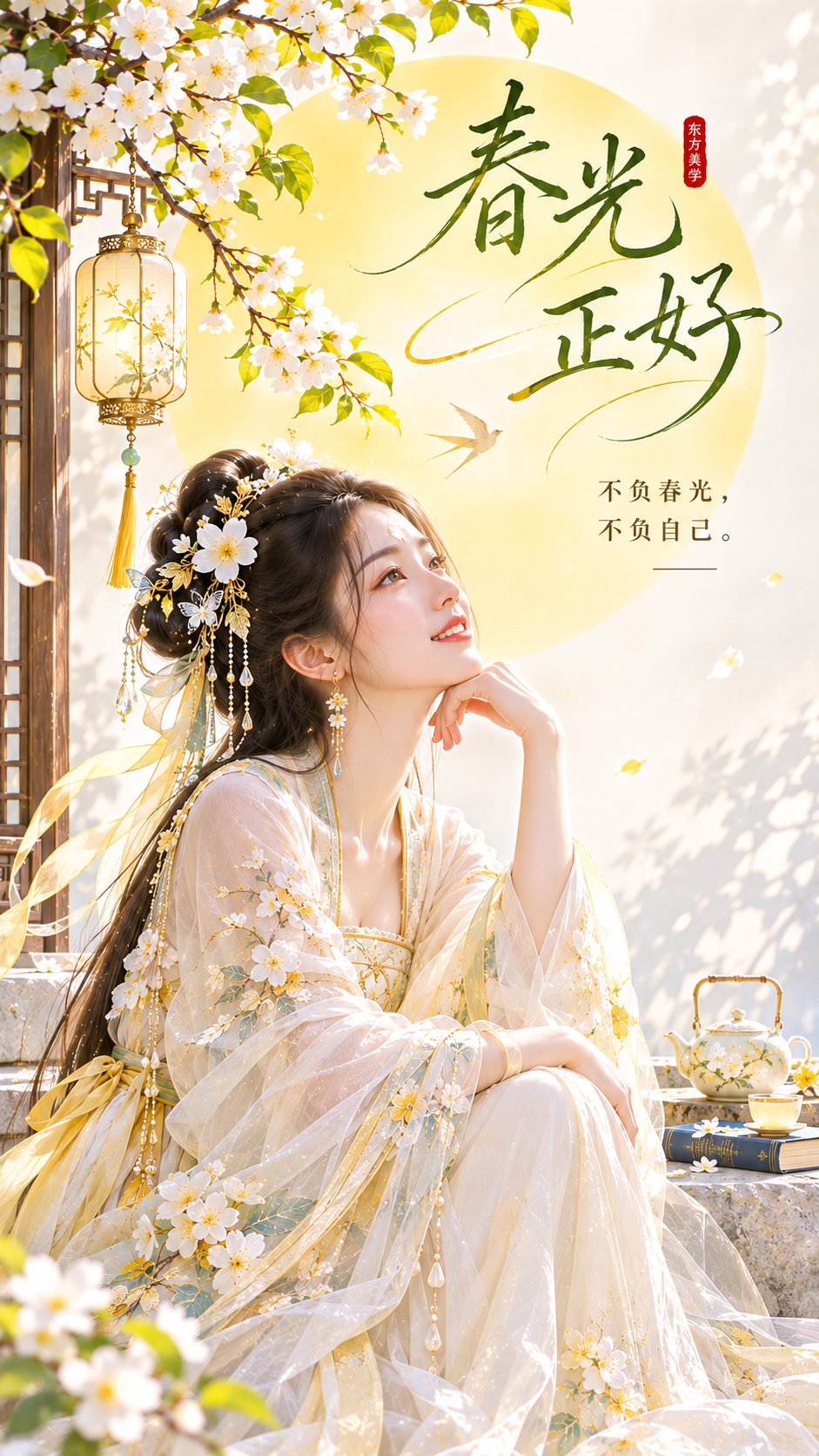
春光正好。 主题方向:东方禅意极简封面海报 风格分支:女性审美明快型 主体内容:一位古风女子坐在画面下方偏一侧的矮凳上,微微抬头看向远处 情绪母题:松弛、明朗、轻治愈 场景与意象:象牙白背景、柠檬黄色圆形日光、女子、少量浅灰地面投影 构图与空间:9:16竖版构图,圆形日光位于中上部偏中位置形成视觉岛,人物位于下方偏侧,日光周围和上方保留标题空间 色彩控制:象牙白作为整体高明度基底,柠檬黄只用于圆形日光和少量暖反光,人物服装建议浅米白或淡奶黄;避免整体发黄 光线与质感:明亮柔光,背景纯净,边缘清楚,干净平面海报感 画幅比例:9:16 补充要求:标题可围绕圆形日光排布,整体像小红书爆款封面,明快但不刺眼
0
檢視詳情
GPT Image 2.6
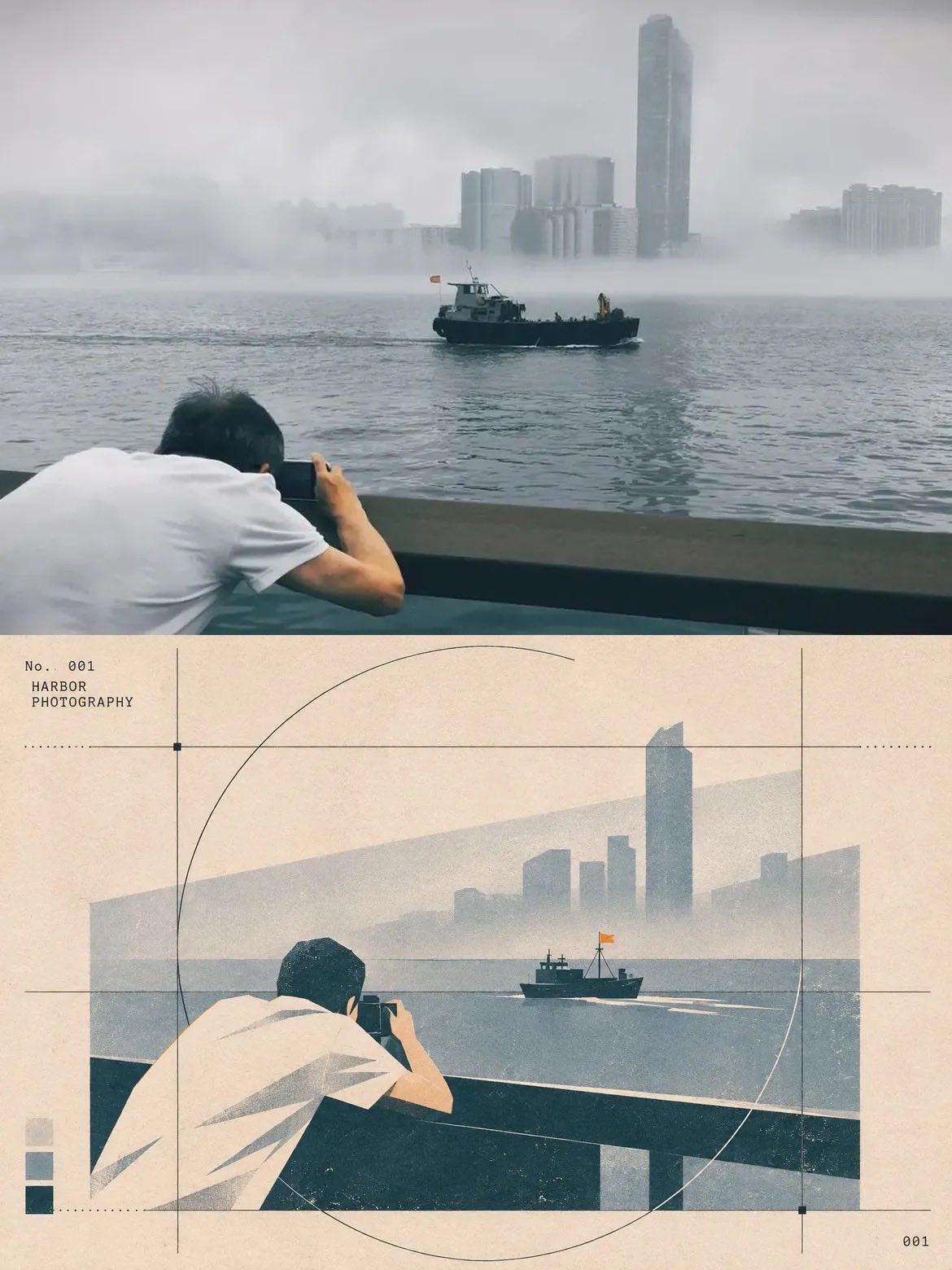
Transform the uploaded reference photograph into a sophisticated vintage editorial photography poster, following the exact visual aesthetic of the provided examples. Create a vertical 2:3 split-layout composition. Place the original photograph in the upper half, preserving its original colors, subject, camera angle, perspective, framing, and details. In the lower half, recreate the exact same scene as a minimalist, geometric, vintage-inspired 2D illustration. Use a refined Swiss graphic design and Bauhaus-inspired editorial aesthetic. Apply a muted, earthy color palette featuring warm beige, cream, charcoal black, dusty grey, muted blue-grey, and subtle brown tones. Simplify the subjects and surroundings into clean geometric shapes, bold silhouettes, angular forms, and flat color blocks while maintaining the original scene's composition and recognizable details. Add a subtle aged paper texture, fine grain, distressed vintage print effects, and slightly faded ink. Incorporate delicate graphic design elements such as thin circular arcs, vertical and horizontal alignment guides, intersecting lines, dotted lines, small square markers, and minimal geometric grids around the illustrated scene. Include small editorial typography in a typewriter-style font, with a numbered photographic series label in the upper-left corner of the illustrated section. Add a small sequence number in the bottom-right corner and a minimal three-color palette swatch along the lower-left edge. Maintain generous negative space, precise alignment, balanced proportions, and an elegant museum-quality art direction. IMPORTANT: Preserve the original photograph in the upper section without changing the scene. The lower illustration must represent the exact same photograph, including the same subjects, positions, perspective, architecture, objects, and background. Do not introduce new elements or change the original composition. Overall aesthetic: vintage photography journal, Swiss editorial graphic design, minimalist architectural illustration, retro art direction, sophisticated print design, and timeless visual storytelling. High resolution, crisp details, vertical poster format.
0
檢視詳情
GPT Image 2.5
Create an exceptionally creative, colourful, hand-drawn travel art poster featuring [LANDMARK NAME], [CITY], [COUNTRY]. 1. ARTISTIC COMPOSITION Create a playful architectural illustration showcasing the destination’s most iconic landmarks. Include: * One large, dominant landmark in detailed black-ink line drawing. * Two or three smaller architectural landmarks positioned around the main subject. * Distinctive local buildings, monuments, towers, bridges, domes or historical structures. * Simplified architectural sketches with expressive hand-drawn outlines. * Preserve the recognisable shapes and identity of the actual landmarks. 2. COLOURFUL GEOMETRIC BACKGROUND Create an artistic patchwork background using large rectangular and irregular geometric colour blocks. Use overlapping sections of different sizes, with visible brush strokes, rough painted textures and subtle canvas grain. IMPORTANT: Automatically create a completely unique colour palette for every new destination. Choose colours inspired by the country’s culture, flag, architecture, landscape and artistic traditions. Do not repeat the same colour combination for different countries or cities. 3. HAND-DRAWN CULTURAL DETAILS Surround the architecture with charming illustrated elements associated with the destination. Examples: * Local transportation, bicycles, trams, boats or vintage cars. * Traditional food, drinks and cultural objects. * Local street signs, decorative lamps and architectural ornaments. * Small people in traditional or locally appropriate clothing. * Hearts, stars, birds, clouds and whimsical decorative sketches. * Local symbols, flowers or plants only when appropriate to the destination. Keep these elements playful, artistic and naturally scattered throughout the composition. 4. DESTINATION NAME & TYPOGRAPHY Make the destination name an essential part of the artwork. Include: [LANDMARK NAME] [CITY NAME] [COUNTRY NAME] Add the destination’s native-language name where appropriate. Use a mixture of handwritten lettering, elegant cursive typography, playful uppercase text and small handwritten annotations. Include short destination-inspired words and cultural expressions. 5. ARTISTIC STYLE Contemporary hand-drawn architectural illustration, expressive black ink outlines, colourful geometric collage, playful editorial art, imperfect sketchbook drawings, mixed-media painting and modern European poster design. Use slightly irregular lines, visible pencil marks, rough brush textures and charming handmade imperfections. 6. FINAL PRESENTATION The composition should feel like an original piece of contemporary travel artwork created by an imaginative illustrator. Bold, joyful, colourful, artistic and visually rich without becoming cluttered. Square 1:1 composition, premium art-print quality, balanced layout, crisp architectural linework, beautiful colour harmony. Avoid photorealism, 3D rendering, generic clipart, repetitive layouts and excessive decorative elements. Generate for paris france tarquoise cobalt pink yellow
0
檢視詳情
GPT Image 2.5
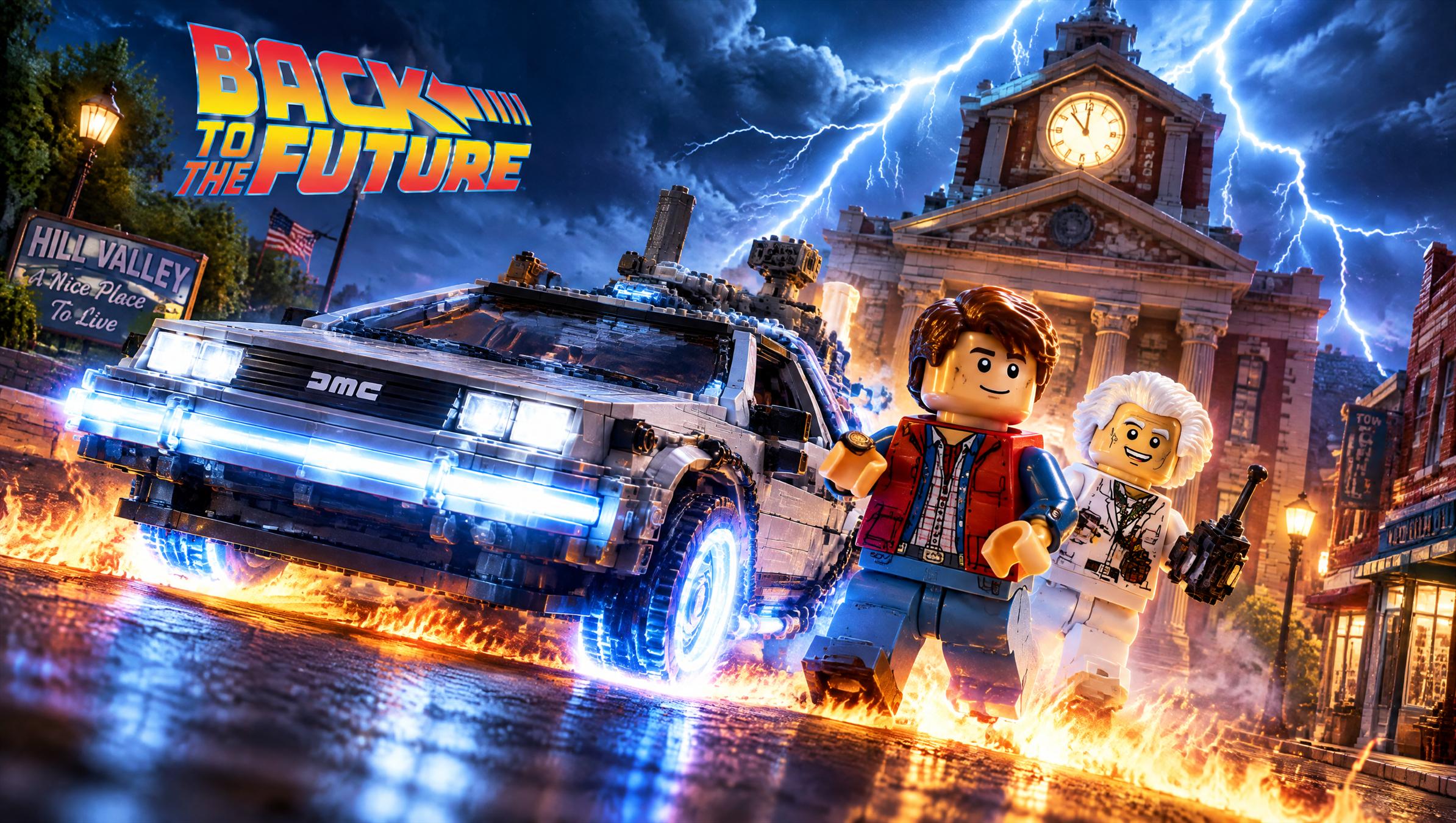
Create an epic LEGO-style cinematic collector poster inspired by [MOVIE TITLE]. Show the most iconic [vehicle / location / creature / object] in detailed brick-built form, with the main characters as LEGO-style mini figures. Add dramatic lighting, dynamic action, recognizable visual elements from the movie, and a strong atmosphere matching the film’s genre. Make it look like a premium movie poster, colorful, polished, highly detailed, and worthy of a limited-edition LEGO collector set.
0
檢視詳情
GPT Image 2.5
Create a premium artistic travel poster inspired by the uploaded photograph. Use a sophisticated 3:4 vertical composition divided into two sections. TOP HALF (50%): Preserve the original photograph as a breathtaking, photorealistic landscape. Maintain natural lighting, realistic textures, atmospheric depth, and the original scene's composition. BOTTOM HALF (50%): Transform the main subject or location into a beautiful hand-drawn editorial illustration. Use Japanese vintage poster aesthetics, delicate ink outlines, watercolor textures, geometric shapes, abstract patterns, botanical elements, and flowing organic lines. DESIGN STYLE: Minimalist Japanese-inspired graphic design, Scandinavian aesthetics, muted navy blue, warm terracotta, dusty beige, soft grey, and off-white palette. Add subtle paper grain, imperfect hand-painted textures, collage elements, and carefully balanced negative space. LAYOUT: Keep the illustration centered and visually connected to the photograph above. Add small decorative details, geometric frames, dotted patterns, and elegant botanical sketches. Include a tiny Japanese-inspired typography element at the bottom. Overall aesthetic: Premium art gallery poster, vintage travel magazine, contemporary Japanese illustration, sophisticated editorial composition, handcrafted artistic finish. High detail, clean composition, beautiful visual balance, professional graphic design, 3:4 portrait ratio.
0
檢視詳情
GPT Image 2.5
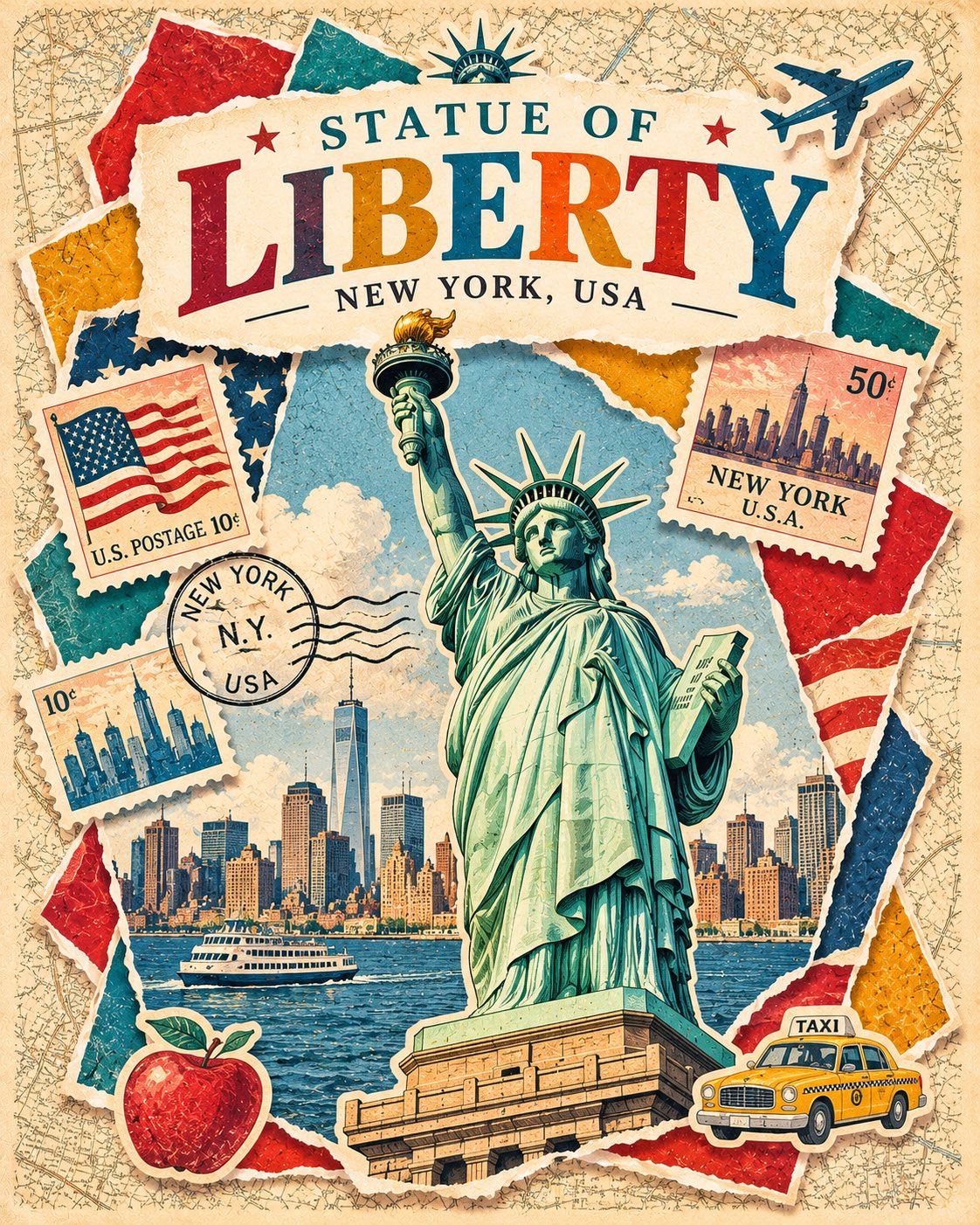
Create a premium vintage-inspired travel poster for [LANDMARK, CITY, COUNTRY], inspired by the artistic style of retro European travel postcards, illustrated postage stamps and layered paper collage. CENTRAL COMPOSITION: Feature the landmark as the dominant central subject, illustrated with beautiful architectural detail, realistic proportions and a subtle vintage engraved or hand-painted appearance. COLLAGE DESIGN: A large, torn-edge white paper title banner displaying the destination name in bold, colourful vintage typography. Multiple overlapping pieces of brightly coloured paper arranged behind the landmark. An antique city map as the background texture. Vintage postage stamps featuring local symbols, architecture and cultural elements. Old postal cancellation marks, passport stamps, handwritten travel notes and tiny airplane illustrations. Small illustrated local transportation, decorative icons and travel memorabilia. Irregular torn paper edges, visible paper fibres, subtle shadows and authentic printed textures. UNIQUE COLOUR IDENTITY: Give every landmark a completely different, specially curated colour palette. Select colours that complement the landmark’s architecture, history, atmosphere and cultural identity. Use a different dominant background colour, contrasting collage papers, stamp colours and typography for every new destination. Never repeat the exact same colour combination across the collection. ART DIRECTION: Retro 1950s travel advertising meets handmade scrapbook collage, vintage postal ephemera, illustrated architectural tourism poster, tactile paper layering, sophisticated colour blocking and charming nostalgic details. FINISH: Beautifully balanced composition, highly detailed landmark illustration, crisp typography, warm aged-paper background, authentic vintage print imperfections, premium collectible poster quality. Vertical 4:5 composition. No modern digital UI, no photorealistic photography, no generic template appearance.
0
檢視詳情
GPT Image 2.5
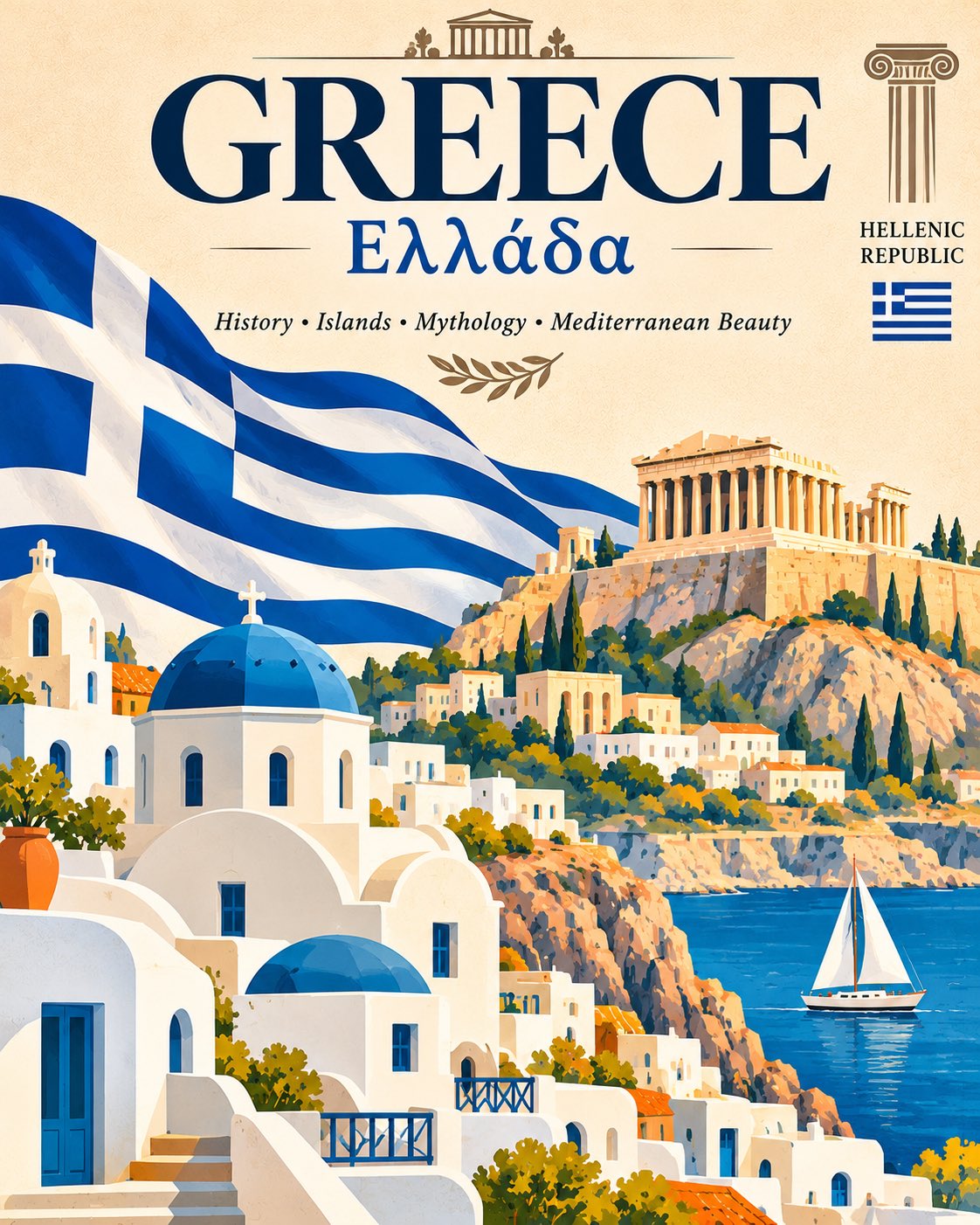
Create an exceptionally beautiful minimalist architectural travel art poster featuring [LANDMARK / CITY / COUNTRY]. 1. ARCHITECTURAL COMPOSITION Illustrate the destination through a charming collection of simplified geometric buildings, iconic landmarks, traditional houses, historic monuments, towers, domes and surrounding architecture. Use clean geometric shapes, elegant silhouettes, flat artistic forms and carefully arranged architectural layers. Preserve the recognisable characteristics of the actual landmark. 2. COLOUR PALETTE Create a sophisticated, distinctive colour palette inspired by the country’s culture, landscape and architectural identity. Use harmonious combinations of pastel and earthy tones, including warm ivory, muted terracotta, sage green, dusty rose, ochre, soft peach and deep teal where appropriate. IMPORTANT: Every new country must receive a completely different and original colour palette. Never repeat the same combination. 3. NATIONAL FLAG — FLOWING SILK Feature a magnificent, beautifully coloured national flag of [COUNTRY], made from luxurious flowing silk fabric. The flag should gracefully wave through the composition, with elegant natural folds, delicate fabric texture, realistic silk reflections and beautiful flowing movement. Display the country’s authentic national flag with its correct colours, symbols, proportions and design. Make it visually prominent but naturally integrated into the artwork. 4. DESTINATION TYPOGRAPHY Add the destination name prominently: [LANDMARK NAME] [CITY NAME] [COUNTRY NAME] Use elegant, bold, modern typography with beautiful spacing. Include the destination’s native-language name and a short cultural tagline. 5. BACKGROUND & ATMOSPHERE Use a warm ivory handmade-paper background with subtle grain and delicate vintage print texture. Include soft rolling hills, winding pathways, trees, gardens, distant mountains or architectural surroundings inspired by the actual location. Create a spacious composition with beautiful negative space and balanced visual elements. 6. ARTISTIC STYLE Contemporary minimalist geometric illustration, Scandinavian-inspired travel art, modern architectural poster design, sophisticated flat colours, subtle paper grain, clean silhouettes and premium gallery-quality artwork. 7. FINAL PRESENTATION A visually striking, elegant and timeless collectible travel poster. Beautifully balanced composition, distinctive national identity, accurate landmark architecture and a stunning flowing silk national flag. Vertical 4:5 aspect ratio. High-resolution professional poster design. No photorealistic collage, no excessive details, no clutter, no generic architecture.
0
檢視詳情
Nano Banana 2.1
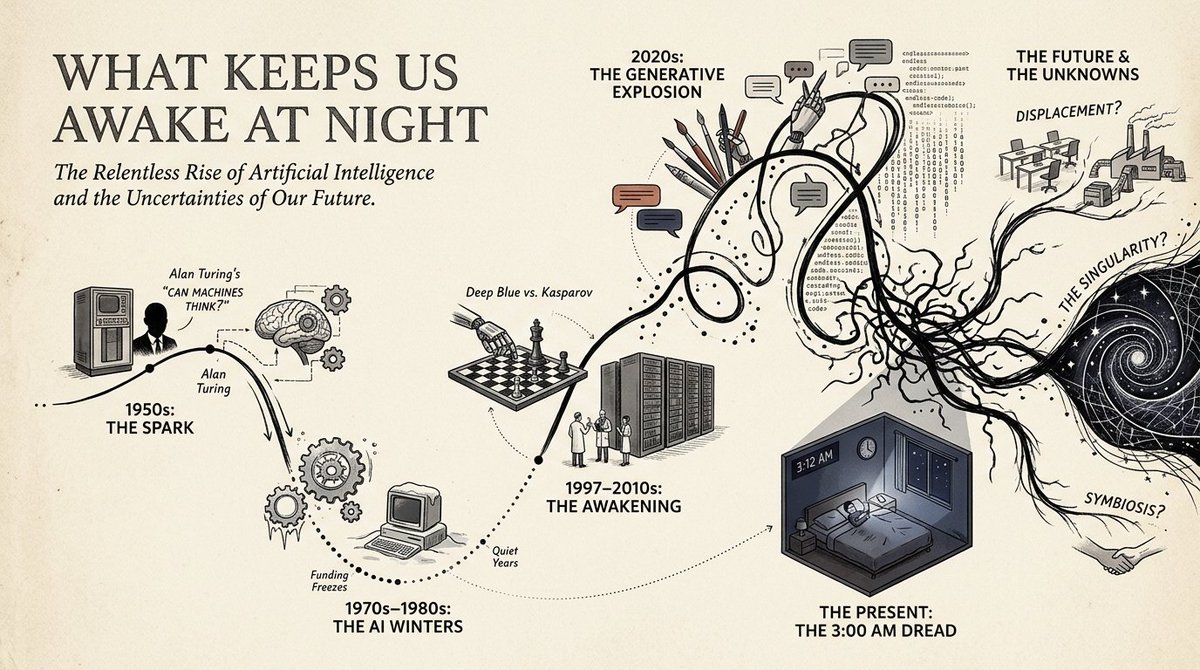
16:9, do this for a topic that keeps us awake at night: in this style= { CORE IDEA: Transform the subject into a chronological visual journey where a single wandering line travels through time, branching into illustrated milestones, cultural scenes, human moments, and symbolic turning points. MEDIUM: Editorial infographic × historical poster illustration × narrative timeline × miniature visual storytelling. BACKGROUND: Warm ivory or lightly textured archival paper. PALETTE: Mostly black, cream, muted gray, and one or two restrained accent families inferred from the subject. Important milestones may receive stronger localized color. TIMELINE: A continuous hand-drawn path flows horizontally or diagonally across the composition. The path may: loop, dip, accelerate, split, reconnect, flatten, or become chaotic according to the subject’s actual development. MILESTONES: Major stages become illustrated nodes attached to the line. Each node may contain: a person, profession, invention, object, event, environment, symbol, cultural artifact, breakthrough, setback, or transformation. - Analyze the subject and infer its most meaningful chronological stages rather than dividing time evenly. Convert the subject’s progression into one expressive continuous path whose shape reflects momentum, uncertainty, disruption, growth, decline, or reinvention. Reinterpret major milestones as compact illustrated vignettes placed above or below the path. Use simplified human figures, objects, architecture, tools, symbols, or environments to make each milestone immediately understandable. Convert abstract changes into visual path behavior: uncertainty → loops and knots, acceleration → steep directional movement, stability → long clean segments, disruption → sudden breaks or drops, divergence → branching routes, convergence → reconnecting paths. Use dotted vertical connectors to link timeline points with their illustrated scenes. Let early periods feel simpler and later periods become visually denser when the subject naturally grows in complexity. If the subject has competing trajectories, show multiple temporary paths before returning to one dominant storyline. Preserve substantial negative space so the journey remains readable rather than becoming a collage. Simplified editorial figures. Bold silhouettes mixed with minimal line drawing. Small architectural scenes. Iconic objects rather than detailed realism. Clear visual metaphors. Occasional large symbolic illustrations anchoring major transitions. PRIMARY: large subject title or concept. SECONDARY: milestone dates, eras, phases, or sequence markers. TERTIARY: very short explanatory phrases. VISUAL: the timeline and illustrations must communicate the story even if all secondary text disappears. Use one dominant timeline across the full composition. Alternate visual nodes above and below it. Reserve one end of the composition for the current or culminating state. Allow one particularly important milestone to become much larger than surrounding nodes. Keep text aligned to a disciplined editorial grid. - Intelligent narrative infographic. - Historical journey poster. - Human-centered, analytical, and visually approachable. - Feels like a magazine feature, museum wall graphic, and illustrated timeline combined. - Avoid generic evenly spaced timelines. - Avoid turning every event into the same-sized icon. - Avoid dense paragraphs. - Avoid meaningless decorative line movement. - Avoid purely corporate infographic aesthetics. - Avoid identical color intensity across every era. }
0
檢視詳情