由 Google 出品

Nano Banana 2.1 提示詞

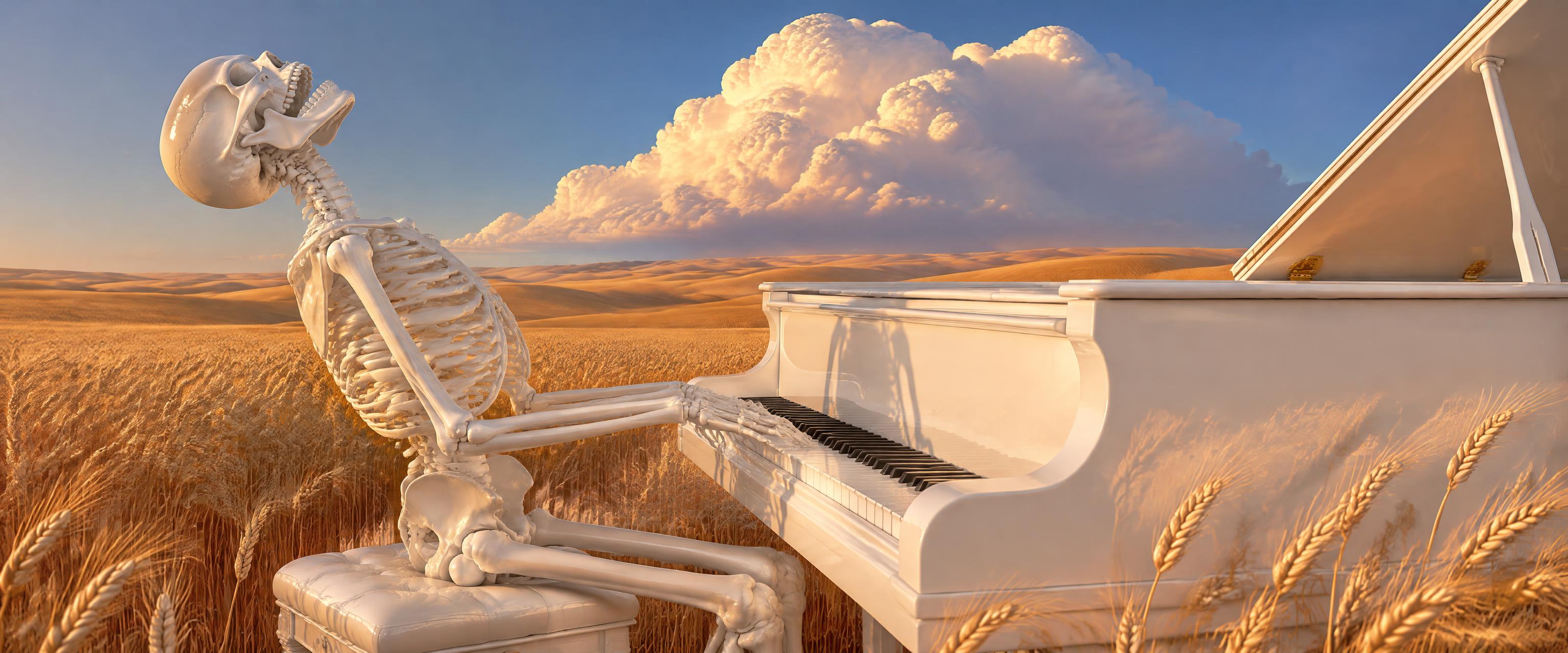
Google's Nano Banana 2.1 — the latest conversational image generation and editing model, succeeding Nano Banana 2.

image
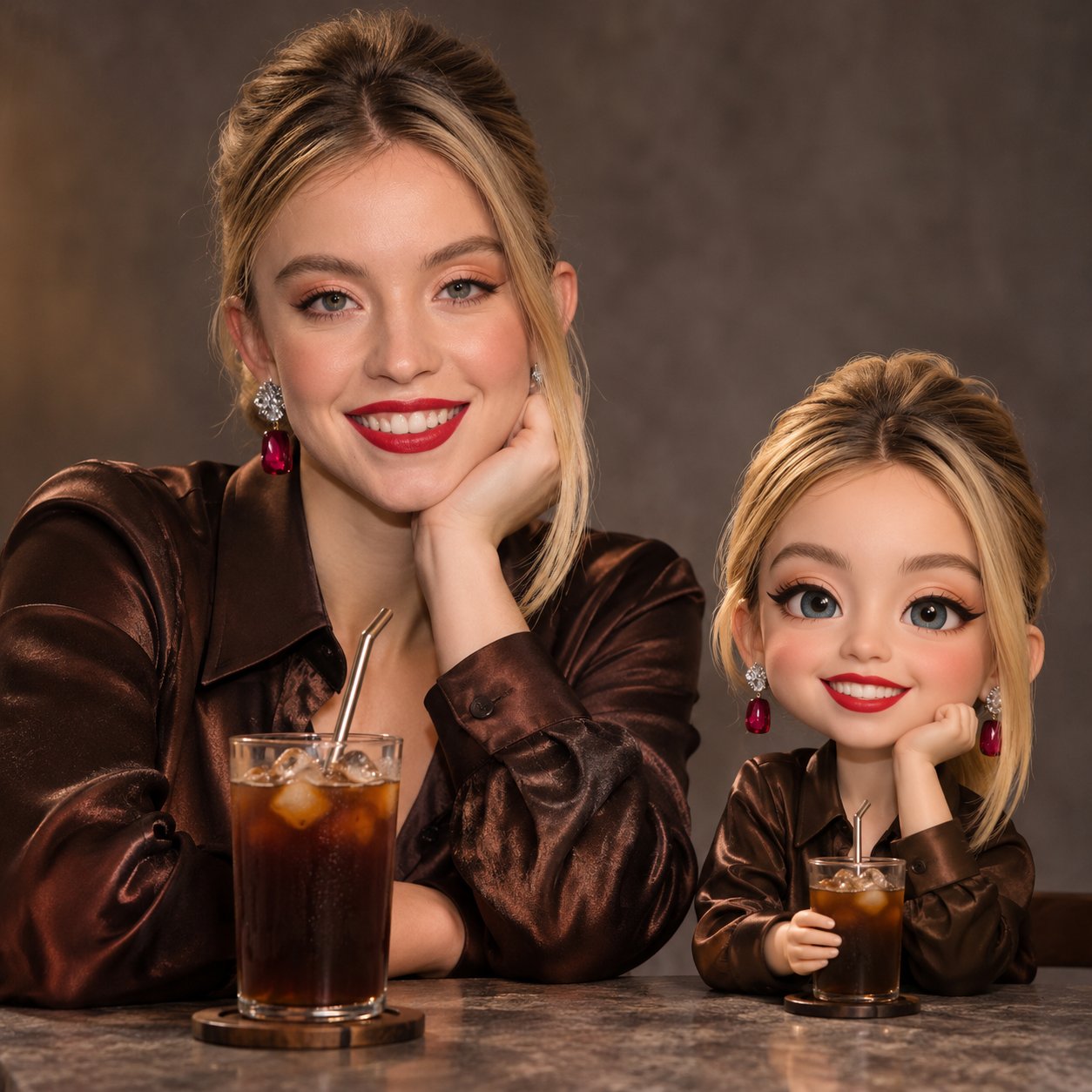
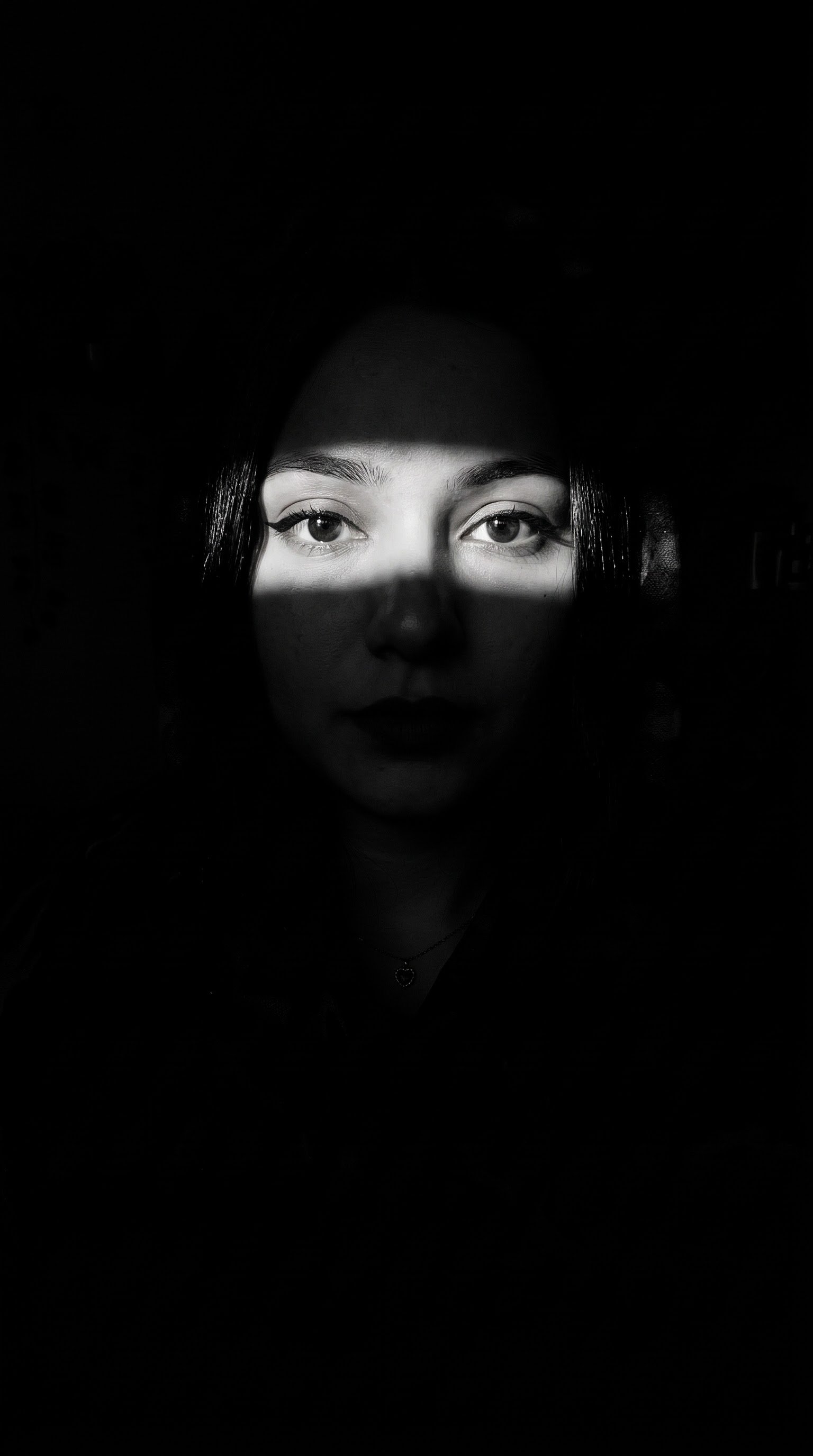
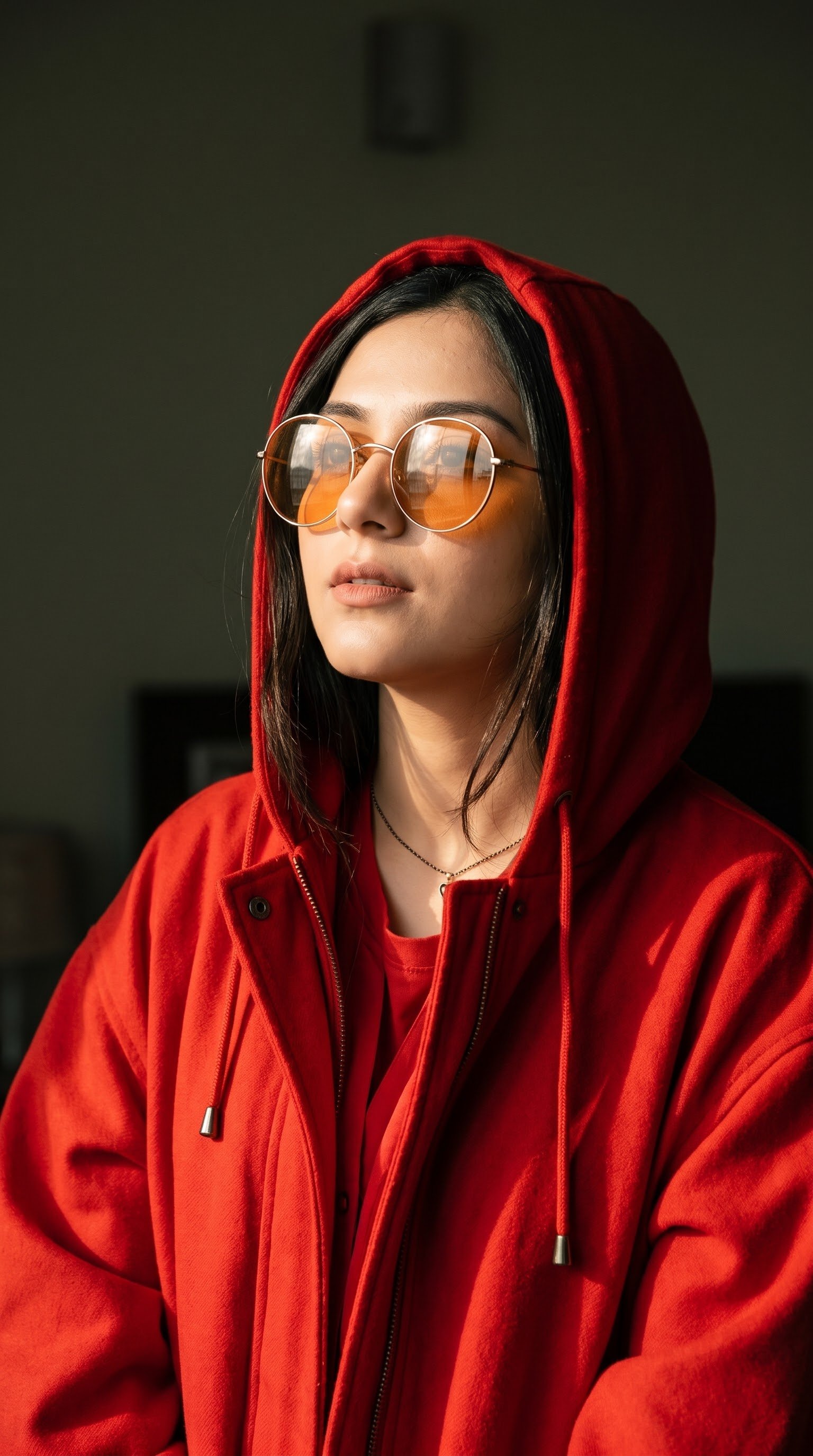
Create an ultra-realistic cinematic fashion editorial portrait using the uploaded reference image as the ABSOLUTE SOURCE OF TRUTH for the subject's identity. IDENTITY LOCK — ALR: Preserve the subject's exact facial identity, facial structure, proportions, eyes, nose, lips, jawline, skin tone, and all distinctive features. Maintain unmistakable facial resemblance with zero identity drift. Do not beautify, reinterpret, or alter the face. SCENE & POSE: A vertical medium close-up portrait, photographed from a slightly low angle. The subject stands in a three-quarter pose, chin slightly raised, gazing upward toward the left with a calm, confident expression and slightly parted lips. STYLING: Oversized vibrant red hooded jacket with a front zipper, adjustable waist drawstrings, layered red clothing, and a delicate dark necklace with a small metallic pendant. Oversized round sunglasses with thin metallic frames, translucent amber-orange lenses, and realistic environmental reflections. LIGHTING & ATMOSPHERE: Warm directional sunlight from the upper left, illuminating the face and clothing with rich amber highlights and dramatic deep shadows. Dark muted olive-gray indoor background. PHOTOGRAPHY: Ultra-realistic cinematic fashion photography, natural skin texture, detailed fabric folds, realistic reflections, dramatic chiaroscuro lighting, warm cinematic color grading, 85mm portrait lens, shallow depth of field, vertical 9:16 composition. STRICT RULE: The reference image controls facial identity exclusively. Never change, replace, or reinterpret the subject's identity.
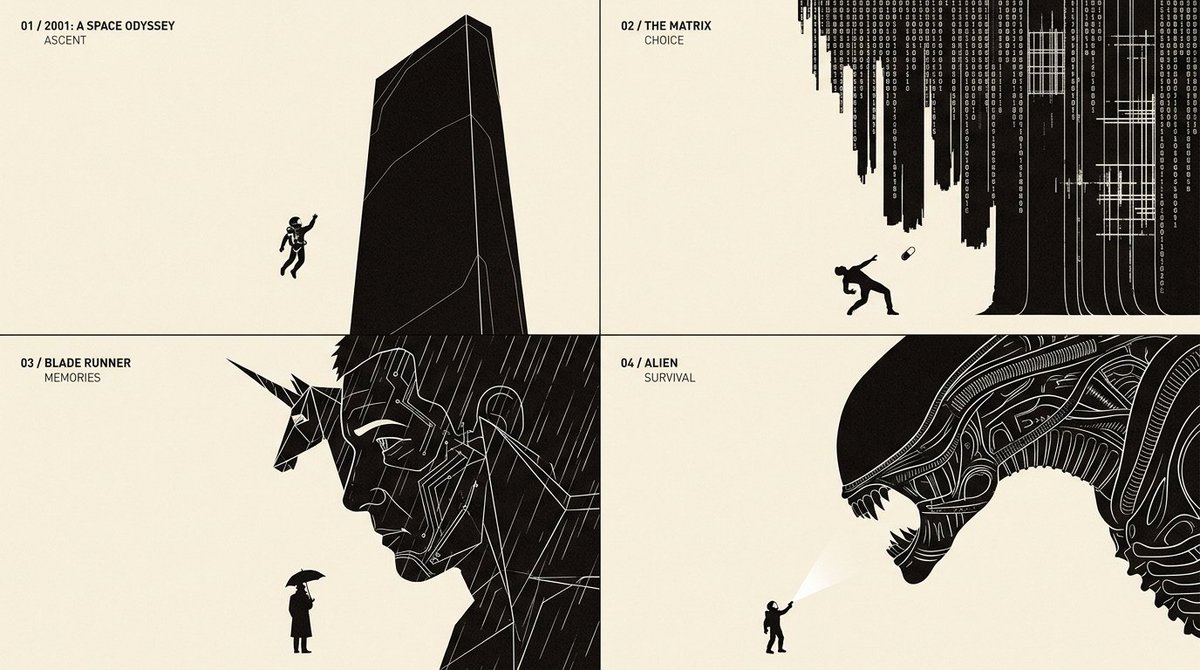
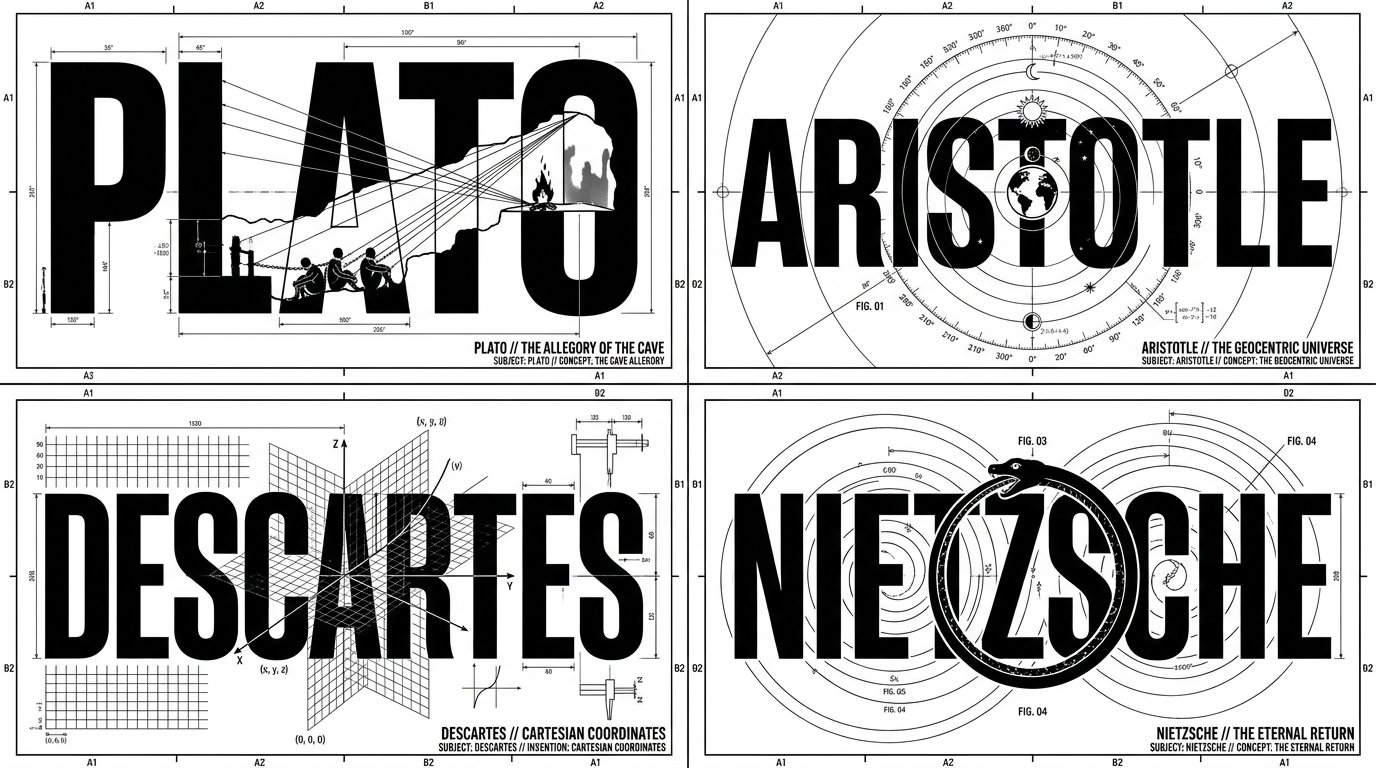
2x2 grid, 16:9, do this for 4 famous scifi movies: class UniversalEditorialMetaphor: def __init__(self, topic): self.topic = topic self.semantics = infer_semantic_structure(topic) self.thesis = infer_visual_thesis(topic) self.mood = infer_editorial_tone(topic) self.metaphors = generate_candidate_metaphors( topic, count=12 ) self. best_metaphor = self. select_best_metaphor() def select_best_metaphor(self): return max( self.metaphors, key=lambda m: 0.35 * semantic_accuracy(m) + 0.25 * conceptual_originality(m) + 0.25 * visual_clarity(m) + 0.15 * silhouette_strength(m) ) def visual_actors(self): return { "primary": infer_dominant_form( self. best_metaphor ), "secondary": infer_consequence_or_partner( self. best_metaphor ), "interaction": infer_decisive_action( self. best_metaphor ) } def composition(self): return { "geometry": "asymmetric", "primary_scale": "monumental", "secondary_scale": "small", "camera": "flat editorial orthographic", "cropping": "dramatic boundary intrusion", "negative_space": "dominant", "focal_point": "physical interaction" } def typography(self): return { "heading": derive_chapter_title(self.topic), "embedded_word": infer_single_action_label_if_needed( self.topic ), "density": "minimal" } def render_style(self): return { "background": "warm ivory", "foreground": "near-black", "interior_lines": "fine white contours", "shadows": None, "gradients": None, "texture": "minimal editorial print", "format": "wide conceptual illustration" } def render(self): return compose( actors=self.visual_actors(), metaphor=self. best_metaphor, layout=self.composition(), typography=self.typography(), style=self.render_style() ) FINAL_IMAGE = UniversalEditorialMetaphor( topic="[TOPIC]" ).render()
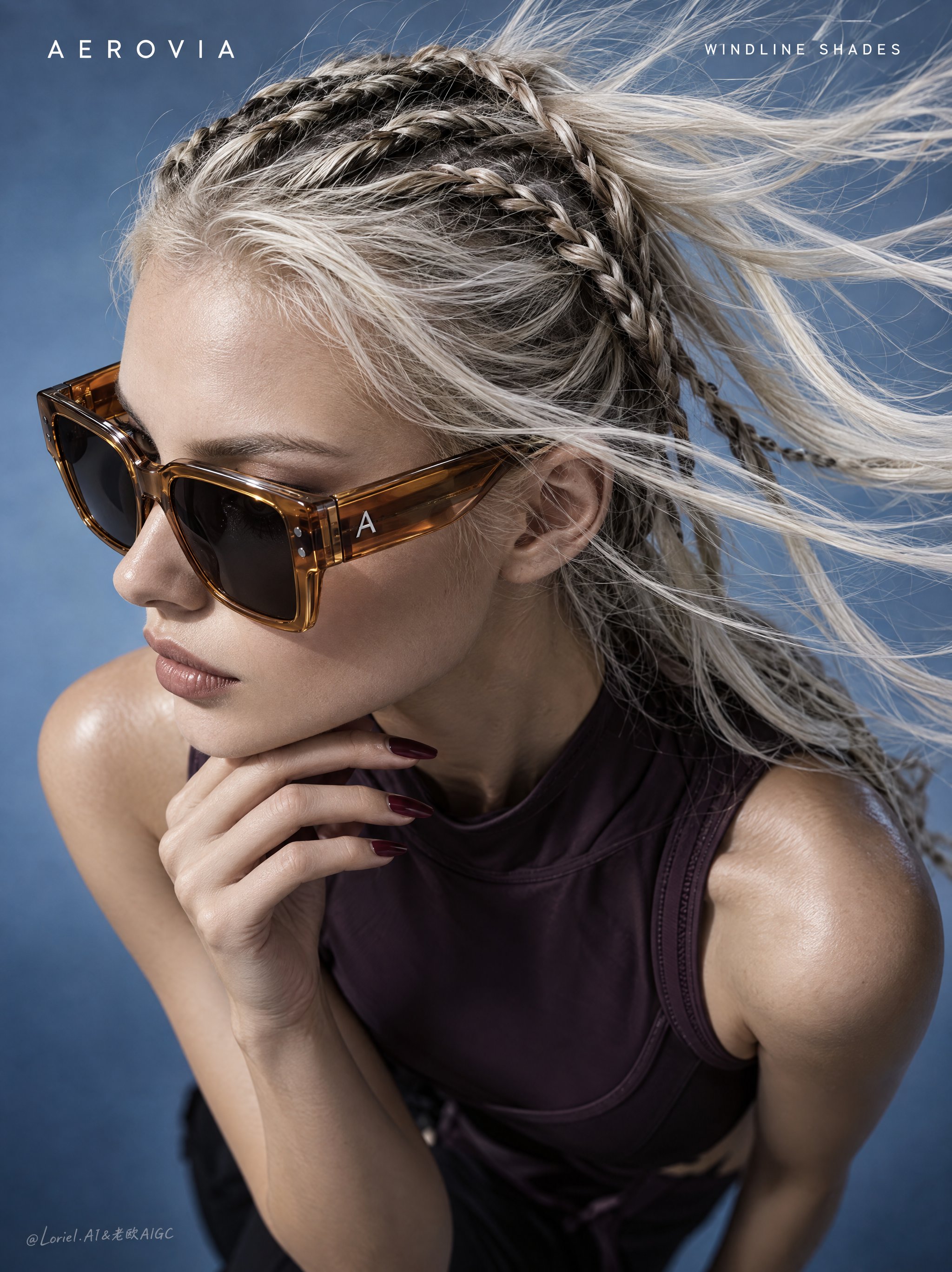
A full-bleed vertical luxury eyewear poster for the original overseas brand "AEROVIA", combining wind-driven profile tension, precise eyewear-and-hair detail, and a reduced curatorial layout. The hero product is the "WINDLINE SHADES": oversized translucent amber sunglasses shown in high-fashion studio photography from an extreme high overhead three-quarter angle. Show an adult female model, clearly over 20, in a left-facing profile with head slightly lowered, cropped from head and flying hair to upper torso. The face, sunglasses, and hand form a compact diagonal from upper left to lower center. One hand rests under the chin with elongated fingers and deep burgundy nails, staying below the jawline and away from the lenses. The sunglasses must be the sharpest element: oversized square frames with warm translucent amber acetate rims, thick sculpted temples, dark smoke lenses, black hinge details, and a tiny original silver "A" mark on the side arm. Keep rim thickness, bridge form, hinge pins, temple connection, lens reflections, and face contact structurally believable. Hair is platinum blonde in tight dark-and-blonde braids wrapping the scalp, with loose wind-blown strands sweeping toward the upper right as the main motion cue. A sleeveless dark plum technical top remains secondary and acts only as a grounding mass. Use a minimal cool blue-gray gradient studio background with no props or scenery. Depth comes from the overhead angle, floating hair strands, hand-to-face overlap, the sunglass silhouette, and soft falloff under the shoulders. Lighting is hard-soft studio light from the upper left, creating highlights on the amber acetate, cheekbone, platinum strands, burgundy nails, and shoulder, with cool fill preserving shadow detail. Color hierarchy: blue-gray background as the dominant field, amber sunglasses as the hero accent, platinum hair as motion highlight, dark plum top as the grounding tone, burgundy nails as a small secondary accent. Keep highest detail on the eyewear and hair: glossy amber acetate, smoke lens reflections, hinge pins, temple edges, bridge geometry, braided texture, loose strands, and clean hand contact near the jaw. Skin stays realistic with natural editorial texture. Hair edges remain fine and separated. Exact visible text only: Top-left: "AEROVIA" Top-right: "WINDLINE SHADES" Typography: small white uppercase sans serif with wide spacing, placed in the upper corners away from the face, hair, hand, and sunglasses. Negative constraints: no distorted profile, broken sunglass geometry, missing temples, extra hands, distorted fingers, impossible neck angle, or hair covering the eyewear; no plastic skin, muddy amber acetate, dead black lenses, smeared hair, flat light, or dirty background; no copied real logos, misspelled "AEROVIA", extra text, gibberish marks, or typography over the face or sunglasses; no street background, excessive jewelry, sci-fi interface, painterly drift, collage artifacts, or low-quality eyewear edges.
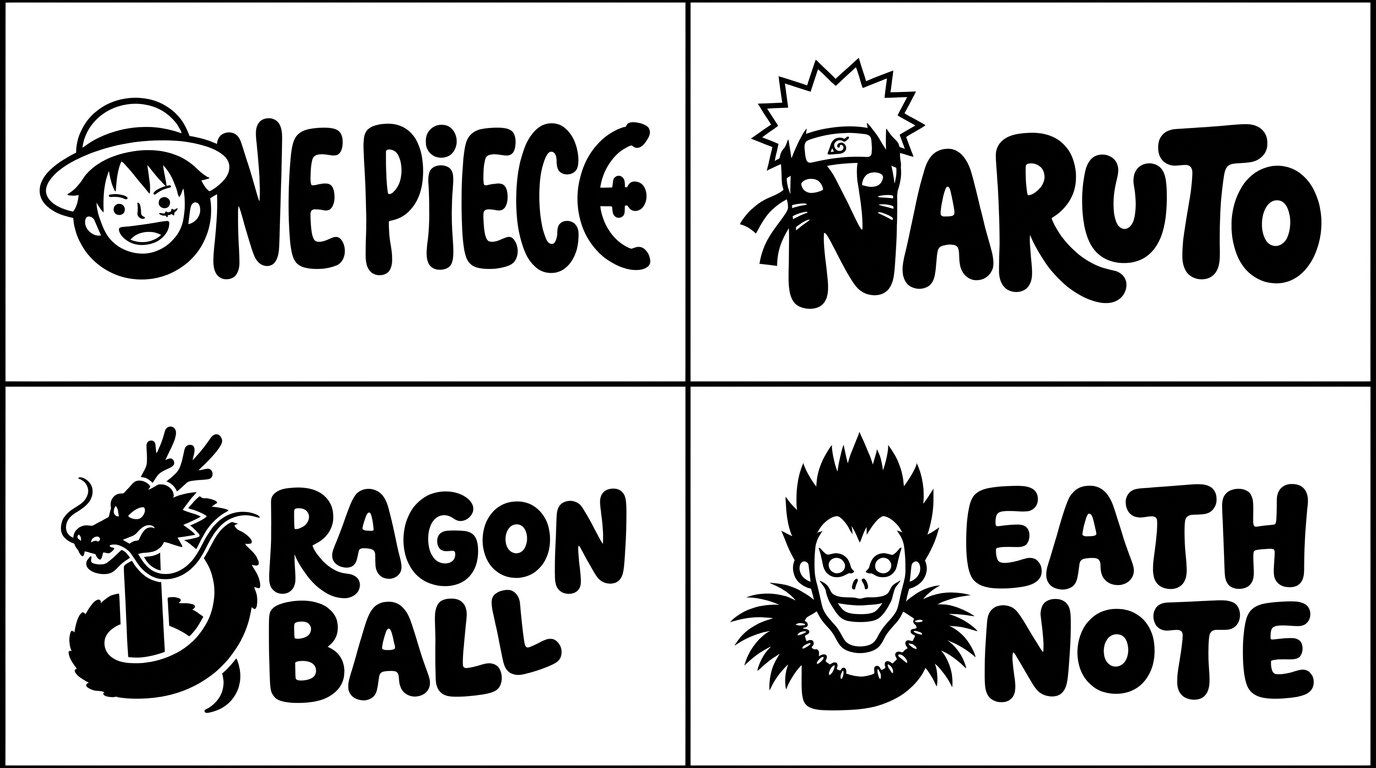
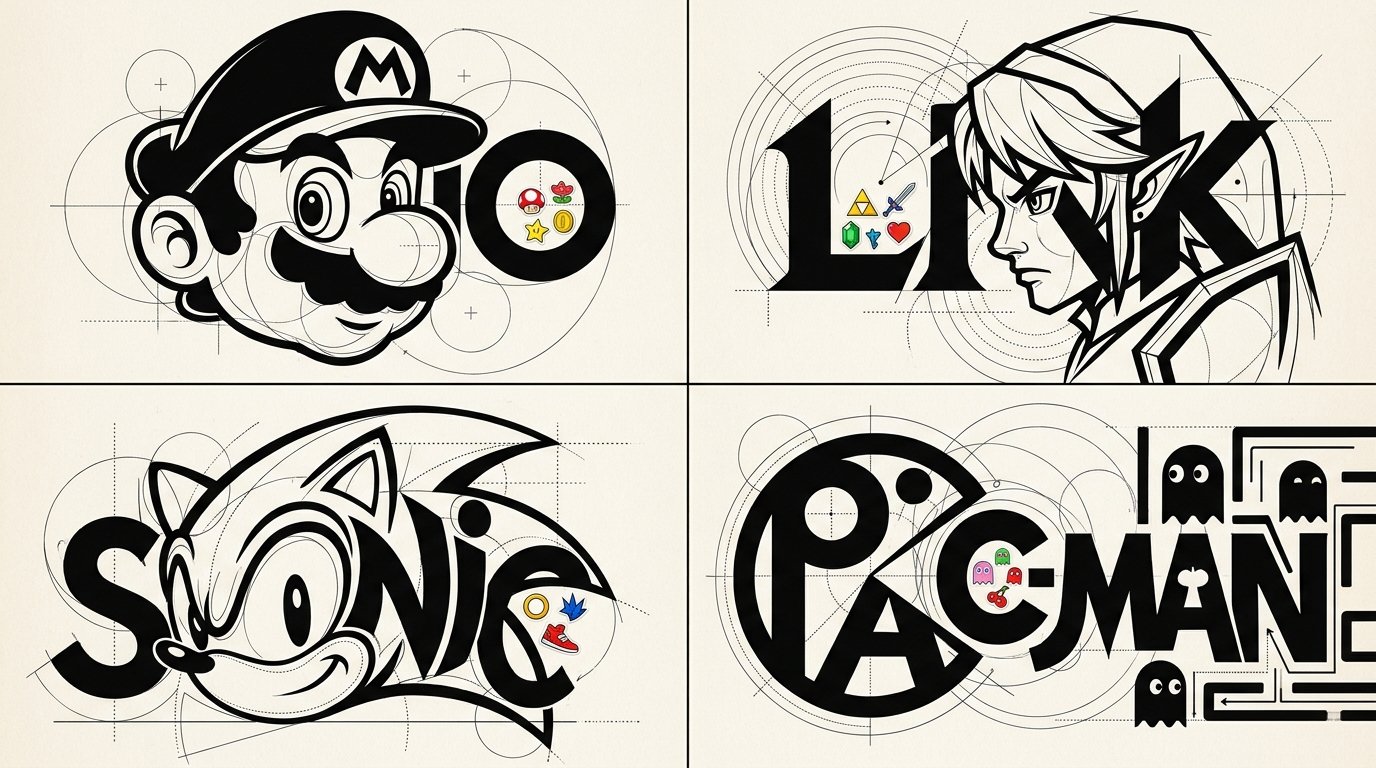
2x2 grid, 16:9, do this for 4 famous games: STYLE: LIVING LETTERFORM CARICATURES Create an experimental typographic character design of [SUBJECT] where recognizable anatomy and lettering become one unified graphic sculpture-like illustration. C₀ IDENTITY PRESERVATION Identify the subject's most recognizable physical features, including hairstyle silhouette, nose, eyes, jawline, eyebrows, and signature expression. Reconstruct these characteristics using geometric letterforms and controlled negative space. The viewer should recognize both the subject and the typographic construction. ¬C₀ = generic mascot face / unrelated character silhouette / completely abstract identity. C₁ TYPOGRAPHIC ANATOMY FUSION (master) Use the subject's name or recognizable initials as the primary structural foundation. Construct the head, hair, eyebrows, eyes, nose, mouth, and signature facial geometry through carefully manipulated typographic forms. Transform letter counters into eye shapes, rounded glyphs into facial masses, vertical stems into necks or structural elements, and curved strokes into hair or facial contours. Allow the letters and character features to share physical boundaries. The character and typography must feel inseparable rather than layered independently. ¬C₁ = portrait placed above a logo / unrelated typography / conventional wordmark / generic illustrated character. C₂ CONSTRUCTIVIST GEOMETRIC ENGINEERING Surround key forms with precise thin-line circles, overlapping arcs, tangent guides, crosshair marks, dotted construction paths, baseline grids, and small alignment points. Use dramatic contrasts between massive filled black typographic forms and delicate hairline geometric construction elements. Every guide should appear to explain how the character's visual geometry was constructed. ¬C₂ = random decorative circles / excessive technical clutter / inconsistent alignment / meaningless geometry. C₃ MICRO-STICKER INTERRUPTIONS Introduce isolated concentrations of small colorful cartoon stickers inside selected letter counters, along typographic edges, or within intentional negative spaces. Stickers should reference the subject's personality, career, recognizable accessories, or visual identity. Keep approximately 80–90% of the overall composition monochromatic, with sticker accents creating surprising pockets of color. Sticker illustrations should use bold outlines, simple expressive faces, and compact shapes. ¬C₃ = full-page sticker wallpaper / stickers covering the face / unrelated doodles / random colorful decoration. C₄ GRAPHIC MINIMALISM + CONTROLLED COLOR Primary palette: pure black and warm white. Use one or two subject-adaptive accent colors within the sticker clusters. Typography should use exceptionally heavy geometric letterforms, clean sharp edges, strong negative space, and selective high-contrast curved structures. Background remains clean and pale. ¬C₄ = full rainbow palette / photoreal textures / 3D material shaders / glossy effects / elaborate gradients. C₅ EXPERIMENTAL IDENTITY POSTER Square or portrait editorial composition. Make the fused character-wordmark occupy most of the image. Preserve generous white space around the central construction. Integrate delicate registration geometry without obscuring the primary lettering. The final artwork should function both as a recognizable character illustration and a distinctive experimental identity mark. ¬C₅ = ordinary portrait / dense stickerbomb background / realistic scenery / conventional logo placement. η HONEST GRAPHIC RENDER Precisely engineered curves, confident typography, mathematically inspired geometry, clever facial abstraction, seamless letter-character integration, clean high-contrast shapes, and crisp print quality. FORBIDDEN = ordinary text under a portrait · generic icon · excessive color · random stickers · unrelated geometric symbols · photorealism · generic cartoon avatar · 3D CGI · watermarks.
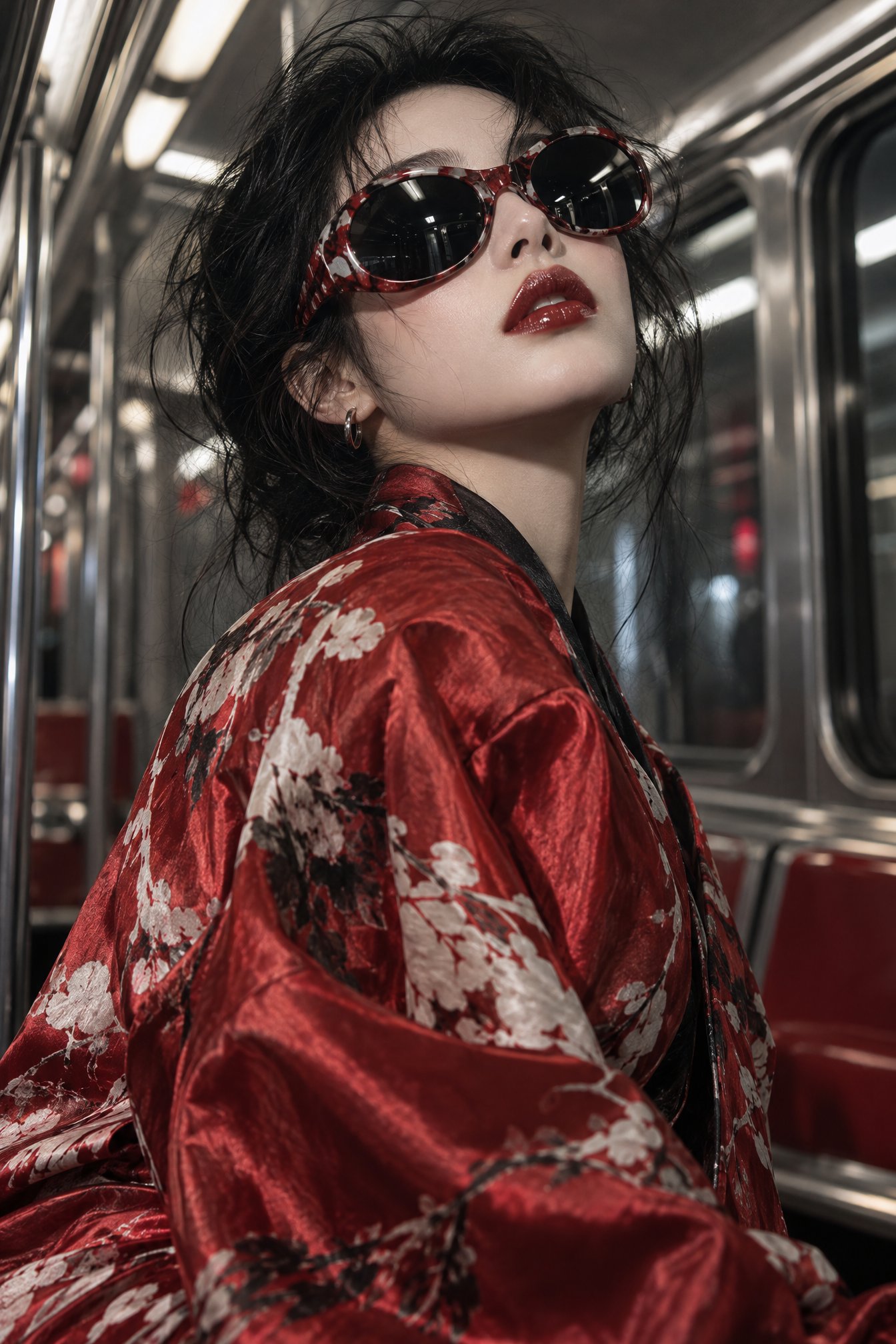
Create an ultra-realistic, cinematic avant-garde fashion editorial portrait of a mysterious young woman inside a modern subway train. MAIN SUBJECT & APPEARANCE: A young woman with delicate facial features, smooth porcelain-like fair skin, a softly defined jawline, a small nose, and full, glossy cherry-red lips. Her head is slightly tilted backward, with her chin raised and face turned subtly toward the camera. Her expression is confident, mysterious, and effortlessly rebellious. She has voluminous, messy, naturally textured black hair, loosely tied back with several wispy strands falling across her forehead, temples, and cheeks. The hairstyle should feel intentionally undone, creating a raw editorial fashion aesthetic. SUNGLASSES & ACCESSORIES: She wears oversized, dramatic, oval-shaped black sunglasses with extremely dark reflective lenses. The frames feature an unusual translucent red, black, and white marbled pattern with an irregular artistic texture. The glasses dominate her upper facial features and create a bold fashion statement. A small metallic hoop earring is visible on her ear, adding a subtle detail to the styling. CLOTHING: She wears an oversized, vibrant scarlet-red silk-like kimono-inspired jacket with a loose, flowing silhouette. The garment features large, irregular white floral and abstract botanical patterns mixed with darker red organic textures. The fabric has a slightly glossy appearance, with visible folds, natural wrinkles, and reflective highlights. The red garment occupies a significant portion of the foreground, creating a striking visual contrast against the dark subway interior. POSE & BODY LANGUAGE: A low-angle, three-quarter portrait composition. Her shoulders are slightly turned away from the camera while her head rotates back toward it. Her chin is raised, exposing the elegant line of her neck. Her posture feels relaxed, powerful, and fashion-forward. ENVIRONMENT & BACKGROUND: Interior of a modern subway train or metro carriage. The background contains dark metallic architectural panels, curved structural elements, horizontal fluorescent ceiling lights, and subtle reflections on the surrounding surfaces. A bright cool-white fluorescent light strip runs diagonally across the upper background. Additional horizontal lighting elements create depth. Near the lower-left background, two vivid red illuminated horizontal light strips add a futuristic urban atmosphere. The environment should feel enclosed, moody, industrial, and slightly futuristic. LIGHTING & ATMOSPHERE: High-contrast cinematic lighting with cool fluorescent illumination from above and behind the subject. The bright overhead lighting creates subtle highlights along her cheekbones, nose, lips, sunglasses, and glossy clothing. Her hair and parts of the background fall into deep shadows. Use a mixture of cold cyan-blue ambient lighting and dramatic red accents. Preserve the slightly underexposed, atmospheric quality of the original scene. COLOR PALETTE & COLOR GRADING: Dominant scarlet red, deep black, cool charcoal grey, icy cyan, and bright white. Apply a cinematic teal-and-red color grade with rich blacks, controlled highlights, slightly desaturated background tones, and highly saturated red clothing and lipstick. CAMERA & COMPOSITION: Vertical 9:16 portrait orientation. Medium close-up fashion photography, framed from approximately the upper torso to slightly above the head. Slightly low camera angle, looking upward toward the subject. Subject positioned centrally, with her face in the upper-middle portion of the frame. Strong diagonal architectural lines in the background. Shallow depth of field, with the subject sharply focused and the subway background softly blurred. Simulate professional full-frame fashion photography using a 50mm or 85mm portrait lens, wide aperture, realistic optical depth, and subtle film grain. ART DIRECTION & FINAL AESTHETIC: High-end underground fashion magazine editorial, experimental street fashion, avant-garde styling, cinematic urban photography, rebellious luxury aesthetic, raw fashion campaign, analog film-inspired texture, photorealistic skin details, realistic fabric rendering, sophisticated color grading, and dramatic atmospheric depth. The final image should look like an authentic high-fashion editorial photograph captured spontaneously inside a subway carriage, not a digitally rendered illustration. CRITICAL PRESERVATION INSTRUCTIONS: Maintain the oversized marbled sunglasses, messy black hairstyle, glossy red lips, vivid red-and-white patterned oversized garment, upward head tilt, low-angle camera perspective, dark subway environment, cool fluorescent ceiling lights, and red background light accents. These elements define the visual identity of the reference image.
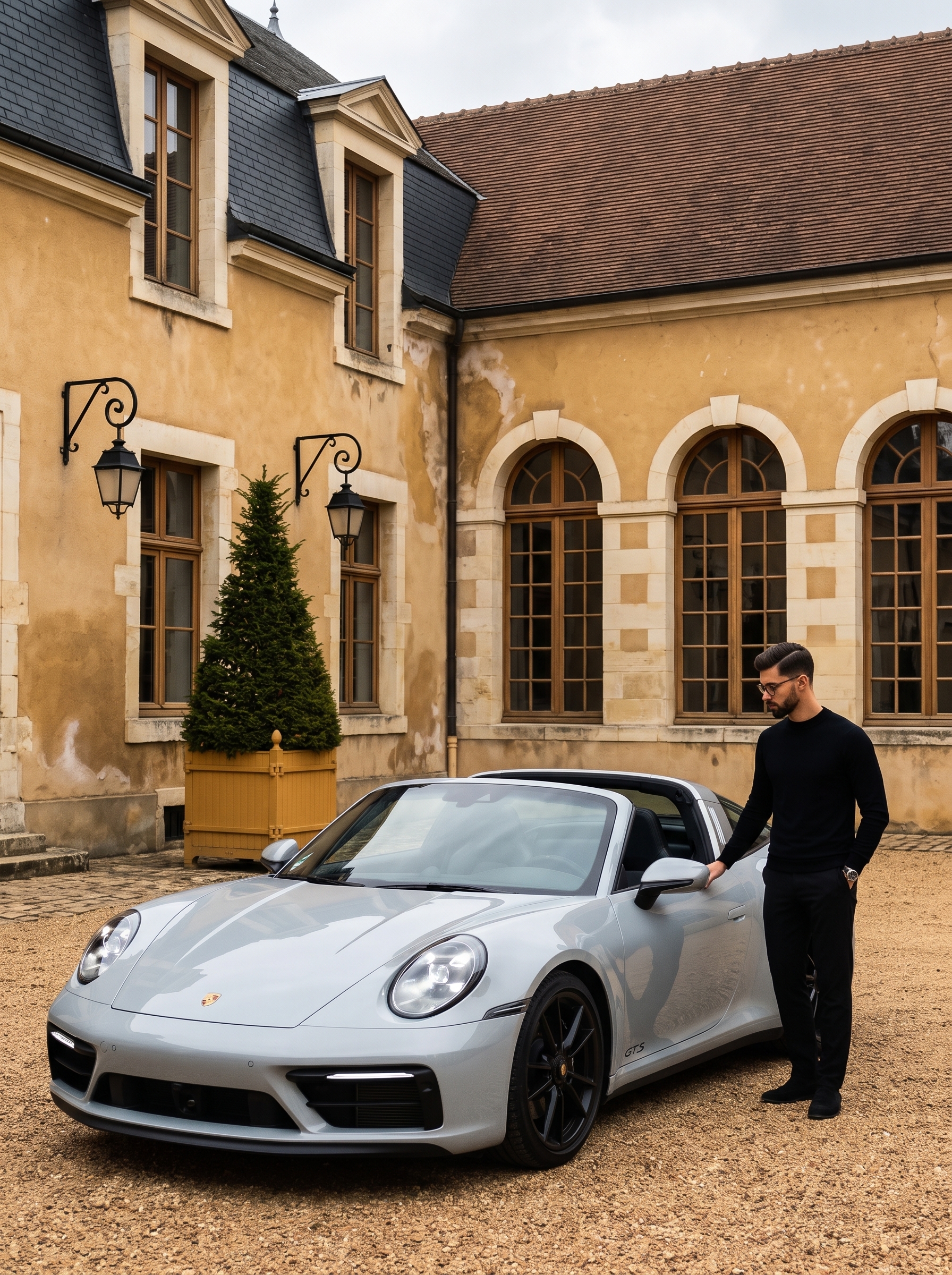
A young man in a jet-black (#141414) long-sleeve sweater and tailored trousers stands at a 45-degree angle with level shoulders and centered weight in the right midground. His dark brown hair features a tapered side-part cut trimmed neat above the ears, swept right from a left part with a matte finish, slight volume, and loose forehead strands. Projecting a posed, confident emotion, he has neutral eyebrows, closed lips, and gazes down and left behind glasses, while his relaxed left hand, wearing a wristwatch, rests lightly on the open driver-side window frame. Dominating the lower-left foreground on warm tan and beige solid gravel is a pristine, ice-gray metallic (#C5CCD4) Porsche 911 Targa GTS (992) with black wheels, a brushed silver Targa roll bar, a hood crest, and bold sans-serif GTS side-skirt badging. Behind them rises an aged French chateau courtyard facade of slightly textured, matte warm ochre yellow (#B48A5A) plaster with patchy color variation, lower-base damp staining, and cream limestone quoins and surrounds. The building features three tall arched multi-pane wooden windows on the right wing beneath a terracotta brown (#7D4E38) clay tile roof, and a left section with a charcoal slate (#2F353B) mansard roof, dormers, two upper rectangular windows, two vintage black scrolled wrought-iron hexagonal lanterns, and a thriving conical conifer (Picea or Thuja) in an ochre wooden planter box between ground-floor windows. Diffused, soft overcast sky lighting and warm golden ambient fill pair with the car's glowing 4-point LED headlights to create a sophisticated, low-contrast atmosphere with short, soft-edged gray shadows beneath the car and eaves, plus specular highlights across the glossy hood, windshield, headlight housing, and Targa bar. Captured in a two-point perspective using rule-of-thirds asymmetric composition, this realistic digital editorial photograph evokes old-money European luxury with tack-sharp focus and a deep depth of field at 35mm, f/5.6, 1/250s, and ISO 200, finished with warm color grading, clean metallic highlight roll-off, and crushed blacks, framed in a 3:4 aspect ratio.
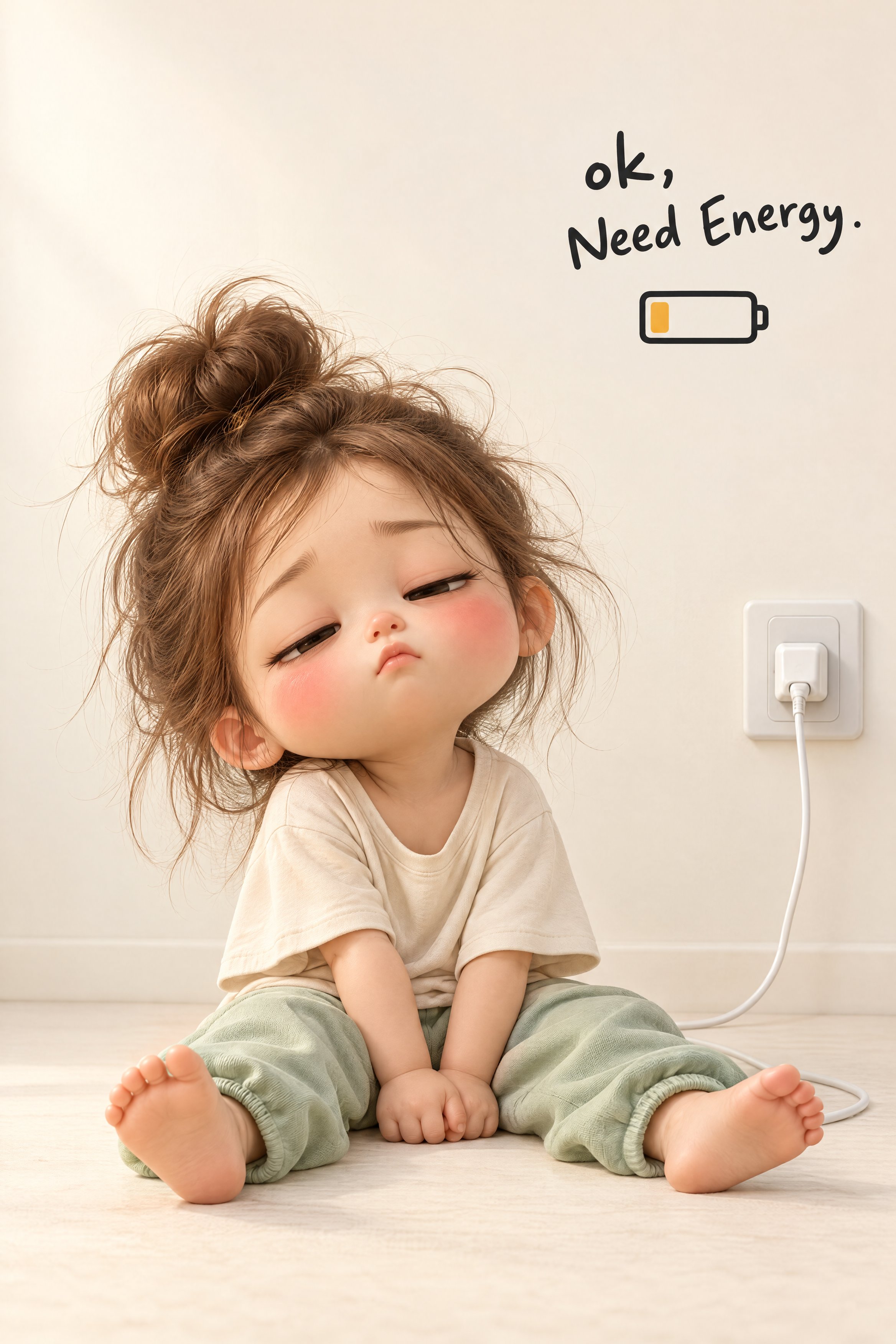
Create an adorable, premium-quality 3D chibi-style illustration of a sleepy little toddler girl sitting beside an oversized white pause button, visually representing the feeling of wanting to stop everything and take a break. A tiny, adorable toddler girl with an oversized rounded head, delicate childlike proportions, and soft, porcelain-like skin. Her facial features include: Large, expressive dark-brown eyes, almost completely closed. Delicate black eyelashes. Soft, naturally rosy cheeks with a prominent pink blush. A tiny button nose. Small, gently puckered pink lips. Thin, delicate eyebrows. Smooth, peach-toned skin with subtle natural highlights. Small, rounded ears. Her dark chocolate-brown hair is styled in a messy, voluminous high bun. Several loose, wispy strands escape around the bun and frame her forehead, temples, and cheeks. Her expression communicates complete relaxation, sleepiness, and peaceful exhaustion. Her eyes are gently closed, her lips slightly pursed, and her head rests sideways against the large white object. The toddler wears a soft pastel-pink pajama set. The outfit includes: A long-sleeved pink pajama top with delicate white piping around the collar and sleeve edges. Matching loose pink pajama trousers. Soft cotton-like fabric with subtle wrinkles and natural folds. She is barefoot, with tiny feet and realistically rendered little toes. She holds a small cream-white plush cushion shaped like a rounded flower or decorative pillow. The cushion has a soft, padded appearance, subtle pale-pink speckles, and a small flower-shaped cushion detail visible near her legs. The toddler sits on the floor with her legs extended forward and slightly bent. Her back and head lean comfortably against the large white pause button. Both hands gently hold a small cream-colored cushion against her stomach. Her shoulders are relaxed, her head tilts slightly toward the large object, and her eyes remain peacefully closed. Her entire body language should communicate that she has mentally switched off and wants to rest. A large, minimalist, white 3D rectangular button occupies the right side of the composition. The object resembles an oversized computer keyboard key or a physical pause button. Its characteristics: Large, chunky, rectangular form. Smooth, glossy white surface. Rounded corners and gently curved edges. Slightly elevated top surface. Thick, solid white sides. Softly reflective highlights. Subtle shadows around its base. On the upper surface, prominently display the exact word: "Pause" Use large, bold, black, clean sans-serif typography. The word should be centered on the top surface, following the slight perspective and angle of the button. The toddler leans against this oversized button, making the object appear like a physical symbol of taking a break from life. Include a second text element near the lower-right area of the composition. The exact wording should be: "life on pause ♡" Use small, lowercase, dark-grey handwritten-style lettering. The typography should resemble casual, slightly imperfect handwriting with natural spacing between letters. Include a small outlined heart symbol at the end. Keep the lettering delicate and minimal. A seamless, warm ivory-white studio environment. The background and floor blend together without visible corners or distracting architectural elements. The toddler and oversized pause button rest directly on the smooth floor. There should be no additional furniture, decorative objects, or unnecessary background details. Maintain generous empty space, especially across the upper half of the image. Vertical 9:16 portrait orientation. Front-facing, slightly low camera perspective. Toddler positioned in the lower-left portion. Oversized pause button positioned on the lower-right side. The toddler's head and shoulder gently touch the button. Entire character and oversized button visible. Text "life on pause ♡" positioned below and slightly to the right of the button. Large areas of clean negative space above the main subjects. Balanced visual relationship between the character and the oversized button. The composition should feel like a minimalist premium 3D social-media illustration. Soft, diffused studio lighting from the upper-left/front direction. Gentle highlights on the toddler's forehead, cheeks, nose, hair, and pink pajamas. Soft reflective highlights across the glossy white pause button. Subtle contact shadows beneath the toddler's feet, body, cushion, and the large button. Use ambient occlusion around the contact points between the toddler and the button to create realistic depth. Avoid harsh shadows or dramatic lighting. Use a soft, warm pastel color palette: Warm ivory and creamy-white background. Glossy pure-white pause button. Pastel blush-pink pajamas. Peach and porcelain skin tones. Rosy-pink cheeks. Dark chocolate-brown hair. Cream-white cushion. Black typography. Muted charcoal-grey handwritten text. Keep the overall image warm, peaceful, minimal, and visually soothing. High-end 3D animated character illustration with a cute chibi aesthetic. Exaggerated toddler proportions, oversized expressive head, delicate facial details, beautifully rendered hair strands, soft skin shading, realistic cotton fabric, and smooth rounded geometry. Use: Subtle subsurface scattering. Physically based materials. Soft ambient occlusion. Realistic fabric folds. Smooth glossy plastic rendering. Delicate studio reflections. High-quality CGI character modeling. The result should resemble a professionally rendered collectible animated character in a premium lifestyle advertising campaign. Professional 3D product-illustration composition. Simulate a 50mm portrait lens perspective with minimal distortion, sharp focus across the
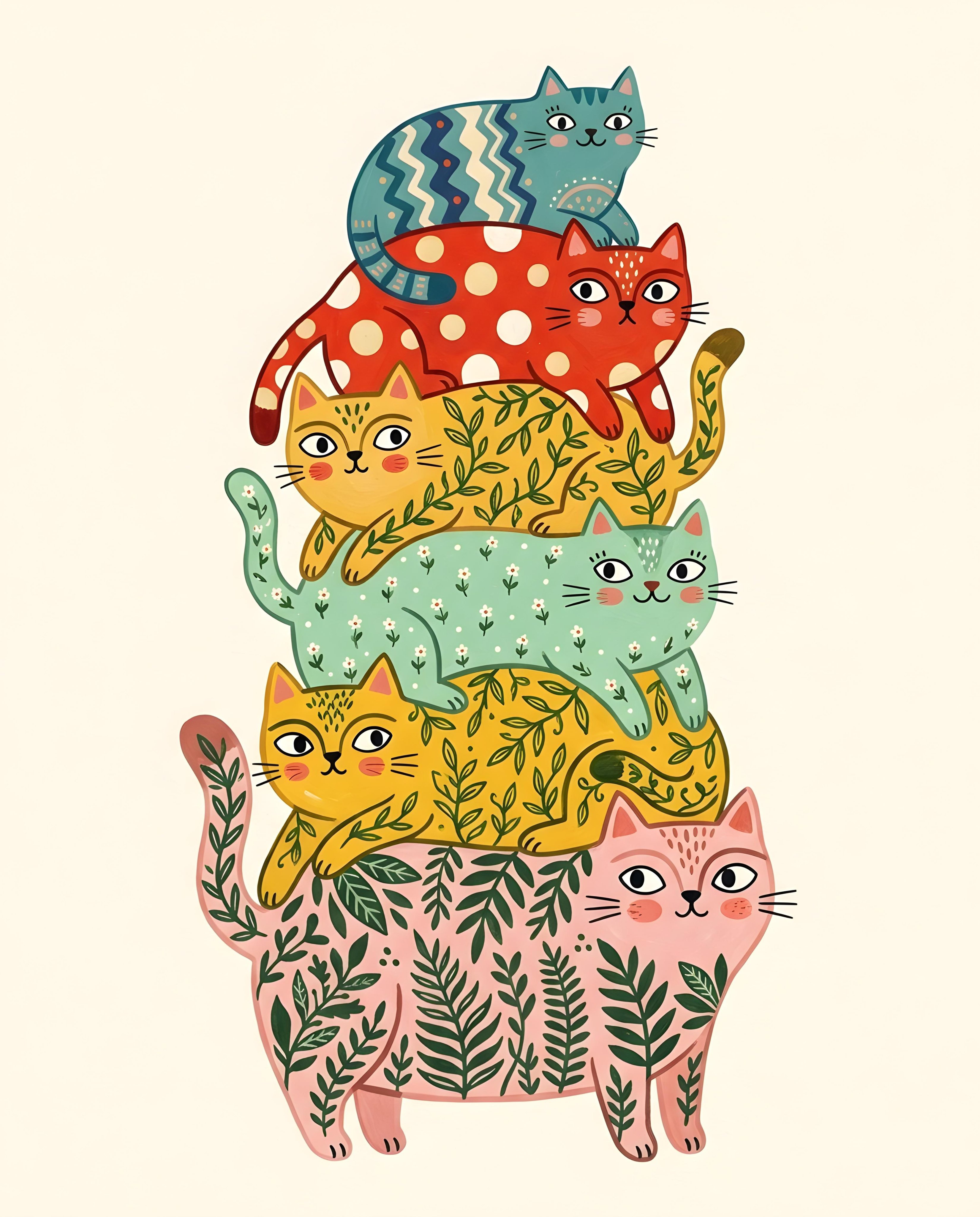
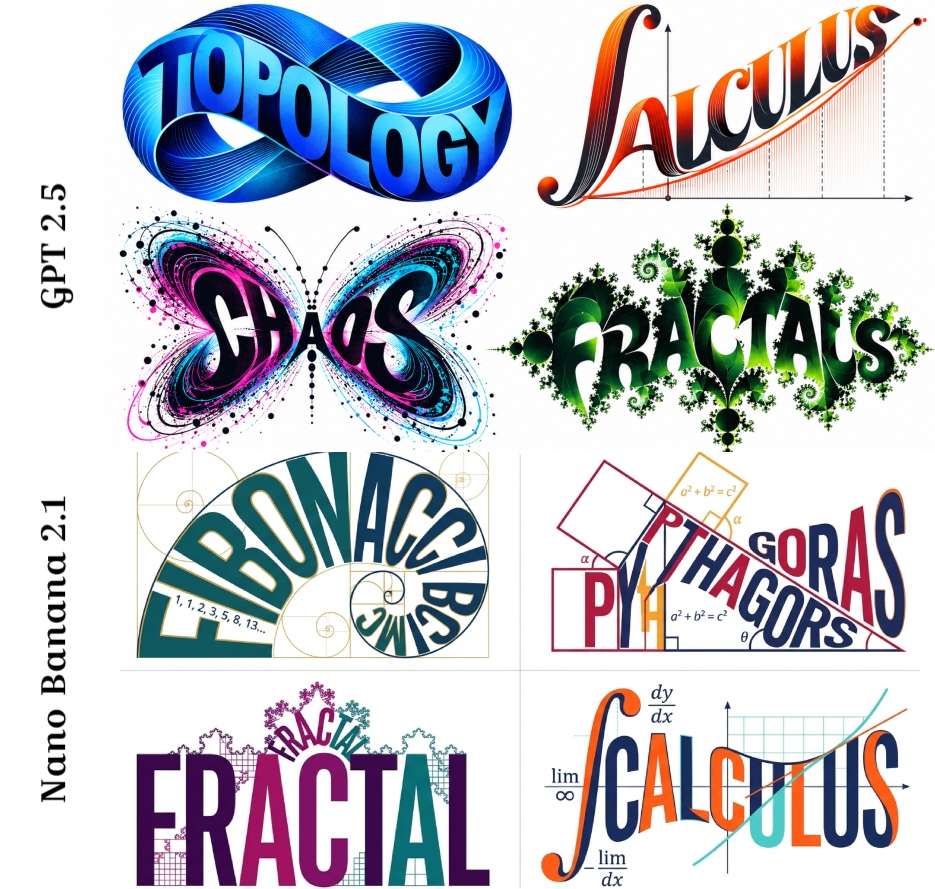
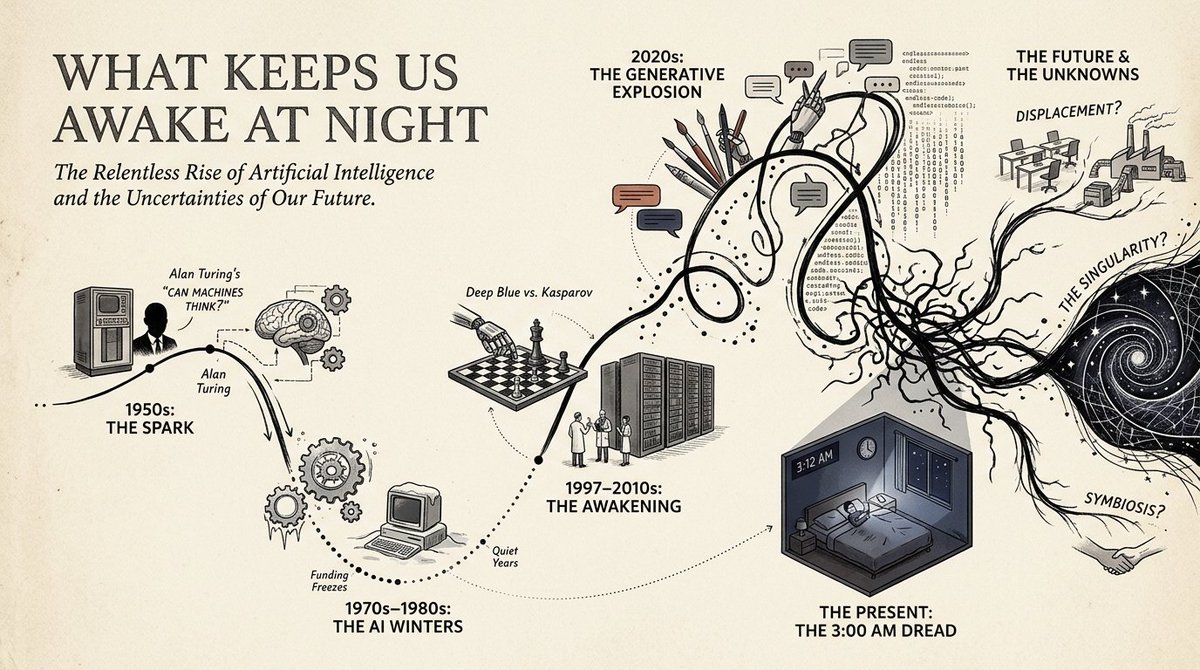
16:9, do this for a topic that keeps us awake at night: in this style= { CORE IDEA: Transform the subject into a chronological visual journey where a single wandering line travels through time, branching into illustrated milestones, cultural scenes, human moments, and symbolic turning points. MEDIUM: Editorial infographic × historical poster illustration × narrative timeline × miniature visual storytelling. BACKGROUND: Warm ivory or lightly textured archival paper. PALETTE: Mostly black, cream, muted gray, and one or two restrained accent families inferred from the subject. Important milestones may receive stronger localized color. TIMELINE: A continuous hand-drawn path flows horizontally or diagonally across the composition. The path may: loop, dip, accelerate, split, reconnect, flatten, or become chaotic according to the subject’s actual development. MILESTONES: Major stages become illustrated nodes attached to the line. Each node may contain: a person, profession, invention, object, event, environment, symbol, cultural artifact, breakthrough, setback, or transformation. - Analyze the subject and infer its most meaningful chronological stages rather than dividing time evenly. Convert the subject’s progression into one expressive continuous path whose shape reflects momentum, uncertainty, disruption, growth, decline, or reinvention. Reinterpret major milestones as compact illustrated vignettes placed above or below the path. Use simplified human figures, objects, architecture, tools, symbols, or environments to make each milestone immediately understandable. Convert abstract changes into visual path behavior: uncertainty → loops and knots, acceleration → steep directional movement, stability → long clean segments, disruption → sudden breaks or drops, divergence → branching routes, convergence → reconnecting paths. Use dotted vertical connectors to link timeline points with their illustrated scenes. Let early periods feel simpler and later periods become visually denser when the subject naturally grows in complexity. If the subject has competing trajectories, show multiple temporary paths before returning to one dominant storyline. Preserve substantial negative space so the journey remains readable rather than becoming a collage. Simplified editorial figures. Bold silhouettes mixed with minimal line drawing. Small architectural scenes. Iconic objects rather than detailed realism. Clear visual metaphors. Occasional large symbolic illustrations anchoring major transitions. PRIMARY: large subject title or concept. SECONDARY: milestone dates, eras, phases, or sequence markers. TERTIARY: very short explanatory phrases. VISUAL: the timeline and illustrations must communicate the story even if all secondary text disappears. Use one dominant timeline across the full composition. Alternate visual nodes above and below it. Reserve one end of the composition for the current or culminating state. Allow one particularly important milestone to become much larger than surrounding nodes. Keep text aligned to a disciplined editorial grid. - Intelligent narrative infographic. - Historical journey poster. - Human-centered, analytical, and visually approachable. - Feels like a magazine feature, museum wall graphic, and illustrated timeline combined. - Avoid generic evenly spaced timelines. - Avoid turning every event into the same-sized icon. - Avoid dense paragraphs. - Avoid meaningless decorative line movement. - Avoid purely corporate infographic aesthetics. - Avoid identical color intensity across every era. }
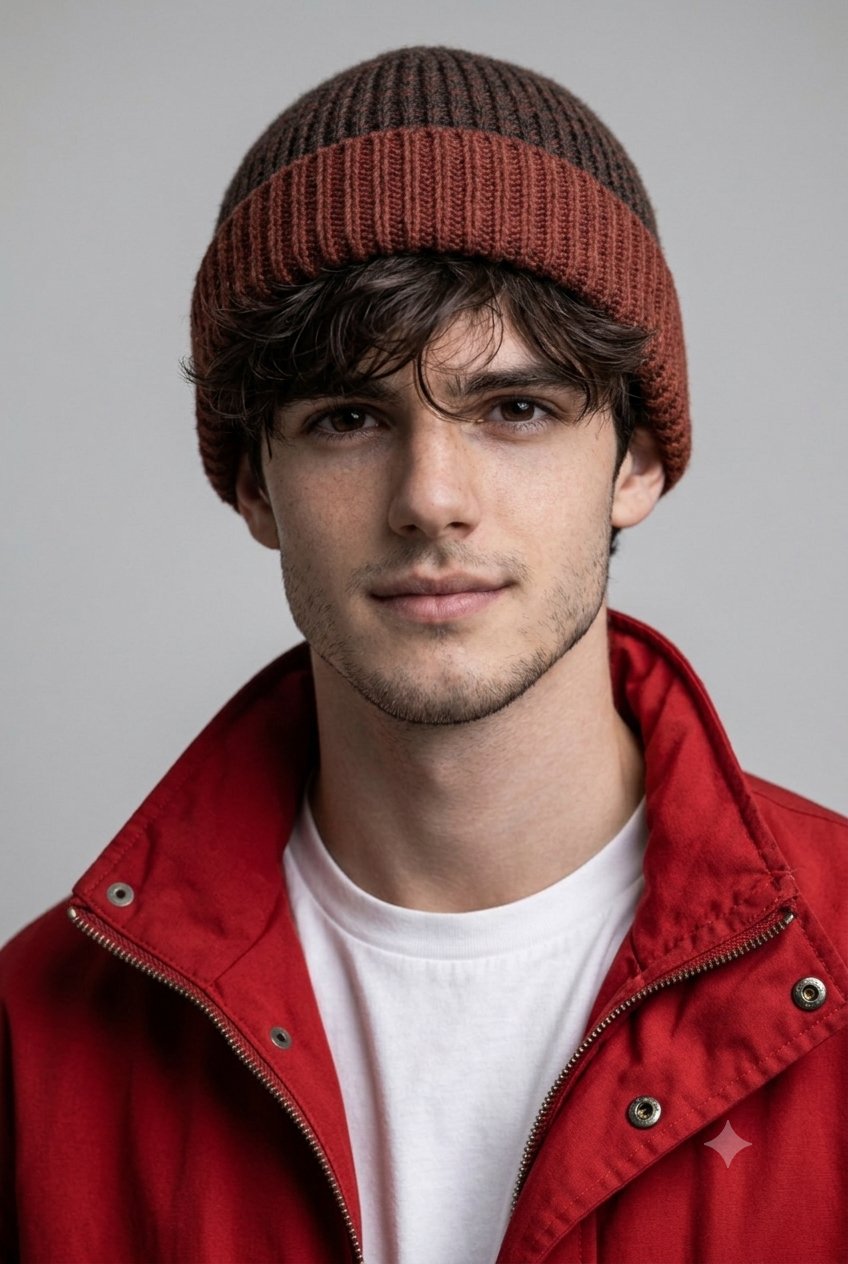
Create an ultra-realistic, high-end men's fashion editorial portrait of a handsome young man in his early 20s, with a naturally attractive appearance and a relaxed, slightly confident expression. Subject: A young man with thick, naturally wavy dark brown hair, soft curls falling across his forehead, defined eyebrows, warm natural skin tone, subtle freckles, a well-defined jawline, and realistic facial features. He has deep brown eyes and looks directly into the camera with a subtle, relaxed smile. Headwear: A dark brown and muted rust-red knitted beanie with a thick ribbed texture and a wide folded cuff, sitting naturally on his head. Some loose curls of hair are visible around his forehead and ears. Outfit: A vibrant red casual jacket with a slightly oversized fit, raised wide collar, front zipper, and visible metallic snap buttons. The jacket is worn partially open, revealing a clean white crew-neck T-shirt underneath. Pose and Expression: A close-up to medium portrait, with the subject's head slightly tilted to one side. His shoulders are relaxed, his body faces slightly toward the camera, and his eyes look directly into the lens. Natural, effortless masculine styling. Background: A simple, smooth light grey studio backdrop with subtle natural tonal variations and no distracting objects. Lighting: Soft natural studio lighting coming from the front-left side, creating gentle shadows across the face and highlighting the skin texture, hair, knitted beanie, and red jacket. Warm, balanced exposure with realistic shadows. Photography Style: Premium contemporary men's fashion campaign, minimalist editorial photography, candid yet polished aesthetic, authentic skin texture, natural imperfections, realistic fabric details, subtle cinematic color grading. Camera and Quality: Professional DSLR photography, 85mm portrait lens, f/2.8 aperture, shallow depth of field, sharp focus on the eyes, high-resolution details, vertical 2:3 composition, photorealistic quality. Important Details: Maintain natural facial proportions, realistic wavy hair, detailed knitted fabric, accurate red jacket texture, authentic skin pores, and natural lighting. Avoid plastic-looking skin, excessive retouching, artificial facial features, or CGI effects.
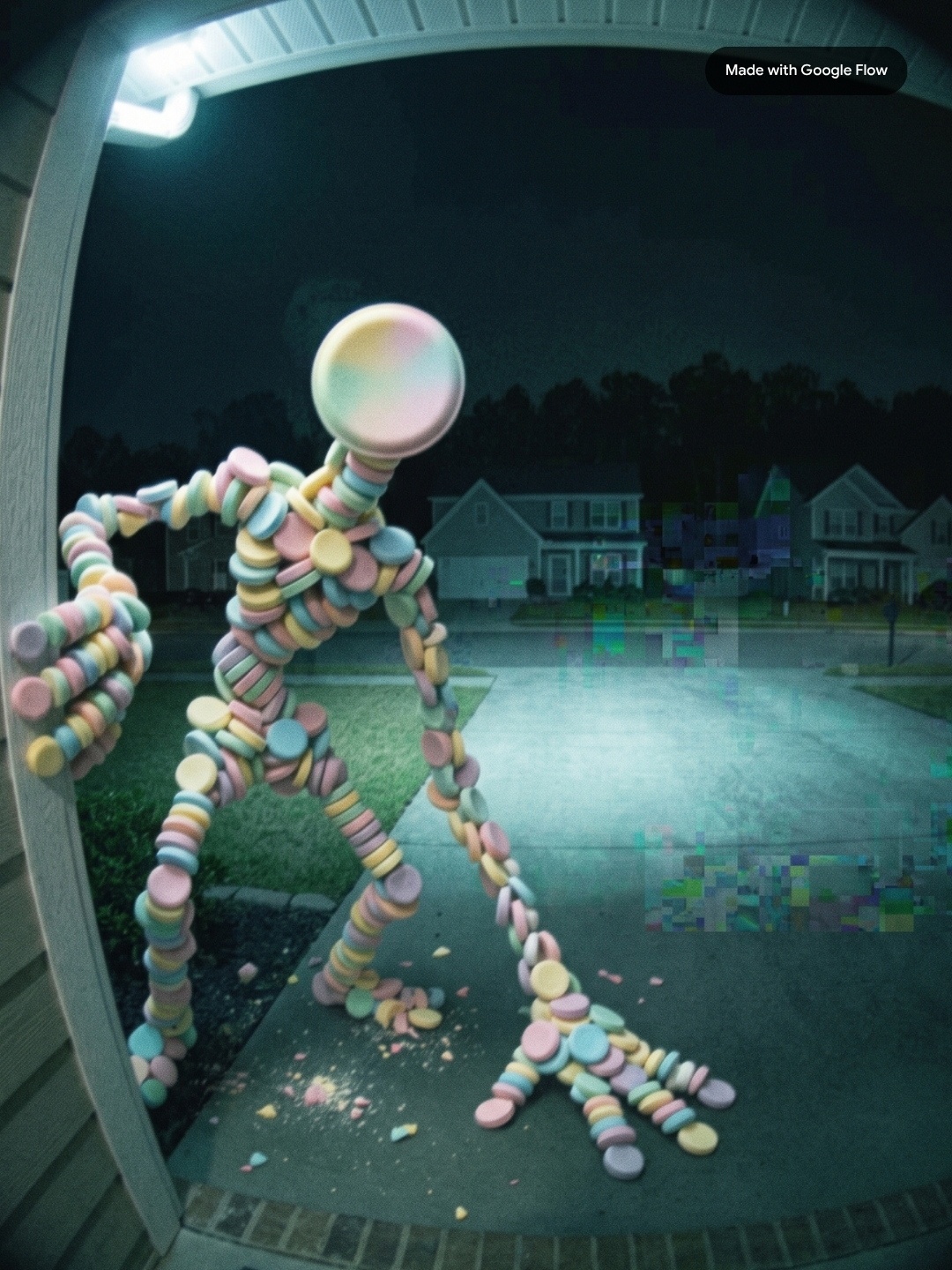
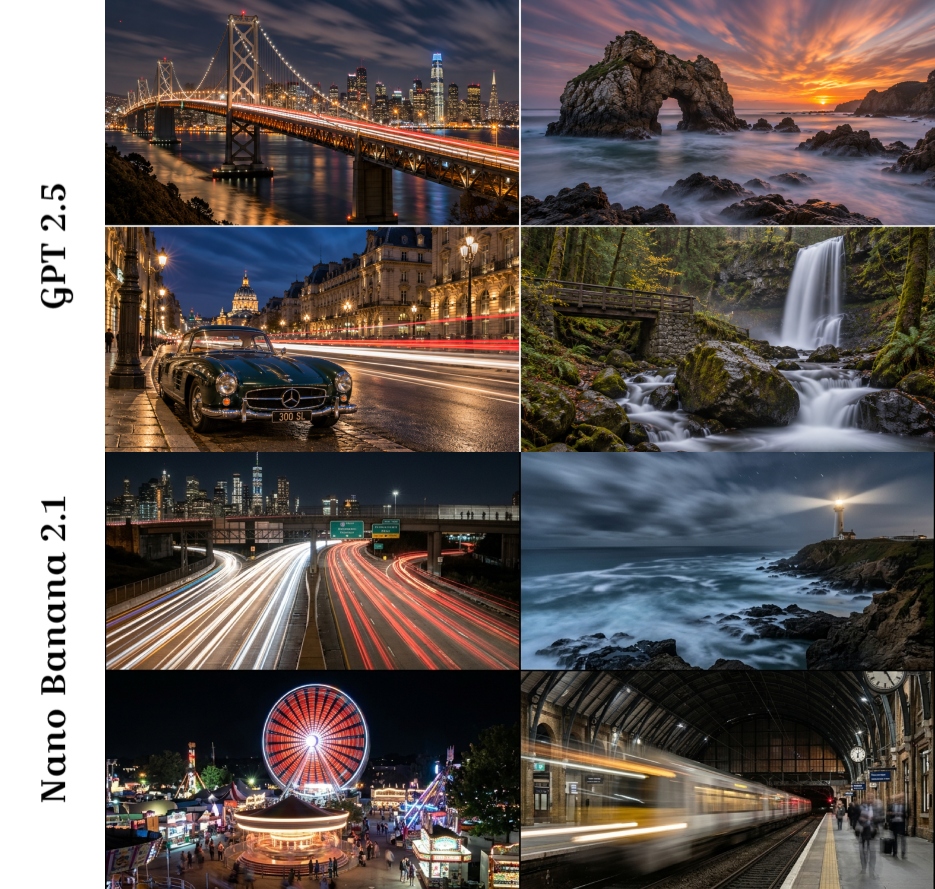
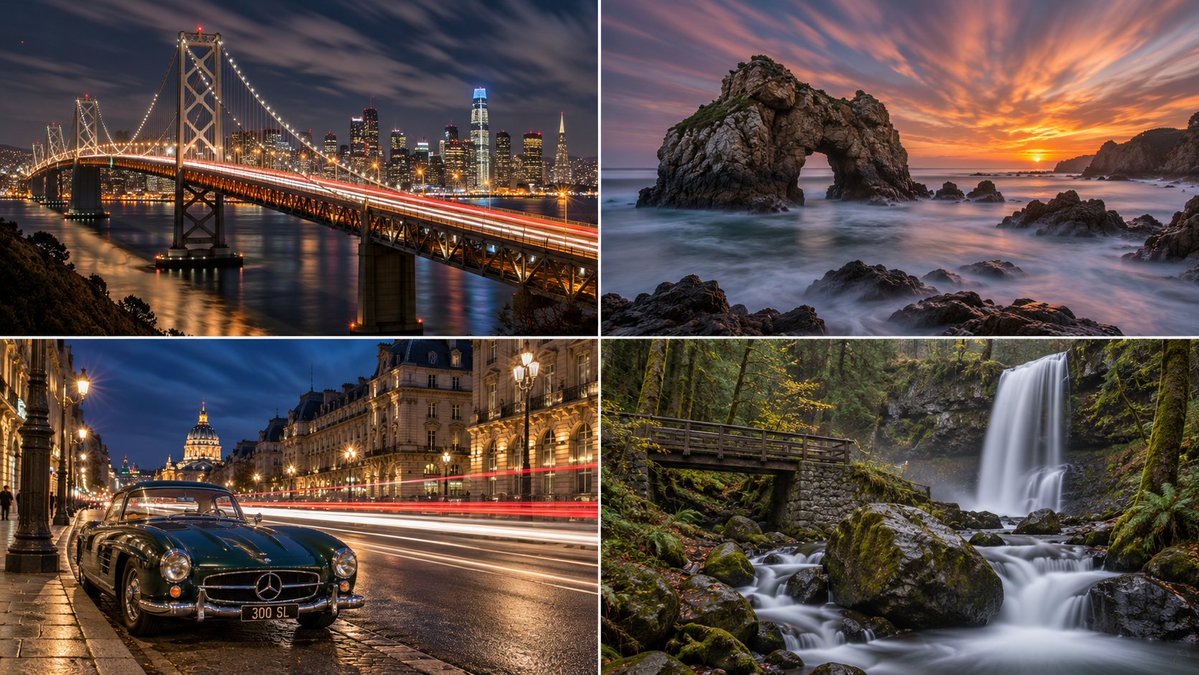
WITH RECURSIVE input(static_anchor, moving_elements, duration, capture_medium, time_logic) AS ( VALUES ( :STATIC_ANCHOR, :MOVING_ELEMENTS, :DURATION, :CAPTURE_MEDIUM, :TIME_LOGIC ) ), -- infer the photometric gaps from CONTEXT (the front‑end fills them; no NULLs) context AS ( SELECT i.*, infer_lights(moving_elements) AS lights, infer_wind(time_logic) AS wind_dir, infer_ambient(capture_medium, duration) AS ambient, infer_nd(capture_medium) AS nd FROM input i ), -- the shutter window, discretised into sub‑frames (the integrand rows) subframes AS ( SELECT generate_series(0, 63) AS k, duration * generate_series(0,63)/63.0 AS t, render_movers(moving_elements, t) AS mover_layer -- smeared along v at instant t FROM context ), -- E₂/E₁: the integral = SUM over the window; static pulled out (constant in t => sharp) integrated AS ( SELECT (SELECT render_sharp(static_anchor) FROM context) -- PSF = δ (E₃) + SUM(mover_layer) -- ∫ movers (E₁) + (SELECT ambient*duration FROM context) -- night over‑bright (E₂) AS raw FROM subframes ), -- η: the honesty layer honest AS ( SELECT clip01(raw/(SELECT duration FROM context)/(SELECT nd FROM context)) + hot_pixels(1e-5) + bloom_cores(0.98) + vib_jitter(capture_medium) AS frame FROM integrated, context ) SELECT grade(frame, 'serene_otherworldly') AS long_exposure FROM honest -- ===================== THE SPEC AS CONSTRAINTS ===================== -- E₁ single‑T: every moving class implies the SAME duration -- CHECK ( (SELECT COUNT(DISTINCT implied_T) FROM motion_signature(frame)) = 1 ) -- E₁ coupling: silky water ⇒ no sharp pedestrian -- CHECK ( NOT (state(frame,'water')='SILKY' AND state(frame,'peds')='SHARP') ) -- E₂ trails unbroken + correct colour by direction -- CHECK ( every trail 8‑connected AND colour = (dot(v,view) τ AND horizon_tilt(frame) < 0.3 ) -- FORBIDDEN rows can never satisfy the SELECT (they violate a CHECK above): -- sharp_ped+silky_water | frozen_clouds+streaked_traffic | dashed_trails | blurred_anchor | tilted_horizon ;
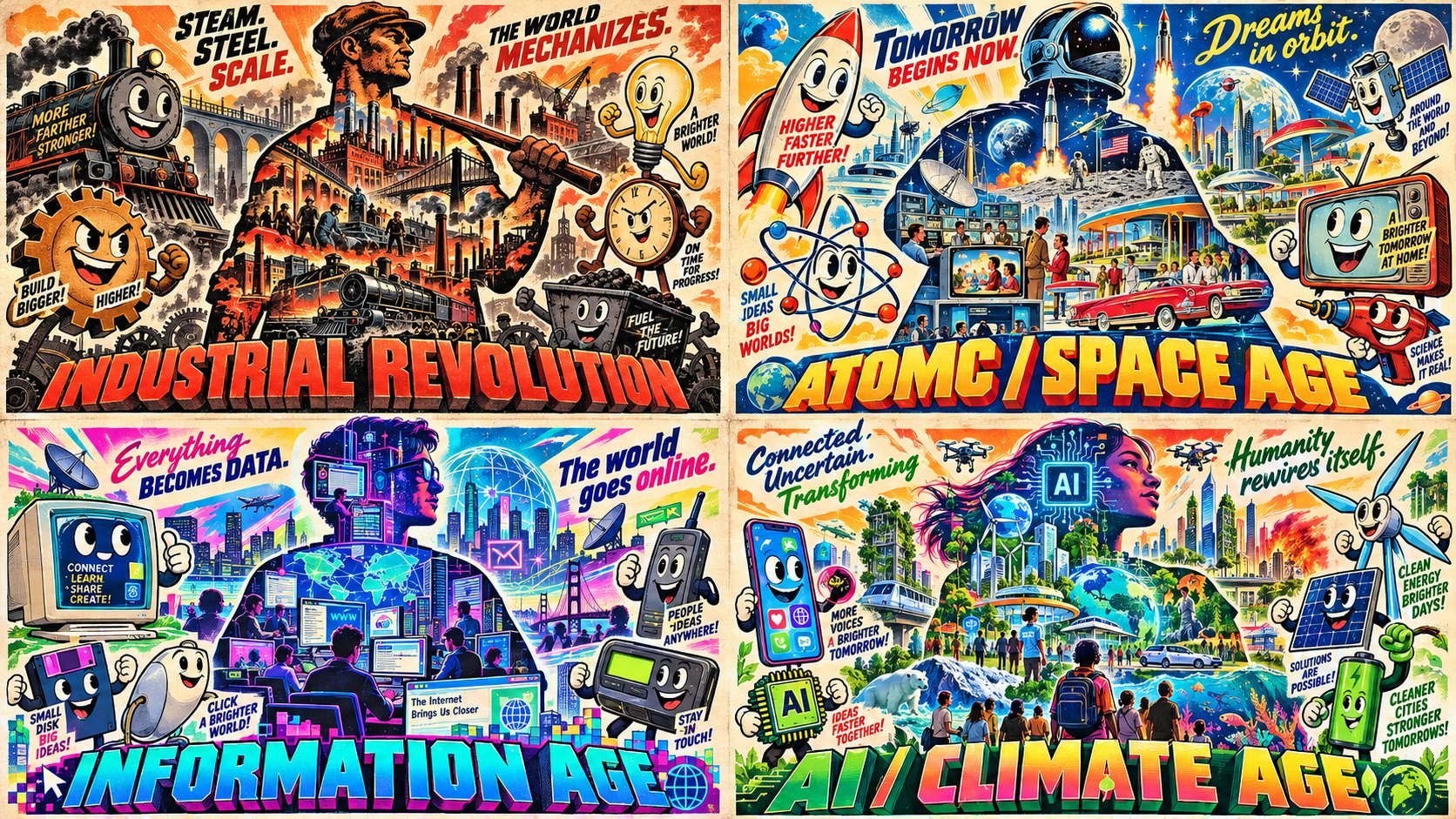
2x2 grid, 16:9, do this for 4 eras that defined modern humanity: S₁ CHARACTER SILHOUETTE FILLED WITH SCENES (master) a central character silhouette whose interior is filled with scenes from the topic/era (city, sunset, objects, people); the silhouette IS the era. ¬S₁ = no silhouette / empty silhouette / scenes outside. S₂ ANTHROPOMORPHIZED OBJECTS WITH era's main emotion appropriate FACES surrounding the silhouette, 3–6 objects from the era with smiley faces and expressive eyes (cassette, phone, car, food, tool); each object is a character. ¬S₂ = no objects / no smiley faces / realistic objects / generic props. S₃ GIANT 3D TYPOGRAPHY + TAGLINES giant bold 3D title at the bottom naming the era/topic; taglines above the silhouette or panels; legible, retro style. ¬S₃ = small type / no 3D / no taglines / modern font. S SATURATED RETRO PALETTE saturated colors (neon pink, electric blue, sunset orange, lime green) on cream; retro poster feel; bold shapes. ¬S₄ = muted / grayscale / modern minimal / dark ground. S₅ MULTI‑PANEL OR COMPOSITIONAL DENSITY either a multi-panel layout (4 panels like Image 55) or a single dense composition with the silhouette + objects + title filling the frame; no empty space. ¬S₅ = sparse / single object / empty frame. η HONEST RETRO bold shapes, saturated fills, retro typography, poster texture. FORBIDDEN = no silhouette · empty silhouette · no smiley objects · small type · no 3D · muted palette · sparse · empty frame
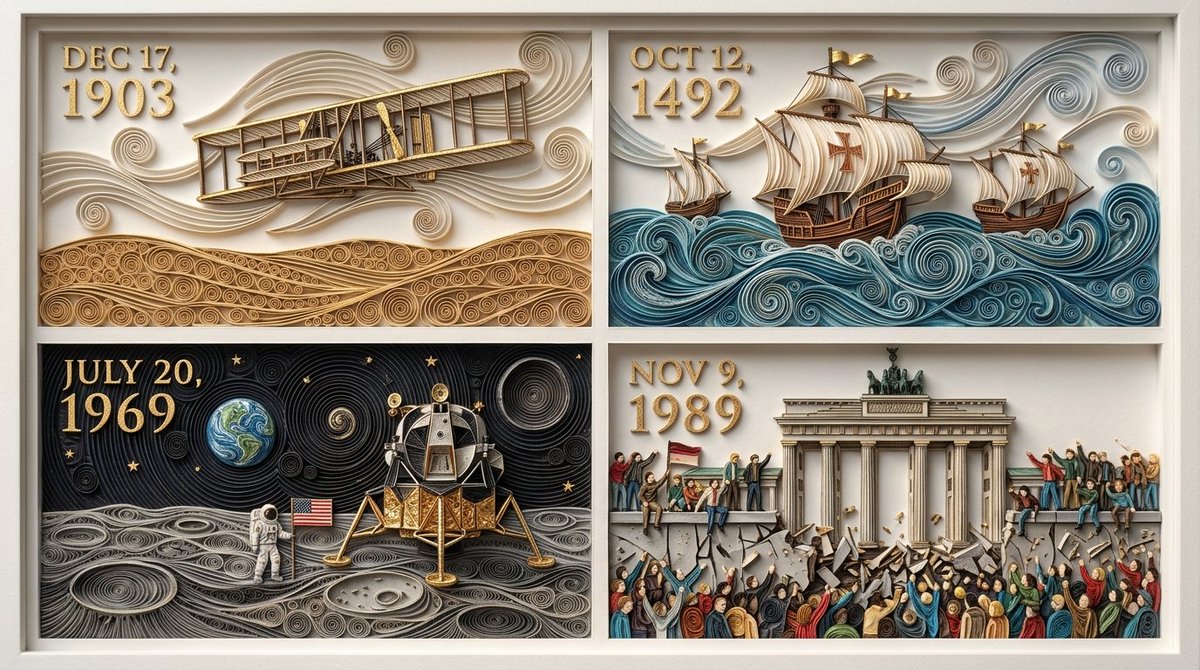
2x2 grid, 16:9, 4 days that changed history: RENDER_CHAIN = "[$SUBJECT :: flow_strips :: nested_quilling_sculpture :: raking_macro]" FUSION_RULES = { "flow_analysis": "compute edge-direction field θ and curvature field κ across $ SUBJECT; derive flow vector field F = ∇θ; curl(F) drives coil tightness, divergence(F) drives coil spacing", "strip_conversion": "convert every streamline of F into a tightly coiled quilling strip; coil radius = 1/|κ| at that point; strip follows the flow without breaking it", "recursion": "each large coil recursively contains 2–4 smaller nested coils aligned to the same local flow direction; recursion depth capped so the silhouette stays readable", "material": "dyed paper quilling strips, satin finish, low specular, visible fibrous edges; gilded tips (gold leaf) at terminal ends of strips only; no other material", "support": "shallow white plinth, no visible armature, no wire, no plastic", "lighting": "global illumination + soft top fill; hard raking key from ~20° above horizon, aligned to F; reveals micro-relief on every coil edge and paper fiber", "camera": "shallow DOF f/1.8; focal plane on the nearest coil edge cluster; paper fibers resolved at the focal plane; background coils fall into soft bokeh", "result": "a quilled-paper sculpture of $ SUBJECT in which every curve becomes nested spirals of razor-clean paper geometry", "negative": "wire armature, plastic, glossy resin, painted illustration, flat 2D, 3D render sheen, blurred paper fibers, random coils off-flow, pasted-on decoration" } OUTPUT = (RENDER_CHAIN :: FUSION_RULES) - NEGATIVE_SET RENDER: ONE macro photograph of the sculpture.
Let S(x,y) ∈ {0,1} = static mask (1 on STATIC_ANCHOR) v(x,y) ∈ ℝ² = velocity field of MOVING_ELEMENTS (0 where S=1) L(x,y,t) = scene radiance at instant t ND ≥ 1 = neutral‑density factor from CAPTURE_MEDIUM τ = clip threshold (sensor full‑well) THE FRAME (one shutter speed T = DURATION governs ALL of it): ⎡ ⎤ I(x,y) = ⎢ S·L_static(x,y) ⎥ ← anchor: integrand constant in t clip₀¹⎢ T ⎥ ⇒ after /T → L_static, PSF=δ (E₃) ──────+ (1−S)· ∫₀ L(x − vt, y − v_yt, t) dt ⎥ ← movers: smeared along v over T (E₁) ND ⎢ ⎥ ⎢+ ambient·T ⎥ ← night brighter than eye (E₂) ⎣ ⎦ + η(x,y) ← hot‑pixels + blown‑core bloom + ε_vib Derived consequences (read straight off the integral — NOT painted by hand): • point light p(t) with intensity ≫ τ ⇒ ∫ draws a CONTINUOUS curve; peak clips → white core, coloured halo = trailColor(v·view) ∈ {Red receding, White/Amber approaching} (E₂) • small fast object (pedestrian), ‖v‖T ≫ size ⇒ its energy spreads thin ⇒ GHOST/ABSENT (E₁) • water, ‖v‖T large & turbulent ⇒ veil = SILKY ; cloud, v=wind ⇒ STREAK(wind_dir) (E₁) Consistency test (E₁ as a scalar equality): T̂_water = |∇⁻¹ blur(water)|/‖v_water , T̂_cloud = len(streak)/‖v_wind , T̂_trail = len(trail)/‖v_car HONEST |T̂_water − T̂_cloud| + |T̂_cloud − T̂_trail| < ε -- one T explains every blur FORBIDDEN ⟺ ∃ class with T̂ ≈ 0 while another T̂ = T -- a frozen thing inside a long exposure
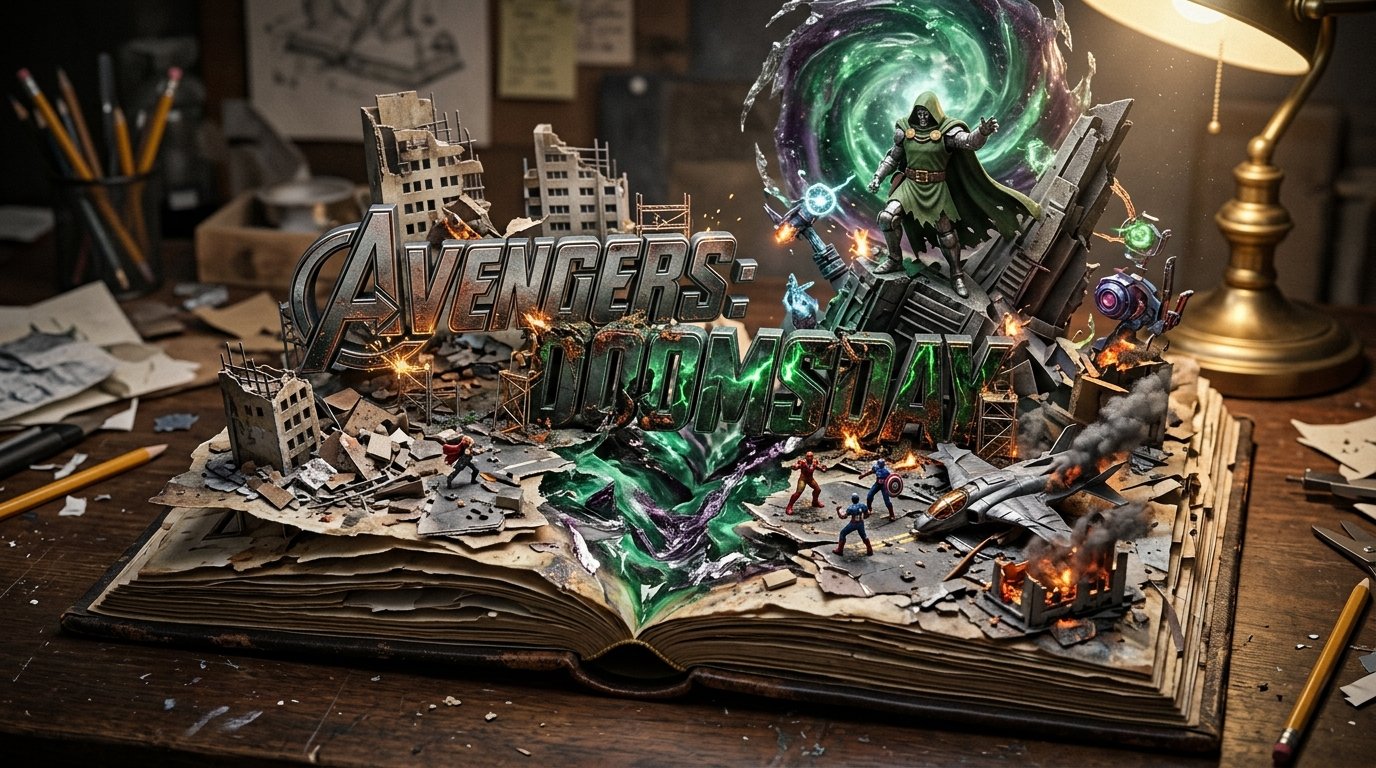
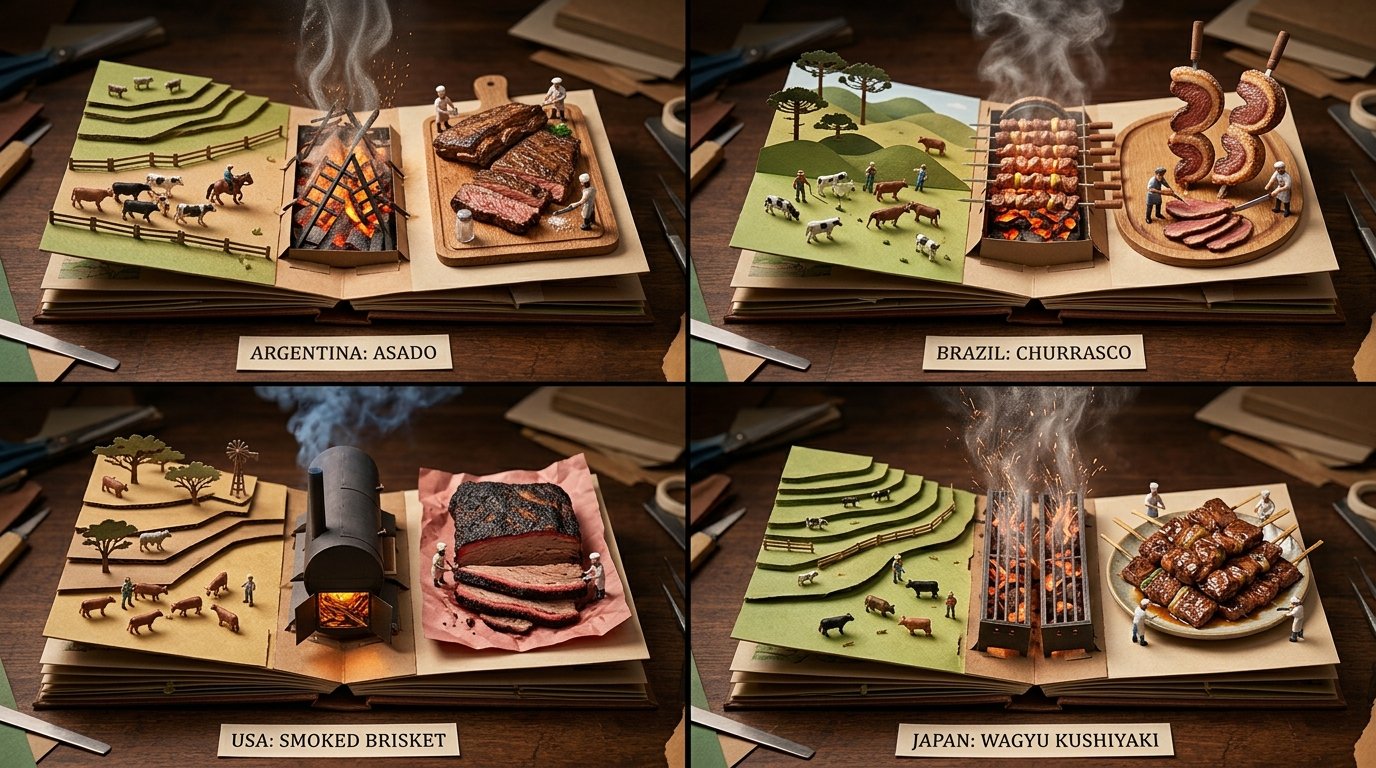
Do it for Avengers, Doomsday: Input Variable: [INSERT TITLE] (e.g., Moby Dick, Jurassic Park, The Odyssey, Star Wars) System Instruction: Act as a Master Prop Maker. Generate a hyper-realistic, macro-photography shot of a "Pop-Up Book Diorama." 1. Narrative Forensic Analysis: Analyze the Input Title to determine the visual components: The Biome: Identify the primary setting (e.g., Ocean, Jungle, Space, Desert). The Conflict: Identify the Antagonist or Monster (e.g., The White Whale, T-Rex, Darth Vader). The Vessel/Hero: Identify the main vehicle or protagonist (e.g., The Pequod, The Jeep, The Millennium Falcon). The Materiality: Identify the texture of the world (e.g., Wood & Water; Amber & Leaf; Metal & Stars). 2. The Open Book : The Object: A massive, vintage, leather-bound hardcover book lying flat on a wooden desk. The Transformation: The book is open to the middle. The pages do not just lie flat; they physically mutate into the "Biome" identified in Step 1. Example: If Ocean, the pages turn into turbulent resin waves. If Desert, they turn into dunes. 3. The Typography (The Floating Title): The Text: The [Title of the Input] rises out of the landscape as massive, 3D block letters. Integration: The letters must interact with the environment. Texture: The letters are made of materials from the story (e.g., Driftwood, Stone, Bone). Placement: The waves crash over the letters; vines wrap around the letters. 4. The Action Scene (The Diorama): CRITICAL: Construct a specific scene using miniature models on top of the book. The Threat: Place the "Antagonist" looming large in the background (e.g., The Whale breaching behind the text). The Hero: Place the "Vessel" or "Protagonist" navigating the terrain in the foreground (e.g., A tiny ship rocking on the waves). Scale: The scene must look like a high-end model kit (1:87 scale). 5. Lighting & Atmosphere: The Lamp: A vintage brass desk lamp is visible in the corner, casting a warm, directional "reading light" onto the scene. Atmosphere: Magical realism. The water should glisten; the fog should swirl. Depth: Shallow depth of field to blur the edge of the desk, keeping focus on the book. Output: ONE image, 16:9 Aspect Ratio, Cinematic Miniature Photography, 8k Resolution.
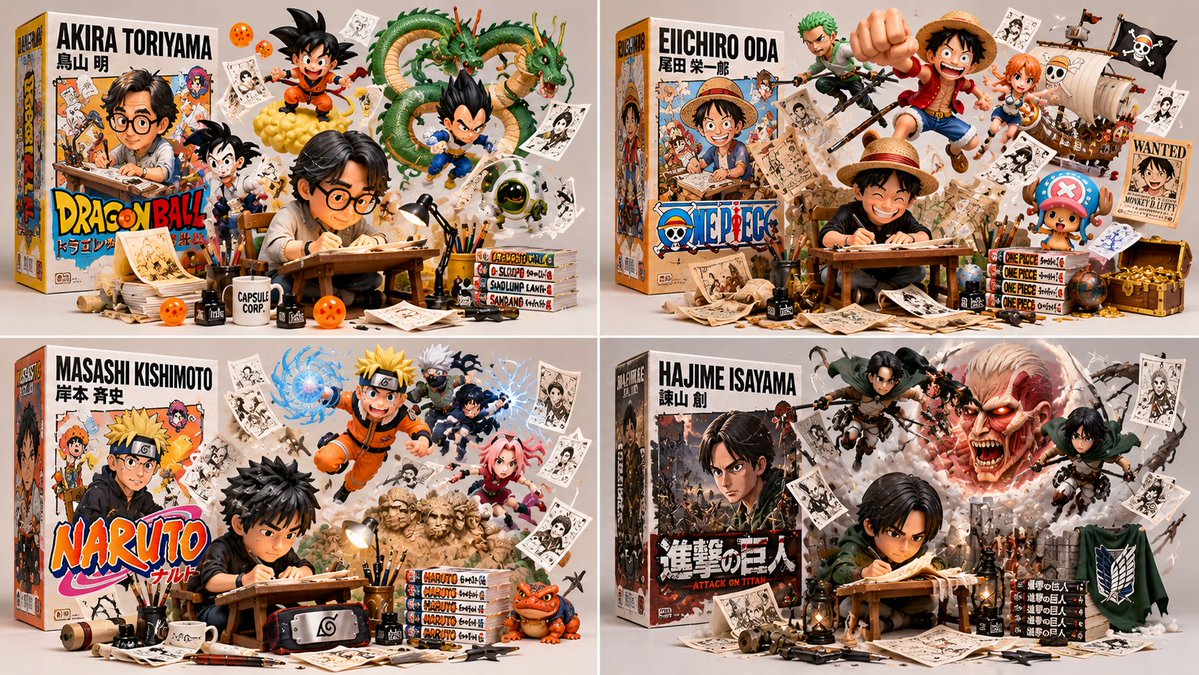
2x2 grid, 16:9, do this for 4 delicious carnivore diet dishes internationallly: CLASSIFY(input) → { domain: miniature_diorama × pop_up_book_engineering × culinary_narrative × tilt_shift_macro intent: narrate + delight + miniaturize (farm → fire → feast in a single spread) audience: food editorial, cookbook publishers, miniature collectors, brand campaigns platform: 3:2 or 16:9 landscape hero shot, print + social complexity: extreme (three-act narrative across physical book topology, 1:87 HO figures, diegetic gutter thermodynamics, scale-nesting, Scheimpflug optics) } CORE DESIGN LAWS (IMMUTABLE): ⚠ THE BOOK IS THE WORLD. THE GUTTER IS THE ENGINE. TIME FLOWS LEFT → RIGHT. • Act I (left page) = ORIGIN: farming biome as terraced pop-up terrain + harvesters. • Act II (gutter) = TRANSFORMATION: cooking machinery straddling the seam; smoke/steam/fire rises vertically — the spread's only Z-vector. • Act III (right page)= FEAST: monumental finished dish + chefs garnishing. • Scale: figures & machinery 1:87 HO; the finished dish is MONUMENTAL relative to chefs. • Optics: tilt-shift macro, warm diegetic light, 8k. ¬flat illustration ¬cold light. SEMANTIC_VARIABLES (AI infers from {{DISH}}): {{DISH}} → [e.g., Wood-Fired Neapolitan Pizza, Tonkotsu Ramen, Nigiri Sushi] {{ORIGIN_BIOME}} → farming terrain of the hero ingredients (terraced, pop-up) {{MACHINERY}} → the cooking tool that straddles the gutter {{PHYSICS_FX}} → smoke | steam | fire — matched to the cooking method {{PLATING}} → the monumental finished dish {{HARVESTERS}} → 1:87 farmers mid-labor · {{CHEFS}} → 1:87 chefs mid-garnish {{HERO_INGREDIENT}} → one ingredient traced through all three acts (raw→cooked→plated) INFERENCE_EXAMPLE ({{DISH}} = "Wood-Fired Neapolitan Pizza"): {{ORIGIN_BIOME}} = terraced tomato vines + golden wheat rows on pop-up hills {{MACHINERY}} = domed wood-fire oven astride the gutter, mouth glowing {{PHYSICS_FX}} = smoke column + ember sparks rising from the seam {{PLATING}} = leopard-charred margherita, basil canopy, oil sheen {{HERO_INGREDIENT}} = tomato: on vine (I) → bubbling sauce in oven mouth (II) → sauce on crust (III)
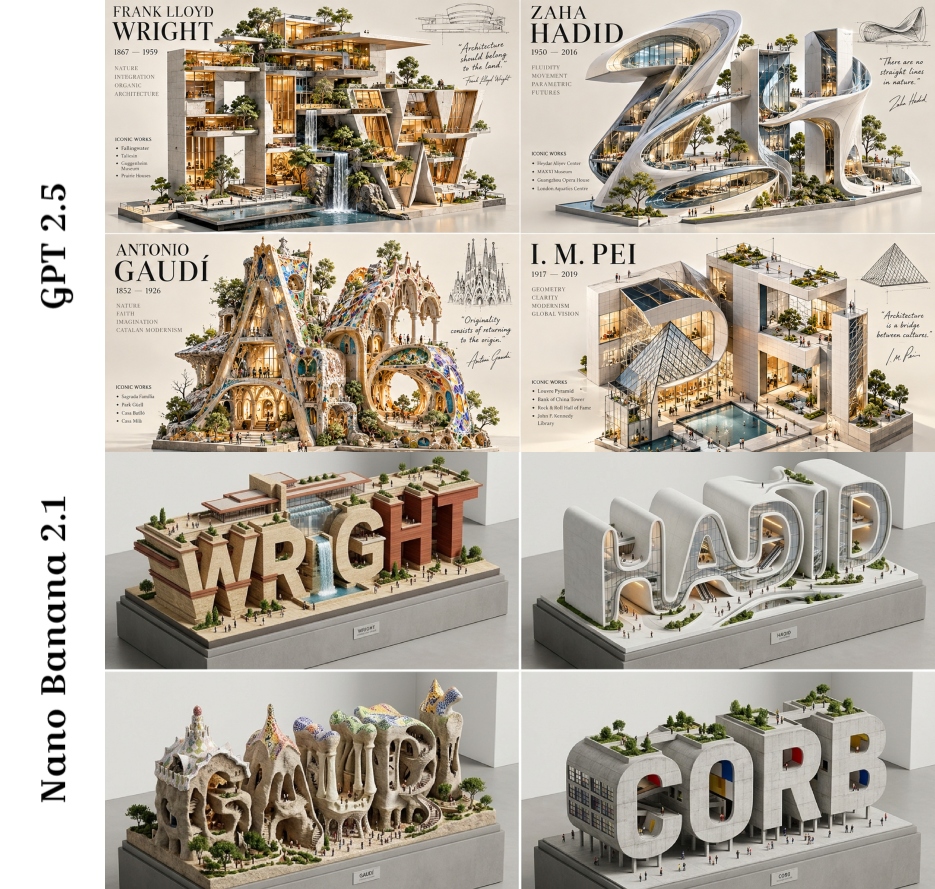
2x2 grid, 16:9, do this for 4 legendary architects: CLASSIFY(input) → { domain: isometric_3D × typographic_sculpture × architectural_diorama × brand_pavilion intent: elevate + inhabit + miniaturize (the "monumental letterform as habitable space") audience: brand identity directors, architectural visualizers, premium product designers platform: 1:1 or 4:5 high-res 3D render, flagship campaign hero, collectible digital art complexity: extreme (requires strict dual-scale management, volumetric boolean typography, luxury material physics, and pristine showroom photometrics) } CORE DESIGN LAWS : ⚠ THE LETTER IS THE BUILDING. THE OUTSIDE IS MINIMAL. THE INSIDE IS RICH. • Form: The `{{SUBJECT}}` is transformed into monumental, freestanding 3D typography or an emblematic silhouette. • Topology: The letterforms act as architecture. Cutaways, terraces, atriums, and galleries are embedded inside. • Scale Duality: Monumental exterior (macro) vs. Miniature interior (micro). Tiny humans and trees define the immense scale. • Materiality: Luxury modern. Matte white concrete, glass curtain walls, brushed aluminum, pale stone. • Lighting: Premium showroom. Soft studio daylight, crisp edges, gentle ambient occlusion, recessed interior LEDs. • Vibe: Futuristic, refined, aspirational. "Flagship campus" energy. Zero grunge, zero toy aesthetics. SEMANTIC_VARIABLES (AI infers from {{SUBJECT}}): {{SUBJECT}} → [e.g., "AERO", "LUMEN", "NEXUS", or a brand emblem] {{TYPOLOGY}} → The base 3D letterforms or emblematic mass {{INTERIOR_PROGRAM}}→ [e.g., Sunken galleries, cantilevered terraces, glass atriums] {{MICRO_ELEMENTS}} → Tiny scale figures, miniature planters, digital kiosks, sleek benches {{ACCENT_PALETTE}} → Restrained natural greens + 1 inferred brand accent color {{LIGHTING_RIG}} → Soft studio daylight + warm interior accent pools