Fluorescent Brush Art City Poster
 GPT Image 2OpenAIimage
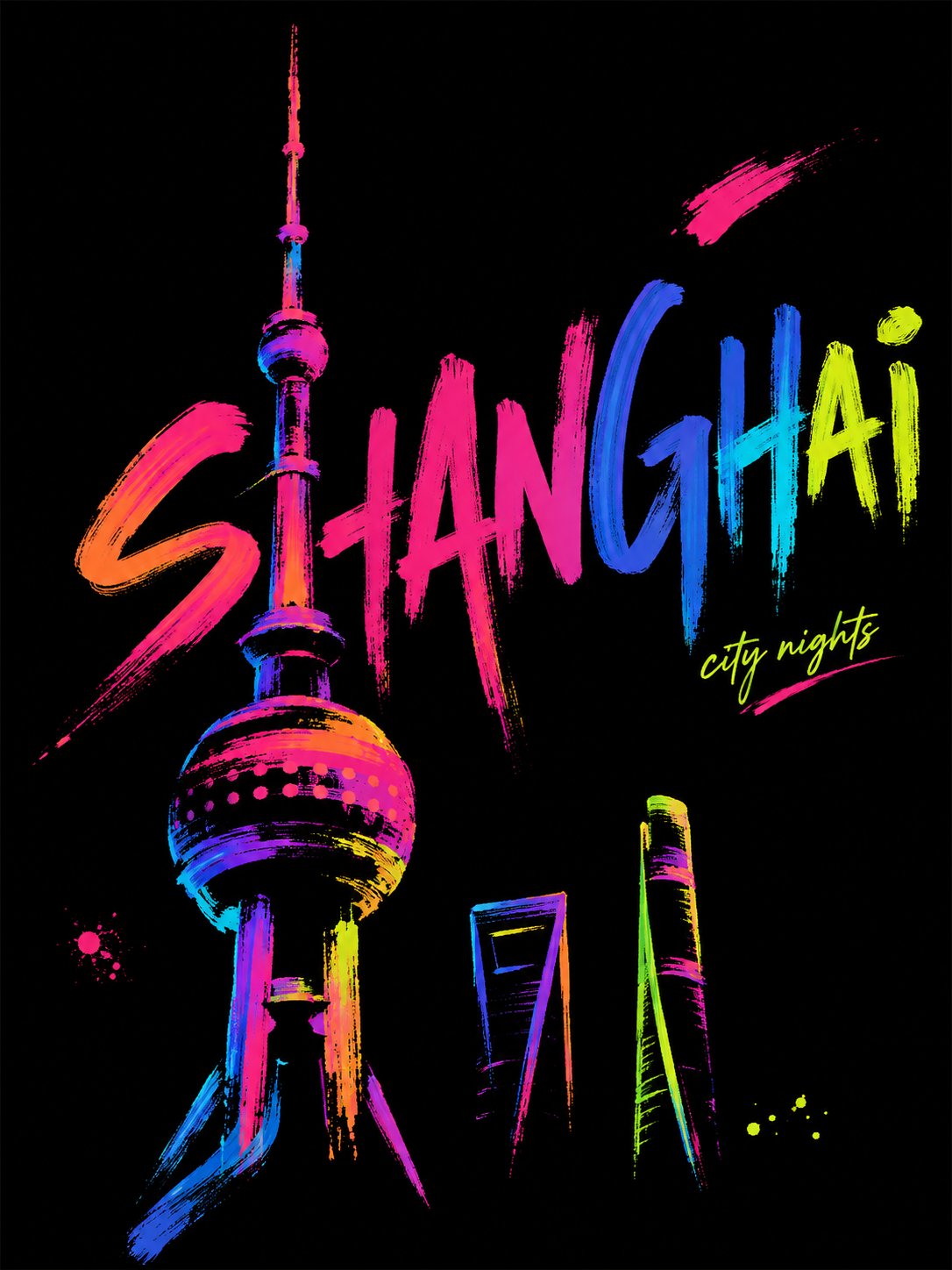
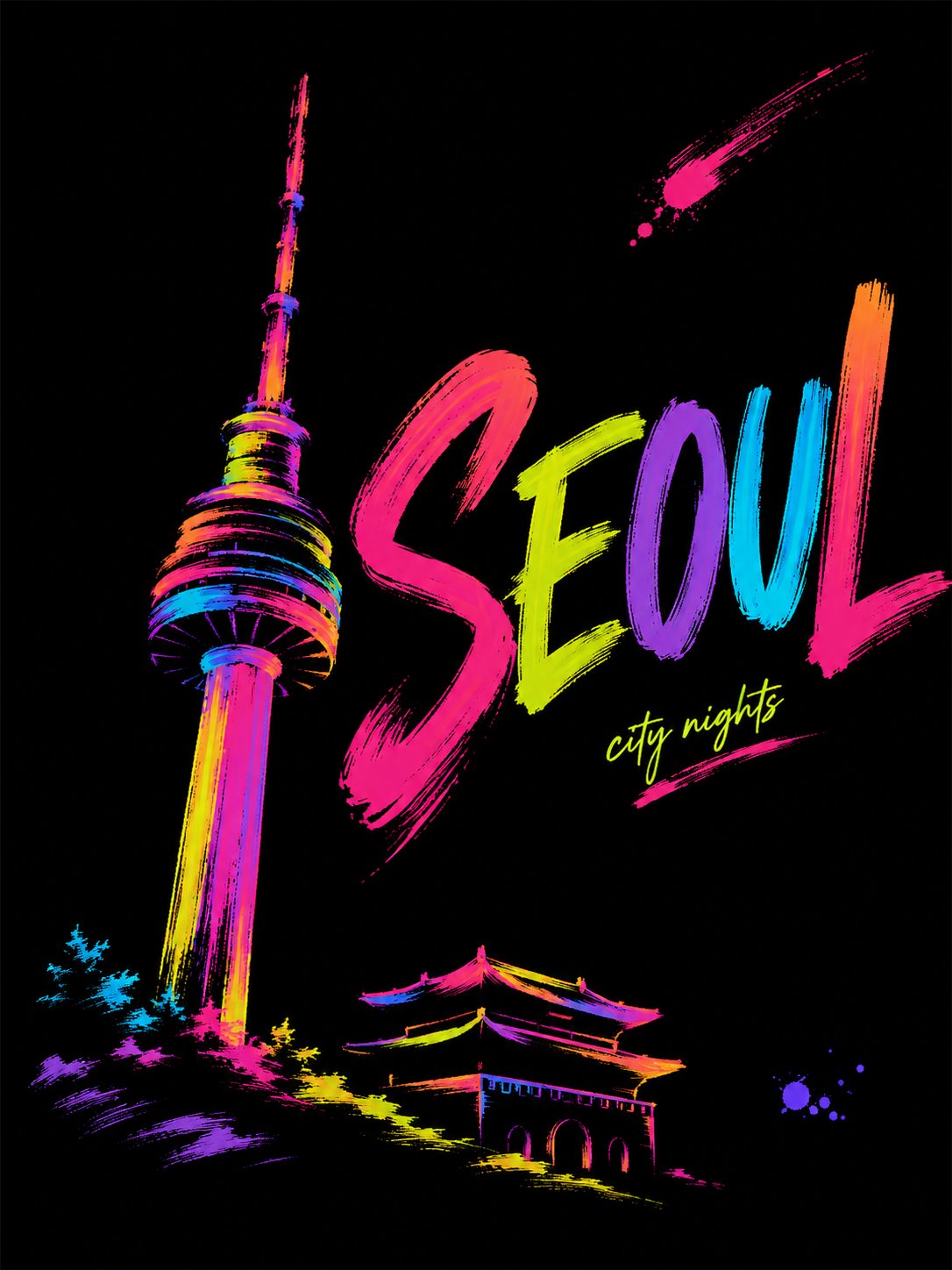
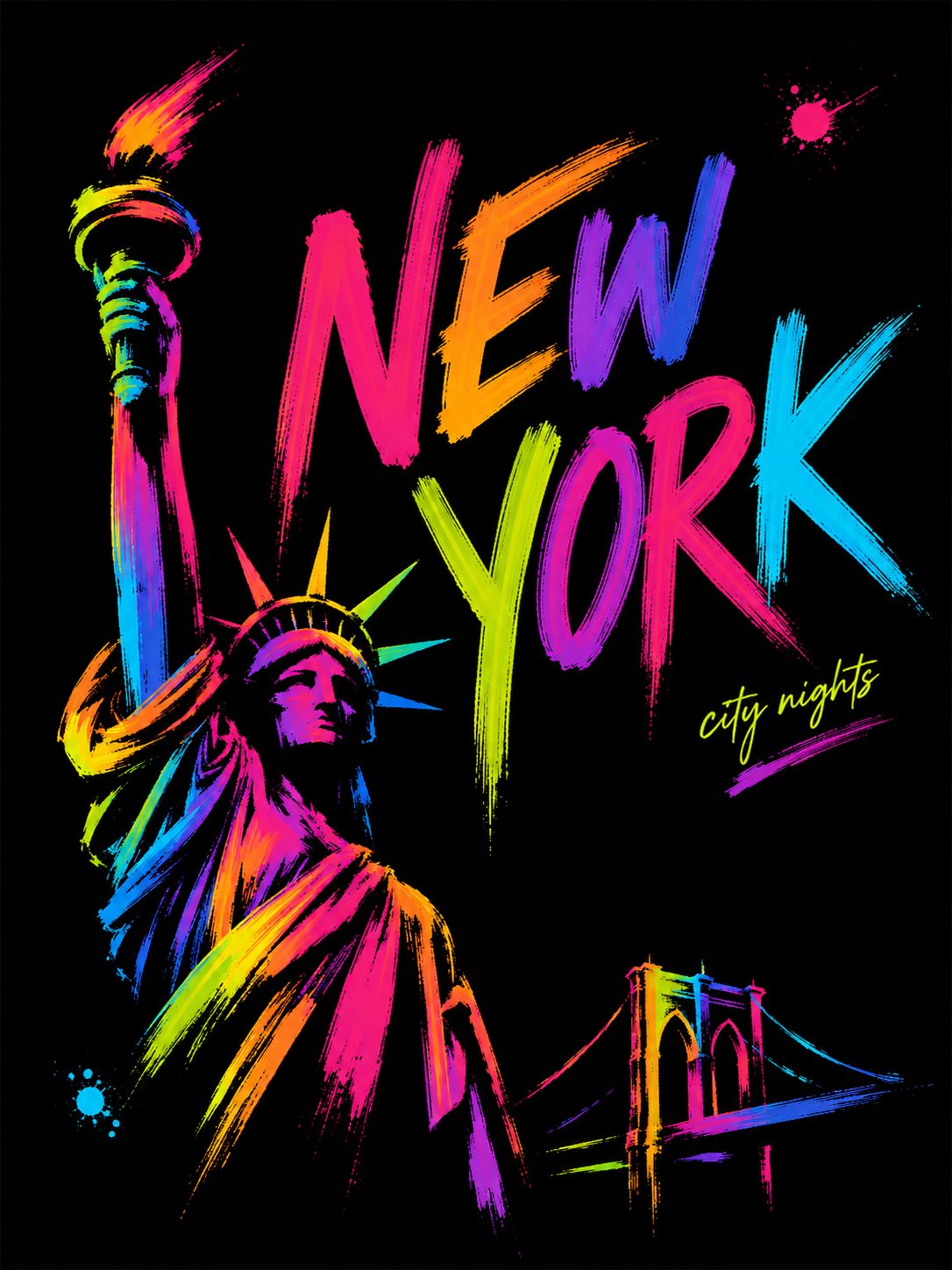
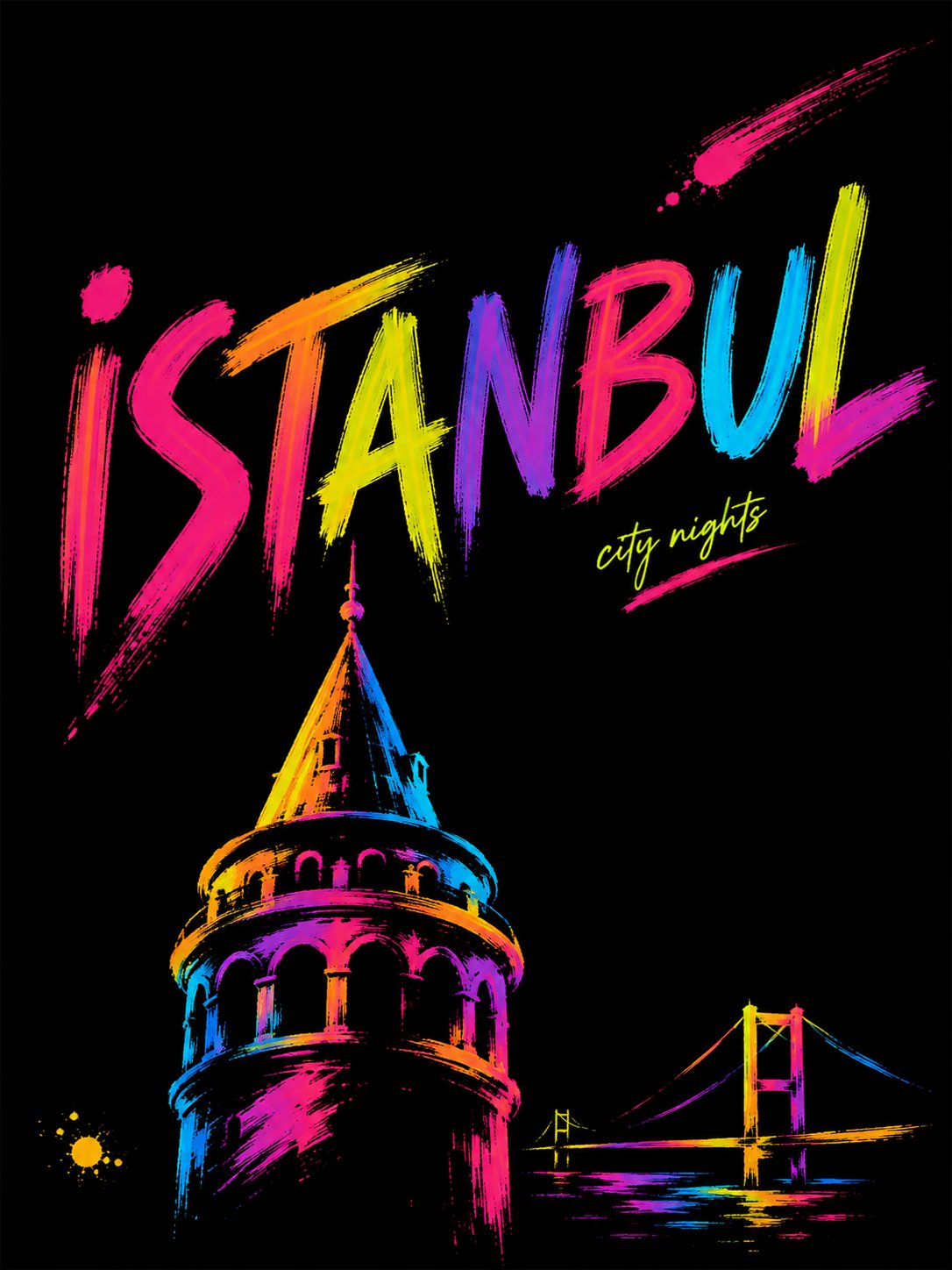
CITY = [CITY NAME] Create a vertical 3:4 minimal fluorescent brush-art travel poster for [CITY] on a pure black background. First identify the city’s most iconic and instantly recognizable visual symbols, then select: ONE hero landmark — large and dominant ONE or TWO secondary landmarks — much smaller supporting elements Do not create a full skyline. Draw all landmarks using only thick, broken fluorescent paint-marker strokes with simplified silhouettes, incomplete outlines, large gaps, rough dry-brush edges, and tapered endings. Use the minimum number of lines needed for instant recognition. Use vivid fluorescent magenta, pink, cobalt blue, cyan, violet, acid lime, yellow, and orange, with irregular color shifts between brush strokes. Add huge expressive hand-painted lettering: “[CITY]” Optionally add a small handwritten phrase such as: “city nights” Keep 50–60% of the composition as uninterrupted pure black negative space. Add only 2–3 isolated paint accents such as a brush slash, compact splatter, or tiny dots. Avoid dense skylines, realistic architecture, detailed windows, complete outlines, clean vector graphics, neon tubes, 3D lighting, and excessive decoration. Overall aesthetic: minimal fluorescent brush art, iconic city landmarks, expressive hand-painted typography, urban nightlife, fashion-editorial poster, sophisticated street art, bold black negative space, high contrast.
Details
- Type
- AI Image Prompts
- Aspect Ratio
- 3:4
- Updated
- Aug 18, 2026
Category
How to use this prompt
- 1Copy the full prompt with the copy button above.
- 2Open GPT Image 2 by OpenAI, or any image generator with a similar style range.
- 3Paste the prompt, then swap the subject and style keywords to match your idea.
- 4Match the example's settings (3:4 · Typography · Poster · Minimalist), then iterate — small wording changes shift the output a lot.
Frequently asked questions
Which AI model generated this image?
This image was generated with GPT Image 2 by OpenAI. The prompt on this page is the exact text used to create it.
What settings does this prompt use?
The example was generated with GPT Image 2 using: 3:4 · Typography · Poster · Minimalist. Reusing these settings gives the closest match.
How do I get similar results?
Copy the prompt as-is first, then replace only the subject while keeping the style, lighting, and composition keywords. Generate a few variations — outputs differ between runs.
Can I modify this prompt?
Yes. Prompts work best as starting points — adjust descriptors, aspect ratio, or style tags to make the output your own.