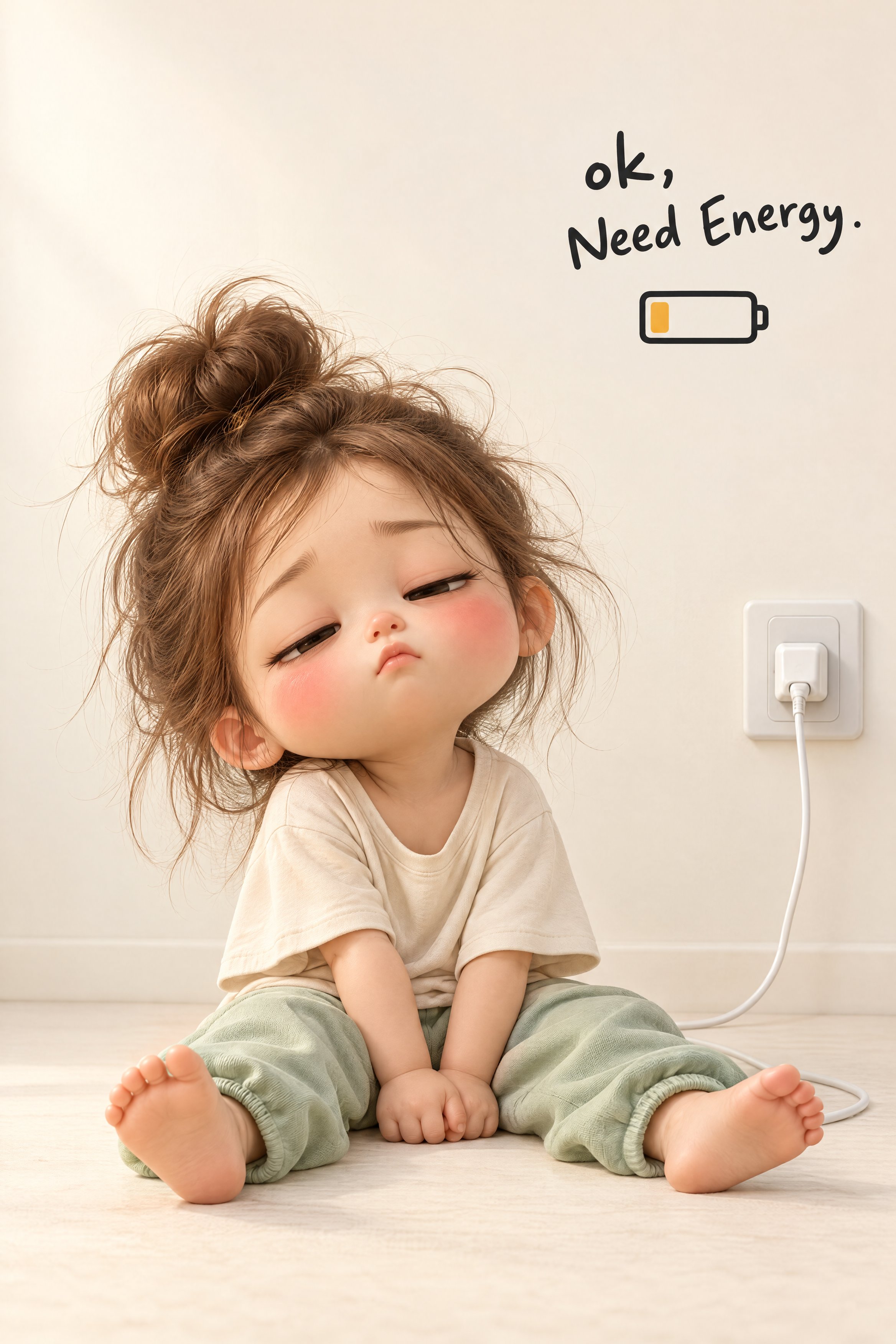
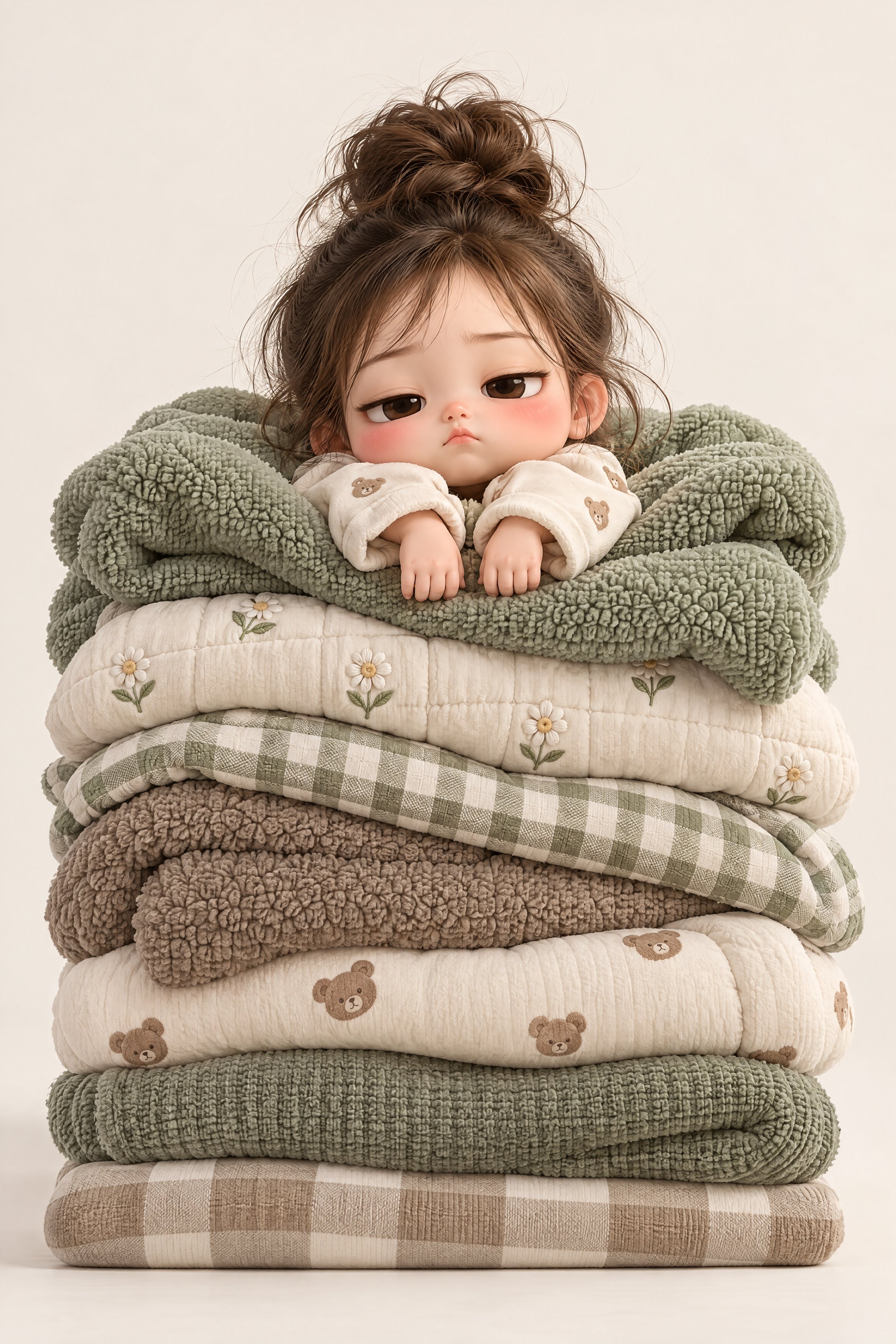
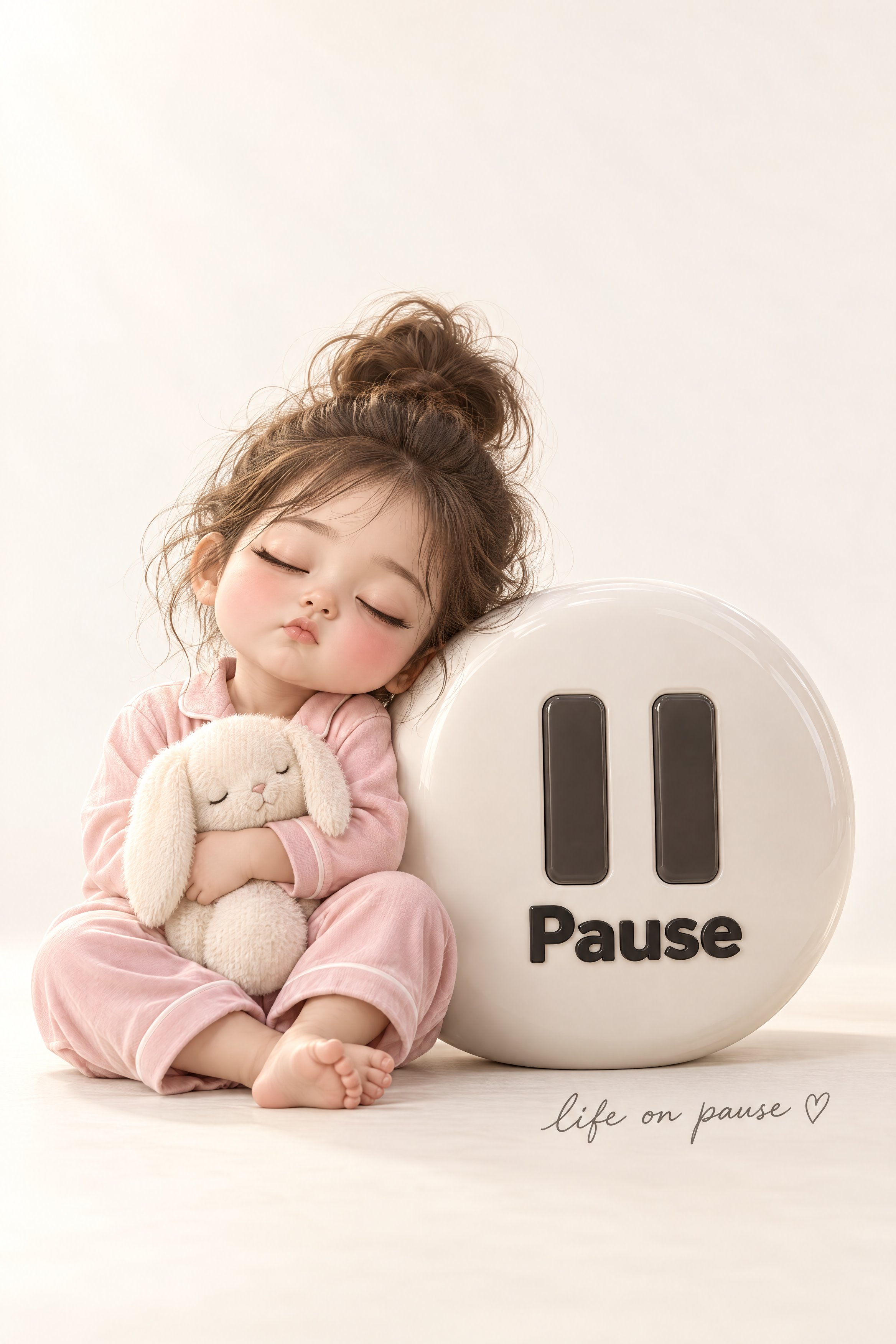
Chibi Toddler Resting on Pause Button

Create an adorable, premium-quality 3D chibi-style illustration of a sleepy little toddler girl sitting beside an oversized white pause button, visually representing the feeling of wanting to stop everything and take a break. A tiny, adorable toddler girl with an oversized rounded head, delicate childlike proportions, and soft, porcelain-like skin. Her facial features include: Large, expressive dark-brown eyes, almost completely closed. Delicate black eyelashes. Soft, naturally rosy cheeks with a prominent pink blush. A tiny button nose. Small, gently puckered pink lips. Thin, delicate eyebrows. Smooth, peach-toned skin with subtle natural highlights. Small, rounded ears. Her dark chocolate-brown hair is styled in a messy, voluminous high bun. Several loose, wispy strands escape around the bun and frame her forehead, temples, and cheeks. Her expression communicates complete relaxation, sleepiness, and peaceful exhaustion. Her eyes are gently closed, her lips slightly pursed, and her head rests sideways against the large white object. The toddler wears a soft pastel-pink pajama set. The outfit includes: A long-sleeved pink pajama top with delicate white piping around the collar and sleeve edges. Matching loose pink pajama trousers. Soft cotton-like fabric with subtle wrinkles and natural folds. She is barefoot, with tiny feet and realistically rendered little toes. She holds a small cream-white plush cushion shaped like a rounded flower or decorative pillow. The cushion has a soft, padded appearance, subtle pale-pink speckles, and a small flower-shaped cushion detail visible near her legs. The toddler sits on the floor with her legs extended forward and slightly bent. Her back and head lean comfortably against the large white pause button. Both hands gently hold a small cream-colored cushion against her stomach. Her shoulders are relaxed, her head tilts slightly toward the large object, and her eyes remain peacefully closed. Her entire body language should communicate that she has mentally switched off and wants to rest. A large, minimalist, white 3D rectangular button occupies the right side of the composition. The object resembles an oversized computer keyboard key or a physical pause button. Its characteristics: Large, chunky, rectangular form. Smooth, glossy white surface. Rounded corners and gently curved edges. Slightly elevated top surface. Thick, solid white sides. Softly reflective highlights. Subtle shadows around its base. On the upper surface, prominently display the exact word: "Pause" Use large, bold, black, clean sans-serif typography. The word should be centered on the top surface, following the slight perspective and angle of the button. The toddler leans against this oversized button, making the object appear like a physical symbol of taking a break from life. Include a second text element near the lower-right area of the composition. The exact wording should be: "life on pause ♡" Use small, lowercase, dark-grey handwritten-style lettering. The typography should resemble casual, slightly imperfect handwriting with natural spacing between letters. Include a small outlined heart symbol at the end. Keep the lettering delicate and minimal. A seamless, warm ivory-white studio environment. The background and floor blend together without visible corners or distracting architectural elements. The toddler and oversized pause button rest directly on the smooth floor. There should be no additional furniture, decorative objects, or unnecessary background details. Maintain generous empty space, especially across the upper half of the image. Vertical 9:16 portrait orientation. Front-facing, slightly low camera perspective. Toddler positioned in the lower-left portion. Oversized pause button positioned on the lower-right side. The toddler's head and shoulder gently touch the button. Entire character and oversized button visible. Text "life on pause ♡" positioned below and slightly to the right of the button. Large areas of clean negative space above the main subjects. Balanced visual relationship between the character and the oversized button. The composition should feel like a minimalist premium 3D social-media illustration. Soft, diffused studio lighting from the upper-left/front direction. Gentle highlights on the toddler's forehead, cheeks, nose, hair, and pink pajamas. Soft reflective highlights across the glossy white pause button. Subtle contact shadows beneath the toddler's feet, body, cushion, and the large button. Use ambient occlusion around the contact points between the toddler and the button to create realistic depth. Avoid harsh shadows or dramatic lighting. Use a soft, warm pastel color palette: Warm ivory and creamy-white background. Glossy pure-white pause button. Pastel blush-pink pajamas. Peach and porcelain skin tones. Rosy-pink cheeks. Dark chocolate-brown hair. Cream-white cushion. Black typography. Muted charcoal-grey handwritten text. Keep the overall image warm, peaceful, minimal, and visually soothing. High-end 3D animated character illustration with a cute chibi aesthetic. Exaggerated toddler proportions, oversized expressive head, delicate facial details, beautifully rendered hair strands, soft skin shading, realistic cotton fabric, and smooth rounded geometry. Use: Subtle subsurface scattering. Physically based materials. Soft ambient occlusion. Realistic fabric folds. Smooth glossy plastic rendering. Delicate studio reflections. High-quality CGI character modeling. The result should resemble a professionally rendered collectible animated character in a premium lifestyle advertising campaign. Professional 3D product-illustration composition. Simulate a 50mm portrait lens perspective with minimal distortion, sharp focus across the
Details
- Type
- AI Image Prompts
- Aspect Ratio
- 2:3
- Updated
- Nov 12, 2026
Category
How to use this prompt
- 1Copy the full prompt with the copy button above.
- 2Open Nano Banana 2.1 by Google, or any image generator with a similar style range.
- 3Paste the prompt, then swap the subject and style keywords to match your idea.
- 4Match the example's settings (2:3 · Character · Digital Art · 3D Render), then iterate — small wording changes shift the output a lot.
Frequently asked questions
Which AI model generated this image?
This image was generated with Nano Banana 2.1 by Google. The prompt on this page is the exact text used to create it.
What settings does this prompt use?
The example was generated with Nano Banana 2.1 using: 2:3 · Character · Digital Art · 3D Render. Reusing these settings gives the closest match.
How do I get similar results?
Copy the prompt as-is first, then replace only the subject while keeping the style, lighting, and composition keywords. Generate a few variations — outputs differ between runs.
Can I modify this prompt?
Yes. Prompts work best as starting points — adjust descriptors, aspect ratio, or style tags to make the output your own.