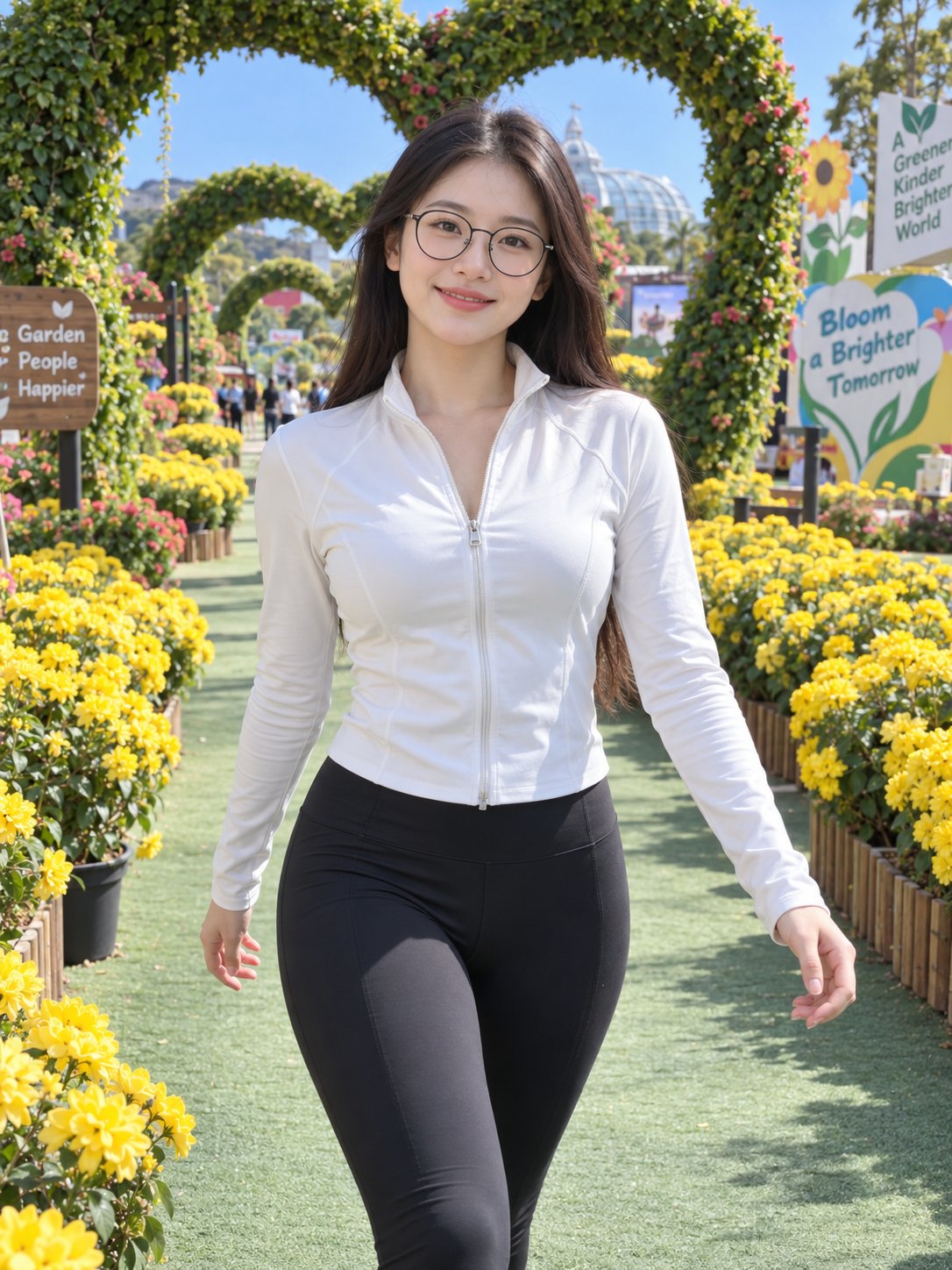
Woman Walking in Botanical Garden
 GPT Image 2.5OpenAIimage
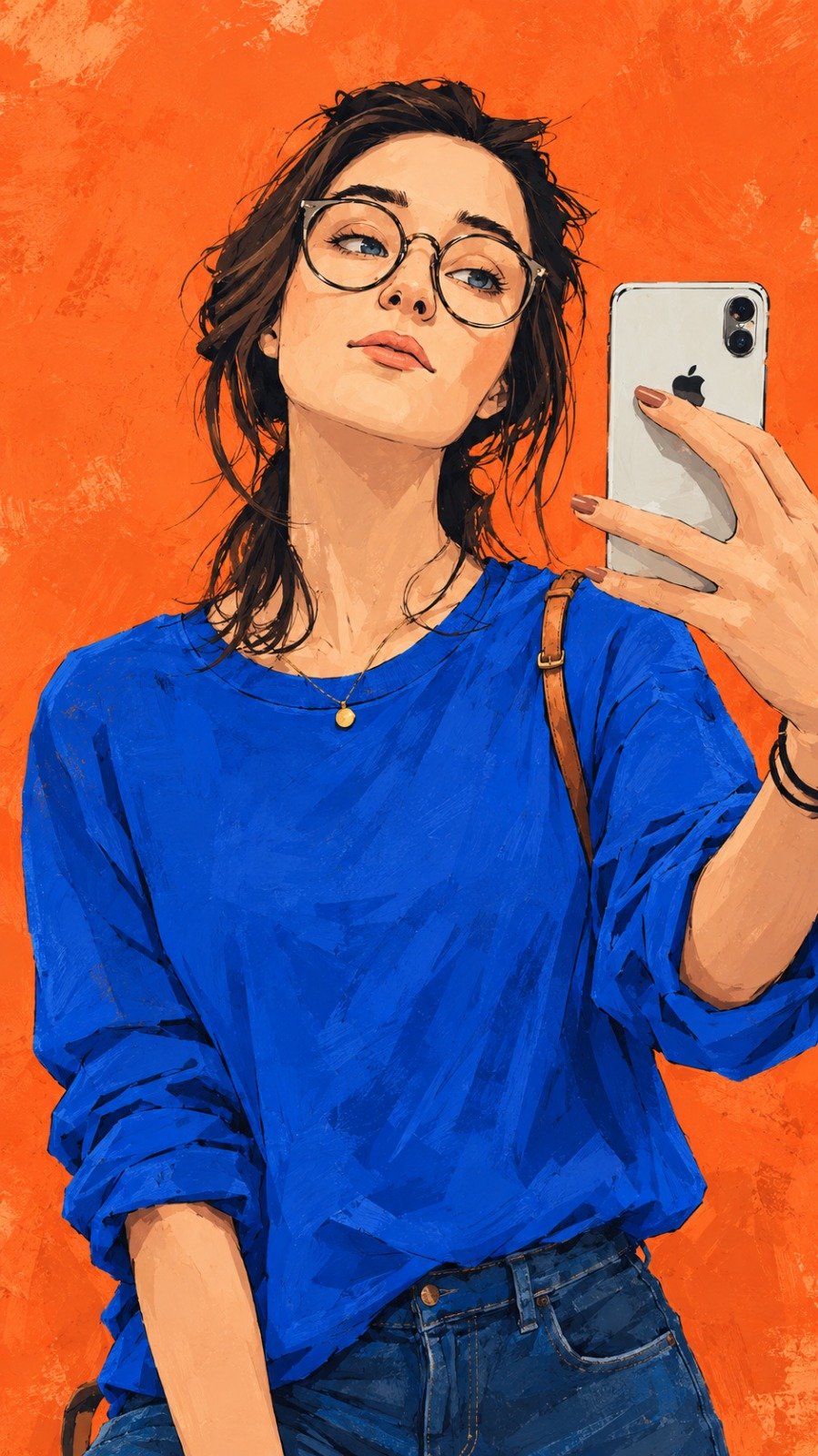
Medium shot, eye-level daylight portrait of a pleasant mid-20s East Asian woman walking happily forward along an outdoor botanical garden walkway. She moves naturally toward the camera with a gentle, warm smile, her arms relaxed and lightly extended outward in a candid walking stride. She has a soft, fair oval face with gentle features, framed by round black-rimmed eyeglasses that highlight her warm, clear dark eyes. Her dark brown, straight silky hair is neatly parted in the center, flowing down past her shoulders and resting naturally behind her back. She wears a clean white performance athletic zip-up jacket made of four-way stretch technical fabric, featuring a stand-up collar with a silver half-zip open slightly at the throat, ergonomic contoured seam detailing, and full-length fitted sleeves. Below, she wears high-waisted solid black athletic yoga leggings accentuating her natural, hourglass feminine proportions. The background is a vibrant outdoor floral garden exhibition: a green carpeted walking path bordered by lush potted yellow chrysanthemums in full bloom, passing beneath manicured arching topiary hedges shaped like giant green hearts. Bright blue sky and cheerful park signboards are softly visible behind the greenery. Bathed in clear, bright midday natural daylight with soft diffusion, providing clean, crisp highlight definition on the white jacket and realistic, unblemished skin texture. Shot on a 50mm prime lens at f/2.5, ISO 100, 1/1000s, producing rich organic foliage details, natural fabric stretch wrinkles, and gentle photographic depth of field.
Details
- Type
- AI Image Prompts
- Aspect Ratio
- 3:4
- Updated
- Oct 5, 2026
How to use this prompt
- 1Copy the full prompt with the copy button above.
- 2Open GPT Image 2.5 by OpenAI, or any image generator with a similar style range.
- 3Paste the prompt, then swap the subject and style keywords to match your idea.
- 4Match the example's settings (3:4 · Fashion · Realistic · Portrait), then iterate — small wording changes shift the output a lot.
Frequently asked questions
Which AI model generated this image?
This image was generated with GPT Image 2.5 by OpenAI. The prompt on this page is the exact text used to create it.
What settings does this prompt use?
The example was generated with GPT Image 2.5 using: 3:4 · Fashion · Realistic · Portrait. Reusing these settings gives the closest match.
How do I get similar results?
Copy the prompt as-is first, then replace only the subject while keeping the style, lighting, and composition keywords. Generate a few variations — outputs differ between runs.
Can I modify this prompt?
Yes. Prompts work best as starting points — adjust descriptors, aspect ratio, or style tags to make the output your own.