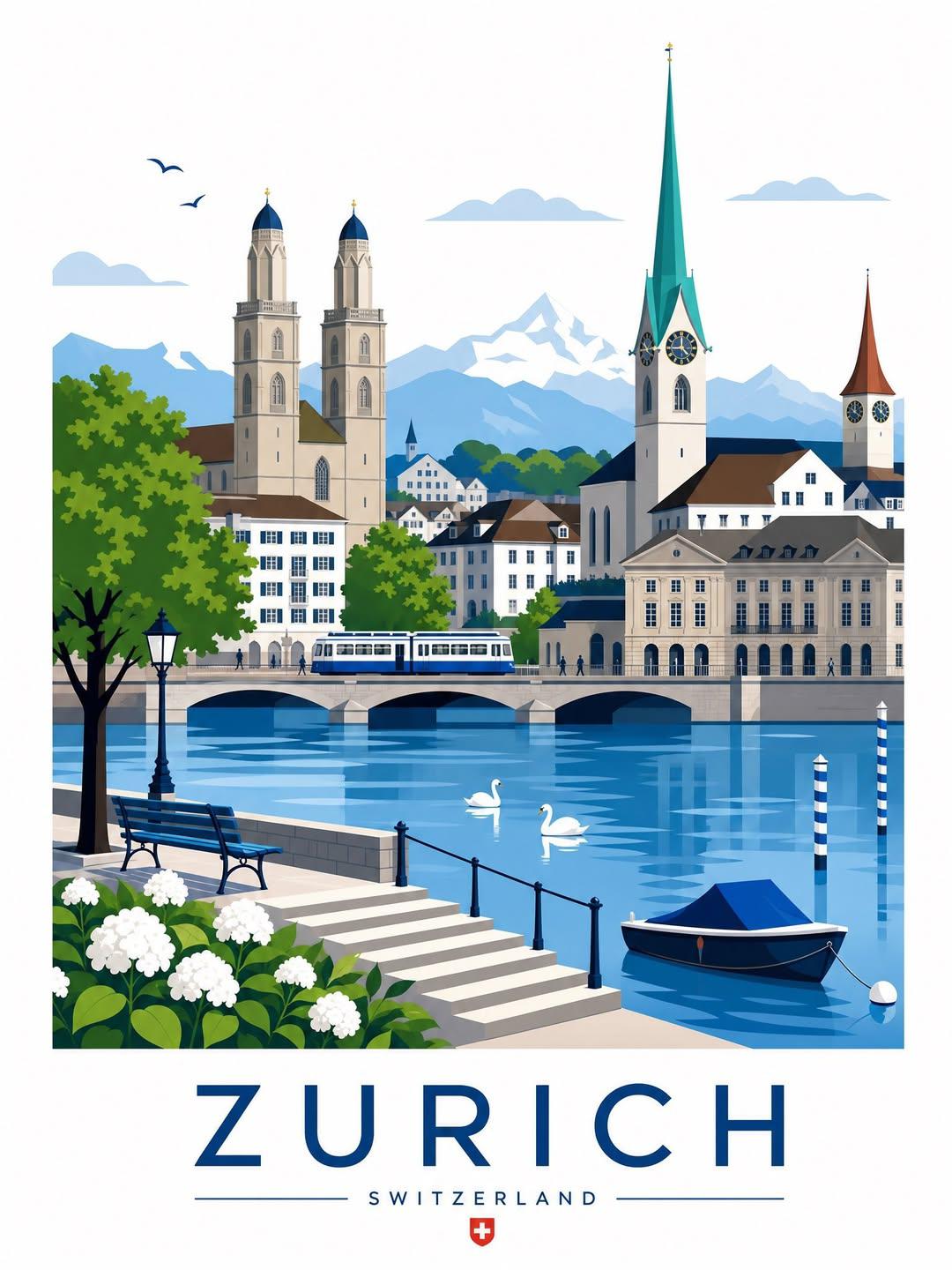
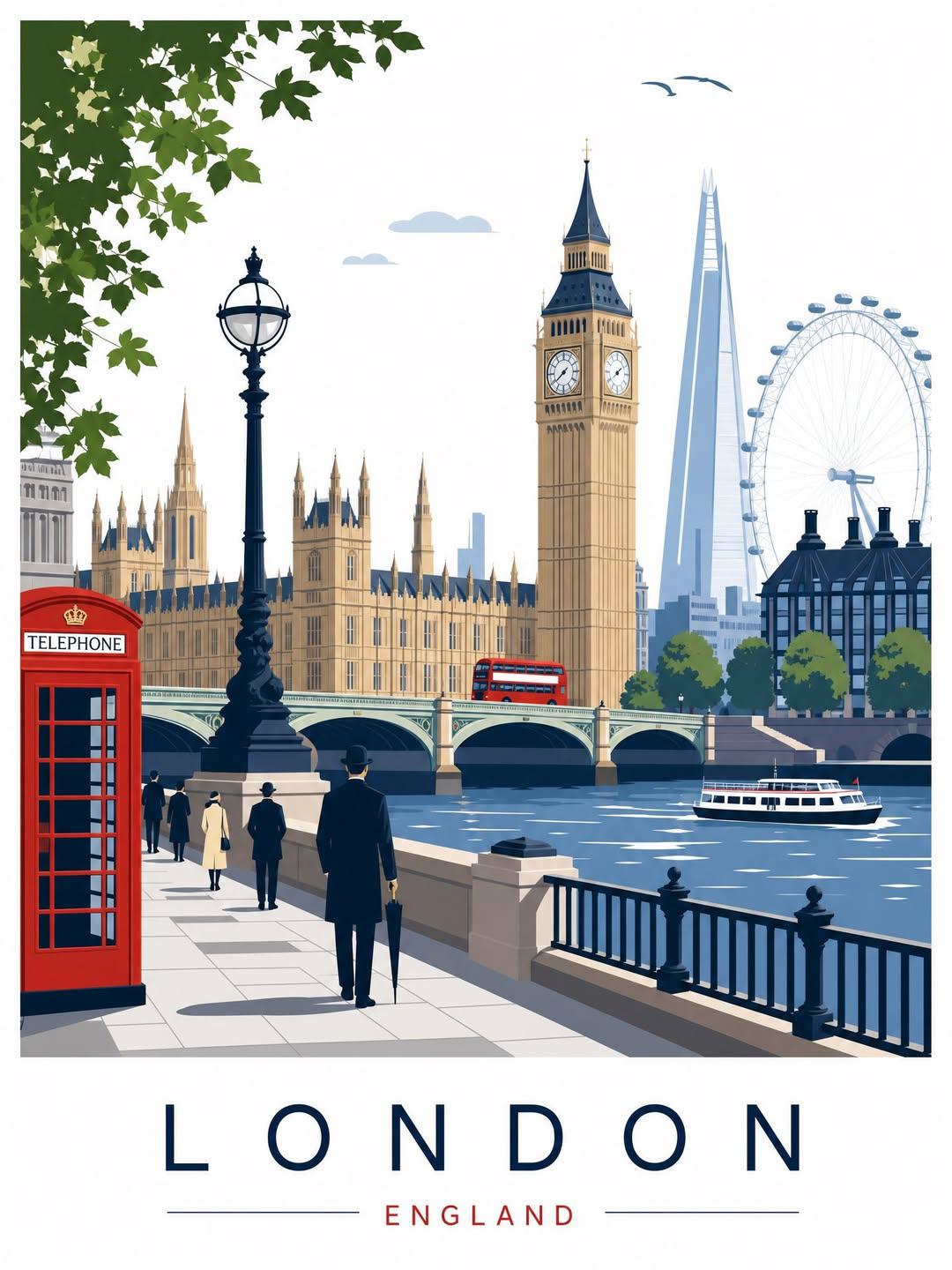
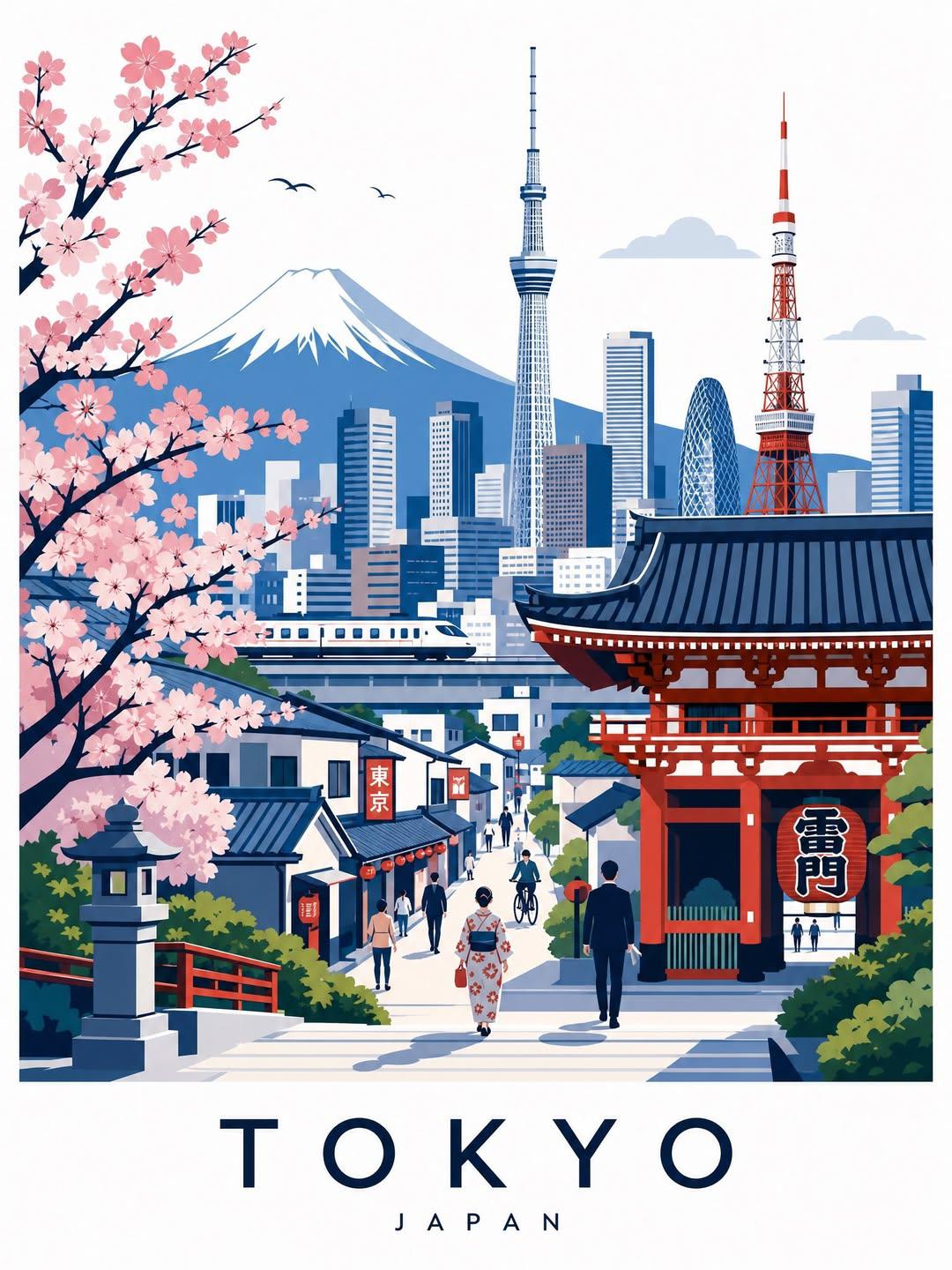
Vintage Illustrated City Travel Poster
 GPT Image 2.5OpenAIimage
{ "input": { "city_name": "{{CITY NAME}}" }, "generation": { "type": "premium_illustrated_travel_poster", "aspect_ratio": "3:4", "orientation": "portrait", "resolution": "high", "reference_mode": "use_uploaded_images_for_style_reference_only", "city_adaptation": "fully_automatic" }, "creative_direction": { "objective": "Create a beautifully composed, destination-specific illustrated travel poster that resembles a premium vintage European travel print with crisp modern vector artwork. Every generated image must feel like an authentic visual postcard of the specified city.", "art_style": { "primary": "refined_flat_vector_illustration", "secondary": "mid_century_travel_poster", "influences": [ "classic European tourism posters", "Japanese illustrated travel prints", "modern editorial vector artwork", "minimalist architectural illustration" ], "rendering": "clean geometric shapes, precise architectural outlines, layered silhouettes, controlled shading, subtle tonal gradients, carefully simplified details", "texture": "smooth matte printed-paper appearance with extremely subtle print texture", "realism_level": "stylized illustration with recognizable architectural accuracy", "avoid": [ "photorealism", "3D rendering", "watercolor effects", "rough sketching", "childish cartoon styling", "excessive gradients", "plastic-looking surfaces", "generic AI artwork" ] }, "destination_intelligence": { "instruction": "Identify the actual city, its country, and its most recognizable visual landmarks. Build the composition around a carefully selected combination of authentic architecture, local scenery, transportation, public spaces, and cultural elements.", "landmarks": "Select 2 to 4 recognizable landmarks or architectural features associated with the specified city.", "architecture": "Reproduce the city's characteristic architectural styles, rooflines, facades, towers, monuments, and urban structures.", "natural_environment": "Include locally appropriate mountains, rivers, lakes, coastlines, gardens, trees, or other landscape elements when relevant.", "transportation": "Add a locally recognizable train, tram, bus, boat, bicycle, or other transportation element only when appropriate.", "cultural_details": "Include subtle, authentic local details such as street lamps, traditional storefronts, bridges, signage, or regional vegetation.", "accuracy_rule": "Do not invent landmarks or combine unrelated cities. All recognizable locations and cultural details must correspond to the requested destination.", "fallback": "If a city has limited internationally recognizable landmarks, create an authentic composition using its actual architecture, urban character, and regional landscape." }, "composition": { "layout": "large illustrated cityscape in the upper portion, destination typography in a separate lower section", "main_illustration": { "coverage": "approximately 78 to 83 percent of the canvas height", "framing": "a carefully composed, almost rectangular scenic illustration with clean edges", "perspective": "slightly elevated or street-level architectural perspective chosen to best showcase the destination", "depth_layers": [ "foreground with flowers, trees, benches, railings, steps, pedestrians, or waterfront details", "middle ground with streets, bridges, public spaces, transport, and prominent architecture", "background with the city's skyline, secondary landmarks, and natural landscape" ], "visual_hierarchy": "one dominant landmark supported by complementary architectural elements", "spacing": "balanced, intentional, and visually rich without overcrowding", "human_figures": "small, elegantly simplified pedestrians used sparingly to establish scale", "sky": "clean pale sky with a few minimal stylized clouds or birds when appropriate" }, "foreground_details": { "instruction": "Select destination-appropriate details that frame the scene naturally without obscuring its important landmarks.", "density": "moderate", "rule": "Avoid forcing flowers, boats, trees, or other elements into cities where they would look geographically or compositionally unnatural." }, "background": { "color": "warm white or very pale ivory", "style": "minimal, uncluttered, print-ready", "negative_space": "generous space surrounding the illustration and destination typography" } }, "color_palette": { "primary": [ "deep navy blue", "cobalt blue", "sky blue", "warm ivory", "soft cream" ], "secondary": [ "muted forest green", "sage green", "warm architectural beige", "terracotta", "soft grey" ], "adaptation": "Adjust accent colors to complement the city's architecture, national character, and natural surroundings.", "contrast": "clear and harmonious with strong separation between architectural layers", "saturation": "moderate, elegant, and print-friendly", "lighting": "bright, soft daylight with minimal hard shadows" }, "typography": { "placement": "centered beneath the illustration", "city_name": { "text": "{{CITY NAME IN UPPERCASE}}", "font_style": "large, elegant, geometric sans-serif", "weight": "regular to medium", "letter_spacing": "very wide", "alignment": "center", "color": "deep navy blue", "importance": "primary visual anchor of the lower section" }, "country_name": { "text": "Automatically identify the correct country and display its name in uppercase", "font_style": "small, clean sans-serif", "letter_spacing": "wide", "alignment": "center", "color": "muted navy or a restrained destination-appropriate accent", "position": "directly below the city name" }, "decorative_elements": { "horizontal_lines": "thin symmetrical horizontal lines on either side of the country name when visually appropriate"
Details
- Type
- AI Image Prompts
- Aspect Ratio
- 3:4
- Updated
- Oct 23, 2026
How to use this prompt
- 1Copy the full prompt with the copy button above.
- 2Open GPT Image 2.5 by OpenAI, or any image generator with a similar style range.
- 3Paste the prompt, then swap the subject and style keywords to match your idea.
- 4Match the example's settings (3:4 · Vector · Poster · Vintage), then iterate — small wording changes shift the output a lot.
Frequently asked questions
Which AI model generated this image?
This image was generated with GPT Image 2.5 by OpenAI. The prompt on this page is the exact text used to create it.
What settings does this prompt use?
The example was generated with GPT Image 2.5 using: 3:4 · Vector · Poster · Vintage. Reusing these settings gives the closest match.
How do I get similar results?
Copy the prompt as-is first, then replace only the subject while keeping the style, lighting, and composition keywords. Generate a few variations — outputs differ between runs.
Can I modify this prompt?
Yes. Prompts work best as starting points — adjust descriptors, aspect ratio, or style tags to make the output your own.