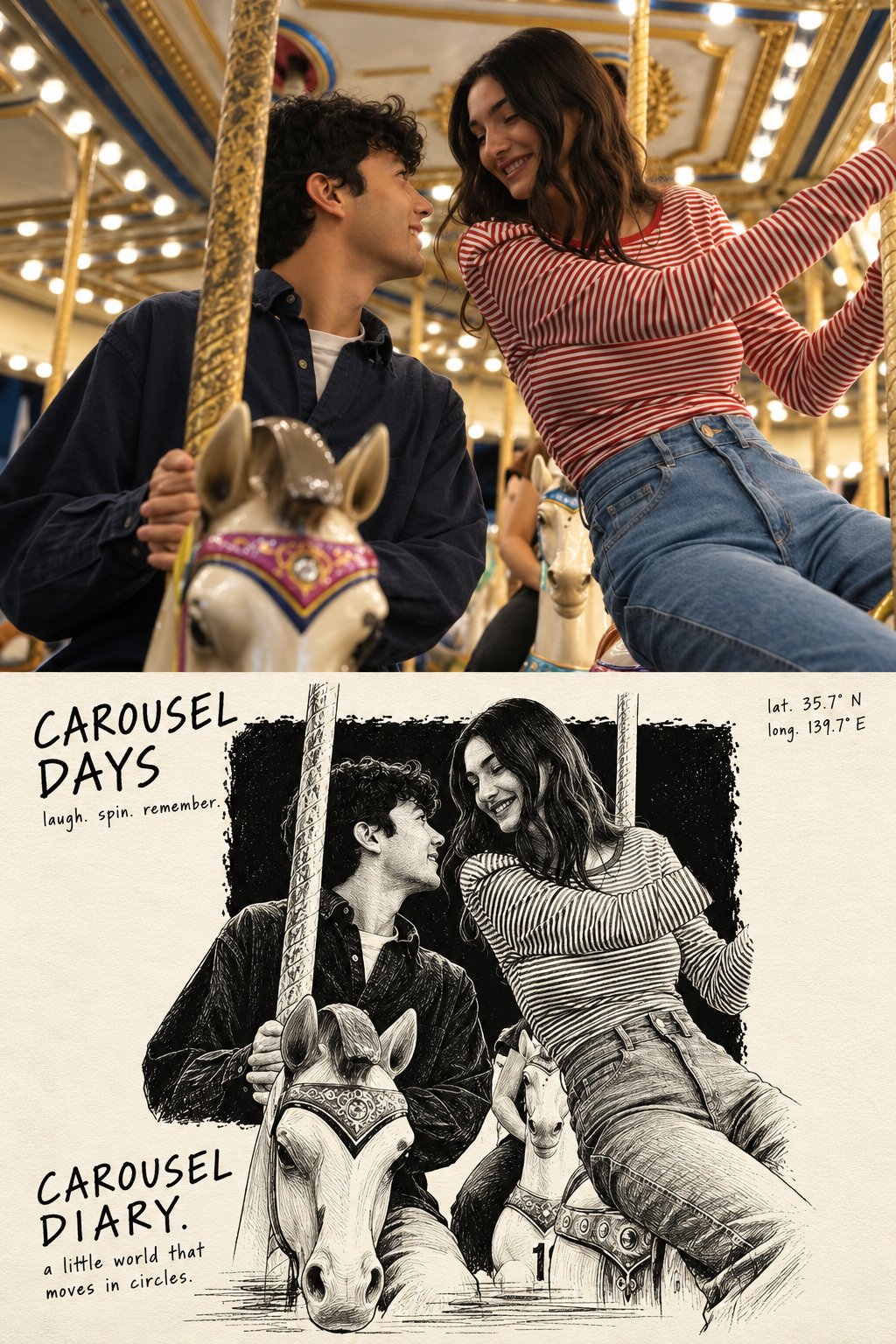
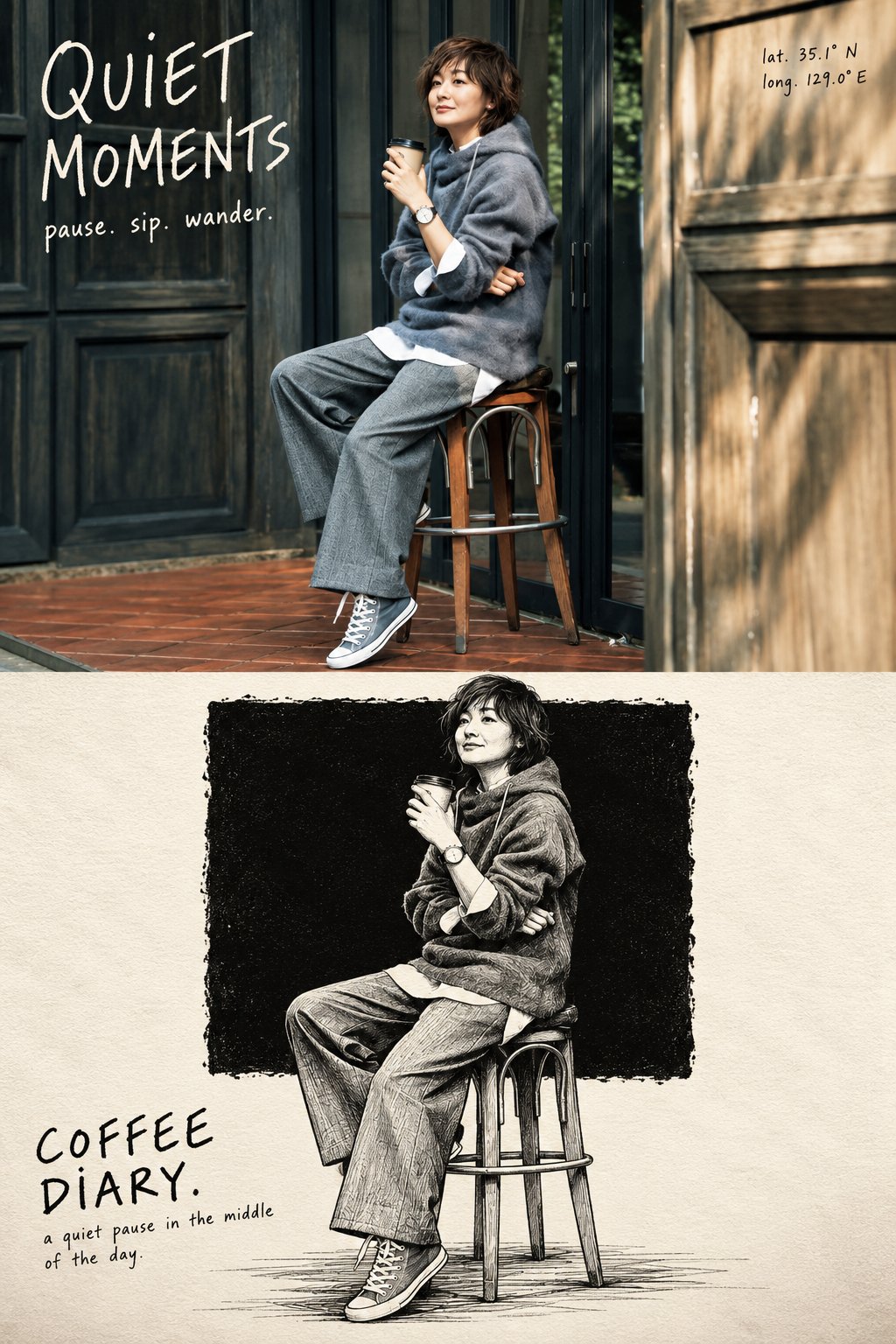
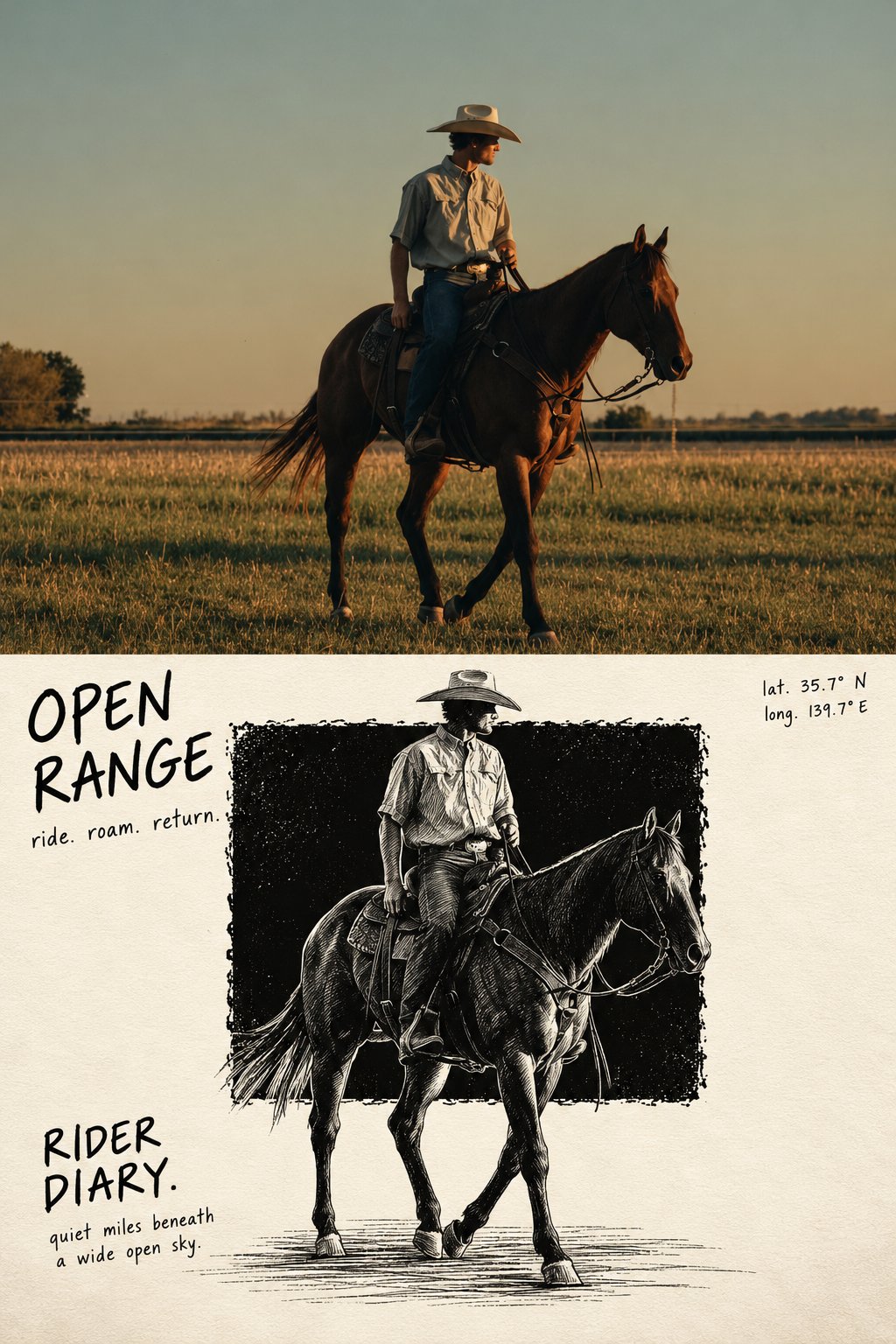
Split Editorial Photo and Scratchboard Poster
 GPT Image 2.5OpenAIimage
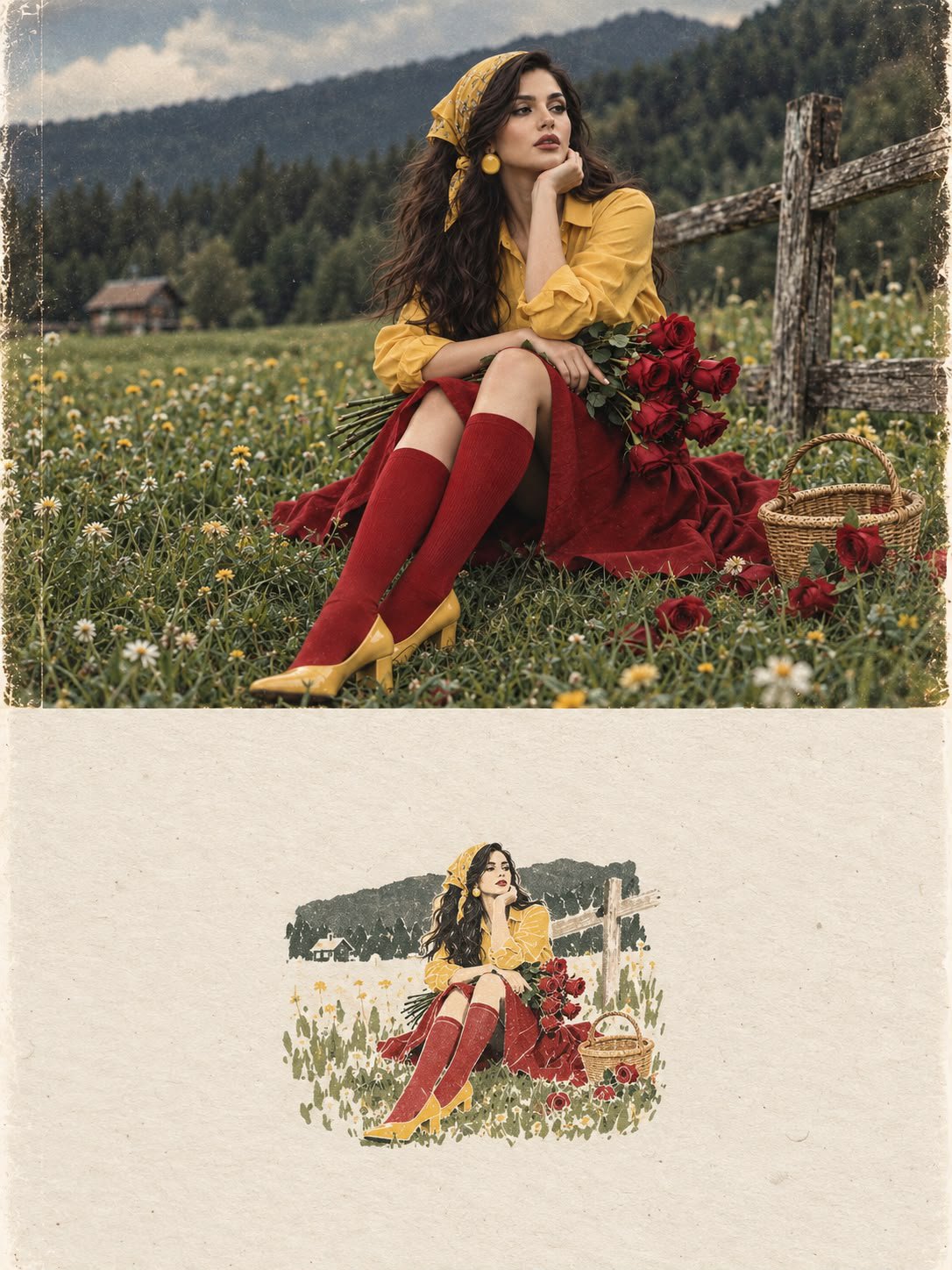
Create a high-resolution, vertical 2:3 editorial art poster using the uploaded reference photo. TOP HALF: Use the original photograph full bleed, preserving the subject's identity, appearance, natural lighting, and photographic quality. Crop carefully if needed. No borders or margins. BOTTOM HALF: On textured ivory paper, create a monochrome scratchboard illustration of only the main subject and essential accessories. Place a large, rough-edged black ink block in the center. The figure must be larger than the block, with roughly two-thirds inside it and the lower third breaking out onto the ivory paper. Add loose horizontal ink strokes beneath the feet for grounding. Inside the black block, use fine white and light-grey etched linework. Outside it, continue the same figure in expressive black pen strokes on ivory. Ensure a seamless transition between both tonal styles. Avoid excessive hatching and unnecessary background details. COLORS: The bottom half must use only black, white, and ivory, with subtle paper grain. TYPOGRAPHY: Use rough, upright handwritten lettering. - Top left: a 2 to 4 word title across two lines, followed by three short lowercase verbs separated by periods. - Top right: latitude and longitude on two lines only. - Bottom left: the location or theme followed by “DIARY.”, with a short descriptive sentence beneath. - Keep all typography black on ivory, natural and imperfect, never cursive. FINAL COMPOSITION: Exactly one standalone poster with two equal horizontal halves and one perfectly straight dividing line. Preserve the original subject's identity and proportions. Maintain generous negative space and a restrained, collectible editorial aesthetic, combining documentary photography with expressive hand-printed illustration. Print quality, 2:3 vertical aspect ratio.
Details
- Type
- AI Image Prompts
- Aspect Ratio
- 2:3
- Updated
- Oct 23, 2026
Category
How to use this prompt
- 1Copy the full prompt with the copy button above.
- 2Open GPT Image 2.5 by OpenAI, or any image generator with a similar style range.
- 3Paste the prompt, then swap the subject and style keywords to match your idea.
- 4Match the example's settings (2:3 · Poster · Digital Art · Black & White), then iterate — small wording changes shift the output a lot.
Frequently asked questions
Which AI model generated this image?
This image was generated with GPT Image 2.5 by OpenAI. The prompt on this page is the exact text used to create it.
What settings does this prompt use?
The example was generated with GPT Image 2.5 using: 2:3 · Poster · Digital Art · Black & White. Reusing these settings gives the closest match.
How do I get similar results?
Copy the prompt as-is first, then replace only the subject while keeping the style, lighting, and composition keywords. Generate a few variations — outputs differ between runs.
Can I modify this prompt?
Yes. Prompts work best as starting points — adjust descriptors, aspect ratio, or style tags to make the output your own.