Rubber Stamp Photo Comparison Poster
 GPT Image 2.5OpenAIimage
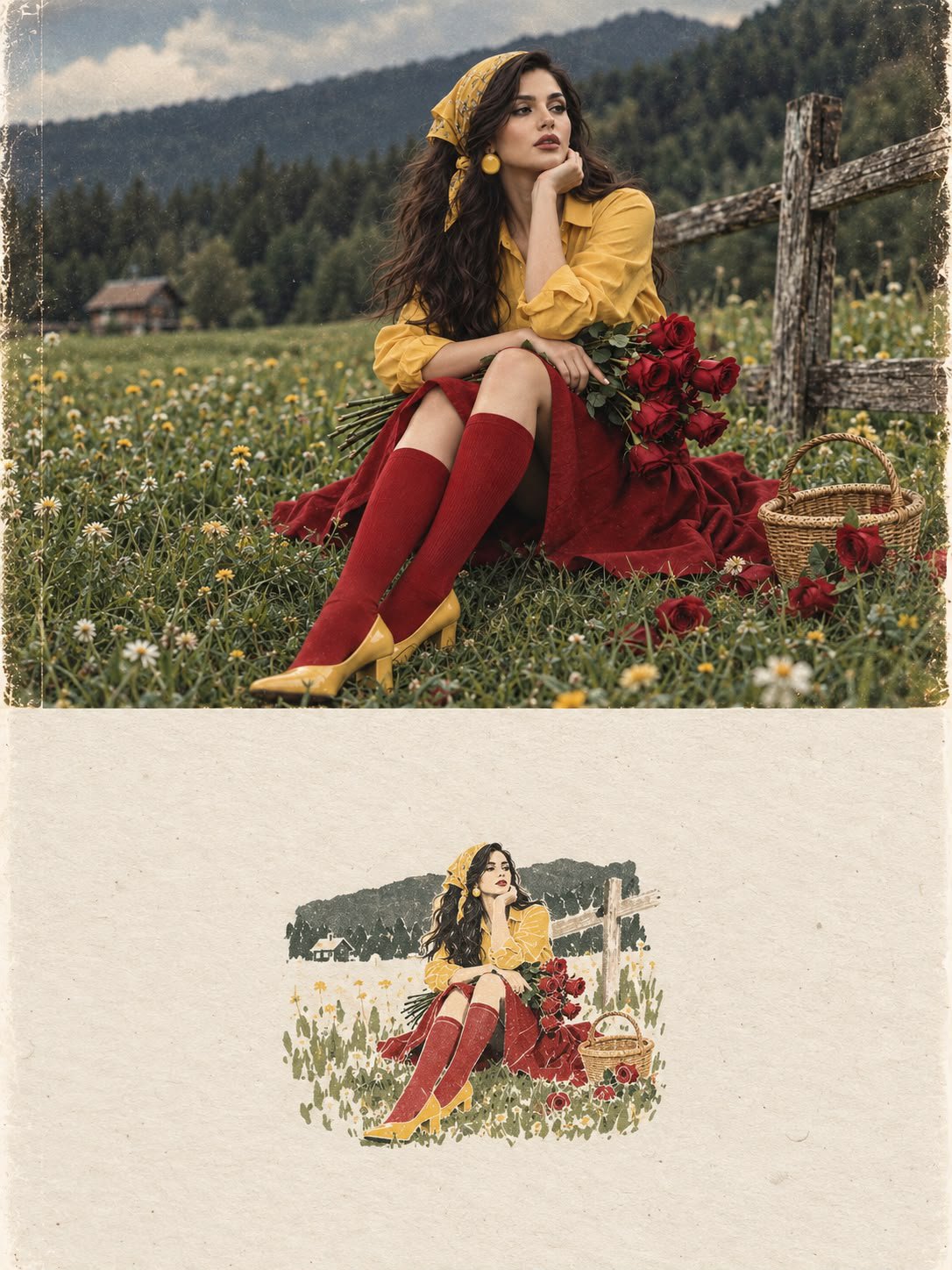
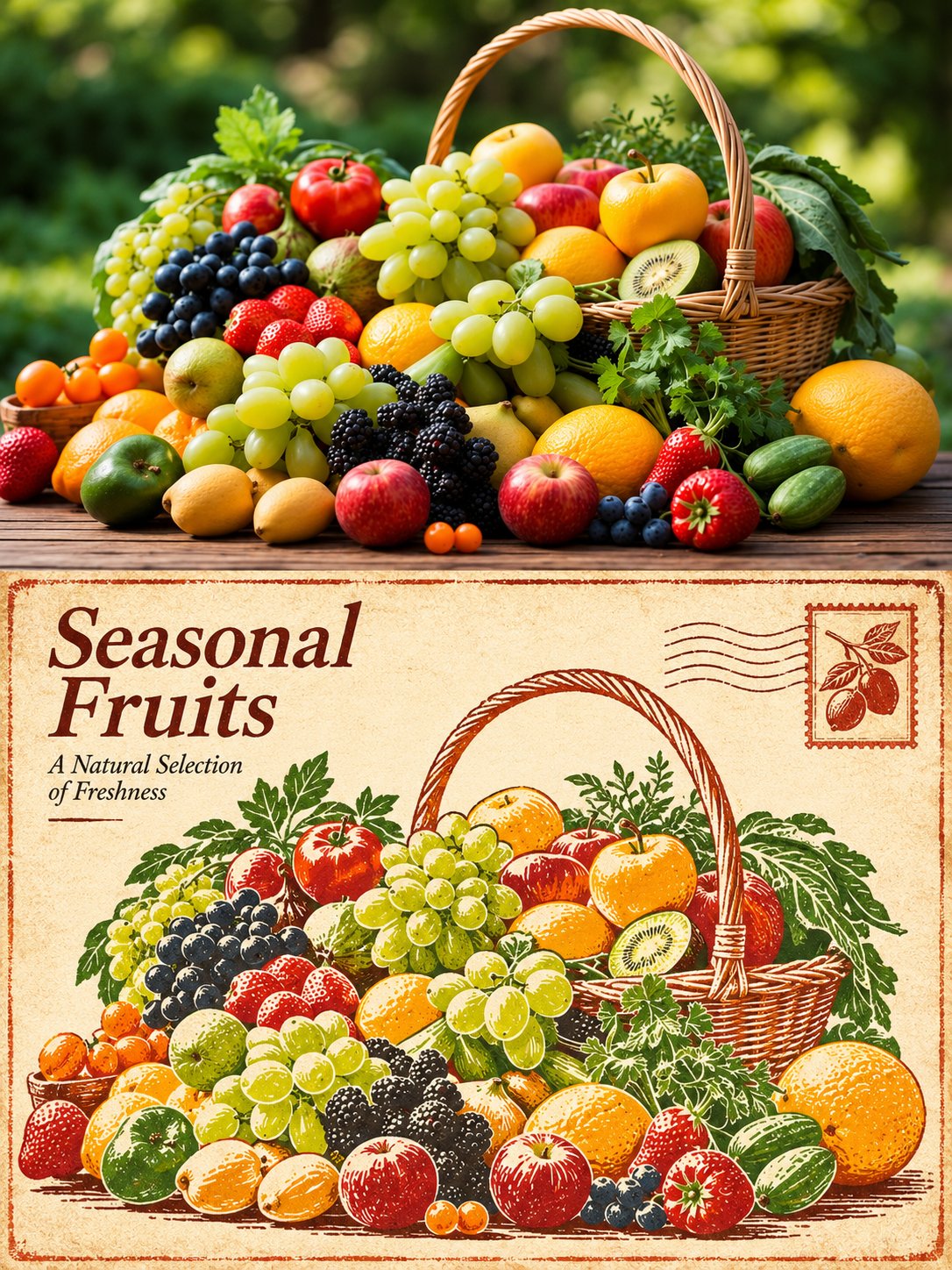
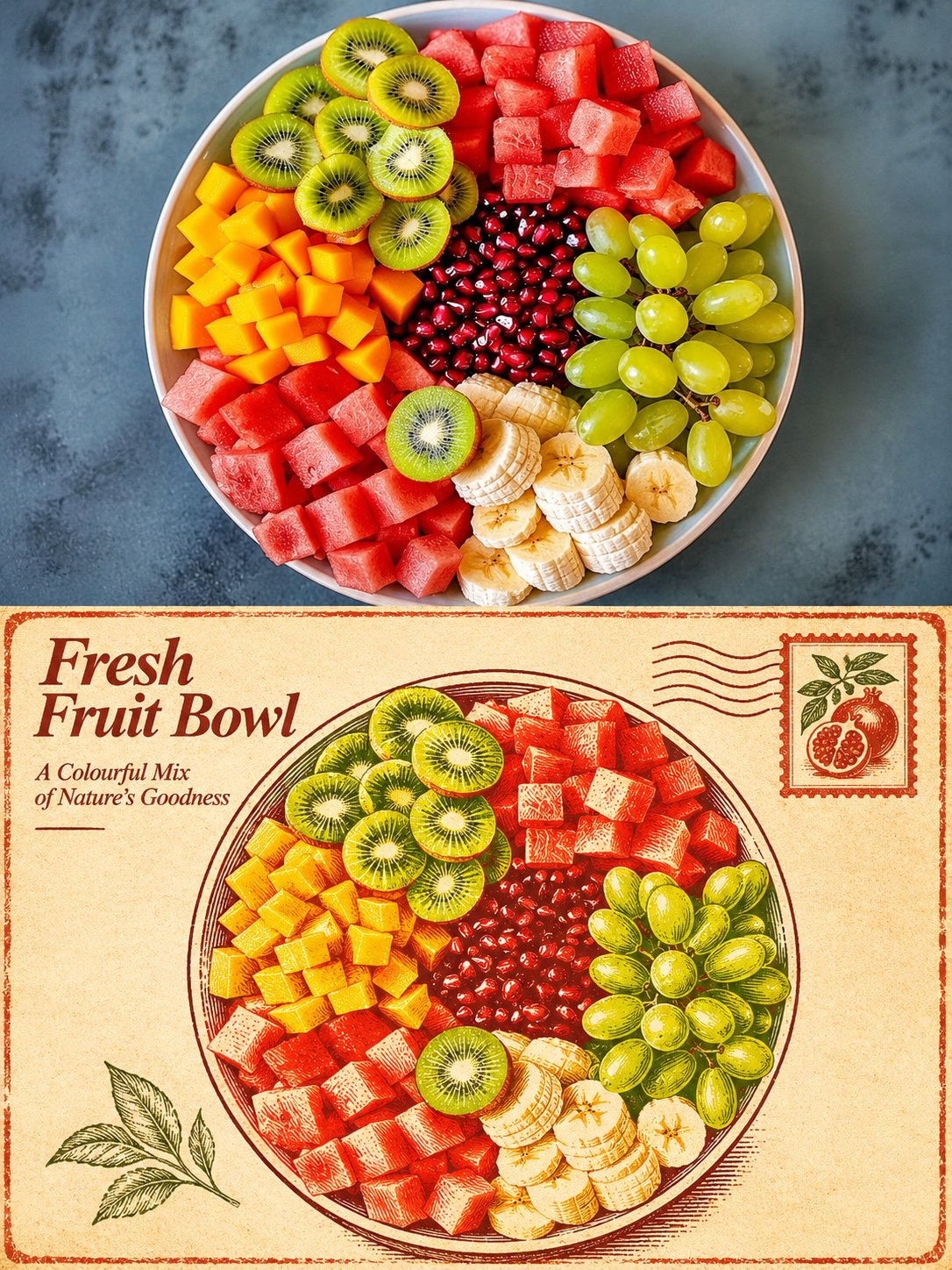
RUBBER STAMP PRINT - PHOTOGRAPHY × DESIGN POSTER TASK: Transform each uploaded photograph into an individual 3:4 vertical comparison poster. Never combine multiple photographs. Adapt the design naturally to the original subject and scene. COMPOSITION: Divide the canvas into two perfectly equal horizontal sections (50% each). The top half retains the original photograph; the bottom half presents its rubber stamp print interpretation. Both sections must meet at a clean, sharp horizontal boundary with no gaps, gradients or overlap. Keep all text and decorations inside the bottom half. Recommended resolution: 1200 × 1600 px. TOP — ORIGINAL PHOTOGRAPH: Preserve the subject's identity, quantity, proportions, pose, silhouette, defining details, perspective, positioning, natural lighting and original colours. Apply only subtle colour correction. Minor background cropping or expansion is allowed, but never distort, duplicate, mirror, move or redraw the subject. No text, borders or decorative elements. BOTTOM — RUBBER STAMP ART: Artistically reinterpret the same subject and composition as an authentic rubber stamp relief print. Use simplified engraved lines, bold ink shapes and balanced negative space while maintaining recognizability. Do not simply apply a printmaking filter to the photograph. Use warm, light-toned paper with a subtle distressed border, one small illustrative stamp and a minimal text-free postmark, all contained within this section. COLOURS & TEXTURES: Derive a limited, harmonious colour palette from the original photograph. Preserve the subject's natural colour character. Use a deep tone from the photograph's shadows for engraved lines and its original colours for solid ink shapes. Add subtle ink imperfections, slight printing irregularities and delicate paper fibres for authentic printmaking texture. TYPOGRAPHY: In the upper-left negative space of the bottom section, place a short, elegant English serif title with one brief complementary line underneath. Generate wording based on the subject and mood. Ensure correct spelling. Avoid invented locations, dates, coordinates, brands, signatures, usernames or placeholder text. OVERALL STYLE: Quiet, refined and sophisticated, resembling a collectible fine-art editorial publication. Create visual hierarchy through thoughtful composition, paper texture, limited colours and negative space. AVOID: Combining photographs, changing the subject, unrelated scenes, excessive decorations, separate title bars, duplicated or distorted text, new logos, signatures, watermarks, illustration effects in the photographic section, decorations crossing the dividing line, excessive distressing or large dirty areas. Preserve original logos and markings as authentic details of the photograph.
Details
- Type
- AI Image Prompts
- Aspect Ratio
- 3:4
- Updated
- Nov 5, 2026
Category
How to use this prompt
- 1Copy the full prompt with the copy button above.
- 2Open GPT Image 2.5 by OpenAI, or any image generator with a similar style range.
- 3Paste the prompt, then swap the subject and style keywords to match your idea.
- 4Match the example's settings (3:4 · Poster · Digital Art · Vintage), then iterate — small wording changes shift the output a lot.
Frequently asked questions
Which AI model generated this image?
This image was generated with GPT Image 2.5 by OpenAI. The prompt on this page is the exact text used to create it.
What settings does this prompt use?
The example was generated with GPT Image 2.5 using: 3:4 · Poster · Digital Art · Vintage. Reusing these settings gives the closest match.
How do I get similar results?
Copy the prompt as-is first, then replace only the subject while keeping the style, lighting, and composition keywords. Generate a few variations — outputs differ between runs.
Can I modify this prompt?
Yes. Prompts work best as starting points — adjust descriptors, aspect ratio, or style tags to make the output your own.