Late Night Fridge Realistic Snapshot
 GPT Image 2OpenAIimage
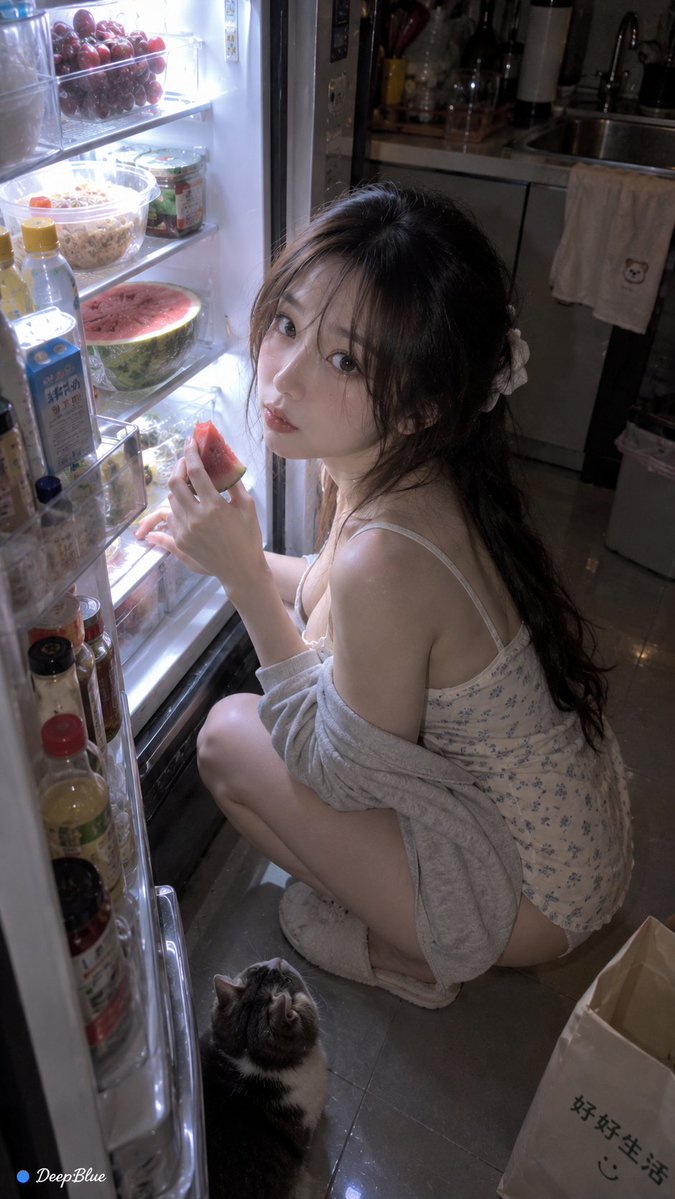
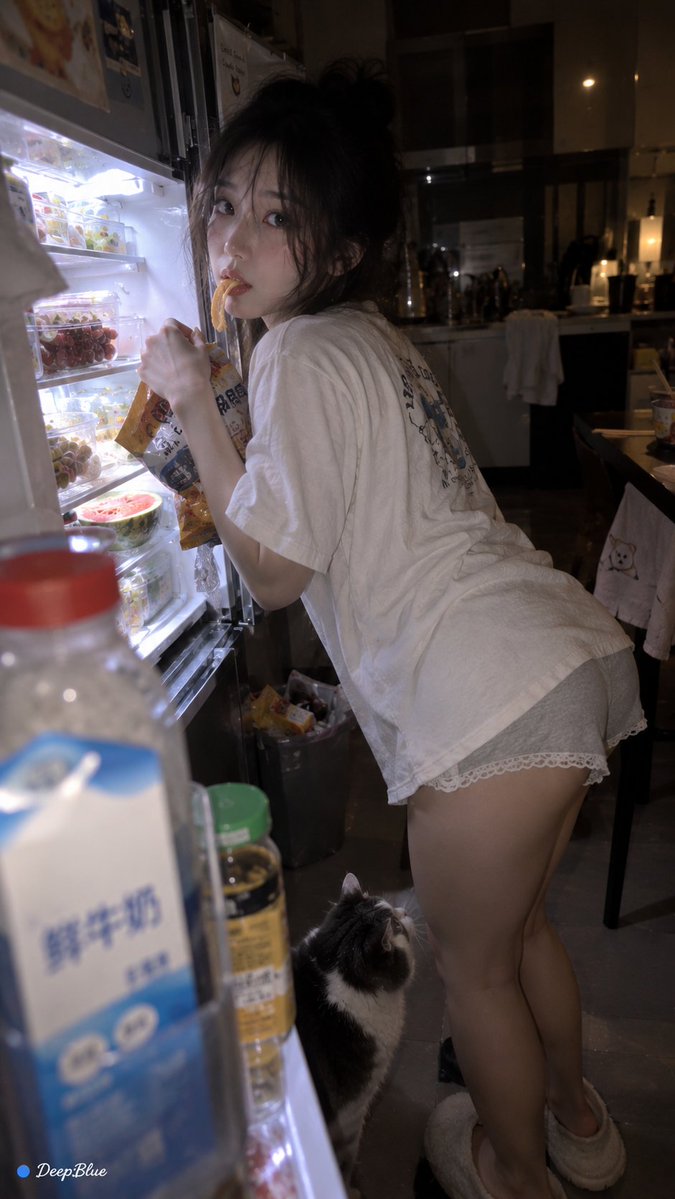
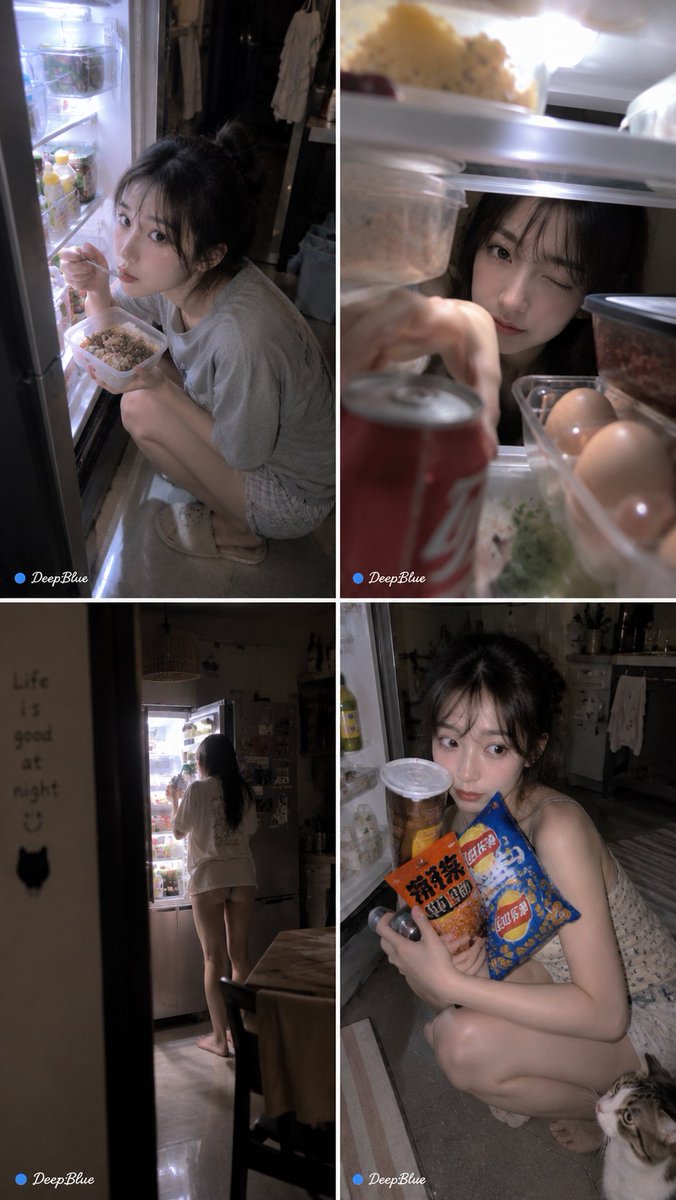
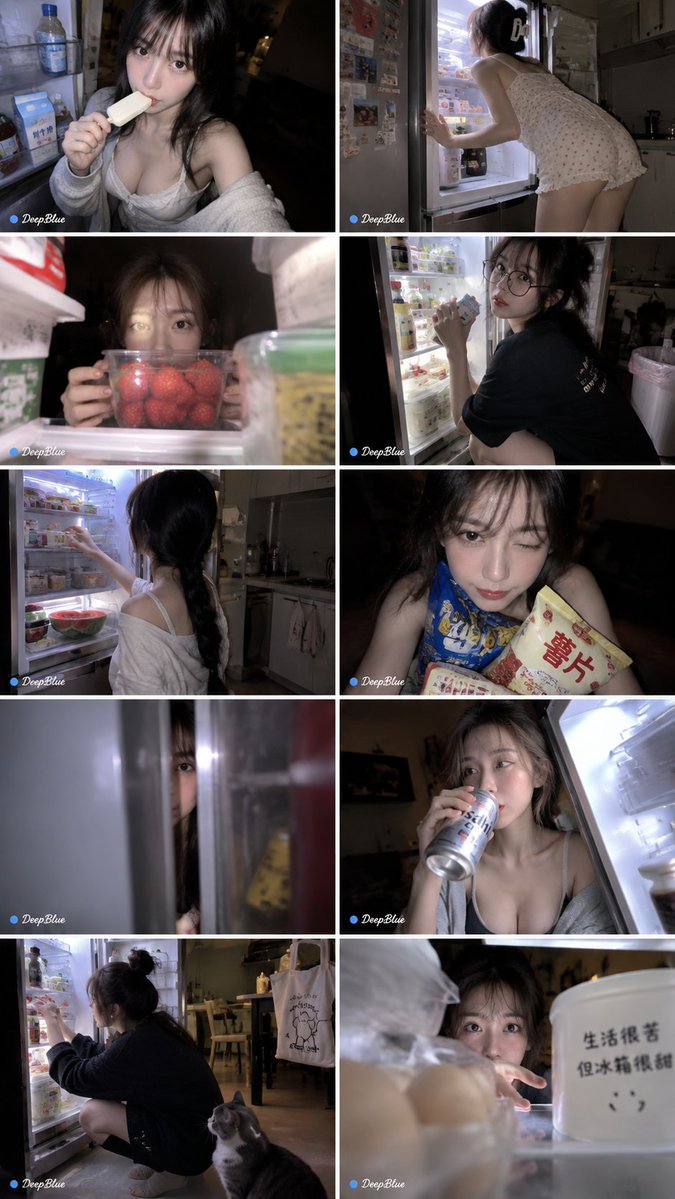
Vertical realistic phone snapshot, late-night residential kitchen, adult woman opening the refrigerator looking for food; overall like a roommate standing nearby suddenly taking a phone photo of a real-life moment. Random number of people, random positioning, random fridge contents, random actions, random camera angles; the person may be squatting while rummaging through the fridge, bending over to look, standing holding a drink in a daze, looking back at the camera, shielding the fridge light with a hand, or carrying an armful of snacks. Random camera angles — view from inside the fridge, ultra-close wide-angle, low angle, candid from the side-rear, blocked by a door gap, half-face cropping, fridge light overexposure, mirror reflection, slight motion blur; chosen randomly. The fridge randomly contains drinks, leftovers, eggs, plastic containers, sauces, half a watermelon, takeout boxes,保鲜袋, weird snacks; each shot highlights only a few real items. The kitchen background randomly includes a sink, trash can, magnetic stickers, dining table, unput-away shopping bags, washed cups, and a towel hanging to dry. The fridge's cold white light is the main light source, with the surrounding environment darker, real phone auto-exposure, partial highlight exposure on the person's face, slight noise and compression, realistic everyday texture. Gacha focus: fridge contents, person's actions, camera position, and facial expression are random; one slightly absurd but plausible object is allowed, while the overall scene stays realistic. Bottom-left signature "● DeepBlue". n=10
Details
- Type
- AI Image Prompts
- Aspect Ratio
- 675:1199
- Updated
- Sep 9, 2026
How to use this prompt
- 1Copy the full prompt with the copy button above.
- 2Open GPT Image 2 by OpenAI, or any image generator with a similar style range.
- 3Paste the prompt, then swap the subject and style keywords to match your idea.
- 4Match the example's settings (675:1199 · Cinematic · Realistic · Dark), then iterate — small wording changes shift the output a lot.
Frequently asked questions
Which AI model generated this image?
This image was generated with GPT Image 2 by OpenAI. The prompt on this page is the exact text used to create it.
What settings does this prompt use?
The example was generated with GPT Image 2 using: 675:1199 · Cinematic · Realistic · Dark. Reusing these settings gives the closest match.
How do I get similar results?
Copy the prompt as-is first, then replace only the subject while keeping the style, lighting, and composition keywords. Generate a few variations — outputs differ between runs.
Can I modify this prompt?
Yes. Prompts work best as starting points — adjust descriptors, aspect ratio, or style tags to make the output your own.