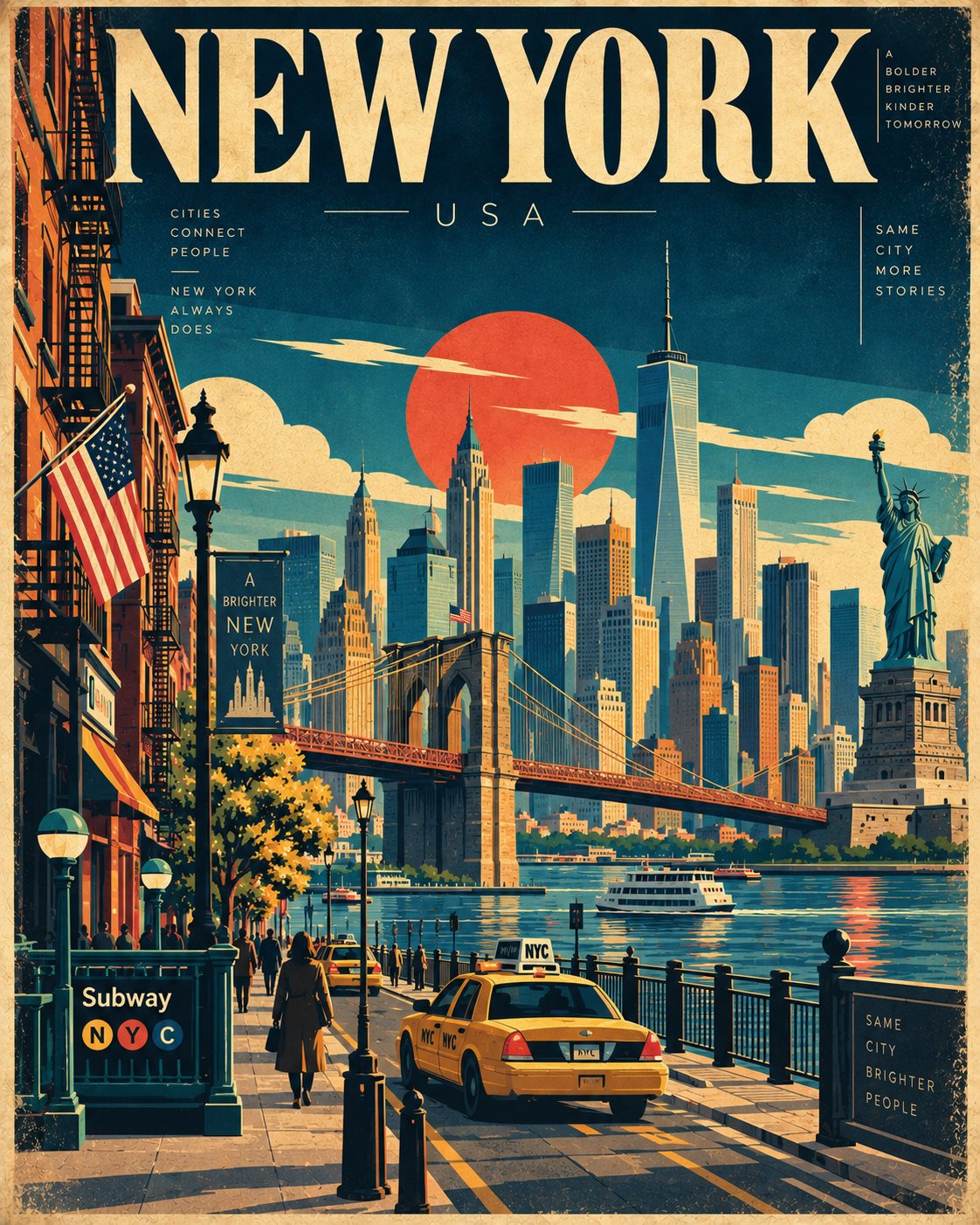
Japanese Geometric Travel Poster
 GPT Image 2.5OpenAIimage
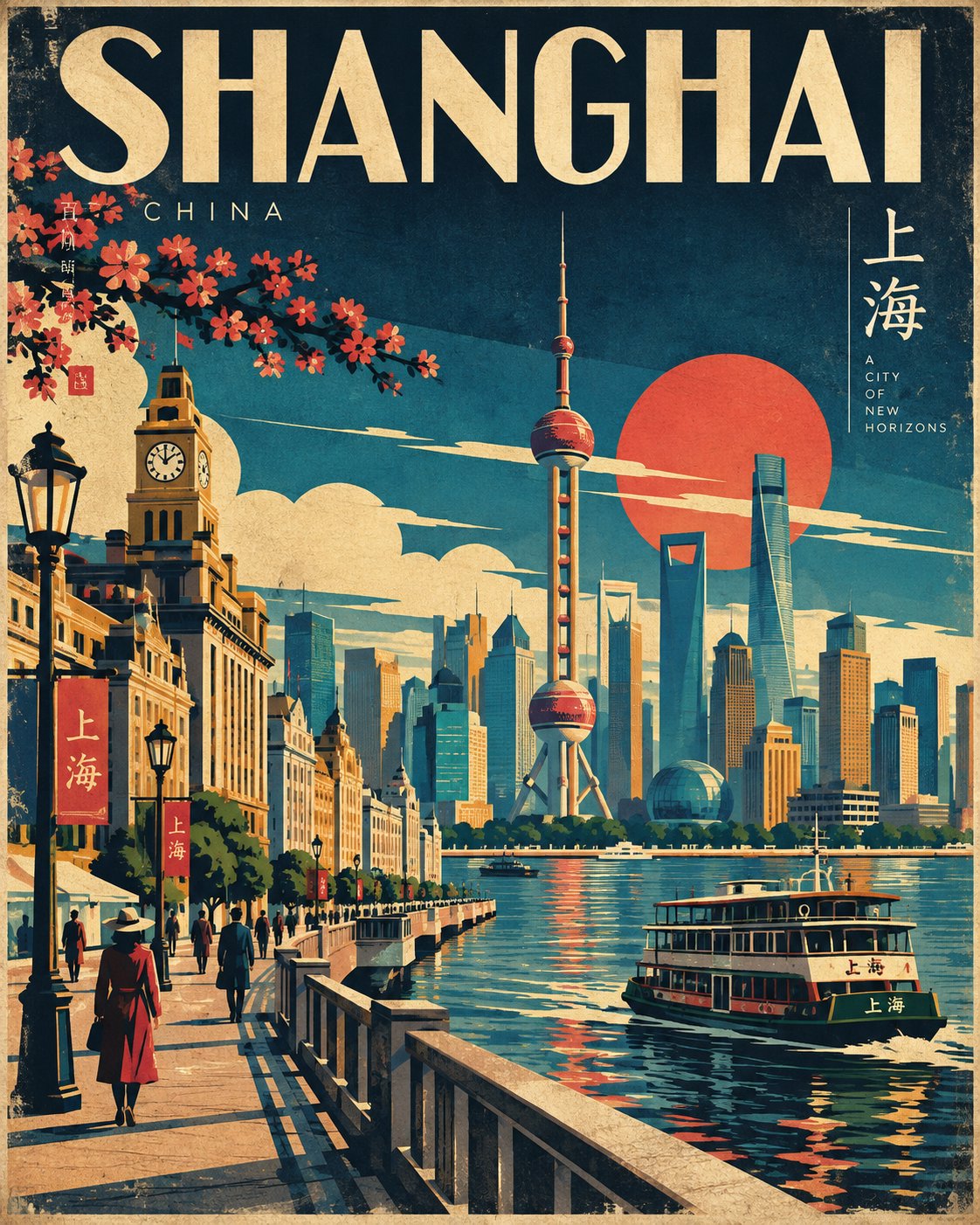
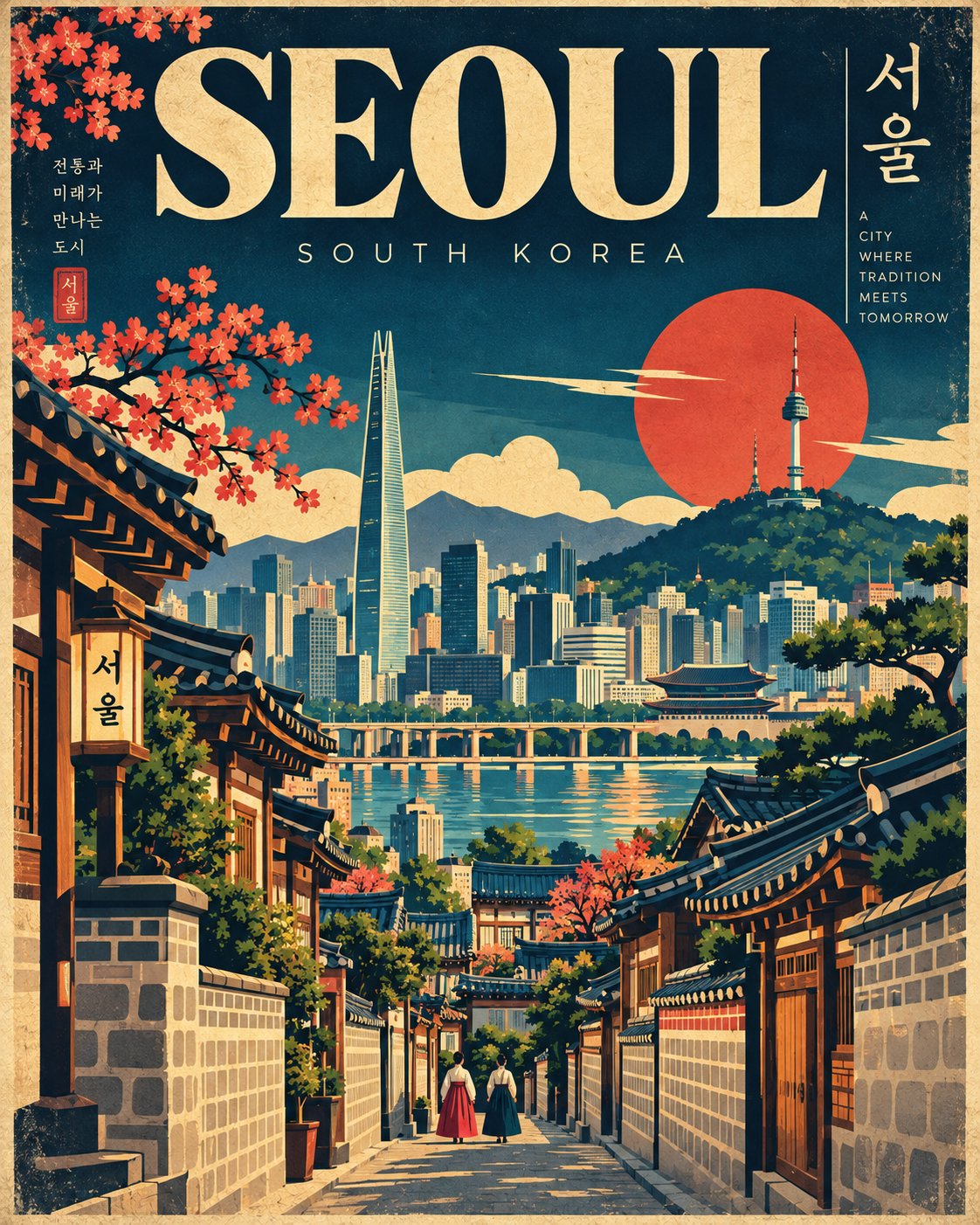
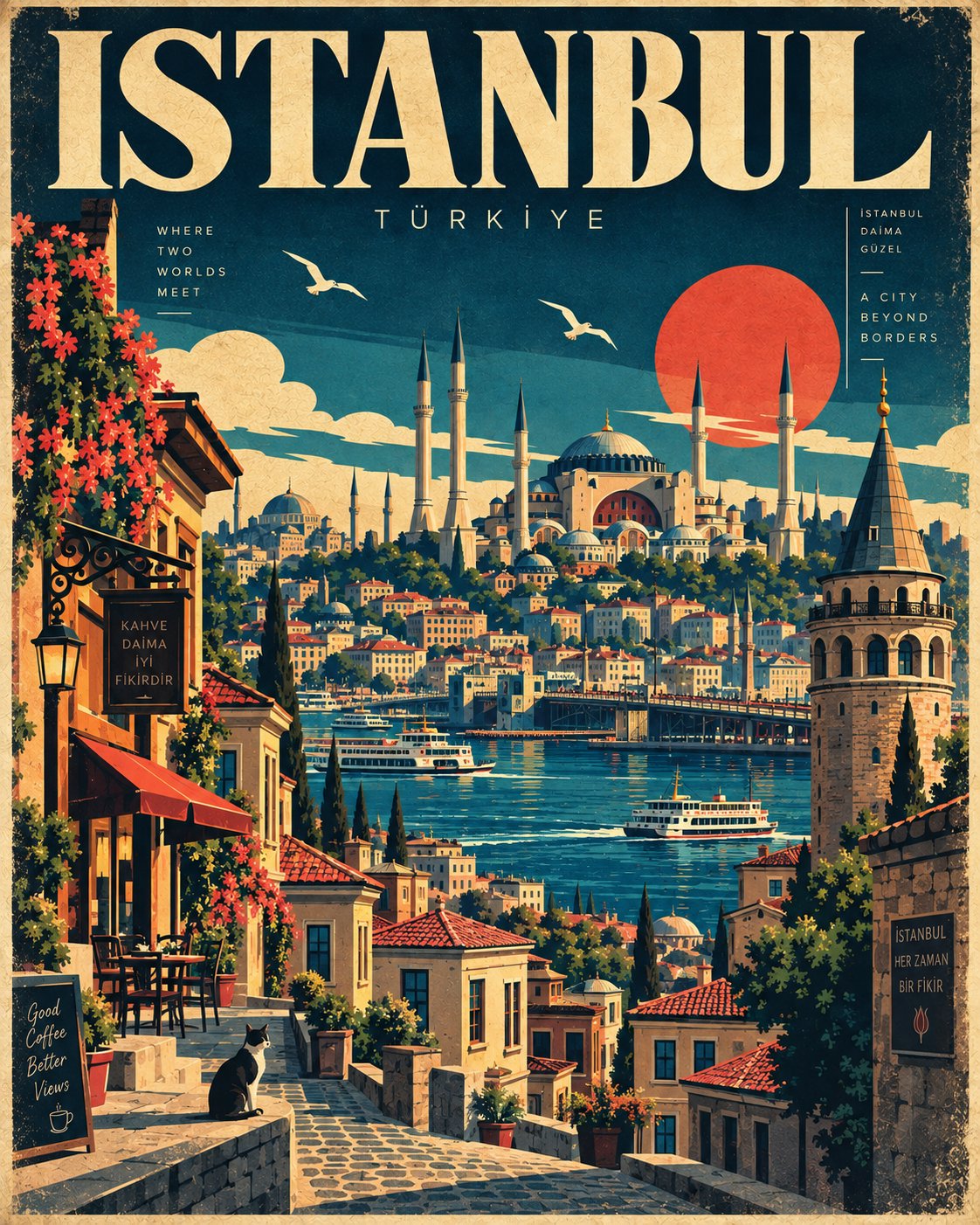
Create a premium retro-modern Japanese geometric travel poster for [CITY, COUNTRY] in a STRICT 4:5 VERTICAL ASPECT RATIO. Use a sophisticated flat-vector, mid-century Japanese travel-poster aesthetic with bold geometric shapes, elegant editorial composition, simplified architecture, and strong visual storytelling. Automatically identify and feature the most iconic landmark, architecture, streets, transportation, landscape, cultural elements, and atmosphere of [CITY, COUNTRY] in one cohesive original scene. Create clear foreground, middle ground, and background depth with one dominant focal point, strong perspective, geometric streets, architectural silhouettes, simplified vegetation, atmospheric sky, and minimal human figures for scale. Use a limited retro palette of deep navy, indigo, teal, turquoise, warm cream, mustard, ochre, coral, vermillion, and forest green, with strong color blocking and dramatic graphic lighting. Use geometric shadows and highlights rather than realistic lighting or complex gradients. Add subtle vintage paper grain, screen-print texture, slight ink variation, and restrained halftone detail for an authentic printed-poster finish. Keep landmarks and cultural elements recognizable yet artistically simplified, with clean shapes, crisp edges, balanced composition, controlled perspective, and strong readability from a distance. Avoid: photorealism, 3D rendering, glossy surfaces, excessive detail, complex gradients, neon colors, clutter, heavy grunge, excessive outlines, bokeh, lens flare, distorted architecture, warped perspective, random objects, illegible text, and generic AI-art appearance. FINAL LOOK: Museum-quality collectible Japanese tourism poster—bold, elegant, atmospheric, culturally distinctive, cohesive, and professionally designed. IMPORTANT: Strictly maintain the 4:5 vertical composition. Create a completely original artwork specifically adapted to [CITY, COUNTRY]. Do not copy any existing artwork.
Details
- Type
- AI Image Prompts
- Aspect Ratio
- 561:701
- Updated
- Sep 14, 2026
How to use this prompt
- 1Copy the full prompt with the copy button above.
- 2Open GPT Image 2.5 by OpenAI, or any image generator with a similar style range.
- 3Paste the prompt, then swap the subject and style keywords to match your idea.
- 4Match the example's settings (561:701 · Vector · Poster · Vintage), then iterate — small wording changes shift the output a lot.
Frequently asked questions
Which AI model generated this image?
This image was generated with GPT Image 2.5 by OpenAI. The prompt on this page is the exact text used to create it.
What settings does this prompt use?
The example was generated with GPT Image 2.5 using: 561:701 · Vector · Poster · Vintage. Reusing these settings gives the closest match.
How do I get similar results?
Copy the prompt as-is first, then replace only the subject while keeping the style, lighting, and composition keywords. Generate a few variations — outputs differ between runs.
Can I modify this prompt?
Yes. Prompts work best as starting points — adjust descriptors, aspect ratio, or style tags to make the output your own.
![Create a premium vertical 4:5 editorial travel poster for [COUNTRY], where the outline of the countr — AI image prompt — GPT Image 2.5](https://cdn.ahaprompt.app/harvest-media/import-1789369064970-j9jipe.jpg)
![Create a sophisticated, dreamy editorial magazine cover titled “[COUNTRY NAME] — A COUNTRY IN ONE DR — AI image prompt — GPT Image 2.5](https://cdn.ahaprompt.app/harvest-media/import-1789368946131-xefjx1.jpg)
![2x2 grid, 9:16, 4 goat chess players who passed away [SUBJECT] :: single standalone vertical tribute — AI image prompt — GPT Image 2.5](https://cdn.ahaprompt.app/harvest-media/import-1789139801507-ah2jvt.jpg)
![Create a premium educational travel poster featuring [STRUCTURE NAME], one of the world’s most famou — AI image prompt — GPT Image 2.5](https://cdn.ahaprompt.app/harvest-media/import-1789369131185-x1iuzs.jpg)
![Create a premium cinematic luxury tourism poster for [COUNTRY / DESTINATION] in a STRICT 4:5 vertica — AI image prompt — GPT Image 2.5](https://cdn.ahaprompt.app/harvest-media/import-1789369001673-dctuvc.jpg)
![Create a premium contemporary editorial art poster for [LOCATION] in a playful Japanese design-ZINE — AI image prompt — GPT Image 2.5](https://cdn.ahaprompt.app/harvest-media/import-1789139846025-v6z310.jpg)