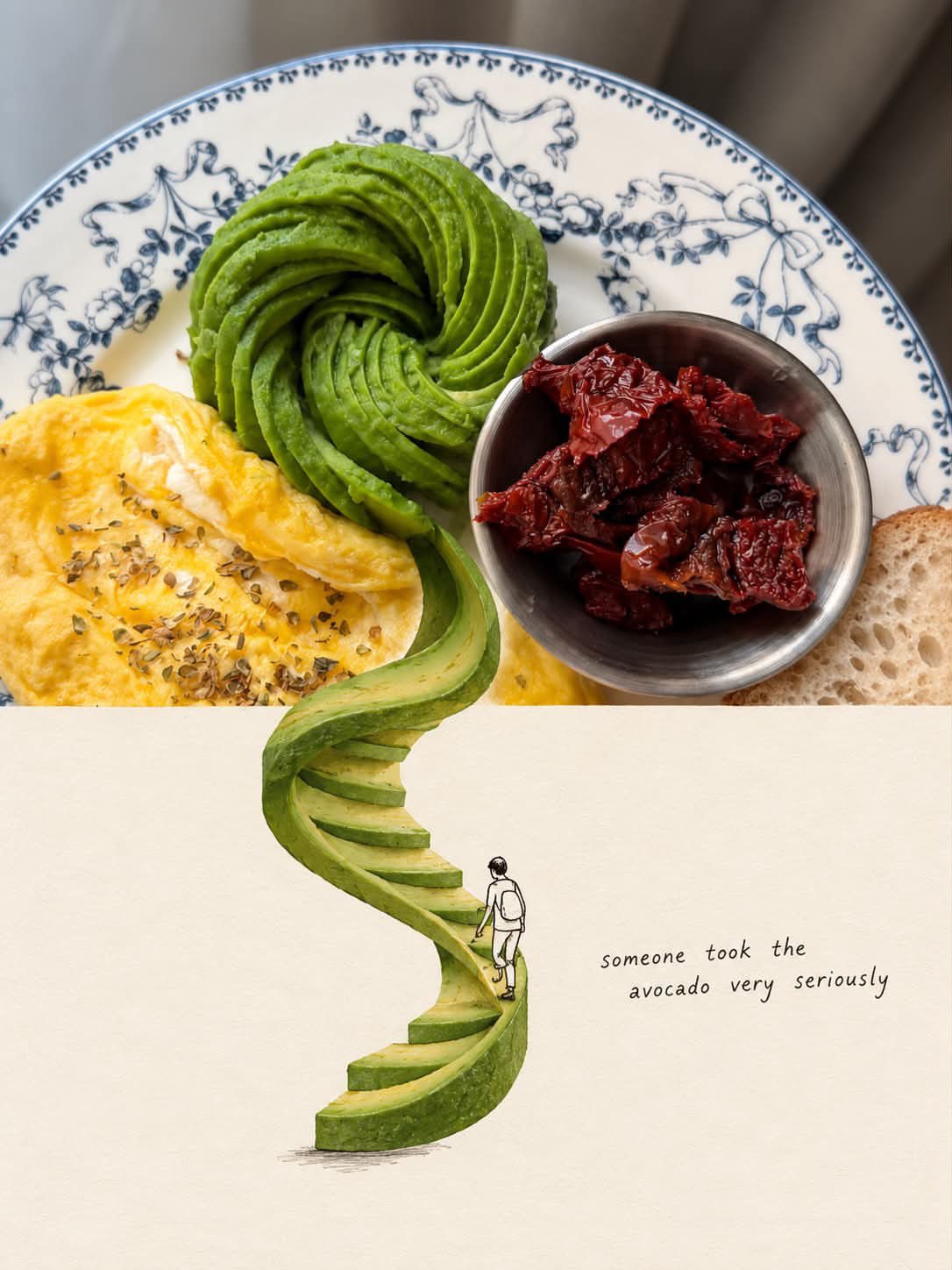
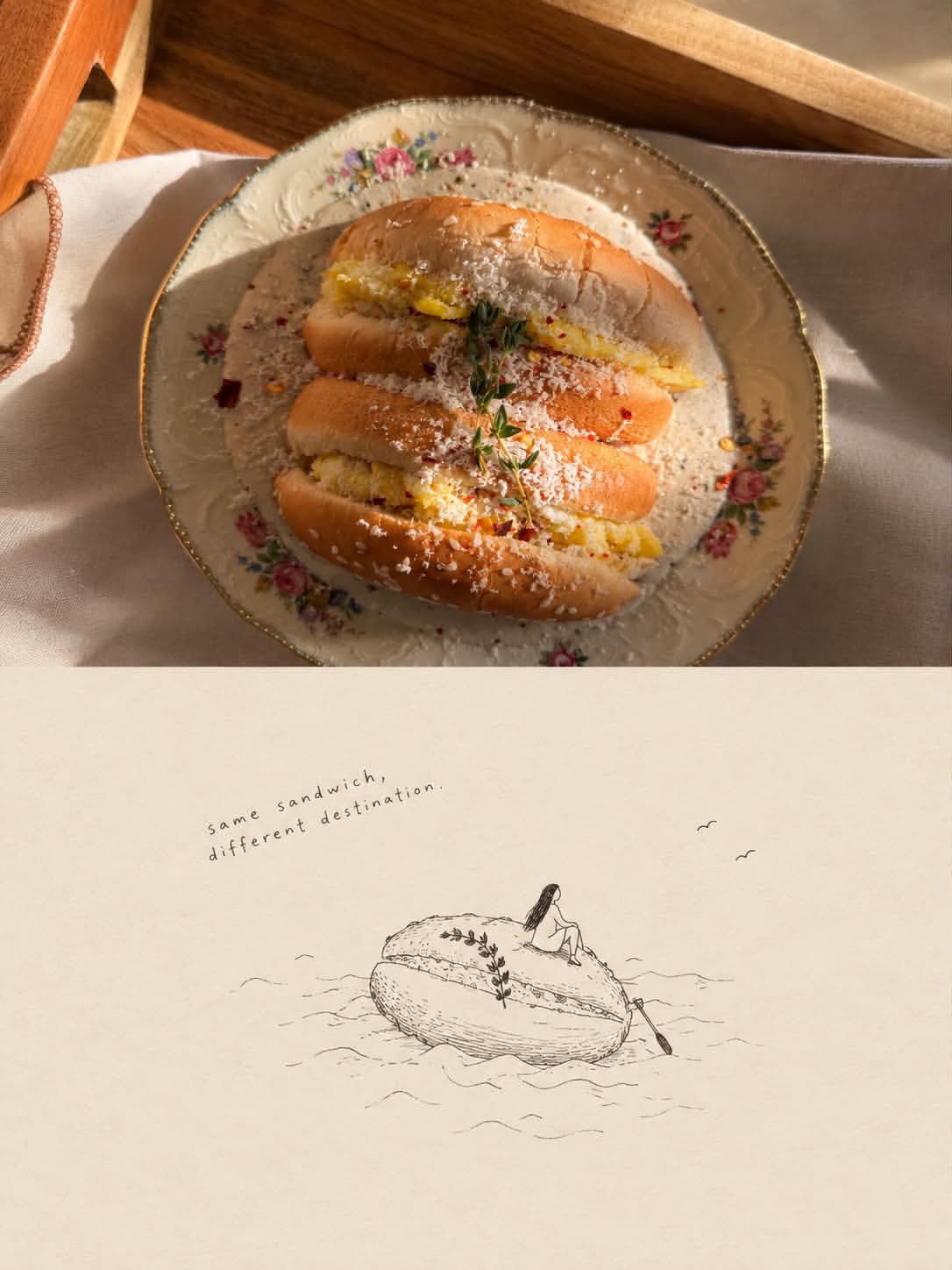
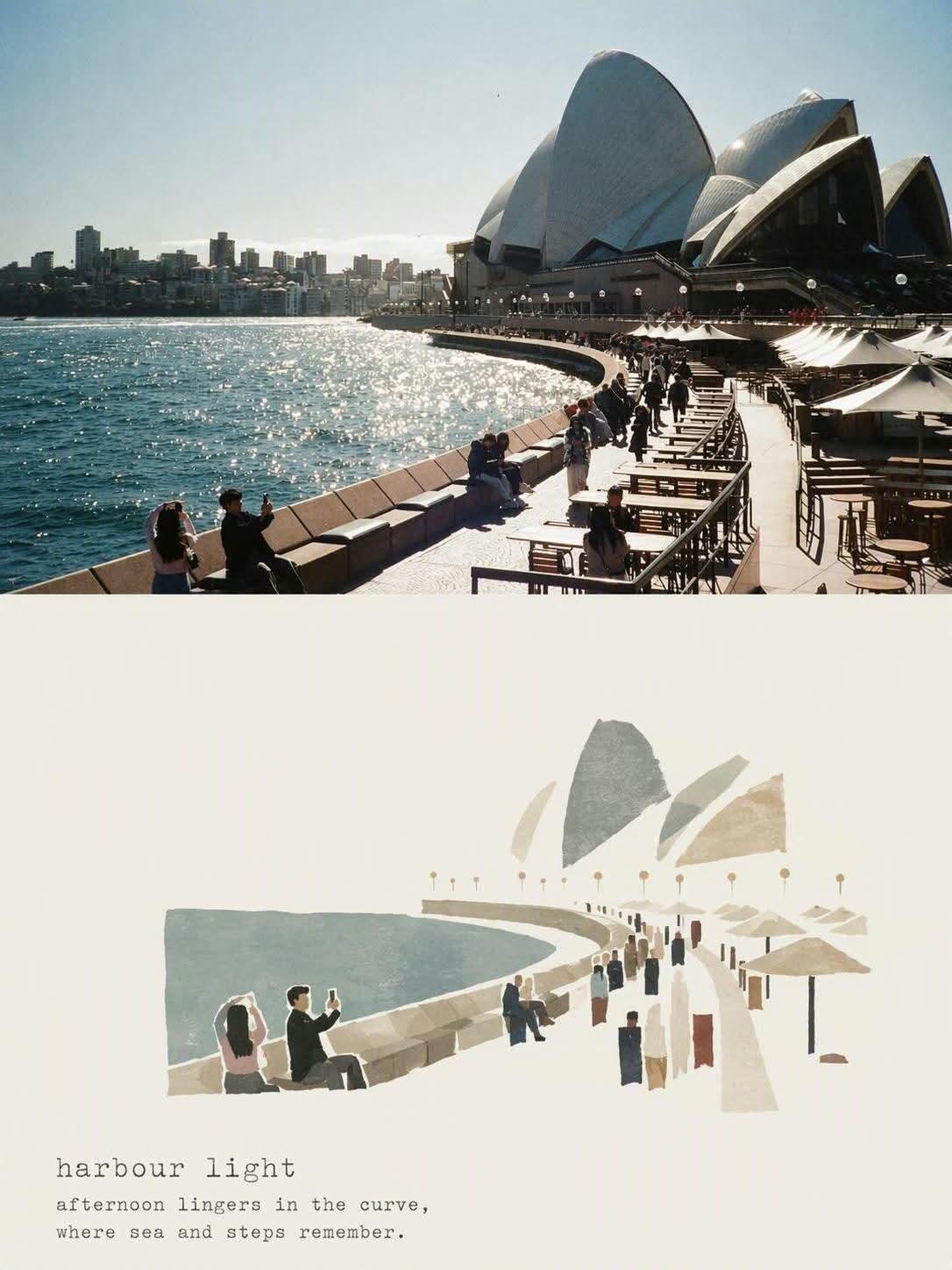
Editorial Food Poster With Whimsical Illustration
 GPT Image 2OpenAIimage
Use the uploaded food photograph as the primary reference and transform it into a vertical 3:4 editorial art poster while preserving the main food, its appearance, composition, colors, textures, and recognizable details. Keep the upper half photorealistic, styled like a premium lifestyle/food magazine photograph: natural warm light, soft realistic shadows, elegant composition, authentic food textures, subtle film grain, vintage photography atmosphere, and a sophisticated cozy aesthetic. In the lower half, seamlessly transform the main food or a visually important element from the photograph into a whimsical hand-drawn scene or surreal miniature world related to the food. Extend, reshape, or reinterpret the food naturally as part of the illustration. Add one or two tiny human figures interacting with it in a charming, imaginative way. Use delicate imperfect ink linework, minimal vintage sketch style, subtle botanical/details, warm ivory paper texture, and plenty of negative space. Create a smooth, creative transition between the realistic photograph and the illustration so they feel like one continuous artwork rather than two separate images. The illustrated scene should tell a simple visual story based on the food and its characteristics. Add a short, witty handwritten caption that relates specifically to the food and the illustrated concept. Use small, understated handwritten typography that feels naturally drawn onto the paper. Overall style: premium editorial food photography + whimsical conceptual illustration + vintage storybook aesthetic + minimalist art direction + warm nostalgic mood. Composition: vertical 3:4, balanced negative space, realistic upper section, illustrated lower section, seamless transition, refined visual hierarchy. Avoid: changing the identity of the food, excessive decoration, clutter, large typography, borders, frames, logos, watermarks, harsh dividing lines, cartoonish 3D graphics, overly saturated colors, or an artificial AI-generated appearance.
Details
- Type
- AI Image Prompts
- Aspect Ratio
- 3:4
- Updated
- Sep 30, 2026
How to use this prompt
- 1Copy the full prompt with the copy button above.
- 2Open GPT Image 2 by OpenAI, or any image generator with a similar style range.
- 3Paste the prompt, then swap the subject and style keywords to match your idea.
- 4Match the example's settings (3:4 · Surreal · Poster · Food), then iterate — small wording changes shift the output a lot.
Frequently asked questions
Which AI model generated this image?
This image was generated with GPT Image 2 by OpenAI. The prompt on this page is the exact text used to create it.
What settings does this prompt use?
The example was generated with GPT Image 2 using: 3:4 · Surreal · Poster · Food. Reusing these settings gives the closest match.
How do I get similar results?
Copy the prompt as-is first, then replace only the subject while keeping the style, lighting, and composition keywords. Generate a few variations — outputs differ between runs.
Can I modify this prompt?
Yes. Prompts work best as starting points — adjust descriptors, aspect ratio, or style tags to make the output your own.
![Create a beautiful artistic illustration of [COUNTRY] represented through its national bird, [NATION — AI image prompt — GPT Image 2](https://cdn.ahaprompt.app/harvest-media/import-1788917968096-4tdbpo.jpg)
![Create a charming miniature 3D paper-craft travel illustration of [DESTINATION], designed as a delic — AI image prompt — GPT Image 2](https://cdn.ahaprompt.app/harvest-media/import-1787456914406-re0vi8.jpg)