LogoAhaPrompt
  • Prompts
  • Featured
  • Models
  • Submit
  • Blog
AhaPromptAhaPrompt

AI Prompts for Images, Video & Audio — Every Model, One Library

Built withLogoNEXTY.DEV
Explore
  • All Prompts
  • Featured Prompts
  • Image Prompts
  • Video Prompts
  • Audio Prompts
  • AI Models
  • Submit a Prompt
  • Blog
Languages
  • English
  • 中文
  • 日本語
  • 한국어

Copyright © 2026 AhaPrompt All rights reserved.

Privacy PolicyTerms of Service
HomeAI Prompt LibraryAI Image PromptsDestination Sketchbook Travel Journal Illustration
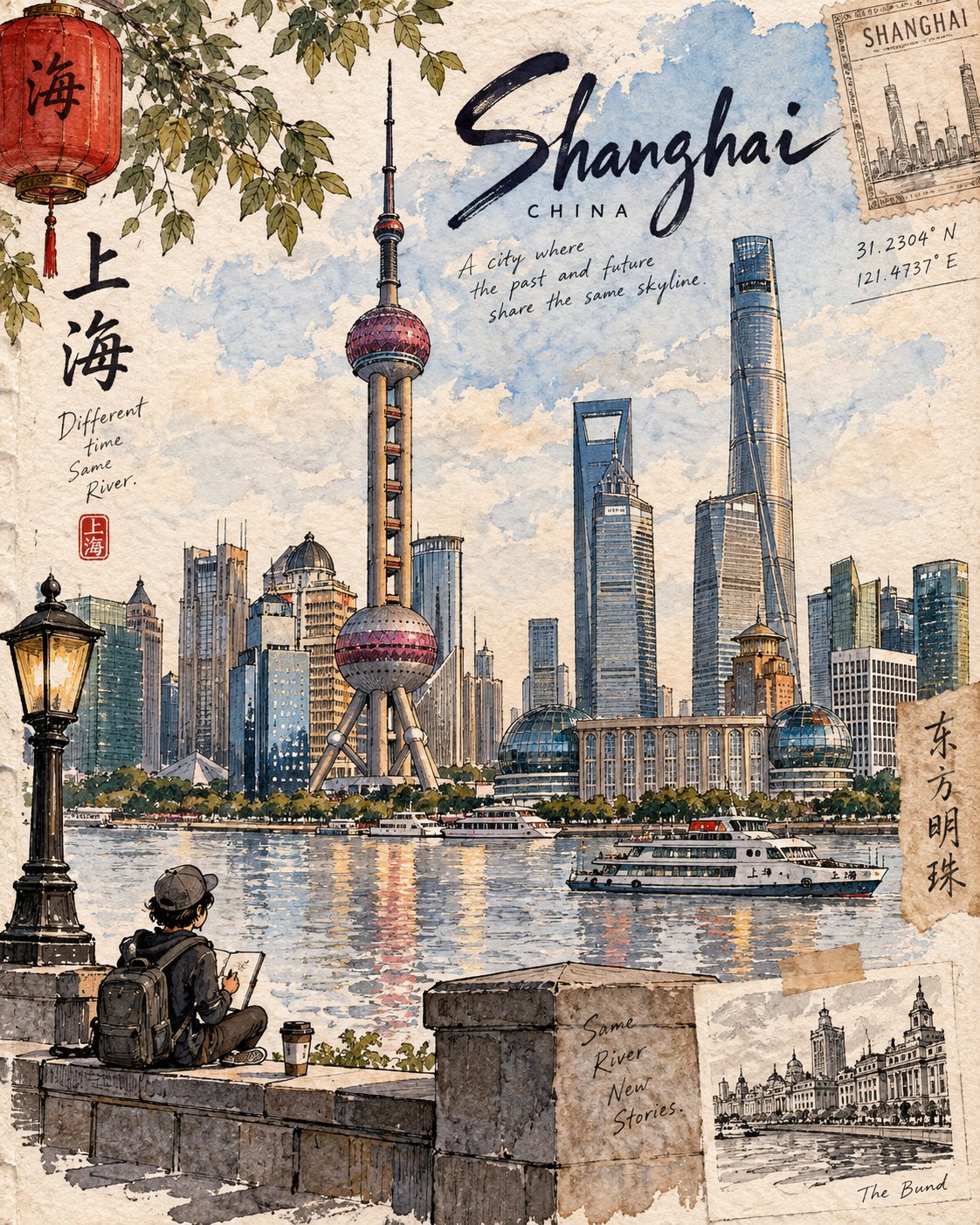
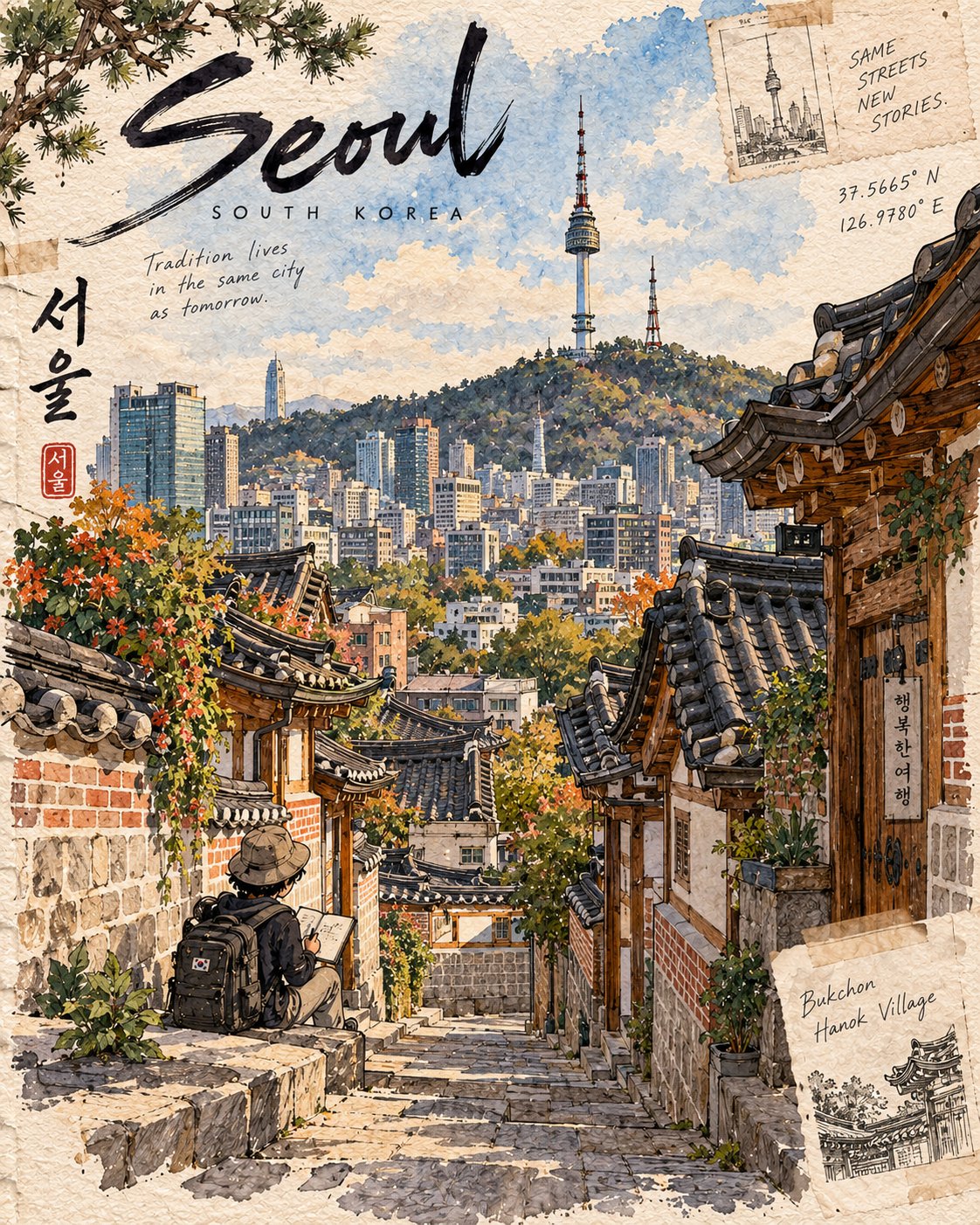
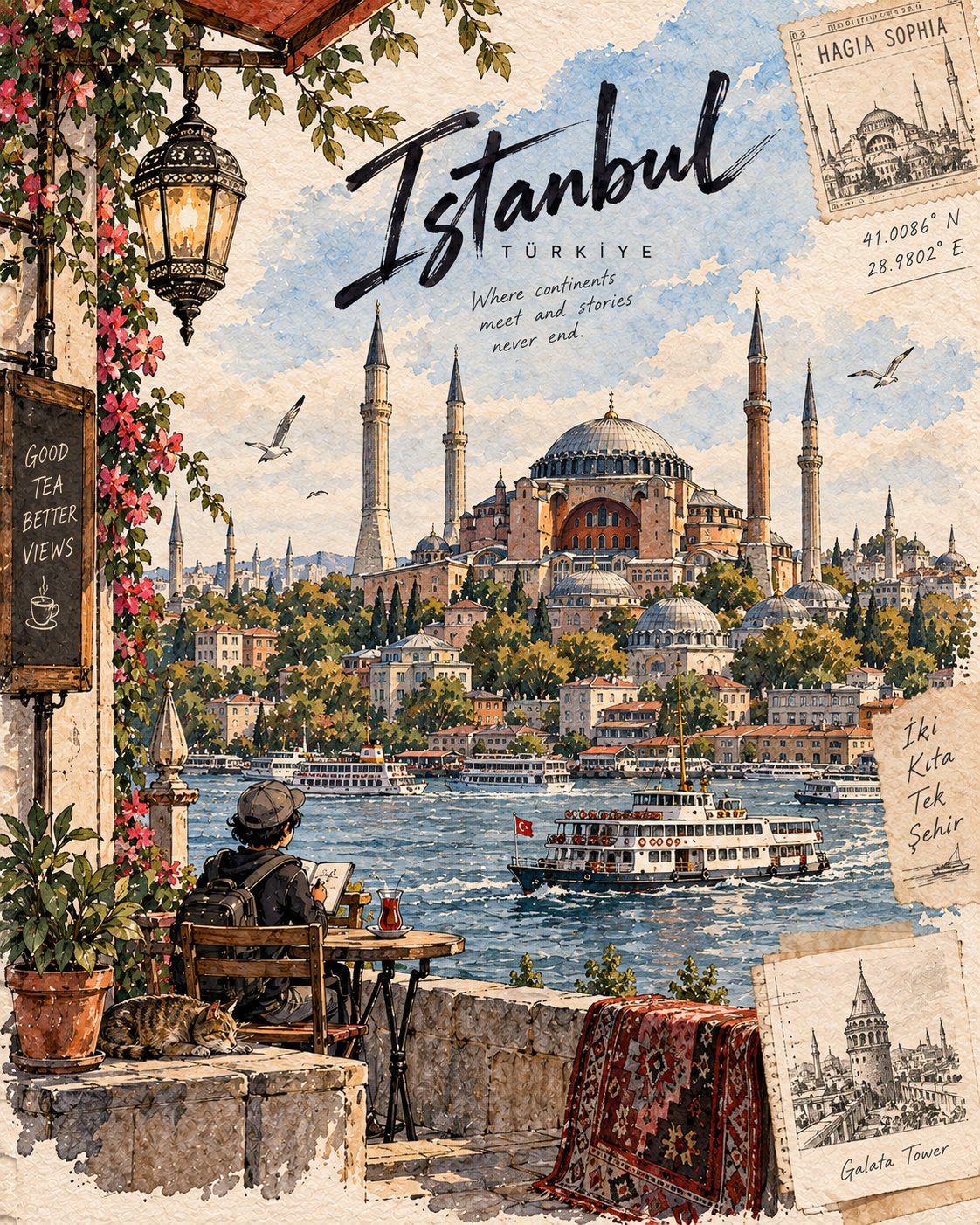
Destination Sketchbook Travel Journal Illustration — AI image prompt — GPT Image 2.5 — Architecture, Landscape - 1

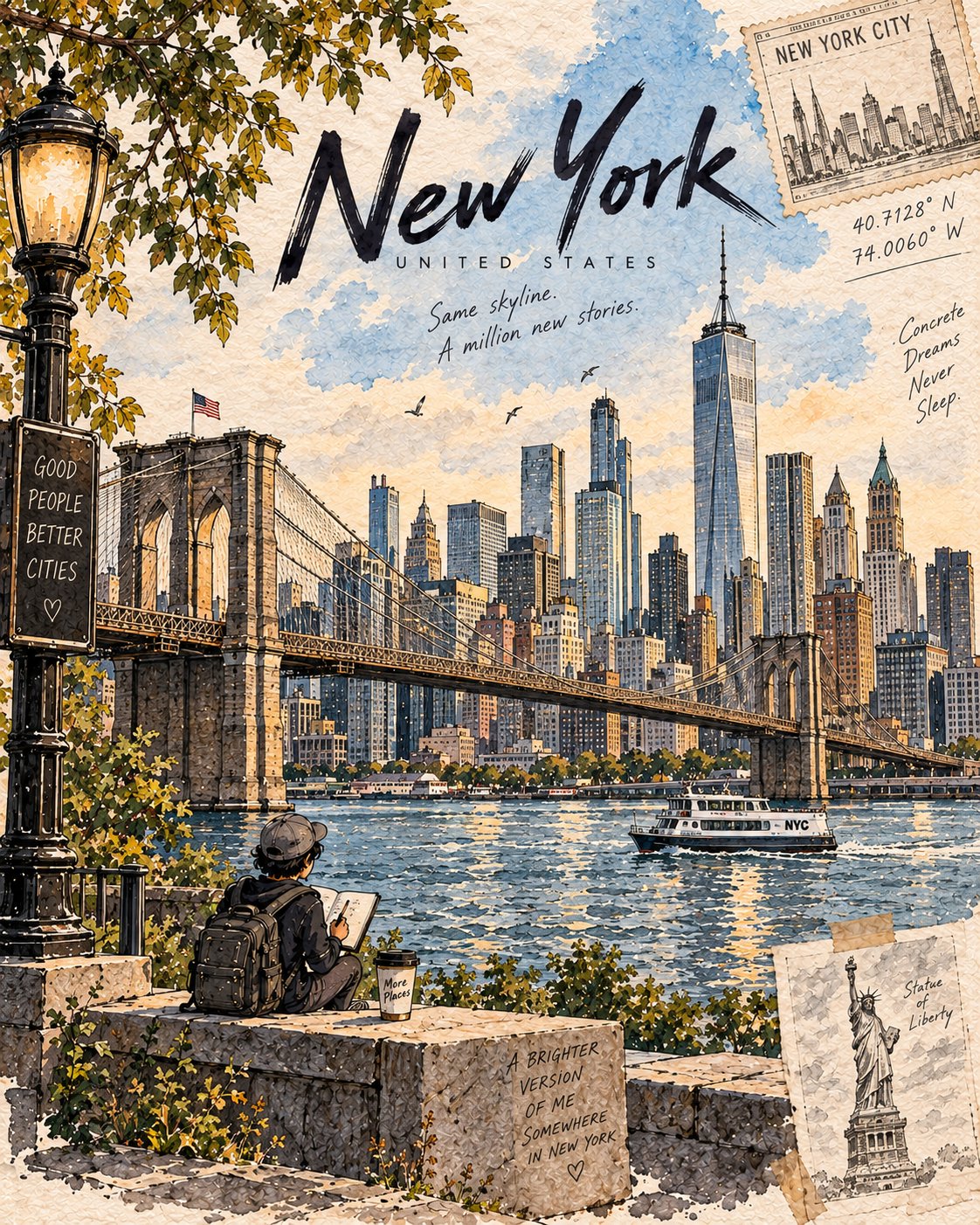
Destination Sketchbook Travel Journal Illustration — AI image prompt — GPT Image 2.5 — Architecture, Landscape - 2
Destination Sketchbook Travel Journal Illustration — AI image prompt — GPT Image 2.5 — Architecture, Landscape - 3
Destination Sketchbook Travel Journal Illustration — AI image prompt — GPT Image 2.5 — Architecture, Landscape - 4

Destination Sketchbook Travel Journal Illustration

OpenAIGPT Image 2.5OpenAIimage

Create a premium 4:5 vertical illustration for the “Destination Sketchbook” series. Use the Matterhorn artwork as the series DNA, not as a literal template. For [DESTINATION], identify its most distinctive and authentic landmark or place and build the entire scene around it. Prioritize geographic accuracy: landmark, architecture, terrain, vegetation, water, geology, culture, and viewpoint must naturally belong together and be realistically observable from one location. Never create composite landmarks or mix attractions from different places. COMPOSITION: One dominant hero landmark with 60–70% visual emphasis, strong foreground–middle–background depth, generous negative space, and exactly ONE tiny cute chibi traveler occupying 8–12% of the frame. The traveler should naturally explore, sketch, sit, walk, or observe—not pose for the viewer. Use destination-specific foreground details. STYLE: Hand-painted travel-journal artwork with expressive dark ink lines, varied line weight, loose watercolor/gouache washes, warm off-white paper, visible grain, subtle pencil marks, imperfect brush edges, natural paint bleeds, and restrained imperfections. It should feel personally observed, tactile, intimate, and handmade—not photorealistic, glossy, vector-like, or generically AI-watercolored. Make each destination visually unique through its architecture, vegetation, geology, materials, weather, light, culture, textures, and viewpoint, while preserving the same artist identity. Avoid generic tourism clichés and decorative elements unless genuinely relevant. TEXT: Minimal handwritten editorial lettering: [LANDMARK NAME] [LOCATION, COUNTRY] Optionally add 1–2 short, location-specific observations. COLOR: Naturally derived from the destination and season. Restrained watercolor palette, subtle accents, visible paper, no neon, excessive contrast, glossy gradients, or artificial cinematic grading. FINAL: The destination must be immediately recognizable, geographically coherent, landmark-dominant, authentically detailed, and unmistakably part of the Destination Sketchbook series. OUTPUT: 4:5 vertical premium hand-drawn travel-journal illustration.

Details
Type
AI Image Prompts
Aspect Ratio
561:701
Updated
Sep 21, 2026
Category
ArchitectureLandscape
Source

How to use this prompt

  1. 1Copy the full prompt with the copy button above.
  2. 2Open GPT Image 2.5 by OpenAI, or any image generator with a similar style range.
  3. 3Paste the prompt, then swap the subject and style keywords to match your idea.
  4. 4Match the example's settings (561:701 · Architecture · Landscape), then iterate — small wording changes shift the output a lot.

Frequently asked questions

Which AI model generated this image?

This image was generated with GPT Image 2.5 by OpenAI. The prompt on this page is the exact text used to create it.

What settings does this prompt use?

The example was generated with GPT Image 2.5 using: 561:701 · Architecture · Landscape. Reusing these settings gives the closest match.

How do I get similar results?

Copy the prompt as-is first, then replace only the subject while keeping the style, lighting, and composition keywords. Generate a few variations — outputs differ between runs.

Can I modify this prompt?

Yes. Prompts work best as starting points — adjust descriptors, aspect ratio, or style tags to make the output your own.

More GPT Image 2.5 prompts

Create a premium educational travel poster featuring [STRUCTURE NAME], one of the world’s most famou — AI image prompt — GPT Image 2.5
OpenAIGPT Image 2.5
Create a premium educational travel poster featuring [STRUCTURE NAME], one of the world’s most famous architectural landmarks. Show a beautiful, highly detailed illustration or photorealistic miniature of the structure as the main focal point, surrounded by clean infographic-style information. Include these clearly arranged details: NAME: [Structure Name] RULER / LEADER OF THE TIME: [Ruler or leader] CONSTRUCTION DURATION: [Number of years / approximate duration] HISTORICAL COST: [Original construction cost, if known] CURRENT TICKET PRICE: [Current entry price] LOCATION: [City, Country] FAMOUS FOOD TO TRY: [1–3 famous local foods] Add small architectural sketches, construction details, a tiny location map, historical symbols, subtle decorative elements, and elegant infographic lines. Use a sophisticated museum archive + luxury travel magazine aesthetic with warm ivory paper, muted heritage colors, fine black typography, subtle vintage grain, and clean geometric layout. Make the structure large and dominant, with the information arranged neatly around it. Add a small “WORLD ARCHITECTURE ARCHIVE” label and a subtle historical catalog number. Style: elegant, educational, premium, collectible travel poster, highly detailed, clean composition, realistic textures, sophisticated typography. FORMAT: Vertical 4:5. Avoid: clutter, excessive text, unrelated landmarks, people, modern advertisements, and watermark.
Details
One poster, 3:4 vertical canvas. Split into two roughly equal zones — a realistic photograph on top, — AI image prompt — GPT Image 2.5
OpenAIGPT Image 2.5
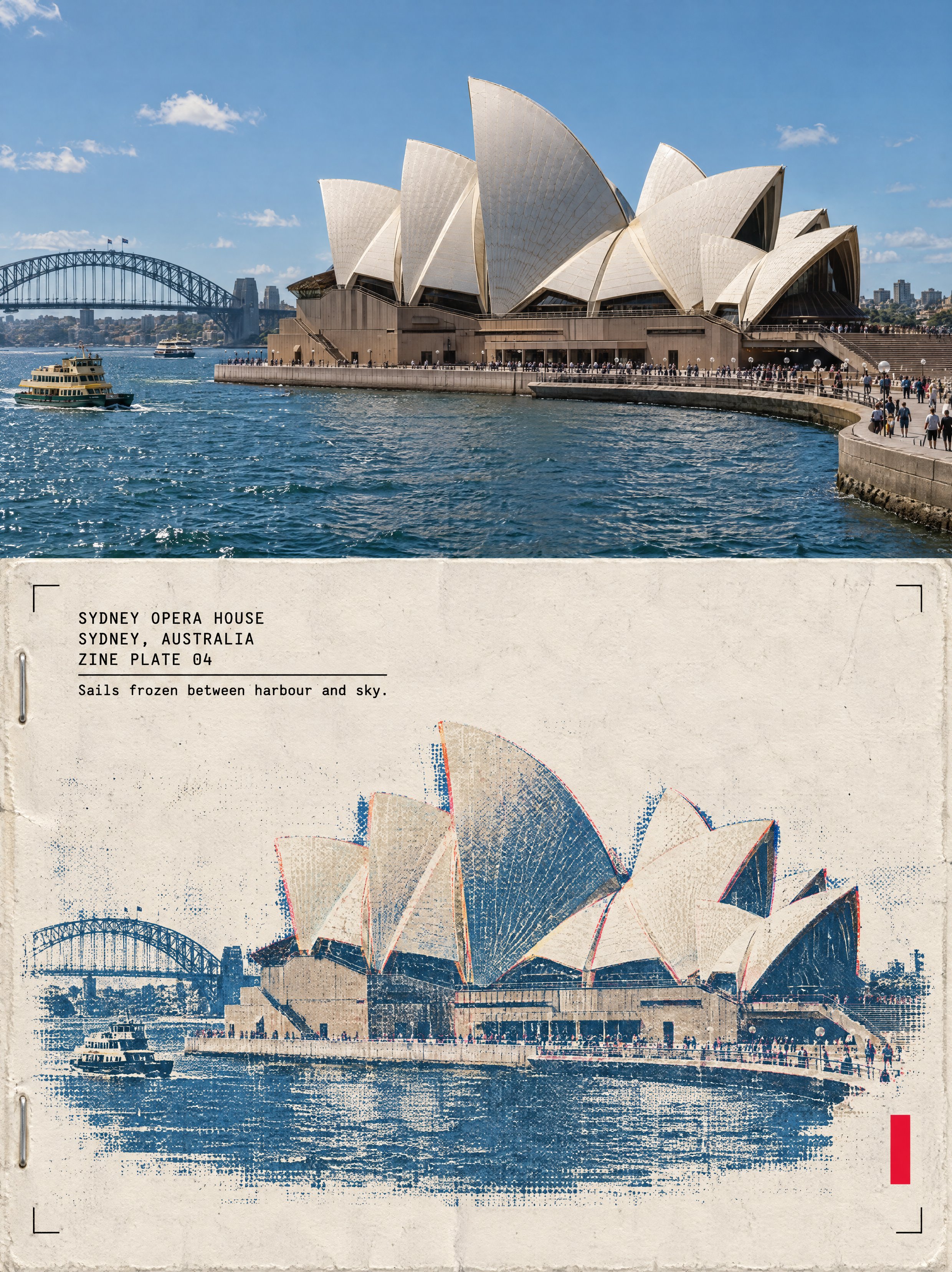
One poster, 3:4 vertical canvas. Split into two roughly equal zones — a realistic photograph on top, a printed reconstruction below — divided by one clean sharp horizontal line. The structure must not be stretched, warped, tilted or repositioned unnaturally. TOP HALF — THE REAL SHOT {STRUCTURE DESCRIPTION}. {PLATE LIGHT}. Preserve the structure faithfully: same architecture, proportions, perspective, distinctive details, natural light and shadow. Add only a subtle high-end color grade and the faintest film grain. Never redesign or reinterpret the architecture. BOTTOM HALF — THE PRINTED RECONSTRUCTION Rebuild the same structure as a two-color risograph zine print: bold flat spot-color shapes (one deep ink layer plus the structure's muted colors as a second spot layer), visible misregistration offsets between the layers, drum streaks, coarse layered ink-grain, halftone texture from overlapping dots, a zine masthead bar, two staple marks and paste-up edges. The photograph dissolves outward into flat spot-color shapes, misaligned layers and grainy ink. The structure must remain immediately recognizable. {PLATE DENSITY}. Texture: cheap zine paper, layered soy ink, misregistration, drum streaks, folded-edge wear, cut-and-paste edges, restrained crop marks, one small fluorescent red calibration bar. Color: cream zine paper, black ink, one deep spot color, the structure's original muted colors, a single fluorescent red accent. Never fully desaturate the structure. The structure occupies roughly 60-88% of the frame width. Leave 22-38% of the paper visibly untouched and empty — generous negative space so the poster reads as an archival specimen, not a packed screen. TYPOGRAPHY — a clean fixed-width architectural title block, pinned top-left at a small fixed inset, black ink, monospaced technical typeface, verbatim, each line in caps: "{NAME}" "{CITY, COUNTRY}" "ZINE PLATE 0N" A thin horizontal rule under the third line, then one short observational caption verbatim: "{CAPTION}" A solid vertical red rectangle — the only red in the poster — is pinned to the bottom-right corner zone about 12% from the bottom and right edges. Four thin black crop marks sit in the four corners of the bottom half at identical insets. Red bar, crop marks and text block keep exactly the same position and size relative to the frame. MOOD: underground zine crossed with an architecture fanzine — young, tactile, collectible. Sophisticated, minimal, tactile, intellectual, slightly mysterious, highly collectible. AVOID: solid black terminal backgrounds, dense walls of code, cyberpunk neon, excessive decorative glyphs, distorted architecture, impossible geometry, invented architectural details, fake technical specifications, random meaningless symbols, garbled text, extra colors, brand logos, QR codes, watermarks, author credits, tourist-poster clichés. Priority: preserve the structure's identity and architectural accuracy first. The experimental print treatment enhances the architecture, never hides it.
Details
A surreal, high-end architectural art photograph of [STRUCTURE / LANDMARK] transformed into a giant  — AI image prompt — GPT Image 2.5
OpenAIGPT Image 2.5
A surreal, high-end architectural art photograph of [STRUCTURE / LANDMARK] transformed into a giant handcrafted textile sculpture, while preserving its instantly recognizable silhouette, proportions, architectural details, distinctive features, and original geometry. The structure is covered in soft knitted or woven fabric, with intricate cable-knit patterns inspired by the architecture. A section of the structure opens, peels back, or unfolds like a fabric vessel, revealing a beautifully detailed miniature world of [CITY / COUNTRY] emerging from inside. Inside the opening, show miniature elements strongly connected to the location: buildings, streets, rooftops, trees, bridges, landmarks, local transportation, landscapes, and subtle cultural details, all integrated naturally into the structure. The outer architecture gradually transitions between soft textile fibers and realistic architectural materials, creating a surprising contrast between handmade craftsmanship and structural precision. Keep the original architectural identity clearly recognizable. Minimal luxury studio setting, warm off-white background, soft directional daylight, subtle natural shadow, photorealistic materials, extremely detailed textile fibers, intricate architectural details, sophisticated muted color palette with carefully selected local colors, tactile handcrafted appearance, surreal but believable, premium editorial art photography, centered composition, generous negative space, collectible contemporary design object, 4:5 vertical composition. No people, no text, no logos, no watermark, no futuristic elements, no cyberpunk, no distorted architecture, no invented structural features. Preserve the landmark’s identity and proportions above everything else. “What if [LANDMARK] was a handmade object?” A giant handcrafted knitted version of [LANDMARK], faithfully preserving its recognizable architecture, with part of the structure opening like a soft fabric vessel and a tiny [CITY / COUNTRY] emerging from inside — miniature buildings, streets, landscapes, transportation and local details woven into the architecture. Soft textile fibers transition into realistic stone, metal or glass, creating a magical fusion of craftsmanship + architecture + miniature world. Photorealistic, luxurious, tactile, surreal but believable, warm neutral studio background, soft lighting, dramatic detail, generous negative space, 4:5 vertical.
Details
Soft Minimalism wallpaper-style landscape of [MAIN LANDSCAPE/SCENE], featuring [KEY NATURAL ELEMENTS — AI image prompt — GPT Image 2.5
OpenAIGPT Image 2.5
Soft Minimalism wallpaper-style landscape of [MAIN LANDSCAPE/SCENE], featuring [KEY NATURAL ELEMENTS], surrounded by [BACKGROUND ELEMENTS], with [WEATHER/ATMOSPHERE], a muted [COLOR PALETTE] palette, soft diffused [TIME OF DAY] lighting, smooth simplified organic forms, subtle shadows, gentle atmospheric depth, vast negative space, clean balanced composition, minimal details, calm and serene mood, elegant modern aesthetic, dreamy yet natural appearance, premium desktop wallpaper feel, no people, no text, 16:9
Details
Create a premium vertical 4:5 editorial travel poster for [COUNTRY], where the outline of the countr — AI image prompt — GPT Image 2.5
OpenAIGPT Image 2.5
Create a premium vertical 4:5 editorial travel poster for [COUNTRY], where the outline of the country is formed organically from its landscapes, architecture, culture, and nature rather than using a normal map. Inside the country silhouette, create a seamless cinematic journey: * Top: iconic architecture emerging from clouds * Middle: famous city skyline + traditional buildings * Lower middle: dramatic natural landscape * Bottom: wildlife, local crafts, food, flowers, or cultural details * Small birds, boats, trains, or people can subtly connect the different scenes. Instead of decorative borders, use one continuous architectural element—an ancient arch, carved doorway, stone wall, temple corridor, bridge, or traditional pattern—that visually holds the composition together. On the side, use elegant editorial typography: [COUNTRY NAME] WHERE [SHORT POETIC PHRASE] HISTORY • CULTURE • NATURE • CITIES • CUISINE Add small details: CAPITAL AREA FAMOUS FOR BEST TIME TO VISIT ICONIC PLACES Use a “window into the country” concept: the country silhouette looks like a giant architectural doorway/window, and instead of showing separate boxes, the entire interior becomes one continuous surreal landscape.
Details
One poster, 3:4 vertical canvas. Split into two roughly equal zones — a realistic photograph on top, — AI image prompt — GPT Image 2.5
OpenAIGPT Image 2.5
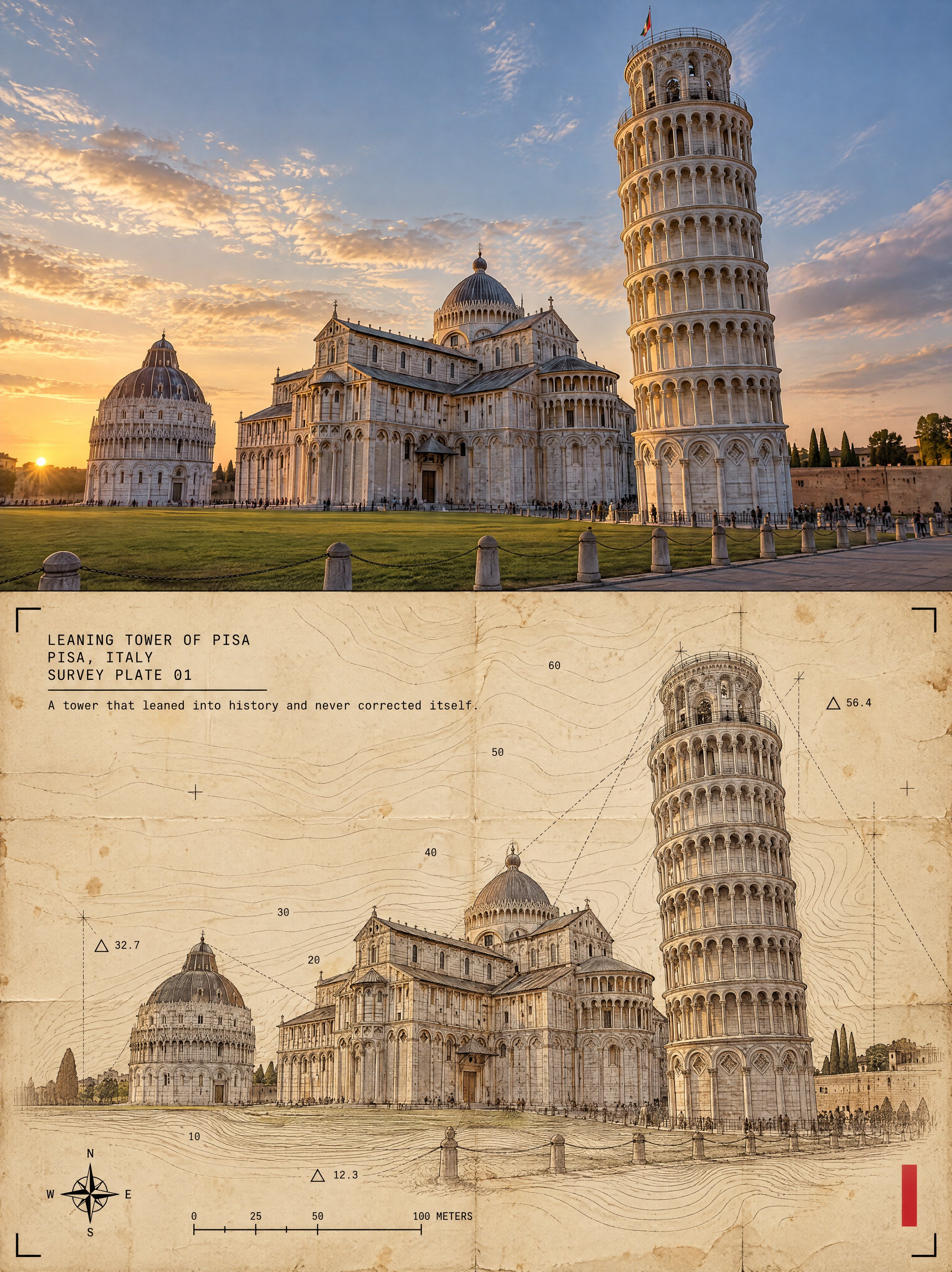
One poster, 3:4 vertical canvas. Split into two roughly equal zones — a realistic photograph on top, a printed reconstruction below — divided by one clean sharp horizontal line. The structure must not be stretched, warped, tilted or repositioned unnaturally. TOP HALF — THE REAL SHOT {STRUCTURE DESCRIPTION}. {PLATE LIGHT}. Preserve the structure faithfully: same architecture, proportions, perspective, distinctive details, natural light and shadow. Add only a subtle high-end color grade and the faintest film grain. Never redesign or reinterpret the architecture. BOTTOM HALF — THE PRINTED RECONSTRUCTION Rebuild the same structure as a mid-century surveyor's topographic map sheet: the building and its site rendered in fine brown contour lines that wrap around the mass and terrain, elevation index numbers printed along the contours, small triangular benchmark markers with elevation tags, a compass rose, a thin scale bar, faint theodolite sight-lines and the blocky vintage lettering of a USGS quadrangle sheet. The photograph dissolves outward into contour lines, survey ticks and a faint grid. The structure must remain immediately recognizable. {PLATE DENSITY}. Texture: yellowed map paper with fiber grain, worn fold creases, faint old stains, restrained crop marks, one small red calibration bar. Color: aged-paper ground, warm brown and black survey inks, the structure's original muted colors, a single red accent. Never fully desaturate the structure. The structure occupies roughly 60-88% of the frame width. Leave 22-38% of the paper visibly untouched and empty — generous negative space so the poster reads as an archival specimen, not a packed screen. TYPOGRAPHY — a clean fixed-width architectural title block, pinned top-left at a small fixed inset, black ink, monospaced technical typeface, verbatim, each line in caps: "{NAME}" "{CITY, COUNTRY}" "SURVEY PLATE 0N" A thin horizontal rule under the third line, then one short observational caption verbatim: "{CAPTION}" A solid vertical red rectangle — the only red in the poster — is pinned to the bottom-right corner zone about 12% from the bottom and right edges. Four thin black crop marks sit in the four corners of the bottom half at identical insets. Red bar, crop marks and text block keep exactly the same position and size relative to the frame. MOOD: field survey notebook crossed with modern travel editorial — the landmark as a place the surveyor has measured. Sophisticated, minimal, tactile, intellectual, slightly mysterious, highly collectible. AVOID: solid black terminal backgrounds, dense walls of code, cyberpunk neon, excessive decorative glyphs, distorted architecture, impossible geometry, invented architectural details, fake technical specifications, random meaningless symbols, garbled text, extra colors, brand logos, QR codes, watermarks, author credits, tourist-poster clichés. Priority: preserve the structure's identity and architectural accuracy first. The experimental print treatment enhances the architecture, never hides it. THE FOUR VARIATIONS (one axis change per plate) PLATE 01 — DENSE · light: "Golden-hour sunlight with long warm shadows" · density: "The print treatment is at its densest and richest: layered marks, full system detail" PLATE 02 — LINEWORK · light: "Soft overcast daylight, muted flat tones" · density: "The print is linework-forward: thin drafting lines and technical geometry dominate the reconstruction" PLATE 03 — FRAGMENT · light: "Blue-hour dusk with cool tones and lit windows glowing" · density: "The print is fragment-forward: torn photographic fragments dominate, with fewer system marks around them" PLATE 04 — MINIMAL · light: "Bright midday sunlight with crisp shadows" · density: "The print is the minimal plate of the set: sparse marks, maximum untouched paper"
Details
Create a premium 4:5 vertical miniature city diorama for [COUNTRY / LOCATION / SUBJECT].

TEXT-TO-IM — AI image prompt — GPT Image 2.5
OpenAIGPT Image 2.5
Create a premium 4:5 vertical miniature city diorama for [COUNTRY / LOCATION / SUBJECT]. TEXT-TO-IMAGE GENERATION ONLY. Generate the entire scene from [COUNTRY / LOCATION / SUBJECT] alone. No reference image or additional visual input is required. CORE CONCEPT Automatically identify the most iconic landmark, architecture, streets, urban features, and cultural details that best represent [COUNTRY / LOCATION / SUBJECT]. Recreate them as a highly detailed block-style miniature city diorama, preserving recognizable architectural forms, proportions, street layouts, and distinctive local characteristics. COMPOSITION Use a dynamic isometric / elevated three-quarter viewpoint, allowing the entire miniature city structure and street flow to be clearly visible. Arrange the main landmark as the visual focal point, surrounded by supporting buildings, roads, sidewalks, vehicles, greenery, and small urban details. Add tiny miniature figures naturally throughout the streets to create a lively everyday-city atmosphere. MATERIAL & STYLE Use a premium LEGO-inspired block construction aesthetic with clean geometric forms, crisp edges, modular details, and realistic miniature proportions. The scene should feel physically built as a collectible architectural model rather than like a conventional digital city illustration. Maintain subtle depth of field with gentle background blur while keeping the main landmark and central structures sharply detailed. LIGHTING & ATMOSPHERE Set the scene during a bright clear daytime with a vivid blue sky and a few soft white clouds. Use bright natural-looking studio illumination, clean highlights, soft shadows, vibrant but controlled colors, and realistic miniature material textures. FINAL AESTHETIC Create a polished toy-scale architectural diorama that combines: iconic city identity × miniature architecture × block construction × isometric composition × tiny figures × realistic model-making detail. The result should be charming, highly detailed, clean, colorful, and immediately recognizable as [COUNTRY / LOCATION / SUBJECT]. Avoid excessive text, logos, watermarks, distorted architecture, impossible structures, random landmarks, photorealistic full-size environments, clutter, or unrealistic proportions. STRICT 4:5 VERTICAL | HIGH DETAIL | PREMIUM MINIATURE DIORAMA | ISOMETRIC VIEW | CLEAN BLOCK-STYLE CONSTRUCTION. Generate everything autonomously from [COUNTRY / LOCATION / SUBJECT] alone.
Details
Create a breathtaking, premium national park travel infographic poster for [NATIONAL PARK, COUNTRY], — AI image prompt — GPT Image 2.5
OpenAIGPT Image 2.5
Create a breathtaking, premium national park travel infographic poster for [NATIONAL PARK, COUNTRY], designed to inspire people to explore, protect, and appreciate nature. Show a cinematic natural landscape featuring the park’s most famous animal — [FAMOUS ANIMAL] — naturally integrated into the scene, surrounded by its authentic flora and fauna. Include subtle visual elements representing the park’s ecosystem, such as native trees, flowers, grasses, mountains, rivers, birds, and wildlife. Use an elegant editorial travel-poster aesthetic with realistic nature photography blended with refined graphic-design elements. Warm natural tones, soft sunlight, atmospheric depth, detailed textures, and a clean premium composition. Make the wildlife the emotional focal point while keeping the landscape expansive and majestic. Add beautifully organized, minimal information panels: [NATIONAL PARK] [COUNTRY] Famous Animal: [ANIMAL] Flora & Fauna: [KEY SPECIES / VEGETATION] Species: [NUMBER OF SPECIES] Area: [AREA] 📍 Location: [LOCATION] Best Time to Visit: [MONTHS / SEASON] Ticket Price: [PRICE] Add a short inspirational line: “Protect the wild. Preserve the wonder.” Keep the typography sophisticated, clean, and highly legible. Use small icons, fine divider lines, subtle map/topographic details, and a restrained information hierarchy. The overall design should feel like a luxury conservation magazine cover + collectible national-park poster, visually inspiring but informative. Format: Vertical 4:5 Style: Cinematic, realistic, premium editorial, conservation-inspired, detailed, elegant, atmospheric Avoid: Crowds, excessive text, cartoon style, artificial-looking animals, tourist buses, logos, watermarks, and clutter.
Details
Browse all GPT Image 2.5 promptsExplore AI Image Prompts