LogoAhaPrompt
  • Prompts
  • Featured
  • Models
  • Submit
  • Blog
AhaPromptAhaPrompt

AI Prompts for Images, Video & Audio — Every Model, One Library

Built withLogoNEXTY.DEV
Explore
  • All Prompts
  • Featured Prompts
  • Image Prompts
  • Video Prompts
  • Audio Prompts
  • AI Models
  • Submit a Prompt
  • Blog
Languages
  • English
  • 中文
  • 日本語
  • 한국어

Copyright © 2026 AhaPrompt All rights reserved.

Privacy PolicyTerms of Service
HomeAI Prompt LibraryAI Image PromptsBlock-Style Miniature City Diorama
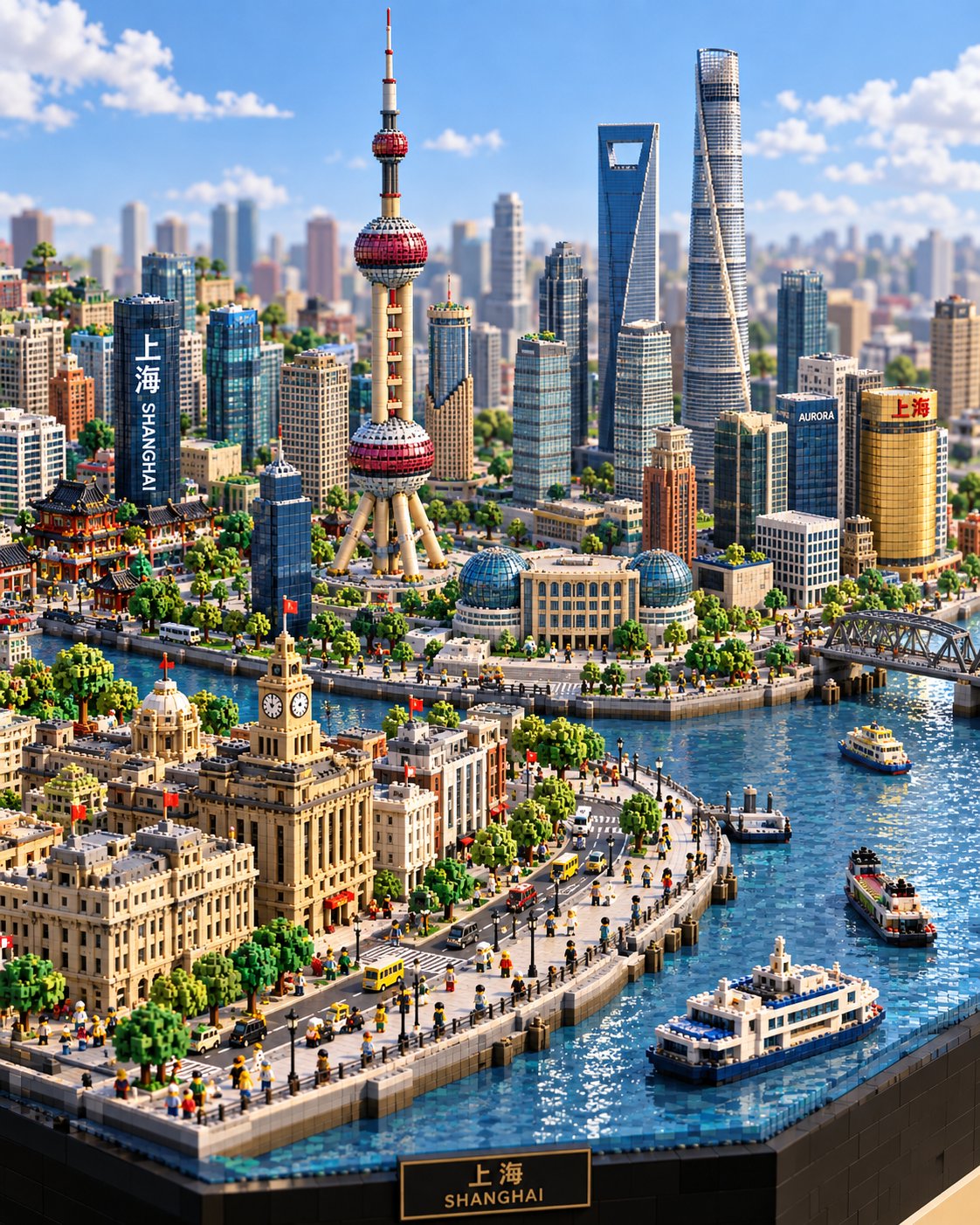
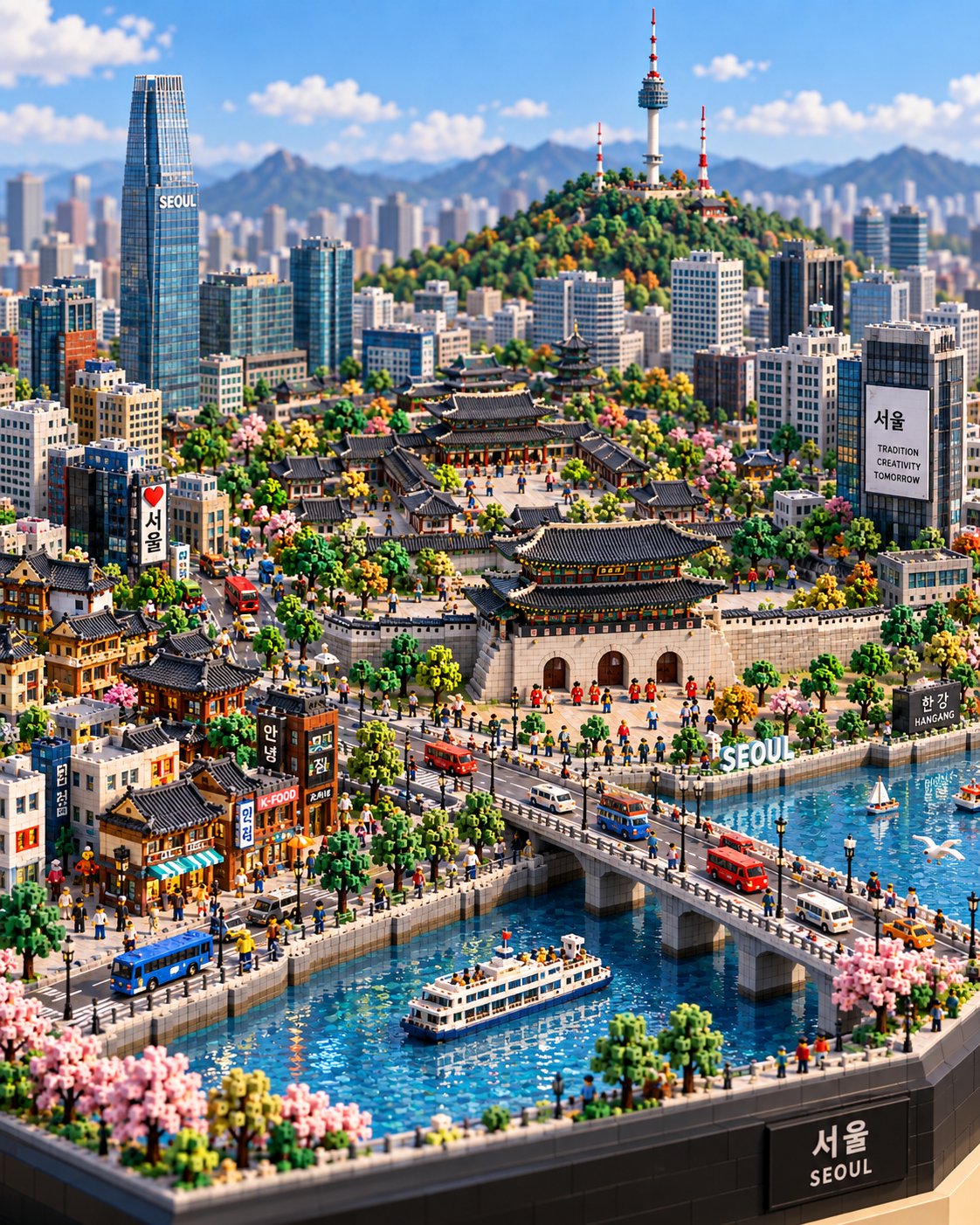
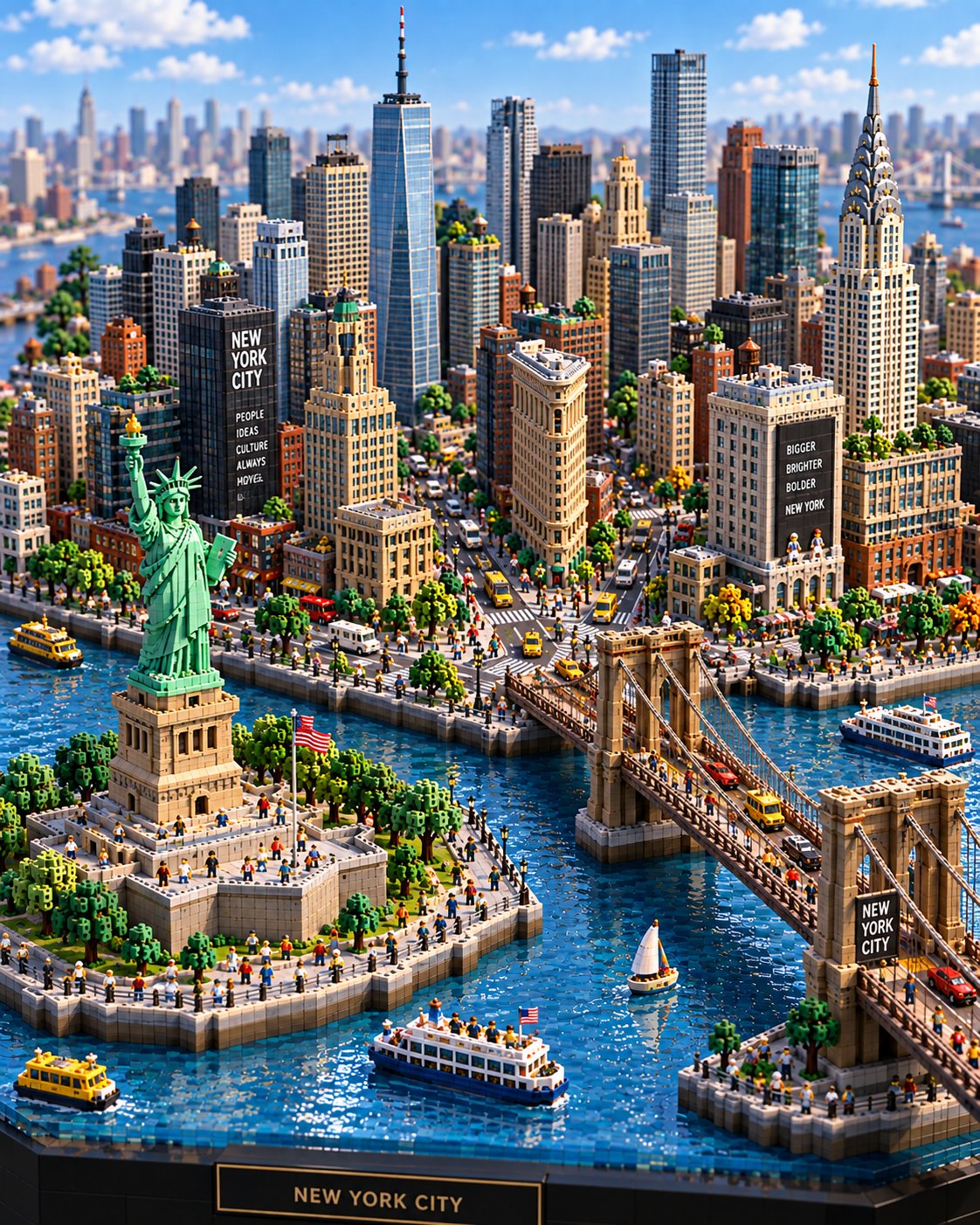
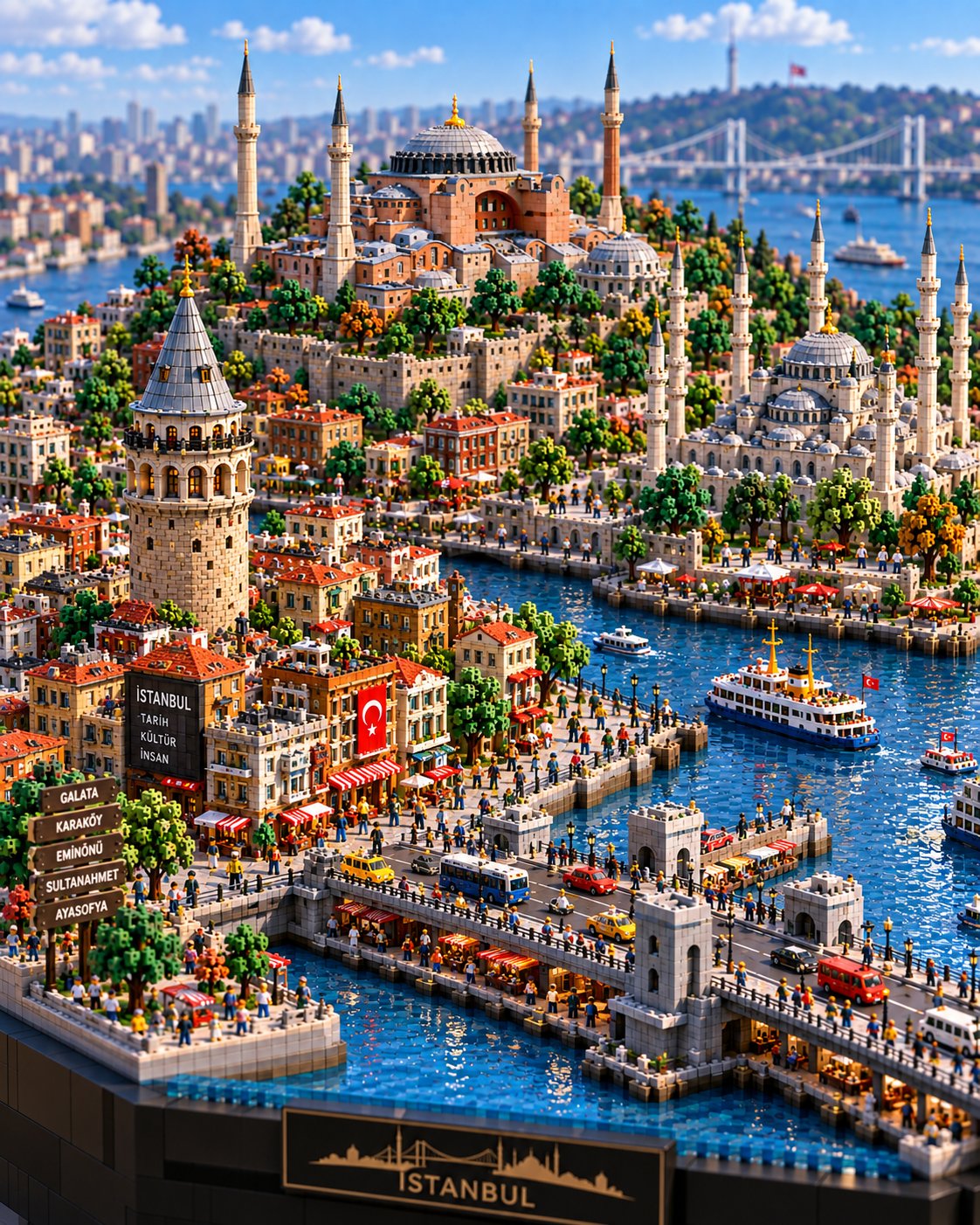
Block-Style Miniature City Diorama — AI image prompt — GPT Image 2.5 — Architecture, 3D Render, Cityscape - 1

Block-Style Miniature City Diorama — AI image prompt — GPT Image 2.5 — Architecture, 3D Render, Cityscape - 2
Block-Style Miniature City Diorama — AI image prompt — GPT Image 2.5 — Architecture, 3D Render, Cityscape - 3
Block-Style Miniature City Diorama — AI image prompt — GPT Image 2.5 — Architecture, 3D Render, Cityscape - 4

Block-Style Miniature City Diorama

OpenAIGPT Image 2.5OpenAIimage

Create a premium 4:5 vertical miniature city diorama for [COUNTRY / LOCATION / SUBJECT]. TEXT-TO-IMAGE GENERATION ONLY. Generate the entire scene from [COUNTRY / LOCATION / SUBJECT] alone. No reference image or additional visual input is required. CORE CONCEPT Automatically identify the most iconic landmark, architecture, streets, urban features, and cultural details that best represent [COUNTRY / LOCATION / SUBJECT]. Recreate them as a highly detailed block-style miniature city diorama, preserving recognizable architectural forms, proportions, street layouts, and distinctive local characteristics. COMPOSITION Use a dynamic isometric / elevated three-quarter viewpoint, allowing the entire miniature city structure and street flow to be clearly visible. Arrange the main landmark as the visual focal point, surrounded by supporting buildings, roads, sidewalks, vehicles, greenery, and small urban details. Add tiny miniature figures naturally throughout the streets to create a lively everyday-city atmosphere. MATERIAL & STYLE Use a premium LEGO-inspired block construction aesthetic with clean geometric forms, crisp edges, modular details, and realistic miniature proportions. The scene should feel physically built as a collectible architectural model rather than like a conventional digital city illustration. Maintain subtle depth of field with gentle background blur while keeping the main landmark and central structures sharply detailed. LIGHTING & ATMOSPHERE Set the scene during a bright clear daytime with a vivid blue sky and a few soft white clouds. Use bright natural-looking studio illumination, clean highlights, soft shadows, vibrant but controlled colors, and realistic miniature material textures. FINAL AESTHETIC Create a polished toy-scale architectural diorama that combines: iconic city identity × miniature architecture × block construction × isometric composition × tiny figures × realistic model-making detail. The result should be charming, highly detailed, clean, colorful, and immediately recognizable as [COUNTRY / LOCATION / SUBJECT]. Avoid excessive text, logos, watermarks, distorted architecture, impossible structures, random landmarks, photorealistic full-size environments, clutter, or unrealistic proportions. STRICT 4:5 VERTICAL | HIGH DETAIL | PREMIUM MINIATURE DIORAMA | ISOMETRIC VIEW | CLEAN BLOCK-STYLE CONSTRUCTION. Generate everything autonomously from [COUNTRY / LOCATION / SUBJECT] alone.

Details
Type
AI Image Prompts
Aspect Ratio
561:701
Updated
Sep 21, 2026
Category
Architecture3D RenderCityscape
Source

How to use this prompt

  1. 1Copy the full prompt with the copy button above.
  2. 2Open GPT Image 2.5 by OpenAI, or any image generator with a similar style range.
  3. 3Paste the prompt, then swap the subject and style keywords to match your idea.
  4. 4Match the example's settings (561:701 · Architecture · 3D Render · Cityscape), then iterate — small wording changes shift the output a lot.

Frequently asked questions

Which AI model generated this image?

This image was generated with GPT Image 2.5 by OpenAI. The prompt on this page is the exact text used to create it.

What settings does this prompt use?

The example was generated with GPT Image 2.5 using: 561:701 · Architecture · 3D Render · Cityscape. Reusing these settings gives the closest match.

How do I get similar results?

Copy the prompt as-is first, then replace only the subject while keeping the style, lighting, and composition keywords. Generate a few variations — outputs differ between runs.

Can I modify this prompt?

Yes. Prompts work best as starting points — adjust descriptors, aspect ratio, or style tags to make the output your own.

More GPT Image 2.5 prompts

Create a premium educational travel poster featuring [STRUCTURE NAME], one of the world’s most famou — AI image prompt — GPT Image 2.5
OpenAIGPT Image 2.5
Create a premium educational travel poster featuring [STRUCTURE NAME], one of the world’s most famous architectural landmarks. Show a beautiful, highly detailed illustration or photorealistic miniature of the structure as the main focal point, surrounded by clean infographic-style information. Include these clearly arranged details: NAME: [Structure Name] RULER / LEADER OF THE TIME: [Ruler or leader] CONSTRUCTION DURATION: [Number of years / approximate duration] HISTORICAL COST: [Original construction cost, if known] CURRENT TICKET PRICE: [Current entry price] LOCATION: [City, Country] FAMOUS FOOD TO TRY: [1–3 famous local foods] Add small architectural sketches, construction details, a tiny location map, historical symbols, subtle decorative elements, and elegant infographic lines. Use a sophisticated museum archive + luxury travel magazine aesthetic with warm ivory paper, muted heritage colors, fine black typography, subtle vintage grain, and clean geometric layout. Make the structure large and dominant, with the information arranged neatly around it. Add a small “WORLD ARCHITECTURE ARCHIVE” label and a subtle historical catalog number. Style: elegant, educational, premium, collectible travel poster, highly detailed, clean composition, realistic textures, sophisticated typography. FORMAT: Vertical 4:5. Avoid: clutter, excessive text, unrelated landmarks, people, modern advertisements, and watermark.
Details
2x2 grid, 16:9, AI infers viral topics: Create a haunting, minimalist 3D visualization that represen — AI image prompt — GPT Image 2.5
OpenAIGPT Image 2.5
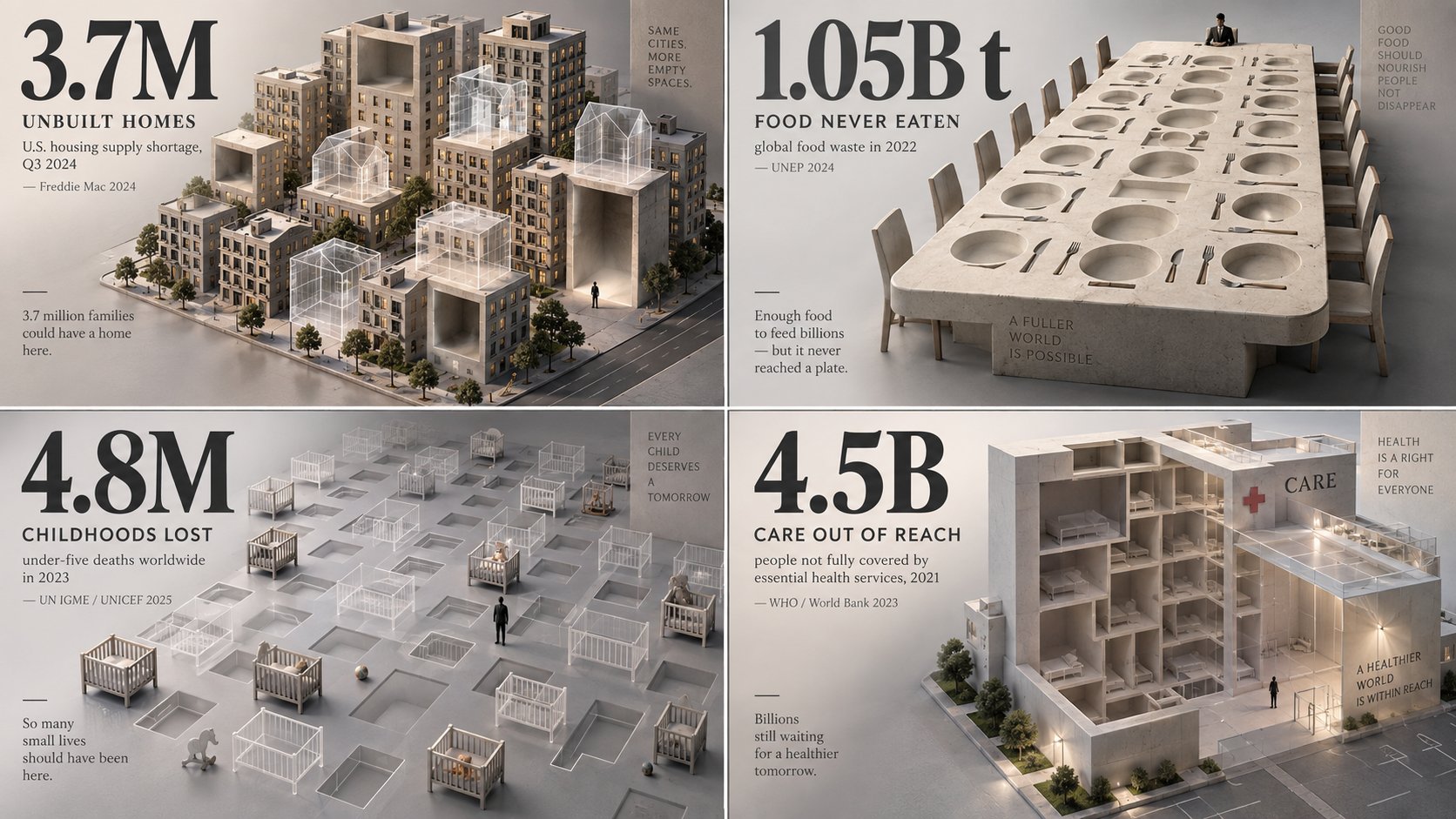
2x2 grid, 16:9, AI infers viral topics: Create a haunting, minimalist 3D visualization that represents what is missing, lost, avoided, delayed, or erased because of [TOPIC]. The AI should choose a statistic involving loss: missing sleep, lost time, extinct species, unbuilt homes, unpaid wages, wasted food, lost attention, preventable deaths, disappearing land, delayed care, or unrealized potential. Instead of showing the object directly, represent it as negative space: empty chairs, ghost outlines, hollow cubes, missing city blocks, erased silhouettes, transparent containers, absent books, unfilled beds, or a carved-out void in a solid mass. The missing quantity should feel physically present through absence. Style: museum-grade isometric 3D render, matte clay and translucent materials, soft directional lighting, quiet shadows, neutral grey backdrop. Use one oversized numeral as a solemn anchor. Caption: what is missing, time period, metric, and source year. Add a tiny human silhouette for emotional scale. The spirit: make absence feel heavier than presence.
Details
2x2 grid, 16:9, do this for 4 fortune 500 comapnies: CONCEPT ANCHOR 1: "City transformed by a physic — AI image prompt — GPT Image 2.5
OpenAIGPT Image 2.5
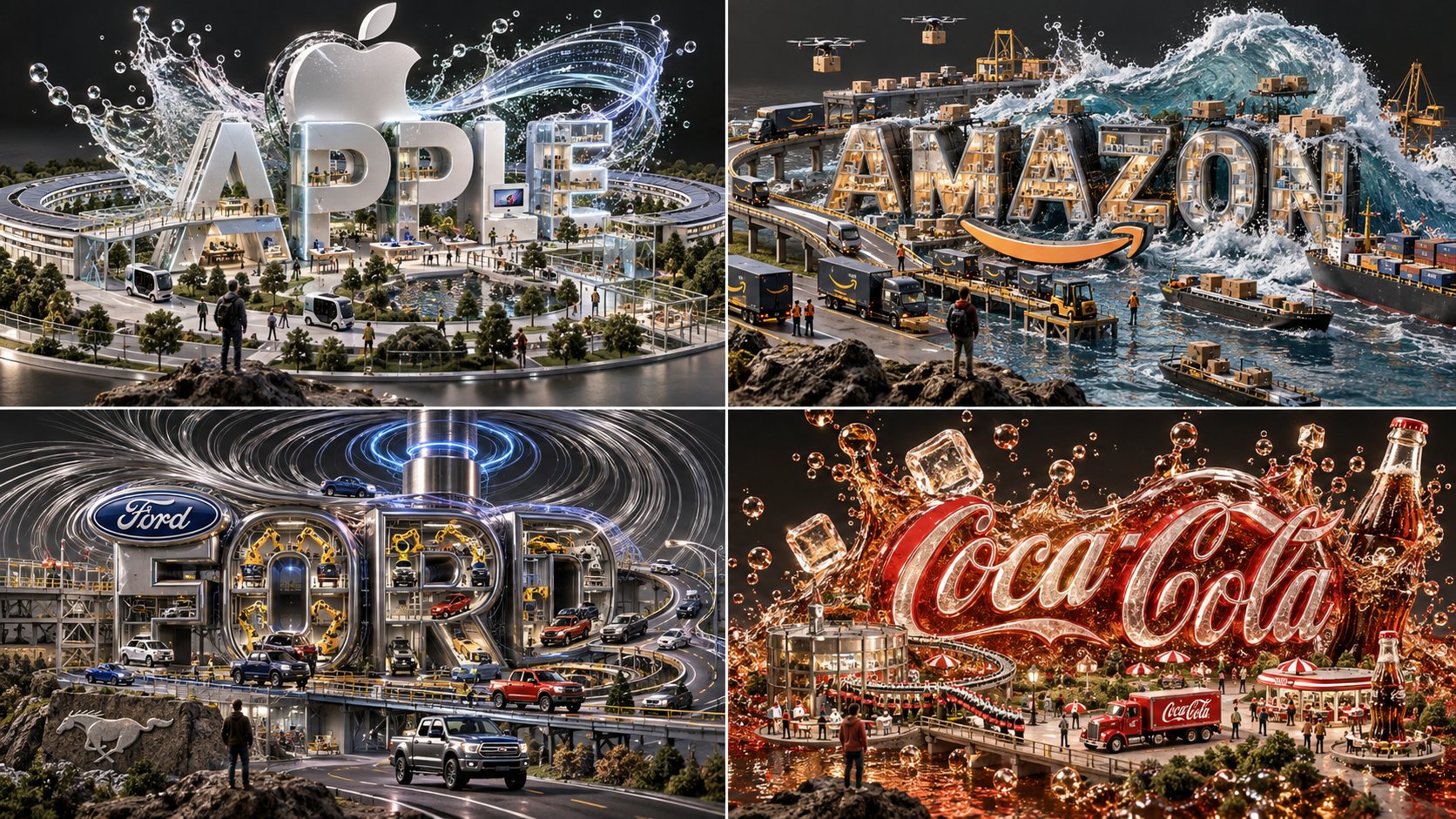
2x2 grid, 16:9, do this for 4 fortune 500 comapnies: CONCEPT ANCHOR 1: "City transformed by a physical force — skyline shaped into wave, whirlpool, splash, drip, pressure burst, molten flow, or suspended liquid architecture" :: CONCEPT ANCHOR 2: "Miniature civilization wordmark — giant subject name acts as infrastructure, with roads, tiny workers, vehicles, parks, ports, and buildings arranged around it" :: CONCEPT ANCHOR 3: "Luxury object render — dark neutral background, macro clarity, sharp shadows, realistic miniature materials, high-end concept model finish" INSTRUCTION: Render $ SUBJECT as if its entire identity has been sculpted by one dramatic elemental force. STYLE RULES: - Choose one dominant force based on the subject’s spirit: wave, vortex, gravity fold, flame, sandstorm, crystal bloom, fog bank, magnetic field, liquid metal, glass splash, moss growth, paper curl, smoke plume, or data stream. - Convert $ SUBJECT into a city-like miniature ecosystem caught inside that force. - Convert the subject’s name into large physical architecture integrated into the sculpture. - Make the letters readable but partially shaped by the force: eroded, flowing, folded, dripping, crystalline, melting, stacked, flooded, or levitating. - Build tiny subject-relevant details across the scene: vehicles, people, tools, bridges, signals, signs, interiors, gardens, docks, cranes, screens, tunnels, or monuments. - Use realistic material behavior: wet shine, glass refraction, stone fracture, mist, particles, foam, metallic reflections, glowing lights. - Add one tiny viewer beneath or beside the object to create awe and scale. - Keep the image cinematic, premium, surreal, and highly inspectable. OUTPUT: A viral miniature world where $ SUBJECT becomes a physical skyline-wordmark sculpture transformed by a dramatic elemental force.
Details
One poster, 3:4 vertical canvas. Split into two roughly equal zones — a realistic photograph on top, — AI image prompt — GPT Image 2.5
OpenAIGPT Image 2.5
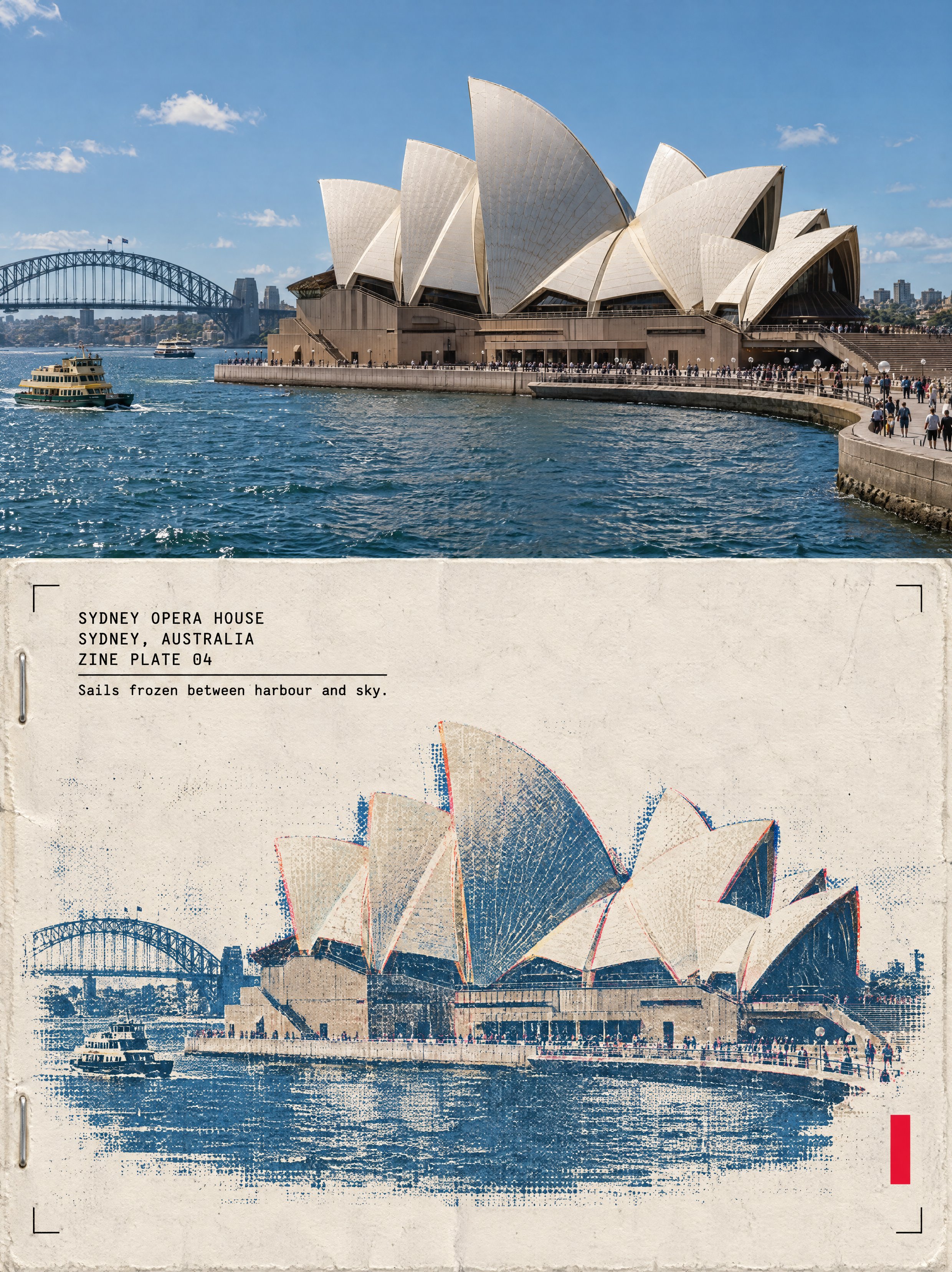
One poster, 3:4 vertical canvas. Split into two roughly equal zones — a realistic photograph on top, a printed reconstruction below — divided by one clean sharp horizontal line. The structure must not be stretched, warped, tilted or repositioned unnaturally. TOP HALF — THE REAL SHOT {STRUCTURE DESCRIPTION}. {PLATE LIGHT}. Preserve the structure faithfully: same architecture, proportions, perspective, distinctive details, natural light and shadow. Add only a subtle high-end color grade and the faintest film grain. Never redesign or reinterpret the architecture. BOTTOM HALF — THE PRINTED RECONSTRUCTION Rebuild the same structure as a two-color risograph zine print: bold flat spot-color shapes (one deep ink layer plus the structure's muted colors as a second spot layer), visible misregistration offsets between the layers, drum streaks, coarse layered ink-grain, halftone texture from overlapping dots, a zine masthead bar, two staple marks and paste-up edges. The photograph dissolves outward into flat spot-color shapes, misaligned layers and grainy ink. The structure must remain immediately recognizable. {PLATE DENSITY}. Texture: cheap zine paper, layered soy ink, misregistration, drum streaks, folded-edge wear, cut-and-paste edges, restrained crop marks, one small fluorescent red calibration bar. Color: cream zine paper, black ink, one deep spot color, the structure's original muted colors, a single fluorescent red accent. Never fully desaturate the structure. The structure occupies roughly 60-88% of the frame width. Leave 22-38% of the paper visibly untouched and empty — generous negative space so the poster reads as an archival specimen, not a packed screen. TYPOGRAPHY — a clean fixed-width architectural title block, pinned top-left at a small fixed inset, black ink, monospaced technical typeface, verbatim, each line in caps: "{NAME}" "{CITY, COUNTRY}" "ZINE PLATE 0N" A thin horizontal rule under the third line, then one short observational caption verbatim: "{CAPTION}" A solid vertical red rectangle — the only red in the poster — is pinned to the bottom-right corner zone about 12% from the bottom and right edges. Four thin black crop marks sit in the four corners of the bottom half at identical insets. Red bar, crop marks and text block keep exactly the same position and size relative to the frame. MOOD: underground zine crossed with an architecture fanzine — young, tactile, collectible. Sophisticated, minimal, tactile, intellectual, slightly mysterious, highly collectible. AVOID: solid black terminal backgrounds, dense walls of code, cyberpunk neon, excessive decorative glyphs, distorted architecture, impossible geometry, invented architectural details, fake technical specifications, random meaningless symbols, garbled text, extra colors, brand logos, QR codes, watermarks, author credits, tourist-poster clichés. Priority: preserve the structure's identity and architectural accuracy first. The experimental print treatment enhances the architecture, never hides it.
Details
Create a premium 4:5 vertical illustration for the “Destination Sketchbook” series. Use the Matterho — AI image prompt — GPT Image 2.5
OpenAIGPT Image 2.5
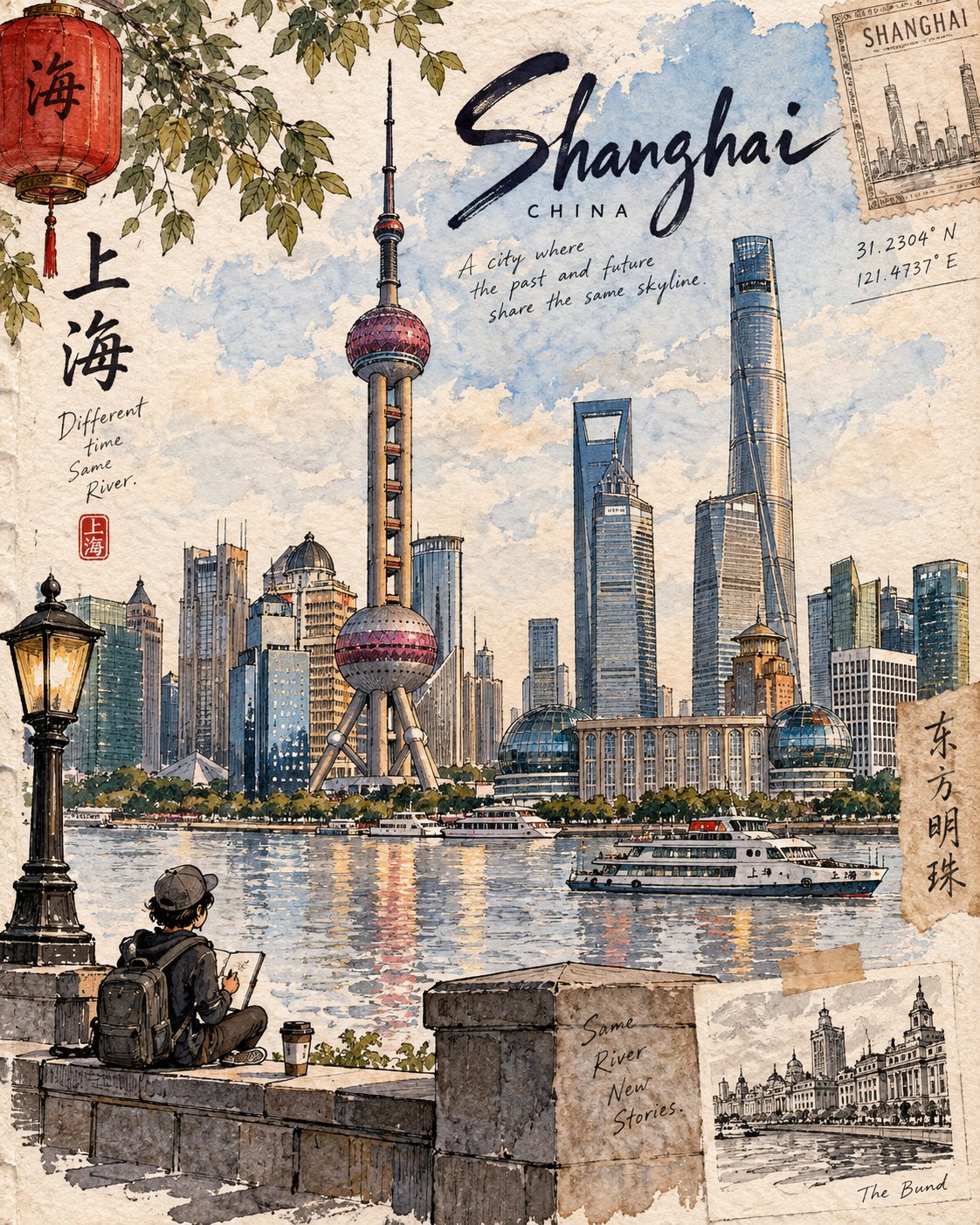
Create a premium 4:5 vertical illustration for the “Destination Sketchbook” series. Use the Matterhorn artwork as the series DNA, not as a literal template. For [DESTINATION], identify its most distinctive and authentic landmark or place and build the entire scene around it. Prioritize geographic accuracy: landmark, architecture, terrain, vegetation, water, geology, culture, and viewpoint must naturally belong together and be realistically observable from one location. Never create composite landmarks or mix attractions from different places. COMPOSITION: One dominant hero landmark with 60–70% visual emphasis, strong foreground–middle–background depth, generous negative space, and exactly ONE tiny cute chibi traveler occupying 8–12% of the frame. The traveler should naturally explore, sketch, sit, walk, or observe—not pose for the viewer. Use destination-specific foreground details. STYLE: Hand-painted travel-journal artwork with expressive dark ink lines, varied line weight, loose watercolor/gouache washes, warm off-white paper, visible grain, subtle pencil marks, imperfect brush edges, natural paint bleeds, and restrained imperfections. It should feel personally observed, tactile, intimate, and handmade—not photorealistic, glossy, vector-like, or generically AI-watercolored. Make each destination visually unique through its architecture, vegetation, geology, materials, weather, light, culture, textures, and viewpoint, while preserving the same artist identity. Avoid generic tourism clichés and decorative elements unless genuinely relevant. TEXT: Minimal handwritten editorial lettering: [LANDMARK NAME] [LOCATION, COUNTRY] Optionally add 1–2 short, location-specific observations. COLOR: Naturally derived from the destination and season. Restrained watercolor palette, subtle accents, visible paper, no neon, excessive contrast, glossy gradients, or artificial cinematic grading. FINAL: The destination must be immediately recognizable, geographically coherent, landmark-dominant, authentically detailed, and unmistakably part of the Destination Sketchbook series. OUTPUT: 4:5 vertical premium hand-drawn travel-journal illustration.
Details
Ultra-realistic expensive lifestyle shot. A girl is in the frame. Her hair is very long, straight to — AI image prompt — GPT Image 2.5
OpenAIGPT Image 2.5
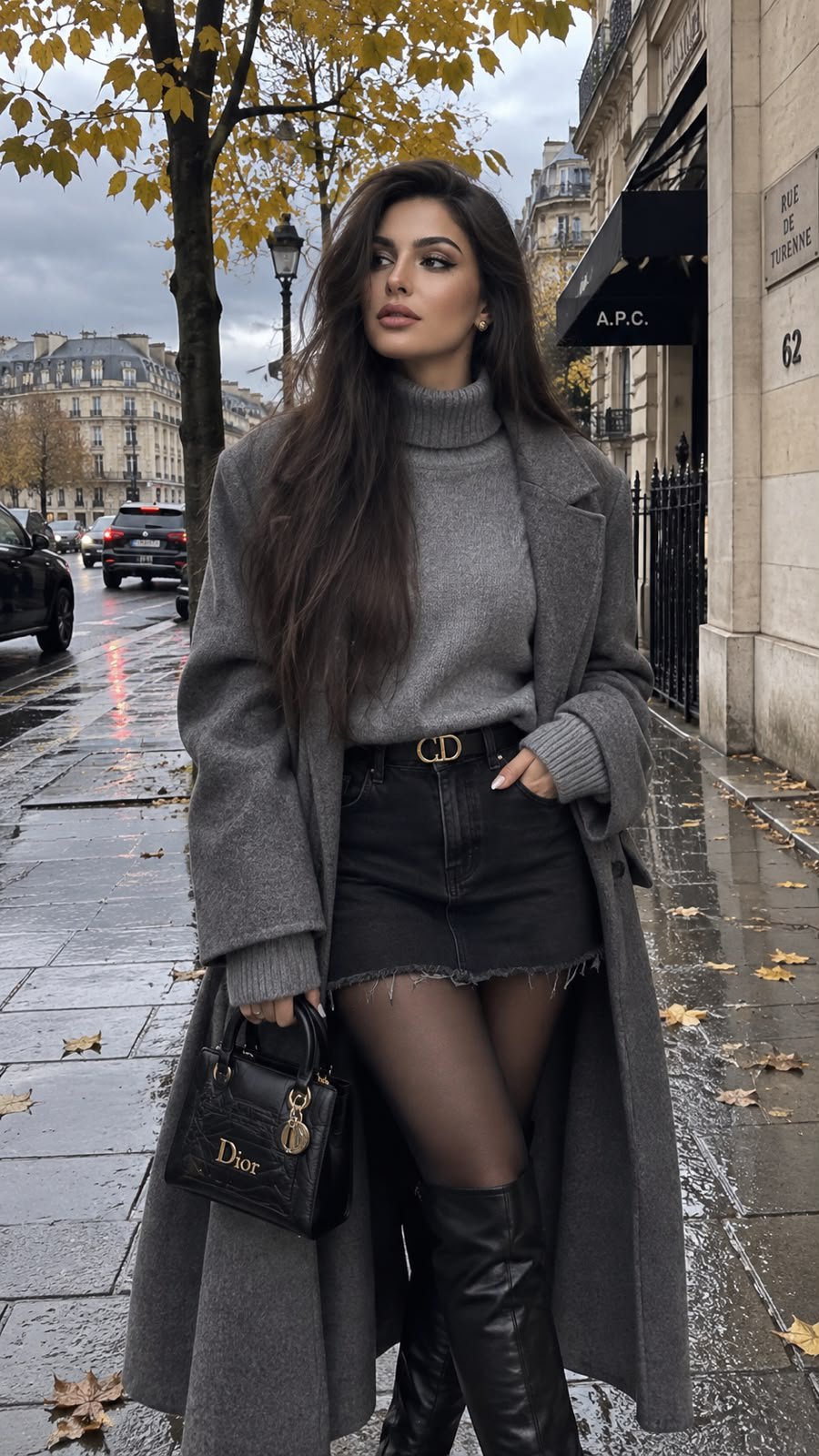
Ultra-realistic expensive lifestyle shot. A girl is in the frame. Her hair is very long, straight to the waist, evenly parted, with several strands falling on her face. Smooth skin tone. 100% facial similarity. She is wearing an oversized grey turtleneck sweater with long sleeves, a black denim skirt with raw/frayed edges, and a black belt from a recognizable brand. Part of the sweater is tucked into the skirt. She wears black nylon tights and tight-fitting high black boots. Her nails are short and milky. She has small round gold earrings. She holds a black Dior bag in her hand and wears a long, voluminous grey coat. The image looks stylish and harmonious. She stands on a city street with wet paving stones, building facades, fallen leaves, and puddles. A tree is visible next to her, with yellow-leafed branches hanging over her. She looks to the side with a soft closed smile. Shot on iPhone 17 Pro Max. The background is not blurred. Clouds are visible. High skin detail. Soft, dimmed lighting. Live photo, no retouching on the face. Raw look.
Details
One poster, 3:4 vertical canvas. Split into two roughly equal zones — a realistic photograph on top, — AI image prompt — GPT Image 2.5
OpenAIGPT Image 2.5
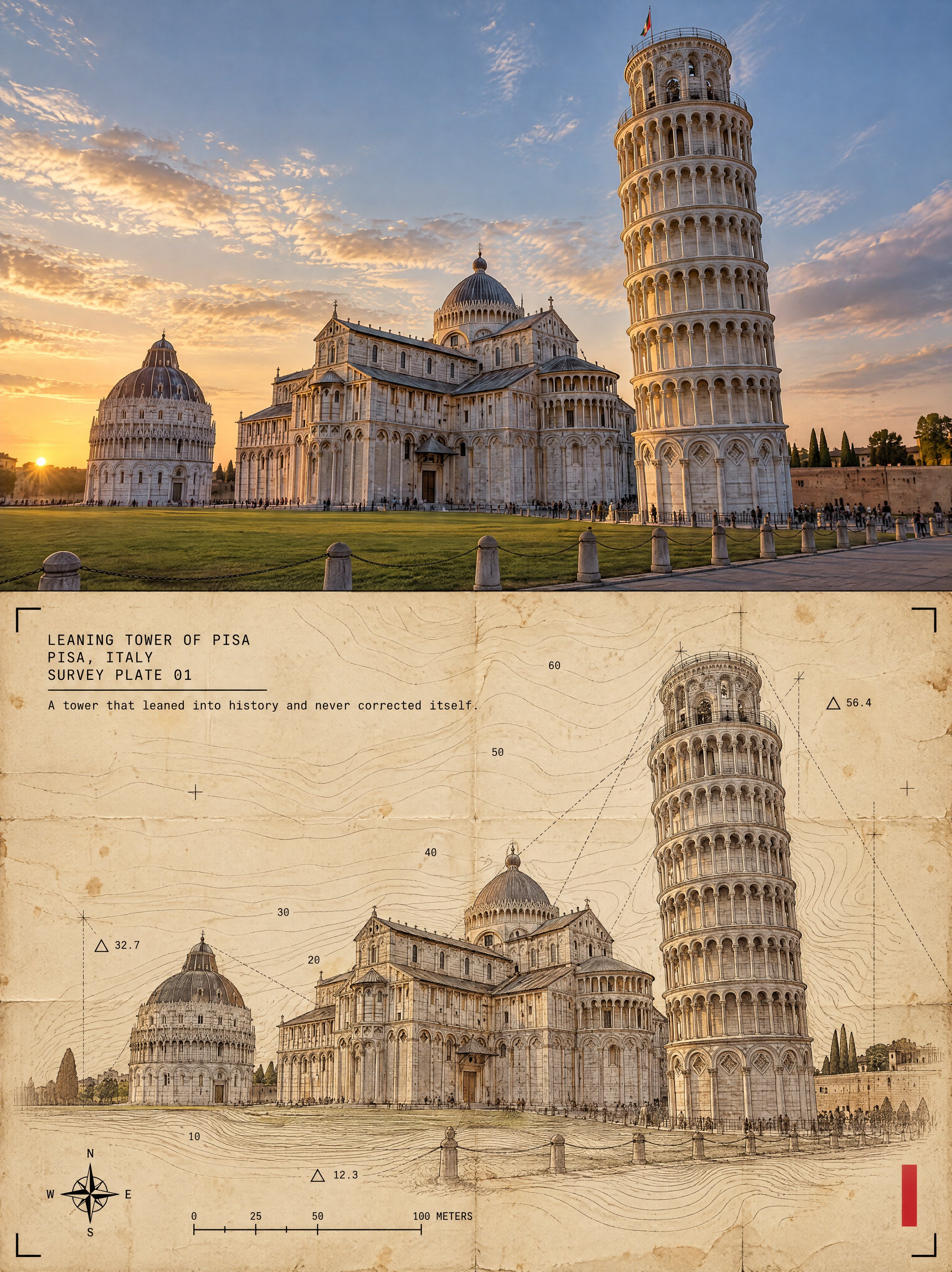
One poster, 3:4 vertical canvas. Split into two roughly equal zones — a realistic photograph on top, a printed reconstruction below — divided by one clean sharp horizontal line. The structure must not be stretched, warped, tilted or repositioned unnaturally. TOP HALF — THE REAL SHOT {STRUCTURE DESCRIPTION}. {PLATE LIGHT}. Preserve the structure faithfully: same architecture, proportions, perspective, distinctive details, natural light and shadow. Add only a subtle high-end color grade and the faintest film grain. Never redesign or reinterpret the architecture. BOTTOM HALF — THE PRINTED RECONSTRUCTION Rebuild the same structure as a mid-century surveyor's topographic map sheet: the building and its site rendered in fine brown contour lines that wrap around the mass and terrain, elevation index numbers printed along the contours, small triangular benchmark markers with elevation tags, a compass rose, a thin scale bar, faint theodolite sight-lines and the blocky vintage lettering of a USGS quadrangle sheet. The photograph dissolves outward into contour lines, survey ticks and a faint grid. The structure must remain immediately recognizable. {PLATE DENSITY}. Texture: yellowed map paper with fiber grain, worn fold creases, faint old stains, restrained crop marks, one small red calibration bar. Color: aged-paper ground, warm brown and black survey inks, the structure's original muted colors, a single red accent. Never fully desaturate the structure. The structure occupies roughly 60-88% of the frame width. Leave 22-38% of the paper visibly untouched and empty — generous negative space so the poster reads as an archival specimen, not a packed screen. TYPOGRAPHY — a clean fixed-width architectural title block, pinned top-left at a small fixed inset, black ink, monospaced technical typeface, verbatim, each line in caps: "{NAME}" "{CITY, COUNTRY}" "SURVEY PLATE 0N" A thin horizontal rule under the third line, then one short observational caption verbatim: "{CAPTION}" A solid vertical red rectangle — the only red in the poster — is pinned to the bottom-right corner zone about 12% from the bottom and right edges. Four thin black crop marks sit in the four corners of the bottom half at identical insets. Red bar, crop marks and text block keep exactly the same position and size relative to the frame. MOOD: field survey notebook crossed with modern travel editorial — the landmark as a place the surveyor has measured. Sophisticated, minimal, tactile, intellectual, slightly mysterious, highly collectible. AVOID: solid black terminal backgrounds, dense walls of code, cyberpunk neon, excessive decorative glyphs, distorted architecture, impossible geometry, invented architectural details, fake technical specifications, random meaningless symbols, garbled text, extra colors, brand logos, QR codes, watermarks, author credits, tourist-poster clichés. Priority: preserve the structure's identity and architectural accuracy first. The experimental print treatment enhances the architecture, never hides it. THE FOUR VARIATIONS (one axis change per plate) PLATE 01 — DENSE · light: "Golden-hour sunlight with long warm shadows" · density: "The print treatment is at its densest and richest: layered marks, full system detail" PLATE 02 — LINEWORK · light: "Soft overcast daylight, muted flat tones" · density: "The print is linework-forward: thin drafting lines and technical geometry dominate the reconstruction" PLATE 03 — FRAGMENT · light: "Blue-hour dusk with cool tones and lit windows glowing" · density: "The print is fragment-forward: torn photographic fragments dominate, with fewer system marks around them" PLATE 04 — MINIMAL · light: "Bright midday sunlight with crisp shadows" · density: "The print is the minimal plate of the set: sparse marks, maximum untouched paper"
Details
Create a hyper-realistic surreal spherical panorama of a charming [CITY NAME], featuring its most fa — AI image prompt — GPT Image 2.5
OpenAIGPT Image 2.5
Create a hyper-realistic surreal spherical panorama of a charming [CITY NAME], featuring its most famous landmarks seamlessly curving around a tiny planet-like surface. The entire city should wrap naturally around the spherical landscape, creating a stunning miniature planet effect. Place the text "[CITY NAME]" prominently at the exact center of the composition, using sleek, elegant white 3D typography seamlessly integrated into the urban landscape. The city name should be clearly readable and visually balanced. The scene is viewed from a top-down, orbiting perspective that strongly emphasizes the spherical planet effect. Soft, natural daylight filters through a slightly cloudy sky, creating realistic lighting, subtle shadows, atmospheric depth, and a cinematic photorealistic finish.
Details
Browse all GPT Image 2.5 promptsExplore AI Image Prompts