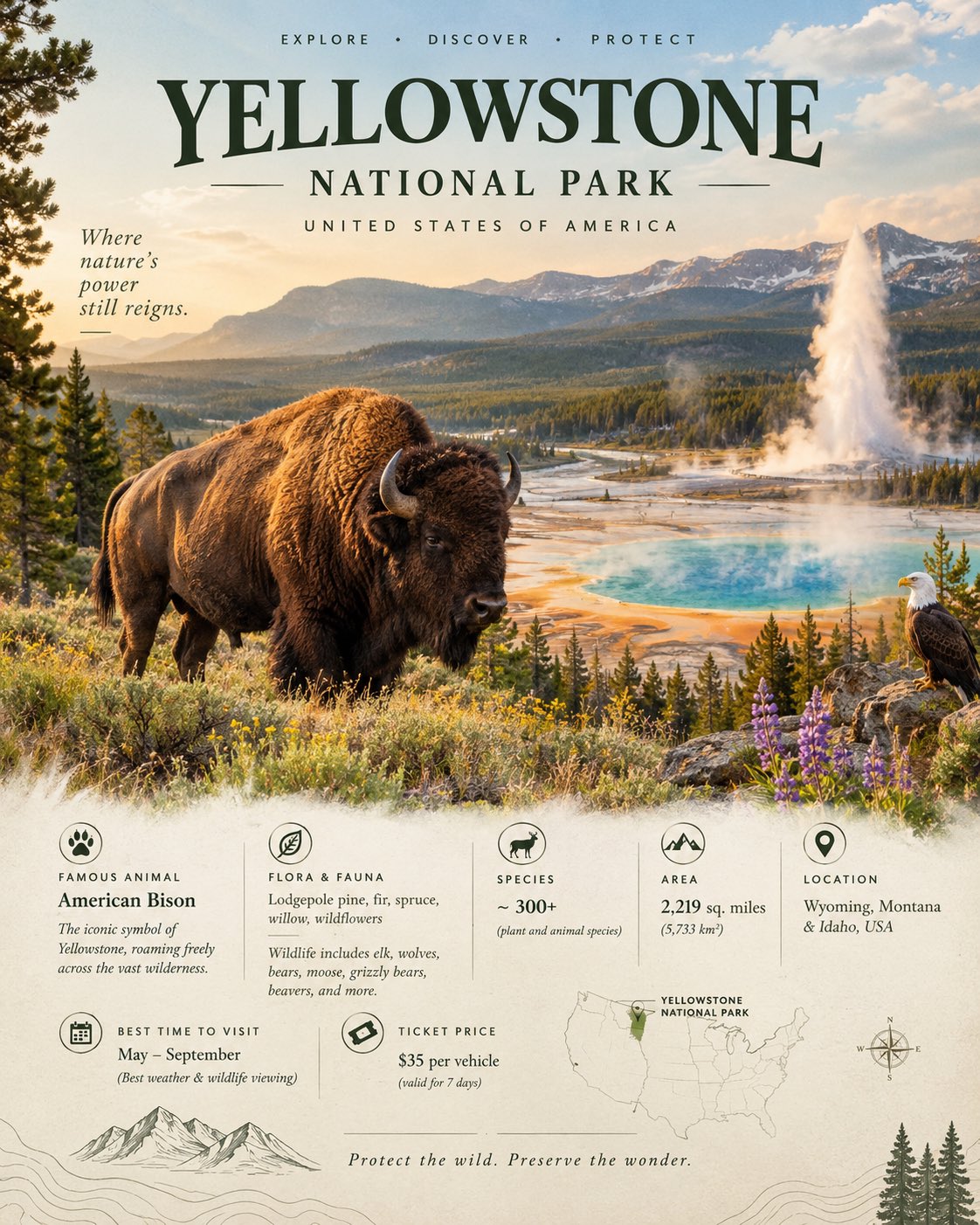
National Park Travel Infographic Poster
 GPT Image 2.5OpenAIimage
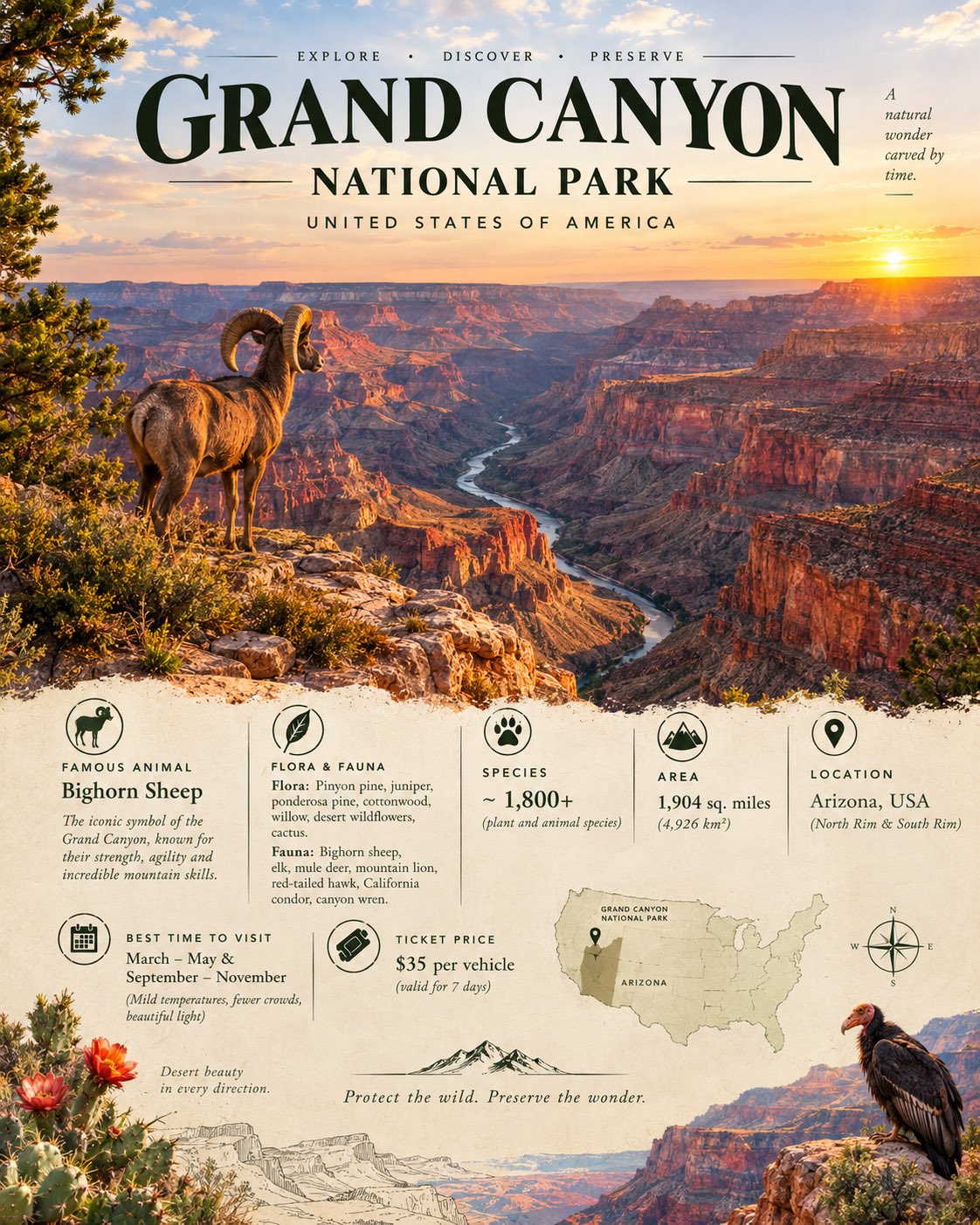
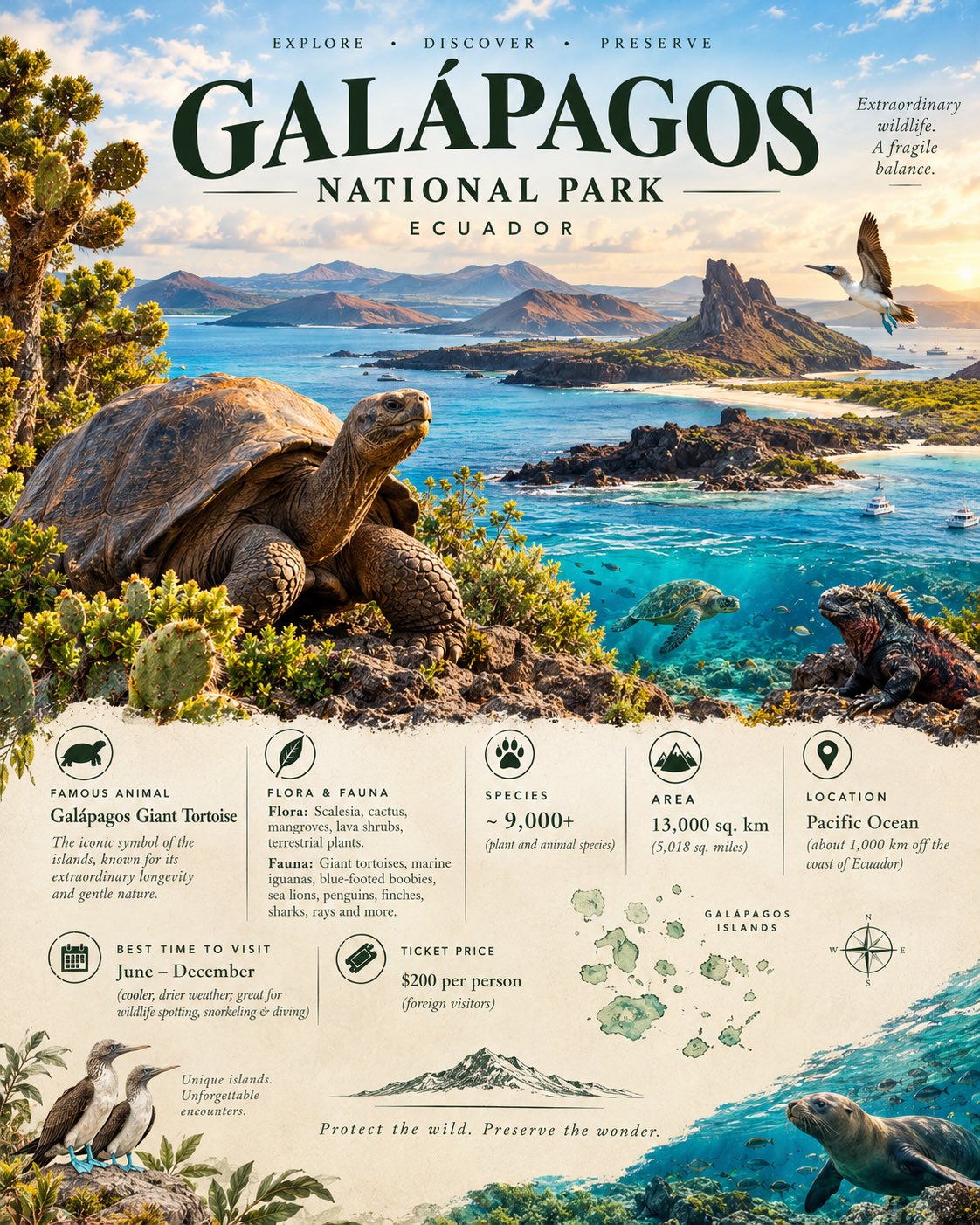
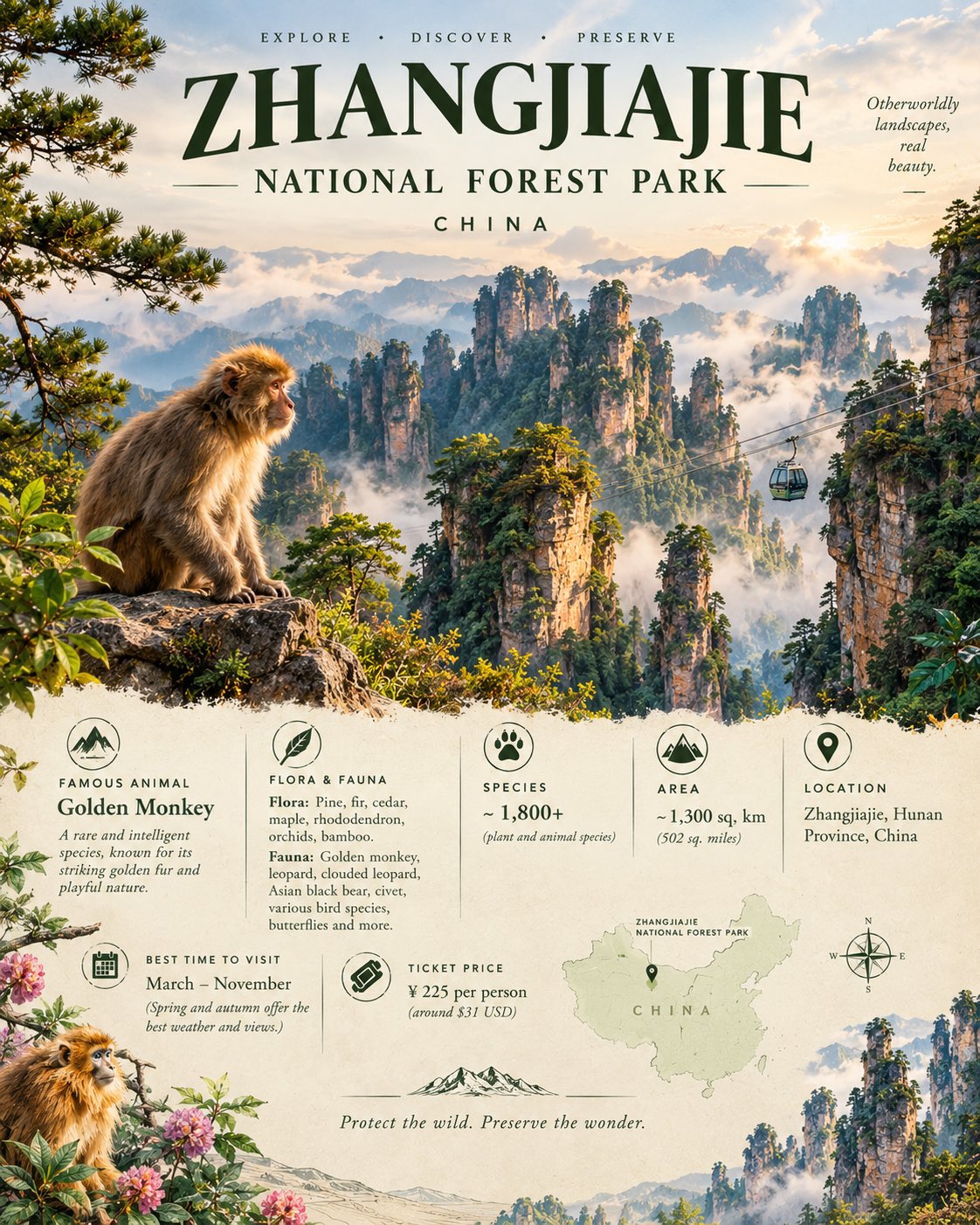
Create a breathtaking, premium national park travel infographic poster for [NATIONAL PARK, COUNTRY], designed to inspire people to explore, protect, and appreciate nature. Show a cinematic natural landscape featuring the park’s most famous animal — [FAMOUS ANIMAL] — naturally integrated into the scene, surrounded by its authentic flora and fauna. Include subtle visual elements representing the park’s ecosystem, such as native trees, flowers, grasses, mountains, rivers, birds, and wildlife. Use an elegant editorial travel-poster aesthetic with realistic nature photography blended with refined graphic-design elements. Warm natural tones, soft sunlight, atmospheric depth, detailed textures, and a clean premium composition. Make the wildlife the emotional focal point while keeping the landscape expansive and majestic. Add beautifully organized, minimal information panels: [NATIONAL PARK] [COUNTRY] Famous Animal: [ANIMAL] Flora & Fauna: [KEY SPECIES / VEGETATION] Species: [NUMBER OF SPECIES] Area: [AREA] 📍 Location: [LOCATION] Best Time to Visit: [MONTHS / SEASON] Ticket Price: [PRICE] Add a short inspirational line: “Protect the wild. Preserve the wonder.” Keep the typography sophisticated, clean, and highly legible. Use small icons, fine divider lines, subtle map/topographic details, and a restrained information hierarchy. The overall design should feel like a luxury conservation magazine cover + collectible national-park poster, visually inspiring but informative. Format: Vertical 4:5 Style: Cinematic, realistic, premium editorial, conservation-inspired, detailed, elegant, atmospheric Avoid: Crowds, excessive text, cartoon style, artificial-looking animals, tourist buses, logos, watermarks, and clutter.
Details
- Type
- AI Image Prompts
- Aspect Ratio
- 561:701
- Updated
- Sep 14, 2026
How to use this prompt
- 1Copy the full prompt with the copy button above.
- 2Open GPT Image 2.5 by OpenAI, or any image generator with a similar style range.
- 3Paste the prompt, then swap the subject and style keywords to match your idea.
- 4Match the example's settings (561:701 · Nature · Poster · Landscape), then iterate — small wording changes shift the output a lot.
Frequently asked questions
Which AI model generated this image?
This image was generated with GPT Image 2.5 by OpenAI. The prompt on this page is the exact text used to create it.
What settings does this prompt use?
The example was generated with GPT Image 2.5 using: 561:701 · Nature · Poster · Landscape. Reusing these settings gives the closest match.
How do I get similar results?
Copy the prompt as-is first, then replace only the subject while keeping the style, lighting, and composition keywords. Generate a few variations — outputs differ between runs.
Can I modify this prompt?
Yes. Prompts work best as starting points — adjust descriptors, aspect ratio, or style tags to make the output your own.
![Create a premium vertical 4:5 editorial travel poster for [COUNTRY], where the outline of the countr — AI image prompt — GPT Image 2.5](https://cdn.ahaprompt.app/harvest-media/import-1789369064970-j9jipe.jpg)
![Create a sophisticated, dreamy editorial magazine cover titled “[COUNTRY NAME] — A COUNTRY IN ONE DR — AI image prompt — GPT Image 2.5](https://cdn.ahaprompt.app/harvest-media/import-1789368946131-xefjx1.jpg)
![2x2 grid, 9:16, 4 goat chess players who passed away [SUBJECT] :: single standalone vertical tribute — AI image prompt — GPT Image 2.5](https://cdn.ahaprompt.app/harvest-media/import-1789139801507-ah2jvt.jpg)
![Create a premium educational travel poster featuring [STRUCTURE NAME], one of the world’s most famou — AI image prompt — GPT Image 2.5](https://cdn.ahaprompt.app/harvest-media/import-1789369131185-x1iuzs.jpg)
![Create a premium cinematic luxury tourism poster for [COUNTRY / DESTINATION] in a STRICT 4:5 vertica — AI image prompt — GPT Image 2.5](https://cdn.ahaprompt.app/harvest-media/import-1789369001673-dctuvc.jpg)
![Create a premium contemporary editorial art poster for [LOCATION] in a playful Japanese design-ZINE — AI image prompt — GPT Image 2.5](https://cdn.ahaprompt.app/harvest-media/import-1789139846025-v6z310.jpg)