Cinematic Romantic Drama Close-Up
 Seedream 5ByteDanceimage
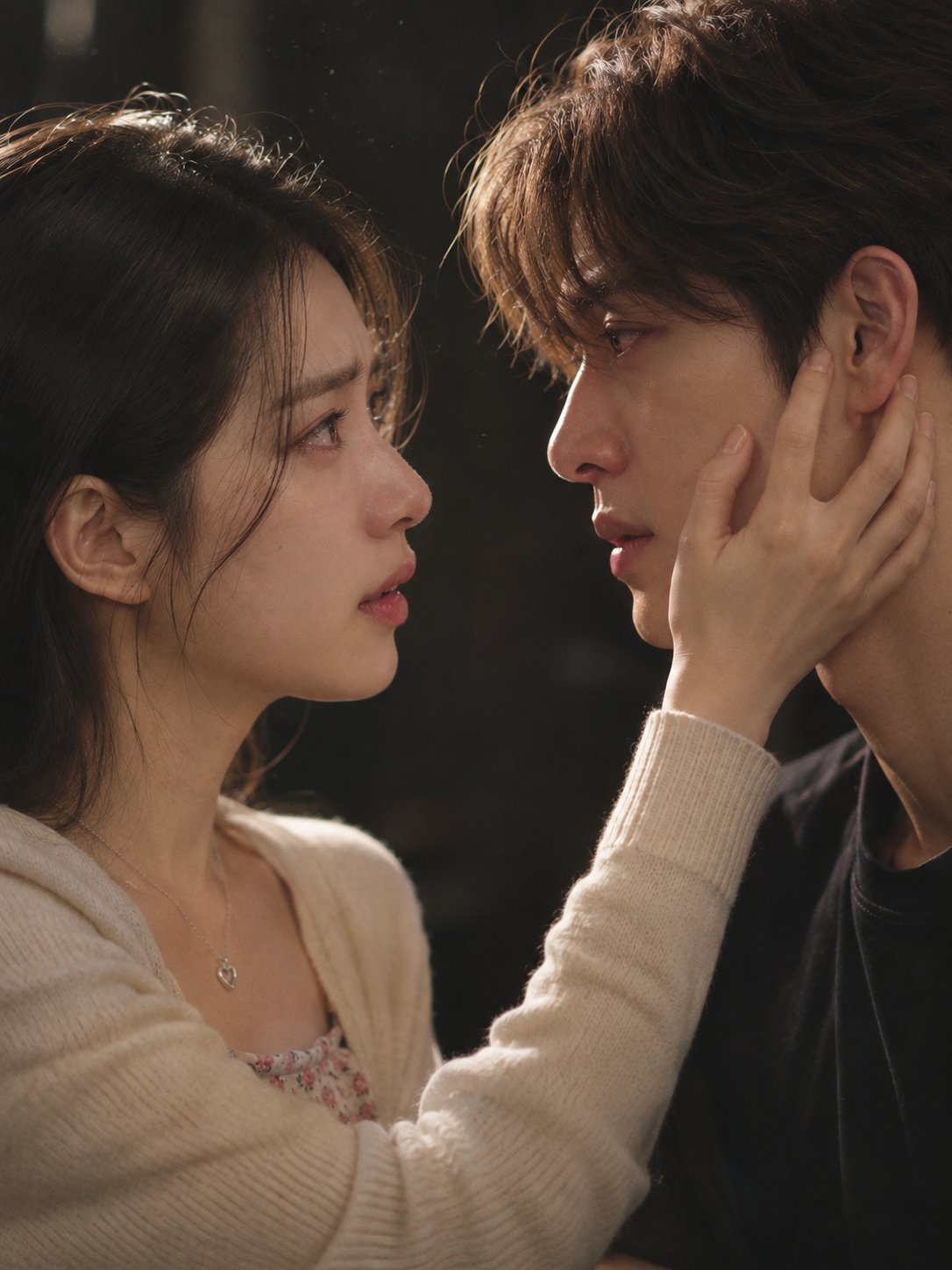
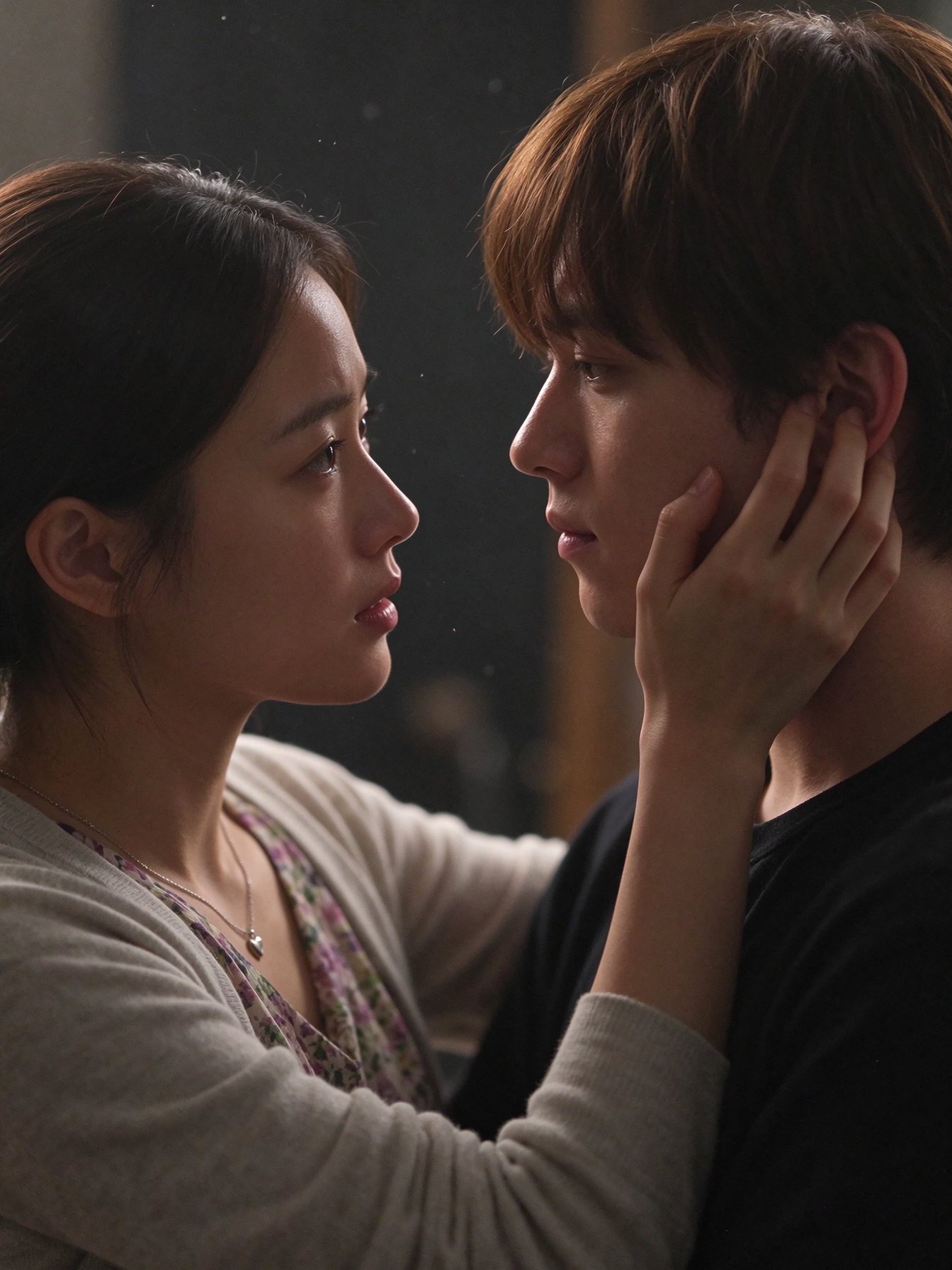
A cinematic vertical 3:4 romantic drama still photograph captured at eye level — a tight, emotional face-to-face side-profile close-up of a gorgeous young East Asian woman and an exceptionally handsome young East Asian man facing each other closely in a dimly lit room. On the left in right-facing profile, the woman possesses elite K-drama lead beauty with sleek dark brown hair tucked behind her ear, delicate features, slightly furrowed brows, and softly parted lips filled with tender concern. Dressed in a light cream-beige long-sleeve cardigan over a pastel floral top with a delicate silver heart necklace, she gently lifts her hand to cup the side of the man's cheek near his ear. On the right in left-facing profile, the strikingly handsome man features soft chestnut middle-parted hair with wispy fringe strands over his brow, a clean jawline, and vulnerable, intense eyes gazing back into hers, wearing a minimalist black crewneck t-shirt. The setting is a softly out-of-focus dark charcoal interior speckled with faint, luminous dust motes. Soft rim lighting gently illuminates the edges of their hair and facial profiles while casting deep, moody shadows behind them, evoking a bittersweet, heartfelt cinematic tension. Captured on a 50mm cinema prime at f/1.8 with shallow depth of field, delicate highlight bloom, and fine 35mm film grain in an M1 narrative drama register. Authentic human skin with fine pores, natural biological warmth, and tangible fabric folds — cinematic frame, strictly no CGI, no 3D render, no plastic skin, no artificial smoothing.
Details
- Type
- AI Image Prompts
- Aspect Ratio
- 3:4
- Updated
- Nov 12, 2026
How to use this prompt
- 1Copy the full prompt with the copy button above.
- 2Open Seedream 5 by ByteDance, or any image generator with a similar style range.
- 3Paste the prompt, then swap the subject and style keywords to match your idea.
- 4Match the example's settings (3:4 · Cinematic · Realistic · Portrait), then iterate — small wording changes shift the output a lot.
Frequently asked questions
Which AI model generated this image?
This image was generated with Seedream 5 by ByteDance. The prompt on this page is the exact text used to create it.
What settings does this prompt use?
The example was generated with Seedream 5 using: 3:4 · Cinematic · Realistic · Portrait. Reusing these settings gives the closest match.
How do I get similar results?
Copy the prompt as-is first, then replace only the subject while keeping the style, lighting, and composition keywords. Generate a few variations — outputs differ between runs.
Can I modify this prompt?
Yes. Prompts work best as starting points — adjust descriptors, aspect ratio, or style tags to make the output your own.