Swiss Editorial Diptych Texture Zones
 GPT Image 2.5OpenAIimage
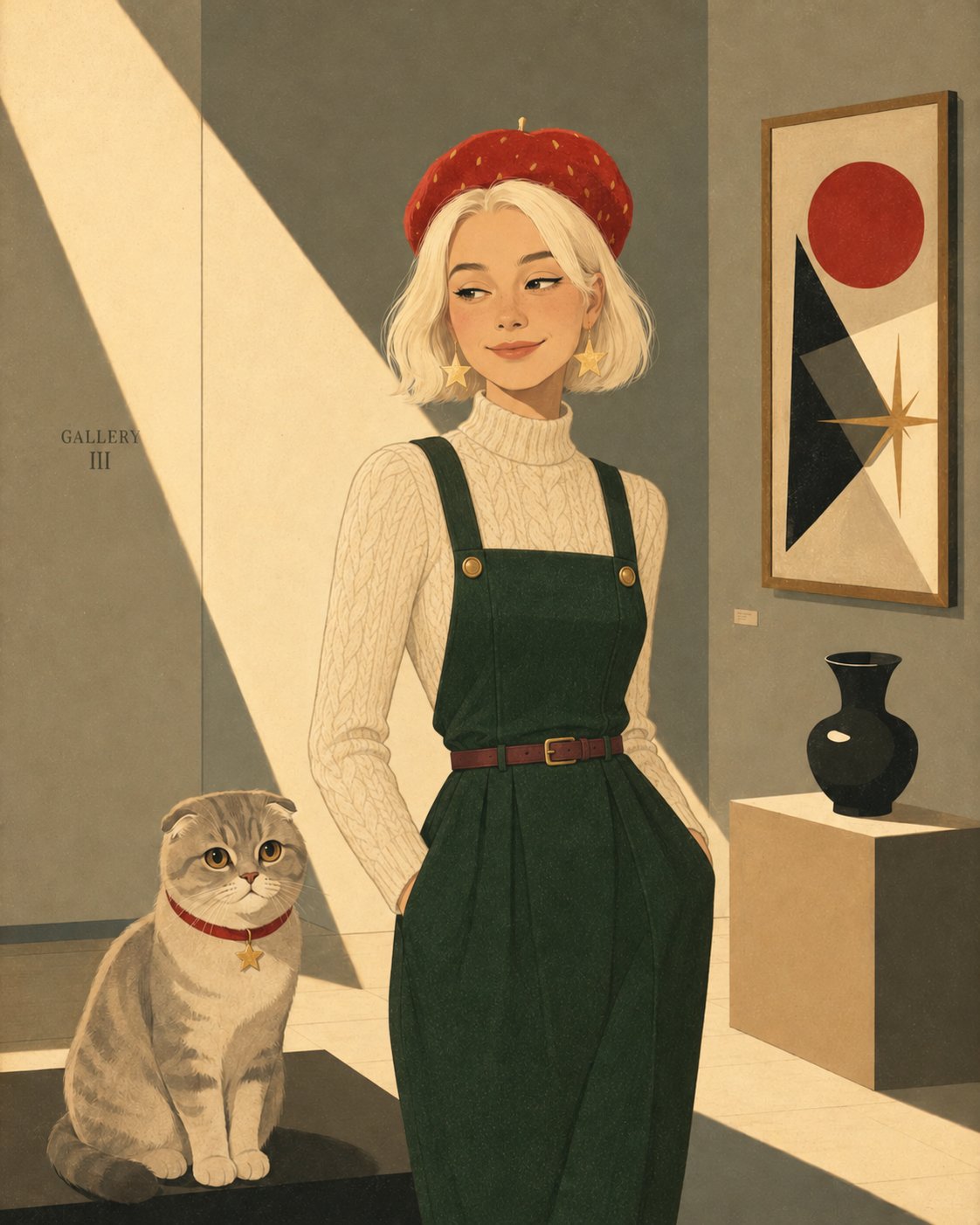
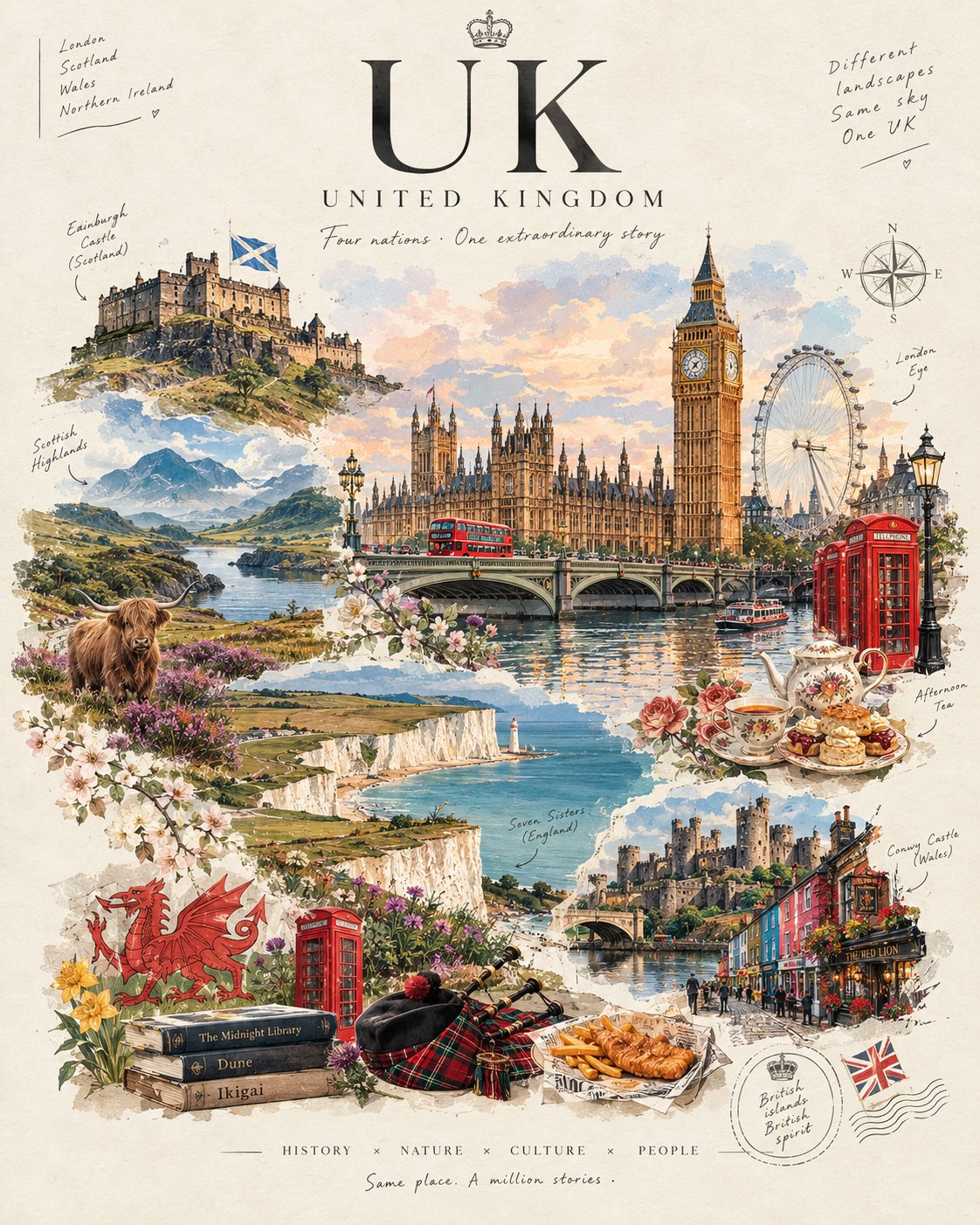
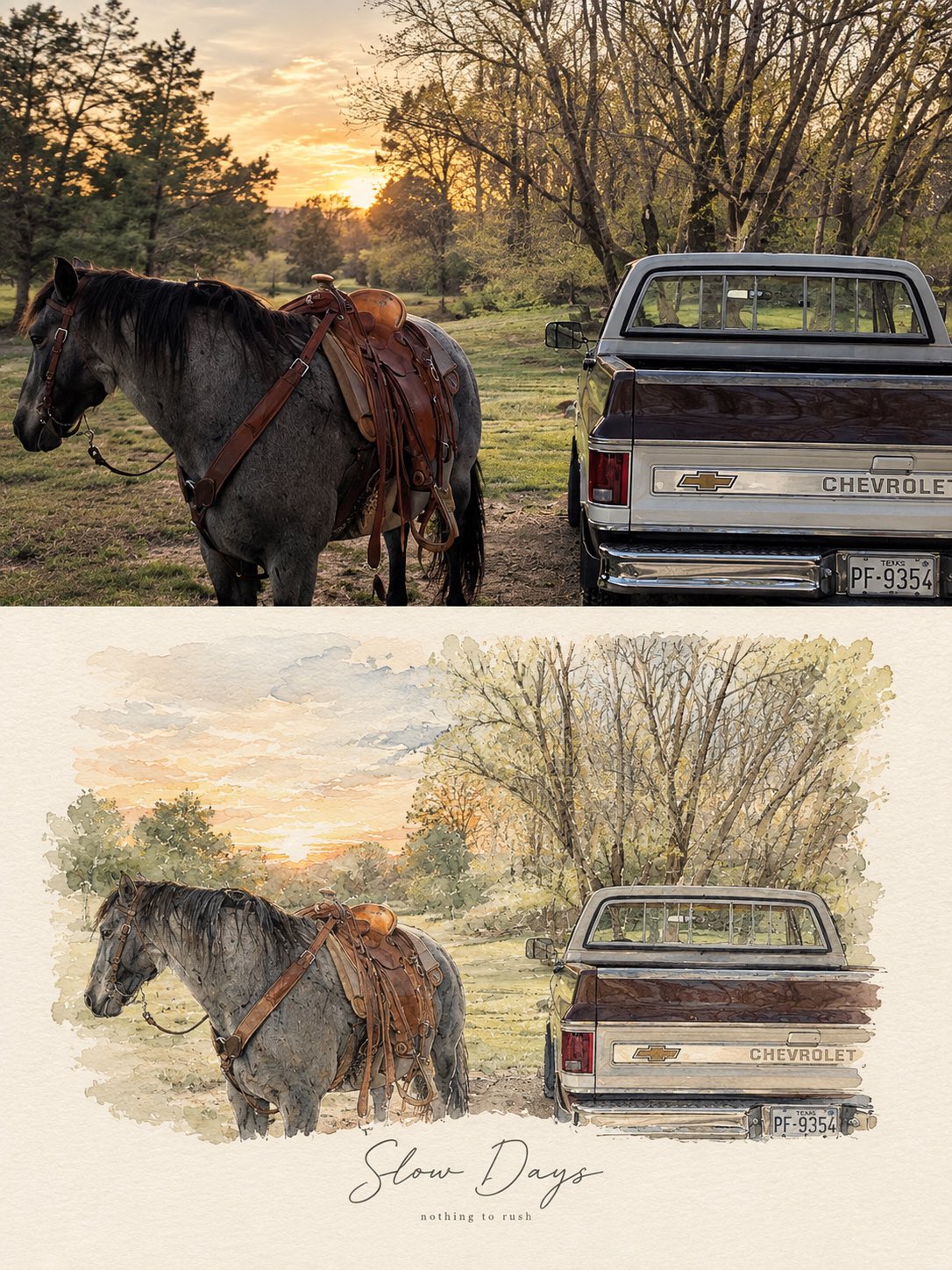
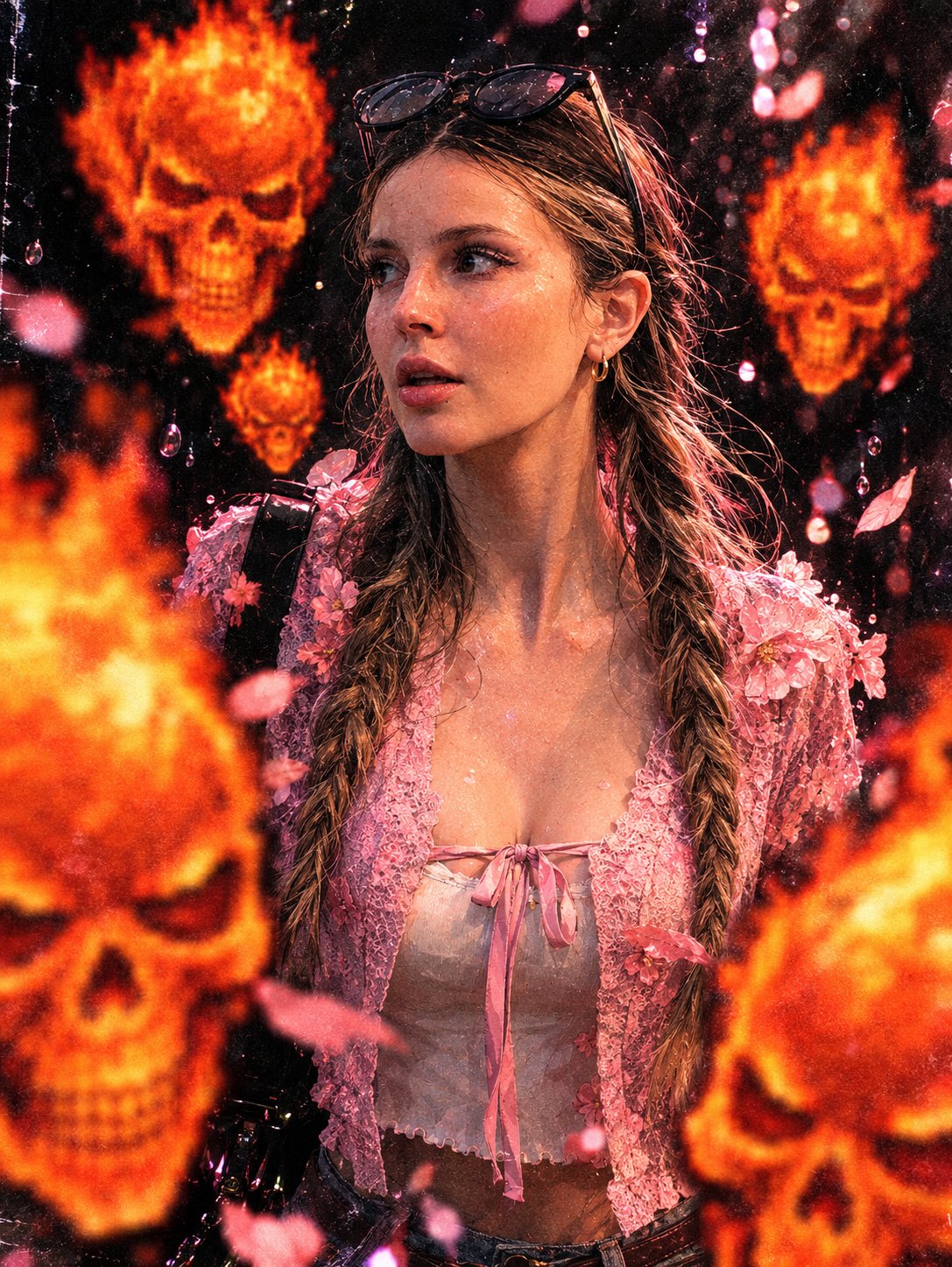
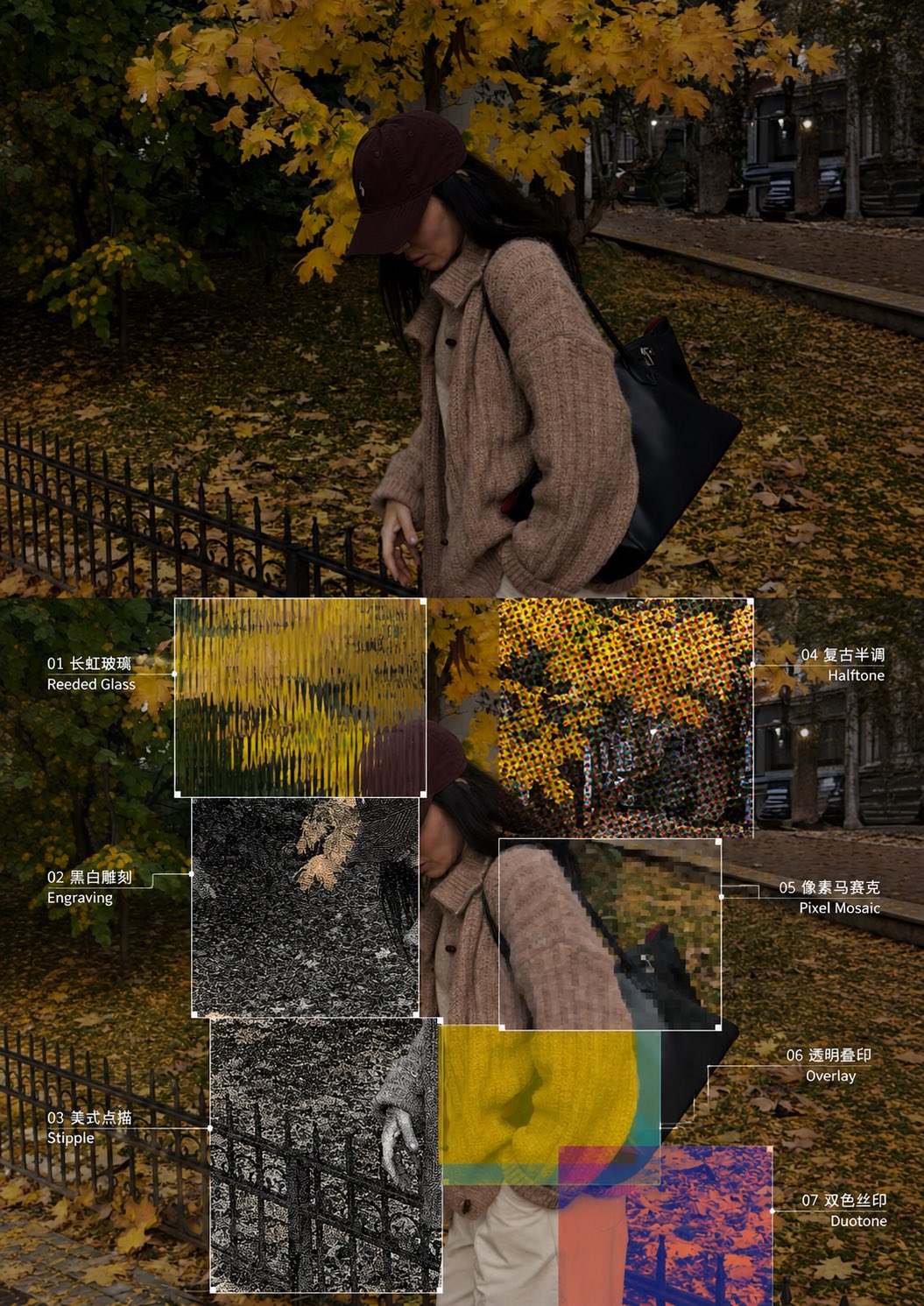
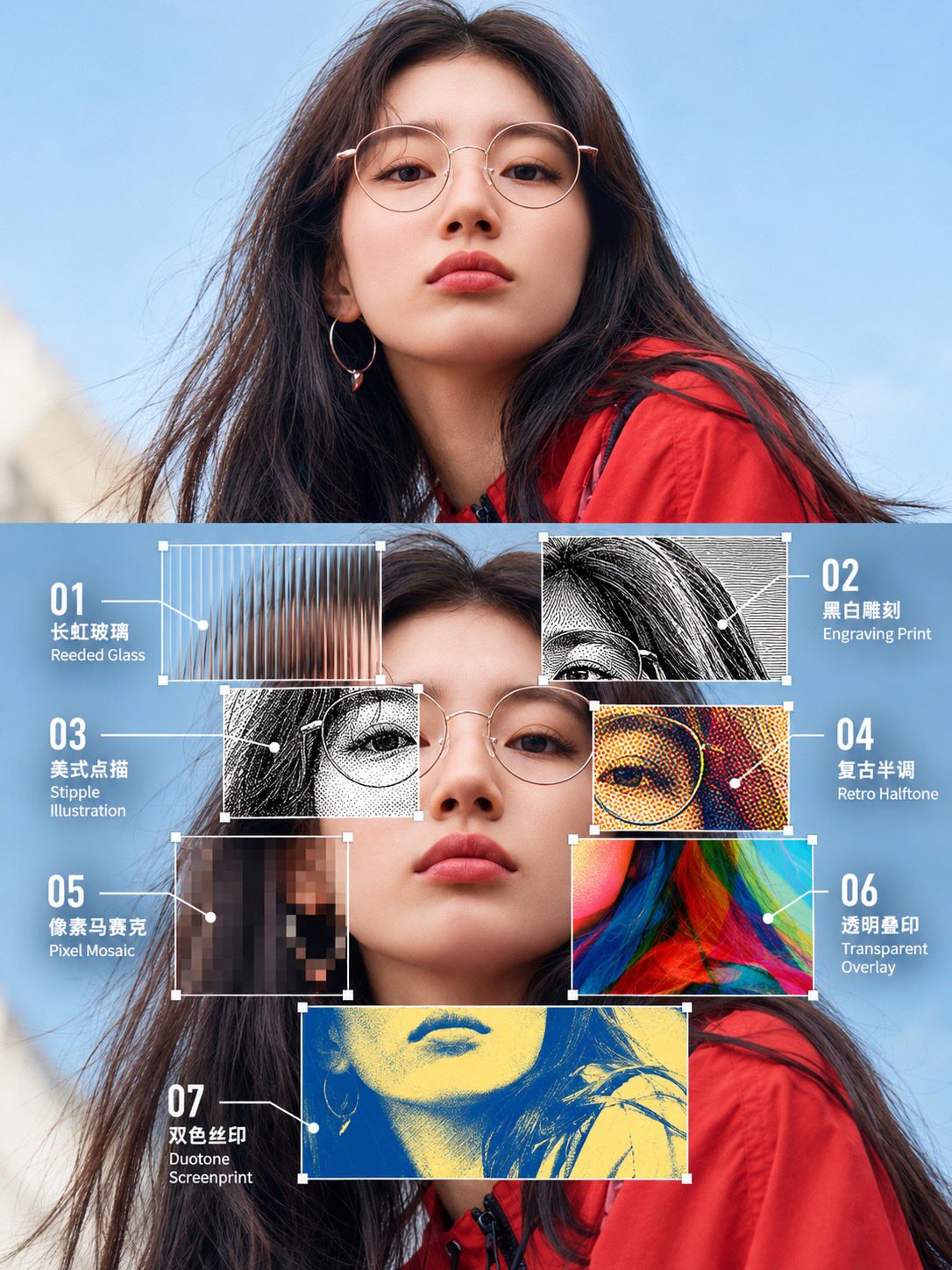
Create one vertical 3:4 diptych for each uploaded photo, divided into equal top and bottom halves with a seamless join. No divider, frame, or collage. Swiss editorial design, experimental photography, and vintage print aesthetics. TOP HALF — ORIGINAL PHOTOGRAPH Preserve the original identity, pose, scene, composition, perspective, lighting, and colors. Allow only subtle color grading and background extension. No text. BOTTOM HALF — SEVEN EXPERIMENTAL TEXTURE ZONES Repeat the entire original photo. Overlay seven asymmetrical rectangular zones of different sizes directly onto the image pixels, crossing non-critical details. Maintain visual continuity inside and outside every zone. Never crop, zoom, shift, duplicate, or redraw the image. Keep all important focal features visible. SEVEN NUMBERED TECHNIQUES 01. Reeded Glass: Vertical optical refraction. 02. Black-and-White Engraving: Fine etched lines and crosshatching. 03. American Stipple: Black-and-white microdot texture. 04. Vintage Halftone: CMYK printing dots. 05. Pixel Mosaic: Square pixel blocks. 06. Transparent Overlay: 2–4 translucent overlapping layers. 07. Duotone Screen Print: Two-color screen-printing effect. DESIGN DETAILS Add hairline borders, tiny corner squares, and fine leader lines to identify each rectangular zone. Label every technique with its corresponding number and English name. Keep all areas outside the seven zones photographic and realistic. STRICT REQUIREMENTS No logos, watermarks, extra images, or unnecessary decorative elements. Preserve the original photograph's integrity and maintain a clean, sophisticated editorial layout. OUTPUT: One high-definition 3:4 vertical poster with equal top and bottom halves.
Details
- Type
- AI Image Prompts
- Aspect Ratio
- 1055:1491
- Updated
- Oct 22, 2026
Category
How to use this prompt
- 1Copy the full prompt with the copy button above.
- 2Open GPT Image 2.5 by OpenAI, or any image generator with a similar style range.
- 3Paste the prompt, then swap the subject and style keywords to match your idea.
- 4Match the example's settings (1055:1491 · Digital Art · Vintage · Minimalist), then iterate — small wording changes shift the output a lot.
Frequently asked questions
Which AI model generated this image?
This image was generated with GPT Image 2.5 by OpenAI. The prompt on this page is the exact text used to create it.
What settings does this prompt use?
The example was generated with GPT Image 2.5 using: 1055:1491 · Digital Art · Vintage · Minimalist. Reusing these settings gives the closest match.
How do I get similar results?
Copy the prompt as-is first, then replace only the subject while keeping the style, lighting, and composition keywords. Generate a few variations — outputs differ between runs.
Can I modify this prompt?
Yes. Prompts work best as starting points — adjust descriptors, aspect ratio, or style tags to make the output your own.