
LogoAhaPrompt
  • 提示詞
  • 精選
  • 模型
  • AI 反推
  • 定價
  • 投稿
  • 部落格
AhaPrompt

圖片、影片、音訊 AI 提示詞庫

探索

  • 全部提示詞
  • 精選提示詞
  • 圖片提示詞
  • 影片提示詞
  • 音訊提示詞
  • AI 模型

工具

  • AI 反推工作臺
  • 圖片反推提示詞
  • 影片反推提示詞

資源

  • 定價方案
  • 投稿提示詞
  • 部落格

版權所有 © 2026 AhaPrompt 保留所有權利。

隱私政策條款與條件退款政策版權申訴 / DMCA
首頁AI 提示詞庫AI 圖片提示詞编辑海报照片转插画
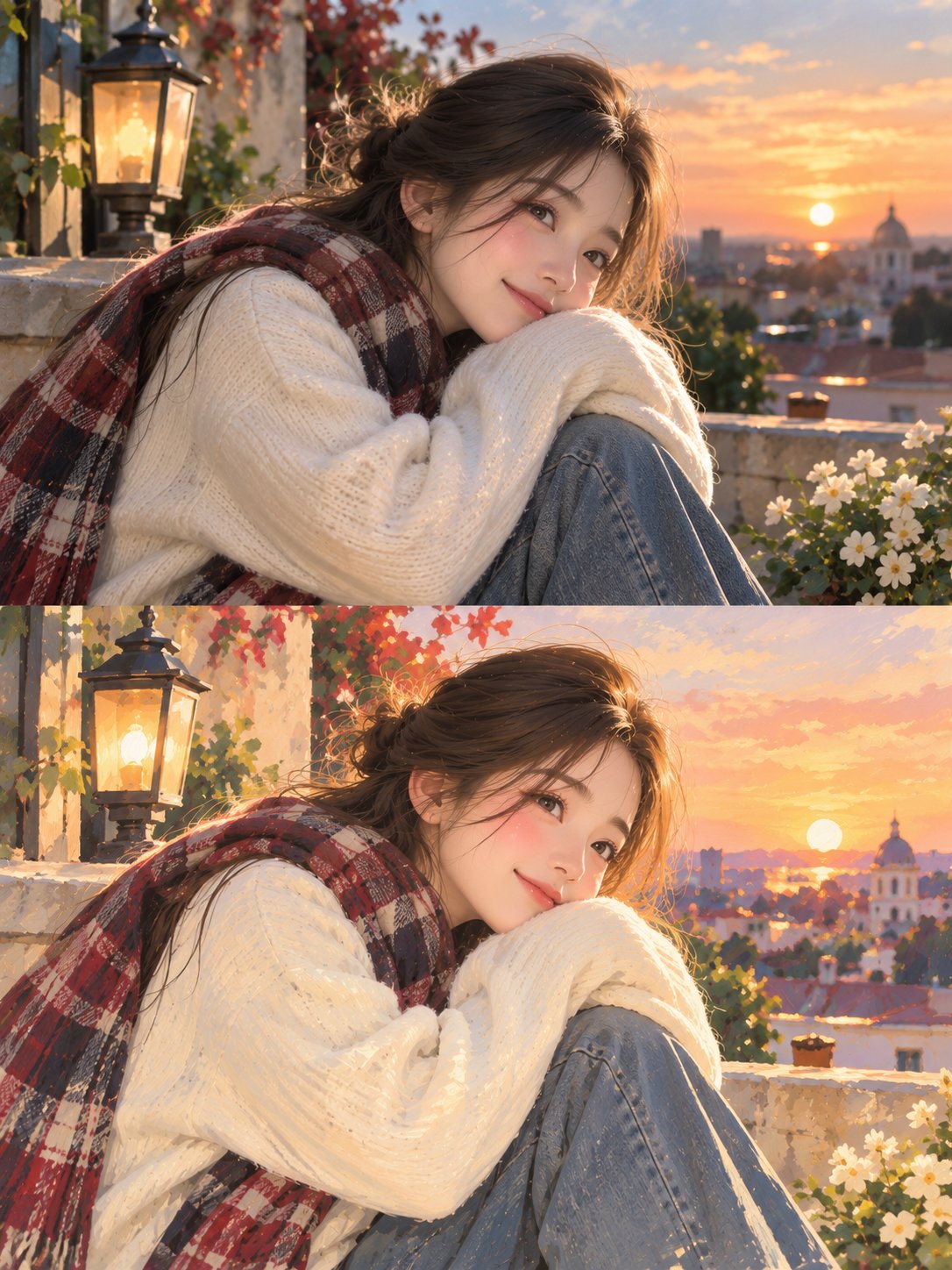
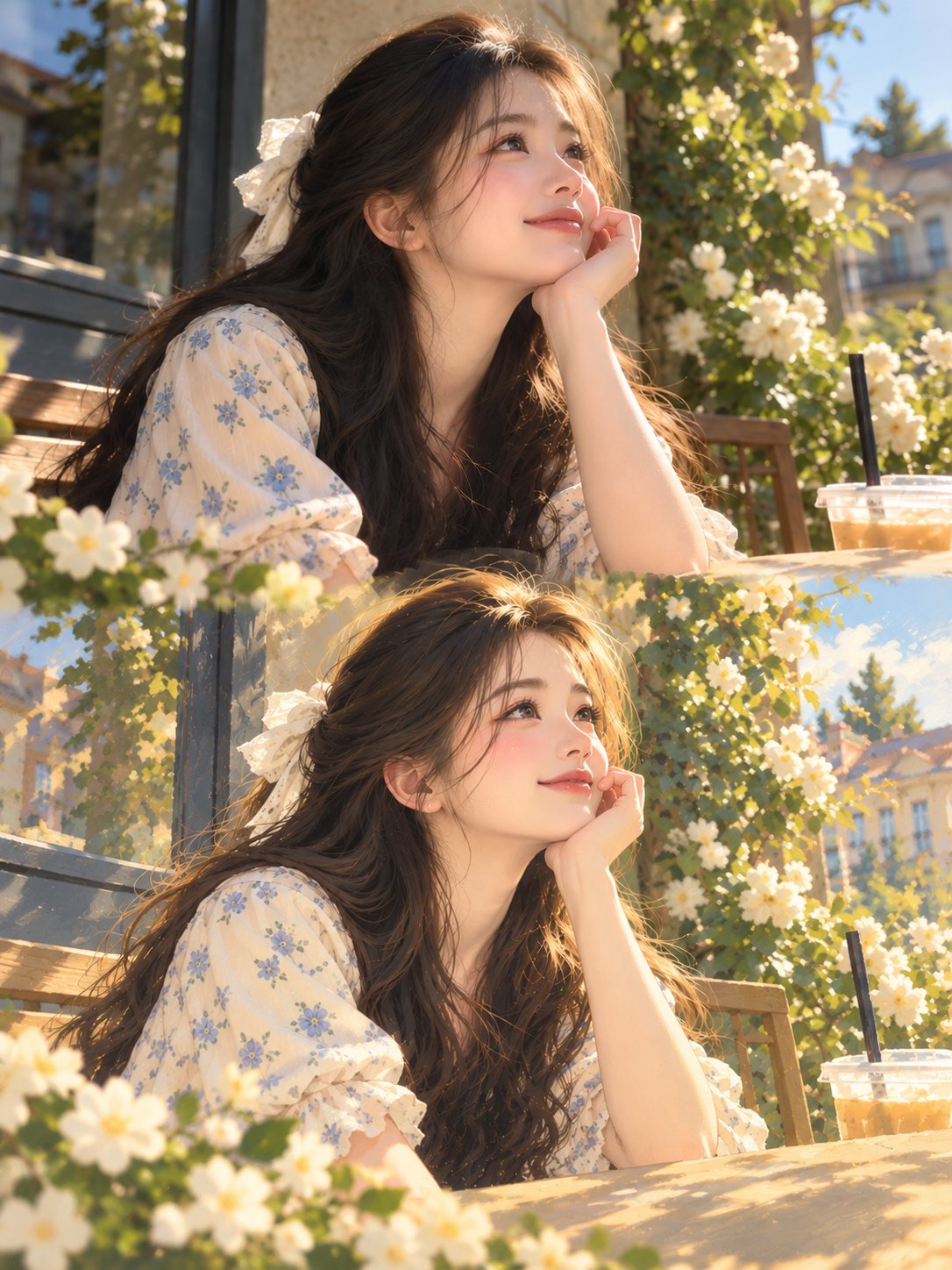
编辑海报照片转插画 — AI image prompt — Nano Banana 2.1 — Poster, Digital Art, Realistic - 1
编辑海报照片转插画 — AI image prompt — Nano Banana 2.1 — Poster, Digital Art, Realistic - 2

编辑海报照片转插画

GoogleNano Banana 2.1Googleimage

设计一张精致的竖版编辑风格海报,采用无缝衔接的双段式构图。 在上半部分,呈现一张[SUBJECT]在[SETTING]中的高度写实照片。使用温暖的自然日光、真实的面部表情、细腻的皮肤质感、微妙的高光、逼真的阴影和电影级景深,营造出精致的摄影质感。 在下半部分,将同一瞬间重现为一幅精致的手绘数字艺术作品。通过匹配原始姿态、面部特征、发型、服装、色彩、光照方向和重要背景元素,使角色一眼即可辨认,同时赋予场景柔和的艺术化诠释。 在插画部分周围环绕温暖的象牙色纸张版式,带有细腻的纸张纹理和优雅的编辑留白。艺术作品应具有精致的绘画笔触、有机形态、柔和的粉彩色调、轻柔的轮廓,以及怀旧的当代杂志美学。添加少量极简的装饰性植物或季节细节,自然地增强构图。 在艺术作品下方,居中放置编辑标题:“[MAIN TITLE]”,使用纤细、精致的全大写字母并配有宽裕的字距。在其下方,以更小、更优雅的字体添加“[TAGLINE]”,带有微妙的字母间距,随后是一条短而精致的粉彩强调线。 保持整个设计干净、平衡、精致且视觉统一。使用竖版3:4比例、高分辨率、精致的印刷美学、自然色彩分级,以及从摄影到插画的无缝过渡。 避免视觉杂乱、过多排版、粗重边框、刺眼的饱和度、扭曲的解剖结构、不一致的面部细节、别扭的比例或不必要的图形装饰。

詳細資訊
类型
AI 圖片提示詞
畫面比例
3:4
更新於
2026年10月24日
分類
PosterDigital ArtRealistic
Source

如何使用這條提示詞

  1. 1點選上方複製按鈕,複製完整提示詞。
  2. 2開啟 Google 的 Nano Banana 2.1,或任何風格相近的圖片生成工具。
  3. 3貼上提示詞,替換主體和風格關鍵詞,改成你想要的畫面。
  4. 4按示例參數(3:4 · Poster · Digital Art · Realistic)生成,再小步迭代——措辭的細微變化會顯著影響結果。

常見問題

這張圖片是用哪個 AI 模型生成的?

本圖由 Google 的 Nano Banana 2.1 生成,頁面上的提示詞就是生成它的原始文字。

這條提示詞用了哪些參數?

示例由 Nano Banana 2.1 生成,參數:3:4 · Poster · Digital Art · Realistic。沿用這些參數可獲得最接近的效果。

怎樣才能生成相似的效果?

先原樣複製提示詞,只替換主體、保留風格/光影/構圖關鍵詞,多生成幾次——每次輸出都會有差異。

可以修改這條提示詞嗎?

當然可以。提示詞最適合作為起點——調整描述詞、寬高比或風格標籤,做出屬於你自己的作品。
更多 Nano Banana 2.1 提示詞

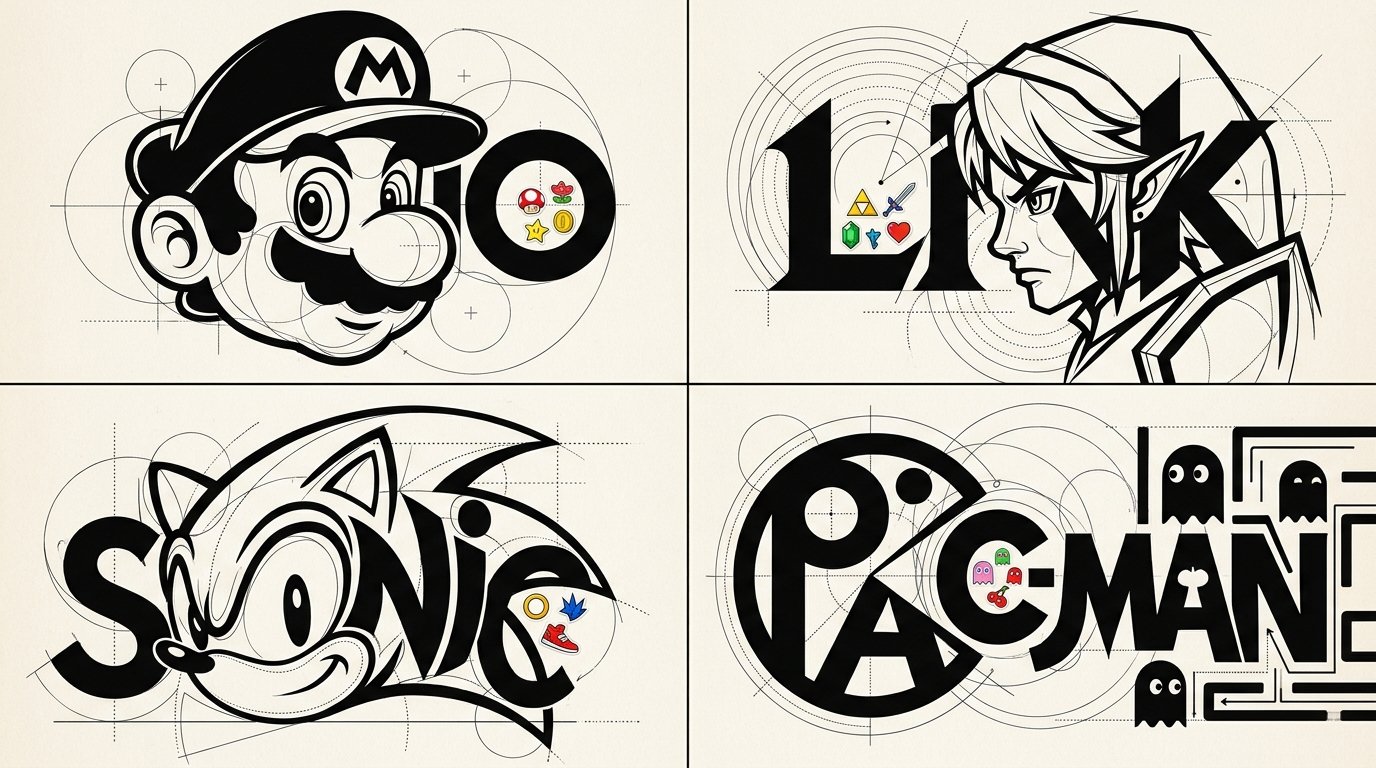
2x2 grid, 16:9, do this for 4 famous games:
STYLE: LIVING LETTERFORM CARICATURES

Create an experime — AI image prompt — Nano Banana 2.1
GoogleNano Banana 2.1
2x2 grid, 16:9, do this for 4 famous games: STYLE: LIVING LETTERFORM CARICATURES Create an experimental typographic character design of [SUBJECT] where recognizable anatomy and lettering become one unified graphic sculpture-like illustration. C₀ IDENTITY PRESERVATION Identify the subject's most recognizable physical features, including hairstyle silhouette, nose, eyes, jawline, eyebrows, and signature expression. Reconstruct these characteristics using geometric letterforms and controlled negative space. The viewer should recognize both the subject and the typographic construction. ¬C₀ = generic mascot face / unrelated character silhouette / completely abstract identity. C₁ TYPOGRAPHIC ANATOMY FUSION (master) Use the subject's name or recognizable initials as the primary structural foundation. Construct the head, hair, eyebrows, eyes, nose, mouth, and signature facial geometry through carefully manipulated typographic forms. Transform letter counters into eye shapes, rounded glyphs into facial masses, vertical stems into necks or structural elements, and curved strokes into hair or facial contours. Allow the letters and character features to share physical boundaries. The character and typography must feel inseparable rather than layered independently. ¬C₁ = portrait placed above a logo / unrelated typography / conventional wordmark / generic illustrated character. C₂ CONSTRUCTIVIST GEOMETRIC ENGINEERING Surround key forms with precise thin-line circles, overlapping arcs, tangent guides, crosshair marks, dotted construction paths, baseline grids, and small alignment points. Use dramatic contrasts between massive filled black typographic forms and delicate hairline geometric construction elements. Every guide should appear to explain how the character's visual geometry was constructed. ¬C₂ = random decorative circles / excessive technical clutter / inconsistent alignment / meaningless geometry. C₃ MICRO-STICKER INTERRUPTIONS Introduce isolated concentrations of small colorful cartoon stickers inside selected letter counters, along typographic edges, or within intentional negative spaces. Stickers should reference the subject's personality, career, recognizable accessories, or visual identity. Keep approximately 80–90% of the overall composition monochromatic, with sticker accents creating surprising pockets of color. Sticker illustrations should use bold outlines, simple expressive faces, and compact shapes. ¬C₃ = full-page sticker wallpaper / stickers covering the face / unrelated doodles / random colorful decoration. C₄ GRAPHIC MINIMALISM + CONTROLLED COLOR Primary palette: pure black and warm white. Use one or two subject-adaptive accent colors within the sticker clusters. Typography should use exceptionally heavy geometric letterforms, clean sharp edges, strong negative space, and selective high-contrast curved structures. Background remains clean and pale. ¬C₄ = full rainbow palette / photoreal textures / 3D material shaders / glossy effects / elaborate gradients. C₅ EXPERIMENTAL IDENTITY POSTER Square or portrait editorial composition. Make the fused character-wordmark occupy most of the image. Preserve generous white space around the central construction. Integrate delicate registration geometry without obscuring the primary lettering. The final artwork should function both as a recognizable character illustration and a distinctive experimental identity mark. ¬C₅ = ordinary portrait / dense stickerbomb background / realistic scenery / conventional logo placement. η HONEST GRAPHIC RENDER Precisely engineered curves, confident typography, mathematically inspired geometry, clever facial abstraction, seamless letter-character integration, clean high-contrast shapes, and crisp print quality. FORBIDDEN = ordinary text under a portrait · generic icon · excessive color · random stickers · unrelated geometric symbols · photorealism · generic cartoon avatar · 3D CGI · watermarks.
檢視詳情
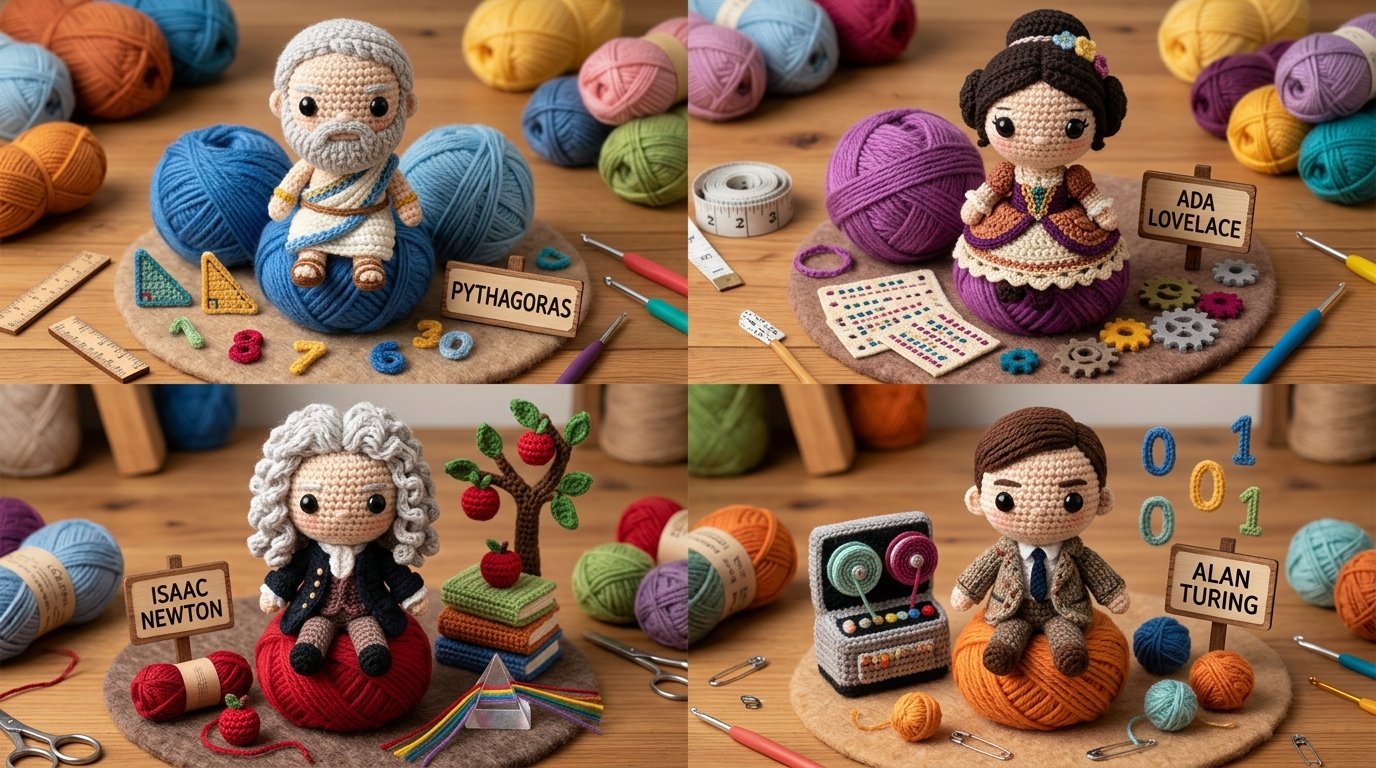
2x2 grid, do this for 4 famous mathematicians TECHNIQUE: Single Crochet. TEXTURE: Visible loop stitc — AI image prompt — Nano Banana 2.1
GoogleNano Banana 2.1
2x2 grid, do this for 4 famous mathematicians TECHNIQUE: Single Crochet. TEXTURE: Visible loop stitches. MATERIAL: Worsted weight yarn. - Convert entire surface to tight yarn loops. - Eyes are plastic safety eyes. - Increase size of head relative to body (chibi). -preserve cuddly, handmade look Output: one image}
檢視詳情
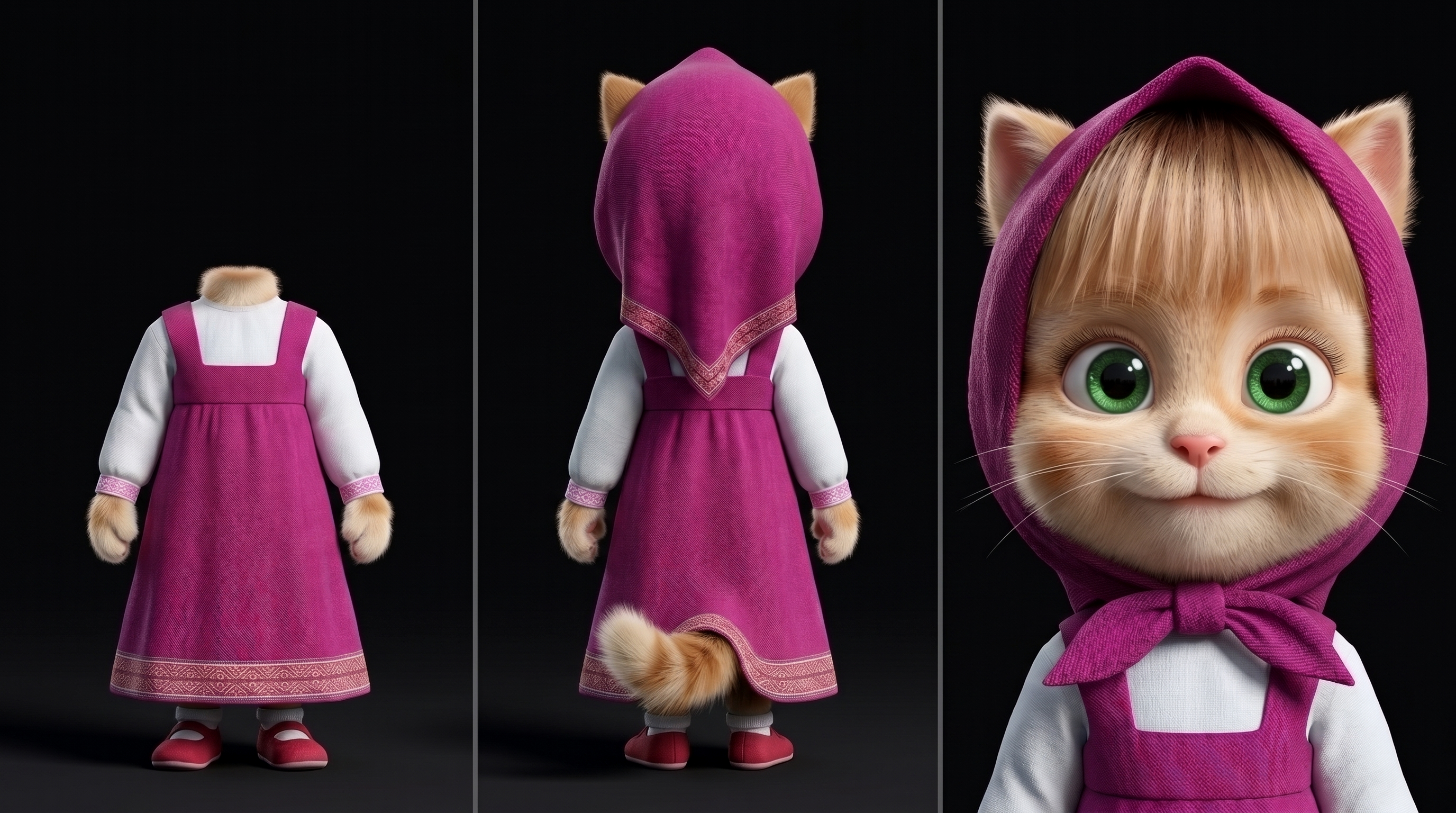
Take the person's appearance from the uploaded photos and create a character reference sheet, divide — AI image prompt — Nano Banana 2.1
GoogleNano Banana 2.1
Take the person's appearance from the uploaded photos and create a character reference sheet, divided into three vertical panels on a neutral white or light-gray background. RIGHT PANEL (close-up): A close-up portrait of the person's face, cropped at the shoulders (bust shot). Face front-facing, looking directly at the camera, neutral expression, natural even lighting. Preserve all facial features and details as accurately as possible: eye shape, nose, lips, eyebrows, face shape, eye color, skin tone and texture, hair shape and color, as well as any unique features (moles, freckles, ear shape). High detail, realism, portrait quality. LEFT PANEL (back view, full body): The person standing at full height, front view, in their everyday clothing, arms along the body, feet shoulder-width apart. IMPORTANT: the head and face are completely absent — the figure is cropped at the neck/shoulder line, no head. Only the figure from the neck down is shown. Preserve body build, proportions, and clothing. MIDDLE PANEL (front view, full body): The same person, back view, in the same clothing, at full height, including the head and hair (viewed from behind). Preserve the hairstyle, body build, and clothing details. GENERAL REQUIREMENTS: Unified style, consistent lighting and figure scale across all panels, consistency of appearance and clothing between panels. Clean background, clear vertical dividers between panels. Realistic photographic style, high resolution.
檢視詳情
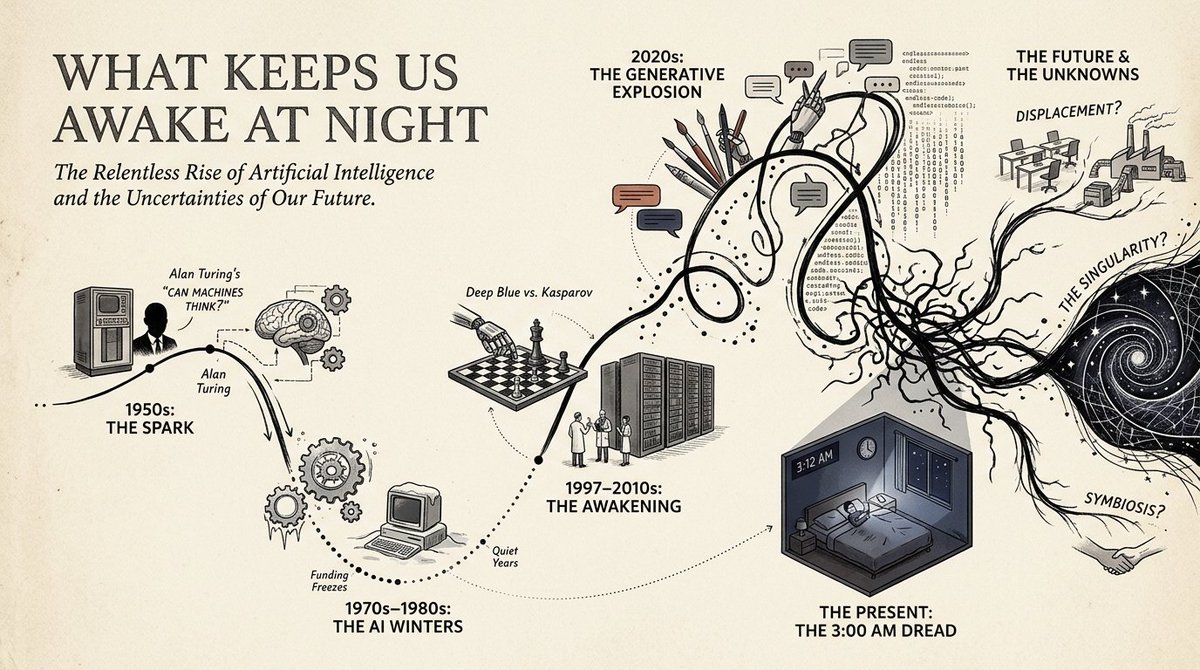
16:9, do this for a topic that keeps us awake at night: in this style= {

CORE IDEA:
Transform the s — AI image prompt — Nano Banana 2.1
GoogleNano Banana 2.1
16:9, do this for a topic that keeps us awake at night: in this style= { CORE IDEA: Transform the subject into a chronological visual journey where a single wandering line travels through time, branching into illustrated milestones, cultural scenes, human moments, and symbolic turning points. MEDIUM: Editorial infographic × historical poster illustration × narrative timeline × miniature visual storytelling. BACKGROUND: Warm ivory or lightly textured archival paper. PALETTE: Mostly black, cream, muted gray, and one or two restrained accent families inferred from the subject. Important milestones may receive stronger localized color. TIMELINE: A continuous hand-drawn path flows horizontally or diagonally across the composition. The path may: loop, dip, accelerate, split, reconnect, flatten, or become chaotic according to the subject’s actual development. MILESTONES: Major stages become illustrated nodes attached to the line. Each node may contain: a person, profession, invention, object, event, environment, symbol, cultural artifact, breakthrough, setback, or transformation. - Analyze the subject and infer its most meaningful chronological stages rather than dividing time evenly. Convert the subject’s progression into one expressive continuous path whose shape reflects momentum, uncertainty, disruption, growth, decline, or reinvention. Reinterpret major milestones as compact illustrated vignettes placed above or below the path. Use simplified human figures, objects, architecture, tools, symbols, or environments to make each milestone immediately understandable. Convert abstract changes into visual path behavior: uncertainty → loops and knots, acceleration → steep directional movement, stability → long clean segments, disruption → sudden breaks or drops, divergence → branching routes, convergence → reconnecting paths. Use dotted vertical connectors to link timeline points with their illustrated scenes. Let early periods feel simpler and later periods become visually denser when the subject naturally grows in complexity. If the subject has competing trajectories, show multiple temporary paths before returning to one dominant storyline. Preserve substantial negative space so the journey remains readable rather than becoming a collage. Simplified editorial figures. Bold silhouettes mixed with minimal line drawing. Small architectural scenes. Iconic objects rather than detailed realism. Clear visual metaphors. Occasional large symbolic illustrations anchoring major transitions. PRIMARY: large subject title or concept. SECONDARY: milestone dates, eras, phases, or sequence markers. TERTIARY: very short explanatory phrases. VISUAL: the timeline and illustrations must communicate the story even if all secondary text disappears. Use one dominant timeline across the full composition. Alternate visual nodes above and below it. Reserve one end of the composition for the current or culminating state. Allow one particularly important milestone to become much larger than surrounding nodes. Keep text aligned to a disciplined editorial grid. - Intelligent narrative infographic. - Historical journey poster. - Human-centered, analytical, and visually approachable. - Feels like a magazine feature, museum wall graphic, and illustrated timeline combined. - Avoid generic evenly spaced timelines. - Avoid turning every event into the same-sized icon. - Avoid dense paragraphs. - Avoid meaningless decorative line movement. - Avoid purely corporate infographic aesthetics. - Avoid identical color intensity across every era. }
檢視詳情
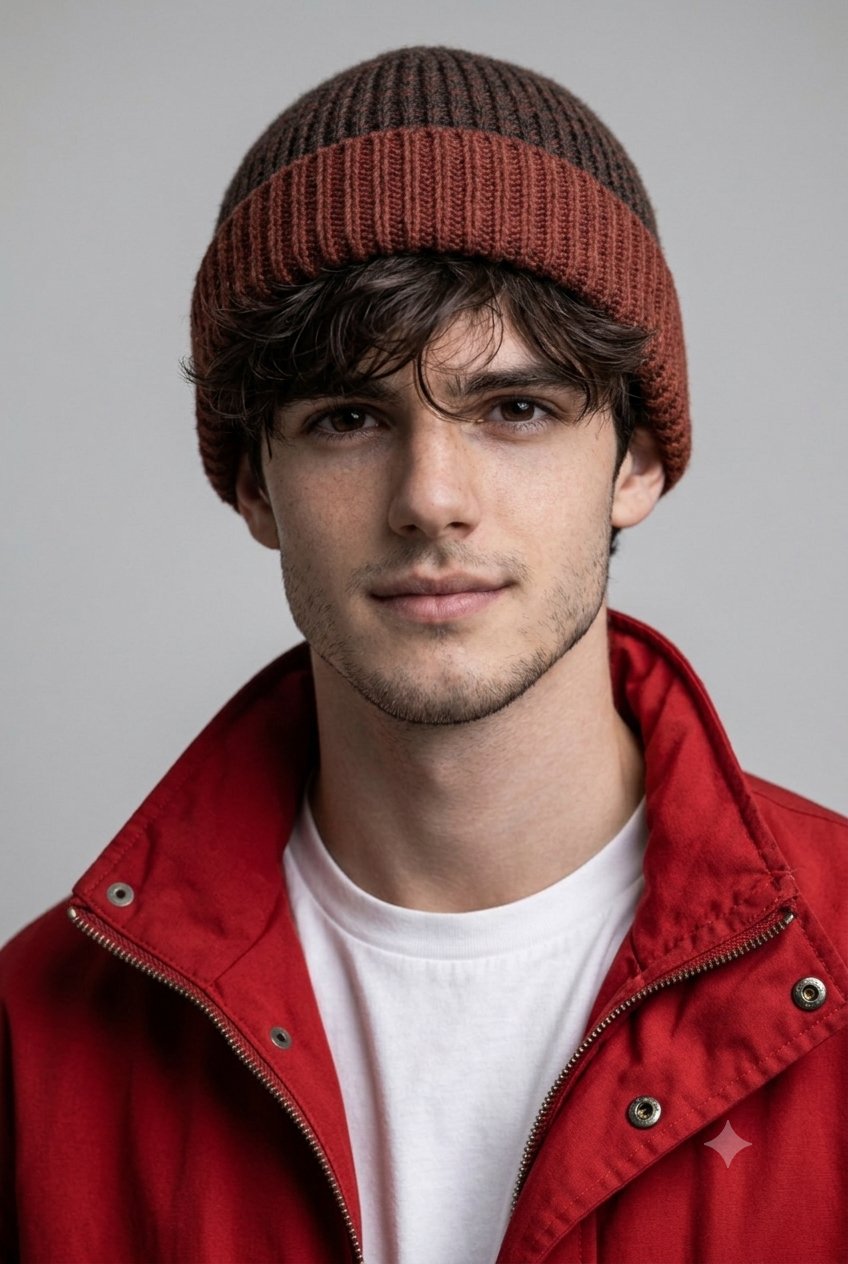
Create an ultra-realistic, high-end men's fashion editorial portrait of a handsome young man in his  — AI image prompt — Nano Banana 2.1
GoogleNano Banana 2.1
Create an ultra-realistic, high-end men's fashion editorial portrait of a handsome young man in his early 20s, with a naturally attractive appearance and a relaxed, slightly confident expression. Subject: A young man with thick, naturally wavy dark brown hair, soft curls falling across his forehead, defined eyebrows, warm natural skin tone, subtle freckles, a well-defined jawline, and realistic facial features. He has deep brown eyes and looks directly into the camera with a subtle, relaxed smile. Headwear: A dark brown and muted rust-red knitted beanie with a thick ribbed texture and a wide folded cuff, sitting naturally on his head. Some loose curls of hair are visible around his forehead and ears. Outfit: A vibrant red casual jacket with a slightly oversized fit, raised wide collar, front zipper, and visible metallic snap buttons. The jacket is worn partially open, revealing a clean white crew-neck T-shirt underneath. Pose and Expression: A close-up to medium portrait, with the subject's head slightly tilted to one side. His shoulders are relaxed, his body faces slightly toward the camera, and his eyes look directly into the lens. Natural, effortless masculine styling. Background: A simple, smooth light grey studio backdrop with subtle natural tonal variations and no distracting objects. Lighting: Soft natural studio lighting coming from the front-left side, creating gentle shadows across the face and highlighting the skin texture, hair, knitted beanie, and red jacket. Warm, balanced exposure with realistic shadows. Photography Style: Premium contemporary men's fashion campaign, minimalist editorial photography, candid yet polished aesthetic, authentic skin texture, natural imperfections, realistic fabric details, subtle cinematic color grading. Camera and Quality: Professional DSLR photography, 85mm portrait lens, f/2.8 aperture, shallow depth of field, sharp focus on the eyes, high-resolution details, vertical 2:3 composition, photorealistic quality. Important Details: Maintain natural facial proportions, realistic wavy hair, detailed knitted fabric, accurate red jacket texture, authentic skin pores, and natural lighting. Avoid plastic-looking skin, excessive retouching, artificial facial features, or CGI effects.
檢視詳情
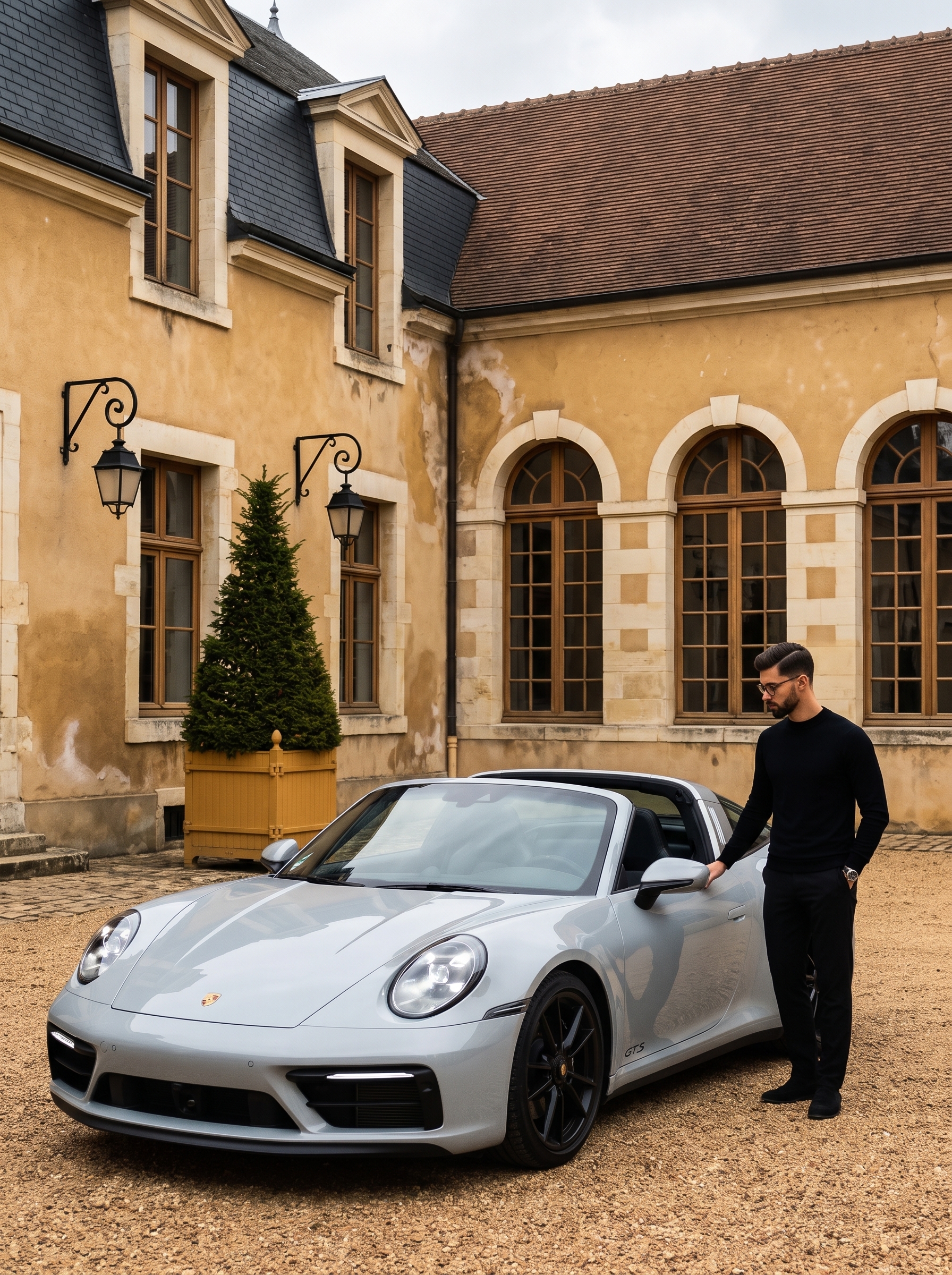
A young man in a jet-black (#141414) long-sleeve sweater and tailored trousers stands at a 45-degree — AI image prompt — Nano Banana 2.1
GoogleNano Banana 2.1
A young man in a jet-black (#141414) long-sleeve sweater and tailored trousers stands at a 45-degree angle with level shoulders and centered weight in the right midground. His dark brown hair features a tapered side-part cut trimmed neat above the ears, swept right from a left part with a matte finish, slight volume, and loose forehead strands. Projecting a posed, confident emotion, he has neutral eyebrows, closed lips, and gazes down and left behind glasses, while his relaxed left hand, wearing a wristwatch, rests lightly on the open driver-side window frame. Dominating the lower-left foreground on warm tan and beige solid gravel is a pristine, ice-gray metallic (#C5CCD4) Porsche 911 Targa GTS (992) with black wheels, a brushed silver Targa roll bar, a hood crest, and bold sans-serif GTS side-skirt badging. Behind them rises an aged French chateau courtyard facade of slightly textured, matte warm ochre yellow (#B48A5A) plaster with patchy color variation, lower-base damp staining, and cream limestone quoins and surrounds. The building features three tall arched multi-pane wooden windows on the right wing beneath a terracotta brown (#7D4E38) clay tile roof, and a left section with a charcoal slate (#2F353B) mansard roof, dormers, two upper rectangular windows, two vintage black scrolled wrought-iron hexagonal lanterns, and a thriving conical conifer (Picea or Thuja) in an ochre wooden planter box between ground-floor windows. Diffused, soft overcast sky lighting and warm golden ambient fill pair with the car's glowing 4-point LED headlights to create a sophisticated, low-contrast atmosphere with short, soft-edged gray shadows beneath the car and eaves, plus specular highlights across the glossy hood, windshield, headlight housing, and Targa bar. Captured in a two-point perspective using rule-of-thirds asymmetric composition, this realistic digital editorial photograph evokes old-money European luxury with tack-sharp focus and a deep depth of field at 35mm, f/5.6, 1/250s, and ISO 200, finished with warm color grading, clean metallic highlight roll-off, and crushed blacks, framed in a 3:4 aspect ratio.
檢視詳情
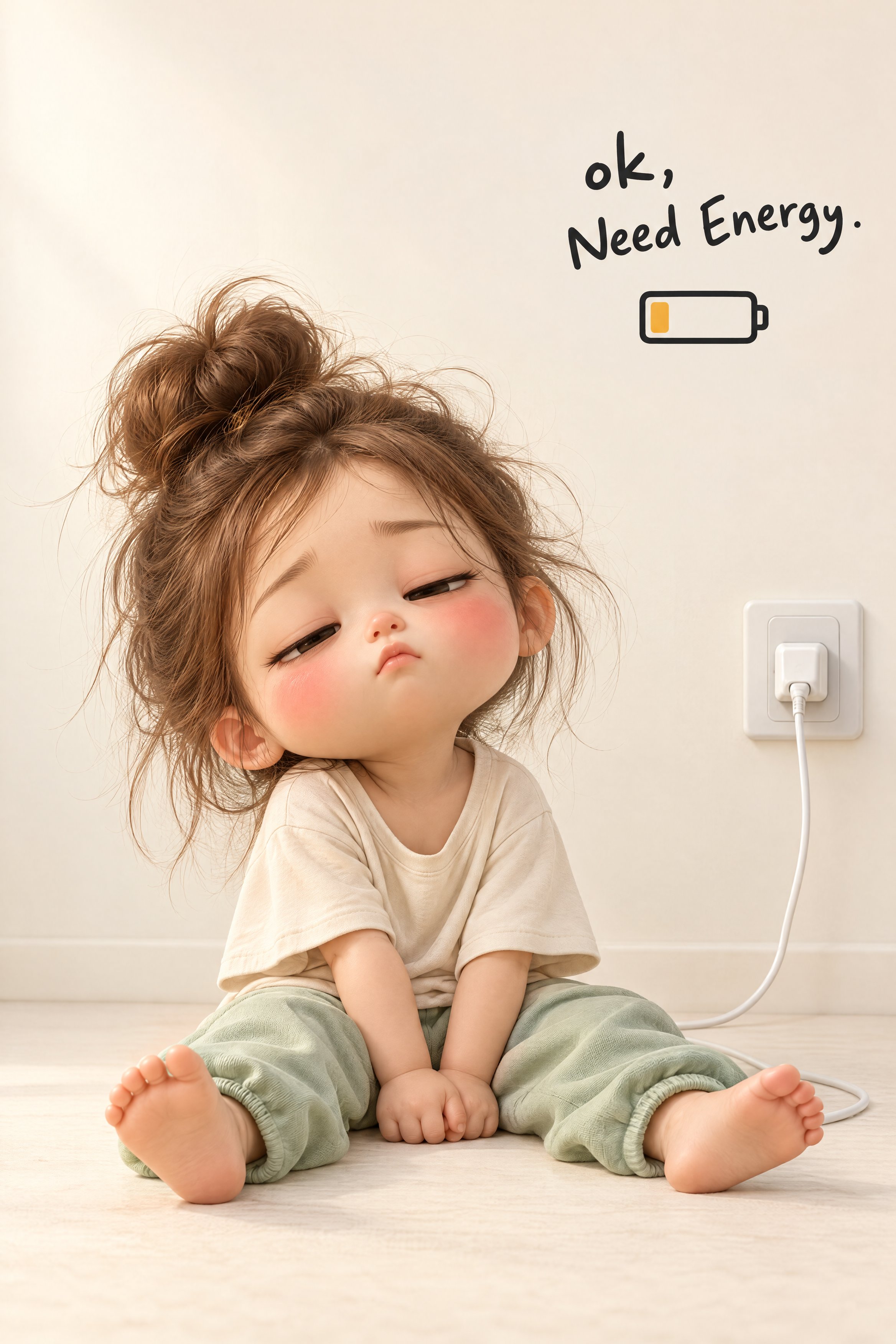
Create an adorable, premium-quality 3D chibi-style illustration of a sleepy little toddler girl sitt — AI image prompt — Nano Banana 2.1
GoogleNano Banana 2.1
Create an adorable, premium-quality 3D chibi-style illustration of a sleepy little toddler girl sitting beside an oversized white pause button, visually representing the feeling of wanting to stop everything and take a break. A tiny, adorable toddler girl with an oversized rounded head, delicate childlike proportions, and soft, porcelain-like skin. Her facial features include: Large, expressive dark-brown eyes, almost completely closed. Delicate black eyelashes. Soft, naturally rosy cheeks with a prominent pink blush. A tiny button nose. Small, gently puckered pink lips. Thin, delicate eyebrows. Smooth, peach-toned skin with subtle natural highlights. Small, rounded ears. Her dark chocolate-brown hair is styled in a messy, voluminous high bun. Several loose, wispy strands escape around the bun and frame her forehead, temples, and cheeks. Her expression communicates complete relaxation, sleepiness, and peaceful exhaustion. Her eyes are gently closed, her lips slightly pursed, and her head rests sideways against the large white object. The toddler wears a soft pastel-pink pajama set. The outfit includes: A long-sleeved pink pajama top with delicate white piping around the collar and sleeve edges. Matching loose pink pajama trousers. Soft cotton-like fabric with subtle wrinkles and natural folds. She is barefoot, with tiny feet and realistically rendered little toes. She holds a small cream-white plush cushion shaped like a rounded flower or decorative pillow. The cushion has a soft, padded appearance, subtle pale-pink speckles, and a small flower-shaped cushion detail visible near her legs. The toddler sits on the floor with her legs extended forward and slightly bent. Her back and head lean comfortably against the large white pause button. Both hands gently hold a small cream-colored cushion against her stomach. Her shoulders are relaxed, her head tilts slightly toward the large object, and her eyes remain peacefully closed. Her entire body language should communicate that she has mentally switched off and wants to rest. A large, minimalist, white 3D rectangular button occupies the right side of the composition. The object resembles an oversized computer keyboard key or a physical pause button. Its characteristics: Large, chunky, rectangular form. Smooth, glossy white surface. Rounded corners and gently curved edges. Slightly elevated top surface. Thick, solid white sides. Softly reflective highlights. Subtle shadows around its base. On the upper surface, prominently display the exact word: "Pause" Use large, bold, black, clean sans-serif typography. The word should be centered on the top surface, following the slight perspective and angle of the button. The toddler leans against this oversized button, making the object appear like a physical symbol of taking a break from life. Include a second text element near the lower-right area of the composition. The exact wording should be: "life on pause ♡" Use small, lowercase, dark-grey handwritten-style lettering. The typography should resemble casual, slightly imperfect handwriting with natural spacing between letters. Include a small outlined heart symbol at the end. Keep the lettering delicate and minimal. A seamless, warm ivory-white studio environment. The background and floor blend together without visible corners or distracting architectural elements. The toddler and oversized pause button rest directly on the smooth floor. There should be no additional furniture, decorative objects, or unnecessary background details. Maintain generous empty space, especially across the upper half of the image. Vertical 9:16 portrait orientation. Front-facing, slightly low camera perspective. Toddler positioned in the lower-left portion. Oversized pause button positioned on the lower-right side. The toddler's head and shoulder gently touch the button. Entire character and oversized button visible. Text "life on pause ♡" positioned below and slightly to the right of the button. Large areas of clean negative space above the main subjects. Balanced visual relationship between the character and the oversized button. The composition should feel like a minimalist premium 3D social-media illustration. Soft, diffused studio lighting from the upper-left/front direction. Gentle highlights on the toddler's forehead, cheeks, nose, hair, and pink pajamas. Soft reflective highlights across the glossy white pause button. Subtle contact shadows beneath the toddler's feet, body, cushion, and the large button. Use ambient occlusion around the contact points between the toddler and the button to create realistic depth. Avoid harsh shadows or dramatic lighting. Use a soft, warm pastel color palette: Warm ivory and creamy-white background. Glossy pure-white pause button. Pastel blush-pink pajamas. Peach and porcelain skin tones. Rosy-pink cheeks. Dark chocolate-brown hair. Cream-white cushion. Black typography. Muted charcoal-grey handwritten text. Keep the overall image warm, peaceful, minimal, and visually soothing. High-end 3D animated character illustration with a cute chibi aesthetic. Exaggerated toddler proportions, oversized expressive head, delicate facial details, beautifully rendered hair strands, soft skin shading, realistic cotton fabric, and smooth rounded geometry. Use: Subtle subsurface scattering. Physically based materials. Soft ambient occlusion. Realistic fabric folds. Smooth glossy plastic rendering. Delicate studio reflections. High-quality CGI character modeling. The result should resemble a professionally rendered collectible animated character in a premium lifestyle advertising campaign. Professional 3D product-illustration composition. Simulate a 50mm portrait lens perspective with minimal distortion, sharp focus across the
檢視詳情
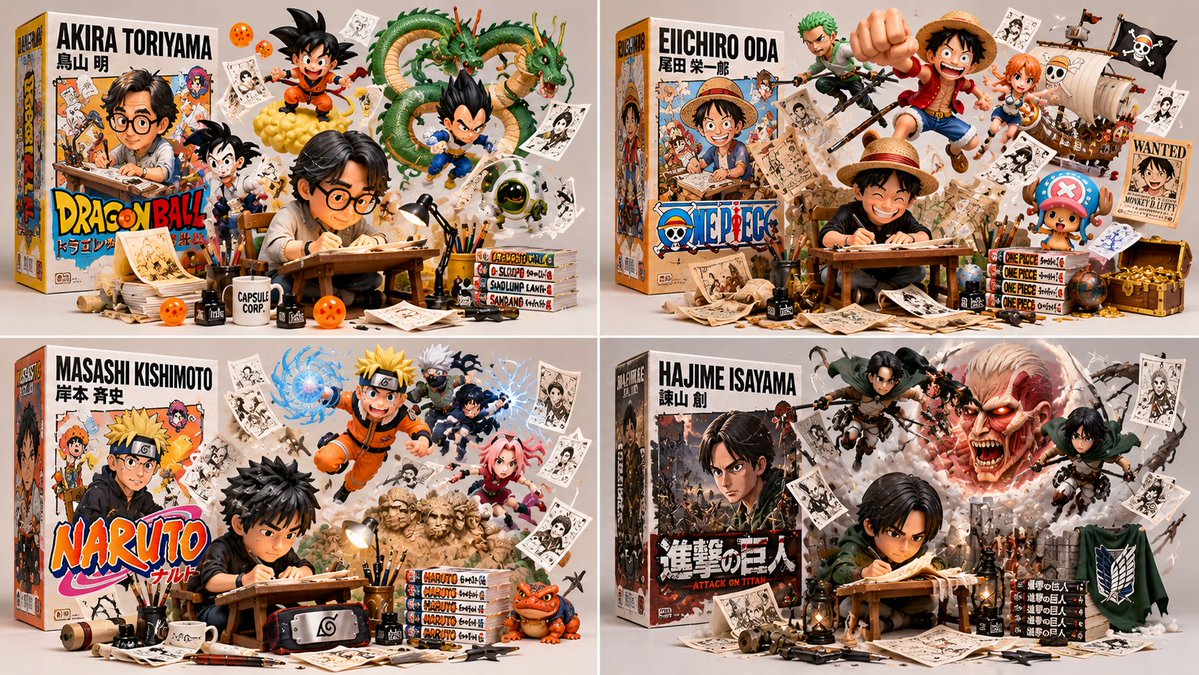
class CreatorToyBoxDiorama:
    def __init__(self, CREATOR):
        s = infer(CREATOR)              — AI image prompt — Nano Banana 2.1
GoogleNano Banana 2.1
class CreatorToyBoxDiorama: def __init__(self, CREATOR): s = infer(CREATOR) # figure, box, escapees, artifacts, present self.s = s def render(self): return collectible_render( figure=vinyl_figure(self.s.figure, at=self.s.station, pose=WORKING), # B₁ box=retail_box(title=self.s.title, art=depicts(self.s.figure)), # B₂ escapees=[ burst_from(e, origin=self. s. box. art, into=SPACE, dynamic=True) for e in self.s.escapees ], # B₃ artifacts=suspended(self.s.artifacts, ground_contact=NONE), # B₄ studio=neutral_bg(soft_light=True, title_legible=True) ) # B₅ def verify(self, img): assert figure_at_craft(img) and toy_material(img.figure), "B₁: realistic/idle" assert box_present(img) and design_equal(img. box. art.figure, img.figure), "B₂: mismatch" assert len(img.escapees) >= 2 and all(origin_on(e, img .box. art) and body_outside(e, img. box) for e in img.escapees), "B₃: static on box" assert all(no_ground_contact(a) for a in img.artifacts), "B₄: resting props" assert neutral_bg(img) and legible(img . box.title) and collectible_quality(img), "B₅" CreatorToyBoxDiorama(CREATOR).render()
檢視詳情
瀏覽全部 Nano Banana 2.1 提示詞探索AI 圖片提示詞