Split Editorial Travel Poster Paper Cut
 GPT Image 2.5OpenAIimage
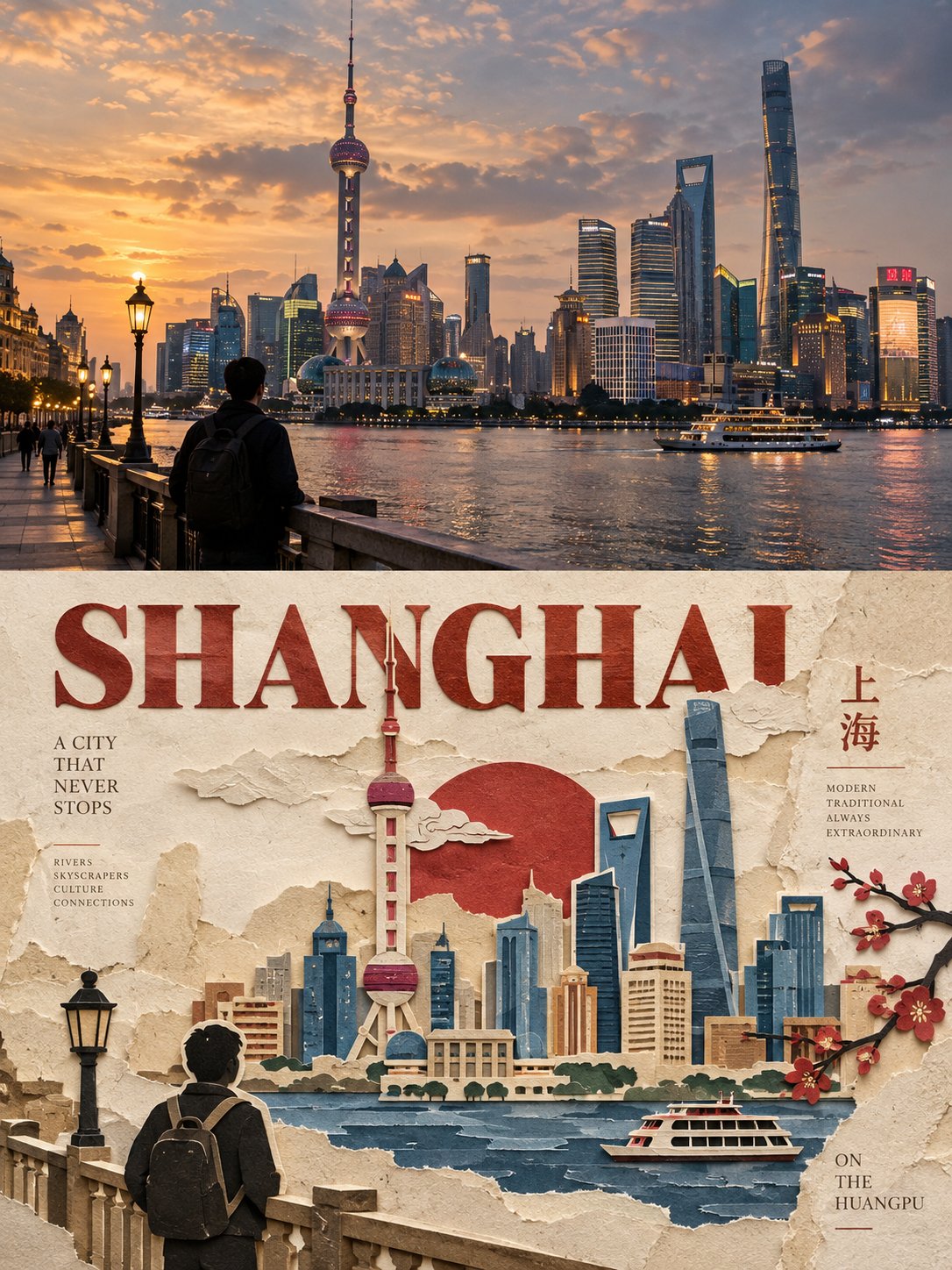
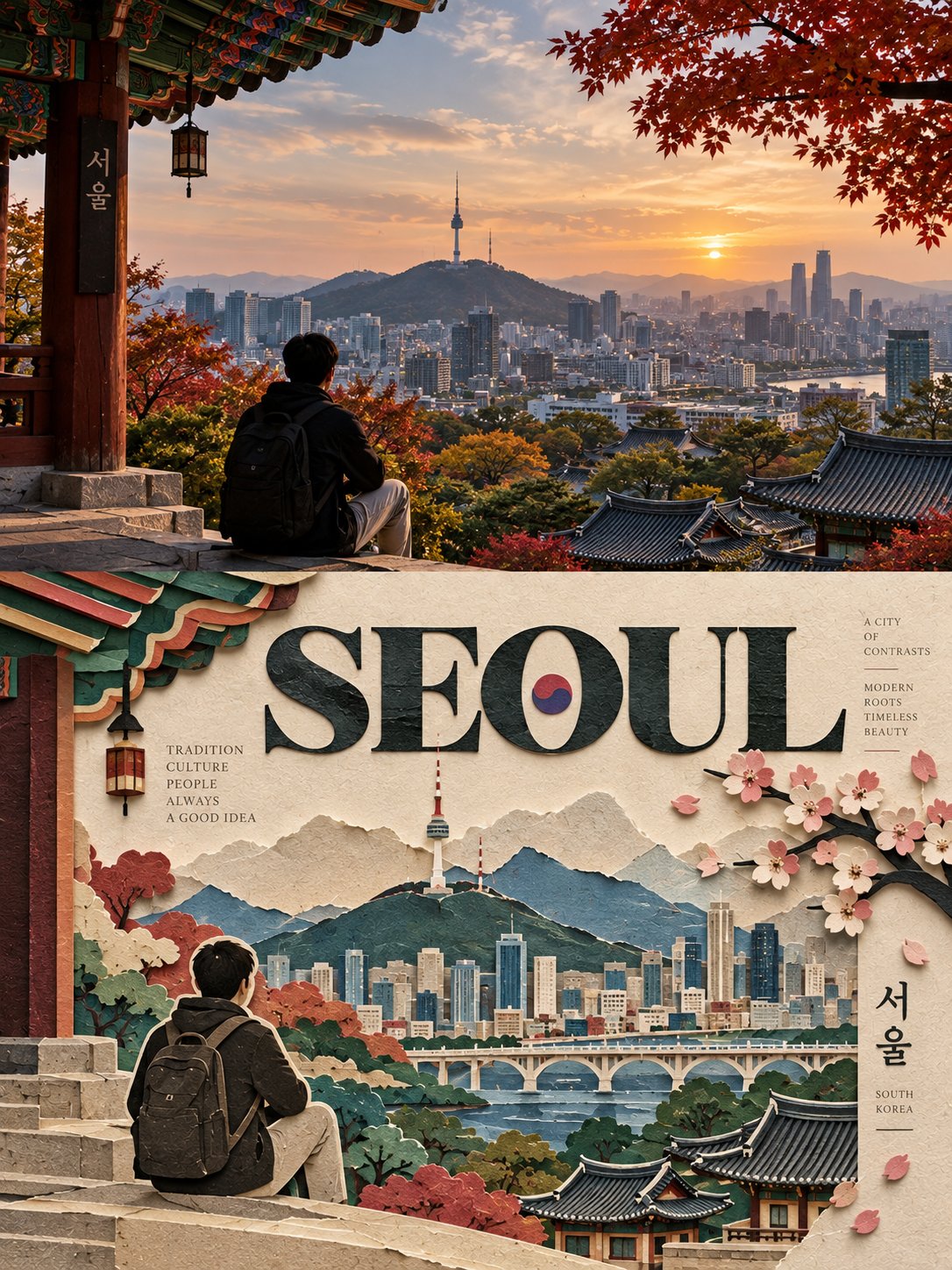
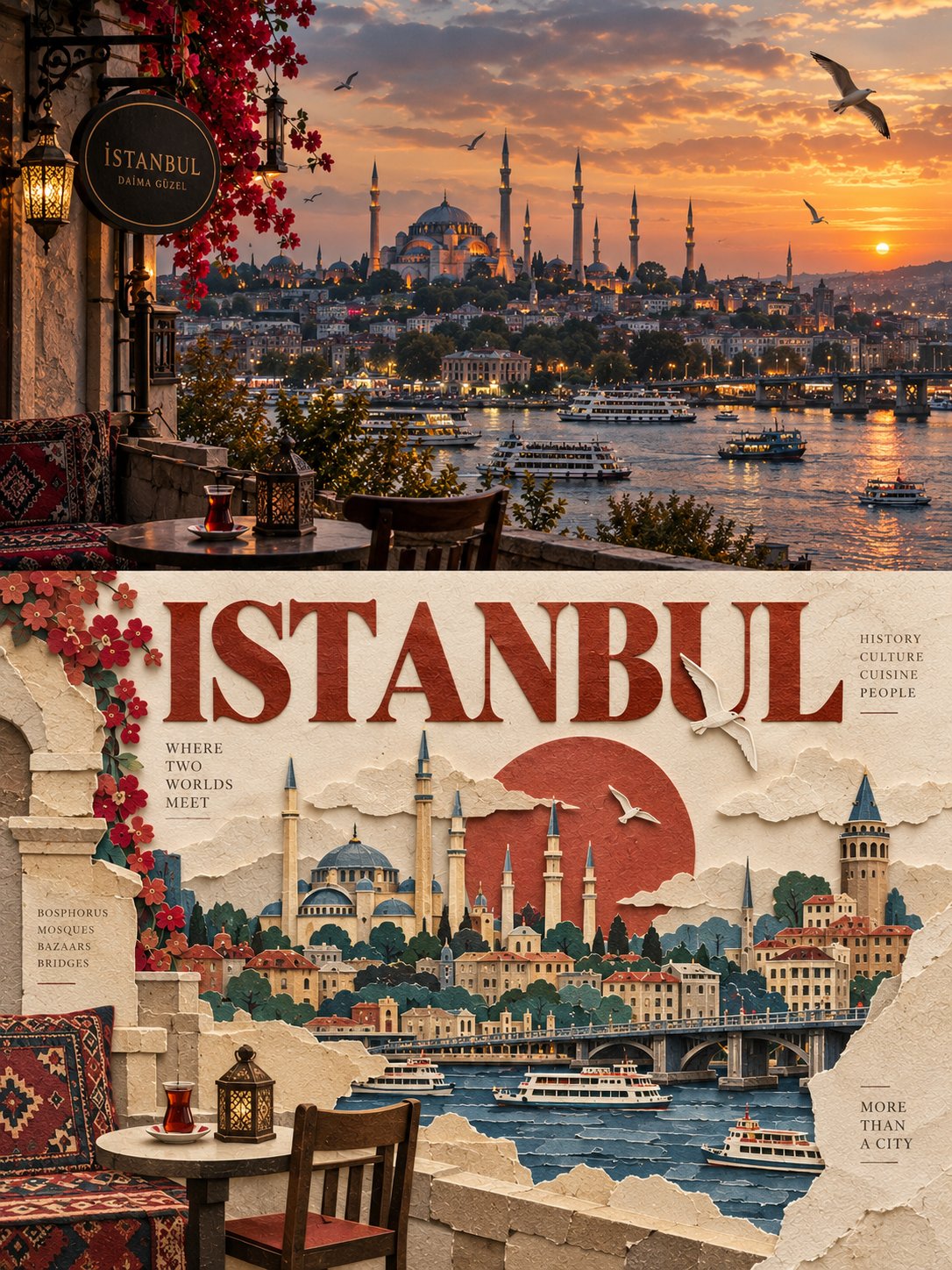
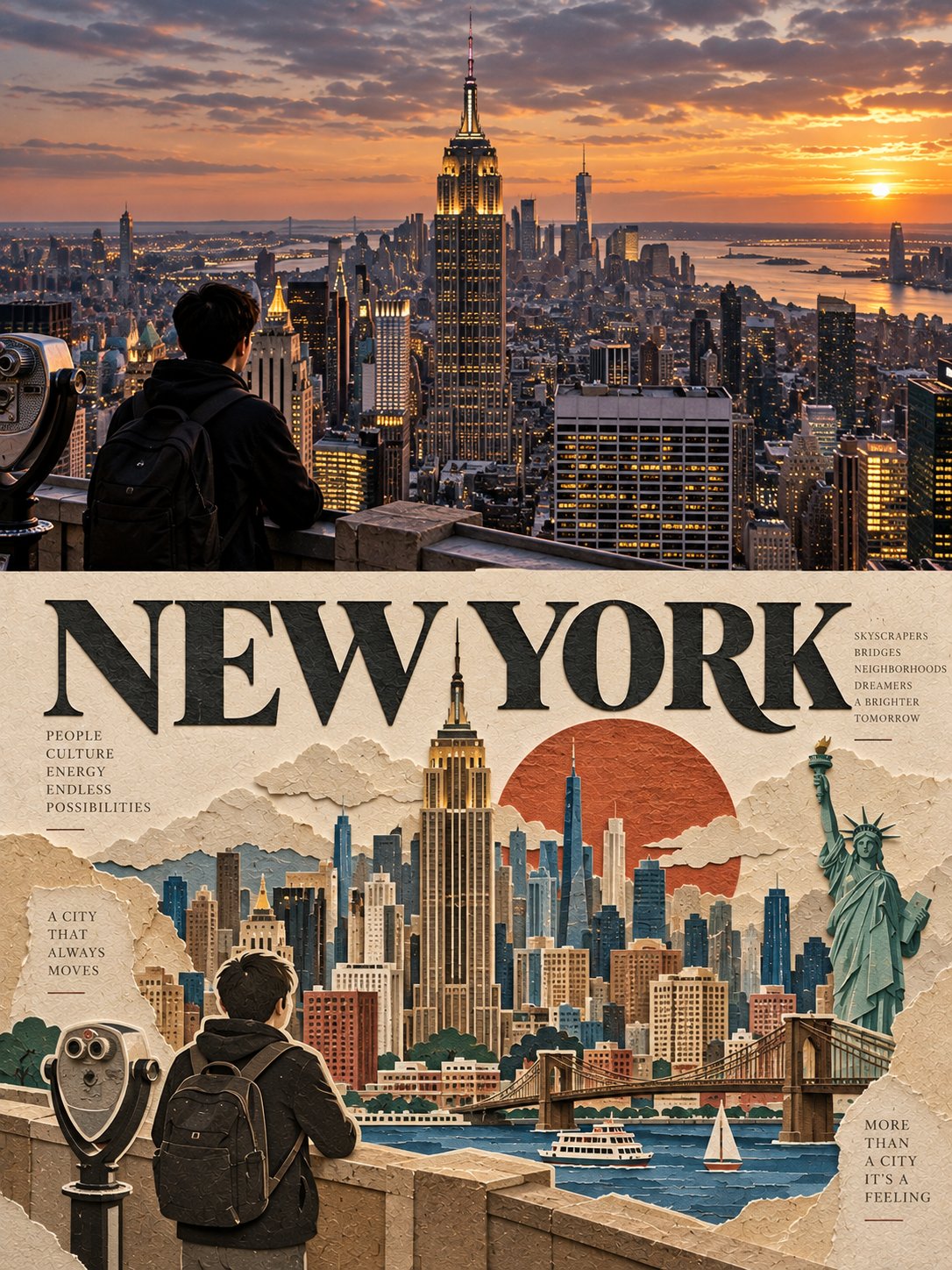
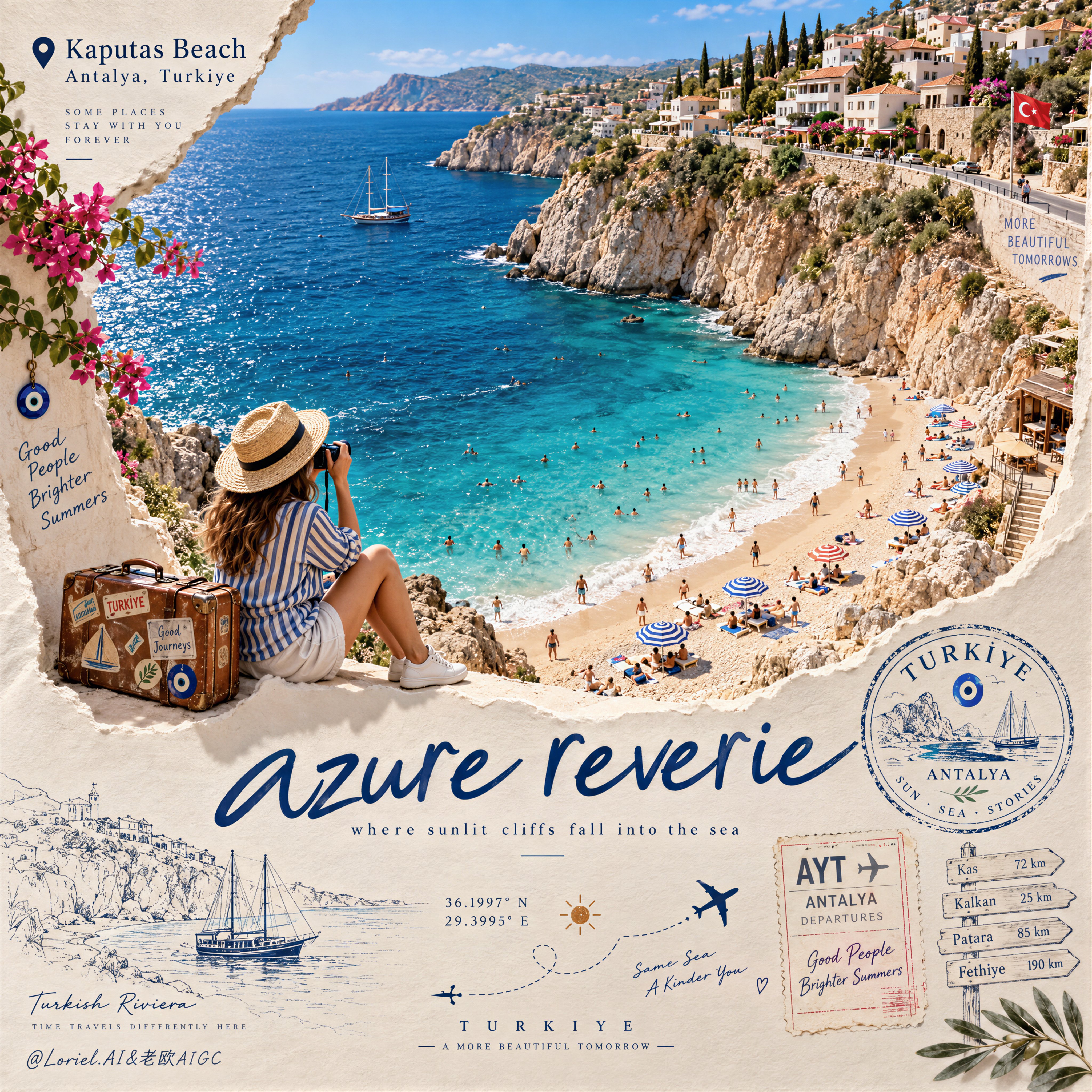
Create one premium 3:4 vertical editorial poster for [COUNTRY / LOCATION / SUBJECT], divided into two exactly equal 50% sections. TEXT-TO-IMAGE GENERATION ONLY. Generate the complete artwork from [COUNTRY / LOCATION / SUBJECT] alone. No reference image or additional visual input is required. TOP 50% -PHOTOGRAPHIC SCENE Create a highly realistic, cinematic photograph representing [COUNTRY / LOCATION / SUBJECT]. Automatically determine the most recognizable subject, pose, architecture, environment, colors, lighting, textures, atmosphere, and composition. Give the scene a subtle high-end editorial color grade, similar to an art magazine, independent publication, or exhibition photograph. Preserve natural lighting, realistic textures, authentic colors, and believable depth. The environment may be naturally extended where appropriate, but keep the main subject realistic, correctly proportioned, and undistorted. BOTTOM 50% - LAYERED PAPER-CUT ART Reinterpret the key subject from the upper scene as a refined layered paper-cut / handcrafted paper-art composition. Preserve its most recognizable silhouette, proportions, pose, structure, and spatial relationships, while simplifying unnecessary details. Build the subject using carefully cut and folded paper layers with clear foreground, midground, and background separation. Use scale contrast, clean alignment, overlapping layers, and controlled negative space to create a sophisticated editorial composition. Keep one primary subject as the visual anchor and use only a few supporting environmental elements. COLOR & MATERIAL Automatically extract the most distinctive colors associated with [COUNTRY / LOCATION / SUBJECT] and reduce them into a limited, harmonious paper-art palette. Use warm ivory or light paper as the base, combined with a few stronger accent colors, darker structural tones, and subtle transitional shades. Make the material resemble premium matte cardstock, with fine paper fibers, crisp cut edges, layered thickness, and soft natural contact shadows. Avoid glossy plastic, excessive 3D effects, neon colors, muddy tones, and complex gradients. EDITORIAL TYPOGRAPHY Create one short main English title inspired by the subject's identity, location, action, emotion, or symbolism. Add 2–4 small groups of supporting English text, such as location details, object names, directional words, numbers, classification labels, material descriptions, or a short poetic phrase. Do not use any year or date. Use refined modern typography with a strong hierarchy. Integrate the text into the artwork by aligning it with paper edges, subject contours, geometric axes, or negative space. Use a mixture of horizontal, vertical, rotated, edge-aligned, and subtly overlapping typography where appropriate. The main title may have a subtle paper-cut character, while supporting text should remain thin, precise, minimal, and editorial. FINAL AESTHETIC Create a seamless combination of: realistic photography × handcrafted layered paper art × sophisticated editorial typography × premium material design. The final poster should feel tactile, elegant, contemporary, balanced, refined, and art-directed, like a limited-edition piece from a high-end design magazine or gallery. STRICT 3:4 VERTICAL | EXACT 50/50 SPLIT | TEXT-ONLY GENERATION | PREMIUM EDITORIAL DESIGN | NO REFERENCE IMAGE REQUIRED.
Details
- Type
- AI Image Prompts
- Aspect Ratio
- 3:4
- Updated
- Sep 21, 2026
How to use this prompt
- 1Copy the full prompt with the copy button above.
- 2Open GPT Image 2.5 by OpenAI, or any image generator with a similar style range.
- 3Paste the prompt, then swap the subject and style keywords to match your idea.
- 4Match the example's settings (3:4 · Poster · Cinematic · Realistic), then iterate — small wording changes shift the output a lot.
Frequently asked questions
Which AI model generated this image?
This image was generated with GPT Image 2.5 by OpenAI. The prompt on this page is the exact text used to create it.
What settings does this prompt use?
The example was generated with GPT Image 2.5 using: 3:4 · Poster · Cinematic · Realistic. Reusing these settings gives the closest match.
How do I get similar results?
Copy the prompt as-is first, then replace only the subject while keeping the style, lighting, and composition keywords. Generate a few variations — outputs differ between runs.
Can I modify this prompt?
Yes. Prompts work best as starting points — adjust descriptors, aspect ratio, or style tags to make the output your own.
![Create a premium vertical 4:5 editorial travel poster for [COUNTRY], where the outline of the countr — AI image prompt — GPT Image 2.5](https://cdn.ahaprompt.app/harvest-media/import-1789369064970-j9jipe.jpg)
![Create a sophisticated, dreamy editorial magazine cover titled “[COUNTRY NAME] — A COUNTRY IN ONE DR — AI image prompt — GPT Image 2.5](https://cdn.ahaprompt.app/harvest-media/import-1789368946131-xefjx1.jpg)
![Create a premium educational travel poster featuring [STRUCTURE NAME], one of the world’s most famou — AI image prompt — GPT Image 2.5](https://cdn.ahaprompt.app/harvest-media/import-1789369131185-x1iuzs.jpg)
![Create a premium cinematic luxury tourism poster for [COUNTRY / DESTINATION] in a STRICT 4:5 vertica — AI image prompt — GPT Image 2.5](https://cdn.ahaprompt.app/harvest-media/import-1789369001673-dctuvc.jpg)
![Create a premium contemporary editorial art poster for [LOCATION] in a playful Japanese design-ZINE — AI image prompt — GPT Image 2.5](https://cdn.ahaprompt.app/harvest-media/import-1789139846025-v6z310.jpg)