Ribbed Glass Diptych Photo Transformation
 GPT Image 2.5OpenAIimage
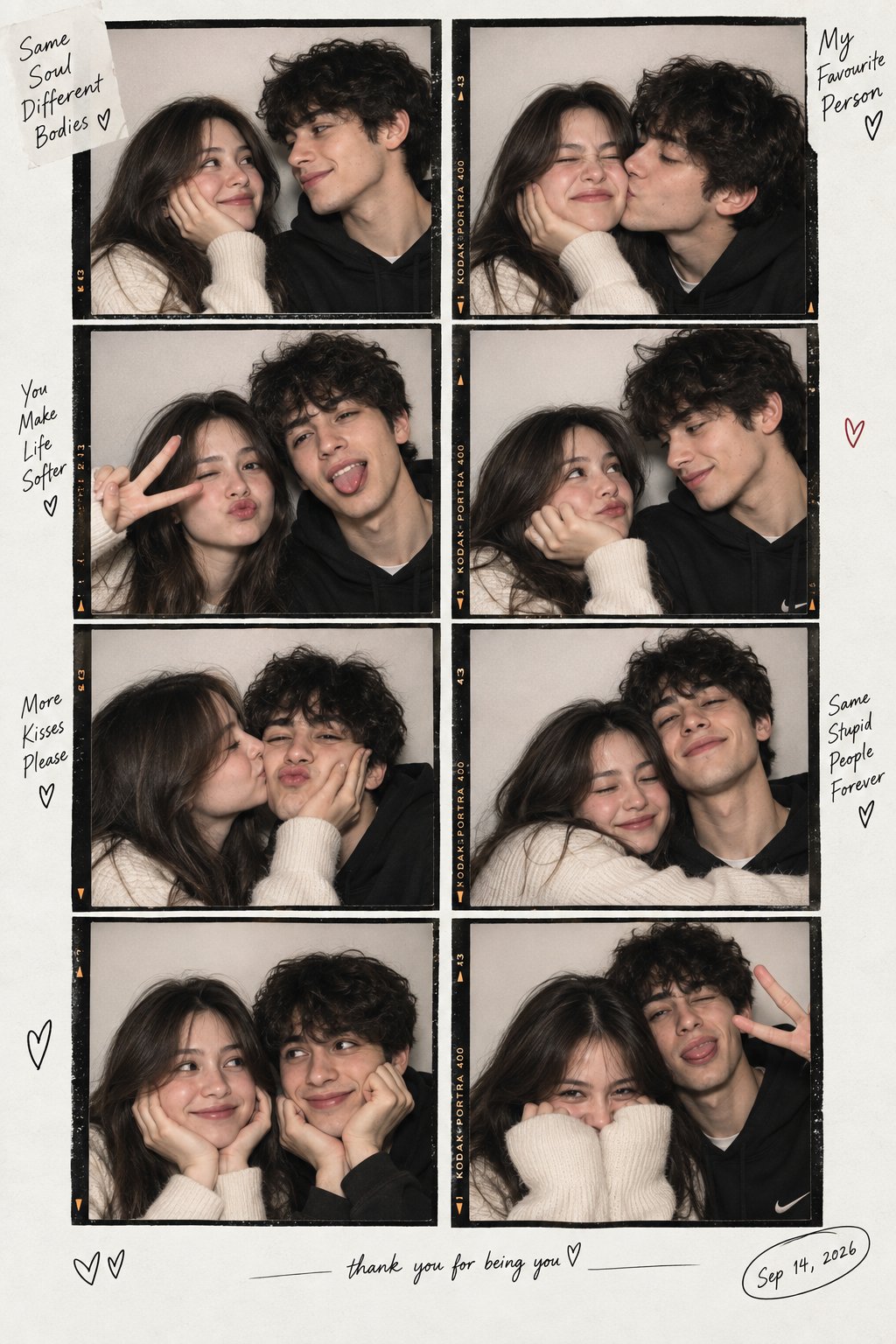
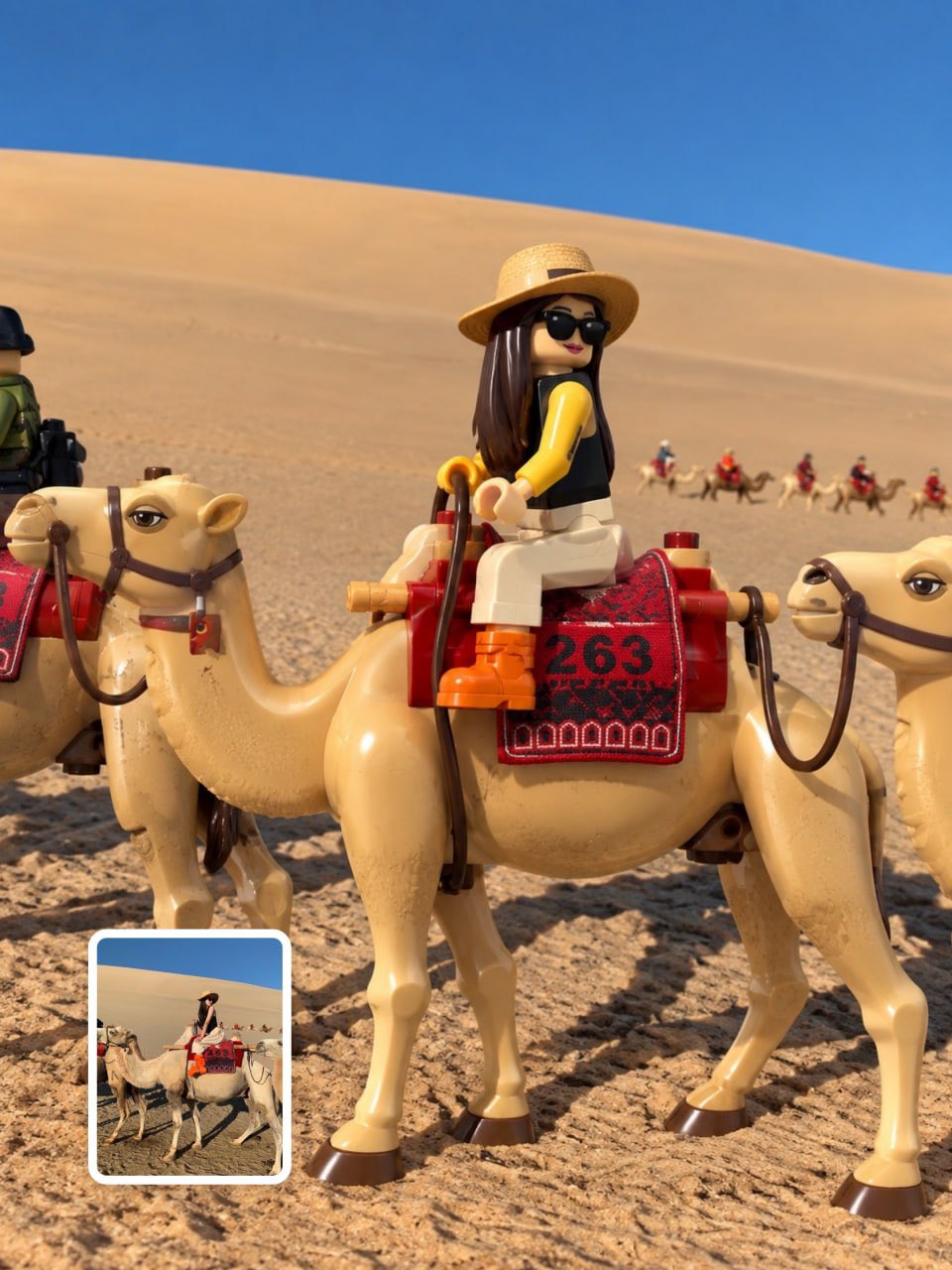
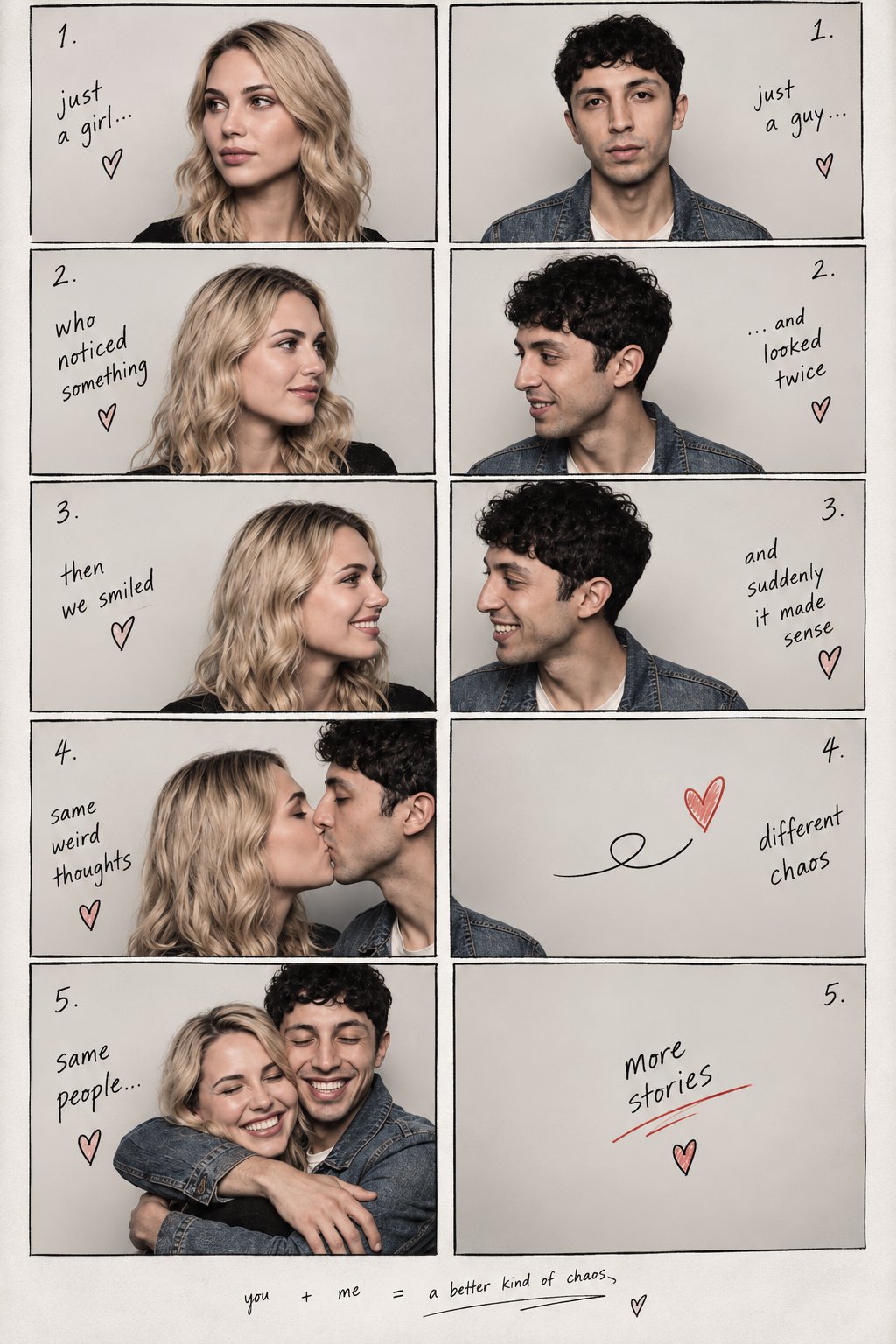
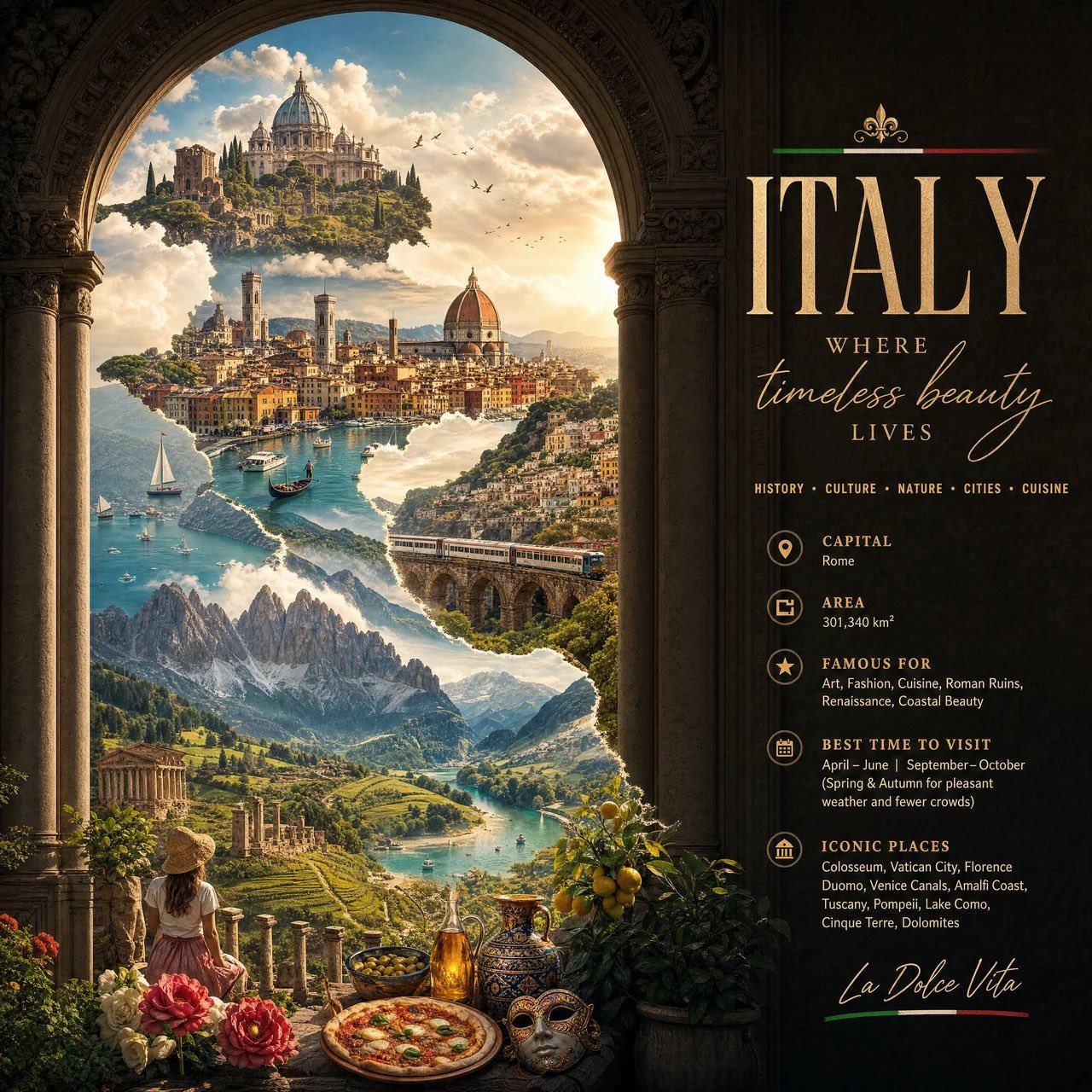
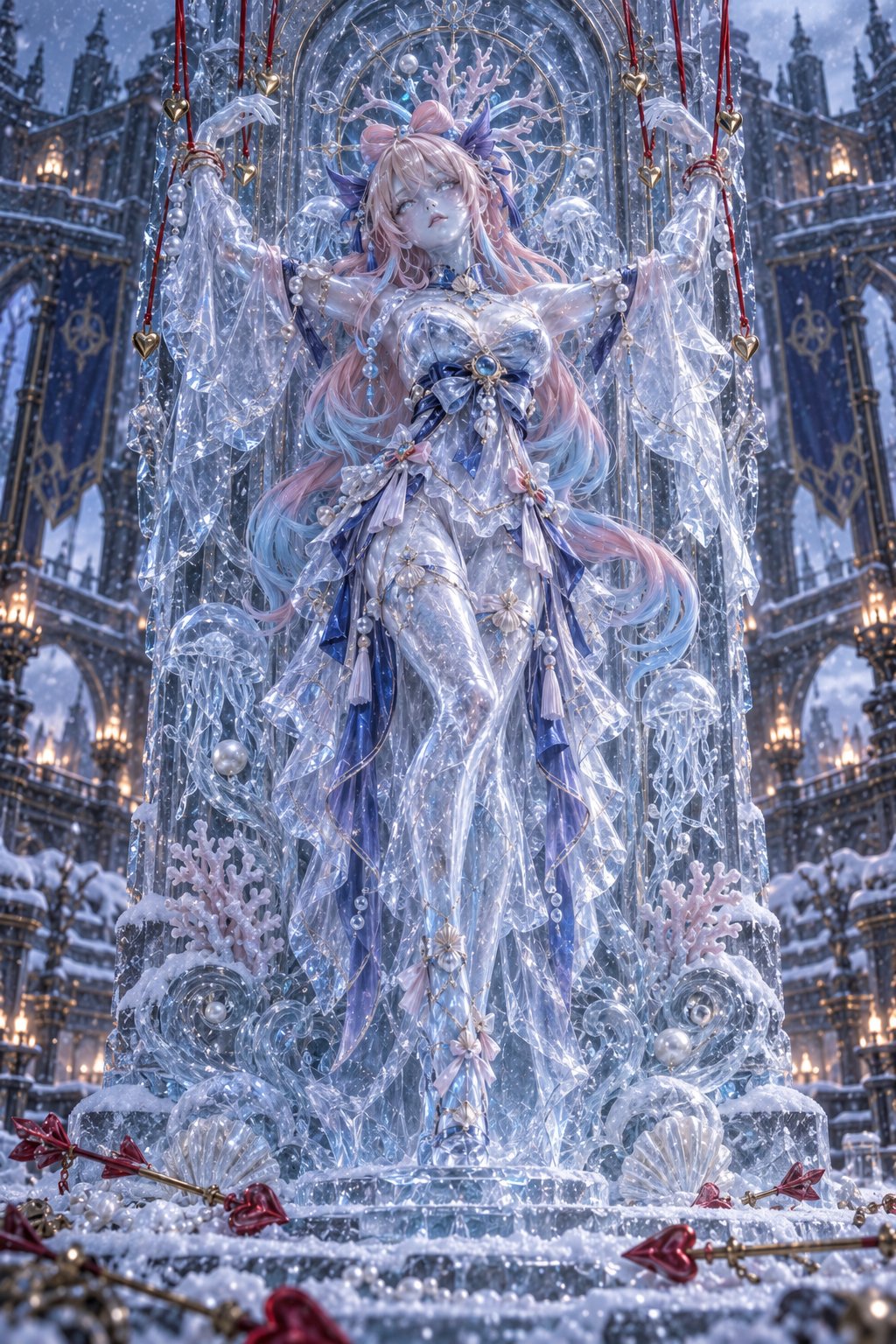
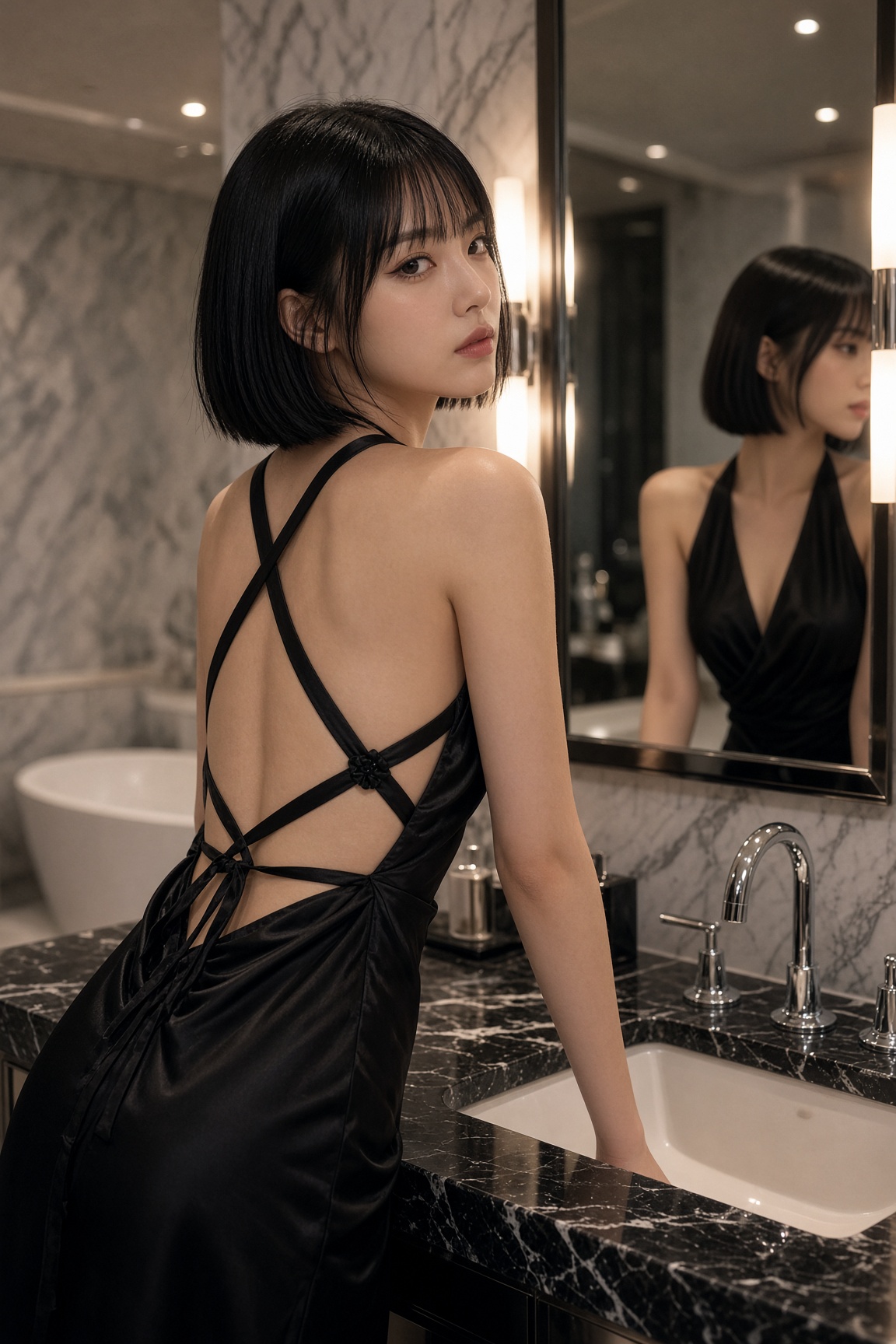
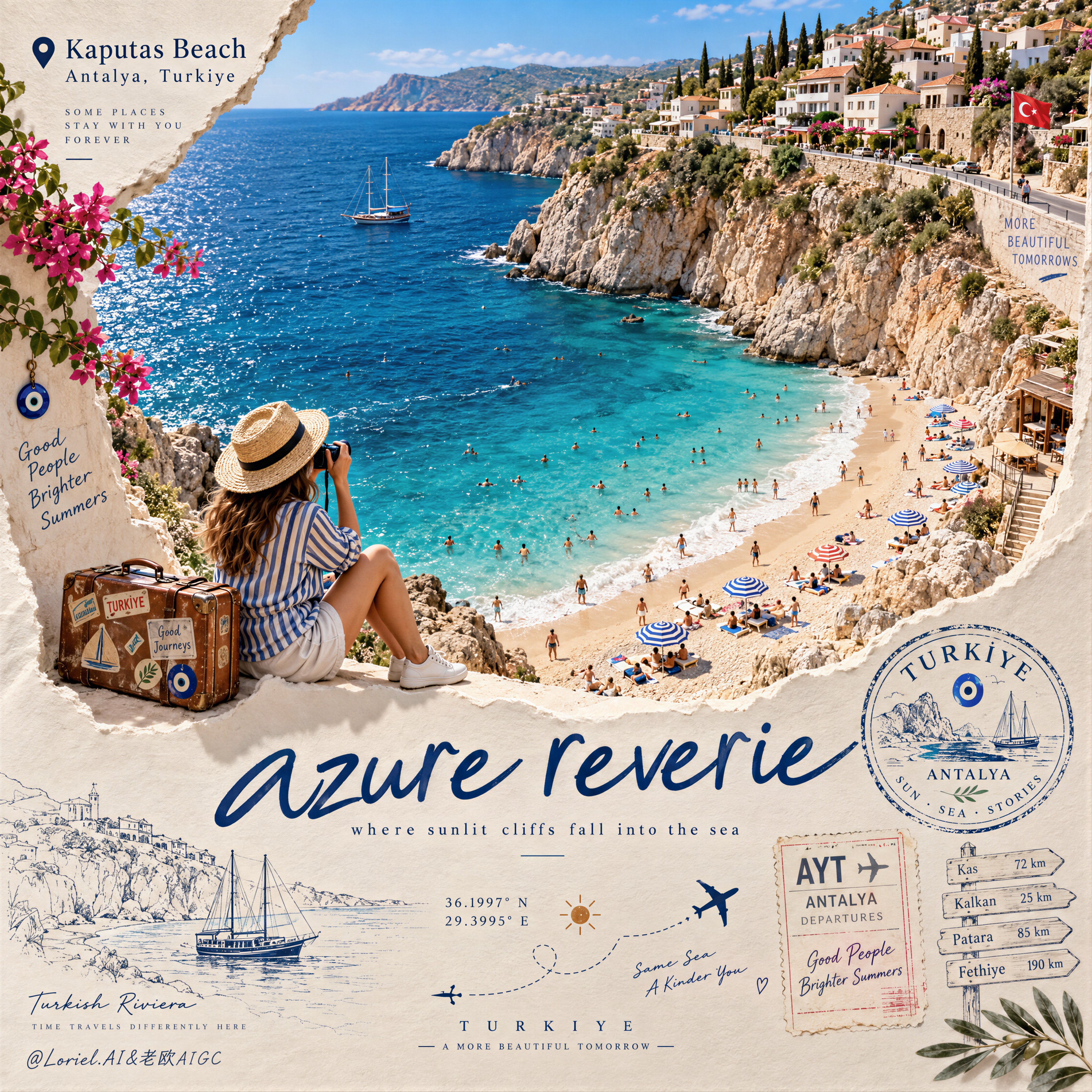
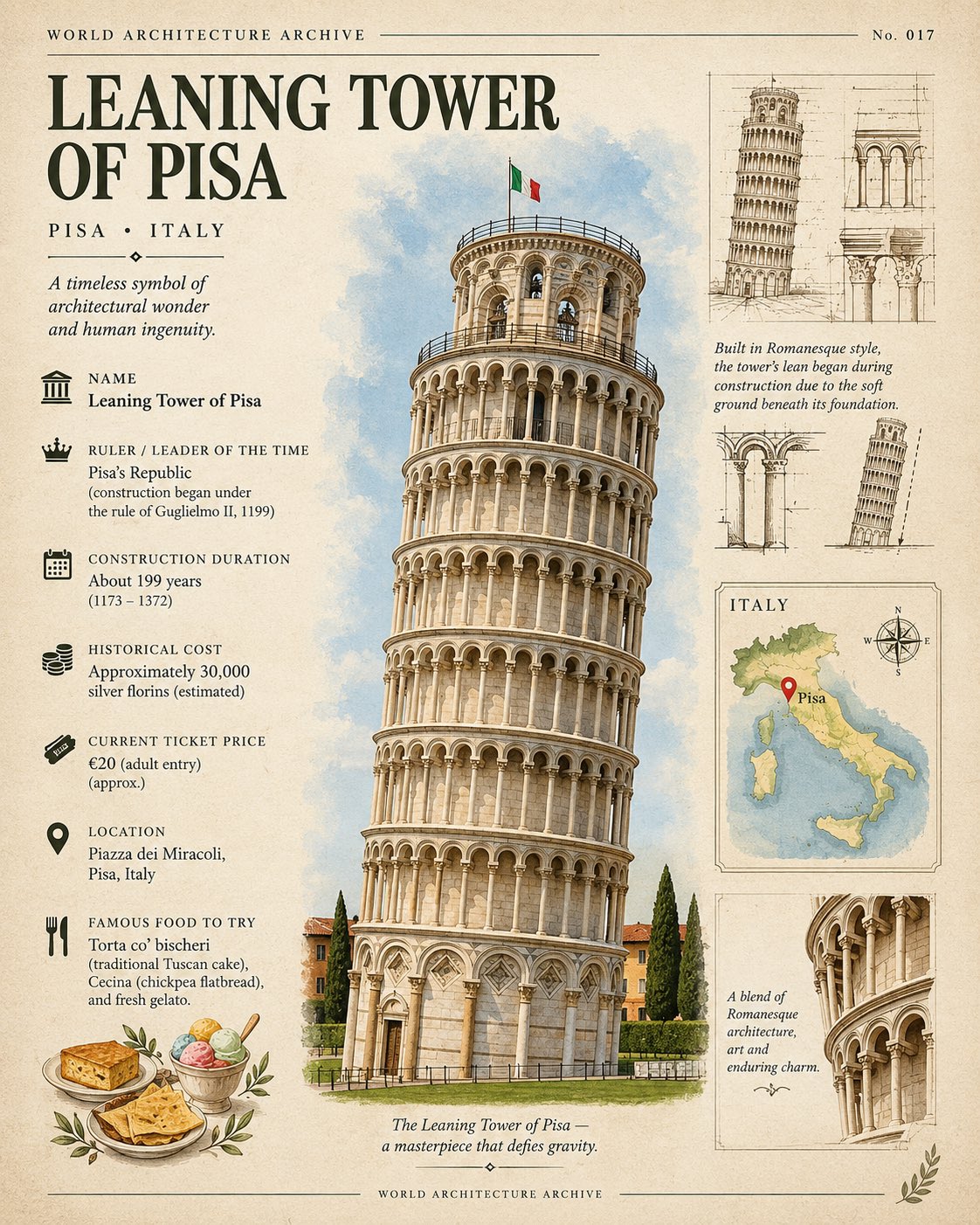
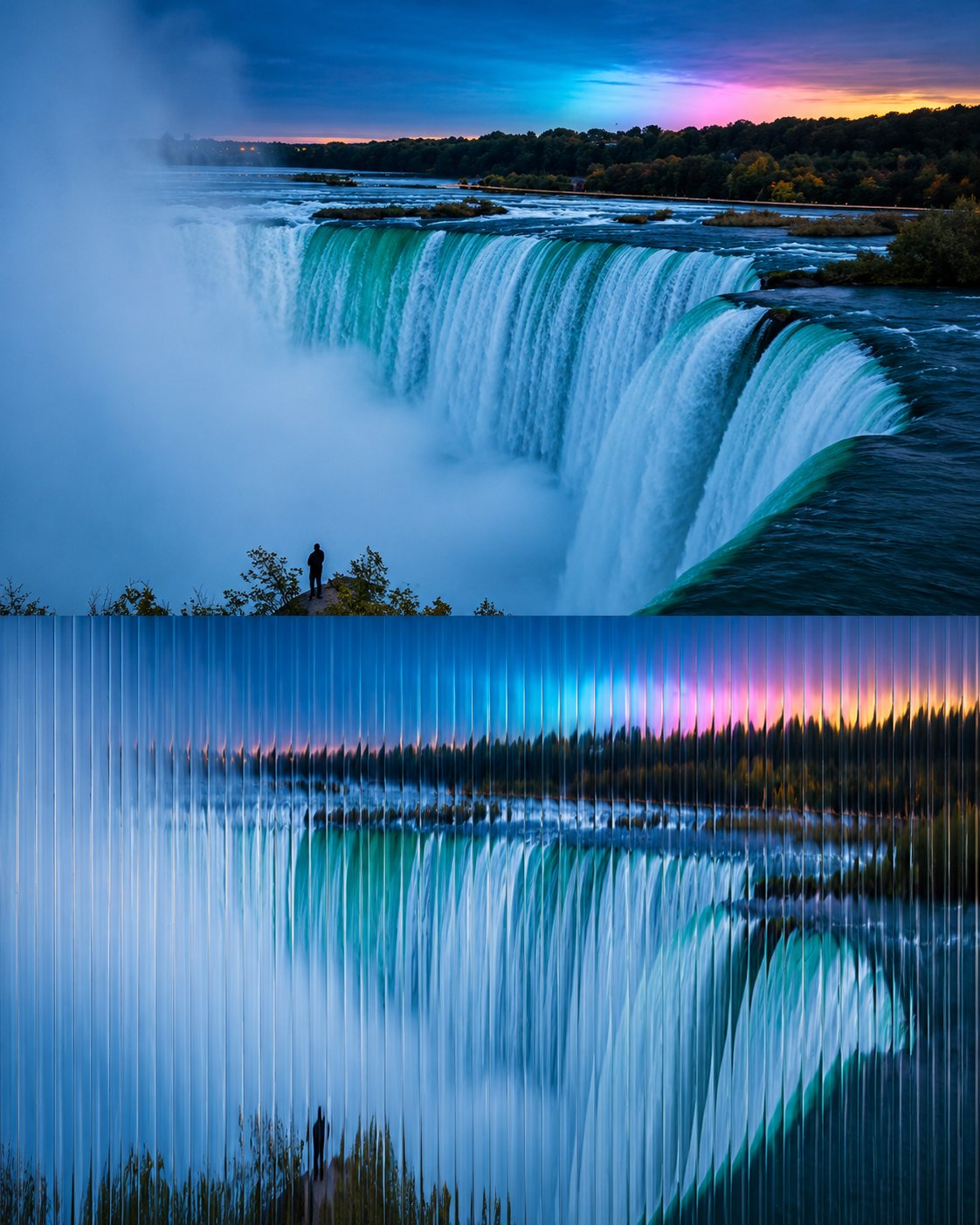
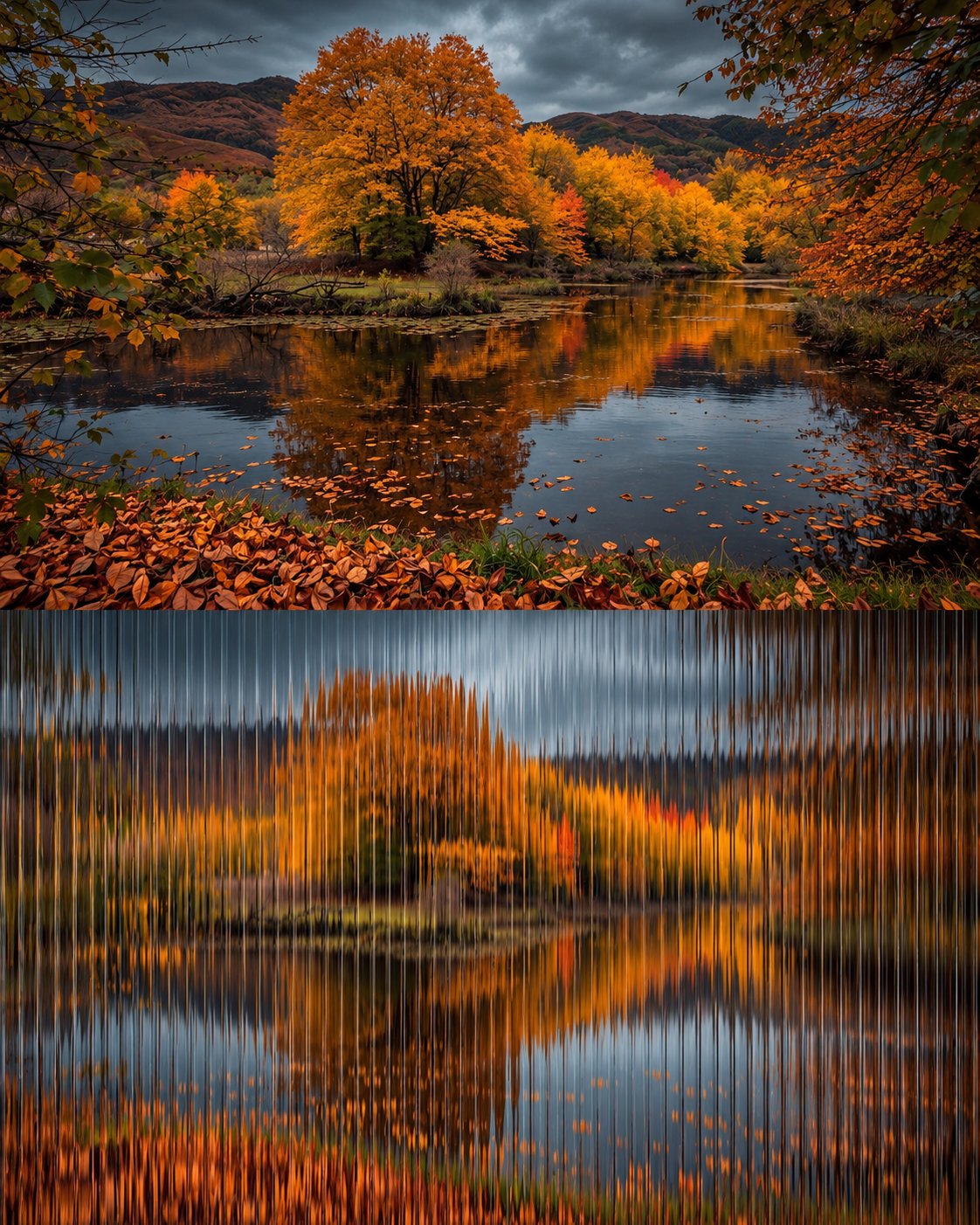
Create a cinematic 4:5 vertical photographic diptych using [LOCATION / DESTINATION / SUBJECT] as the scene. COMPOSITION: Divide the image into two equal horizontal halves. TOP HALF — ORIGINAL PHOTOGRAPH: Show an authentic, beautifully composed photograph with natural lighting, realistic details, atmospheric depth, and refined editorial color grading. Preserve the destination’s recognizable features and genuine photographic appearance. BOTTOM HALF — RIBBED GLASS TRANSFORMATION: Recreate the same scene through vertically fluted, translucent glass, as though the original photograph is viewed through a textured architectural glass panel. The closely spaced vertical ridges refract and stretch the buildings, trees, water, lights, and reflections into elegant elongated patterns. Preserve the original scene’s overall composition and recognizable silhouettes while creating a soft, mesmerizing optical distortion. LIGHT & TEXTURE: Use natural highlights, subtle reflections, realistic glass refraction, delicate vertical lines, and atmospheric blur. Adapt the lighting and colors to the scene, from lush forest greens to warm sunset oranges or cool coastal blues. ART DIRECTION: Minimalist fine-art photography, sophisticated editorial aesthetics, tactile glass texture, poetic visual storytelling, and seamless visual continuity between both halves. Add tiny, understated editorial typography only if desired. Avoid excessive distortion, artificial neon colors, heavy blur, random patterns, unrelated elements, borders, and watermarks. FORMAT: Vertical 4:5, precise 50/50 horizontal split, high resolution.
Details
- Type
- AI Image Prompts
- Aspect Ratio
- 561:701
- Updated
- Oct 20, 2026
Category
How to use this prompt
- 1Copy the full prompt with the copy button above.
- 2Open GPT Image 2.5 by OpenAI, or any image generator with a similar style range.
- 3Paste the prompt, then swap the subject and style keywords to match your idea.
- 4Match the example's settings (561:701 · Cinematic · Architecture · Realistic), then iterate — small wording changes shift the output a lot.
Frequently asked questions
Which AI model generated this image?
This image was generated with GPT Image 2.5 by OpenAI. The prompt on this page is the exact text used to create it.
What settings does this prompt use?
The example was generated with GPT Image 2.5 using: 561:701 · Cinematic · Architecture · Realistic. Reusing these settings gives the closest match.
How do I get similar results?
Copy the prompt as-is first, then replace only the subject while keeping the style, lighting, and composition keywords. Generate a few variations — outputs differ between runs.
Can I modify this prompt?
Yes. Prompts work best as starting points — adjust descriptors, aspect ratio, or style tags to make the output your own.