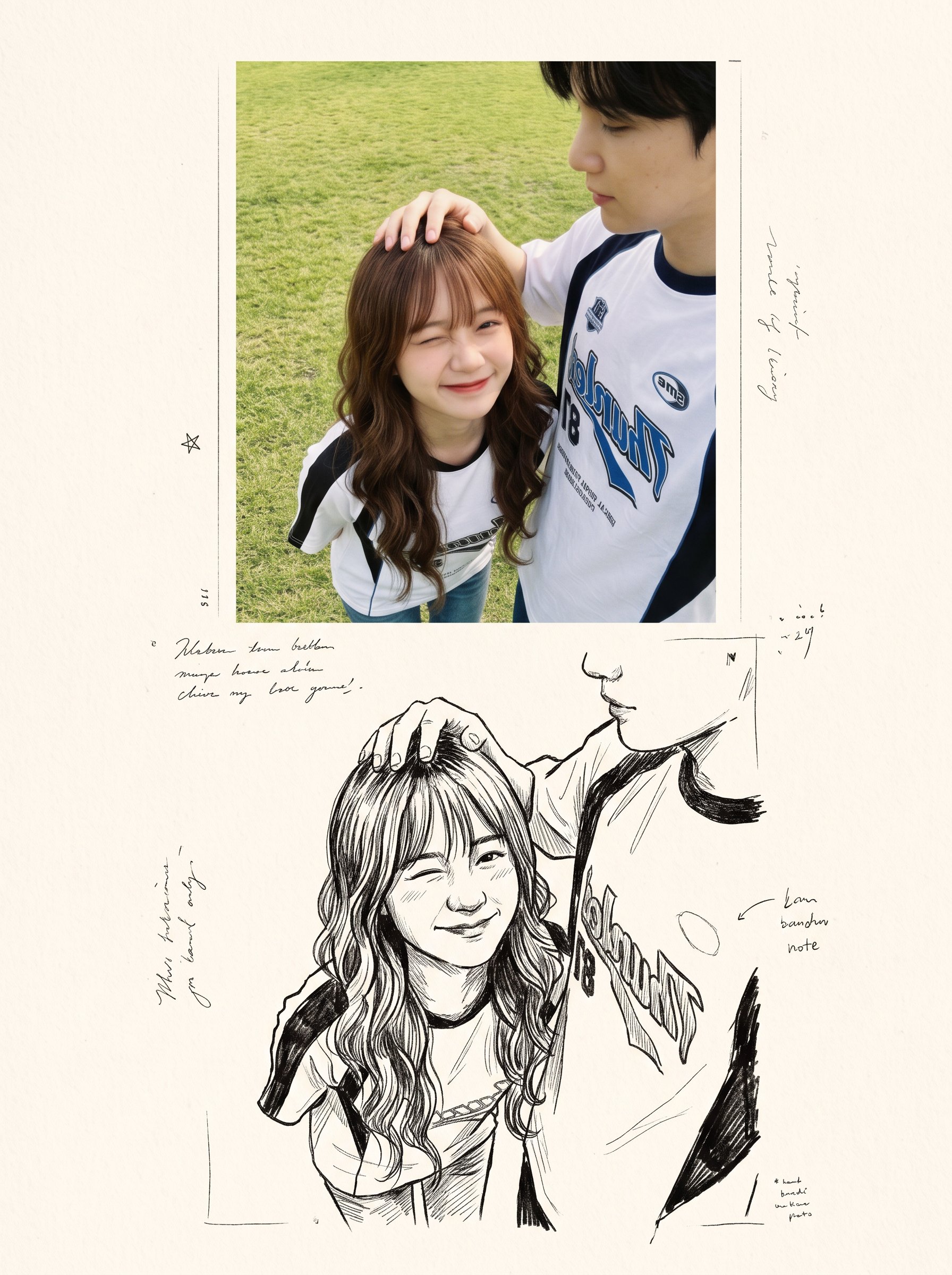
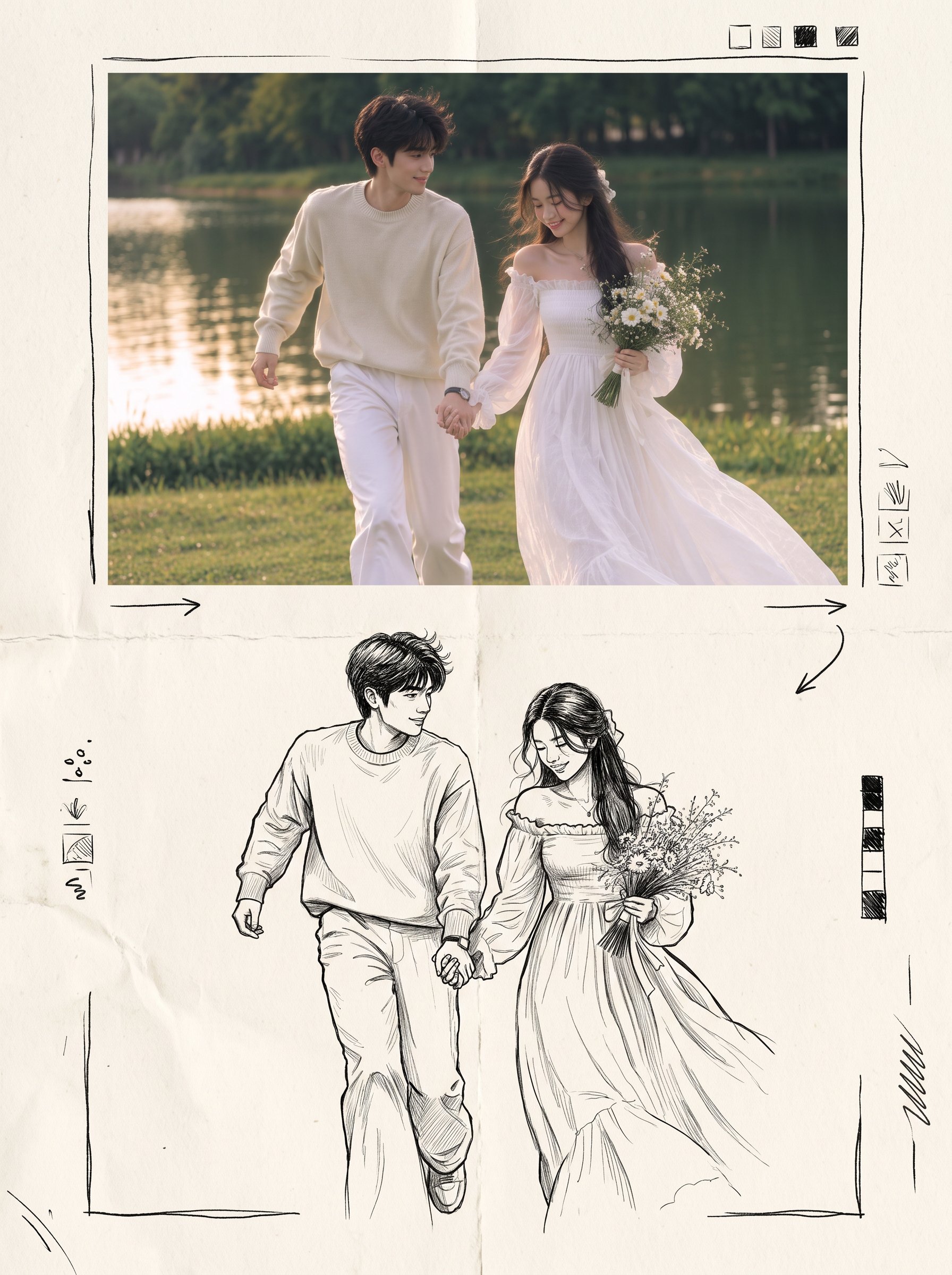
Photo-to-Sketch Artbook Spread
 Nano BananaGoogleimage
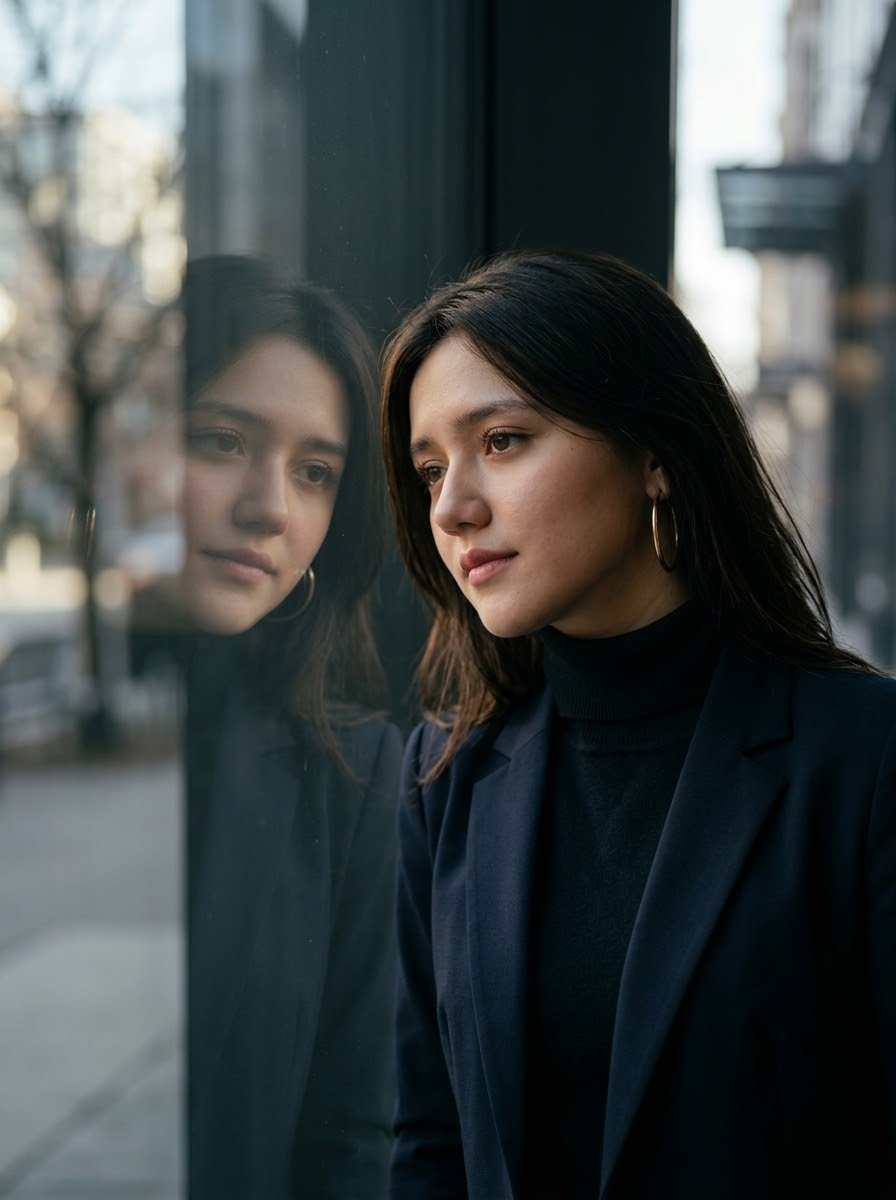
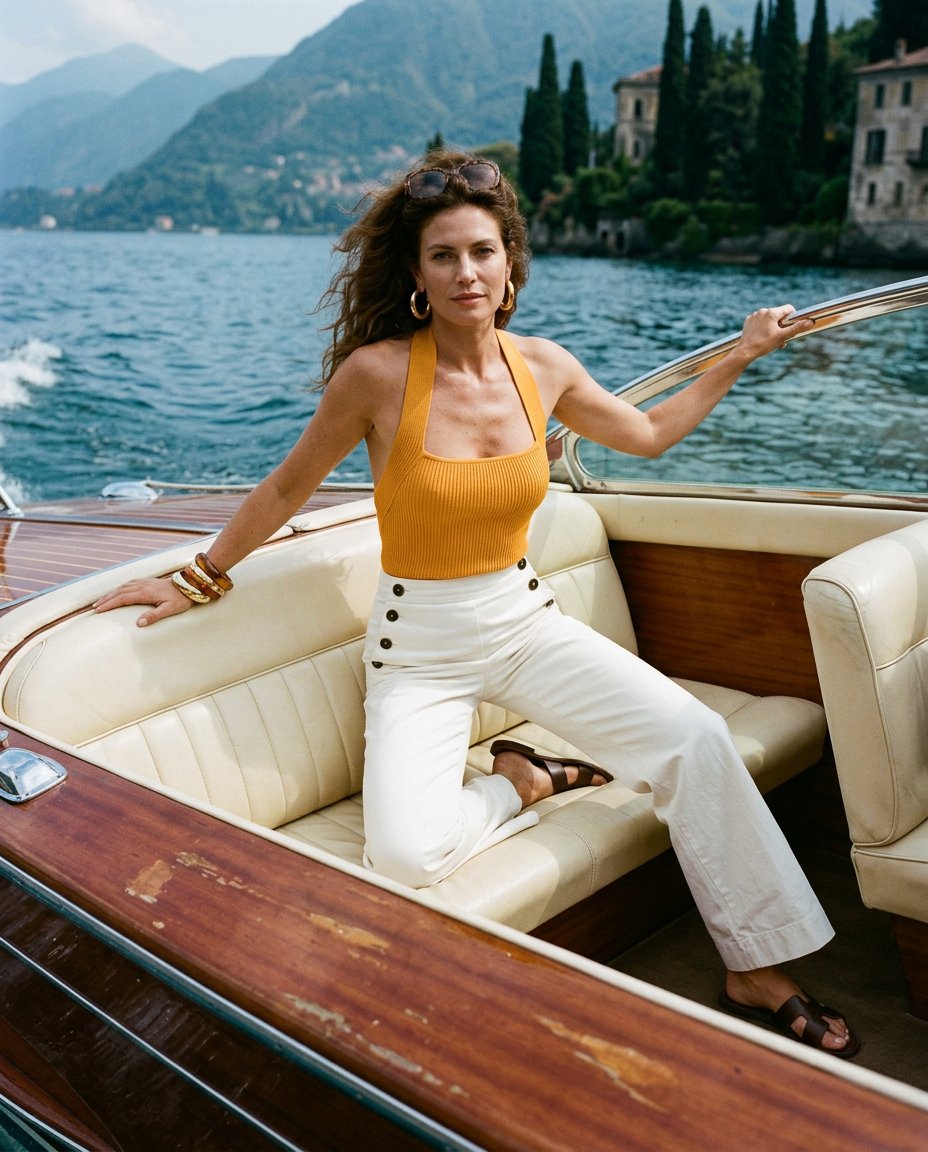
Create a nostalgic, magazine-inspired photo-and-illustration artbook spread using the reference image as the visual foundation. Maintain the original subjects, identities, poses, expressions, wardrobe, framing, and emotional tone without altering their recognizable appearance. Design the composition as two vertically flowing interpretations of the same moment. In the upper portion, recreate the reference as an intimate cinematic photograph. Use gentle natural light, realistic skin and fabric textures, muted authentic colors, delicate analog film grain, soft background separation, and shallow depth of field. The image should feel spontaneous and personal, like a quiet memory captured on film rather than a staged portrait. In the lower portion, reinterpret that identical moment as a raw black-and-white ink drawing printed on warm ivory sketchbook paper. Preserve the characters, pose, proportions, and composition while replacing photographic detail with expressive hand-drawn linework, irregular pen strokes, loose cross-hatching, unfinished contours, and restrained shading. Allow small imperfections so the illustration feels genuinely handmade rather than digitally traced. Blend both sections naturally so the photograph appears to dissolve into the drawing, creating the impression of a memory gradually becoming an illustration. Surround the lower artwork with restrained editorial design elements: a small numbered chapter heading, a brief poetic handwritten annotation, tiny archival or documentary notes, and subtle typographic details. Keep all typography secondary to the imagery. Use generous cream-toned negative space, tactile paper grain, faint printing imperfections, understated vintage publishing details, and an elegant minimalist layout inspired by contemporary photography journals and Japanese visual diaries. Overall mood: nostalgic, intimate, poetic, cinematic, handcrafted, sophisticated, and emotionally warm. Maintain realistic anatomy, natural body proportions, recognizable faces, believable hands, and consistent clothing throughout both versions. High-detail editorial finish, cohesive photo-to-sketch transition, no branding, no logos, and no watermark.
Details
- Type
- AI Image Prompts
- Aspect Ratio
- 56:75
- Updated
- Oct 7, 2026
Category
How to use this prompt
- 1Copy the full prompt with the copy button above.
- 2Open Nano Banana by Google, or any image generator with a similar style range.
- 3Paste the prompt, then swap the subject and style keywords to match your idea.
- 4Match the example's settings (56:75 · Digital Art · Cinematic · Vintage), then iterate — small wording changes shift the output a lot.
Frequently asked questions
Which AI model generated this image?
This image was generated with Nano Banana by Google. The prompt on this page is the exact text used to create it.
What settings does this prompt use?
The example was generated with Nano Banana using: 56:75 · Digital Art · Cinematic · Vintage. Reusing these settings gives the closest match.
How do I get similar results?
Copy the prompt as-is first, then replace only the subject while keeping the style, lighting, and composition keywords. Generate a few variations — outputs differ between runs.
Can I modify this prompt?
Yes. Prompts work best as starting points — adjust descriptors, aspect ratio, or style tags to make the output your own.