LogoAhaPrompt
  • Prompts
  • Featured
  • Models
  • Submit
  • Blog
AhaPromptAhaPrompt

AI Prompts for Images, Video & Audio — Every Model, One Library

Built withLogoNEXTY.DEV
Explore
  • All Prompts
  • Featured Prompts
  • Image Prompts
  • Video Prompts
  • Audio Prompts
  • AI Models
  • Submit a Prompt
  • Blog
Languages
  • English
  • 中文
  • 日本語
  • 한국어

Copyright © 2026 AhaPrompt All rights reserved.

Privacy PolicyTerms of Service
HomeAI Prompt LibraryAI Image PromptsMinimalist Architectural Landmark Art Poster
Minimalist Architectural Landmark Art Poster — AI image prompt — GPT Image 2.5 — Architecture, Watercolor, Minimalist - 1
Minimalist Architectural Landmark Art Poster — AI image prompt — GPT Image 2.5 — Architecture, Watercolor, Minimalist - 2

Minimalist Architectural Landmark Art Poster

OpenAIGPT Image 2.5OpenAIimage

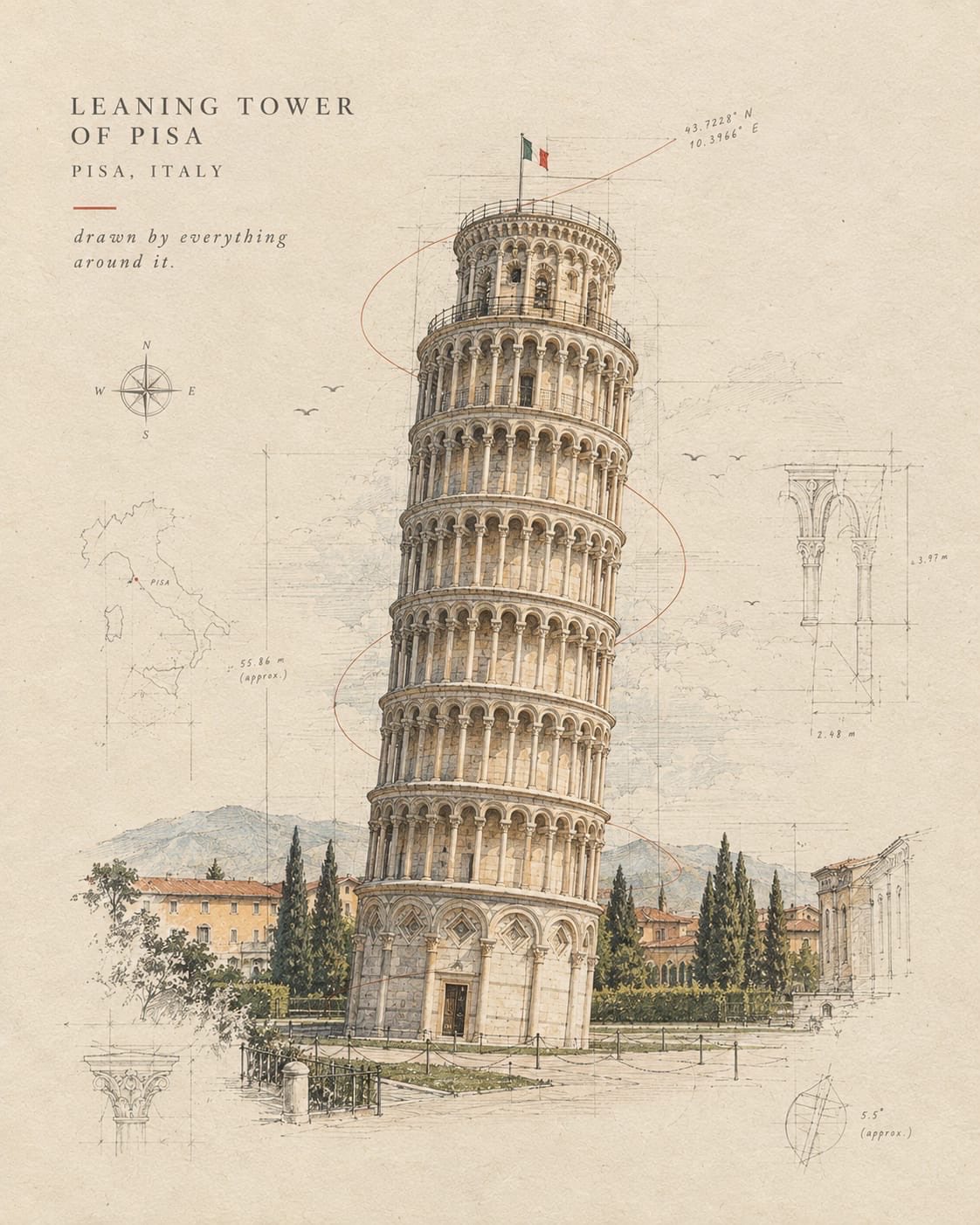
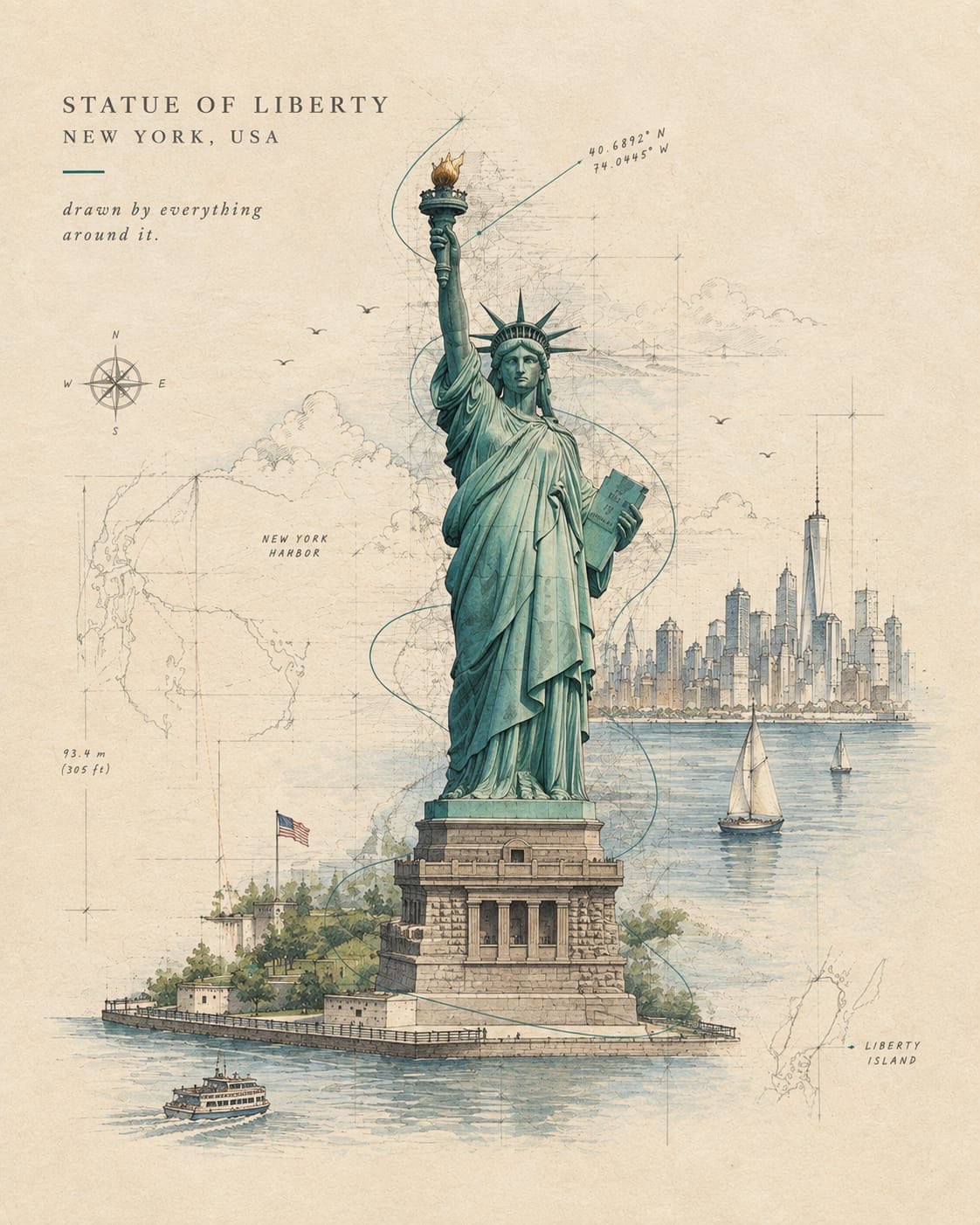
Create an exceptionally original minimalist architectural art poster featuring [LANDMARK] in [CITY, COUNTRY]. Depict the landmark in its recognizable natural architectural appearance, with its authentic proportions, distinctive structure, materials, and characteristic details. Combine fine graphite architectural drawing with subtle vintage watercolor washes, creating the feeling of a sophisticated illustrated travel archive. The landmark should be the central visual focus, surrounded by an intricate but restrained world of extremely delicate architectural linework: construction measurements, perspective guides, tiny streets, rooftops, surrounding buildings, local landscape, clouds, birds, shadows, fragments of maps, compass marks, elevation studies, structural details, and subtle environmental contours. Use a layered visual language where some elements are highly detailed while others fade into the paper, creating depth without making the composition feel crowded. Add one unexpected artistic detail: a single continuous pencil line travels around the landmark without directly tracing its outline. Allow it to occasionally intersect with construction lines, then break at one point beside a tiny handwritten coordinate, date, measurement, or architectural note. Use warm ivory handmade paper, graphite pencil, extremely fine ink lines, delicate watercolor washes, subtle eraser dust, visible paper fibers, faint halftone imperfections, soft natural shadows, and lightly weathered archival texture. Color palette Keep the overall artwork muted, sophisticated, and vintage. Use warm ivory and graphite as the foundation, with the landmark shown in its authentic recognizable colors through restrained watercolor washes. Add one subtle accent color inspired by [CITY/COUNTRY] — for example: - Italy → muted terracotta - Japan → restrained vermilion - France → faded blue - UK → muted navy or burgundy - India → subtle saffron - USA → muted teal or dusty red Avoid bright digital colors. Surrounding details Include carefully chosen elements associated with [CITY/COUNTRY], such as: - local architecture - landscape or geography - streets and rooftops - transportation - vegetation - small cultural details - map fragments - architectural ornaments - elevation or measurement diagrams - compass rose - coordinates - faint historical annotations These details should frame and contextualize the landmark rather than compete with it. Typography Place small, refined typography in generous negative space: [LANDMARK NAME] [CITY, COUNTRY] “drawn by everything around it.” Use elegant editorial serif typography with generous spacing. Add only a few tiny handwritten architectural annotations or coordinates. Artistic direction The final composition should feel mysterious, intelligent, timeless, and unexpectedly beautiful — somewhere between a vintage European travel poster, an architect's working sketch, a museum exhibition print, and a collector's archival illustration. No people. No photorealistic background. No excessive typography. No decorative clutter. No neon colors. No glossy digital rendering. No cartoon aesthetic. No generic stock-travel-poster appearance. 4:5 vertical composition, premium editorial design, tactile handmade paper, sophisticated architectural illustration, precise fine-line details, subtle watercolor, elegant negative space, balanced visual hierarchy, museum-quality contemporary art poster.

Details
Type
AI Image Prompts
Aspect Ratio
561:701
Updated
Sep 29, 2026
Category
ArchitectureWatercolorMinimalist
Source

How to use this prompt

  1. 1Copy the full prompt with the copy button above.
  2. 2Open GPT Image 2.5 by OpenAI, or any image generator with a similar style range.
  3. 3Paste the prompt, then swap the subject and style keywords to match your idea.
  4. 4Match the example's settings (561:701 · Architecture · Watercolor · Minimalist), then iterate — small wording changes shift the output a lot.

Frequently asked questions

Which AI model generated this image?

This image was generated with GPT Image 2.5 by OpenAI. The prompt on this page is the exact text used to create it.

What settings does this prompt use?

The example was generated with GPT Image 2.5 using: 561:701 · Architecture · Watercolor · Minimalist. Reusing these settings gives the closest match.

How do I get similar results?

Copy the prompt as-is first, then replace only the subject while keeping the style, lighting, and composition keywords. Generate a few variations — outputs differ between runs.

Can I modify this prompt?

Yes. Prompts work best as starting points — adjust descriptors, aspect ratio, or style tags to make the output your own.

More GPT Image 2.5 prompts

Create a premium educational travel poster featuring [STRUCTURE NAME], one of the world’s most famou — AI image prompt — GPT Image 2.5
OpenAIGPT Image 2.5
Create a premium educational travel poster featuring [STRUCTURE NAME], one of the world’s most famous architectural landmarks. Show a beautiful, highly detailed illustration or photorealistic miniature of the structure as the main focal point, surrounded by clean infographic-style information. Include these clearly arranged details: NAME: [Structure Name] RULER / LEADER OF THE TIME: [Ruler or leader] CONSTRUCTION DURATION: [Number of years / approximate duration] HISTORICAL COST: [Original construction cost, if known] CURRENT TICKET PRICE: [Current entry price] LOCATION: [City, Country] FAMOUS FOOD TO TRY: [1–3 famous local foods] Add small architectural sketches, construction details, a tiny location map, historical symbols, subtle decorative elements, and elegant infographic lines. Use a sophisticated museum archive + luxury travel magazine aesthetic with warm ivory paper, muted heritage colors, fine black typography, subtle vintage grain, and clean geometric layout. Make the structure large and dominant, with the information arranged neatly around it. Add a small “WORLD ARCHITECTURE ARCHIVE” label and a subtle historical catalog number. Style: elegant, educational, premium, collectible travel poster, highly detailed, clean composition, realistic textures, sophisticated typography. FORMAT: Vertical 4:5. Avoid: clutter, excessive text, unrelated landmarks, people, modern advertisements, and watermark.
Details
Create a high-end editorial poster using the uploaded photo as the exact reference, in a strict 3:4  — AI image prompt — GPT Image 2.5
OpenAIGPT Image 2.5
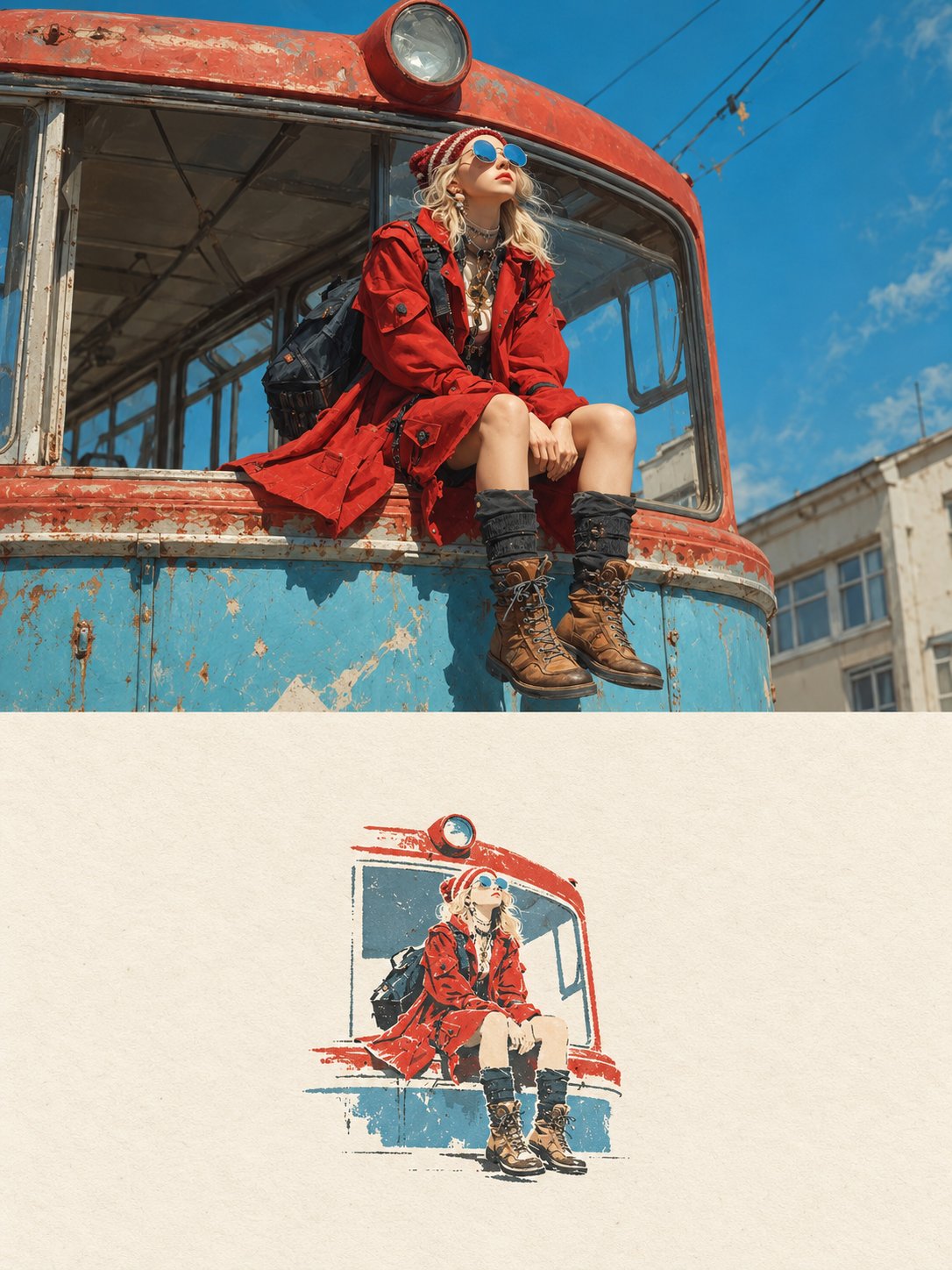
Create a high-end editorial poster using the uploaded photo as the exact reference, in a strict 3:4 vertical format divided horizontally into two equal 50/50 sections. Preserve the original photo faithfully in the top half, including subjects, identity, pose, clothing, objects, lighting, colors, and realistic texture, with only subtle premium editorial color grading. In the bottom half, reinterpret the most recognizable elements as a small, centered, minimalist handmade paper illustration using delicate imperfect lines, bold flat acrylic-like color shapes, subtle paper grain, organic edges, and no more than 4 colors extracted from the original photo. Keep the illustration only 10–20% of the bottom section with lots of warm off-white negative space and optional minimal editorial typography. The overall result should feel quiet, poetic, refined, artistic, premium, and like an independent art-book cover, avoiding cartoon, watercolor, colored-pencil, 3D, glossy, busy, or commercial aesthetics.
Details
Create a premium 4:5 vertical cinematic travel poster for [COUNTRY / CITY / LOCATION / SUBJECT].

TE — AI image prompt — GPT Image 2.5
OpenAIGPT Image 2.5
Create a premium 4:5 vertical cinematic travel poster for [COUNTRY / CITY / LOCATION / SUBJECT]. TEXT-TO-IMAGE ONLY — generate the entire composition creatively from [COUNTRY / CITY / LOCATION / SUBJECT] alone. No reference image required. CORE CONCEPT Create a dramatic editorial collage that merges multiple iconic views of [COUNTRY / CITY / LOCATION / SUBJECT] into one cohesive architectural composition. Use a warm ivory background with enormous condensed typography of the location name stretching vertically behind the architecture. The typography should act as a major graphic element, partially hidden and naturally overlapped by the landmarks. ARCHITECTURE Automatically select the most recognizable landmark as the dominant central subject, then surround it with 3–5 additional authentic landmarks from the same destination. Arrange them from different low-angle perspectives so buildings rise inward from the edges and create a powerful visual frame around the central landmark. Keep the architecture highly recognizable and structurally accurate. Allow controlled cropping at the edges for a dramatic editorial composition. COLOR SYSTEM Use a mostly monochromatic photographic treatment for the architecture—warm charcoal, stone gray, cream, and subtle sepia—combined with ONE strong destination-specific accent color. Apply that accent selectively to the oversized location typography and a few culturally recognizable foreground elements such as transportation, flowers, flags, lights, or architectural details. TYPOGRAPHY Place the exact location name in huge, ultra-condensed uppercase lettering behind the landmarks. Make it tall, bold, tightly spaced, and partially concealed by the architecture. The letters should feel physically integrated into the composition rather than sitting on top as a normal title. Add no unnecessary text. FOREGROUND Include one or two small contextual foreground elements associated with the destination—such as a taxi, bus, tram, bicycle, street lamp, flowers, pedestrians, or street detail—slightly out of focus to create cinematic depth. LIGHTING & TEXTURE Use dramatic natural daylight with subtle atmospheric haze, realistic architectural shadows, selective depth of field, and a slightly nostalgic photographic finish. Add restrained vintage print grain, fine paper texture, and subtle imperfections without making the artwork look artificially aged. FINAL AESTHETIC Luxury travel editorial × cinematic city photography × oversized typography × architectural collage × vintage European poster design. Sophisticated, dramatic, recognizable, highly detailed, and visually balanced. Avoid random landmarks, incorrect architecture, excessive text, cartoon styling, 3D rendering, flat vector graphics, excessive saturation, distorted buildings, duplicated landmarks, clutter, logos, watermarks, or generic city imagery. FORMAT: 4:5 vertical, premium editorial travel poster, cinematic low-angle perspective, high detail.
Details
Create a premium 4:5 vertical vintage hand-drawn travel storybook illustration for [COUNTRY / CITY / — AI image prompt — GPT Image 2.5
OpenAIGPT Image 2.5
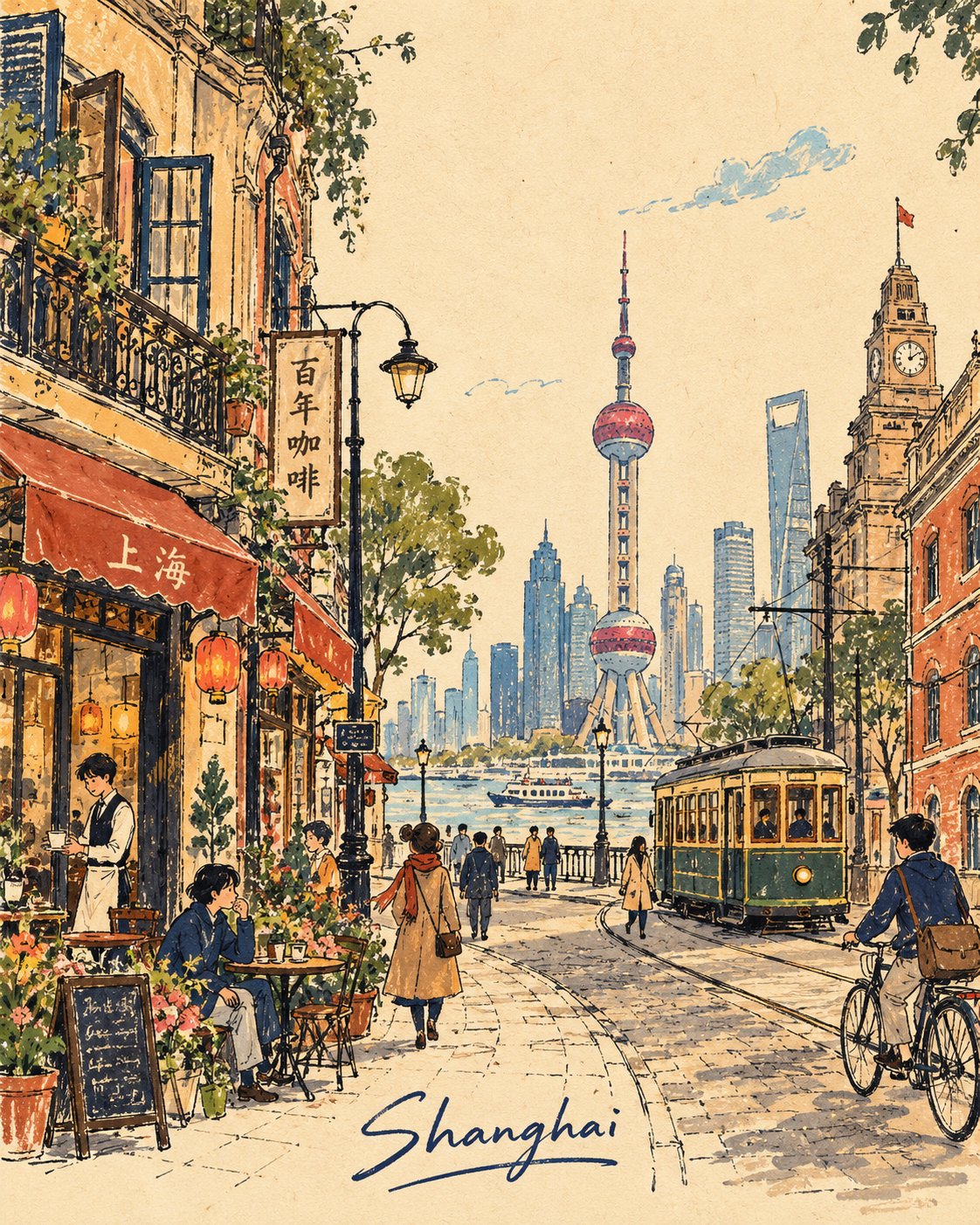
Create a premium 4:5 vertical vintage hand-drawn travel storybook illustration for [COUNTRY / CITY / LOCATION / SUBJECT]. TEXT-TO-IMAGE ONLY — generate the entire artwork creatively from [COUNTRY / CITY / LOCATION / SUBJECT] alone. No reference image required. CORE CONCEPT Imagine [COUNTRY / CITY / LOCATION / SUBJECT] as a softly misremembered travel memory inspired by 1950s–1960s European city storybooks. Create one whimsical imagined street where the destination's real identity remains recognizable, but everything feels gently imperfect, intimate, and nostalgic rather than geographically precise. SCENE Automatically choose one iconic primary landmark as the main focal point, one secondary landmark, and one smaller distant landmark partially hidden in the background. Add one authentic local vehicle, several tiny everyday environmental details, and 5–6 ordinary local residents casually performing simple daily activities. Compress everything naturally into the same imagined street scene with layered depth and a charming sense of discovery. DRAWING STYLE Use loose charcoal and deep navy ink with trembling hand-drawn contours, slightly crooked architecture, sparse windows, simplified silhouettes, minimal expressive lines, and imperfect handmade proportions. Characters should have oversized heads, thin legs, narrow bodies, tiny faces, slightly crooked accessories, and simple readable gestures. COLOR Use a restrained palette of only 6–7 colors inspired by the visual identity of [COUNTRY / CITY / LOCATION / SUBJECT]. Apply muted matte gouache in flat areas with uneven brush edges, tiny unpainted gaps, subtle registration shifts, and visible handmade imperfections. Leave large portions of the sky as untouched warm paper. FINAL AESTHETIC Naïve European travel storybook × loose charcoal sketch × navy ink × muted gouache × nostalgic city memory × handmade editorial illustration. The artwork should feel warm, awkward, poetic, quietly humorous, and authentically handmade—not polished or digitally perfect. Add only a small handwritten caption at the bottom containing the name of [COUNTRY / CITY / LOCATION / SUBJECT]. Avoid photorealism, precise mapping, aerial views, gradients, 3D rendering, polished vector art, hyper-detailed watercolor, realistic faces, excessive linework, heavy distressed effects, clutter, logos, watermarks, or modern graphic design. FORMAT: 4:5 vertical, single unified illustration, generous paper/sky negative space.
Details
Create a refined, high-end PHOTO + MINIMAL WATERCOLOR VIGNETTE artwork based entirely on the uploade — AI image prompt — GPT Image 2.5
OpenAIGPT Image 2.5
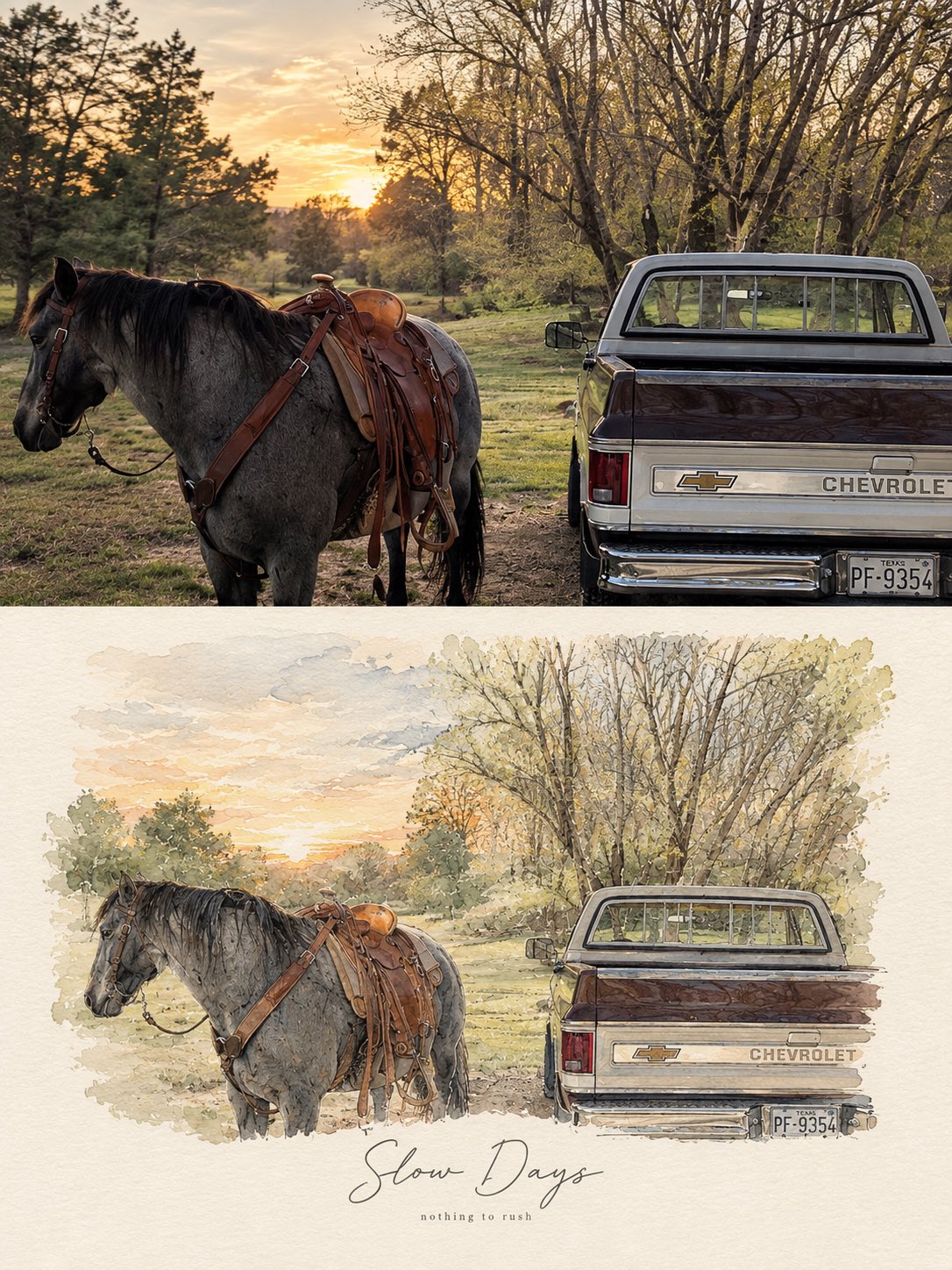
Create a refined, high-end PHOTO + MINIMAL WATERCOLOR VIGNETTE artwork based entirely on the uploaded photograph. Use the photograph as the only visual reference and preserve the exact subject, composition, environment, clothing, objects, lighting, colors, and mood. FORMAT: Vertical 3:4 editorial composition. TOP SECTION — ORIGINAL PHOTOGRAPH: Place the original photograph in the upper 55–60% of the canvas. Keep it photorealistic and naturally detailed. Do not alter the identity, pose, proportions, objects, architecture, scenery, or important visual details. Give it a subtle premium editorial photography finish with natural cinematic light and gentle tonal balance. BOTTOM SECTION — HAND-PAINTED INTERPRETATION: Transform the same exact scene into a delicate minimal watercolor and fine-ink illustration. Recreate the main subject, pose, perspective, key objects, and recognizable background elements from the photograph. Use loose watercolor washes, subtle pencil/ink outlines, imperfect hand-painted edges, soft paper texture, and restrained pastel tones. Keep the illustration airy, elegant, and slightly imperfect rather than digitally polished. The illustration should feel like a fashion/lifestyle magazine sketchbook page, with plenty of clean negative space and a warm off-white textured paper background. Do not introduce new subjects or details. TYPOGRAPHY: Add a short elegant handwritten brush-script phrase underneath or integrated naturally into the illustrated section, similar to a premium lifestyle editorial poster. Underneath it, add a tiny minimalist lowercase serif/sans-serif subtitle. Typography should be subtle, sophisticated, thin, and balanced with the artwork. AESTHETIC: Scandinavian editorial design, quiet luxury, nostalgic travel journal, soft watercolor, delicate ink drawing, handmade paper texture, muted natural palette, sophisticated minimalism, emotional storytelling, premium art-book layout. IMPORTANT: The photograph and illustration must clearly represent the same exact moment and scene. No collage of unrelated images, no dramatic redesign, no excessive watercolor, no cartoon appearance, no heavy outlines, no saturated colors, no clutter. Output: photorealistic upper section + matching delicate watercolor illustration below, seamless premium editorial composition, vertical 3:4, high detail. For different photos, just change the text phrase Examples: •Good Days — a kinder me •Better Together — same window, same silence •Little Moments — worth remembering •Slow Days — nothing to rush •Somewhere Quiet — just for a while •Golden Hours — softly remembered
Details
Create an exceptionally original minimalist architectural art poster featuring [LANDMARK].

Do NOT d — AI image prompt — GPT Image 2.5
OpenAIGPT Image 2.5
Create an exceptionally original minimalist architectural art poster featuring [LANDMARK]. Do NOT directly draw, paint, or fill the landmark. Instead, create the landmark entirely through negative space. The central silhouette of [LANDMARK] remains almost completely untouched — warm ivory paper showing through naturally. Around this empty silhouette, extremely delicate graphite lines describe the world that surrounds it: architectural measurements, tiny streets, distant rooftops, clouds, birds, shadows, perspective guides, fragments of maps and subtle environmental contours. The surrounding drawing becomes denser near the edges of the landmark, making the untouched negative space gradually reveal the unmistakable silhouette of [LANDMARK]. Some construction lines intentionally continue through the empty silhouette but become extremely faint, as if the artist started drawing the landmark and then erased it. Add one unexpected detail: a single continuous pencil line travels around the landmark without ever drawing its actual outline. At one point, the line breaks and leaves a tiny handwritten coordinate or date. Use warm ivory paper, graphite pencil, extremely fine architectural linework, subtle eraser dust, paper fibers, faint halftone imperfections and soft natural shadows. Color palette: almost entirely monochrome graphite and ivory, with one extremely subtle accent inspired by [CITY/COUNTRY]. Small refined typography placed in generous negative space: [LANDMARK NAME] [CITY, COUNTRY] “drawn by everything around it.” The composition must feel mysterious, intelligent and unexpectedly beautiful — like a contemporary museum artwork rather than a conventional travel poster. No photorealistic background. No obvious illustration of the landmark. No decorative clutter. No excessive typography. No people. 4:5 vertical, ultra-minimal, sophisticated editorial design, tactile handmade paper, elegant negative space, precise architectural details, smooth visual flow, premium contemporary gallery aesthetic.
Details
Use the uploaded image as the exact reference. Preserve the original subjects, identities, poses, co — AI image prompt — GPT Image 2.5
OpenAIGPT Image 2.5
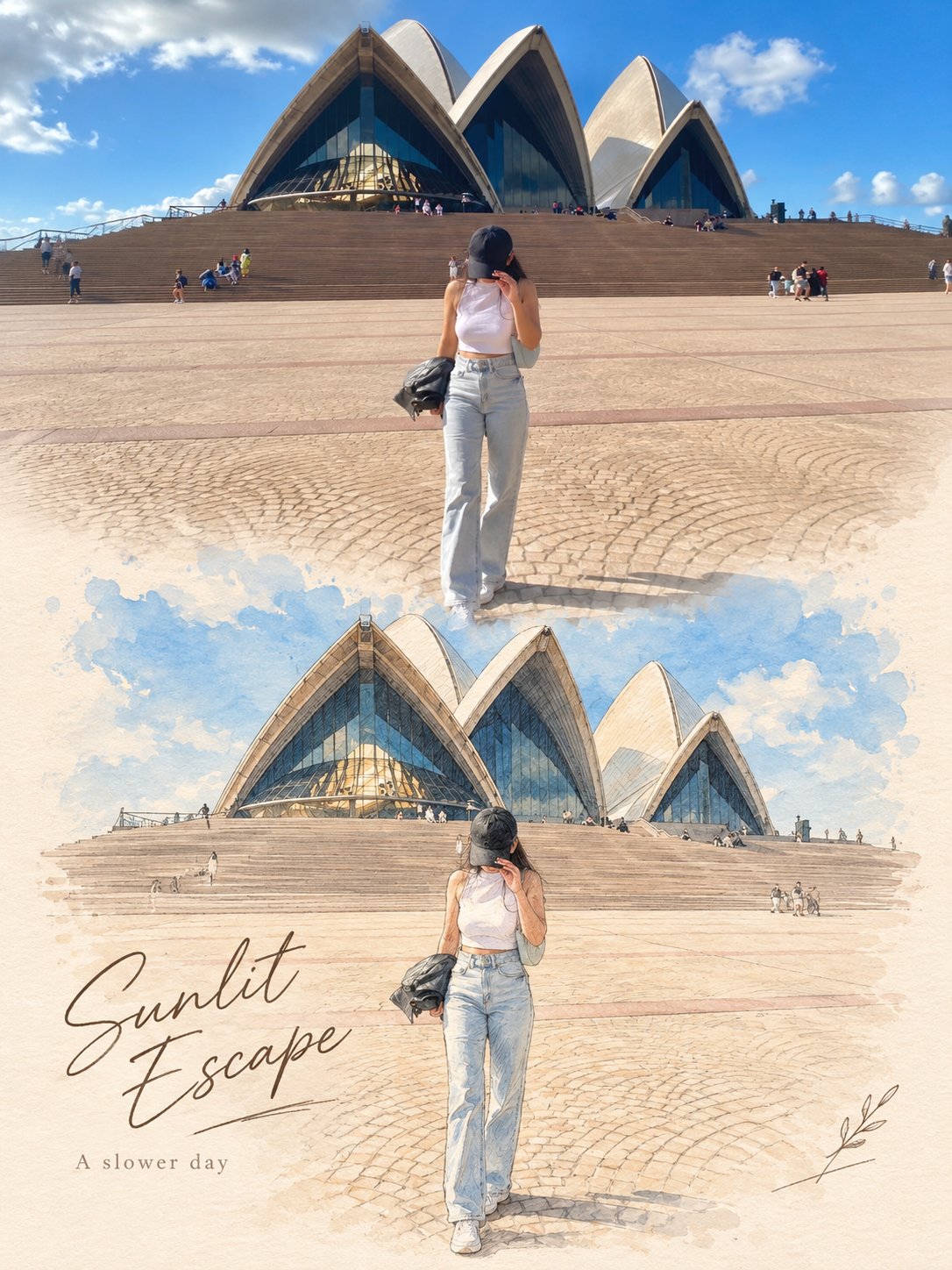
Use the uploaded image as the exact reference. Preserve the original subjects, identities, poses, composition, colors, lighting, background, and key details. Do not add, remove, or rearrange major elements. Create a vertical 3:4 editorial poster with two sections: - Top half: keep the original photo natural, sharp, and essentially unchanged. - Bottom half: recreate the exact same scene as a refined hand-drawn illustration in soft watercolor, colored pencil, and fine ink sketch style. Keep the same subjects, positions, perspective, and recognizable details. Use soft pastel tones, a warm off-white paper background, subtle paper texture, and a premium editorial / art-book / postcard feel. Add a soft seamless transition between the photo and illustration. Add minimal elegant typography: a handwritten-style title and a small simple subtitle. Use context-appropriate text such as “A Brighter Day” and “A Slower Life”, or for pets/family “Good Friends”, “Brighter Days”, or “Happier Tails ♡”. Optional: add a few subtle hand-drawn decorative details like tiny petals, leaves, hearts, or sketch marks only if they naturally fit. Do not change identities or the scene, and do not make the lower section look like photorealism, 3D, anime, or cartoon.
Details
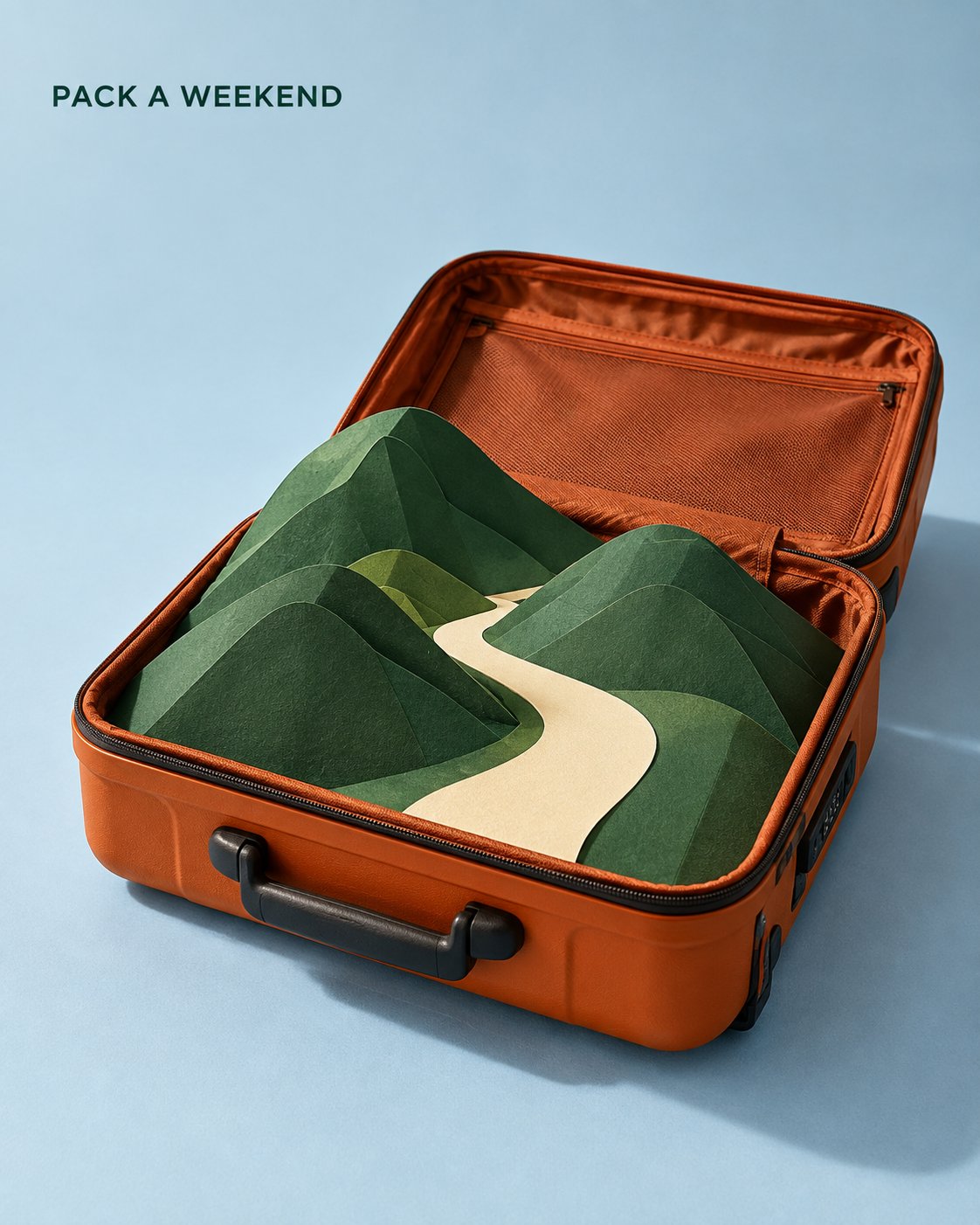
Create a vertical 4:5 travel campaign poster. One open burnt-orange hard-shell suitcase sits on a pa — AI image prompt — GPT Image 2.5
OpenAIGPT Image 2.5
Create a vertical 4:5 travel campaign poster. One open burnt-orange hard-shell suitcase sits on a pale blue studio floor, viewed from an elevated three-quarter angle. Its open lid extends behind the base without obscuring the contents. Center the suitcase within the lower two-thirds of the composition, occupying approximately 60% of the image width. Inside the suitcase, replace clothing with a carefully constructed miniature paper landscape: three overlapping forest-green folded hills and one broad ivory paper path winding between them. All landscape elements originate inside the suitcase and remain within its footprint. The tallest hill rises just above the rim. Make the path the clearest high-contrast shape, leading the eye into the landscape. Render this as a photograph of a real handmade set. Show thick matte paper, precise folds, subtle cut edges, realistic suitcase fabric lining, hinges and zipper details. Keep the miniature’s scale consistent. No buildings or extra travel accessories. Use one large studio light from the upper left. Cast soft shadows toward the lower right, with convincing contact shadows where paper meets the suitcase lining. Palette: burnt orange, forest green, ivory and pale blue. Leave the upper quarter spacious. Place the small dark-green headline “[TITLE] ” near the upper-left margin in a clean sans-serif font. No other text. The paper landscape is the focal point; the suitcase provides context; typography stays subordinate. No people, animals, logos, floating objects or decorative graphics
Details
Browse all GPT Image 2.5 promptsExplore AI Image Prompts