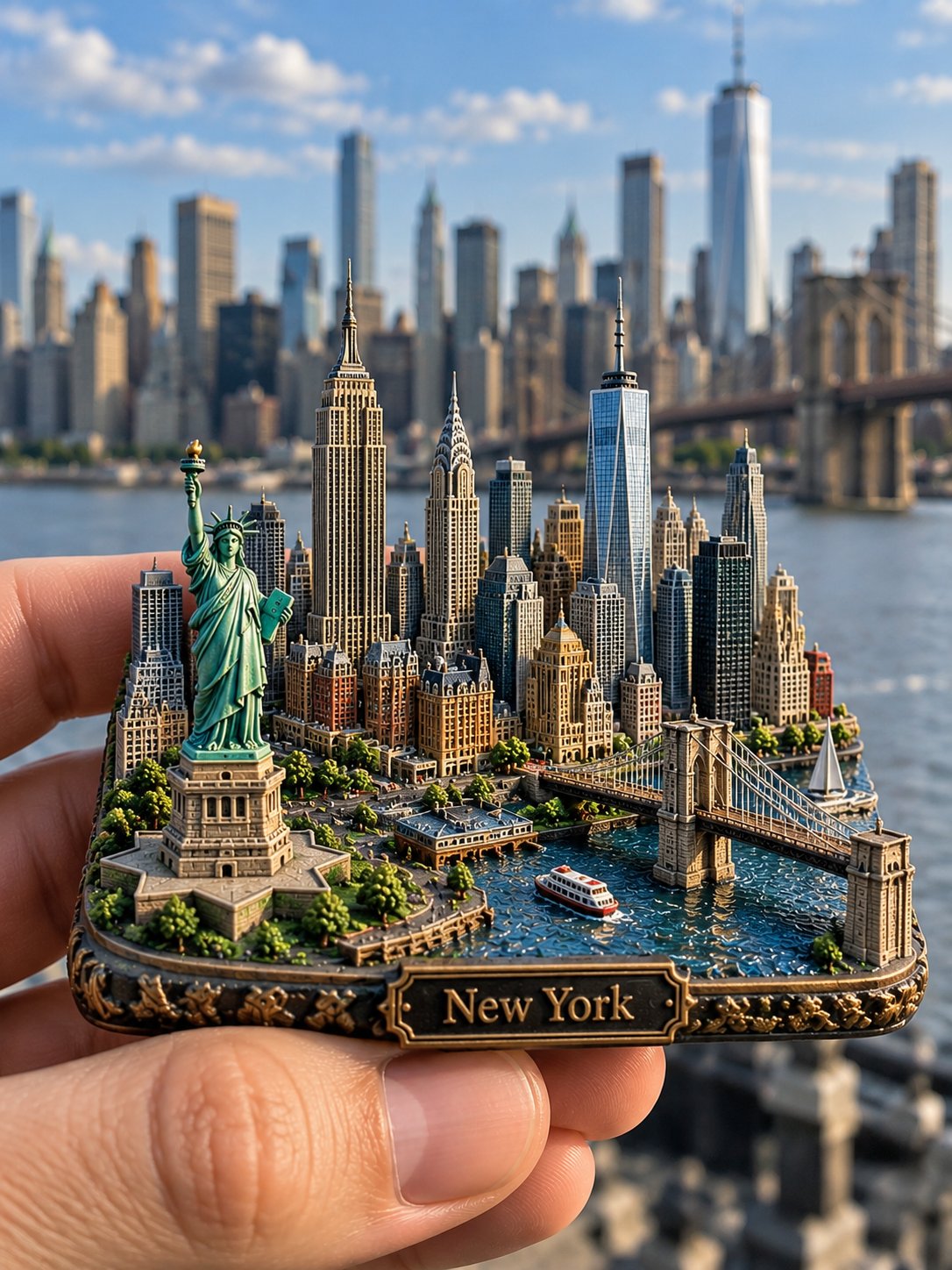
Miniature London Fridge Magnet
 GPT Image 2.5OpenAIimage
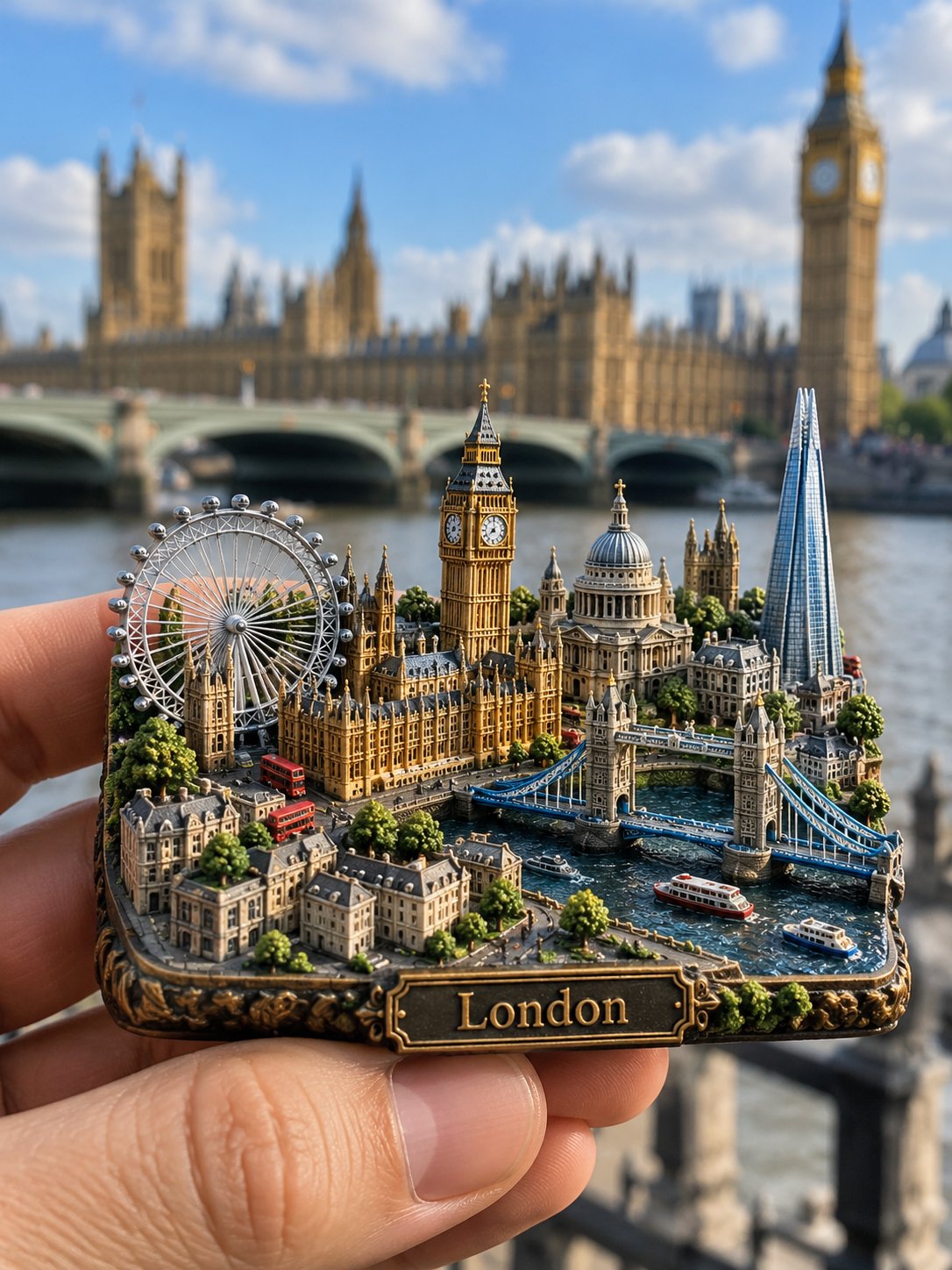
ULTRA-REALISTIC 3D MINIATURE CITY FRIDGE MAGNET Create an ultra-photorealistic product photograph of a premium 3D miniature cityscape refrigerator magnet featuring LONDON. Generate everything entirely from the text description, without requiring any reference image. The main subject is a compact, thick, rectangular refrigerator magnet with softly rounded edges, featuring an intricately sculpted miniature London city built directly into its surface. Include Big Ben, the Palace of Westminster, Tower Bridge, the London Eye, St Paul's Cathedral, The Shard, the River Thames, historic buildings, tiny streets, bridges, trees and landscaped gardens. Arrange the landmarks together in a dense, beautifully layered architectural composition, preserving their recognizable real-world designs and proportions. The miniature should have extraordinary physical depth, realistic architectural textures, tiny windows, detailed rooftops, stone facades and elegant antique bronze and golden metallic accents. Add a small engraved metal nameplate reading "London" along the front edge. A realistic human hand gently holds the magnet close to the camera, showcasing its intricate miniature craftsmanship. In the background, show the actual Big Ben and Westminster architecture, softly blurred but recognizable, creating a beautiful contrast between the real city and its miniature recreation. Professional travel souvenir photography, natural daylight, realistic shadows, macro-level detail, shallow depth of field, authentic materials, cinematic composition, DSLR photography and exceptional photorealism. The final result must look like a real, physically manufactured miniature city refrigerator magnet, not an illustration, poster or digitally floating city. Aspect ratio: 3:4, vertical composition.
Details
- Type
- AI Image Prompts
- Aspect Ratio
- 3:4
- Updated
- Nov 1, 2026
How to use this prompt
- 1Copy the full prompt with the copy button above.
- 2Open GPT Image 2.5 by OpenAI, or any image generator with a similar style range.
- 3Paste the prompt, then swap the subject and style keywords to match your idea.
- 4Match the example's settings (3:4 · Product Photography · Architecture · 3D Render), then iterate — small wording changes shift the output a lot.
Frequently asked questions
Which AI model generated this image?
This image was generated with GPT Image 2.5 by OpenAI. The prompt on this page is the exact text used to create it.
What settings does this prompt use?
The example was generated with GPT Image 2.5 using: 3:4 · Product Photography · Architecture · 3D Render. Reusing these settings gives the closest match.
How do I get similar results?
Copy the prompt as-is first, then replace only the subject while keeping the style, lighting, and composition keywords. Generate a few variations — outputs differ between runs.
Can I modify this prompt?
Yes. Prompts work best as starting points — adjust descriptors, aspect ratio, or style tags to make the output your own.