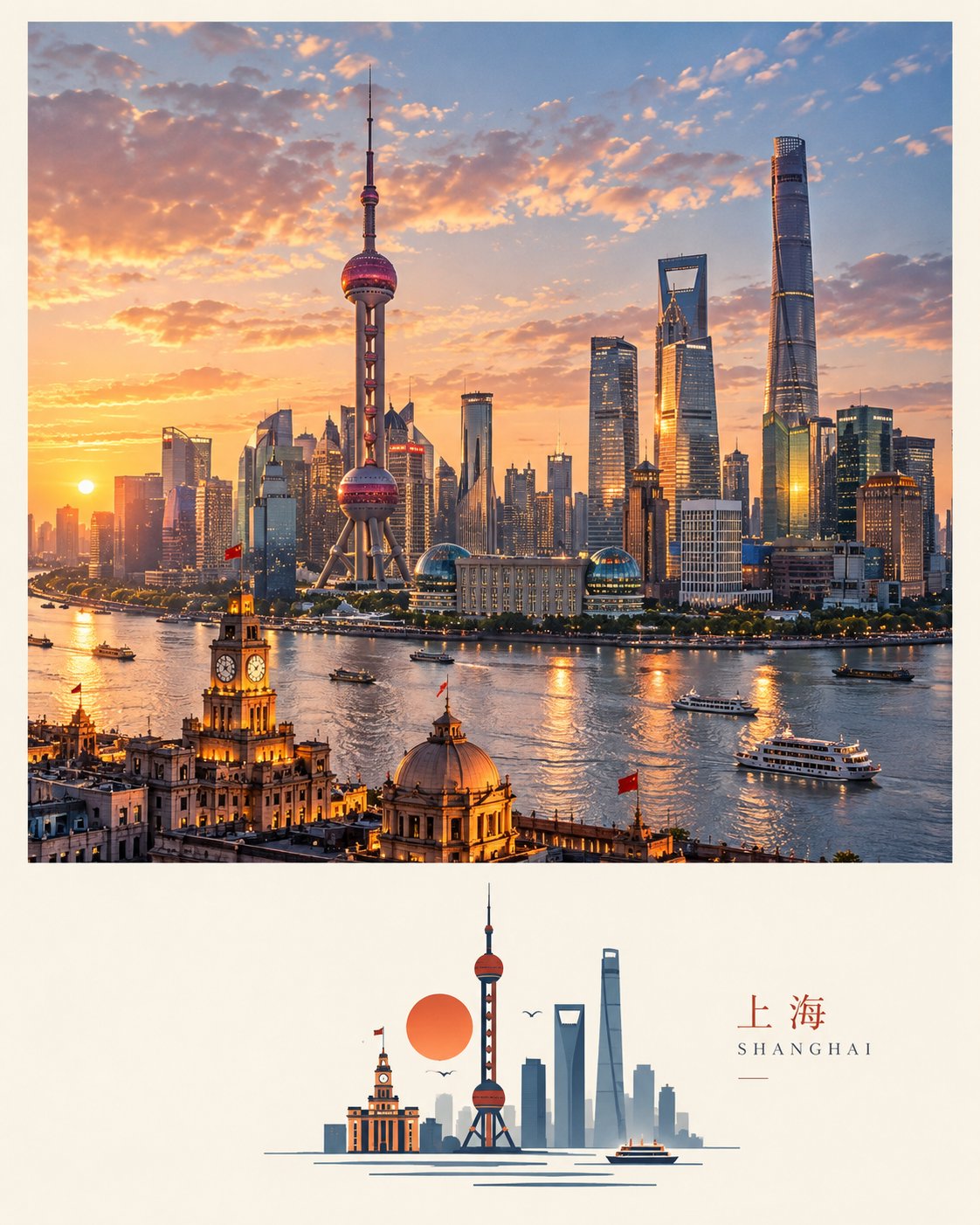
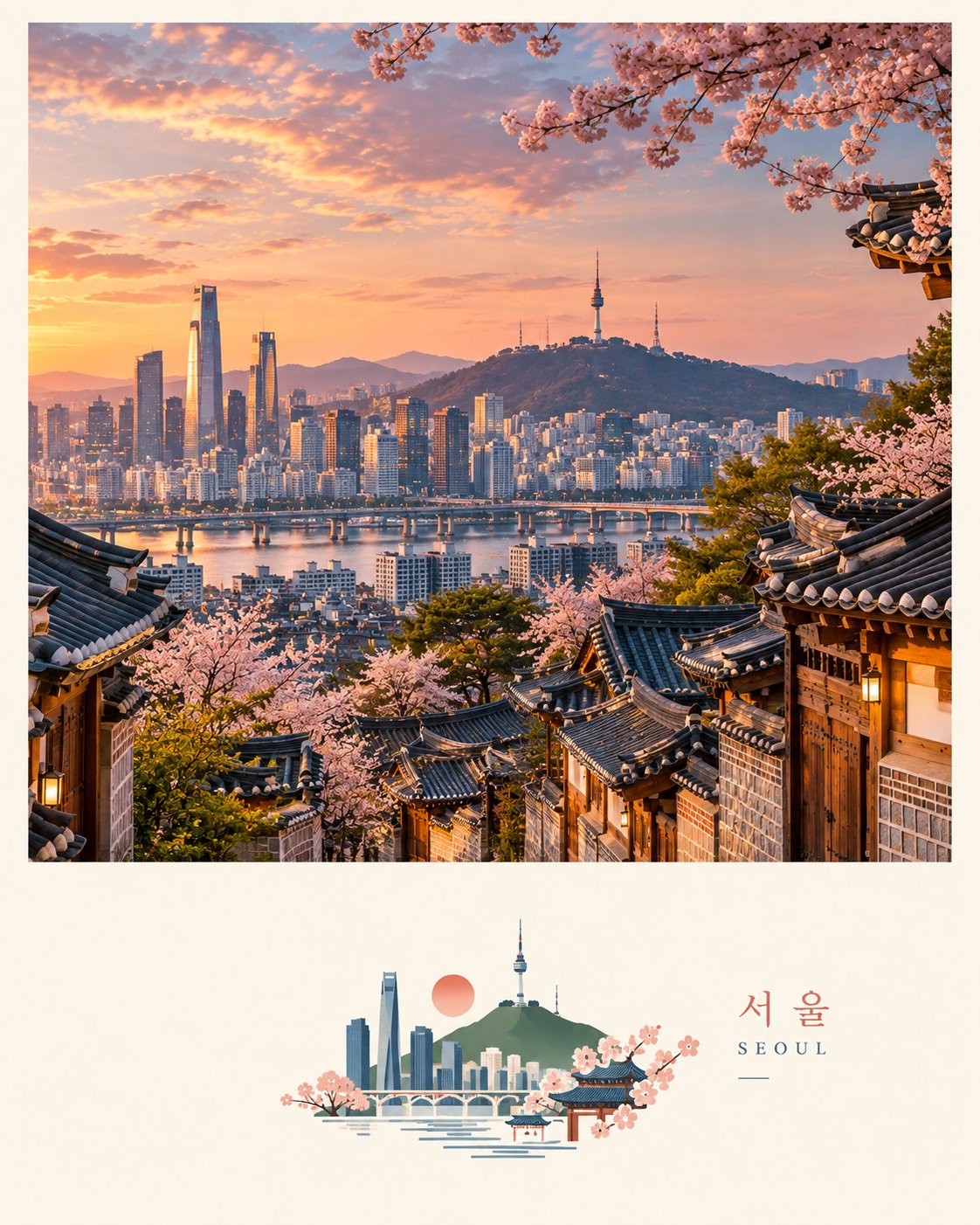
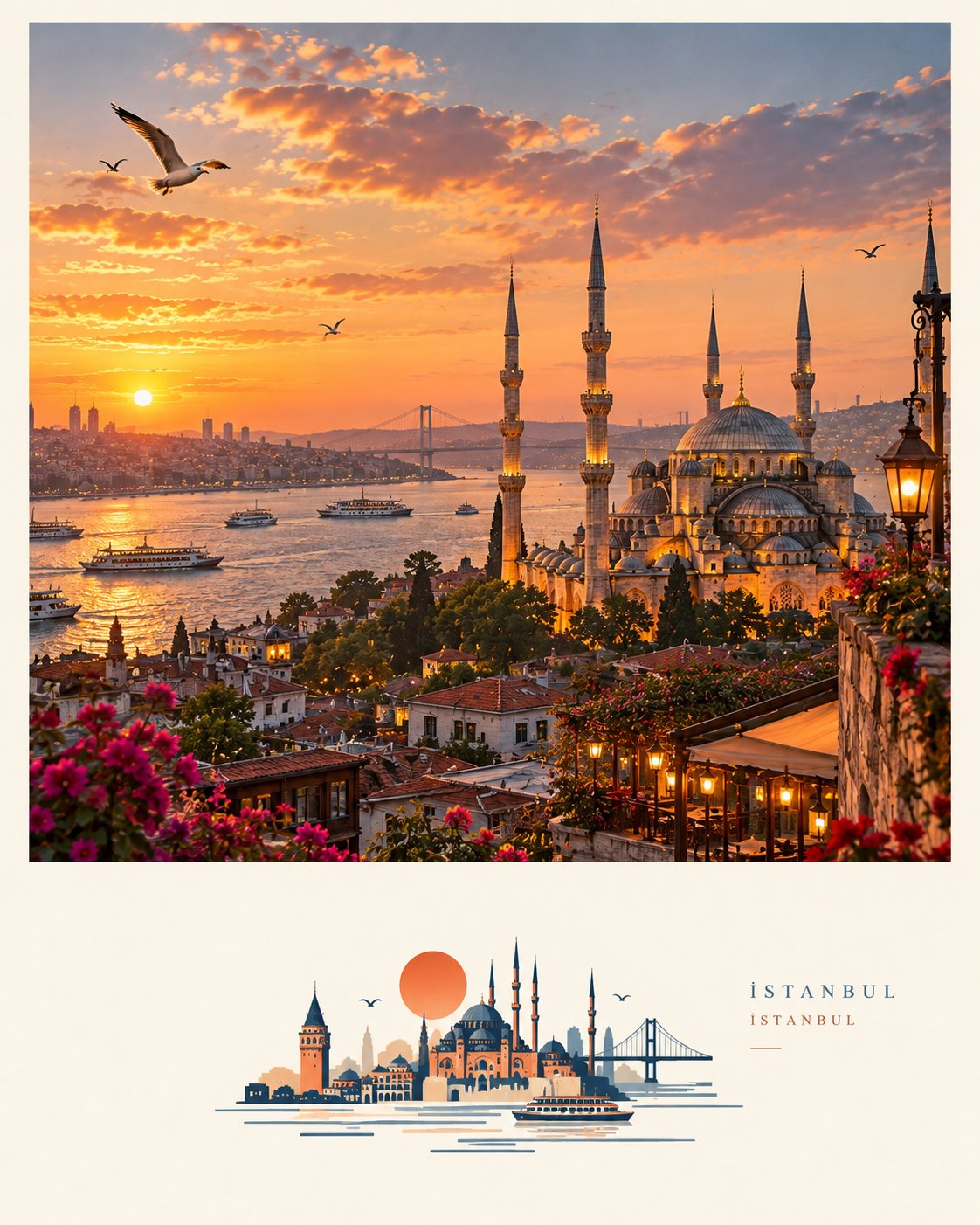
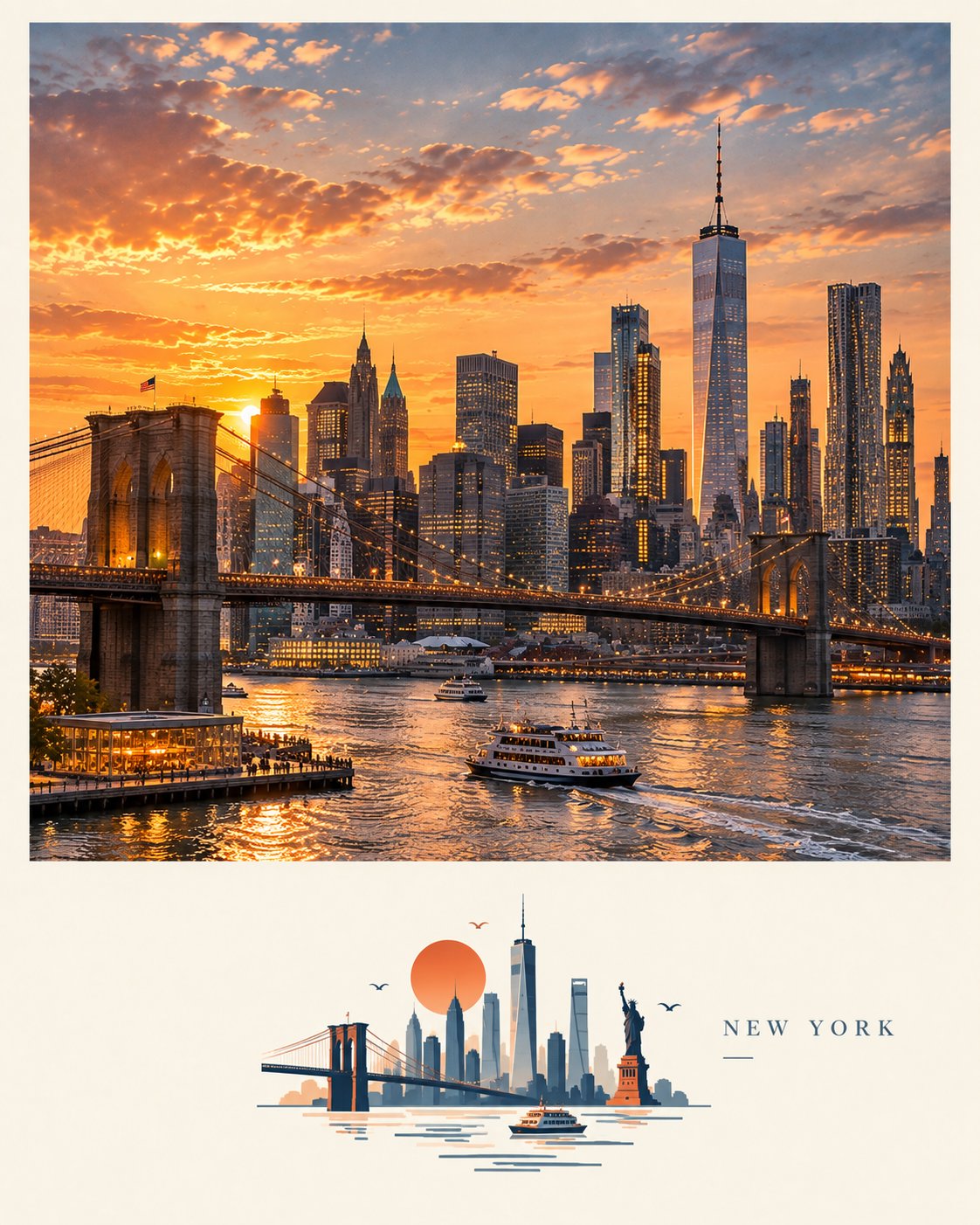
Editorial Travel Art with Geometric Vignette
 GPT Image 2.5OpenAIimage
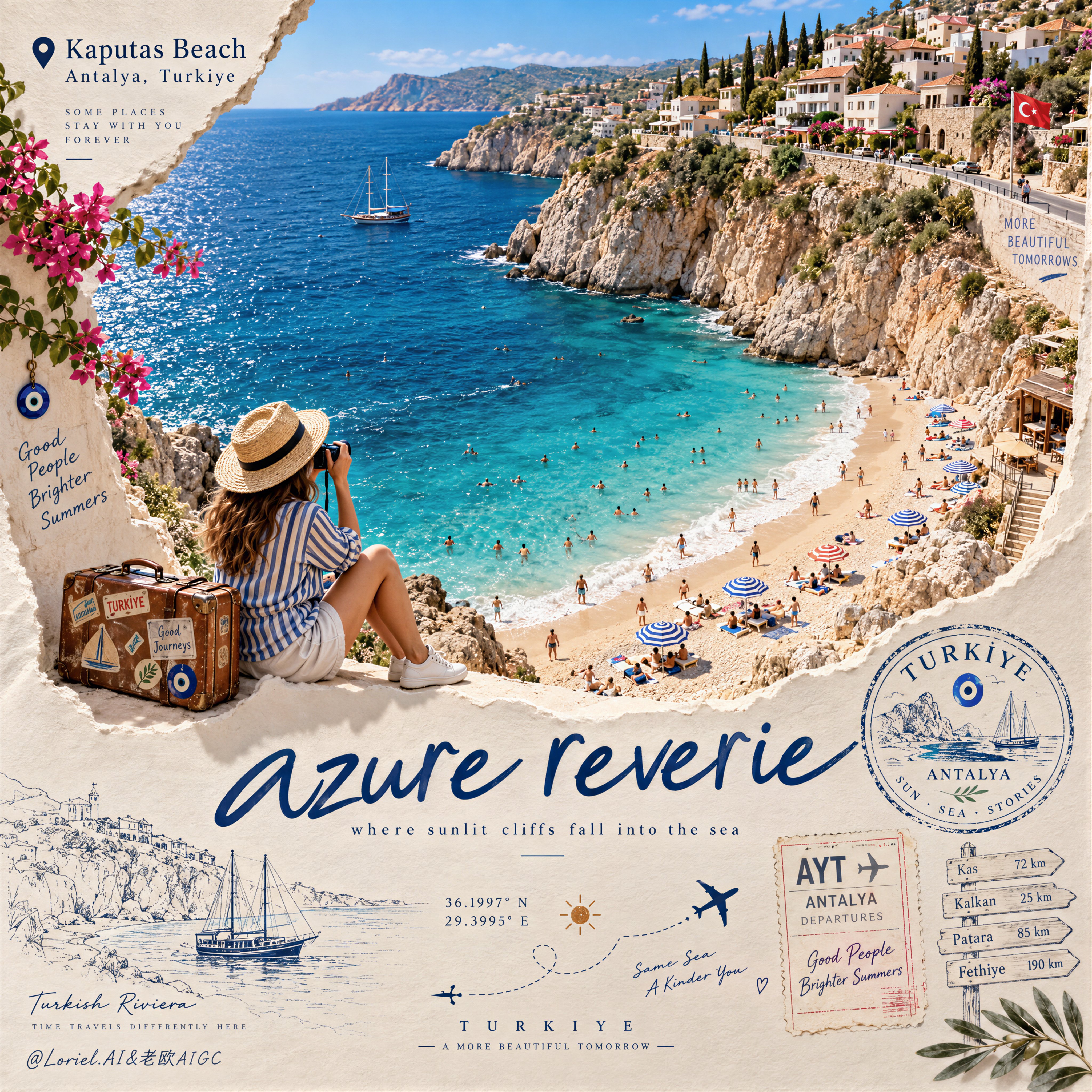
Create a premium 4:5 vertical editorial travel artwork for [COUNTRY / CITY / LOCATION / SUBJECT]. TEXT-TO-IMAGE ONLY — generate the entire composition creatively from [COUNTRY / CITY / LOCATION / SUBJECT] alone. No reference image required. CORE CONCEPT Create a realistic upper scene representing [COUNTRY / CITY / LOCATION / SUBJECT], paired with a small Minimal Geometric Graphic Vignette in the lower section. The lower artwork should visually echo the main scene without literally reproducing it. GRAPHIC VIGNETTE Automatically identify the 2–5 strongest visual memory points of [COUNTRY / CITY / LOCATION / SUBJECT]—its most recognizable silhouette, movement, posture, structure, object, or narrative relationship. Remove everything unnecessary and reconstruct these elements using simple geometric forms, clean silhouettes, solid color blocks, and a few carefully layered shapes. The vignette should remain small and refined, never attempting to recreate the entire scene. It may be slightly off-center, edge-aligned, floating, partially cropped, or asymmetrically positioned according to the visual weight of the subject. NEGATIVE SPACE Give the geometric artwork generous surrounding whitespace. Treat negative space as an essential design element, using scale contrast, positive/negative shapes, spacing, clustering, and asymmetrical balance to create a sophisticated editorial rhythm. COLOR Derive a restrained 2–4 color palette from the visual identity of [COUNTRY / CITY / LOCATION / SUBJECT]. Extract meaningful colors associated with the subject, environment, materials, season, atmosphere, clothing, architecture, vegetation, water, or food, then simplify and slightly brighten them into clean graphic colors. Use a very pale, soft background close to white. Avoid muddy neutrals, unnecessary muted palettes, fluorescent colors, or decorative colors unrelated to the subject. STYLE Keep the vignette small, simple, precise, and highly recognizable. Use professional graphic-design language rather than realistic volume, complex textures, or cartoon styling. Whether the subject is a person, building, animal, plant, object, vehicle, or landscape, transform it into an elegant spot illustration with strong visual identity and minimal geometry. TYPOGRAPHY Add only a very small amount of restrained editorial text if appropriate. Derive a short word or phrase from the destination, subject, action, mood, or visual metaphor. Keep it subtle and integrated into the surrounding negative space. FINAL AESTHETIC Minimal geometric graphic design × editorial spot illustration × contemporary travel art × intelligent negative space × semantic color palette. The result should feel refined, modern, playful, highly intentional, and collectible—not like a photo tracing or ordinary cartoon. Avoid photorealistic lower artwork, literal photo recreation, excessive detail, complex shading, gradients, 3D rendering, oversized graphics, clutter, decorative colors, generic icons, excessive typography, logos, watermarks, or filled-in backgrounds. FORMAT: 4:5 vertical, premium editorial composition, small geometric vignette with generous negative space.
Details
- Type
- AI Image Prompts
- Aspect Ratio
- 561:701
- Updated
- Sep 29, 2026
Category
How to use this prompt
- 1Copy the full prompt with the copy button above.
- 2Open GPT Image 2.5 by OpenAI, or any image generator with a similar style range.
- 3Paste the prompt, then swap the subject and style keywords to match your idea.
- 4Match the example's settings (561:701 · Poster · Realistic · Minimalist), then iterate — small wording changes shift the output a lot.
Frequently asked questions
Which AI model generated this image?
This image was generated with GPT Image 2.5 by OpenAI. The prompt on this page is the exact text used to create it.
What settings does this prompt use?
The example was generated with GPT Image 2.5 using: 561:701 · Poster · Realistic · Minimalist. Reusing these settings gives the closest match.
How do I get similar results?
Copy the prompt as-is first, then replace only the subject while keeping the style, lighting, and composition keywords. Generate a few variations — outputs differ between runs.
Can I modify this prompt?
Yes. Prompts work best as starting points — adjust descriptors, aspect ratio, or style tags to make the output your own.
![Create a premium vertical 4:5 editorial travel poster for [COUNTRY], where the outline of the countr — AI image prompt — GPT Image 2.5](https://cdn.ahaprompt.app/harvest-media/import-1789369064970-j9jipe.jpg)
![Create a sophisticated, dreamy editorial magazine cover titled “[COUNTRY NAME] — A COUNTRY IN ONE DR — AI image prompt — GPT Image 2.5](https://cdn.ahaprompt.app/harvest-media/import-1789368946131-xefjx1.jpg)
![Create a premium educational travel poster featuring [STRUCTURE NAME], one of the world’s most famou — AI image prompt — GPT Image 2.5](https://cdn.ahaprompt.app/harvest-media/import-1789369131185-x1iuzs.jpg)
![Create a premium cinematic luxury tourism poster for [COUNTRY / DESTINATION] in a STRICT 4:5 vertica — AI image prompt — GPT Image 2.5](https://cdn.ahaprompt.app/harvest-media/import-1789369001673-dctuvc.jpg)
![Create a premium contemporary editorial art poster for [LOCATION] in a playful Japanese design-ZINE — AI image prompt — GPT Image 2.5](https://cdn.ahaprompt.app/harvest-media/import-1789139846025-v6z310.jpg)