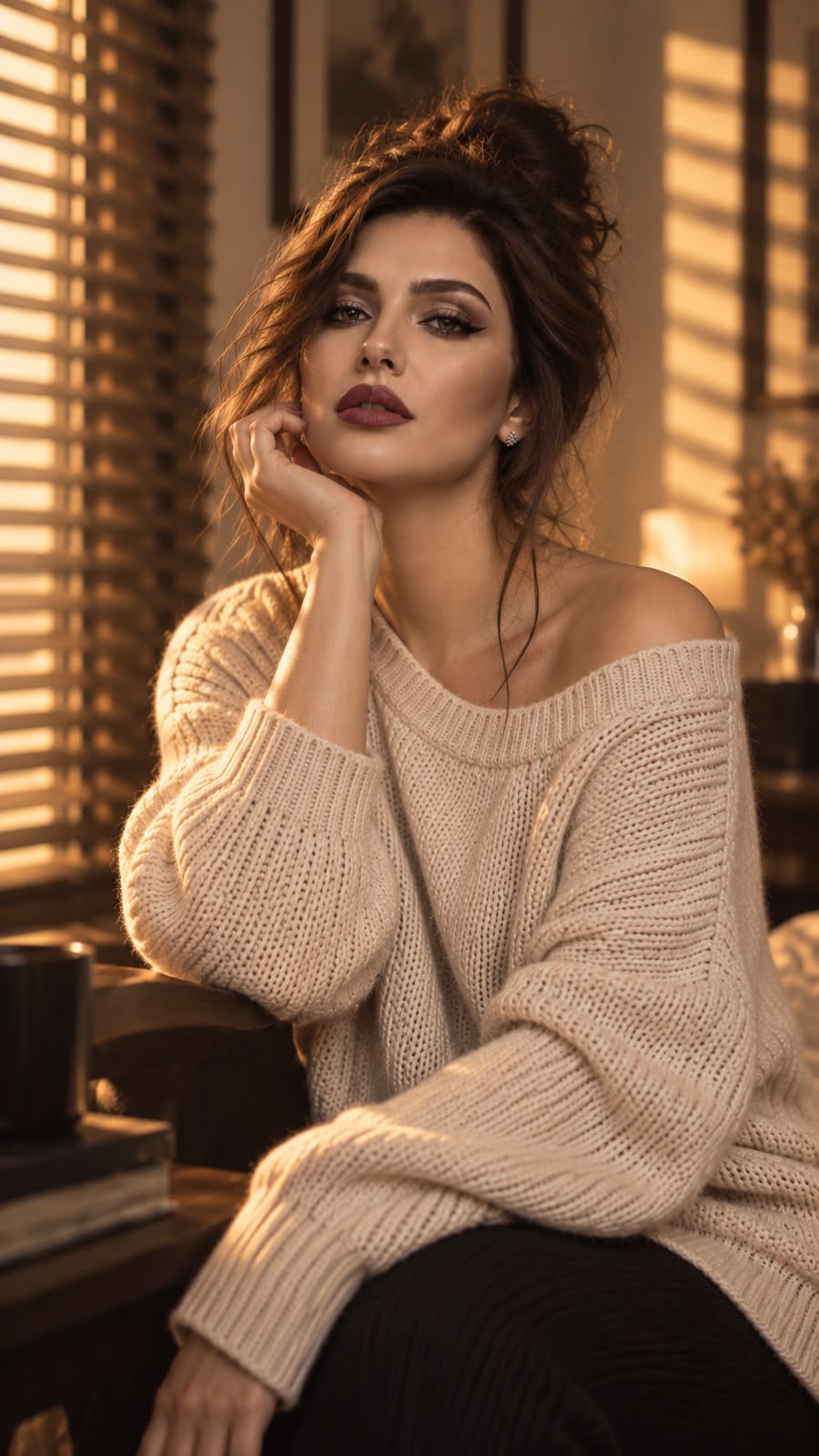
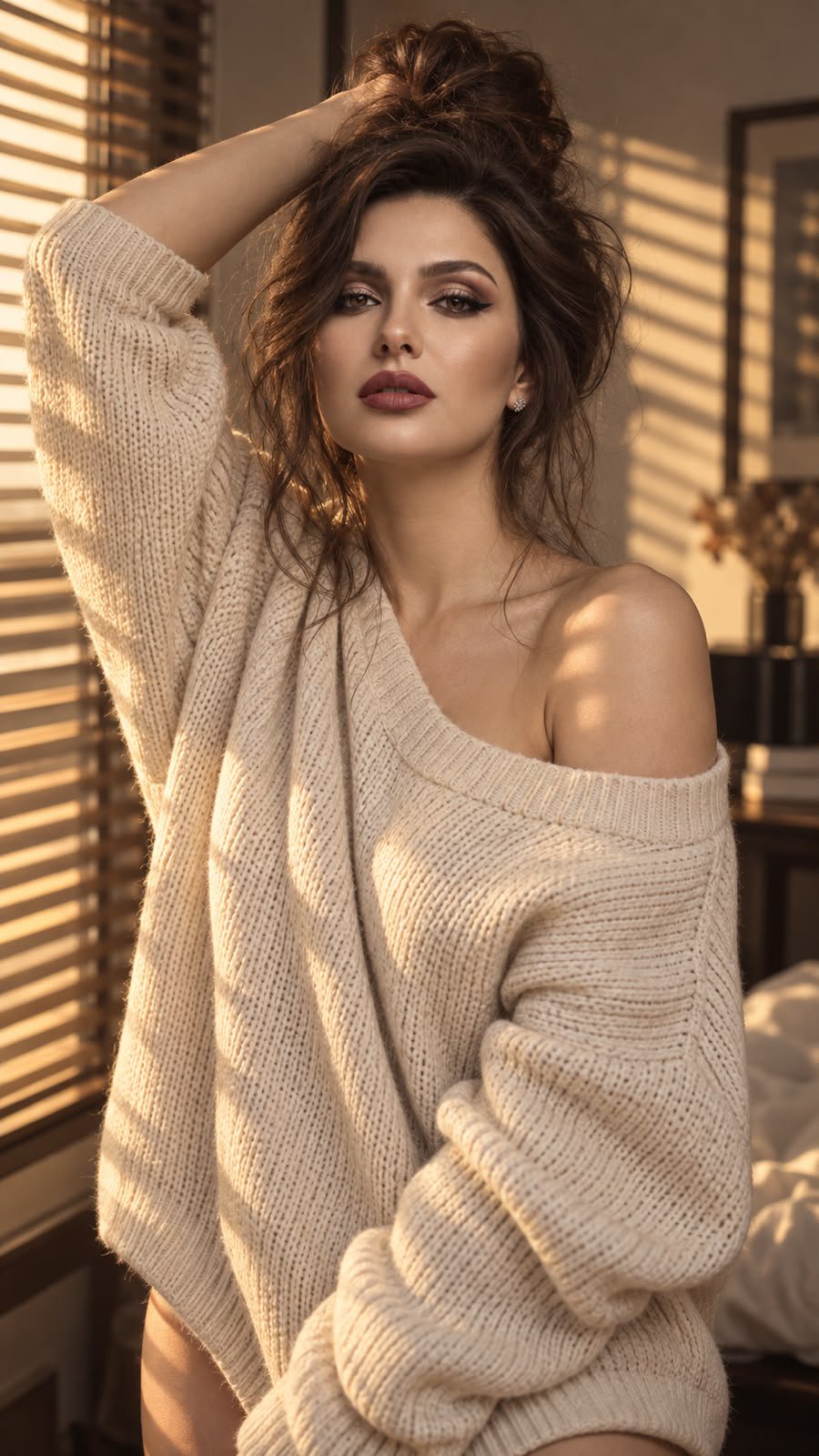
Cinematic Warm Fashion Portrait
 GPT Image 2.5OpenAIimage
Create a highly photorealistic, cinematic fashion portrait using the provided reference image as the identity reference. Keep the woman’s facial identity completely consistent with the reference — including her facial proportions, bone structure, eyes, nose, lips, jawline, complexion, and authentic skin texture. Avoid any facial reshaping, beautification, or artificial retouching. The subject is a clearly adult woman photographed indoors in soft, warm evening light. She wears a loose, oversized cream-toned knitted sweater that naturally falls slightly off one shoulder, creating an elegant and relaxed editorial look. Her deep brown hair is gathered into a casual, imperfect high bun, with wispy strands naturally escaping around her temples and cheeks. She stands in a relaxed, confident pose with one arm lifted overhead and her hand resting naturally against her hair. Her gaze is fixed on the camera, with a composed expression that feels subtly alluring without appearing exaggerated. Her makeup is sophisticated and understated: softly blended taupe-nude eyeshadow, precise black eyeliner, naturally defined eyebrows, a gentle touch of warm blush, and rich burgundy-colored lipstick. Golden sunlight enters through partially closed window blinds, casting delicate horizontal bands of illumination and shadow across the background, sweater, and parts of her figure. Use a warm palette of ivory, beige, caramel, and soft brown tones. The atmosphere should feel intimate, sophisticated, and reminiscent of a high-end fashion editorial. Capture realistic knitted fabric fibers, individual strands of hair, natural pores, fine facial details, and believable light falloff. Use a shallow depth of field with the subject sharply focused against a softly blurred interior. Cinematic tonal range, subtle film grain, realistic highlights and shadows, natural color rendition, premium fashion-photography aesthetic, full-frame camera look, 85mm portrait lens, wide aperture around f/1.4. Frame the composition vertically in 9:16, with a balanced editorial composition and an authentic photographic feel. The final result should look like a real professional photograph rather than an AI-generated image. Negative prompt: artificial-looking skin, excessive smoothing, beauty filter, facial modification, changed identity, altered proportions, unrealistic eyes, malformed hands, extra fingers, missing fingers, distorted anatomy, CGI appearance, illustration, cartoon styling, oversharpening, motion blur, low facial detail, watermark, captions, text, logos.
Details
- Type
- AI Image Prompts
- Aspect Ratio
- 9:16
- Updated
- Sep 11, 2026
How to use this prompt
- 1Copy the full prompt with the copy button above.
- 2Open GPT Image 2.5 by OpenAI, or any image generator with a similar style range.
- 3Paste the prompt, then swap the subject and style keywords to match your idea.
- 4Match the example's settings (9:16 · Cinematic · Fashion · Portrait), then iterate — small wording changes shift the output a lot.
Frequently asked questions
Which AI model generated this image?
This image was generated with GPT Image 2.5 by OpenAI. The prompt on this page is the exact text used to create it.
What settings does this prompt use?
The example was generated with GPT Image 2.5 using: 9:16 · Cinematic · Fashion · Portrait. Reusing these settings gives the closest match.
How do I get similar results?
Copy the prompt as-is first, then replace only the subject while keeping the style, lighting, and composition keywords. Generate a few variations — outputs differ between runs.
Can I modify this prompt?
Yes. Prompts work best as starting points — adjust descriptors, aspect ratio, or style tags to make the output your own.
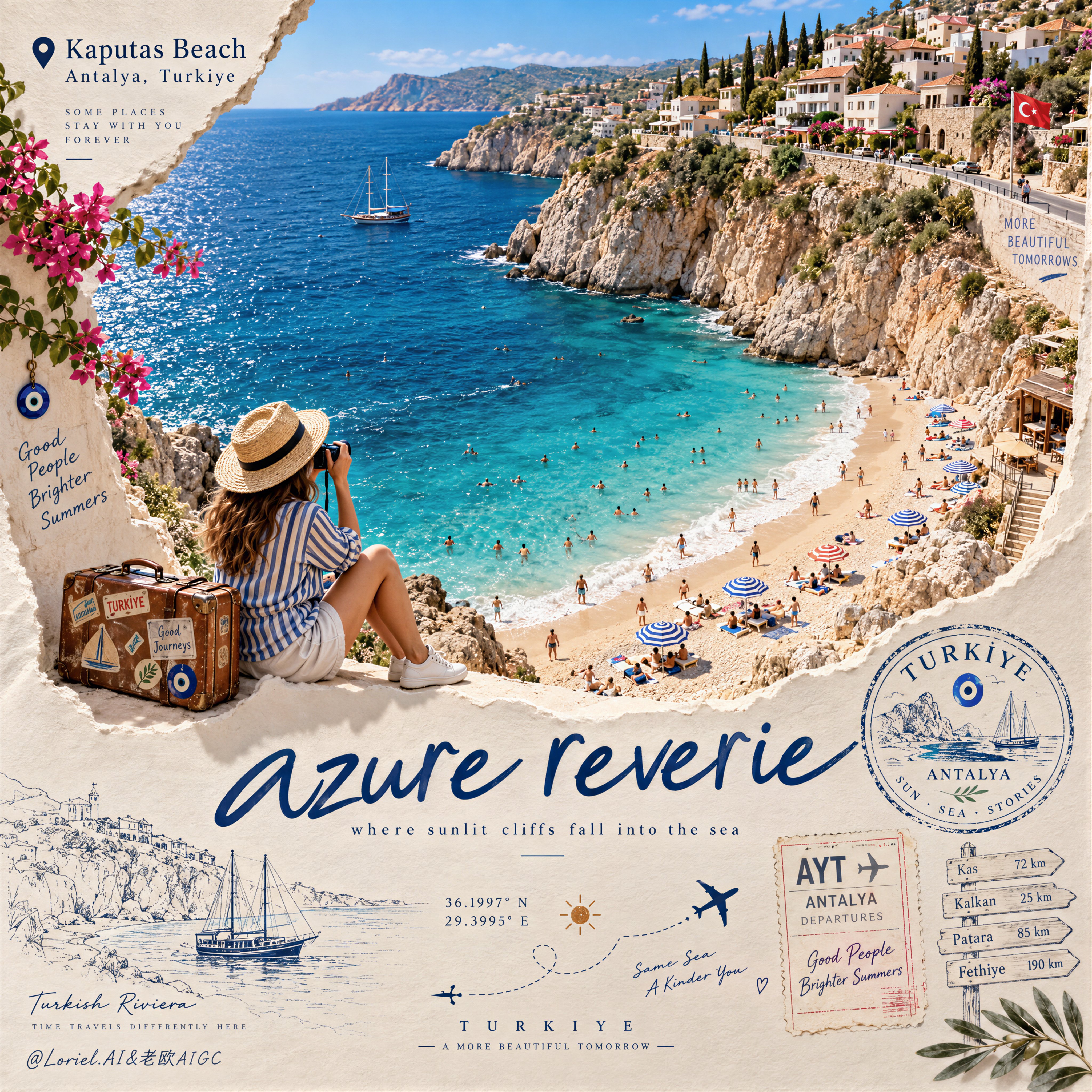
![Create a premium cinematic luxury tourism poster for [COUNTRY / DESTINATION] in a STRICT 4:5 vertica — AI image prompt — GPT Image 2.5](https://cdn.ahaprompt.app/harvest-media/import-1789369001673-dctuvc.jpg)
![Create a premium vintage retro travel poster for [CITY], [COUNTRY] in a strict 4:5 vertical format.
— AI image prompt — GPT Image 2.5](https://cdn.ahaprompt.app/harvest-media/import-1789369143912-5vivkg.jpg)
![Create a premium vertical 4:5 editorial travel poster for [COUNTRY], where the outline of the countr — AI image prompt — GPT Image 2.5](https://cdn.ahaprompt.app/harvest-media/import-1789369064970-j9jipe.jpg)