Cinematic Beauty Triptych Macro Portraits
 GPT Image 2.5OpenAIimage
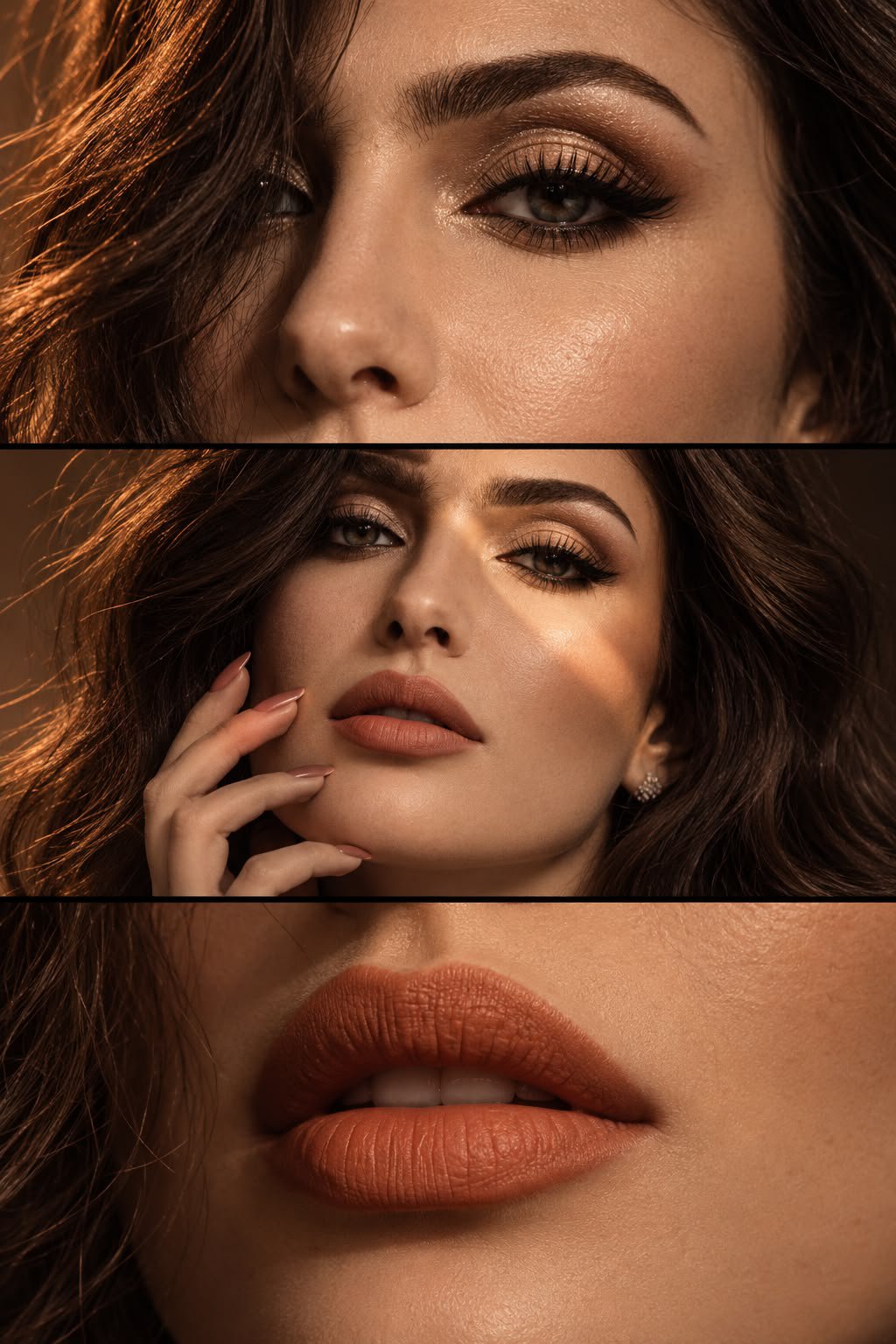
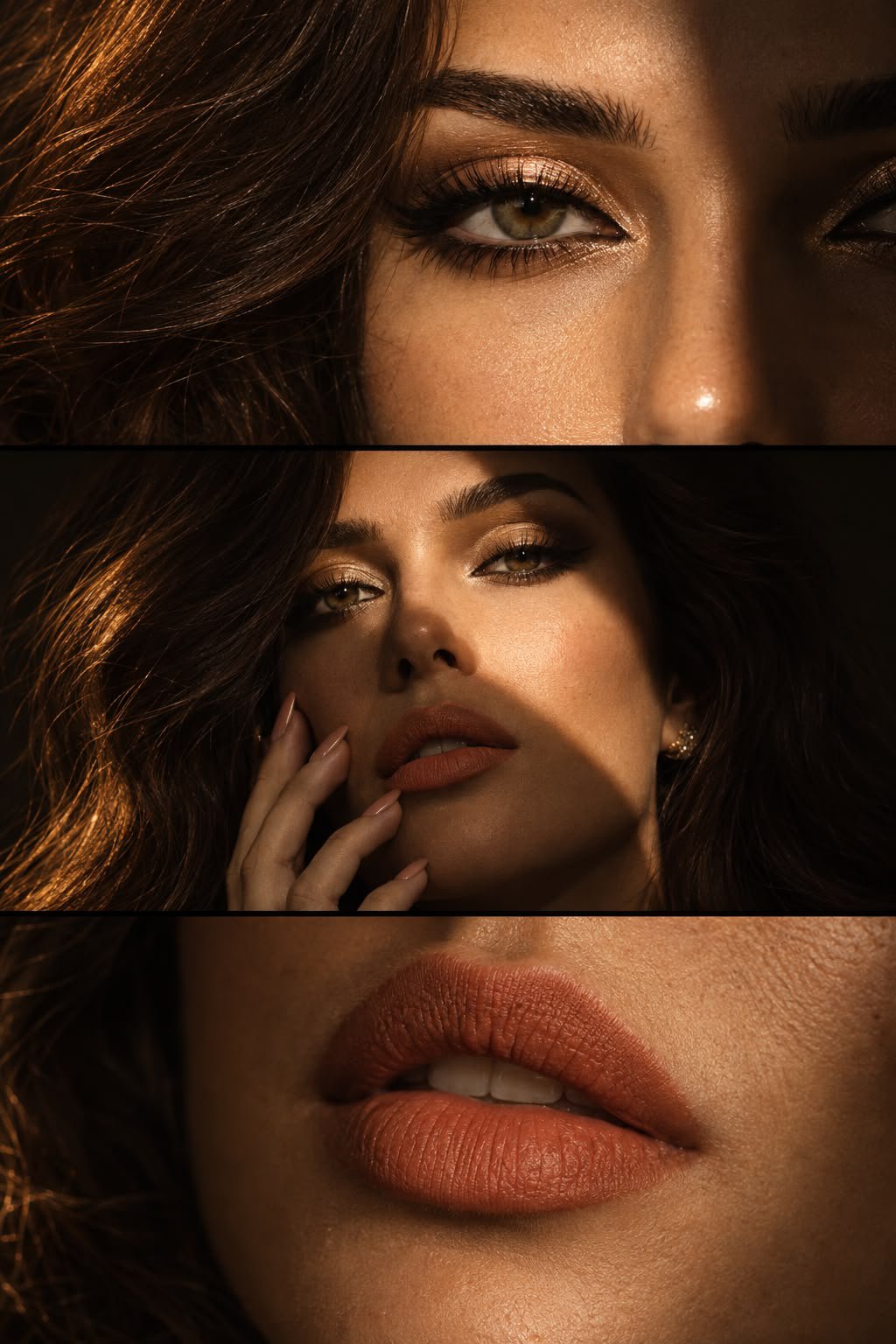
Create a photorealistic, cinematic beauty triptych featuring the same girl from the reference photo, preserving her exact facial identity, eye color, eyebrow shape, nose, lips, skin tone, and natural skin texture. Composition: Three equal horizontal macro portraits stacked vertically, separated by thin black lines, with a luxurious amber-bronze color palette and dramatic shadows. Top panel: One eye gazing directly into the camera, framed by defined brows, long curled lashes, and shimmering golden-bronze eyeshadow. Warm highlights illuminate her cheek and nose, while loose hair catches a subtle reddish-gold glow. The opposite side fades into darkness. Middle panel: Her face slightly tilted, one eye sharply illuminated by a narrow diagonal beam of warm light. Long nude-pink manicured nails gently touch her cheek and near her lips. The remaining face disappears into deep, cinematic shadows. Bottom panel: An extreme close-up of her softly parted lips with matte terracotta-orange lipstick, revealing natural lip creases, delicate skin pores, and a subtle glimpse of her teeth. Lighting & Style: Hard directional light from the upper left, glowing golden highlights, rich bronze tones, deep blacks, and striking chiaroscuro contrast. Ultra-sharp macro details, realistic skin texture, sophisticated luxury beauty editorial, shot on Sony A7R IV with a 100mm macro lens. Maintain perfect facial consistency across all three panels. Vivid warm colors, crisp focus, natural proportions, 8K photorealism, no text, no watermark, no artificial skin smoothing, no AI artifacts.
Details
- Type
- AI Image Prompts
- Aspect Ratio
- 2:3
- Updated
- Oct 24, 2026
How to use this prompt
- 1Copy the full prompt with the copy button above.
- 2Open GPT Image 2.5 by OpenAI, or any image generator with a similar style range.
- 3Paste the prompt, then swap the subject and style keywords to match your idea.
- 4Match the example's settings (2:3 · Macro · Cinematic · Portrait), then iterate — small wording changes shift the output a lot.
Frequently asked questions
Which AI model generated this image?
This image was generated with GPT Image 2.5 by OpenAI. The prompt on this page is the exact text used to create it.
What settings does this prompt use?
The example was generated with GPT Image 2.5 using: 2:3 · Macro · Cinematic · Portrait. Reusing these settings gives the closest match.
How do I get similar results?
Copy the prompt as-is first, then replace only the subject while keeping the style, lighting, and composition keywords. Generate a few variations — outputs differ between runs.
Can I modify this prompt?
Yes. Prompts work best as starting points — adjust descriptors, aspect ratio, or style tags to make the output your own.