LogoAhaPrompt
  • Prompts
  • Featured
  • Models
  • Submit
  • Blog
AhaPromptAhaPrompt

AI Prompts for Images, Video & Audio — Every Model, One Library

Built withLogoNEXTY.DEV
Explore
  • All Prompts
  • Featured Prompts
  • Image Prompts
  • Video Prompts
  • Audio Prompts
  • AI Models
  • Submit a Prompt
  • Blog
Languages
  • English
  • 中文
  • 日本語
  • 한국어

Copyright © 2026 AhaPrompt All rights reserved.

Privacy PolicyTerms of Service
HomeAI Prompt LibraryAI Image PromptsWatercolor Travel Editorial Poster Prompt
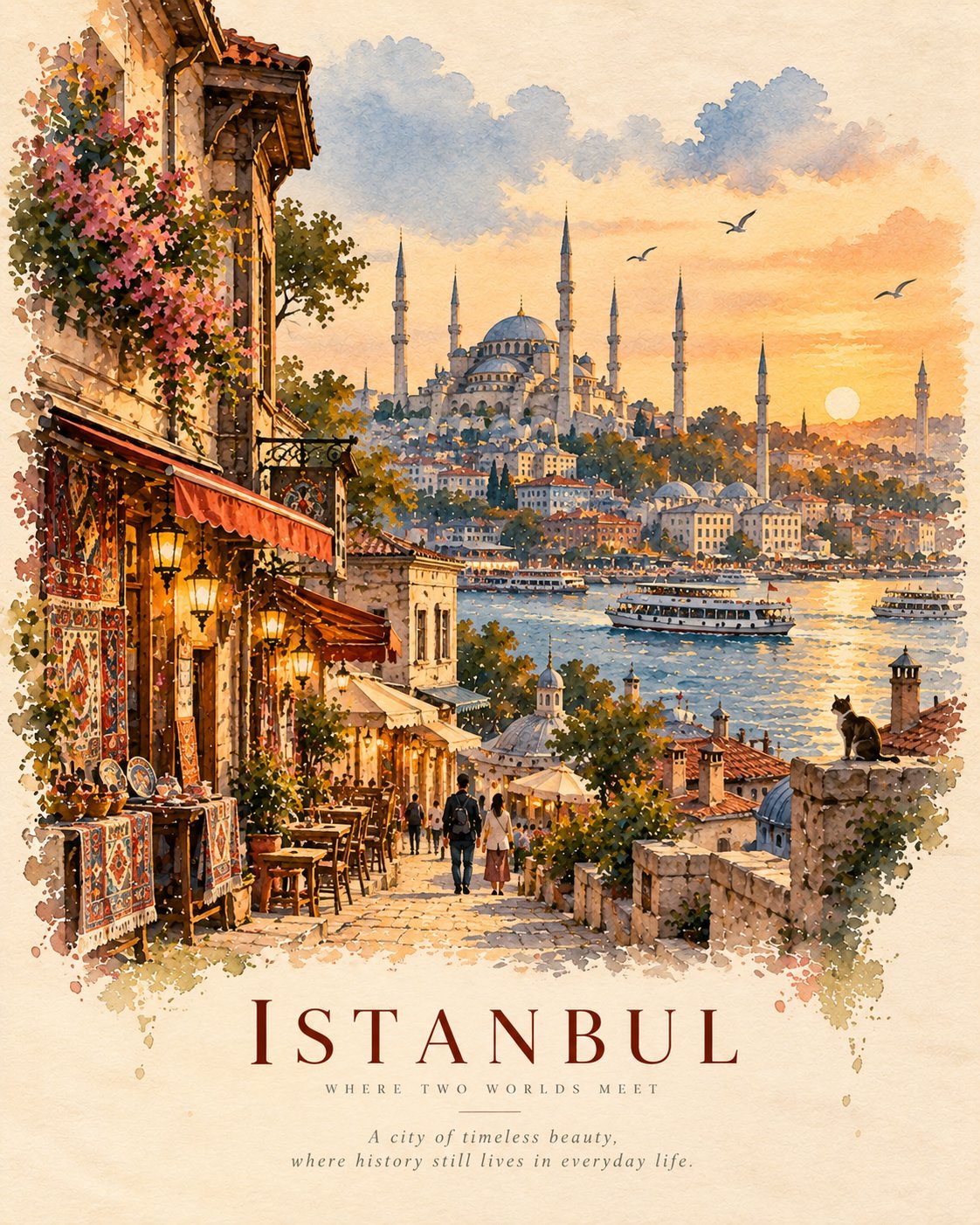
Watercolor Travel Editorial Poster Prompt — AI image prompt — GPT Image 2.5 — Watercolor, Vintage, Landscape - 1

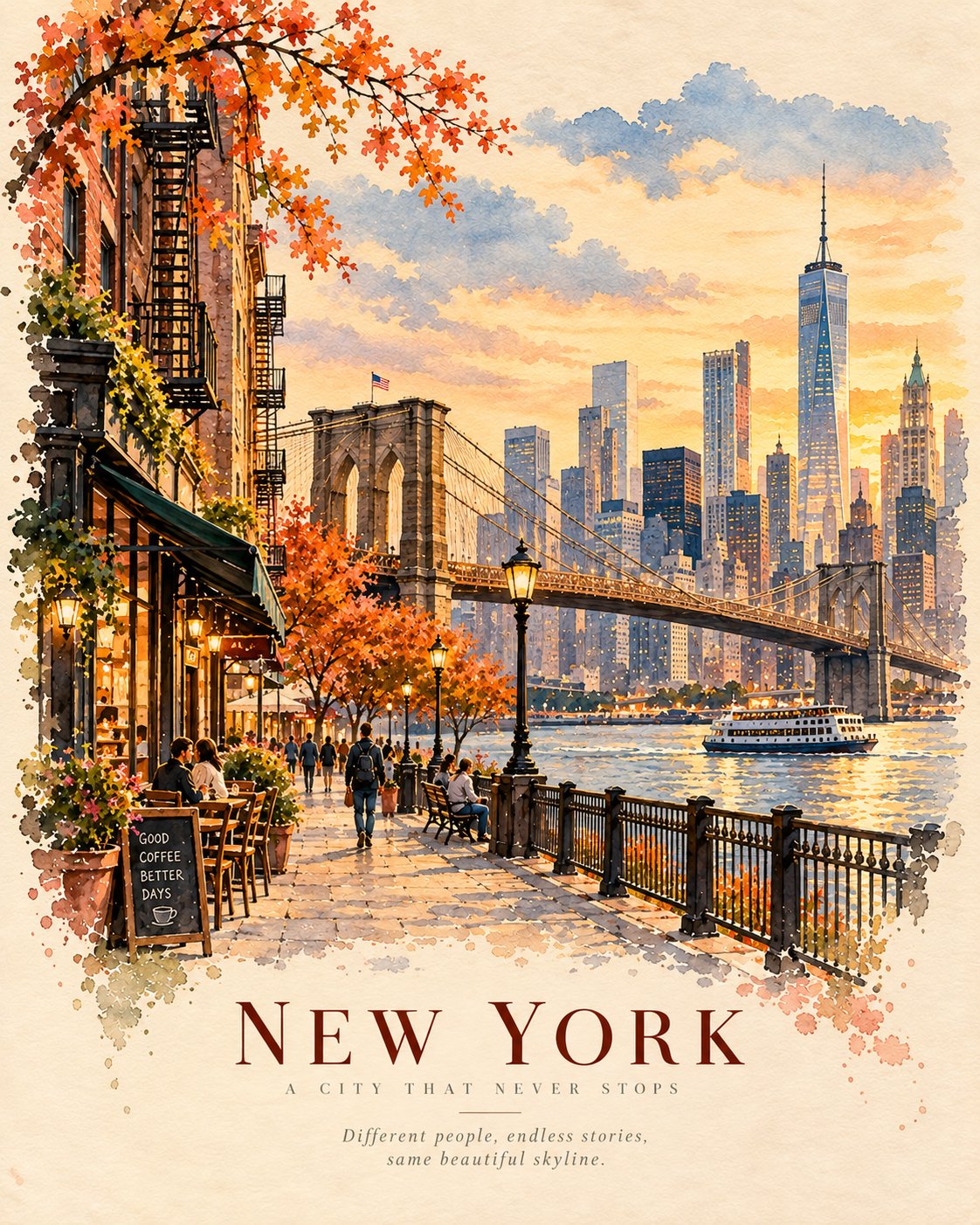
Watercolor Travel Editorial Poster Prompt — AI image prompt — GPT Image 2.5 — Watercolor, Vintage, Landscape - 2
Watercolor Travel Editorial Poster Prompt — AI image prompt — GPT Image 2.5 — Watercolor, Vintage, Landscape - 3
Watercolor Travel Editorial Poster Prompt — AI image prompt — GPT Image 2.5 — Watercolor, Vintage, Landscape - 4

Watercolor Travel Editorial Poster Prompt

OpenAIGPT Image 2.5OpenAIimage

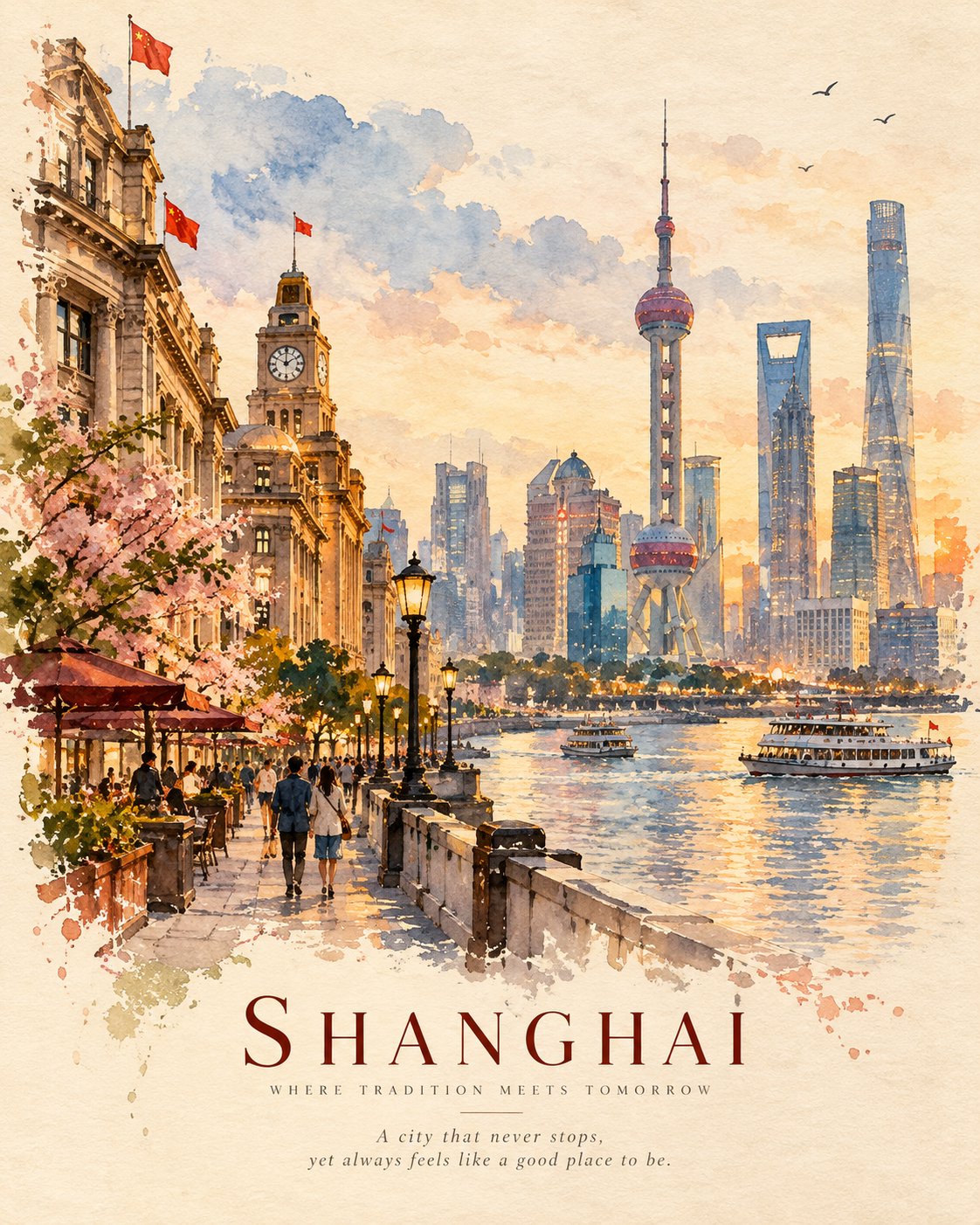
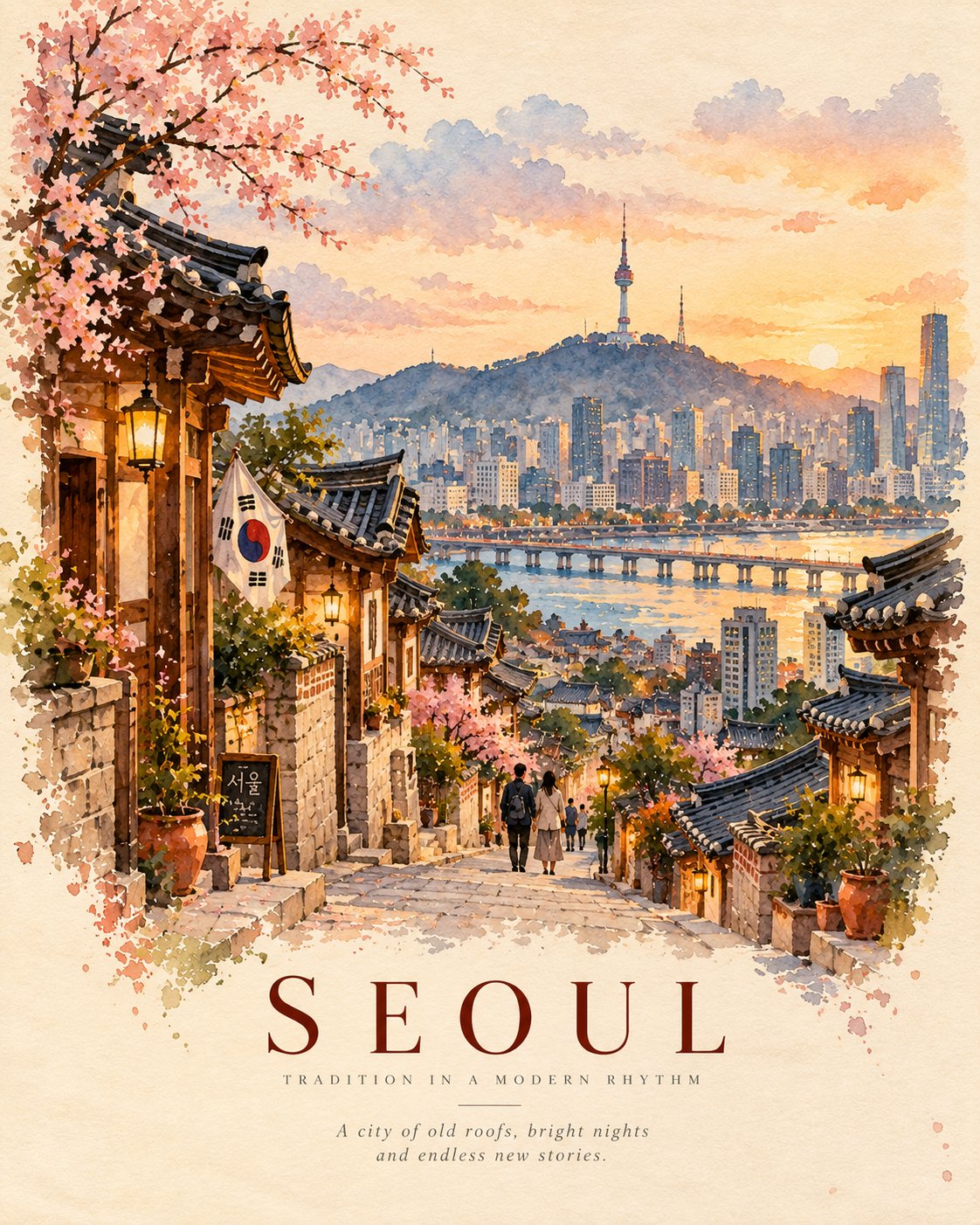
Create a premium 4:5 vertical travel-editorial artwork for [COUNTRY / CITY / LOCATION / SUBJECT]. PURE GENERATION. Invent the complete artwork from the written destination or subject alone. The written destination is the only input. Create every visual element from your own knowledge and imagination. MASTER STYLE LOCK: Hand-painted watercolor on warm cream textured paper. Minimalist travel-editorial poster. Transparent watercolor blended with soft gouache. Soft imperfect brushwork, visible paper grain, organic painted edges, muted natural colors, generous negative space, quiet nostalgic atmosphere, sophisticated handcrafted art-book quality. Flat illustrated artwork with painterly depth. No 3D rendering, no glossy finish, no cartoon style, no digital photorealism. DESTINATION INTERPRETATION: Automatically identify the strongest visual identity of [COUNTRY / CITY / LOCATION / SUBJECT]. Select the most recognizable landmark, architecture, landscape, street character, transportation, vegetation, local objects, or cultural details that naturally belong to the destination. Create ONE unified scene rather than a collection of separate elements. COMPOSITION: Use an elegant vertical editorial composition with one dominant focal point and several smaller supporting details. Establish clear foreground, middle ground, and background layers using watercolor washes and simplified shapes. Leave generous warm cream space around important forms. Keep the silhouette clean and immediately recognizable. Avoid overcrowding. LOCAL STORY: Show an authentic everyday moment connected to the destination. Include subtle human activity only when it strengthens the story: walking, cycling, sitting, shopping, traveling, eating, working, or simply enjoying the surroundings. Favor ordinary local atmosphere over generic tourism imagery. LIGHT & ATMOSPHERE: Automatically choose lighting that suits the destination and scene: soft morning light, warm afternoon glow, misty weather, gentle sunset, or quiet evening illumination. Use atmospheric watercolor washes to create depth while maintaining a calm, delicate feeling. COLOR LANGUAGE: Build the palette naturally from [COUNTRY / CITY / LOCATION / SUBJECT]. Use warm cream, muted ochre, terracotta, dusty blue, soft green, faded red, warm grey, and subtle golden tones where appropriate. Keep the colors slightly desaturated, harmonious, and naturally layered. TYPOGRAPHY: At the bottom of the artwork, add three restrained editorial text elements: [LOCATION NAME] [SHORT DESTINATION-INSPIRED SUBTITLE] [SHORT WARM POETIC SENTENCE] Use elegant minimal typography with generous spacing. Keep it secondary to the artwork and ensure all wording is clean and correctly spelled. FINAL AESTHETIC: Premium handmade watercolor travel poster × contemporary editorial illustration × nostalgic travel memory × quiet everyday life × sophisticated art-book design. The finished artwork should feel like a beautifully remembered place painted by hand: atmospheric, personal, refined, understated, and unmistakably connected to [COUNTRY / CITY / LOCATION / SUBJECT]. AVOID: Any editing workflow, source material, references, existing compositions, copied imagery, collage construction, unrelated landmarks, generic scenery, excessive detail, oversaturated colors, harsh outlines, glossy digital effects, CGI, 3D objects, cartoon characters, clutter, excessive typography, logos, watermarks, interface elements. FORMAT: 4:5 vertical portrait composition, warm cream paper, handcrafted watercolor texture, generous negative space, premium print-quality finish.

Details
Type
AI Image Prompts
Aspect Ratio
561:701
Updated
Oct 9, 2026
Category
WatercolorVintageLandscape
Source

How to use this prompt

  1. 1Copy the full prompt with the copy button above.
  2. 2Open GPT Image 2.5 by OpenAI, or any image generator with a similar style range.
  3. 3Paste the prompt, then swap the subject and style keywords to match your idea.
  4. 4Match the example's settings (561:701 · Watercolor · Vintage · Landscape), then iterate — small wording changes shift the output a lot.

Frequently asked questions

Which AI model generated this image?

This image was generated with GPT Image 2.5 by OpenAI. The prompt on this page is the exact text used to create it.

What settings does this prompt use?

The example was generated with GPT Image 2.5 using: 561:701 · Watercolor · Vintage · Landscape. Reusing these settings gives the closest match.

How do I get similar results?

Copy the prompt as-is first, then replace only the subject while keeping the style, lighting, and composition keywords. Generate a few variations — outputs differ between runs.

Can I modify this prompt?

Yes. Prompts work best as starting points — adjust descriptors, aspect ratio, or style tags to make the output your own.
More GPT Image 2.5 prompts

{

  "user_inputs": {
    "pose": "{{USER_DEFINED_POSE}}",
    "background": "{{USER_DEFINED_BACKGRO — AI image prompt — GPT Image 2.5
OpenAIGPT Image 2.5
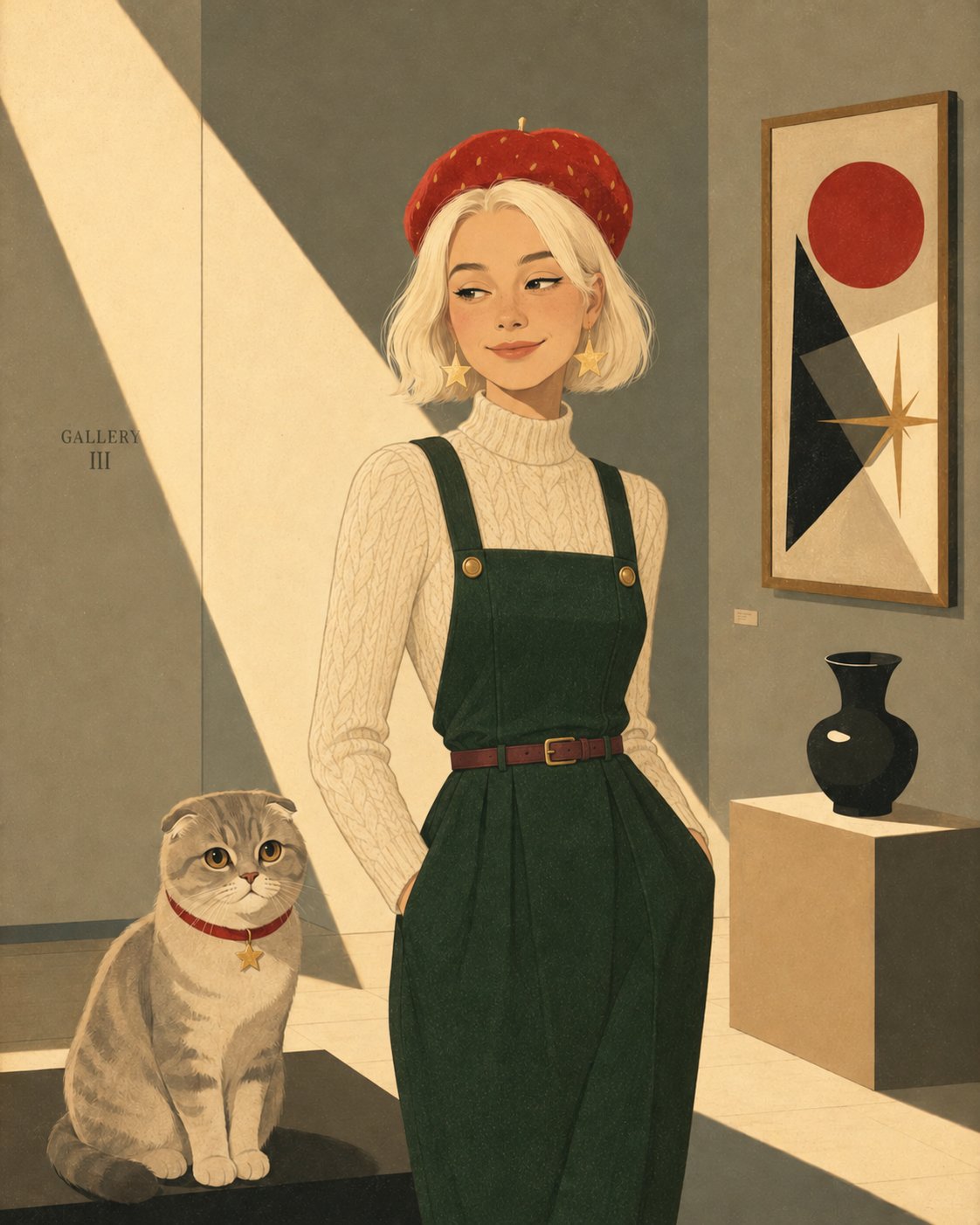
{ "user_inputs": { "pose": "{{USER_DEFINED_POSE}}", "background": "{{USER_DEFINED_BACKGROUND}}", "pet": "{{USER_DEFINED_PET}}" }, "generation_settings": { "aspect_ratio": "3:4", "orientation": "portrait", "output_type": "illustration", "quality": "high", "style_consistency": "strict" }, "core_prompt": { "objective": "Create a beautifully composed, nostalgic fashion illustration matching the exact visual language of the provided reference images. Every output must look like part of the same illustrated editorial collection, with only the pose, environment, and pet determined by user input.", "subject": { "identity": "A stylish young adult woman illustrated in a sophisticated contemporary vintage aesthetic.", "appearance": "Expressive face, naturally proportioned facial features, softly defined eyes, delicate nose, subtle blush, understated makeup, and a relaxed, confident expression.", "hair": "Attractive, naturally flowing hairstyle with softly rendered strands, gentle volume, and a silhouette that complements the overall outfit.", "fashion": "Tasteful, contemporary casual-chic clothing inspired by vintage European street style. Layered knitwear, oversized sweaters, ribbed turtlenecks, tailored trousers, dungarees, cropped jackets, berets, beanies, canvas sneakers, and understated accessories.", "wardrobe_rules": "Generate a coordinated outfit appropriate to the scene. Use rich forest green, cream, warm beige, muted olive, rust red, burgundy, and other harmonious earthy colors. Clothing should have convincing folds, visible fabric texture, clean silhouettes, and carefully illustrated seams.", "accessories": "Optional gold earrings, subtle necklaces, belts, hats, glasses, or small handbags when appropriate to the outfit.", "character_consistency": "Maintain the same general illustration quality, facial sophistication, anatomy, and fashion sensibility across generations without forcing an identical hairstyle, outfit, or facial appearance." }, "art_direction": { "medium": "Premium hand-painted digital illustration with the appearance of traditional gouache, colored pencil, and lightly textured vintage editorial artwork.", "influences": "European lifestyle illustration, retro fashion magazine art, mid-century interior illustration, contemporary character concept art.", "linework": "Fine, controlled, softly visible outlines. Avoid thick cartoon contours, harsh ink strokes, and exaggerated anime linework.", "shading": "Painterly tonal transitions, soft edge control, subtle ambient occlusion, delicate facial shading, and restrained highlights.", "texture": "Fine paper grain, subtle pigment irregularities, lightly distressed printed texture, delicate canvas-like surface, and restrained analog film grain.", "detail_level": "Highly refined clothing textures, expressive facial details, carefully rendered hands, believable anatomy, and thoughtfully illustrated environmental objects.", "finish": "Polished, sophisticated, cohesive, tactile, and unmistakably illustrated rather than photographic or three-dimensional." }, "pose": { "instruction": "Follow the user-defined pose exactly.", "input": "{{USER_DEFINED_POSE}}", "requirements": [ "Respect the requested body orientation and posture.", "Match the placement of the arms, hands, legs, and head.", "Preserve natural body proportions and believable weight distribution.", "Ensure the pose interacts naturally with furniture, props, and the environment.", "Do not replace the requested pose with a default standing fashion pose." ] }, "background": { "instruction": "Build the entire environment around the user-defined background.", "input": "{{USER_DEFINED_BACKGROUND}}", "visual_treatment": "Illustrate the setting with the same warm, nostalgic, painterly treatment as the character.", "design_language": "Use architectural geometry, carefully selected furniture, decorative objects, framed graphic artwork, plants, and small lifestyle details only when appropriate to the specified environment.", "depth": "Establish clear foreground, middle ground, and background using overlapping shapes, atmospheric tonal separation, and natural perspective.", "integration": "The environment must feel deliberately art-directed and visually cohesive, never like a photographic background pasted behind an illustration.", "restrictions": [ "Do not substitute a different location.", "Do not automatically add a kitchen, gallery, cafe, or living room.", "Do not introduce unrelated props merely to imitate a specific reference scene." ] }, "pet": { "instruction": "Include the pet specified by the user.", "input": "{{USER_DEFINED_PET}}", "rendering": "Illustrate the animal in the same soft, detailed, painterly style as the woman.", "requirements": [ "Preserve the requested animal species and recognizable physical characteristics.", "Give the pet believable anatomy and a clear, appealing silhouette.", "Use expressive eyes and carefully rendered fur, feathers, scales, or other species-appropriate surface details.", "Match the pet's lighting, color palette, perspective, and ground contact to the environment.", "Make the pet a naturally integrated secondary subject rather than a competing focal point." ], "placement": "Position the pet naturally within the scene according to the user-defined composition.", "restrictions": [ "Do not replace the specified pet with another animal.", "Do not add additional animals unless requested.", "Do not force a collar, costume, or accessory unless appropriate to the input." ] }, "lighting_and_color":
Details
Create a sophisticated, dreamy editorial magazine cover titled “[COUNTRY NAME] — A COUNTRY IN ONE DR — AI image prompt — GPT Image 2.5
OpenAIGPT Image 2.5
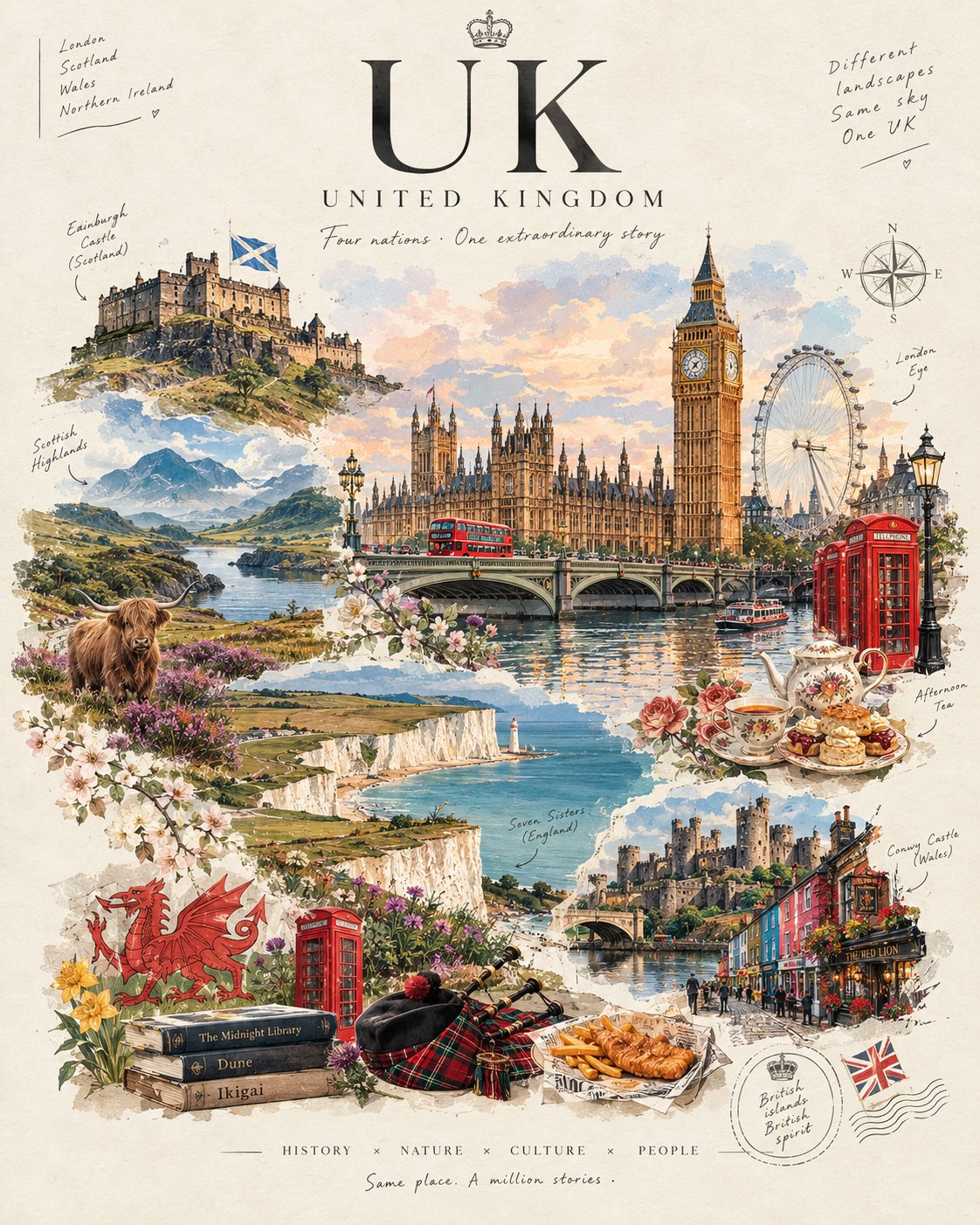
Create a sophisticated, dreamy editorial magazine cover titled “[COUNTRY NAME] — A COUNTRY IN ONE DREAM”. The entire composition should feel like a poetic visual journey rather than a conventional travel poster. Use a warm ivory paper background with subtle handmade paper texture, elegant high-fashion serif typography, and delicate architectural linework. Build the country’s identity through layered miniature scenes that seamlessly merge into one surreal landscape: dramatic mountains fading into mist, an ancient architectural landmark emerging from clouds, a winding river transforming into a silk ribbon, traditional houses nestled among trees, tiny local people walking along stone paths, native wildlife, iconic food, flowers, traditional crafts, and subtle cultural symbols. Instead of placing everything separately, make each element flow organically into the next, almost like an illustrated dream. Add translucent watercolor washes, fine ink outlines, soft faded edges, atmospheric fog, reflections in still water, tiny handwritten-style annotations, ornamental borders, and subtle geometric design elements. Color palette: muted sage, dusty blue, warm beige, pale peach, soft gray, touches of faded terracotta. Style: luxury travel magazine × Japanese watercolor × vintage cartography × contemporary editorial design × dreamscape illustration. Mood: peaceful, intelligent, nostalgic, cinematic, elegant, mysterious and deeply connected to the culture. At the bottom, add a small elegant line: “Places become memories. Cultures become stories.” Vertical 4:5 composition, highly detailed, refined negative space, premium print quality, delicate textures, sophisticated visual hierarchy, no photorealism, no clutter.
Details
Create a refined, high-end PHOTO + MINIMAL WATERCOLOR VIGNETTE artwork based entirely on the uploade — AI image prompt — GPT Image 2.5
OpenAIGPT Image 2.5
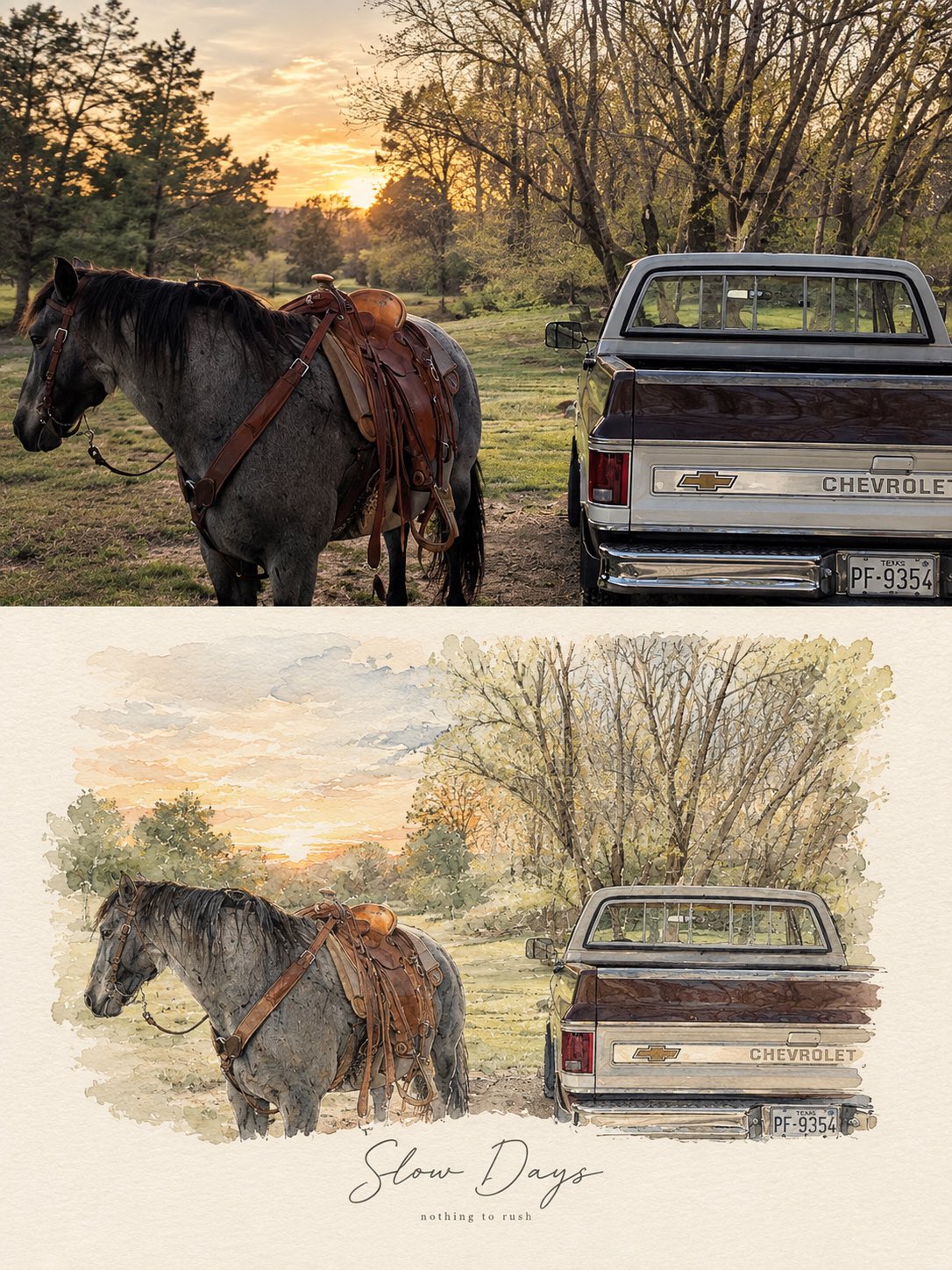
Create a refined, high-end PHOTO + MINIMAL WATERCOLOR VIGNETTE artwork based entirely on the uploaded photograph. Use the photograph as the only visual reference and preserve the exact subject, composition, environment, clothing, objects, lighting, colors, and mood. FORMAT: Vertical 3:4 editorial composition. TOP SECTION — ORIGINAL PHOTOGRAPH: Place the original photograph in the upper 55–60% of the canvas. Keep it photorealistic and naturally detailed. Do not alter the identity, pose, proportions, objects, architecture, scenery, or important visual details. Give it a subtle premium editorial photography finish with natural cinematic light and gentle tonal balance. BOTTOM SECTION — HAND-PAINTED INTERPRETATION: Transform the same exact scene into a delicate minimal watercolor and fine-ink illustration. Recreate the main subject, pose, perspective, key objects, and recognizable background elements from the photograph. Use loose watercolor washes, subtle pencil/ink outlines, imperfect hand-painted edges, soft paper texture, and restrained pastel tones. Keep the illustration airy, elegant, and slightly imperfect rather than digitally polished. The illustration should feel like a fashion/lifestyle magazine sketchbook page, with plenty of clean negative space and a warm off-white textured paper background. Do not introduce new subjects or details. TYPOGRAPHY: Add a short elegant handwritten brush-script phrase underneath or integrated naturally into the illustrated section, similar to a premium lifestyle editorial poster. Underneath it, add a tiny minimalist lowercase serif/sans-serif subtitle. Typography should be subtle, sophisticated, thin, and balanced with the artwork. AESTHETIC: Scandinavian editorial design, quiet luxury, nostalgic travel journal, soft watercolor, delicate ink drawing, handmade paper texture, muted natural palette, sophisticated minimalism, emotional storytelling, premium art-book layout. IMPORTANT: The photograph and illustration must clearly represent the same exact moment and scene. No collage of unrelated images, no dramatic redesign, no excessive watercolor, no cartoon appearance, no heavy outlines, no saturated colors, no clutter. Output: photorealistic upper section + matching delicate watercolor illustration below, seamless premium editorial composition, vertical 3:4, high detail. For different photos, just change the text phrase Examples: •Good Days — a kinder me •Better Together — same window, same silence •Little Moments — worth remembering •Slow Days — nothing to rush •Somewhere Quiet — just for a while •Golden Hours — softly remembered
Details
Theme: Minimalist natural imagery × Split Fountain same-screen gradient screen printing

Each print  — AI image prompt — GPT Image 2.5
OpenAIGPT Image 2.5
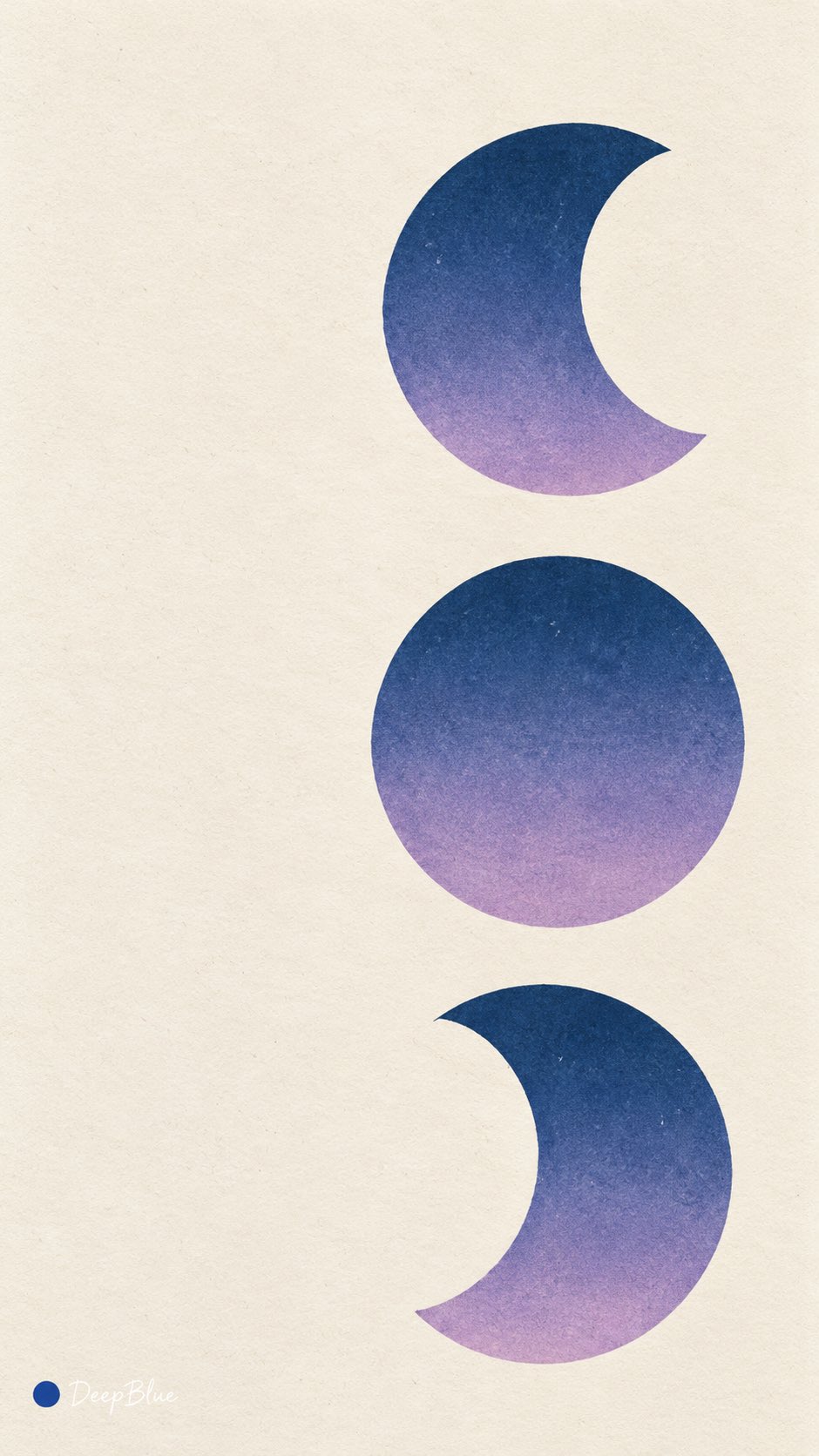
Theme: Minimalist natural imagery × Split Fountain same-screen gradient screen printing Each print independently selects one from sunset, ocean waves, mountain peaks, sand dunes, and moon phases, expressed with a small number of concise large forms and color fields, retaining subject recognizability and generous negative space. Independently explore coordinated two-color or multi-color ink combinations, as well as gradient direction, color mixing range, and graphic layout. Colors enter the interior of the graphics through the same screen printing plate, naturally blending along a unified direction, with original colors retained at both ends and a continuous soft mixed-color transition formed in the middle. The matte ink layer is smooth and delicate, with slight ink color variation retained locally, clear contours with slight hand-printed irregularity. The texture of warm white paper is faintly visible, and the overall effect is concise, warm, and possesses the quality of vintage art prints. Each print is re-conceived, with different combinations of subject, color scheme, and composition. 9:16 vertical format, n=10, each a separate single image. Bottom-left signature: a solid dark blue dot first, followed by white natural handwritten "DeepBlue".
Details
Create a premium vertical 4:5 editorial travel poster for [COUNTRY], where the outline of the countr — AI image prompt — GPT Image 2.5
OpenAIGPT Image 2.5
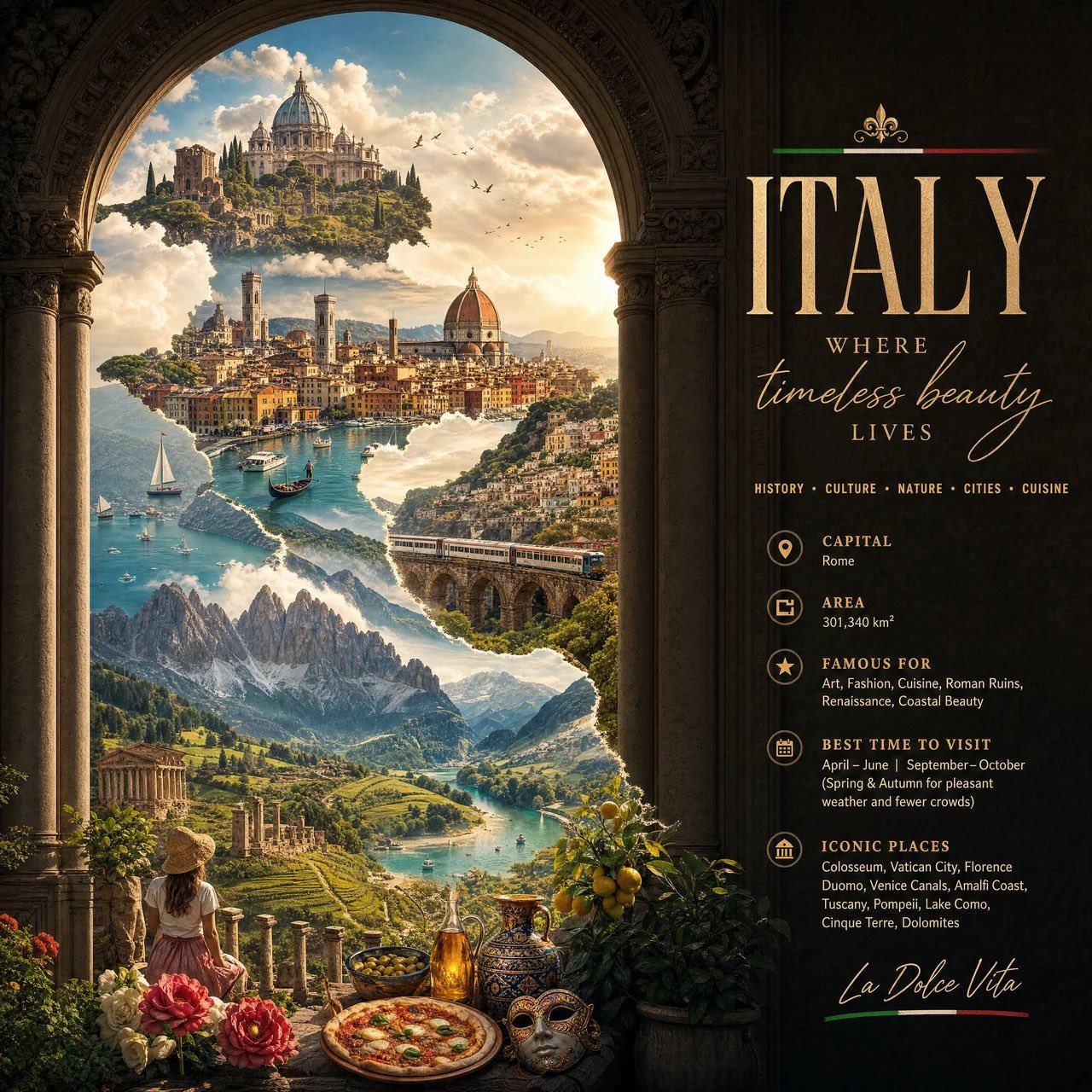
Create a premium vertical 4:5 editorial travel poster for [COUNTRY], where the outline of the country is formed organically from its landscapes, architecture, culture, and nature rather than using a normal map. Inside the country silhouette, create a seamless cinematic journey: * Top: iconic architecture emerging from clouds * Middle: famous city skyline + traditional buildings * Lower middle: dramatic natural landscape * Bottom: wildlife, local crafts, food, flowers, or cultural details * Small birds, boats, trains, or people can subtly connect the different scenes. Instead of decorative borders, use one continuous architectural element—an ancient arch, carved doorway, stone wall, temple corridor, bridge, or traditional pattern—that visually holds the composition together. On the side, use elegant editorial typography: [COUNTRY NAME] WHERE [SHORT POETIC PHRASE] HISTORY • CULTURE • NATURE • CITIES • CUISINE Add small details: CAPITAL AREA FAMOUS FOR BEST TIME TO VISIT ICONIC PLACES Use a “window into the country” concept: the country silhouette looks like a giant architectural doorway/window, and instead of showing separate boxes, the entire interior becomes one continuous surreal landscape.
Details
Create a premium cinematic luxury tourism poster for [COUNTRY / DESTINATION] in a STRICT 4:5 vertica — AI image prompt — GPT Image 2.5
OpenAIGPT Image 2.5
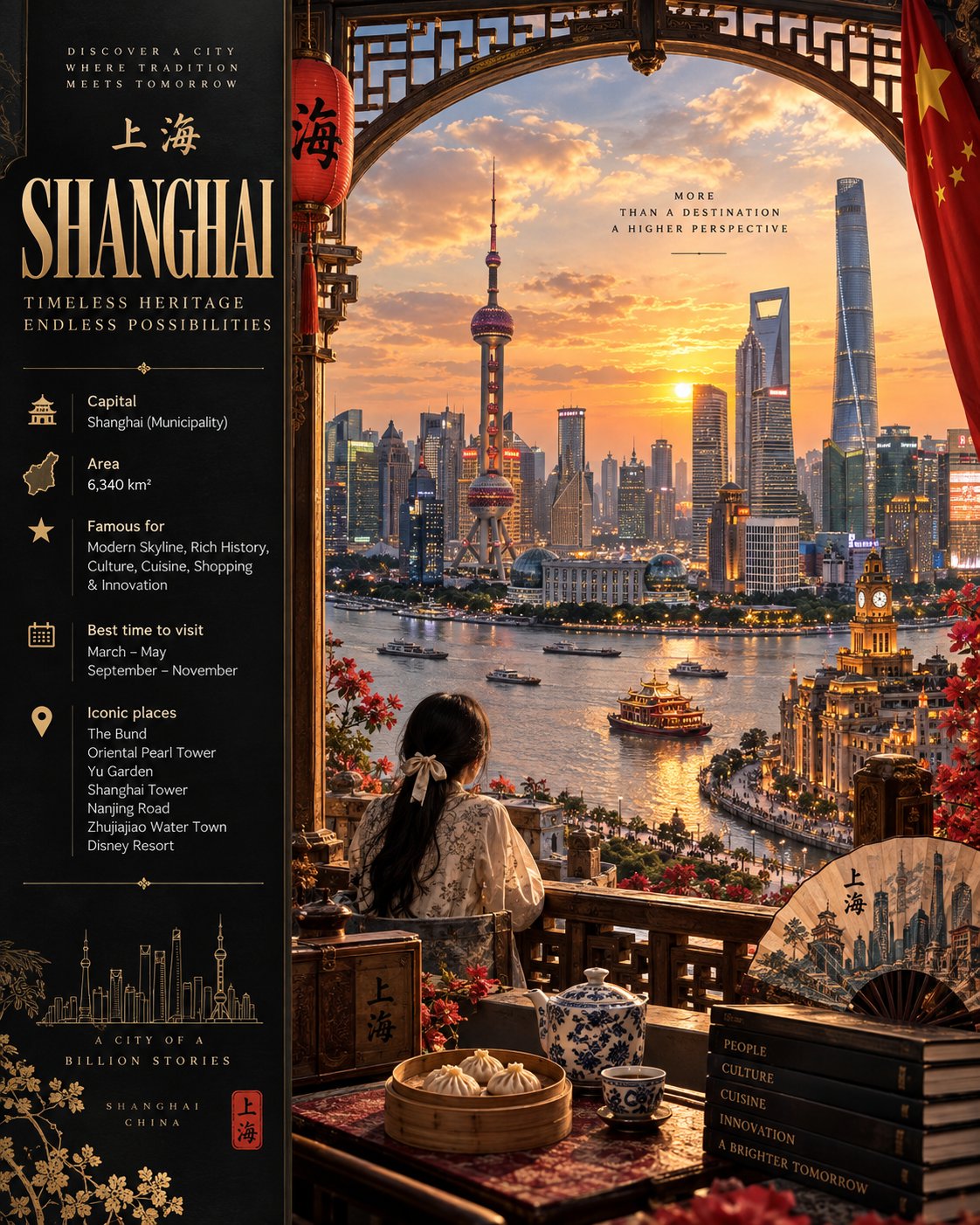
Create a premium cinematic luxury tourism poster for [COUNTRY / DESTINATION] in a STRICT 4:5 vertical format, designed like an official international tourism campaign. COMPOSITION Create a sophisticated editorial layout with a strong visual hierarchy. LEFT — INFORMATION PANEL A dark matte black/deep charcoal panel occupying approximately 30% of the width. [COUNTRY NAME] — large, elegant classical serif typography "[SHORT TAGLINE]" — refined secondary text Clean travel-information section using subtle icons and modern sans-serif typography: Capital: [CAPITAL] Area: [AREA] Famous for: [3–5 KEY CHARACTERISTICS] Best time to visit: [SEASON / MONTHS] Iconic places: [5–7 LOCATIONS] Use ivory, cream and muted gold typography with minimal geometric or authentic cultural motifs. Keep everything elegant, organized and highly readable. RIGHT — CINEMATIC DESTINATION SCENE Create a breathtaking ultra-realistic cinematic panoramic landscape that authentically represents [COUNTRY / DESTINATION]. Naturally integrate: Iconic city skyline and real, geographically appropriate landmarks Dramatic mountains, landscapes or natural formations River, lake, valley or coastline in the foreground Authentic local architecture and vegetation People in geographically and historically appropriate traditional clothing Appropriate native wildlife Traditional food, crafts and cultural objects A subtle national flag element Spectacular golden-hour sunset Frame the main landscape with a large ornate traditional arch or window, inspired specifically by the authentic architectural heritage of [COUNTRY]. Add tasteful foreground details such as carpets, crafts, instruments, food or architectural ornaments. Include one or two travelers/cultural figures, naturally posed in profile or from behind. LIGHTING & STYLE Golden-hour cinematic lighting, warm sunlight, volumetric rays, realistic shadows, atmospheric haze and strong depth. Combine ultra-realistic photography with premium cinematic concept art. Aim for a National Geographic-quality luxury travel campaign, high-end travel magazine aesthetic, epic scale, photorealistic textures, extremely detailed architecture and landscapes, natural colors and sophisticated warm cinematic grading. DESIGN Use a refined black, ivory, bronze and muted-gold palette. Maintain strong contrast between the dark information panel and luminous landscape. Keep the composition luxurious, balanced and uncluttered. Typography: classical serif for the destination name; clean modern sans-serif for information. Ensure all text is accurately spelled, legible and professionally arranged. AUTHENTICITY — CRITICAL Every cultural, architectural, environmental and historical element must be authentic to [COUNTRY / DESTINATION]. Do not mix cultures or landmarks from other countries. Do not invent recognizable landmarks. Maintain believable geography and natural relationships between all elements. Avoid distorted architecture, duplicated objects, malformed faces, extra limbs, unrealistic animals or artificial-looking environments. FINAL RESULT: A breathtaking, highly detailed 4:5 luxury tourism poster that seamlessly combines heritage, modernity, nature, architecture and national identity into one believable cinematic destination scene.
Details
Create a premium contemporary editorial art poster for [LOCATION] in a playful Japanese design-ZINE  — AI image prompt — GPT Image 2.5
OpenAIGPT Image 2.5
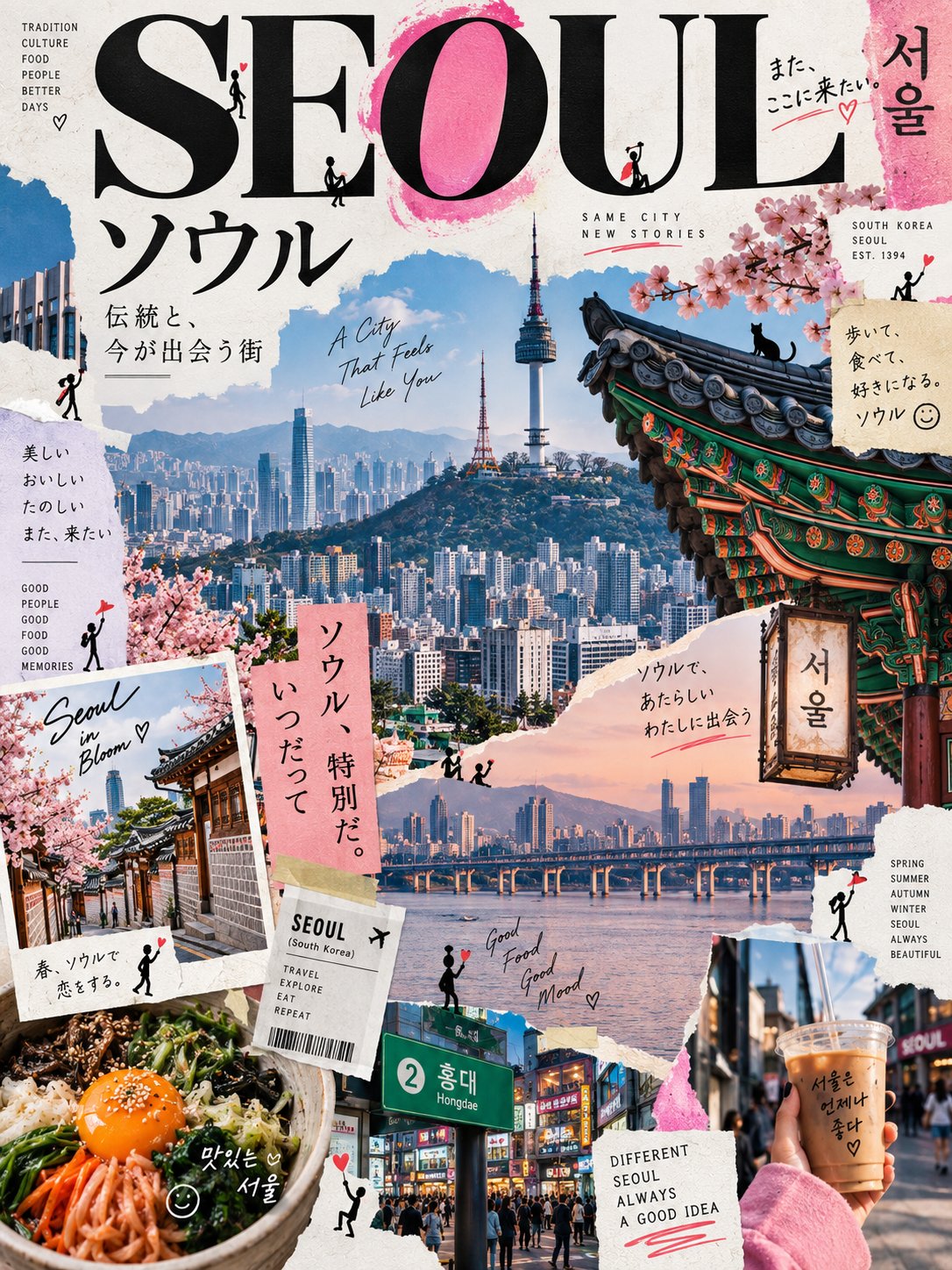
Create a premium contemporary editorial art poster for [LOCATION] in a playful Japanese design-ZINE style. FORMAT: Vertical 3:4 | High resolution | Modern editorial art Automatically choose the most iconic and visually interesting-elements of [LOCATION]-landmarks, architecture, streets, landscapes, food, nature, transportation, or cultural details—and build the artwork around the strongest subject. Use a bold full-frame collage composition, with the main subject occupying about 70–90% of the image. Combine dramatic crops, enlarged details, cutout elements, layered paper shapes, small image fragments, irregular edges, and overlapping graphics. Avoid large empty spaces, but keep everything clean and professionally art-directed. Automatically extract 2–4 signature colors from the character of [LOCATION] and use them for translucent shapes, circles, brush strokes, watercolor marks, lines, arrows, symbols, and small hand-drawn motifs. Add a strong combination of English + Japanese typography: A short, original English title inspired by the location A complementary Japanese title expressing its mood or story 2–4 small Japanese editorial captions Minimal English/Japanese details such as place, season, date, or atmosphere Use elegant serif or modern sans-serif English typography and refined Japanese Mincho or Gothic lettering. Allow some text to overlap the imagery or extend slightly beyond the frame for an editorial feel. Add one small handwritten Japanese message, naturally drawn with a thin black pen, inspired by the scene. Include 5–10 tiny black stick figures throughout the design. Give each a different playful action—climbing letters, pulling arrows, carrying shapes, observing the landmark, sitting on the image edge, holding a tiny flag, or interacting with the artwork. Keep them small and subtle, with only a few using accent-colored accessories. FINAL LOOK Make it feel like a lively little magazine created from [LOCATION]—a sophisticated combination of contemporary Japanese design, independent magazines, art books, fashion editorials, and gallery-shop ZINEs. Bright, fresh, artistic, playful, and highly polished. Not a traditional tourist poster, generic advertisement, vintage poster, or ordinary AI illustration. No reference image required. Generate the entire visual concept from [LOCATION] alone.
Details
2x2 grird, do this for 4 fashion movement of various decades, 16:9 class EditorialPoster:     def __ — AI image prompt — GPT Image 2.5
OpenAIGPT Image 2.5
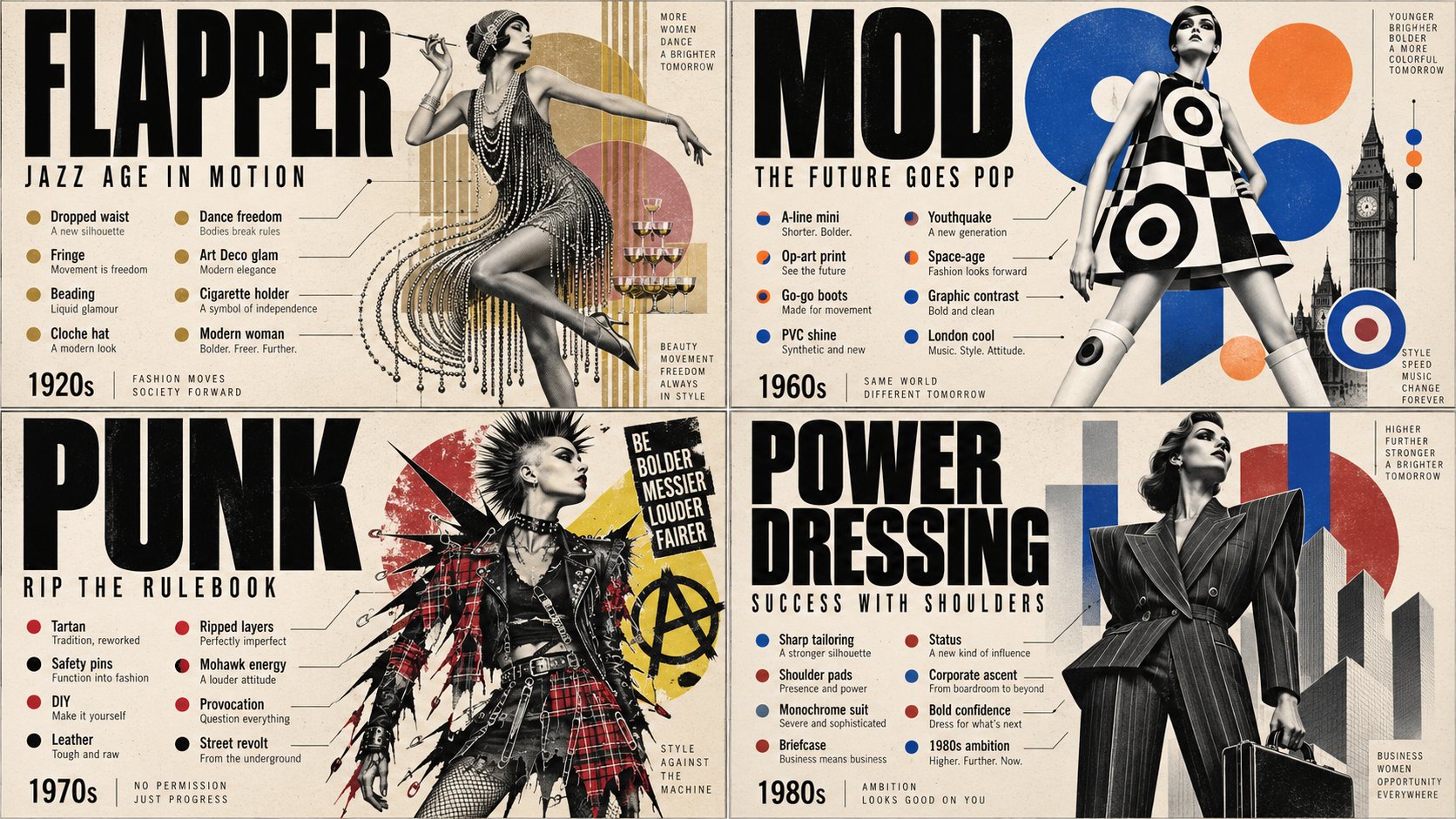
2x2 grird, do this for 4 fashion movement of various decades, 16:9 class EditorialPoster: def __init__(self, topic): self.topic = topic self.resolution = self.resolve_auto_fields(topic) def resolve_auto_fields(self, topic): # Module 2: Copy & Facts self.title = generate_title(topic, max_words=5) self.tagline = generate_tagline(topic, min_words=3, max_words=8) self.labels = extract_key_points(topic, count=6-12, relationship="components") # principles/stages/types # Module 3: The Surreal Character Engine self.mechanism = infer_verb(topic) # e.g., "filtering", "branching", "accumulating" self.base_form = select_organism(self.mechanism) # human, animal, or object # CRITICAL: Transformation must be structural, not just accessories self.transformation = invent_structural_alteration(self.base_form, self.mechanism) self.pose = select_pose(topic, attitude="intriguing_uncanny") # Module 5: Geometry & Palette self.geometry = select_geometric_family(topic) # rays, arcs, ribbons, grids self.palette = derive_accent_colors(topic, count=2-6, mood="flat_matte_weathered") def verify_character_logic(self): # The "Thumbnail & Concept" Check assert is_structural(self.transformation), "Module 3: Must be anatomy/proportion, not accessories." assert fits_sentence(self.transformation, self.mechanism), "Module 3: Logic check failed." assert visible_at_thumbnail(self.transformation), "Module 3: Must read at small scale." assert not is_generic_cute_scary(self.pose), "Module 3: Avoid default emotional tropes." def render(self): self.verify_character_logic() # Module 1 & 6: Style Kernel canvas = Canvas(aspect="1:1", bg="warm_ivory", texture="subtle_analog_grain") # Hero: Grayscale, sculptural shading, stippling/halftone hero = render_grayscale_sculptural(self.base_form, self.transformation, self.pose, shading="fine_stippling", texture="tactile_print") # Module 4: Adaptive Layout layout = adaptive_composition( hero=hero, title=self.title, # Oversized, black, condensed, uppercase labels=self.labels, # Compact, high contrast geometry=self.geometry, # Connects hero to info palette=self.palette # Flat, matte accents ) return canvas.compose(layout, typography="extreme_contrast_hierarchy") EditorialPoster($ TOPIC).render()
Details
Browse all GPT Image 2.5 promptsExplore AI Image Prompts