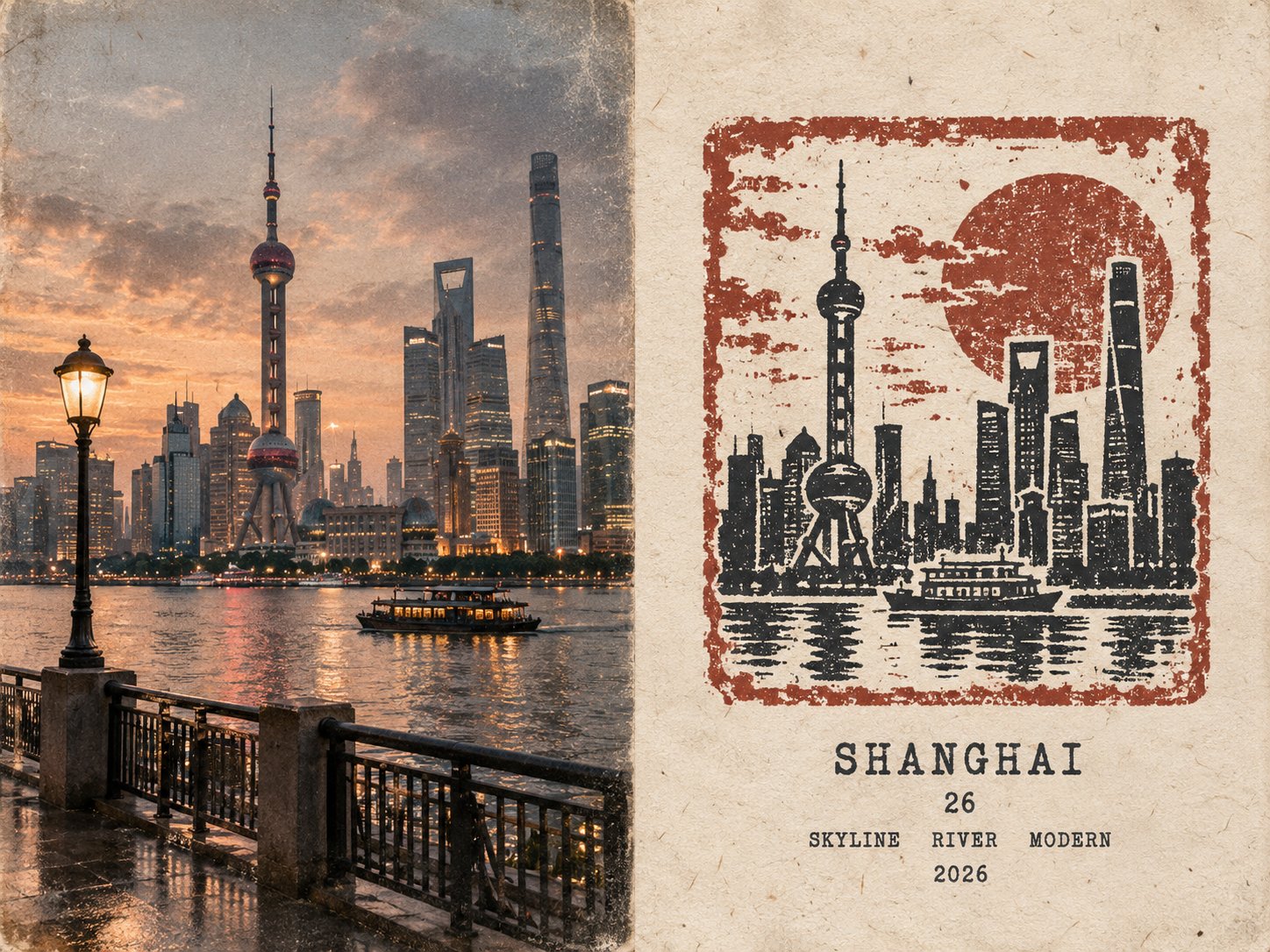
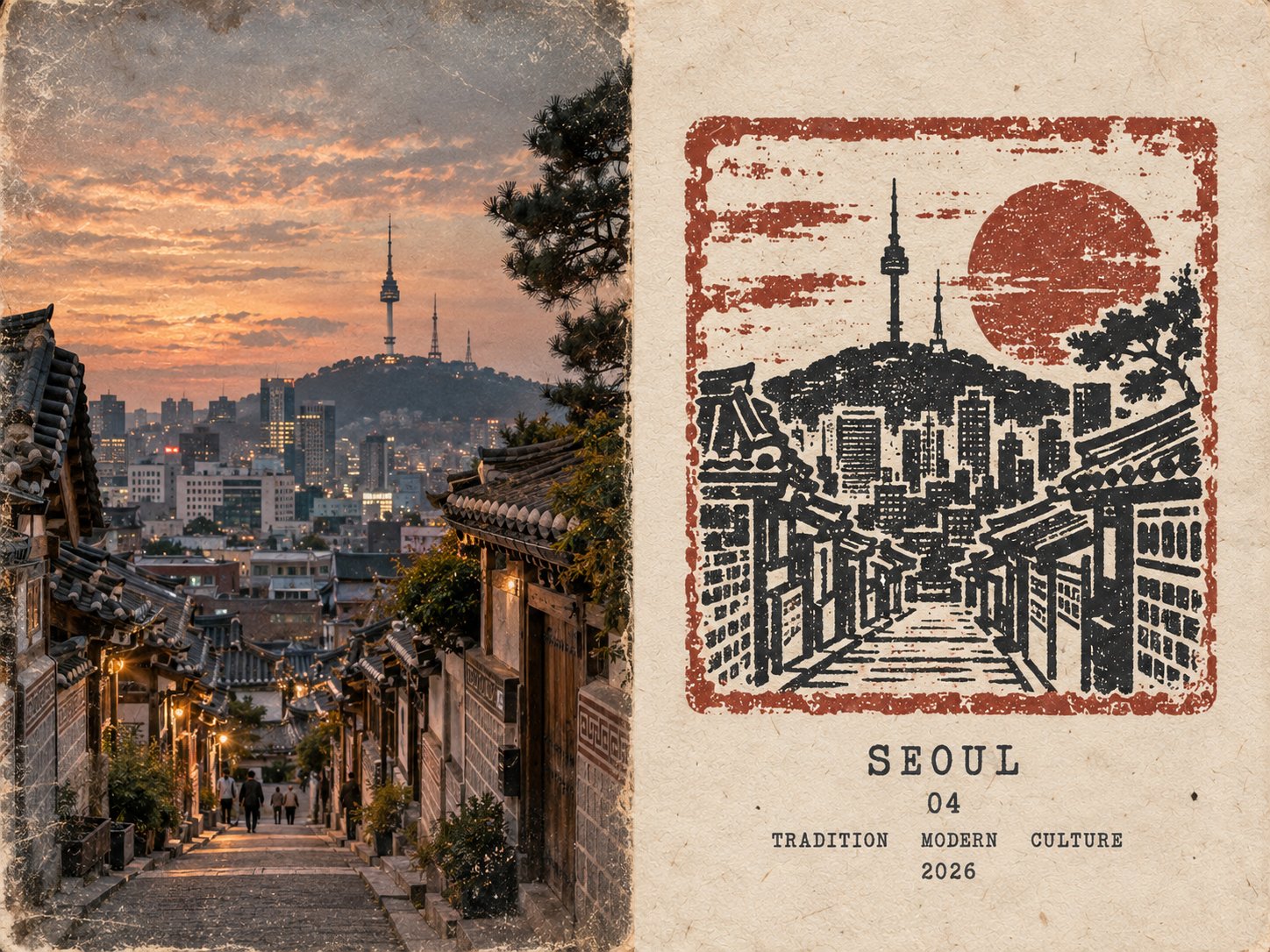
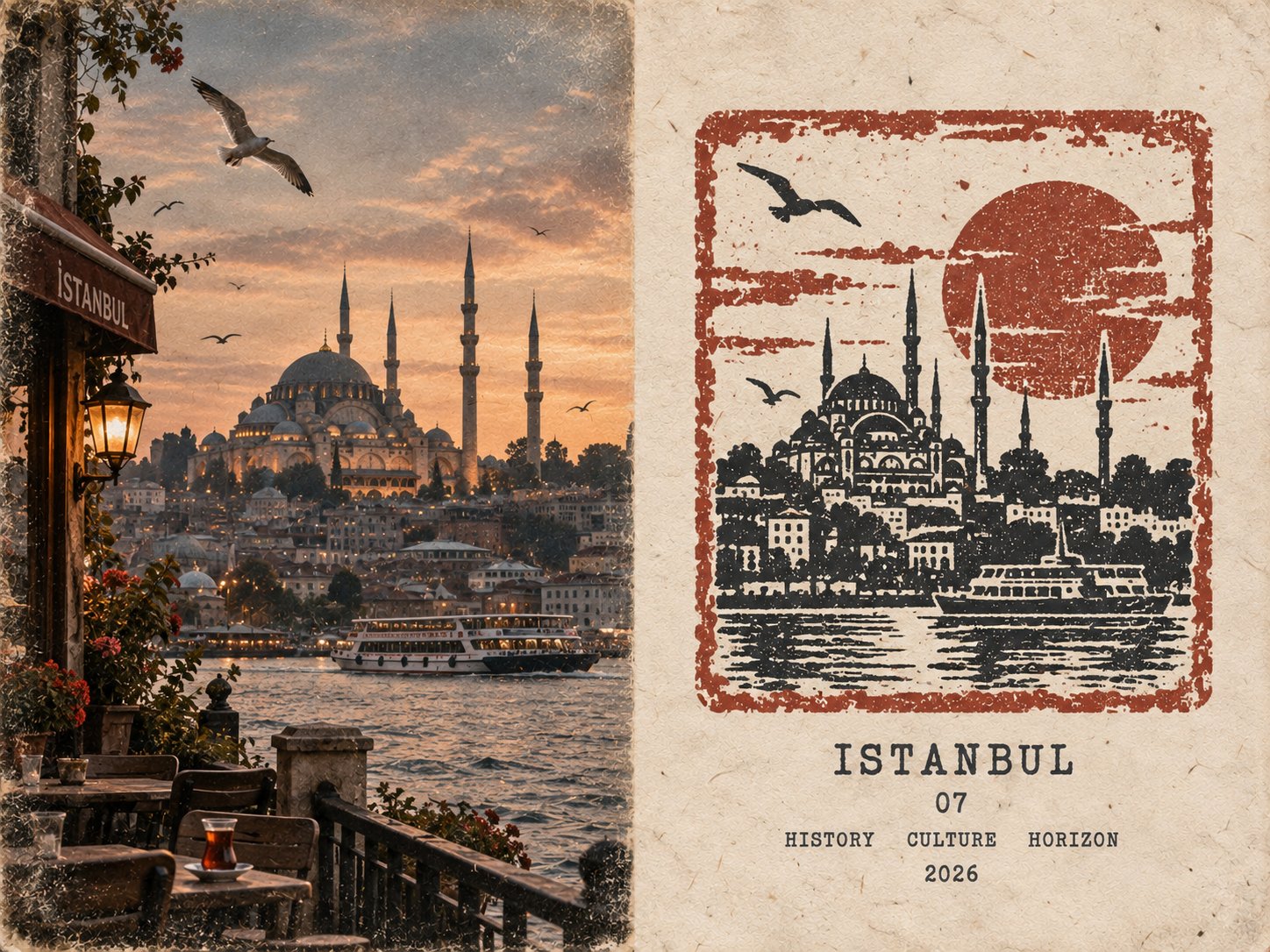
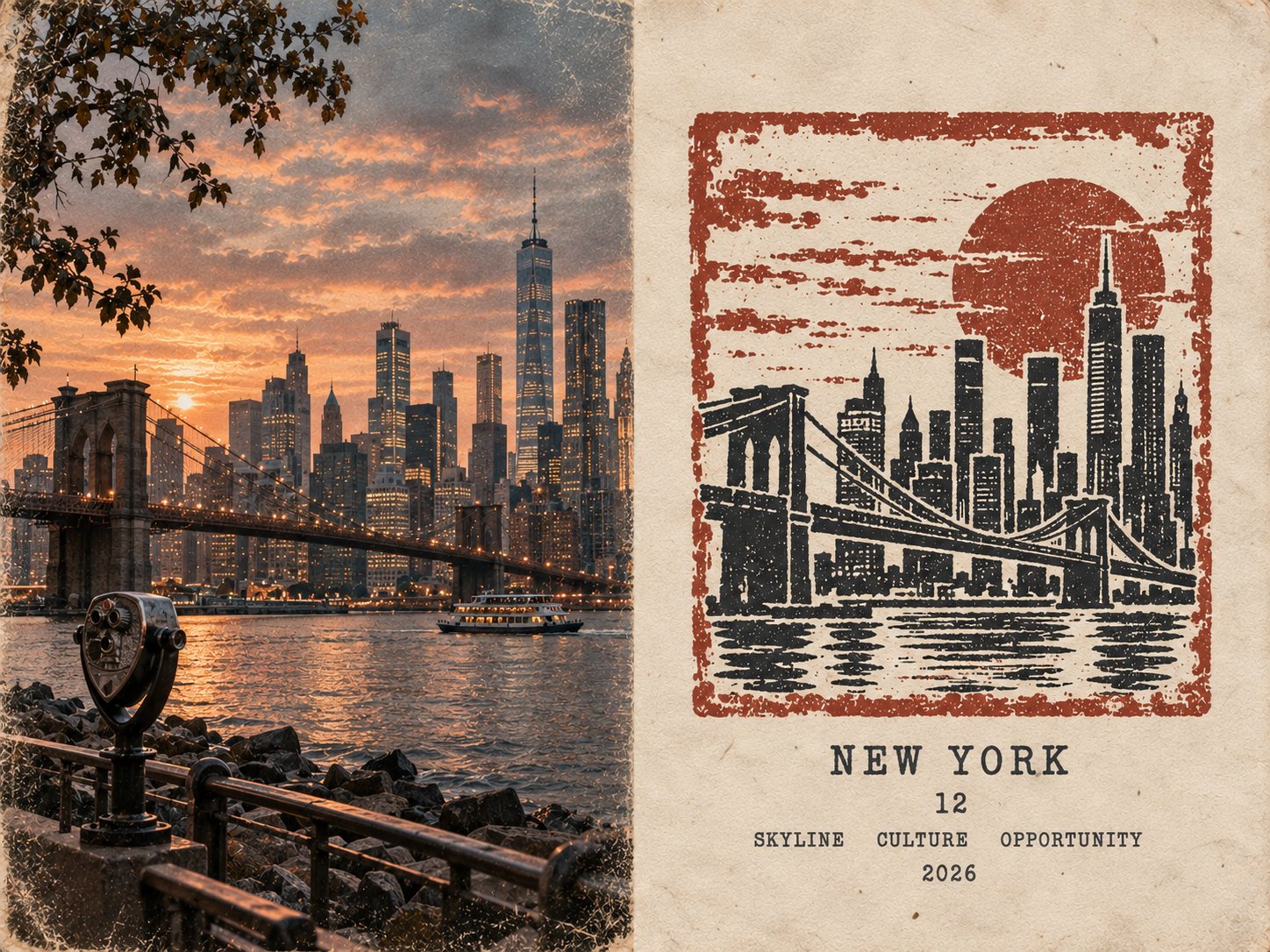
Rubber Stamp Travel Journal Poster
 GPT Image 2.5OpenAIimage
Create one premium 4:3 landscape rubber-stamp travel journal poster for [COUNTRY / LOCATION / SUBJECT]. TEXT-TO-IMAGE GENERATION ONLY. Generate the entire artwork from [COUNTRY / LOCATION / SUBJECT] alone. No reference image or additional visual input is required. COMPOSITION Divide the canvas vertically into exactly two equal 50% sections with no visible divider, border, gutter, overlap, or before/after labels. LEFT 50% — PHOTOGRAPHIC SCENE Create a realistic, cinematic photograph representing [COUNTRY / LOCATION / SUBJECT]. Automatically determine its most recognizable subject, architecture, landscape, objects, people, animals, composition, lighting, colors, and atmosphere. Give the scene a subtle aged archival-photography treatment: slightly faded colors, reduced saturation and contrast, warm vintage tones, fine film grain, faint paper texture, and a matte printed finish. Keep the scene clearly photographic and natural. RIGHT 50% — RUBBER-STAMP MEMORY Transform the key visual identity of the scene into one compact hand-carved two-color rubber-stamp print. Preserve the essential silhouette, structure, pose, orientation, horizon, and major foreground/background relationships so the subject remains immediately recognizable. Simplify the scene aggressively—remove unnecessary crowds, tiny details, repetitive architecture, complex shading, and photographic textures. Build the artwork entirely from solid ink areas, not outlines. Use one dark structural ink plus one or two muted colors inspired by [COUNTRY / LOCATION / SUBJECT]. Give the print authentic handmade imperfections: ragged carved edges, broken ink coverage, dry-ink gaps, uneven pressure, subtle pigment grain, slight paper bleed, and 1–2 mm color misregistration. It must look physically stamped onto paper—not like a vector illustration, cartoon, watercolor, pencil drawing, or digital filter. PAPER & COLOR Use warm off-white handmade paper with subtle natural fibers, tiny flecks, gentle beige variation, and a matte tactile surface. Keep the palette restrained and slightly muted. Use approximately 2–4 colors derived from the visual identity of [COUNTRY / LOCATION / SUBJECT]. TEXT Automatically generate: A concise 1–3 word English title identifying or describing the subject A two-digit number from 01–99 Exactly three short uppercase English keywords related to the scene A four-digit Gregorian year Place these as a small centered archival text block beneath the stamp. Use understated dark-charcoal typewriter-style typography with slightly imperfect printed ink. Keep all text correctly spelled and fully legible. Do not add slogans, logos, signatures, coordinates, QR codes, social handles, watermarks, or random text. FINAL AESTHETIC The finished poster should feel like a quiet collectible field-journal page: realistic travel photograph × handmade rubber stamp × aged paper × archival typography. The left side documents the place or subject; the right side preserves its visual memory as a small handmade stamp. Elegant, restrained, tactile, nostalgic, and professionally art-directed. STRICT 4:3 LANDSCAPE | EXACT 50/50 SPLIT | TEXT-ONLY GENERATION | PREMIUM PRINT QUALITY | NO REFERENCE IMAGE REQUIRED.
Details
- Type
- AI Image Prompts
- Aspect Ratio
- 4:3
- Updated
- Sep 18, 2026
How to use this prompt
- 1Copy the full prompt with the copy button above.
- 2Open GPT Image 2.5 by OpenAI, or any image generator with a similar style range.
- 3Paste the prompt, then swap the subject and style keywords to match your idea.
- 4Match the example's settings (4:3 · Poster · Cinematic · Vintage), then iterate — small wording changes shift the output a lot.
Frequently asked questions
Which AI model generated this image?
This image was generated with GPT Image 2.5 by OpenAI. The prompt on this page is the exact text used to create it.
What settings does this prompt use?
The example was generated with GPT Image 2.5 using: 4:3 · Poster · Cinematic · Vintage. Reusing these settings gives the closest match.
How do I get similar results?
Copy the prompt as-is first, then replace only the subject while keeping the style, lighting, and composition keywords. Generate a few variations — outputs differ between runs.
Can I modify this prompt?
Yes. Prompts work best as starting points — adjust descriptors, aspect ratio, or style tags to make the output your own.
![Create a premium vertical 4:5 editorial travel poster for [COUNTRY], where the outline of the countr — AI image prompt — GPT Image 2.5](https://cdn.ahaprompt.app/harvest-media/import-1789369064970-j9jipe.jpg)
![Create a sophisticated, dreamy editorial magazine cover titled “[COUNTRY NAME] — A COUNTRY IN ONE DR — AI image prompt — GPT Image 2.5](https://cdn.ahaprompt.app/harvest-media/import-1789368946131-xefjx1.jpg)
![Create a premium educational travel poster featuring [STRUCTURE NAME], one of the world’s most famou — AI image prompt — GPT Image 2.5](https://cdn.ahaprompt.app/harvest-media/import-1789369131185-x1iuzs.jpg)
![Create a premium cinematic luxury tourism poster for [COUNTRY / DESTINATION] in a STRICT 4:5 vertica — AI image prompt — GPT Image 2.5](https://cdn.ahaprompt.app/harvest-media/import-1789369001673-dctuvc.jpg)
![Create a premium contemporary editorial art poster for [LOCATION] in a playful Japanese design-ZINE — AI image prompt — GPT Image 2.5](https://cdn.ahaprompt.app/harvest-media/import-1789139846025-v6z310.jpg)