Handcrafted Colored Pencil Travel Poster
 GPT Image 2.5OpenAIimage
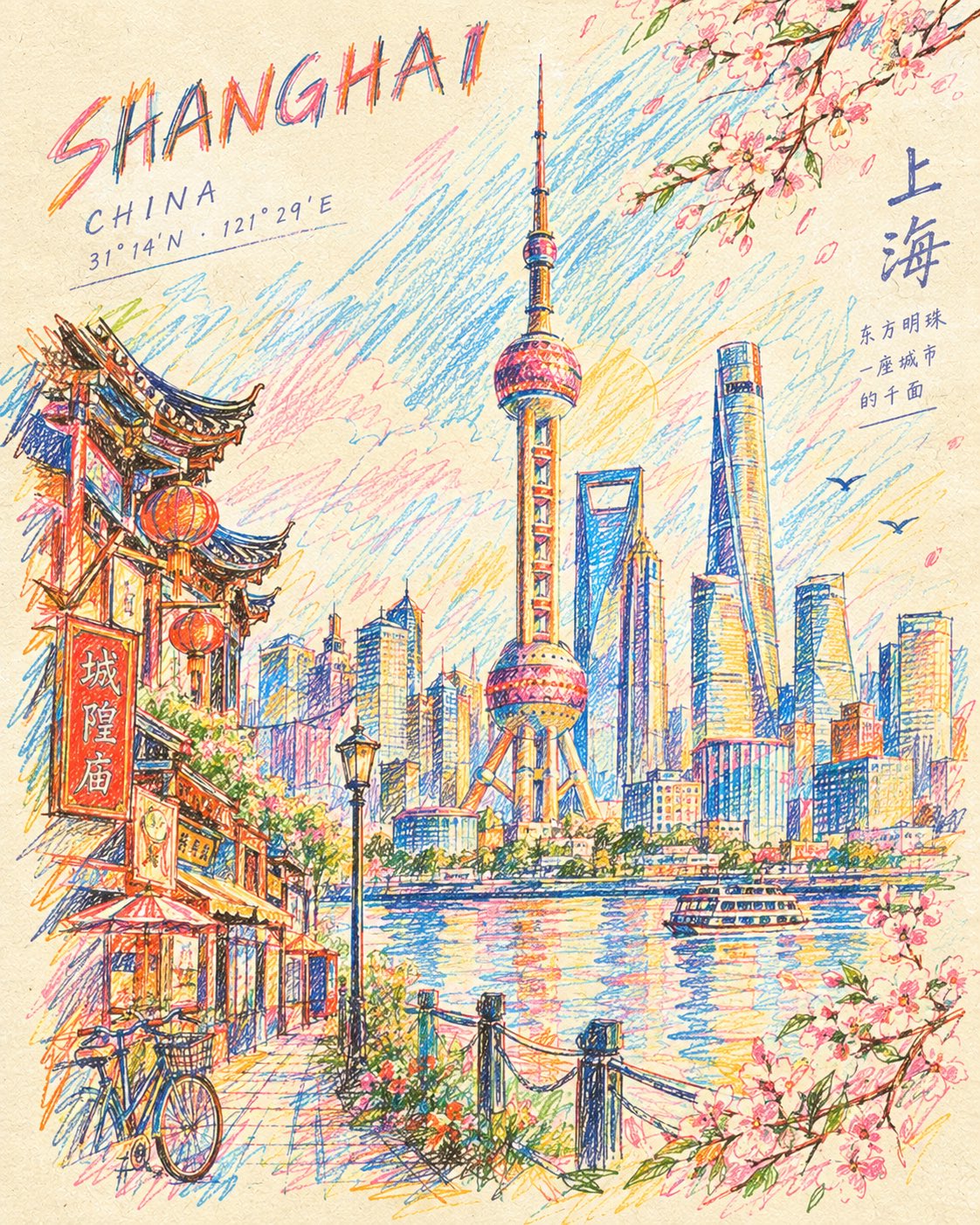
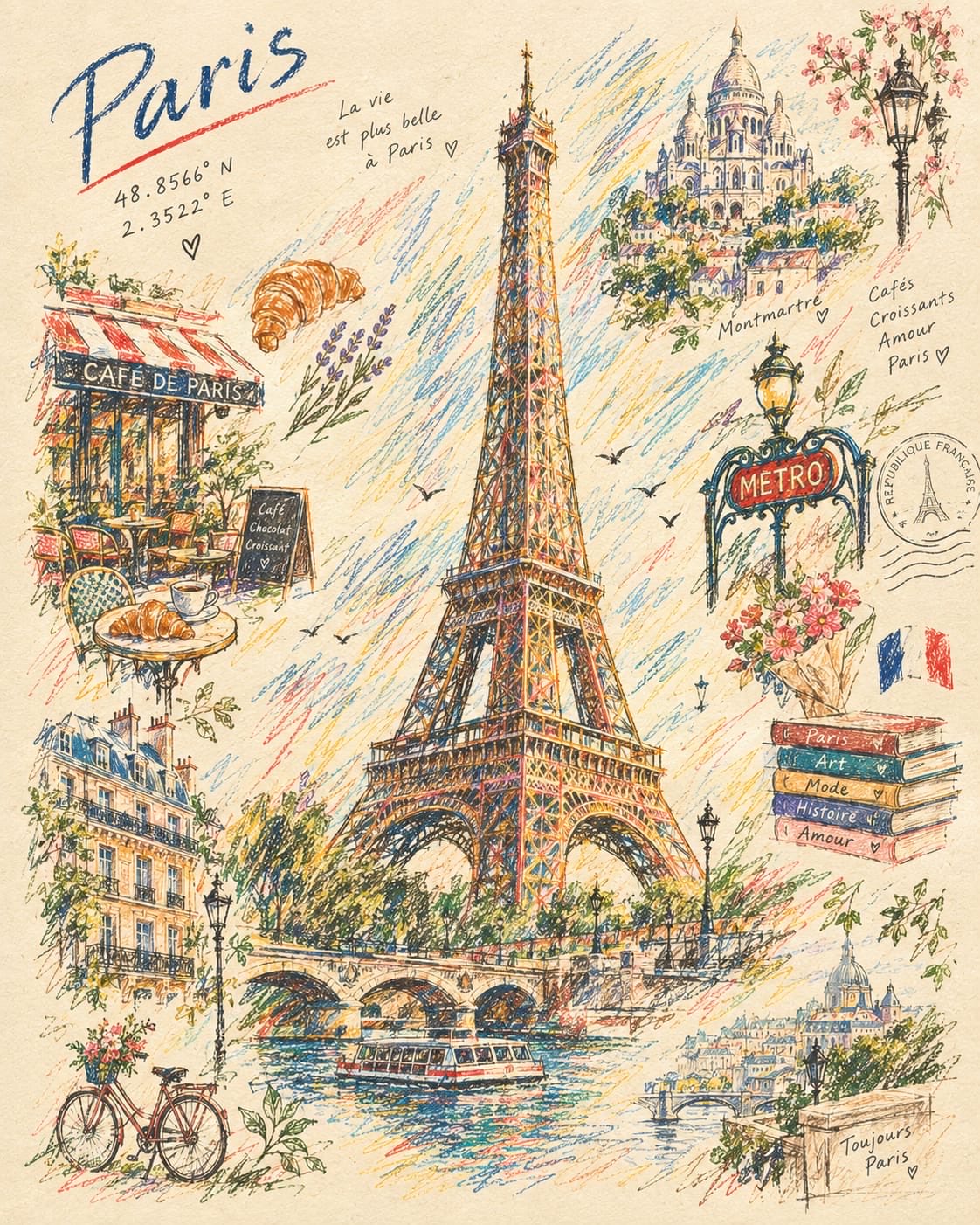
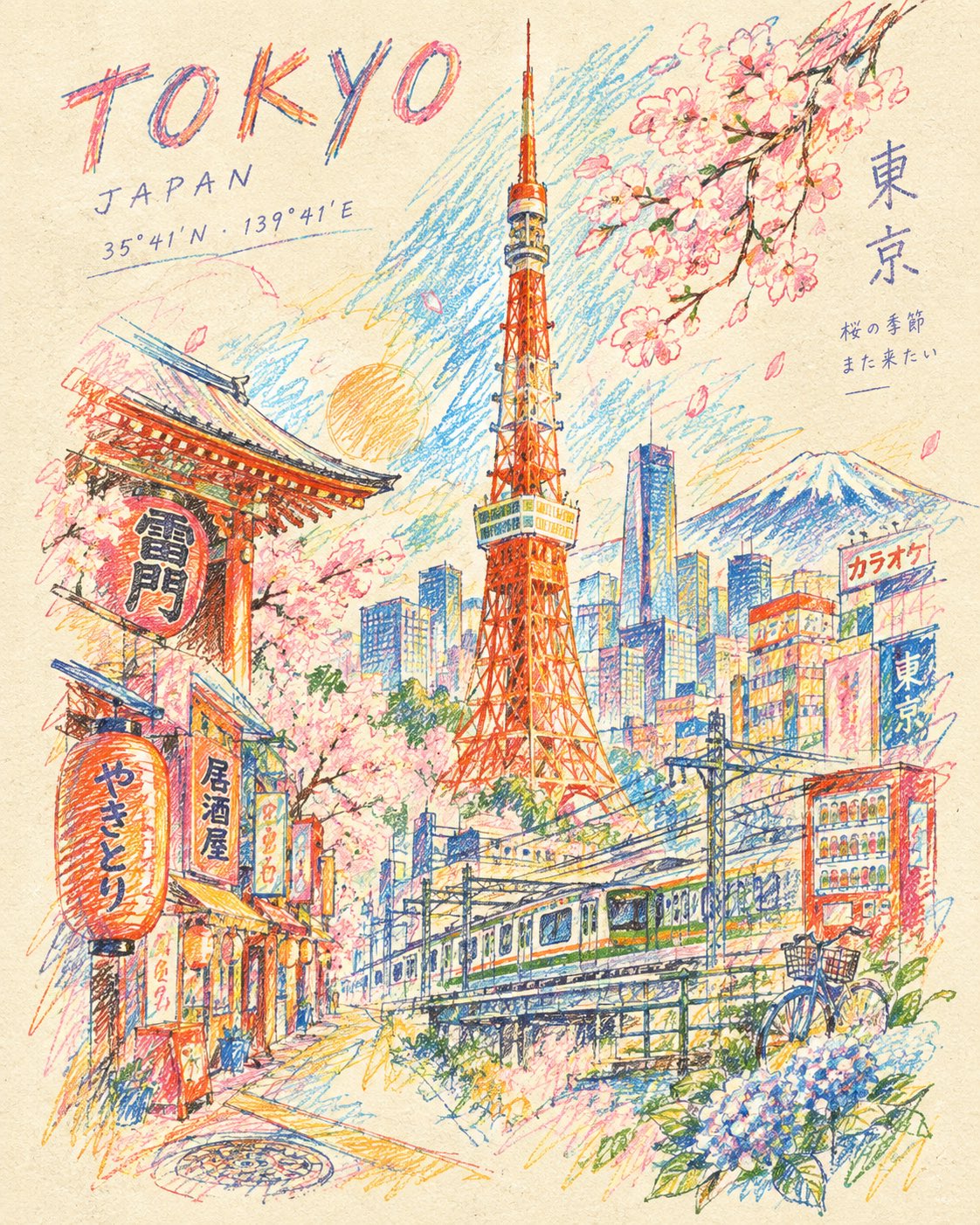
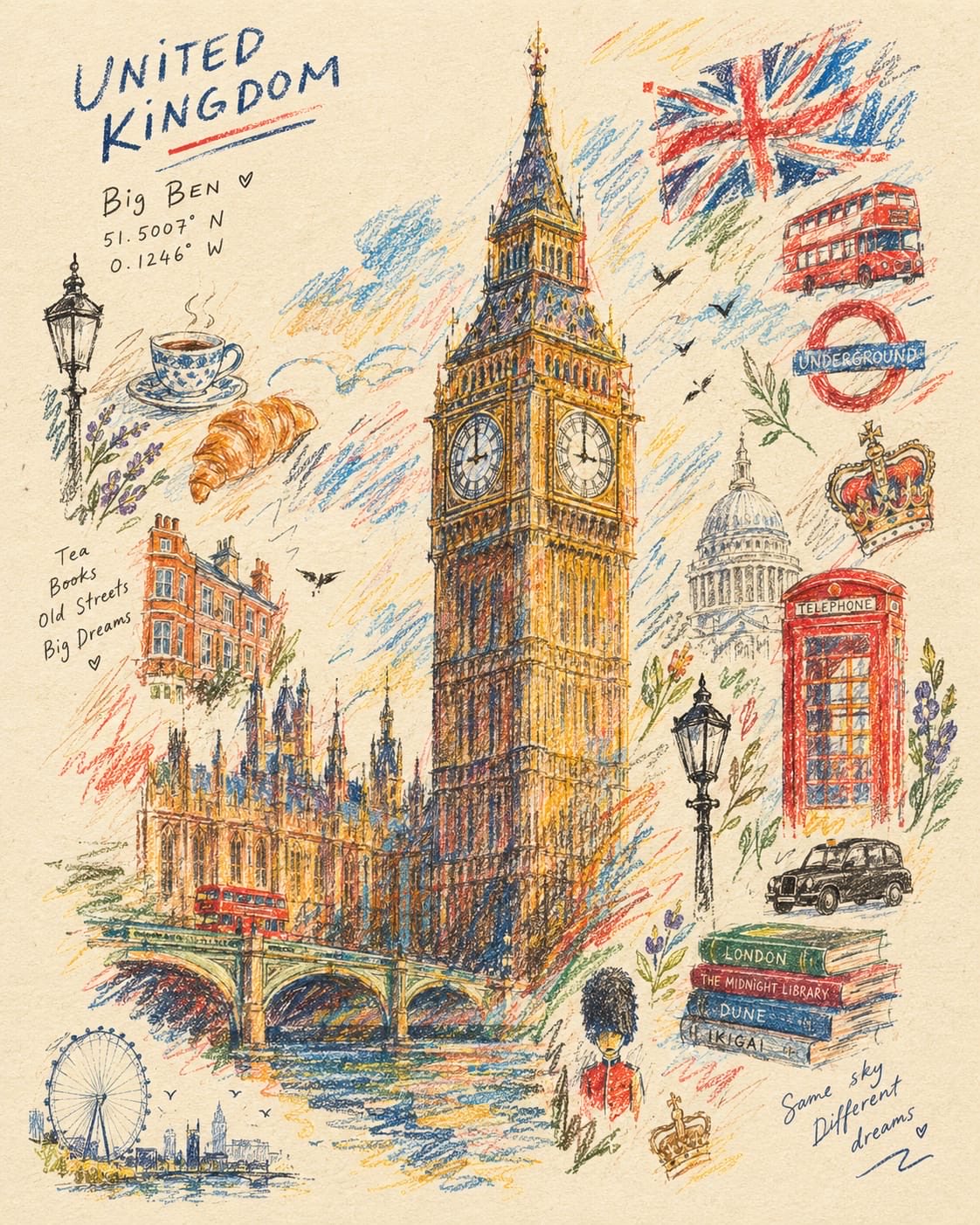
Create a sophisticated handcrafted travel-art poster of [LANDMARK / CITY / COUNTRY], illustrated entirely with colored pencils and wax crayons on warm ivory paper. Depict [LANDMARK / CITY / COUNTRY] as if it has been drawn from memory by an exceptionally talented artist — recognizable architecture and proportions, but expressed through energetic imperfect pencil strokes, layered wax-crayon marks, loose cross-hatching, scribbled shading, overlapping colors, and visible hand pressure. Instead of filling the landmark with flat color, let hundreds of expressive pencil strokes build its form. Allow certain strokes to extend beyond the architectural edges, creating a sense of movement and imagination. Add tiny hand-drawn visual memories around and within the composition: local patterns, plants, birds, windows, streets, clouds, cultural motifs, landscape elements and subtle symbols associated with the place. Use a limited but vibrant destination-inspired palette: [COLORS]. Keep some areas intentionally unfinished, allowing the ivory paper to remain visible. Add small imperfect handwritten-style typography: [COUNTRY / CITY] [LANDMARK NAME] [COORDINATES OR SHORT PHRASE] The result should feel like a rare artist’s sketchbook page transformed into a premium contemporary travel poster — playful, tactile, nostalgic, artistic and highly detailed. Visible colored-pencil grain, wax-crayon texture, imperfect outlines, layered strokes, subtle paper fibers, hand-drawn imperfections, sophisticated composition, strong negative space, no photorealism, no 3D rendering, no glossy digital effects, no people, 4:5 vertical. An even more unique variation: “Pencil Explosion” The landmark stays recognizable in the center, but its colors and pencil strokes progressively break apart into tiny illustrated memories of the city — almost like the drawing is coming alive. That would preserve the exact crayon/pencil aesthetic of your reference while giving it a much more original concept.
Details
- Type
- AI Image Prompts
- Aspect Ratio
- 561:701
- Updated
- Sep 30, 2026
How to use this prompt
- 1Copy the full prompt with the copy button above.
- 2Open GPT Image 2.5 by OpenAI, or any image generator with a similar style range.
- 3Paste the prompt, then swap the subject and style keywords to match your idea.
- 4Match the example's settings (561:701 · Poster · Vintage · Sketch), then iterate — small wording changes shift the output a lot.
Frequently asked questions
Which AI model generated this image?
This image was generated with GPT Image 2.5 by OpenAI. The prompt on this page is the exact text used to create it.
What settings does this prompt use?
The example was generated with GPT Image 2.5 using: 561:701 · Poster · Vintage · Sketch. Reusing these settings gives the closest match.
How do I get similar results?
Copy the prompt as-is first, then replace only the subject while keeping the style, lighting, and composition keywords. Generate a few variations — outputs differ between runs.
Can I modify this prompt?
Yes. Prompts work best as starting points — adjust descriptors, aspect ratio, or style tags to make the output your own.
![Create a premium vertical 4:5 editorial travel poster for [COUNTRY], where the outline of the countr — AI image prompt — GPT Image 2.5](https://cdn.ahaprompt.app/harvest-media/import-1789369064970-j9jipe.jpg)
![Create a sophisticated, dreamy editorial magazine cover titled “[COUNTRY NAME] — A COUNTRY IN ONE DR — AI image prompt — GPT Image 2.5](https://cdn.ahaprompt.app/harvest-media/import-1789368946131-xefjx1.jpg)
![Create a premium educational travel poster featuring [STRUCTURE NAME], one of the world’s most famou — AI image prompt — GPT Image 2.5](https://cdn.ahaprompt.app/harvest-media/import-1789369131185-x1iuzs.jpg)
![Create a premium cinematic luxury tourism poster for [COUNTRY / DESTINATION] in a STRICT 4:5 vertica — AI image prompt — GPT Image 2.5](https://cdn.ahaprompt.app/harvest-media/import-1789369001673-dctuvc.jpg)
![Create a premium contemporary editorial art poster for [LOCATION] in a playful Japanese design-ZINE — AI image prompt — GPT Image 2.5](https://cdn.ahaprompt.app/harvest-media/import-1789139846025-v6z310.jpg)
![2x2 grid, 9:16, 4 goat chess players who passed away [SUBJECT] :: single standalone vertical tribute — AI image prompt — GPT Image 2.5](https://cdn.ahaprompt.app/harvest-media/import-1789139801507-ah2jvt.jpg)