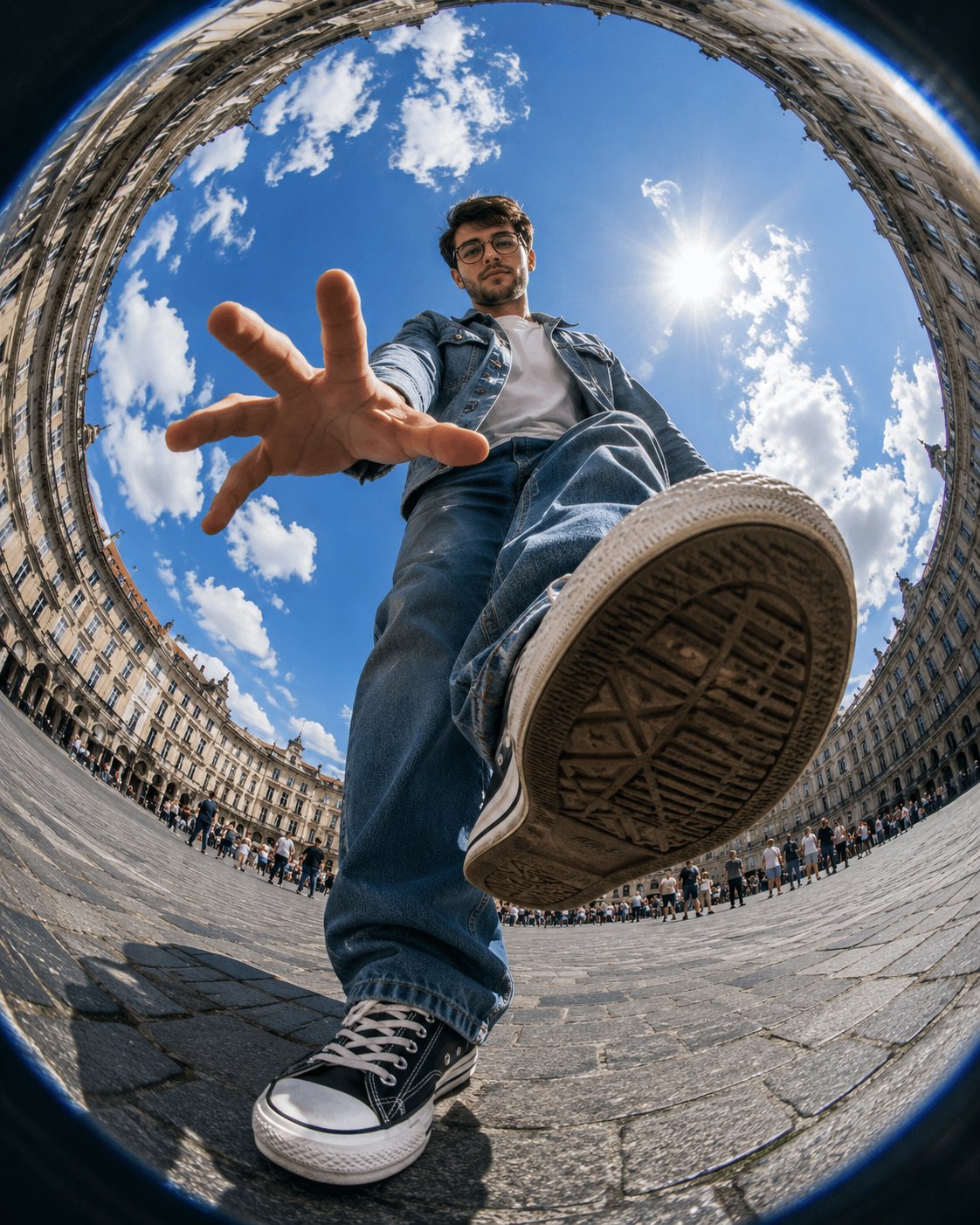
Fisheye Man Walking Over Camera
 GPT Image 2OpenAIimage
Create a surreal, ultra-realistic low-angle fisheye photograph of a young man walking directly over the camera in the center of a grand European city square. The camera is placed almost flat against the cobblestone pavement, creating an extreme forced-perspective effect. One leg is lifted high toward the lens, with the sneaker sole dominating the foreground and appearing dramatically oversized, showing detailed rubber tread and realistic texture. His other foot remains planted on the ground. He reaches one hand directly toward the camera with an open palm and naturally spread fingers, creating strong depth and interaction with the viewer. He wears a blue denim jacket over a clean white T-shirt, relaxed blue jeans, and classic black-and-white canvas sneakers. He has short slightly tousled dark hair and subtle round glasses, with a calm, confident expression as he looks down toward the camera. Surround him with elegant historic European architecture curving dramatically around the frame because of the extreme 8mm fisheye lens. Bright blue summer sky with soft white clouds, strong sunlight and subtle lens flare, realistic shadows across the cobblestones, distant pedestrians and city details around the square. Extreme barrel distortion, circular architectural framing, dynamic perspective, crisp facial detail, realistic skin, denim and shoe textures, cinematic street photography, natural colors, high dynamic range, immersive depth, photorealistic, 8K detail. Vertical 4:5 composition, subject centered, no text, no logos, no watermark.
Details
- Type
- AI Image Prompts
- Aspect Ratio
- 561:701
- Updated
- Aug 21, 2026
How to use this prompt
- 1Copy the full prompt with the copy button above.
- 2Open GPT Image 2 by OpenAI, or any image generator with a similar style range.
- 3Paste the prompt, then swap the subject and style keywords to match your idea.
- 4Match the example's settings (561:701 · Street Photography · Surreal · Cinematic), then iterate — small wording changes shift the output a lot.
Frequently asked questions
Which AI model generated this image?
This image was generated with GPT Image 2 by OpenAI. The prompt on this page is the exact text used to create it.
What settings does this prompt use?
The example was generated with GPT Image 2 using: 561:701 · Street Photography · Surreal · Cinematic. Reusing these settings gives the closest match.
How do I get similar results?
Copy the prompt as-is first, then replace only the subject while keeping the style, lighting, and composition keywords. Generate a few variations — outputs differ between runs.
Can I modify this prompt?
Yes. Prompts work best as starting points — adjust descriptors, aspect ratio, or style tags to make the output your own.
![Create a beautiful artistic illustration of [COUNTRY] represented through its national bird, [NATION — AI image prompt — GPT Image 2](https://cdn.ahaprompt.app/harvest-media/import-1788917968096-4tdbpo.jpg)