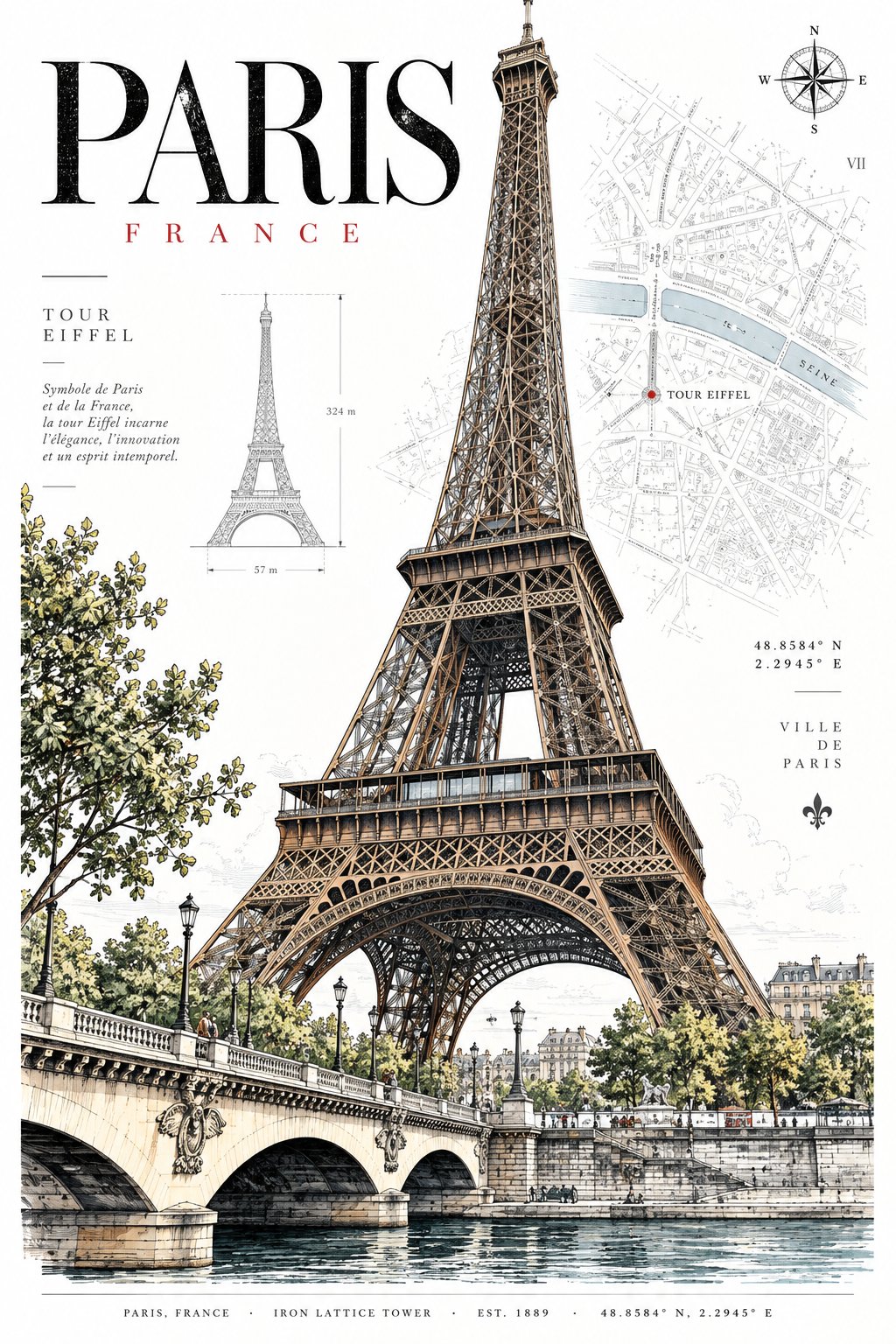
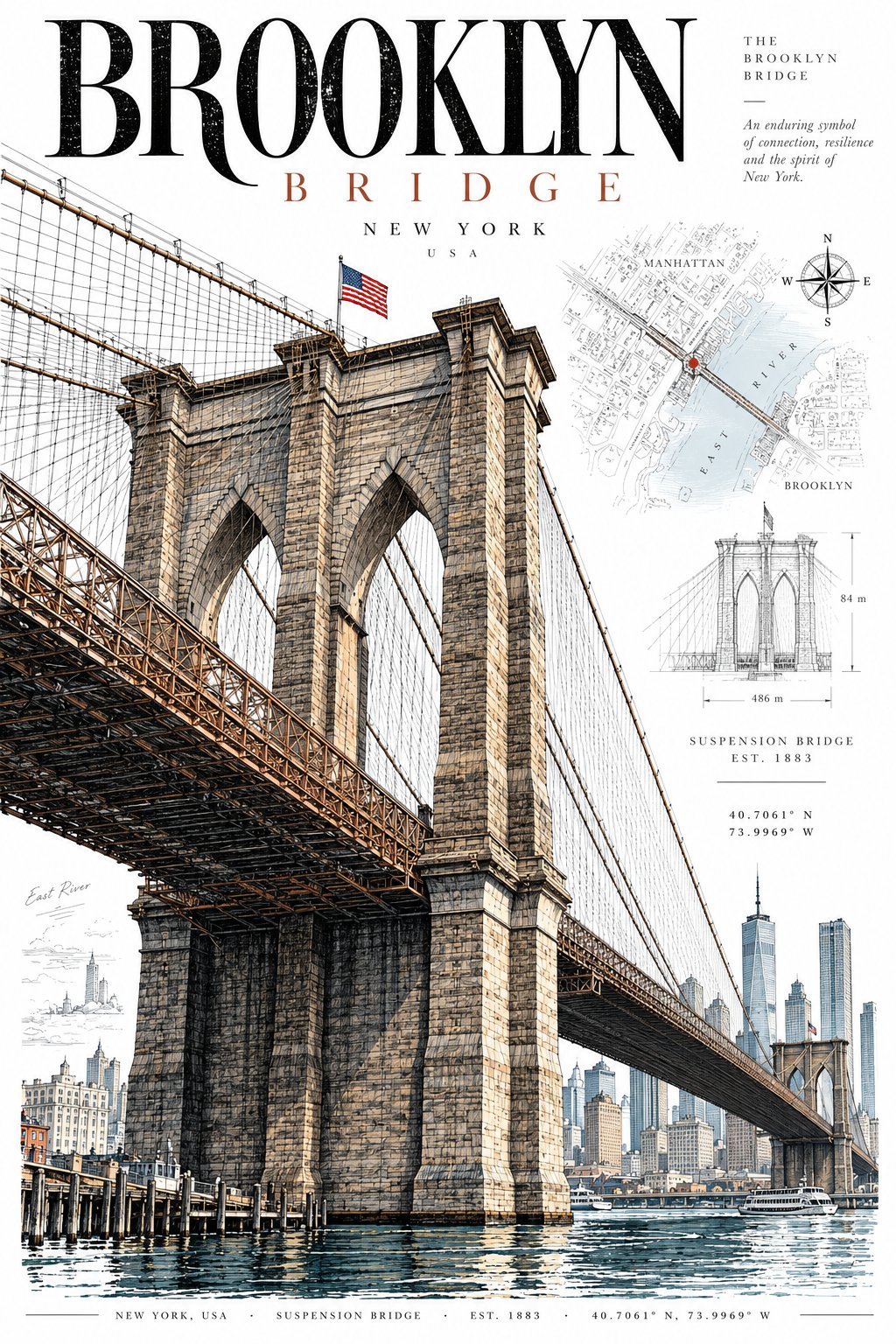
Architectural Travel Postcard Illustration
 GPT Image 2.5OpenAIimage
DESTINATION: [DESTINATION] Create a sophisticated vertical 2:3 architectural travel postcard featuring [DESTINATION]. STYLE Premium contemporary editorial postcard with subtle vintage influence. Combine precise architectural pen-and-ink illustration, restrained travel graphics, archival details, and modern graphic design. The result should feel cultured, timeless, architectural, and collectible—not like a tourist souvenir. MAIN SUBJECT Feature ONE iconic building, monument, structure, street façade, or architectural landmark strongly associated with [DESTINATION]. Make it the clear visual hero, shown from a believable three-quarter or slightly dramatic architectural perspective. No landmark collage. ILLUSTRATION Use exceptionally fine black or dark graphite linework, detailed architectural hatching, accurate proportions, and subtle hand-drawn imperfections. Include recognizable structural details such as windows, façades, roofs, columns, or ornaments where appropriate. COLOR Keep much of the architecture as line art with selective flat color using only 2–4 destination-specific tones. Colors should be sophisticated and slightly muted. Avoid gradients, glossy rendering, photorealism, excessive beige, and muddy sepia. BACKGROUND Use a clean pure white background with subtle archival elements such as faint maps, street plans, coordinates, contour lines, architectural diagrams, or minimal local-language annotations. Keep these elements secondary and lightly faded. COMPOSITION Vertical 2:3 format, with the landmark occupying roughly 60–75% of the artwork. Use generous negative space and an asymmetric editorial layout. Allow tasteful cropping when it improves the composition. TYPOGRAPHY Add restrained typography: [LOCAL NAME] [DESTINATION] Use elegant architectural or museum-catalogue-inspired typography. Add a tiny bottom information strip with relevant details such as CITY / COUNTRY · ARCHITECTURE · EST. YEAR · COORDINATES. DETAILS & MOOD Add only a few tiny contextual elements—people, bicycles, trees, lamps, vehicles, or street details—when appropriate, mainly to establish scale. Mood: quiet urban sophistication, cultural authenticity, history, and refined design. AVOID Tourist clichés, cartoon styling, fake architecture, landmark collages, giant typography, excessive decoration, heavy vintage filters, fake stamps, clutter, 3D rendering, and unnecessary text. FINAL GOAL: A timeless, highly detailed, premium architectural postcard that feels like a museum-shop collectible or contemporary design print.
Details
- Type
- AI Image Prompts
- Aspect Ratio
- 2:3
- Updated
- Sep 30, 2026
Category
How to use this prompt
- 1Copy the full prompt with the copy button above.
- 2Open GPT Image 2.5 by OpenAI, or any image generator with a similar style range.
- 3Paste the prompt, then swap the subject and style keywords to match your idea.
- 4Match the example's settings (2:3 · Poster · Architecture · Vintage), then iterate — small wording changes shift the output a lot.
Frequently asked questions
Which AI model generated this image?
This image was generated with GPT Image 2.5 by OpenAI. The prompt on this page is the exact text used to create it.
What settings does this prompt use?
The example was generated with GPT Image 2.5 using: 2:3 · Poster · Architecture · Vintage. Reusing these settings gives the closest match.
How do I get similar results?
Copy the prompt as-is first, then replace only the subject while keeping the style, lighting, and composition keywords. Generate a few variations — outputs differ between runs.
Can I modify this prompt?
Yes. Prompts work best as starting points — adjust descriptors, aspect ratio, or style tags to make the output your own.
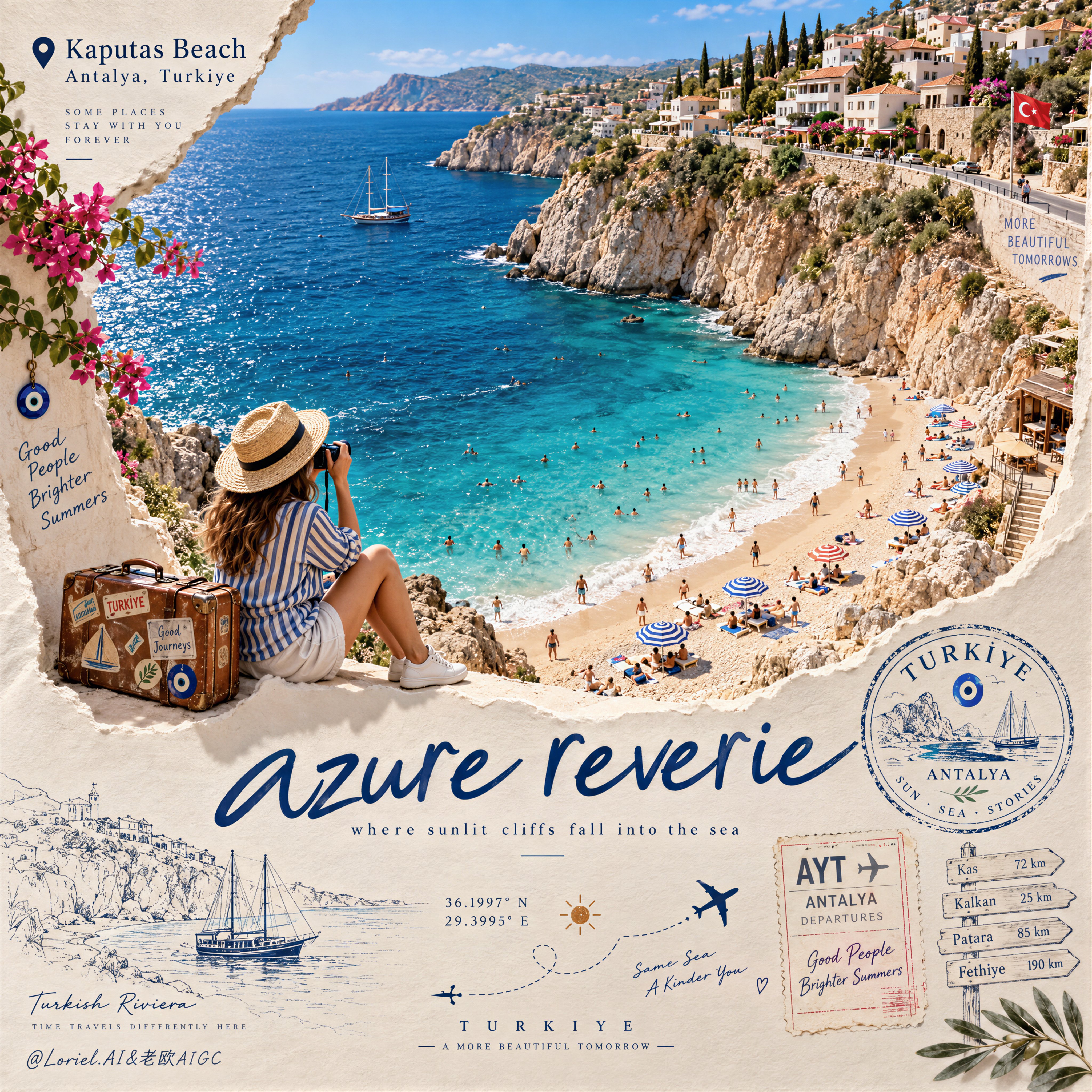
![Create a premium vertical 4:5 editorial travel poster for [COUNTRY], where the outline of the countr — AI image prompt — GPT Image 2.5](https://cdn.ahaprompt.app/harvest-media/import-1789369064970-j9jipe.jpg)
![Create a sophisticated, dreamy editorial magazine cover titled “[COUNTRY NAME] — A COUNTRY IN ONE DR — AI image prompt — GPT Image 2.5](https://cdn.ahaprompt.app/harvest-media/import-1789368946131-xefjx1.jpg)
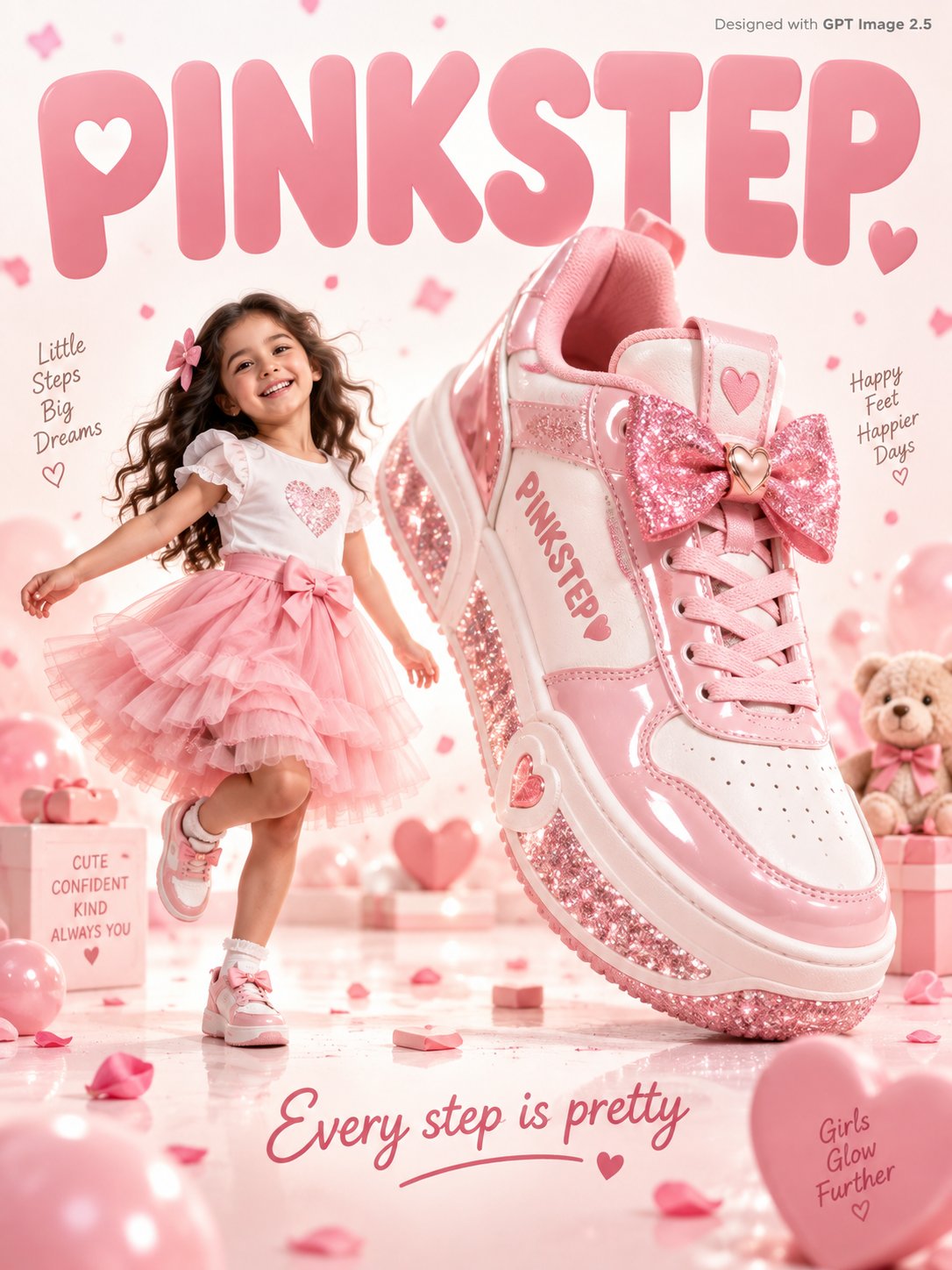
![Create a premium educational travel poster featuring [STRUCTURE NAME], one of the world’s most famou — AI image prompt — GPT Image 2.5](https://cdn.ahaprompt.app/harvest-media/import-1789369131185-x1iuzs.jpg)
![Create a premium cinematic luxury tourism poster for [COUNTRY / DESTINATION] in a STRICT 4:5 vertica — AI image prompt — GPT Image 2.5](https://cdn.ahaprompt.app/harvest-media/import-1789369001673-dctuvc.jpg)
![Create a premium contemporary editorial art poster for [LOCATION] in a playful Japanese design-ZINE — AI image prompt — GPT Image 2.5](https://cdn.ahaprompt.app/harvest-media/import-1789139846025-v6z310.jpg)
![2x2 grid, 9:16, 4 goat chess players who passed away [SUBJECT] :: single standalone vertical tribute — AI image prompt — GPT Image 2.5](https://cdn.ahaprompt.app/harvest-media/import-1789139801507-ah2jvt.jpg)