Editorial Leisure Fashion Portrait
 Grok Imagine 2xAIimage
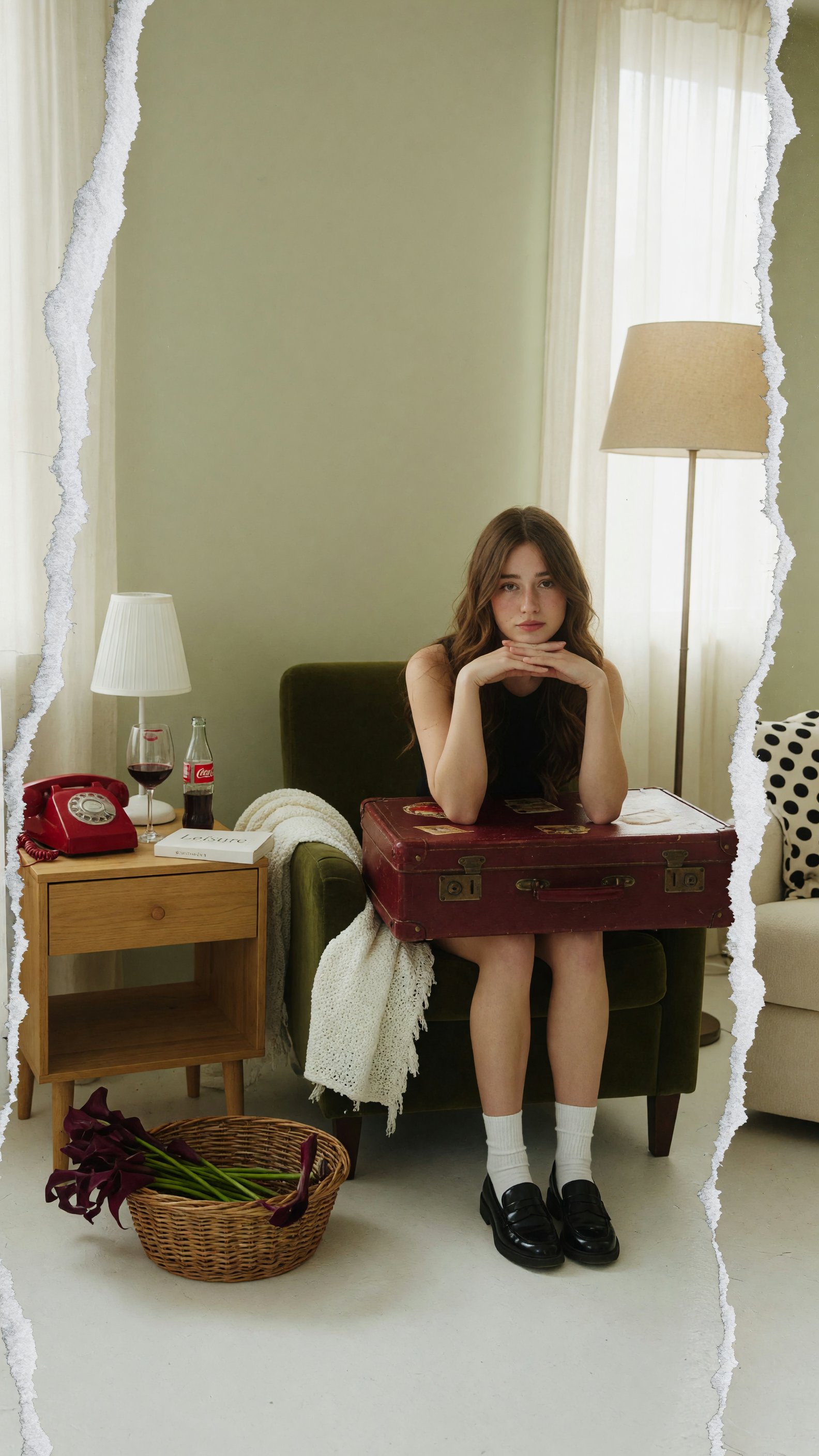
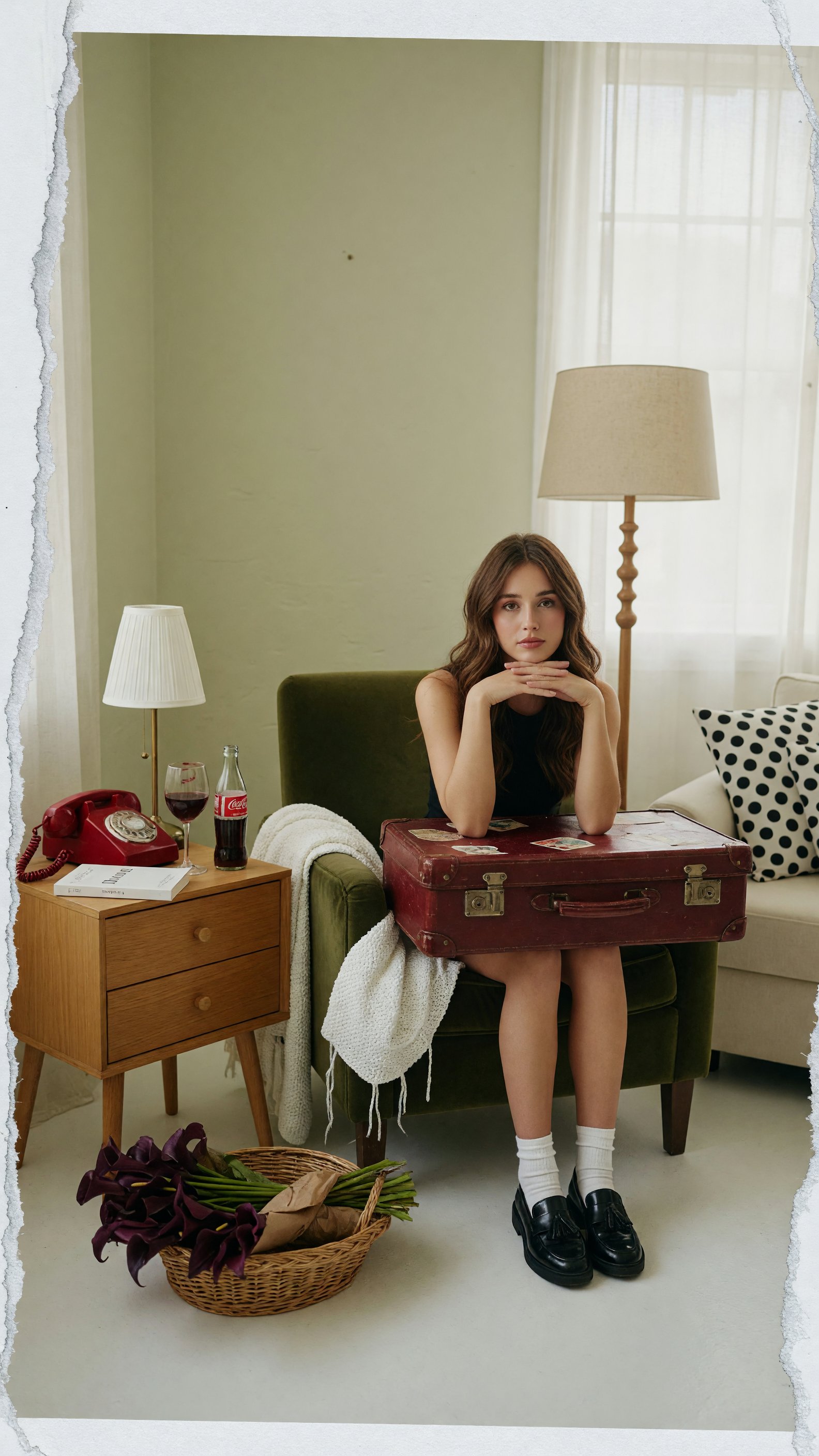
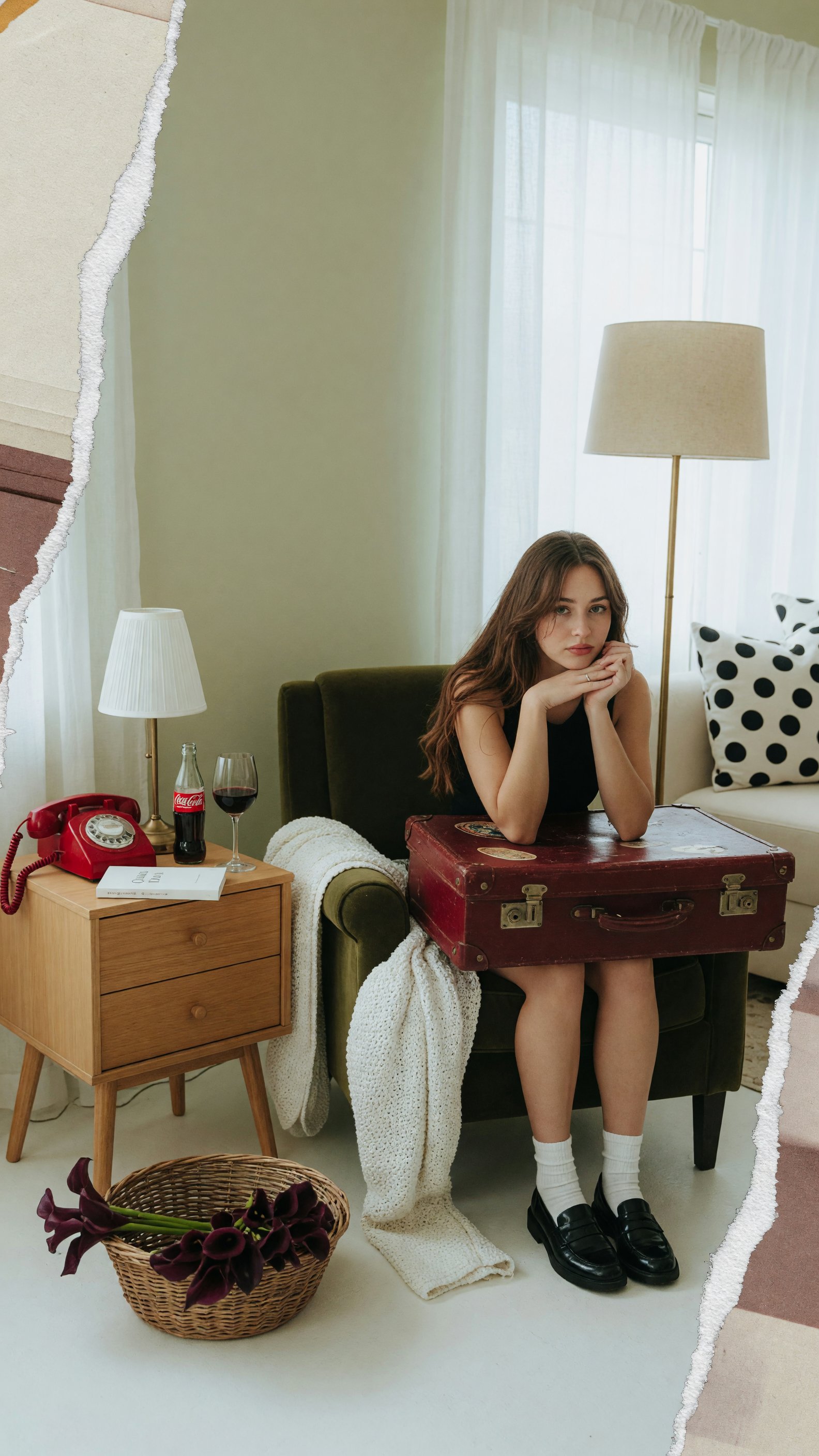
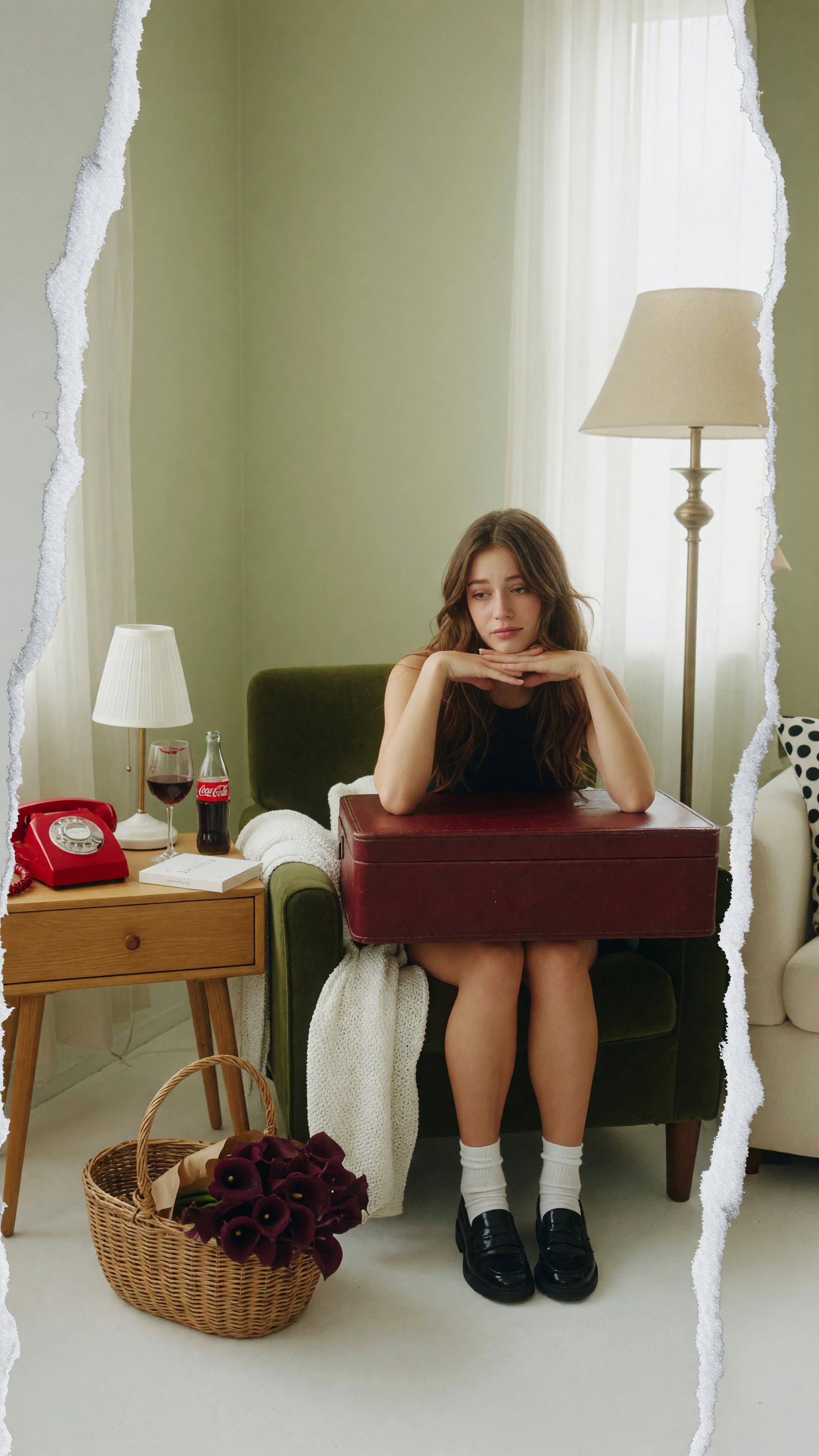
Editorial fashion photography, soft natural window light, pale sage-green walls, minimalist modern-vintage interior. A young woman with long wavy chestnut-brown hair sits centered in a deep olive-green velvet armchair, legs together, knees slightly bent. She leans forward, resting both elbows and chin on the top of a large rectangular vintage burgundy leather suitcase that rests horizontally across her lap. Her hands are gently clasped under her chin, soft neutral expression, direct eye contact with the camera, subtle melancholic yet calm gaze. She wears a simple black sleeveless tank top, white crew socks, and shiny black loafers. To her left: a light oak mid-century nightstand holding a classic red rotary telephone, a stemmed glass of red wine, a glass Coca-Cola bottle, a small white book, and a minimal white table lamp. A white knitted throw blanket is casually draped over the left arm of the chair. On the floor in the lower left corner sits a shallow woven wicker basket filled with deep purple calla lilies. To her right: a tall floor lamp with a beige fabric shade, sheer white curtains covering a bright window that floods the scene with soft daylight. Partial view of a cream-colored sofa with black-and-white polka-dot cushions on the far right. Clean white floor, airy and serene atmosphere. Framed by rough torn-paper edges on both left and right sides, giving the photograph a scrapbook / magazine-tear aesthetic. Shot on medium format film, shallow depth of field, warm neutral color grade, high-end “Editorial Leisure” campaign style, 85 mm lens, f/2.8.
Details
- Type
- AI Image Prompts
- Aspect Ratio
- 9:16
- Updated
- Aug 23, 2026
How to use this prompt
- 1Copy the full prompt with the copy button above.
- 2Open Grok Imagine 2 by xAI, or any image generator with a similar style range.
- 3Paste the prompt, then swap the subject and style keywords to match your idea.
- 4Match the example's settings (9:16 · Fashion · Vintage), then iterate — small wording changes shift the output a lot.
Frequently asked questions
Which AI model generated this image?
This image was generated with Grok Imagine 2 by xAI. The prompt on this page is the exact text used to create it.
What settings does this prompt use?
The example was generated with Grok Imagine 2 using: 9:16 · Fashion · Vintage. Reusing these settings gives the closest match.
How do I get similar results?
Copy the prompt as-is first, then replace only the subject while keeping the style, lighting, and composition keywords. Generate a few variations — outputs differ between runs.
Can I modify this prompt?
Yes. Prompts work best as starting points — adjust descriptors, aspect ratio, or style tags to make the output your own.